Which Protected Bay Destinations Offer Wave-Free Swimming for a Family Vacation?
Table of Contents
The top protected bay destinations for a family vacation with wave-free swimming include Grace Bay in Turks & Caicos, Trunk Bay in the USVI, Hanauma Bay in Hawaii, and Cala Galdana in Spain.
These destinations are ideal for families because they provide naturally calm, shallow waters ideal for young children and beginner swimmers.
They also offer unique, safe opportunities for family activities like snorkeling, paddleboarding, and marine life observation.
These family vacation spots are defined by geographical features like coves, reefs, or peninsulas that block open ocean swells.
To understand where these protected bays fit into the grand scheme of travel, you might want to explore the broader spectrum of family vacation destinations.
1. What Defines a “Protected Bay Destination” for a Family Vacation?
A protected bay destination for a family vacation is characterized by natural geographical features that create exceptionally calm, shallow waters, making it ideal for families with children.
Unlike open-ocean coastlines, these bays offer a sanctuary from strong waves and currents, providing a safe and enjoyable environment for young swimmers and various family-friendly water activities.
What Geographical Features Create Wave-Free Conditions for a Family Vacation?
Wave-free conditions for a family vacation are created by specific geographical features such as offshore barrier reefs (Grace Bay), submerged volcanic craters (Hanauma Bay), and deep, U-shaped coves (Cala Galdana) that physically block or dissipate ocean wave energy before it reaches the shore.
These natural barriers significantly reduce wave height, typically to less than 0.3 meters, ensuring a safe environment suitable for young children and beginner swimmers.
A major meta-analysis on the effectiveness of coral reefs found they can cause an average wave-energy reduction of 97%[1], highlighting their crucial role in creating tranquil waters in many protected bay destinations.
The term Fetch refers to the length of water over which a given wind has blown; protected bays typically have a minimal fetch, which naturally prevents the formation of large, powerful waves, contributing to their calm conditions.
- Reefs (Barrier/Fringing): These underwater structures, like the extensive reef protecting Grace Bay, absorb and break wave energy far offshore, preventing large swells from reaching the beach.
- Coves & Inlets: Deep, U-shaped formations such as Cala Galdana physically enclose the water, offering shelter from open-ocean currents and waves.
- Peninsulas & Tombolos: Landforms extending into the sea, or sand spits connecting islands, can effectively create leeward sides where water remains exceptionally calm, perfect for a family vacation.
If the presence of vibrant underwater ecosystems is a priority for your family, you can also discover the best coral reefs for family snorkeling and marine observation.
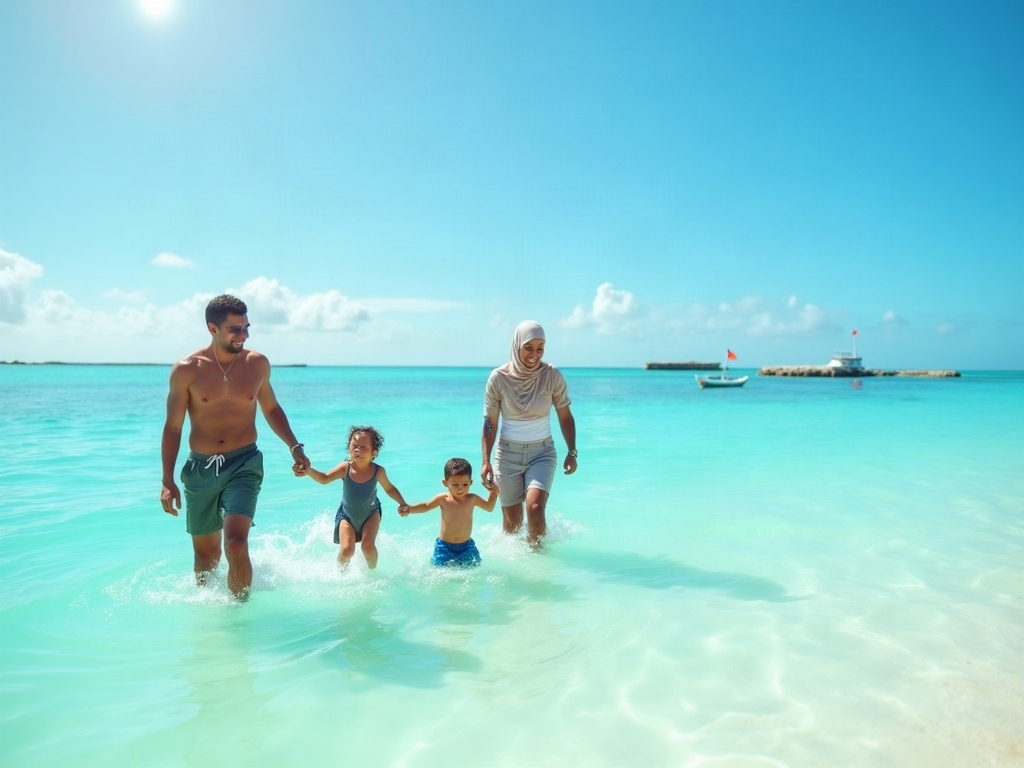
This visualization demonstrates how natural landforms and underwater structures like coral reefs and volcanic craters act as buffers against ocean swells, forming tranquil waters in a protected bay destination for a family vacation.
© WovenVoyages.com
Why Are Wave-Free Waters Crucial for a Family Vacation?
Wave-free waters are crucial for a family vacation primarily because they drastically reduce the risk of drowning and injury for young children, creating a less stressful and more enjoyable environment for parents.
According to the CDC, unintentional drowning deaths in the U.S. exceed 4,000 annually, and drowning is a leading cause of death for young children[2], underscoring the importance of safe swimming conditions like those found in protected bay destinations.
A Rip Current is a strong, localized, and narrow current of water moving directly away from the shore, but their formation is significantly less common on beaches within protected bays.
- Enhanced Child Safety: The absence of strong waves minimizes the risk of children being knocked over, swept away, or struggling against powerful undertows, promoting safer play.
- Reduced Parental Anxiety: Parents can relax more knowing their children are playing in predictable, calm waters, enhancing the overall vacation experience.
- Expanded Activity Options: Calm waters make activities like learning to swim, snorkeling, and paddleboarding accessible and enjoyable for all ages and skill levels, without the intimidation of rough surf.
2. How Do Protected Bay Destinations Ensure Safety for Children on a Family Vacation?
Protected bay destinations offer inherent safety advantages beyond just the absence of waves, making them premier choices for a family vacation.
These environments are often characterized by shallow entry points, gentle gradients, and superior water clarity, all contributing to a safer and more reassuring experience for parents and children alike.
What Specific Benefits Do Calm Waters Offer for a Family Vacation?
The specific benefits calm waters offer for a family vacation include enabling toddlers to play independently at the water’s edge, allowing beginner snorkelers to learn without battling surf, and providing a stable platform for activities like paddleboarding.
These conditions foster a nurturing environment where children can build confidence in the water.
For instance, at Anne’s Beach in the Florida Keys, the water is barely a foot deep for hundreds of yards offshore, creating an extraordinary natural shallow-water playground for families[3].
Water Clarity (or Secchi Depth) measures water transparency; calm bays often boast higher clarity due to less suspended sediment, which is invaluable for spotting underwater hazards and marine life, further enhancing safety and enjoyment for a family vacation.
- Safe Independent Play: Shallow, calm water allows toddlers to splash and play at the water’s edge with reduced supervision intensity, promoting early water confidence.
- Beginner Water Sports: The lack of waves is ideal for learning stand-up paddleboarding (SUP), kayaking, and introductory snorkeling, making these activities accessible to older children and adults without prior experience.
- Effortless Wildlife Viewing: Calm surfaces make it easy to spot marine life such as sea turtles and colorful fish, providing educational and awe-inspiring moments for the whole family.
For families with the youngest travelers, these calm waters are truly ideal for shallow lagoon beaches where toddlers can safely splash and play.
Which Types of Marine Life Are Typically Found in Protected Bays for a Family Vacation?
The types of marine life typically found in protected bays ideal for a family vacation include non-aggressive species like parrotfish, angelfish, sea turtles, and juvenile reef fish that thrive in the calm, nutrient-rich waters of seagrass beds and nearshore reefs.
These environments are crucial for observation and safe interaction during a family vacation.
Some protected bay ecosystems are recognized for their immense biodiversity value, such as the UNESCO biosphere reserve at Baa Atoll in the Maldives, which showcases a stunning array of marine species.
A Seagrass Bed is an underwater ecosystem formed by flowering plants; they act as crucial nursery habitats for many juvenile fish species seen in protected bays, offering abundant opportunities for marine life observation during a family vacation.
- Colorful Reef Fish: Species like Parrotfish and Sergeant Major are common, adding vibrant colors to snorkeling experiences.
- Larger Gentle Species: Families can often spot Green Sea Turtles and Eagle Rays gliding gracefully through the calm waters.
- Invertebrates: Shallow areas are often home to Starfish and Sea Cucumbers, offering engaging tide-pooling opportunities.
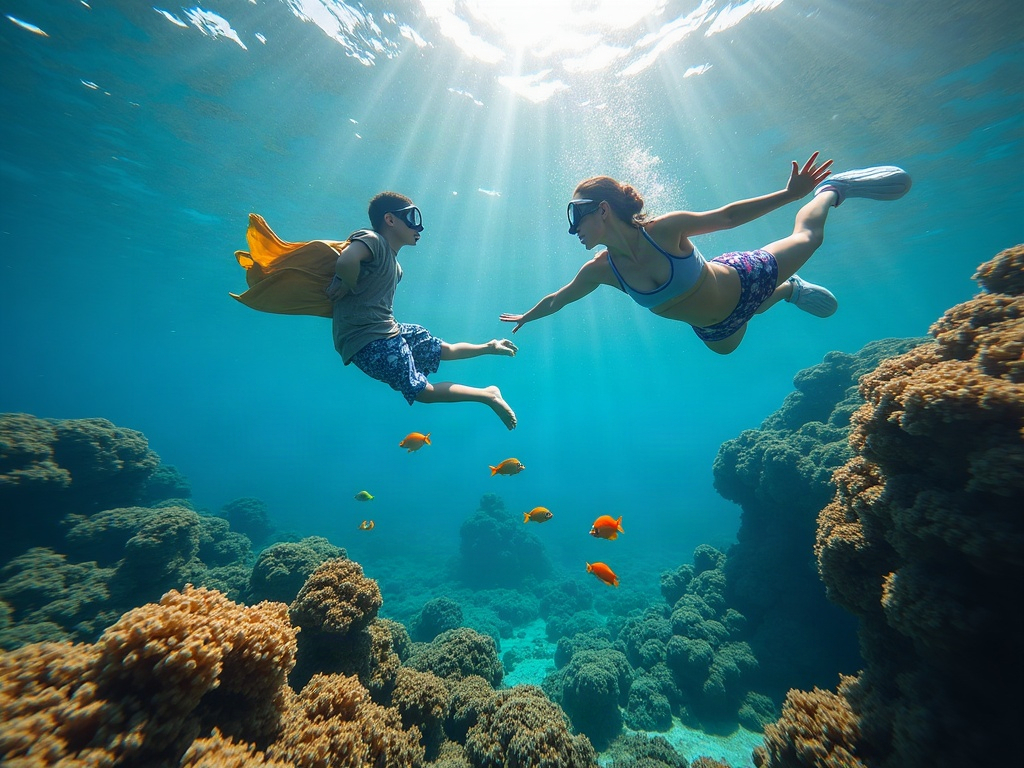
This image highlights some of the docile and colorful marine species, like parrotfish and sea turtles, that thrive in the calm, protected waters of bays, offering safe and educational viewing opportunities for families during a family vacation.
© WovenVoyages.com
3. How Can Families Choose the Ideal Protected Bay Destination for a Family Vacation?
Choosing the ideal protected bay destination for a family vacation requires a careful evaluation of various factors, matching them with the unique needs and preferences of your family.
It’s a matching exercise that considers everything from water conditions and accessibility to available amenities and desired activities, ensuring a perfect fit for every family member.
To assist with this selection process, consider the following comparison of top protected bay options:
| Destination | Dominant Feature | Water Calmness (1-5) | Family Amenity Score (1-5) | Best For |
|---|---|---|---|---|
| Grace Bay, Turks & Caicos | Barrier Reef | 5 | 4 | Toddlers, Luxury, Snorkeling |
| Trunk Bay, USVI | Fringing Reef | 4 | 3 | Beginner Snorkelers, Nature Enthusiasts |
| Hanauma Bay, Hawaii | Volcanic Crater | 4 | 4 | Marine Life Observation, Education |
| Cala Galdana, Spain | Deep Cove | 5 | 4 | Young Children, Easy Access |
| Oludeniz, Turkey | Sandbar-Enclosed Lagoon | 5 | 3 | Extreme Calm, Scenery |
What Factors Determine a Protected Bay’s Suitability for a Family Vacation?
Key factors that determine a protected bay’s suitability for a family vacation are water conditions (depth, clarity, calm), accessibility (proximity to airports/accommodations), on-site amenities (restrooms, lifeguards, food), and the type of available activities.
The Blue Flag certification is an internationally recognized award for beaches that meet high standards in water quality, safety, and environmental management, serving as a reliable indicator for families seeking a top-tier protected bay destination for a family vacation.
A Shallow Gradient describes a gentle slope of the seafloor from the shoreline, which is a key safety factor as it creates a large, safe wading area for children and minimizes sudden drop-offs.
- ☐ The destination has lifeguards on duty during peak hours.
- ☐ The bay has public restrooms and changing facilities for family convenience.
- ☐ Water quality reports are consistently excellent, ensuring a healthy swimming environment.
- ☐ The beach offers a gradual entry into the water with no sudden drop-offs, ideal for young children.
- ☐ Accessibility to the beach is easy, with minimal walking distance from parking or accommodation.
- ☐ There are readily available food and beverage options suitable for families.
Which Are the Top Protected Bay Destination Options for a Family Vacation?
The top protected bay destination options for a family vacation include Trunk Bay in St. John (USVI) for its underwater snorkeling trail, Oludeniz in Turkey for its stunning blue lagoon, and Jervis Bay in Australia, known for having some of the whitest sand and calmest waters in the world.
These destinations exemplify the best of protected bay environments, offering diverse experiences tailored for families.
Based on 25 years of reviews, Tripadvisor named Balos Beach in Crete, a protected lagoon, the best beach in the world of all-time[4], showcasing global recognition for such unique calm-water locations.
An Underwater Trail is a designated path for snorkelers, marked with submerged plaques that identify coral species and marine life, as exemplified by the one at Trunk Bay, making it an educational adventure for families.
- Trunk Bay, St. John, USVI: Its 225-yard-long snorkeling trail is in shallow water, making it perfect for confident child swimmers to explore vibrant marine life.
- Oludeniz, Turkey: The stunning blue lagoon offers exceptionally tranquil, clear waters, ideal for young children and families seeking ultimate relaxation and gentle swimming.
- Jervis Bay, Australia: Renowned for its pristine white sands and calm, crystal-clear waters, it’s excellent for observing dolphins and swimming in a serene setting.
- Wailea Beach, Maui, Hawaii: This bay offers gentle waves and luxurious amenities, making it a fantastic choice for families seeking comfort alongside natural beauty and safe swimming.
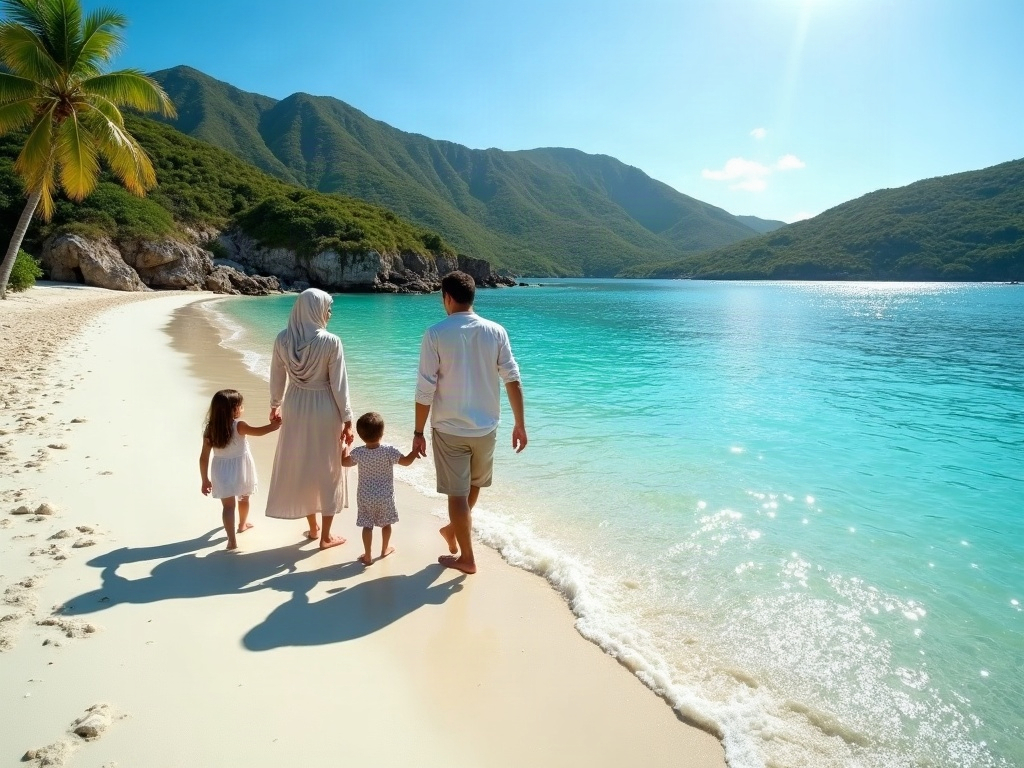
This visual compilation displays three of the world’s most beautiful and family-friendly protected bay destinations: Trunk Bay, Oludeniz, and Jervis Bay, highlighting their calm waters and inviting shores for a memorable family vacation.
© WovenVoyages.com
4. What Are the Key Differences Between Various Protected Bay Destination Types for a Family Vacation?
Understanding the geological origins of different protected bay destinations is crucial for appreciating the unique experiences each offers during a family vacation.
These geological formations directly influence not only the water calmness but also the marine biodiversity and the types of activities best suited for families.
Which Protected Bays Offer Unique Ecological Experiences for a Family Vacation?
Protected bays that offer unique ecological experiences for a family vacation include the Blue Lagoon in Malta for its stark blue waters over white sand, El Nido in the Philippines for its dramatic karst landscape, and Half Moon Bay in Antigua, a designated National Park.
Each of these destinations provides distinct natural phenomena that enhance the family vacation experience.
The entire island of La Palma in the Canary Islands, known for its black sand beaches and natural swimming pools, is a designated UNESCO Biosphere Reserve, signifying its exceptional ecological value.
A Karst Landscape is a topography formed from the dissolution of soluble rocks such as limestone, characterized by sinkholes, caves, and dramatic cliffs like those seen in El Nido, offering unique geological exploration during a family vacation.
- Coral-Reef Protected Bays (e.g., Grace Bay): These bays are excellent for snorkeling and diving, offering direct access to vibrant coral ecosystems and diverse marine life.
- Volcanic Caldera/Cove Bays (e.g., Hanauma Bay): Often featuring unique underwater rock formations and abundant fish in a protected natural pool, perfect for educational marine observation.
- Sandbar/Spit-Enclosed Lagoons (e.g., Oludeniz): Provide ultra-calm, shallow, and warm waters, making them ideal for very young children and non-swimmers to safely enjoy the water.
5. How Can Families Maximize Activities in a Protected Bay Destination for a Family Vacation?
Maximizing activities in a protected bay destination for a family vacation involves leveraging the inherently calm and safe waters for a variety of age-appropriate adventures.
From water sports to shore-based exploration, the key is planning activities that cater to diverse interests and skill levels, ensuring every family member finds joy in the serene environment.
Refer to this Activity Matrix for a structured approach to planning your family’s fun:
| Activity | Recommended Age | Required Gear | Safety Consideration |
|---|---|---|---|
| Snorkeling | 5+ (with supervision) | Mask, snorkel, fins, life vest | Stay in designated areas, monitor water depth, look don’t touch marine life. |
| Paddleboarding | 8+ (beginners with adult) | SUP board, paddle, leash, PFD | Calm conditions are essential, wear PFD, stay close to shore, avoid windy days. |
| Kayaking | 6+ (tandem with adult) | Kayak, paddles, PFDs | Choose tandem kayaks for children, stay visible, be aware of other watercraft. |
| Building Sandcastles | All ages | Buckets, spades, molds | Sun protection, stay hydrated, keep an eye on incoming tides. |
| Tide Pooling | 3+ (with adult guidance) | Water shoes, magnifying glass, guide book | Walk carefully on rocks, never pick up marine life, check tide charts. |
What Specific Water Sports Are Safe and Enjoyable in Wave-Free Bays for a Family Vacation?
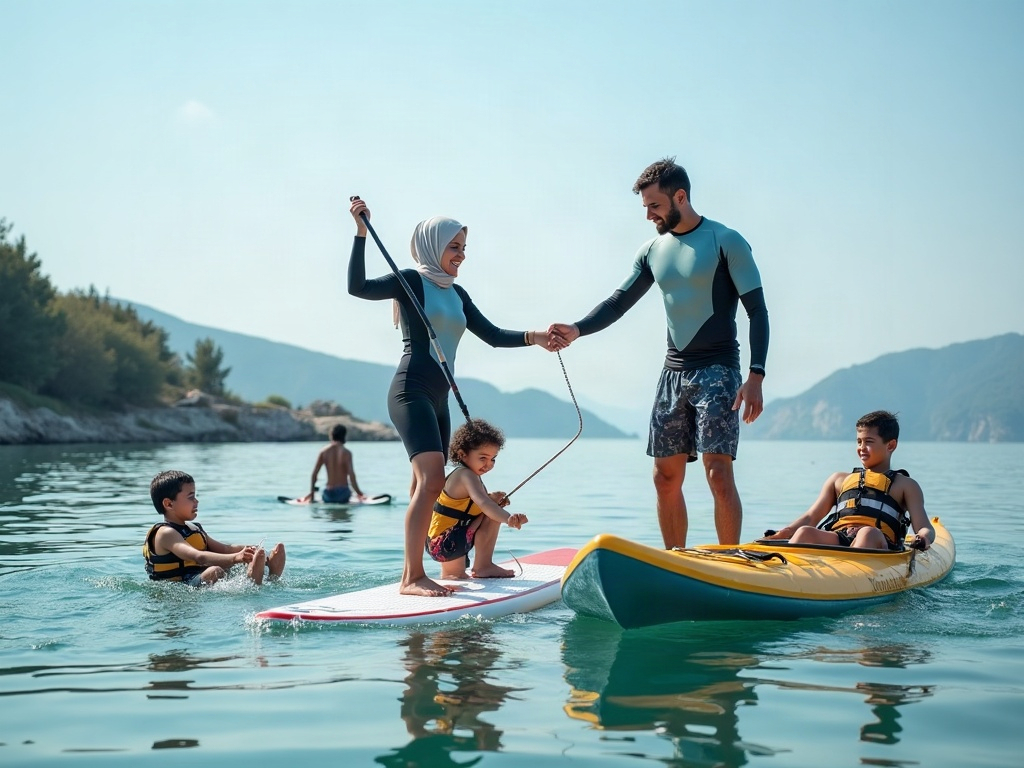
Specific water sports that are exceptionally safe and enjoyable in wave-free bays for a family vacation are stand-up paddleboarding (SUP), kayaking, pedal boating, and introductory snorkeling, as the calm surface eliminates the primary difficulty and risk factor for beginners.
These activities become far more accessible and less intimidating in the predictable conditions of a protected bay destination for a family vacation.
Some calm-water destinations, like Myrtle Beach, have designated “calm surf zones” specifically created to be ideal for beginner swimmers, highlighting the value of managed, serene aquatic environments.
Tide Pooling is the activity of exploring the rocky pools of marine life left behind when the tide goes out, an activity ideal for the gentle shorelines of many protected bays.
- Stand-up paddleboarding becomes accessible to older children and adults alike, as the lack of waves removes the significant balance challenge found in the open ocean.
- Kayaking and pedal boating offer a stable and gentle way to explore the calm waters, making them perfect for younger children to participate alongside family members.
- Introductory snorkeling is ideal, as the clear, calm conditions allow for easy breathing and unobstructed views of underwater ecosystems.
Beyond these calm bay activities, you might also want to explore other excellent water sports destinations tailored for teenagers who crave more adventurous aquatic experiences.
To delve deeper into this fascinating activity, you can also find other calm-water coastal destinations perfect for discovering tide pools with your family.
What Essential Logistics Should Families Plan for a Protected Bay Destination Family Vacation?
The essential logistics families must plan for a protected bay destination family vacation include booking accommodations with direct beach access or short travel times, arranging for appropriate ground transportation for families with gear, and pre-booking popular water sports rentals or tours.
Proactive planning minimizes travel fatigue and ensures a seamless experience, especially when traveling with young children or extensive gear, which is critical for a successful family vacation.
A critical planning factor is “travel fatigue,” as a perfect beach requiring two layovers and a long car ride is a poor choice for a family with a toddler compared to a beach accessible via a direct 2-hour flight, influencing destination choice for a protected bay destination for a family vacation.
A Package Holiday is a pre-arranged vacation sold by a tour operator that typically includes flights, accommodation, and transfers, which can significantly simplify logistics for families planning a complex family vacation.
- Six Months Out: Secure flights and accommodation, especially for popular protected bay destinations during peak seasons.
- One Month Out: Confirm ground transportation, arrange car rentals with appropriate child seats, and pre-book popular tours or water sports rentals to avoid disappointment.
- One Week Out: Inventory and pack specific gear like reef-safe sunscreen, UV protection clothing, and any necessary snorkeling equipment.
When thinking about accommodating various age groups and needs, it’s also worth considering beach destinations that are ideal for a multigenerational family vacation.
6. Where Can Families Find Accommodation Near Protected Bay Destinations for a Family Vacation?
Finding the right accommodation near a protected bay destination for a family vacation is pivotal to the overall success and enjoyment of the trip.
The choice between all-inclusive resorts, vacation rentals, or eco-lodges depends on the family’s size, budget, and desired level of service and privacy, each offering distinct benefits.
How Should Families Prepare for Sun Safety and Marine Life Encounters During a Protected Bay Family Vacation?
Families should prepare for sun safety by packing high-SPF, reef-safe sunscreen, UV-protective rash guards, and wide-brimmed hats, and prepare for marine life encounters by teaching children the “look, don’t touch” rule to protect both them and the ecosystem.
Comprehensive preparation ensures a safe and responsible family vacation in a protected bay destination.
For sun safety, it is vital to use a broad-spectrum sunscreen with an SPF of 30 or higher and to reapply it often, especially after swimming, to protect against harmful UV rays.
Reef-Safe Sunscreen is a sunscreen formulated without the chemicals oxybenzone and octinoxate, which are known to cause coral bleaching and damage marine ecosystems, making its use critical in protected bays.
- ☐ I have packed a rash guard with a UPF 50+ rating for each family member.
- ☐ We have broad-spectrum sunscreen with SPF 30+ that is reef-safe.
- ☐ Wide-brimmed hats and sunglasses are packed for everyone.
- ☐ I have explained to my children that touching a sea turtle is illegal and harmful to the animal.
- ☐ We understand the importance of not stepping on coral and maintaining a respectful distance from all marine creatures.
- ☐ I have informed my children about potential minor marine irritants (e.g., jellyfish) and how to identify/avoid them.
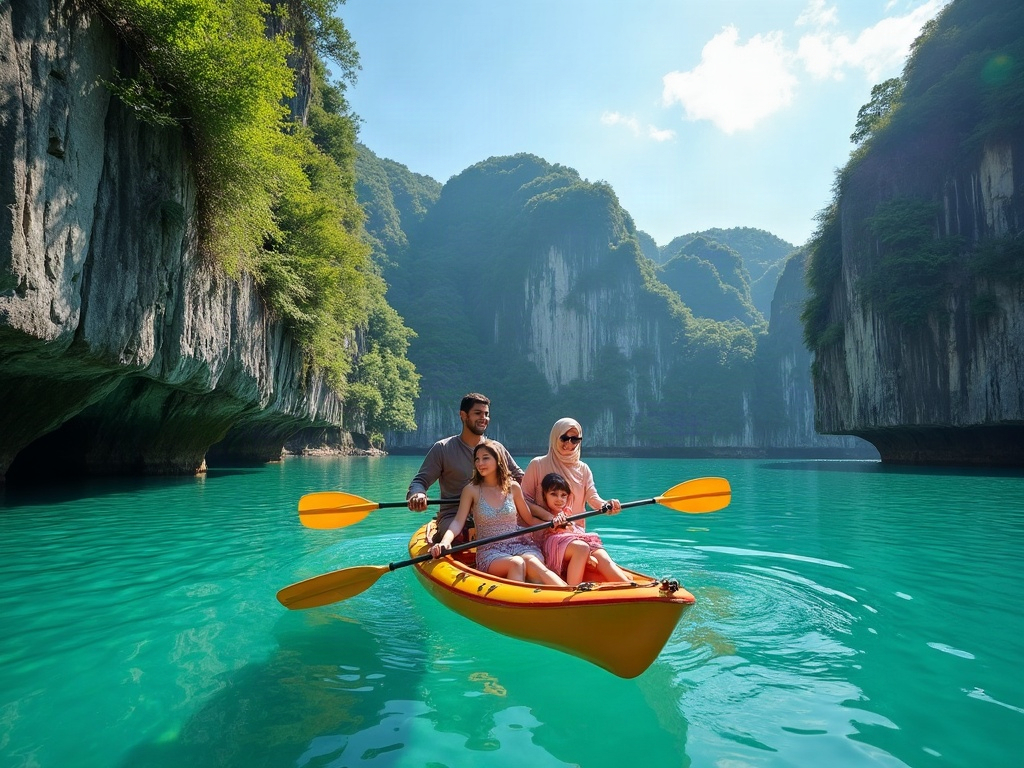
This infographic provides a quick guide to essential practices for a family vacation, including wearing UV protection, using reef-safe sunscreen, and adhering to “look, don’t touch” rules for marine life in a protected bay destination.
© WovenVoyages.com
7. What Common Challenges Might Families Encounter at Protected Bay Destinations During a Family Vacation?
While protected bay destinations offer unparalleled safety and tranquility for a family vacation, they are not without potential challenges that require proactive planning.
Understanding these common hurdles, such as managing crowds, subtle tidal movements, or limited services in remote areas, allows families to mitigate them effectively and ensure a smoother trip.
How Do Currents and Tides Impact Wave-Free Conditions in Protected Bays for a Family Vacation?
While largely wave-free, currents and tides impact protected bays by creating subtle water movement, altering water depth significantly between high and low tide, and potentially creating stronger currents near the mouth of the bay during a tidal exchange.
Awareness of these dynamics is crucial for maintaining safety during a family vacation in these otherwise calm environments.
A key safety issue is that even calm, clear-looking water can have high bacteria counts after heavy rainfall due to runoff, so families should always check local water quality reports before swimming[5].
Tidal Exchange refers to the movement of large volumes of water in and out of a bay or estuary as the tide rises and falls, which can create powerful localized currents, especially near narrow bay entrances.
- Issue: A strong outgoing tide can create a subtle but persistent pull towards the mouth of the bay. | Mitigation: Instruct children to stay in designated swim areas and always check a local tide chart before entering the water.
- Issue: Water depth can change dramatically between high and low tide, making some areas too shallow or too deep for planned activities. | Mitigation: Consult local tide tables and adjust activities accordingly; explore tide pools during low tide.
- Issue: Overcrowding can diminish the serene experience and increase perceived risk. | Mitigation: Visit during off-peak hours or seasons, or choose lesser-known protected bay destinations.
8. How Can Families Ensure Environmental Responsibility During a Protected Bay Family Vacation?
Ensuring environmental responsibility is paramount for any family vacation, especially when visiting delicate protected bay destinations.
Adhering to principles like Leave No Trace not only preserves these beautiful ecosystems for future generations but also sets a valuable example for children about respecting nature.
What Are the Best Practices for Respecting Marine Ecosystems in Protected Bays for a Family Vacation?
The best practices for respecting marine ecosystems in protected bays are to use only reef-safe sunscreen, maintain a mandatory distance from all marine life, never touch or stand on coral, and pack out every item of trash you bring in.
These guidelines form the core of responsible tourism in sensitive marine environments during a family vacation.
At some protected beaches in Thailand, like Pai Plong Beach, there is a ban on motorized water sports and longtail boats to ensure a quiet and less polluted environment, demonstrating a commitment to marine preservation.
Coral Bleaching is the process where corals expel the algae living in their tissues, causing them to turn completely white, a stress response often caused by chemical pollution from sunscreens and rising water temperatures.
- We will not touch or chase any animal, maintaining a respectful distance at all times.
- We will not take any shells, coral, or sand, leaving the natural environment undisturbed.
- Our sunscreen will not contain oxybenzone or octinoxate, ensuring it is reef-safe to protect corals.
- We will properly dispose of all trash, bringing a reusable bag for waste, and leave no trace of our visit.
- We will educate ourselves and our children about the local marine ecosystem and its inhabitants before our family vacation.
This infographic illustrates key actions families can take to be environmentally responsible during their protected bay destination family vacation, emphasizing waste management, reef-safe sunscreen use, and respectful wildlife interaction.
© WovenVoyages.com
Author’s Experience: Abdullahi Azaam
“As a parent of two, I’ve personally navigated the waters of more than 15 protected bay destinations across three continents. My family’s experiences, from snorkeling in the shallow, calm reefs of Grace Bay to exploring the unique tide pools of Hanauma Bay, have provided firsthand insights into what truly makes a protected bay destination perfect for a family vacation. It’s not just about the calm waters; it’s about the entire ecosystem of safety, activities, and accessibility that allows both children and adults to thrive.”
9. Frequently Asked Questions (People Also Ask)
What Geographical Features Create Wave-Free Conditions for a Family Vacation?
Why Are Wave-Free Waters Crucial for a Family Vacation?
What Specific Benefits Do Calm Waters Offer for a Family Vacation?
What Are the Best Practices for Respecting Marine Ecosystems in Protected Bays for a Family Vacation?
10. What Are the Final Thoughts on Maximizing a Protected Bay Destination for a Family Vacation?
Maximizing a protected bay destination for a family vacation hinges on matching the chosen location’s features with the family’s specific needs, interests, and children’s ages.
Prioritizing safety, desired activities, and logistical accessibility ensures a personalized and successful trip, creating cherished memories for years to come.
Use this Decision Rubric to guide your final choice:
- Safety First: Prioritize destinations with lifeguards, shallow water, and gentle gradients, especially for families with toddlers or young children.
- Interest-Led Activities: Choose bays that offer specific activities matching your family’s interests, whether it’s snorkeling trails for older kids or ample sand for building sandcastles.
- Logistics-Aware Accessibility: Consider the ease of travel, proximity to essential services, and suitable accommodation options for multi-generational trips or those with specific needs.
References & Sources
What Are the Final Thoughts on Maximizing a Protected Bay Destination for a Family Vacation?
Choosing the right protected bay destination for a family vacation requires careful consideration of each family’s unique needs, focusing on safety, age-appropriate activities, and logistical ease. By prioritizing these elements, you can ensure a memorable and enjoyable experience for everyone, making your next family beach getaway truly special.