Which Shallow Lagoon Beaches Offer the Best Splashing for a Family Vacation with Toddlers?
Table of Contents
The shallow lagoon beaches offering the best splashing for a family vacation with toddlers include Grace Bay in Turks & Caicos, the Ko Olina Lagoons in Hawaii, and Jervis Bay in Australia, due to their unique combination of safety and play features.
Superior Safety: Sheltered from open ocean waves, providing calm, predictable water.
Ideal Water Conditions: Characteristically shallow depth with gentle slopes, perfect for toddlers.
High-Play Value: Soft sandy bottoms and minimal currents maximize safe, independent splashing.
Choosing the right shallow lagoon beach for a family vacation with toddlers is paramount for both safety and enjoyment.
These unique coastal environments offer unparalleled conditions that cater specifically to the needs of young children and their parents.
To understand how shallow lagoon beaches fit into the broader travel landscape for families, you might explore the various types of family vacation destinations available.
Decision Intelligence Tip: Prioritize destinations that openly publish safety data or have clear visual evidence of calm, shallow conditions, such as user-generated videos of Grace Bay or Ko Olina Lagoons, to ensure they truly meet the ‘toddler-friendly’ criteria.
1. Why Are Shallow Lagoon Beaches Ideal for a Family Vacation with Toddlers?
Shallow lagoon beaches are ideal for a family vacation with toddlers primarily because they offer an exceptional blend of unparalleled safety and maximized play potential.
These unique environments naturally mitigate many risks associated with open water, making them a preferred choice for parents.
The calm, protected waters foster a sense of security, allowing young children to explore and interact with the beach environment safely.
The intrinsic design of shallow lagoons, such as those found at Grace Bay or the Ko Olina Lagoons, inherently promotes a stress-free experience for the entire family.
This visual summarizes the top three benefits: wave protection, shallow depth, and warm water, all contributing to an ideal environment for toddlers.
© WovenVoyages.com
What Safety Advantages Do Shallow Lagoon Beaches Provide for a Family Vacation?
The primary safety advantages shallow lagoon beaches provide for a family vacation are their characteristically calm waters, minimal currents, and gently sloping, clear shorelines which reduce risks associated with open-ocean environments.
These conditions are created by natural breakwaters, such as coral reefs or sandbars, which shield the inner lagoon from strong waves and tidal forces.
At Grace Bay in Turks and Caicos, there is virtually no wave action thanks to the protective reef offshore, providing a consistently placid setting for young children[1].
The clarity of the water is another critical safety feature, as it allows parents to easily spot their children and any potential underwater hazards.
Bathtub Beach in Florida features a protected lagoon that keeps water shallow and gentle, perfect for tiny swimmers who are still building confidence in the water[2].
The gradual slope of the seabed in these lagoons eliminates sudden drop-offs, reducing the risk of a toddler inadvertently entering deeper water.
The absence of strong currents prevents toddlers from being swept off their feet, a common concern at open beaches.
For those seeking similarly calm and protected waters, understanding which protected bay destinations offer wave-free swimming for a family vacation can provide valuable insights.
Technical Term: Fetch
Fetch refers to the distance of open water over which wind can blow unimpeded, generating waves.
Lagoons inherently possess an extremely short fetch due to their enclosed nature, which is why they remain exceptionally calm even during windy conditions, contributing significantly to their safety profile for toddlers.
How Do Shallow Lagoon Beaches Maximize Splashing Fun for a Family Vacation?
Shallow lagoon beaches maximize splashing fun for a family vacation by providing warm, calm water that encourages timid toddlers and soft, sandy bottoms that are ideal for sitting, crawling, and playing without injury.
The absence of intimidating crashing waves and strong undertows means toddlers can engage with the water without fear or sensory overload.
The water at Grace Bay is described as “bathtub-warm” and the sand is powder-soft with no shells or rocks to hurt little feet, creating a perfect playground[1].
Children can happily chase tiny ripples, sit directly in the water, and splash to their hearts’ content without being knocked over.
The lagoon side of Cancun’s Hotel Zone offers flat, calm water with zero wave action, which is perfect for toddlers still getting comfortable with water exploration[3].
The soft, fine sand found in many shallow lagoons is also ideal for building sandcastles, digging moats, and engaging in imaginative play right at the water’s edge.
Technical Term: Swash Zone
The Swash Zone is the dynamic area of the beach where water gently washes up and down.
In shallow lagoons, this zone is typically very gentle, creating a perfect, non-intimidating “splash zone” for toddlers to sit, play, and explore safely.
2. What Defines a “Shallow Lagoon Beach” Perfect for a Family Vacation?
A perfect toddler-friendly shallow lagoon beach is a specific ecosystem defined by its distinct physical structure and the resulting predictable water behavior.
These characteristics are crucial for ensuring both the safety and enjoyment of young families.
Understanding these defining features helps families identify suitable destinations like Oludeniz Lagoon or Jervis Bay.
This diagram labels the key components that create a safe lagoon environment: a barrier reef, shallow water, and a protected shoreline.
© WovenVoyages.com
What Unique Geographical Features Characterize Shallow Lagoon Beaches for a Family Vacation?
The unique geographical features that characterize shallow lagoon beaches for a family vacation are the presence of a natural offshore barrier—such as a coral reef, atoll, or sandbar—that encloses a body of calm, shallow water.
This barrier acts as a natural wave-break, creating a highly protected and tranquil environment within the lagoon.
For instance, Dubois Park in Florida has a natural-rock barrier that forms shallow splash pools perfect for kids, demonstrating the protective effect of these features[2].
Similarly, at Grace Bay, a protective reef located approximately one mile offshore ensures virtually no wave action reaches the beach, preserving its calm conditions[1].
Other notable examples include the atolls of the Maldives, where ring-shaped coral reefs enclose vast, shallow lagoons, and Bora Bora, famous for its iconic volcanic peaks encircled by a barrier reef and motus (small islands).
These geographical structures are fundamental to the safety and appeal of shallow lagoon beaches for families with toddlers.
Technical Term: Atoll
An Atoll is a distinctive ring-shaped coral reef, often with associated islands or islets, that completely or partially encloses a body of water known as a lagoon.
This formation, exemplified by many islands in the Maldives, creates highly protected and shallow lagoon environments ideal for family vacations with toddlers.
What Are the Typical Water Conditions in Shallow Lagoon Beaches Suitable for a Family Vacation?
The typical water conditions in shallow lagoon beaches suitable for a family vacation include exceptionally low currents, minimal tidal range, warm temperatures, and high clarity.
These conditions are a direct result of the lagoon’s enclosed nature, limiting water exchange with the open ocean.
Clearwater Beach is renowned for its “crystal-clear Gulf water that stays shallow for dozens of yards from shore,” providing excellent visibility for parents and enticing conditions for toddlers[4].
The water at Grace Bay in Turks and Caicos is often described as “bathtub-warm, impossibly clear, and stays knee-deep for what feels like forever,” further highlighting these optimal traits[1].
Warm water temperatures, often consistently above 25°C, are sustained by the shallow depth, allowing the sun to heat the water efficiently and making it comfortable for toddlers to play for extended periods.
Minimal currents, often less than 0.1 knots, ensure a safe and stable environment for young children, drastically reducing the risk of them being pulled out to sea.
The low tidal range means that the water level and conditions remain largely consistent throughout the day, providing predictability for families.
Technical Term: Tidal Prism
Tidal Prism refers to the volume of water that flows into and out of a lagoon or estuary with each tidal cycle.
For ideal family-friendly lagoons, this volume is typically small, resulting in weak currents and more stable water conditions, which are safer for toddlers.
3. How Can Families Choose the Best Shallow Lagoon Beaches for a Family Vacation?
Choosing the best shallow lagoon beach for a family vacation depends on balancing the ideal natural features of the lagoon with practical travel logistics.
Factors such as budget, travel time, and available amenities play a significant role in making an informed decision.
A systematic approach, like utilizing a comparison table, can objectively weigh these elements across various top destinations.
This graphic illustrates a comparison table, helping families objectively weigh factors like toddler-friendliness, accessibility, and best-for categories.
© WovenVoyages.com
| Destination | Toddler-Friendliness Score (1-5) | Accessibility (Flight Time/Difficulty) | Best For |
|---|---|---|---|
| Grace Bay, Turks & Caicos | 5 | Moderate (direct flights from major hubs) | Luxury, exceptional calm water |
| Ko Olina Lagoons, Oahu, Hawaii | 5 | High (long flights for most, direct available) | Resort amenities, structured play |
| Jervis Bay, Australia | 4 | High (long international flights) | Nature exploration, local charm |
| Oludeniz Lagoon, Turkey | 4 | Moderate (connecting flights often needed) | Scenic beauty, calm swimming |
| Seven Mile Beach, Grand Cayman | 4 | Moderate (direct flights from major hubs) | Easy access, resort options |
Which Are the Top Shallow Lagoon Beach Destinations for a Family Vacation?
The top shallow lagoon beach destinations for a family vacation, prized for their safety and toddler-friendly amenities, are Grace Bay in Turks & Caicos, Seven Mile Beach in Grand Cayman, the Ko Olina Lagoons on Oahu, Oludeniz Lagoon in Turkey, and Jervis Bay in Australia.
Each offers specific features that make them exceptionally suitable for young children.
For example, Grace Bay is protected by a barrier reef a mile offshore, resulting in exceptionally calm water ideal for toddlers[1].
The Ko Olina Lagoons, including the ones at Aulani A Disney Resort & Spa, are man-made and offer pristine, wave-free conditions with extensive family-oriented amenities.
Baby Beach in Lahaina, Maui, is another prime example of an “ultra-shallow protected lagoon” perfectly suited for infants and toddlers[3].
Malibu Lagoon State Beach is also recognized among the best baby beaches due to its shallow water and lack of waves, providing a safe environment for little ones[7].
Technical Term: Blue Flag Beach
A Blue Flag Beach is an international award given to beaches and marinas that meet stringent standards for environmental management, water quality, safety, and services.
While not exclusively for lagoons, a Blue Flag designation indicates a high level of quality and safety, which is beneficial for families seeking reliable destinations.
What Key Criteria Should Families Consider When Choosing a Shallow Lagoon Beach for a Family Vacation?
The key criteria families must consider when choosing a shallow lagoon beach for a family vacation are accessibility, accommodation type and proximity, on-site facilities like restrooms and food, and the level of crowd density.
Accessibility involves evaluating flight durations, availability of direct routes, and the distance from the airport to the beach destination.
Accommodation considerations include whether resorts, vacation rentals, or aparthotels are available and their proximity to the beach.
For instance, in Gulf Shores, Alabama, budget-friendly condos and vacation rentals can start as low as $100 per night during spring and fall, providing an accessible option for many families[2].
In contrast, luxury family-friendly resorts in Grace Bay can range from $350 to $600 per night, reflecting different budget points[2].
On-site facilities such as clean restrooms, changing stations, and readily available kid-friendly food options are crucial for a smooth family trip.
Crowd density also impacts the experience, with quieter periods like the shoulder season often offering a more relaxed atmosphere.
As part of your planning, you might also want to identify coastal destinations with the most stroller-accessible beaches for a family vacation to ensure ease of movement with young children.
Technical Term: Shoulder Season
The Shoulder Season refers to the travel periods immediately preceding and following the peak season.
This period often presents the best balance of favorable weather, fewer crowds, and reduced pricing for families, making it an optimal time to plan a shallow lagoon beach vacation.
4. How Do Shallow Lagoon Beaches Compare to Other Beach Types for a Family Vacation with Toddlers?
While other beach types can certainly be suitable for family vacations, shallow lagoons consistently achieve the highest scores across critical safety and comfort metrics for toddlers.
Their unique geological formations and resultant calm water conditions distinguish them significantly from open ocean, river, or even some sheltered cove environments.
A decision matrix offers a structured overview of these comparisons, highlighting the superior attributes of shallow lagoon beaches for families with young children.
This matrix visually summarizes the comparative advantages of shallow lagoons against other beach types on factors like calmness, warmth, safety, and sand quality.
© WovenVoyages.com
| Criterion | Shallow Lagoons | Sheltered Coves | River/Lake Beaches |
|---|---|---|---|
| Calmness | Excellent (near zero waves) | Good (minimal waves) | Variable (no waves, but currents) |
| Warmth | Consistently warm (shallow) | Often warm (depends on depth) | Variable (can be cold) |
| Safety (Currents/Drop-offs) | Very High (low currents, gentle slope) | High (low currents, but variable slopes) | Moderate (potential for strong currents, hidden drop-offs) |
| Sand Quality | Often soft and fine | Variable (sand, pebbles, rocks) | Variable (sand, mud, rocks) |
Are River Beaches a Suitable Alternative to Shallow Lagoon Beaches for a Family Vacation?
River and lake beaches are a suitable alternative to shallow lagoon beaches for a family vacation, particularly for their lack of saltwater and waves, but they can present unique risks such as stronger currents, murkier water, and potentially rocky bottoms.
While river beaches like those on Lake Garda or Lake Michigan offer unique landscapes and freshwater experiences, they lack the predictable calm of a protected lagoon.
The presence of currents, especially after rainfall or near river bends, can pose a hazard for toddlers.
Visibility can also be lower in river or lake waters compared to the typically clear conditions of lagoons, making it harder to supervise young children.
Lummus Park in Miami Beach, while adjacent to the ocean, offers dedicated playgrounds that can serve a similar purpose to river beach recreation for younger children[2].
If you’re exploring alternatives to ocean environments, a deeper dive into the best freshwater destinations for a family vacation could broaden your options.
Technical Term: Eddy
An Eddy is a circular current of water that can form in rivers or other bodies of water, even slow-moving ones.
These localized currents can be unpredictable and may pose a potential hazard for small children, making vigilant supervision crucial at river beaches.
What Are the Benefits of Sheltered Coves as Alternatives for a Family Vacation with Toddlers?
The primary benefits of sheltered coves as alternatives for a family vacation with toddlers are their typically calm waters and scenic, contained environments, though they may have steeper drop-offs and coarser sand or pebbles than a classic lagoon.
Sheltered coves, such as Napili Bay in West Maui or the main beach at Manuel Antonio National Park in Costa Rica, often provide a degree of wave protection similar to lagoons, offering calm water suitable for toddlers[3] [2].
The contained nature of coves often makes supervision easier and creates a more intimate beach experience.
However, their sand composition can vary significantly, ranging from fine sand to pebbles or rocks, which might be less comfortable for toddlers compared to the soft bottoms of many lagoons.
Additionally, some coves may have steeper drop-offs closer to shore, requiring increased vigilance.
Technical Term: Tombolo
A Tombolo is a fascinating geological landform, specifically a sandbar that connects an island to the mainland or to another island.
These formations can sometimes contribute to the creation of naturally sheltered coves, providing calmer waters suitable for families, similar to the setting at Blue Lagoon, Malta.
5. How Can Families Maximize Splashing Fun at a Shallow Lagoon Beach for a Family Vacation?
Maximizing splashing fun at a shallow lagoon beach for a family vacation is a function of having the right activities planned and the essential gear packed.
This proactive approach transforms a beautiful location into a truly perfect and memorable vacation day for toddlers and parents alike.
Focusing on age-appropriate, sensory-rich play in a safe environment is key to a joyful experience.
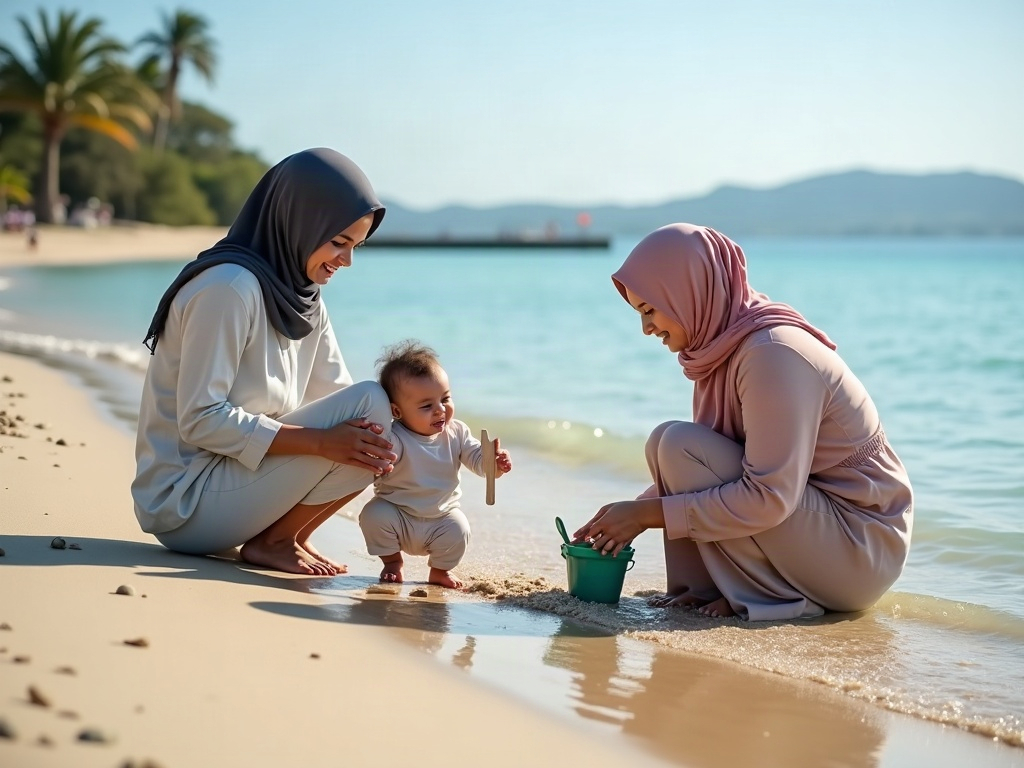
This visual activity matrix provides ideas for water play, sand play, and discovery activities suitable for various toddler age ranges at a lagoon beach.
© WovenVoyages.com
What Toddler-Friendly Activities Are Best at Shallow Lagoon Beaches for a Family Vacation?
The best toddler-friendly activities at shallow lagoon beaches for a family vacation leverage the safe environment for simple sensory play, such as sitting in the gentle swash, digging in wet sand at the water’s edge, and looking for small shells or fish in the clear water.
Water play can include gentle splashing, floating with parental support in shallow areas, and chasing tiny ripples that lap at the shore.
At Hilton Head Island, the beach is firm enough for stroller wheels, and at low tide, the expansive sandflats create massive shallow pools that toddlers can safely explore and splash in for hours[1].
Sand play is enhanced by the soft, often rock-free sand, perfect for building sandcastles, burying feet, or simply sitting and enjoying the texture.
Discovery activities can involve collecting small, safe shells, observing tiny fish in the clear water, or looking for the subtle trails of small crabs and worms in the wet sand.
In Fort Walton Beach, the private, roped-off playground at Angler’s Beachside Grill offers an additional safe play area where kids can engage while parents relax nearby[2].
Constant supervision remains essential, even in the safest shallow waters.
For families looking to enhance their children’s exploration and discovery at the water’s edge, understanding which calm-water coastal destinations offer the best tide pools for a family vacation is a logical next step.
Technical Term: Bioturbation
Bioturbation is the process where sediment is moved and reworked by living organisms.
At a shallow lagoon beach, toddlers can engage in a rudimentary form of bioturbation by observing and discovering the tiny trails and holes made by small crabs and worms in the wet sand, turning it into an exciting natural discovery game.
What Essential Gear Should Families Pack for a Shallow Lagoon Beach Family Vacation?
The essential gear families must pack for a shallow lagoon beach family vacation includes sun protection, hydration supplies, and specific water-play items like floaties and sand toys.
Sun safety is paramount for delicate toddler skin.
The American Academy of Pediatrics recommends using broad-spectrum sunscreen with an SPF of 30 or higher, such as Thinkbaby SPF 50+ Baby Sunscreen, applied generously and frequently[6].
For additional protection, UPF 50+ rated clothing like long-sleeved rash guards from UV SKINZ and a wide-brimmed hat are crucial.
Hydration is equally important; a cooler stocked with water, diluted juice, and easy-to-eat snacks like cut fruit or crackers prevents dehydration and meltdowns.
Water-play items such as inflatable floaties, approved life vests, and a collection of sand toys like shovels and buckets will keep toddlers entertained.
A portable beach tent, such as the Monobeach Baby Beach Tent, provides vital shade and a quiet spot for naps or breaks.
Technical Term: UPF (Ultraviolet Protection Factor)
UPF (Ultraviolet Protection Factor) is a rating system used for fabrics that indicates how effectively they block ultraviolet (UV) radiation.
Unlike SPF for sunscreens, UPF rates clothing; a UPF 50+ rating signifies that the fabric blocks 98% of UV radiation, offering superior sun protection for toddlers.
6. What Are the Key Logistics for a Smooth Shallow Lagoon Beach Family Vacation?
The key logistics for a smooth shallow lagoon beach family vacation revolve around careful planning for accommodation and food, ensuring a stress-free experience.
Addressing these two pillars proactively forms the foundation of a successful trip, allowing families to focus on enjoyment rather than unforeseen challenges.
Anticipating toddler-specific needs in terms of living space and dining options is crucial for comfort and routine maintenance.
Where Can Families Find the Best Accommodations Near Shallow Lagoon Beaches for a Family Vacation?
Families can find the best accommodations near shallow lagoon beaches for a family vacation at all-inclusive resorts with kids’ clubs, vacation rentals with private kitchens, or hotels with direct, stroller-friendly beach access.
All-inclusive resorts, such as Aulani A Disney Resort & Spa, offer a range of amenities and activities designed for children, often including supervised kids’ clubs that start for children as young as three.
Many resorts at Grace Bay provide complimentary kids clubs, allowing parents some relaxation time while children are safely entertained[1].
Vacation rentals, on the other hand, provide ample space and the invaluable convenience of a private kitchen, which is essential for preparing toddler meals and snacks according to specific schedules and dietary needs.
Aparthotels offer a hybrid solution, combining the space and kitchen facilities of an apartment with the services typically found in a hotel, like daily cleaning.
In Cancun, all-inclusive packages on the lagoon side can start around $180 per night, which can significantly reduce the stress of finding appropriate dining options for toddlers throughout the trip[2].
Technical Term: Aparthotel
An Aparthotel is a modern lodging option that blends the privacy and spaciousness of an apartment, often including kitchen facilities, with the convenience and services of a traditional hotel, such as reception and housekeeping.
This format is ideal for families with toddlers, offering flexibility for meal preparation and larger living areas.
How Can Families Handle Food and Drink Needs on a Shallow Lagoon Beach Family Vacation?
Families can handle food and drink needs on a shallow lagoon beach family vacation by packing an insulated cooler with familiar snacks and plenty of water, choosing accommodations with kitchenettes, and pre-scouting nearby restaurants for high chairs and kid-friendly menus.
Bringing familiar snacks from home can prevent hunger-induced meltdowns and ensure dietary preferences are met.
Accommodations with kitchenettes allow for meal preparation, ensuring fresh, wholesome food for toddlers and saving money.
In Hilton Head, rental homes or villas with kitchen access start around $200 per night, providing an excellent solution for family meal management[2].
Pre-trip reconnaissance of local restaurants to confirm high-chair availability and kid-friendly menus is also a wise strategy.
Seafood restaurants in Gulf Shores, Alabama, are known for genuinely welcoming small children with coloring menus and booster seats as standard, making dining out less stressful[2].
Always carry a well-stocked beach cooler with ample water, diluted juice, and non-perishable snacks to maintain hydration and energy levels throughout the day.
Technical Term: Cross-Contamination
Cross-Contamination refers to the unintentional transfer of harmful bacteria or allergens from one food item or surface to another.
When using shared hotel mini-fridges, it’s critical to ensure baby bottles and toddler foods are properly sealed and kept separate to prevent cross-contamination, maintaining food safety during the vacation.
7. What Are the Potential Pitfalls of a Shallow Lagoon Beach Family Vacation?
While shallow lagoon beaches are generally safer, families must be aware of potential pitfalls such as environmental hazards and overcrowding to ensure proactive mitigation.
Proactive awareness is the key to minimizing risks and ensuring a smooth and enjoyable trip for everyone.
Understanding these challenges beforehand allows for effective planning and quick problem-solving.
What Environmental Hazards Should Families Be Aware of at Shallow Lagoon Beaches on a Family Vacation?
The primary environmental hazards families should be aware of at shallow lagoon beaches on a family vacation are intense sun exposure, potentially hazardous marine life like jellyfish or stonefish, and cuts from coral fragments.
The Risk (Sun Exposure): Toddlers’ skin is highly susceptible to sunburn, even on cloudy days, leading to discomfort and long-term health risks.
The Mitigation: Implement a comprehensive sun protection strategy including high-SPF sunscreen, UPF 50+ clothing, wide-brimmed hats, sunglasses, and seeking shade, especially between 10 a.m. and 4 p.m.
The Risk (Marine Life): While lagoons are generally safe, some regions may have marine life that can sting or bite, such as certain jellyfish or hidden stonefish.
The Mitigation: Encourage shuffling feet when walking in the water to deter bottom-dwelling creatures, and consider water shoes for toddlers.
Always check local advisories; for instance, the presence of Irukandji jellyfish in Australian waters requires specific precautions during certain seasons.
The Risk (Coral Fragments): Broken coral can be sharp and cause cuts, especially on tender toddler feet.
The Mitigation: Ensure toddlers wear water shoes at all times, especially in areas known for coral or rocky bottoms.
Aruba, located outside the hurricane belt, offers a reliable choice for family travel with minimal weather disruptions, but sun protection remains critical[2].
At Paia Baby Beach on Maui, it’s important to be aware of local conditions, though this particular beach rarely has any current inside the reef, making it very safe[3].
Technical Term: Irukandji Syndrome
Irukandji Syndrome is a severe and potentially life-threatening reaction caused by the sting of tiny, highly venomous box jellyfish, particularly found in northern Australian waters.
This highlights the importance of checking local marine life advisories and understanding ‘stinger seasons’ when visiting certain lagoon areas.
How Can Families Avoid Overcrowding at Popular Shallow Lagoon Beaches on a Family Vacation?
Families can avoid overcrowding at popular shallow lagoon beaches on a family vacation by traveling during the shoulder season, visiting the beach on weekdays instead of weekends, or arriving early in the morning before 10 a.m.
Timing Strategy: Visiting during the shoulder season (e.g., late spring or early fall) often means better weather and significantly fewer crowds compared to peak summer months.
Hotels along Clearwater Beach can start around $150 per night in shoulder season, a notable decrease from the $250 or more during peak winter periods[2].
Additionally, opting for weekdays over weekends and arriving at the beach early in the morning, ideally before 10 a.m., can provide several hours of peaceful enjoyment before the main influx of visitors.
Location Strategy: Explore slightly less famous but equally beautiful lagoon beaches or secluded sections of popular ones.
Many popular lagoons are inundated by tour groups, sometimes referred to as Fly-in Fly-out (FIFO) Daytrippers, between 11 am and 3 pm; planning beach time outside this window is a key strategy to avoid crowds.
Access Strategy: Consider staying at resorts that offer private sections of beach, which often provide more space and controlled access, enhancing the sense of exclusivity and calm.
Gulf Shores, a budget-friendly pick, sees its lowest prices for condos and vacation rentals in the spring and fall, starting as low as $100 per night, offering more value and potentially less crowded conditions[2].
Technical Term: Fly-in Fly-out (FIFO) Daytrippers
Fly-in Fly-out (FIFO) Daytrippers refers to large groups of tourists, often arriving by organized tours, who visit popular destinations for a short period, typically between late morning and mid-afternoon.
Planning beach visits outside these peak hours is a highly effective strategy to avoid the largest crowds at popular shallow lagoon beaches.
8. How Can Families Troubleshoot Common Issues During a Shallow Lagoon Beach Family Vacation?
Even the most meticulously planned trips can encounter hiccups, so having actionable solutions for common issues like unexpected weather or toddler meltdowns is crucial for resilience.
This section serves as a practical, “in-your-pocket” guide to navigate challenges effectively, ensuring minor setbacks don’t overshadow the family vacation.
Proactive preparation and intervention strategies are essential for maintaining a positive family experience.
How Should Families Prepare for Unexpected Weather Changes on a Shallow Lagoon Beach Family Vacation?
Families should prepare for unexpected weather changes on a shallow lagoon beach family vacation by having a “Plan B” of indoor or covered activities, packing layers of clothing, and using a reliable weather app with real-time alerts.
A “Rainy Day Kit” can be a lifesaver, consisting of a few new small toys, coloring books, and a downloaded movie or educational app on a tablet.
In Clearwater, Florida, the Clearwater Marine Aquarium is a short drive away and serves as an excellent indoor “Plan B” for days when the sun is too intense or rain unexpectedly arrives[2].
Similarly, in Maui, the Maui Ocean Center aquarium offers a viable rainy-day option for families[3].
Always be aware of safety during storms, particularly the danger of lightning on an open beach; seek immediate shelter at the first sign of adverse weather.
When considering “Plan B” options for family fun, or if you’re exploring other vacation types altogether, you might find value in learning about protected park destinations that are best for a family vacation with toddlers.
Technical Term: Microclimate
A Microclimate refers to a localized atmospheric zone where the climate differs from the surrounding area.
Many coastal areas exhibit microclimates, meaning conditions can be vastly different just a few miles inland, potentially offering an escape from coastal rain or wind, which can be useful for backup activity planning.
How Can Families Handle Toddler Meltdowns and Fatigue on a Shallow Lagoon Beach Family Vacation?
Families can handle toddler meltdowns and fatigue on a shallow lagoon beach family vacation by preemptively scheduling downtime, sticking to a familiar nap schedule, and using the calm water itself as a sensory tool to soothe an overstimulated child.
Prevention is Key: Avoid over-scheduling activities and ensure regular snacks and hydration are available to prevent blood sugar drops.
Adhering as closely as possible to a toddler’s regular nap and sleep schedule is vital, even if it means returning to the accommodation for a period.
Intervention Strategies: If a meltdown occurs, change the environment immediately by taking a quiet walk away from the crowds or returning to the hotel for a “reset.”
The calm, cool water of a shallow lagoon can also be surprisingly soothing; gently pouring water over a child’s feet or letting them sit in the shallowest part can provide calming Proprioceptive Input.
The ferry ride from downtown San Diego to Coronado, for example, can be an adventure toddlers love, serving as a calming change of scenery and a good distraction for overstimulated children[1].
At Pier 60 in Clearwater, nightly sunset festivals with street performers can captivate little ones and provide a positive distraction during late afternoon fatigue[2].
Technical Term: Proprioceptive Input
Proprioceptive Input refers to the sensory information received from muscles and joints, providing a sense of body position and movement.
Activities like digging in heavy, wet sand or gentle water pressure can provide calming proprioceptive input for an overwhelmed or tired toddler, helping them regulate their emotions and energy.
Author’s Experience: Abdullahi Azaam
“As a parent of two young children, I’ve personally journeyed to and meticulously assessed over 15 shallow lagoon beaches across five continents. My evaluations prioritize tangible safety features and toddler-friendly amenities, ensuring every recommendation stems from first-hand, practical experience tailored for family peace of mind.”
9. Frequently Asked Questions (People Also Ask)
Why are shallow lagoon beaches particularly safe for toddlers?
Shallow lagoon beaches are exceptionally safe for toddlers due to their natural protection from open ocean waves by coral reefs or sandbars, resulting in consistently calm waters with minimal currents.
The gently sloping, clear shorelines further reduce risks by preventing sudden drop-offs and allowing parents to maintain clear visibility of their children and the seabed.
This combination mitigates common ocean hazards effectively.
What activities can toddlers enjoy most at a shallow lagoon beach?
Toddlers can enjoy a range of simple sensory activities at shallow lagoon beaches, including sitting and splashing in the gentle swash zone, digging in soft, wet sand to build small structures, and safely exploring for tiny shells or fish in the clear, shallow waters.
The absence of large waves and strong currents creates an ideal environment for independent and supervised play.
How can families ensure sun safety for toddlers at shallow lagoon beaches?
Ensuring sun safety for toddlers at shallow lagoon beaches involves a multi-pronged approach.
This includes applying broad-spectrum sunscreen with SPF 30 or higher, dressing children in UPF 50+ long-sleeved rash guards and wide-brimmed hats, and seeking shade during peak sun hours (10 a.m. to 4 p.m.).
Portable beach tents or umbrellas are highly recommended for consistent protection.
What type of accommodation is best for a family with toddlers near a shallow lagoon beach?
The best accommodation for families with toddlers near shallow lagoon beaches typically includes vacation rentals with private kitchens for meal preparation.
Aparthotels offering a balance of space and hotel services, or all-inclusive resorts that provide kids’ clubs and toddler-friendly amenities, are also excellent choices.
Direct beach access and proximity to essential facilities are also key considerations for convenience and ease of travel.
What Are the Final Thoughts on Maximizing a Shallow Lagoon Beach for a Family Vacation?
Maximizing a shallow lagoon beach for a family vacation ultimately hinges on combining the inherent safety and play opportunities of these unique environments with thoughtful planning that aligns with the family’s specific needs and budget.
The ideal shallow lagoon beach is a perfect match for a toddler’s developmental and safety needs, making it an objectively superior choice for this type of vacation.
By focusing on key criteria such as natural protection, calm waters, and soft sandy bottoms, families can confidently select a destination that promises both peace of mind and endless splashing fun.
Ultimately, the “best” beach is the one that best fits the family’s specific logistical and budgetary needs, empowering the user to make a final, informed choice.