Which Beach Destinations Feature the Best Coral Reefs for a Family Vacation?
Table of Contents
The best beach destinations with coral reefs for a family vacation are Australia’s Great Barrier Reef, Belize’s Ambergris Caye, and the Maldives, as they offer the most reliable combination of accessible, shallow reef systems and family-oriented infrastructure.
These prime locations feature calm, protected lagoons, making them suitable for children and novice snorkelers, ensuring a safe and enjoyable introduction to marine life.
They host vibrant, well-documented marine ecosystems, providing engaging and educational encounters with diverse species like Parrotfish and Clownfish.
A high density of certified tour operators is available, offering supervised activities such as guided snorkeling and glass-bottom boat tours, which are ideal for families.
Selecting a beach destination with coral reefs for a family vacation offers an unparalleled opportunity for hands-on learning and adventure, contrasting sharply with passive beach experiences.
Such trips merge the relaxation of a beach holiday with the excitement of marine exploration, appealing to families seeking both leisure and educational value.
Understanding the unique characteristics of different reef types and destinations is crucial for tailoring the perfect family adventure, whether it involves the sprawling wonders of the Great Barrier Reef Marine Park or the intimate charm of Ambergris Caye.
1. What Makes Coral Reef Beach Destinations Ideal for a Family Vacation?
Coral reef beach destinations present an exceptional choice for a family vacation, offering a unique combination of natural beauty, educational opportunities, and recreational activities that cater to all ages.
Unlike traditional beach holidays, these locations provide a living classroom where families can directly observe marine biodiversity and learn about delicate ecosystems.
The calm, shallow waters often associated with coral reefs create a safe environment for younger children and less experienced swimmers to engage in snorkeling and other water activities.
The vibrant colors and diverse inhabitants of a coral reef, including species like the Parrotfish and the iconic Clownfish, offer endless fascination and photo opportunities.
Furthermore, many coral reef destinations are committed to marine conservation, offering structured programs and guided tours that educate families on responsible tourism and the importance of protecting these underwater wonders.
This focus on eco-tourism provides a deeper, more meaningful travel experience beyond mere sightseeing.
Exploring broader options for coastal destinations for a family vacation might provide additional insights.
What Types of Coral Reef Environments Are Best for a Family Vacation?
The best coral reef environments for a family vacation are shallow fringing reefs and calm, protected lagoons, as these minimize risks from strong currents and offer easy entry from the beach.
Fringing Reef: This is a type of coral reef that grows directly from the shore, creating a shallow, calm channel of water between the reef and the land, ideal for young or inexperienced snorkelers.
These reefs provide immediate access to marine life without the need for boat transfers, which can be advantageous for families with young children.
Protected lagoons, often found in destinations like the Maldives, offer exceptionally calm waters, perfect for peaceful snorkeling and wading.
The Florida Keys National Marine Sanctuary protects 2,900 square nautical miles of waters surrounding the Keys, showcasing diverse reef types and opportunities for family exploration.[1]
While barrier reefs, such as the Great Barrier Reef Marine Park or the Belize Barrier Reef Reserve System, are magnificent, their outer sections can be exposed to stronger currents, necessitating careful selection of specific family-friendly sites.
Locations like Ambergris Caye in Belize offer accessible sections of the barrier reef ideal for guided family excursions.
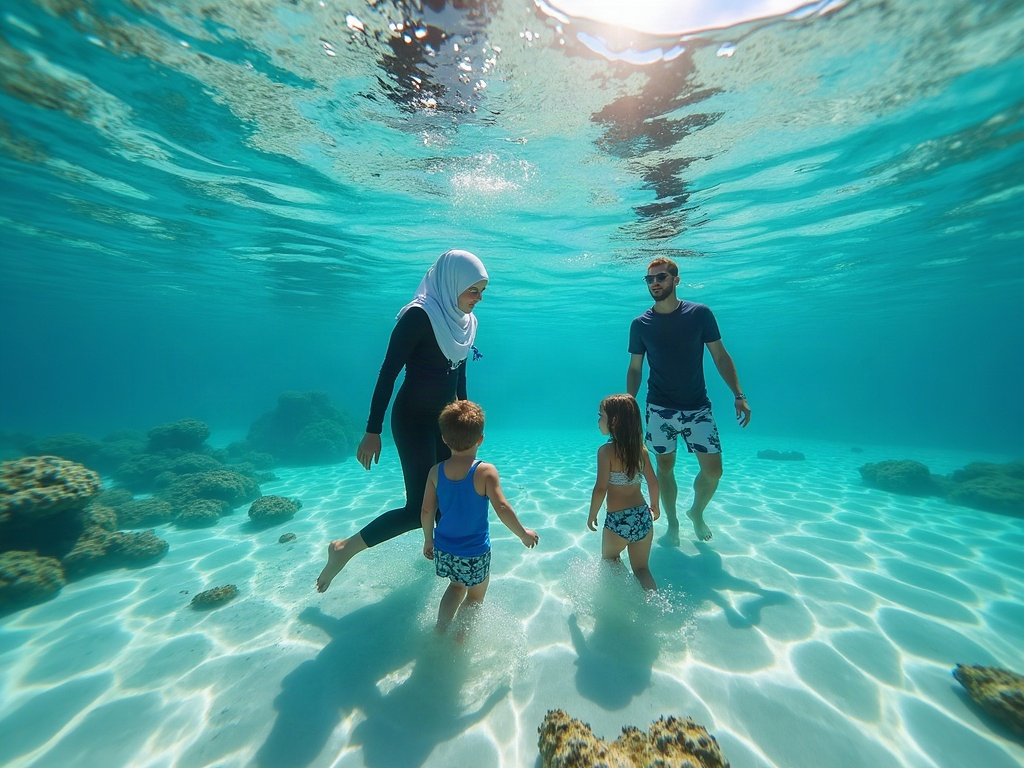
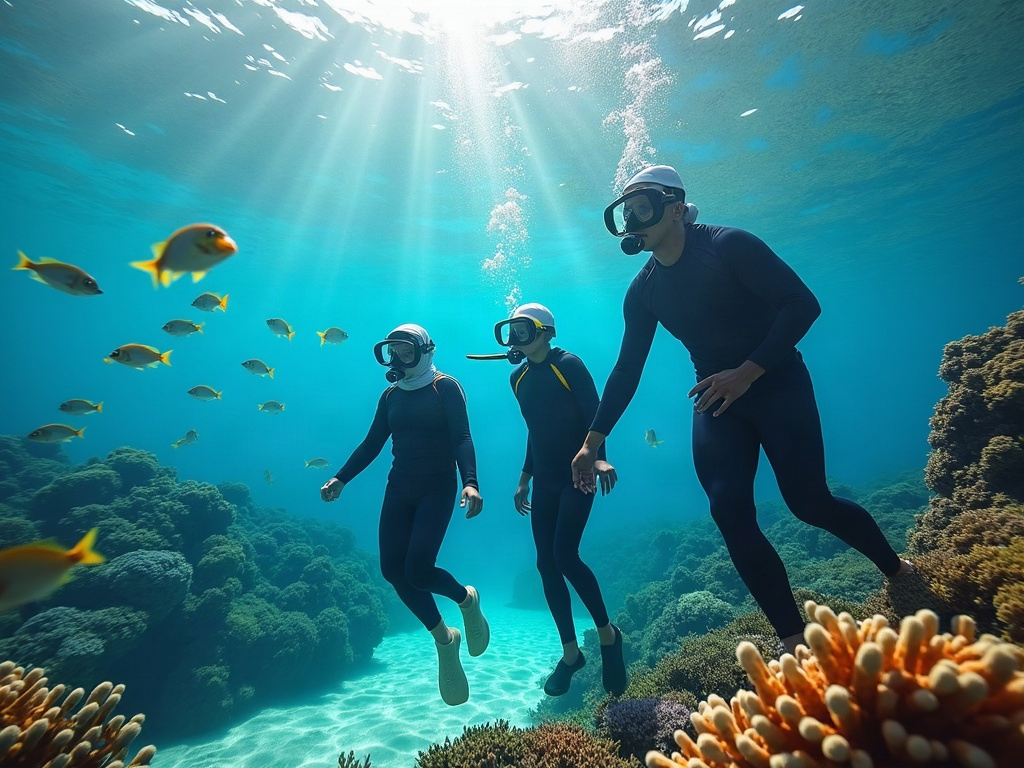
A family, including young children, safely snorkeling in the tranquil, protected waters of a coral reef lagoon, highlighting easy accessibility and vibrant marine life.
© WovenVoyages.com
How Do Coral Reefs Enhance a Family Vacation Experience?
Coral reefs enhance a family vacation experience by providing a dynamic, interactive environment that fosters shared discovery and a direct connection with nature, unlike static resort amenities.
Families can witness an astonishing array of vibrant fish, such as the colorful Parrotfish, and observe the fascinating behavior of species like the Clownfish nestled within anemones.
The underwater world offers a sensory richness, from the gentle sway of sea fans to the subtle sounds of the ocean, creating truly immersive experiences.
On Padre Island National Seashore, wildlife enthusiasts can keep an eye out for some 360 bird species and sea turtles, demonstrating the broader ecological richness connected to marine environments.[3]
Bio-fluorescence is the phenomenon where marine organisms absorb and re-emit light in different colors; this spectacular event can be witnessed on guided night snorkeling tours, adding a unique and “magical” element to the family experience.
These unique encounters create lasting memories and foster a sense of wonder and respect for the natural world among family members.
What Educational Opportunities Do Coral Reefs Offer During a Family Vacation?
Coral reefs offer direct educational opportunities during a family vacation by serving as living laboratories for teaching marine biology, ecosystem interdependence, and the tangible impacts of climate change.
These underwater ecosystems provide an unparalleled setting for practical learning about the natural world.
Learning about marine life through direct observation is significantly more impactful than classroom instruction.
According to geologists, Oahu has lost 25 percent of its shoreline due to development and other factors, highlighting the delicate balance of coastal ecosystems.[3]
Symbiotic Relationship: This is a relationship, exemplified by Clownfish and anemones, where two different species cooperate to survive, providing a simple yet powerful lesson in ecology for children.
Many destinations partner with organizations like the NOAA Coral Reef Conservation Program to offer educational tours focused on marine biology, food webs, and the critical importance of conservation efforts.
Families can actively participate in educational programs, such as junior marine biologist camps or guided eco-tours, which provide hands-on experiences.
These opportunities instill a sense of environmental stewardship and encourage responsible behavior towards marine environments.
To ensure every family member, from toddlers to grandparents, enjoys the trip, it’s helpful to research beach destinations best for a multigenerational family vacation.
2. How Can Families Choose the Best Coral Reef Destination for a Family Vacation?
Choosing the ideal coral reef destination for a family vacation requires careful consideration of various factors to match the unique needs and preferences of each family.
The “best” destination is highly subjective and depends on criteria such as the age of the children, desired activity levels, budget, and travel time.
Families should prioritize destinations known for their accessible, shallow reef systems and robust family-friendly infrastructure, ensuring safety and enjoyment for all members.
Researching local regulations and conservation efforts, particularly regarding reef-safe sunscreen, can also guide responsible choices.
A comparative approach, evaluating destinations based on specific features, is highly recommended to make an informed decision.
| Destination | Reef Accessibility (Shore/Boat) | Best For Ages | Typical Water Calmness (1-5) | Availability of Family Resorts |
|---|---|---|---|---|
| Great Barrier Reef, Australia | Mostly boat (pontoon access to inner reefs) | 5+ (inner reefs), 10+ (outer reefs) | 4 | High (Cairns/Port Douglas area) |
| Ambergris Caye, Belize | Boat (short rides to reef) | 5+ | 4 | High (many options with kids’ clubs) |
| Maldives | Shore (house reefs) & Boat | 3+ | 5 | High (many resorts geared for families) |
| Grand Cayman, Cayman Islands | Boat (Stingray City, shallow sites) | 4+ | 4 | Medium to High |
| Turtle Bay, Mauritius | Shore (protected lagoon) | 2+ | 5 | High (resorts with direct beach access) |
A family utilizing a comparison chart on a tablet to evaluate potential coral reef destinations, symbolizing informed decision-making for their travel plans.
© WovenVoyages.com
Which Are the Top Coral Reef Beach Options for a Family Vacation?
The top coral reef beach options for a family vacation, balancing accessibility, safety, and amenities, are Grand Cayman (Cayman Islands), Bora Bora (French Polynesia), and Nusa Lembongan (Indonesia).
These destinations consistently rank high for their protected waters and diverse marine life.
Grand Cayman is celebrated for its famous Seven Mile Beach and accessible sites like Stingray City, offering unique interactive experiences with marine creatures in shallow waters.
Bora Bora‘s iconic lagoon provides sheltered, clear waters perfect for families, with resorts offering direct access to calm snorkeling spots and the Bora Bora Lagoonarium for contained wildlife viewing.
Nusa Lembongan, a smaller island near Bali, offers a more laid-back atmosphere with pristine reefs and excellent snorkeling suitable for families seeking adventure away from crowds.
A Reef Flat is the shallow, flat-topped area of a reef closest to the shore, which is often exposed at low tide and allows for “tide pooling,” a safe activity for very young children.
U.S. News ranks Maui as the #2 Best U.S. Beach, citing its bounty of beautiful Hawaiian beaches, which often have nearby accessible reef areas.[3]
If you’re considering the ultimate relaxation alongside reef exploration, you might also be interested in which tropical island destinations have the best resorts for a family vacation.
What Are the Best Coral Reef Destinations for Young Children on a Family Vacation?
The best coral reef destinations for a family vacation with young children are those with expansive, shallow lagoons and walk-in beach access, specifically including Turtle Bay in Mauritius and the protected areas of Aqaba, Jordan.
These locations prioritize safety and ease of access, which are paramount for families with toddlers and preschoolers.
Po’ipū Beach Park on Kaua’i’s southern coast offers shallow, family-friendly waters ideal for young children, featuring minimal wave action.[3]
Turtle Bay, Mauritius, provides protected lagoons with gentle currents and zero-entry shorelines, allowing even the youngest children to wade and play safely.
The calm waters of Aqaba, Jordan, particularly within its marine park, offer clear, shallow entry points to vibrant reefs, often accompanied by well-maintained public beaches.
Many resorts in these areas offer child-sized life vests and specific activities tailored for younger ones, such as marine-themed play areas.
A Glass-Bottom Boat is not just a boat with a glass floor, but a “dry” reef exploration tool that allows toddlers and non-swimmers to observe the marine ecosystem without entering the water.
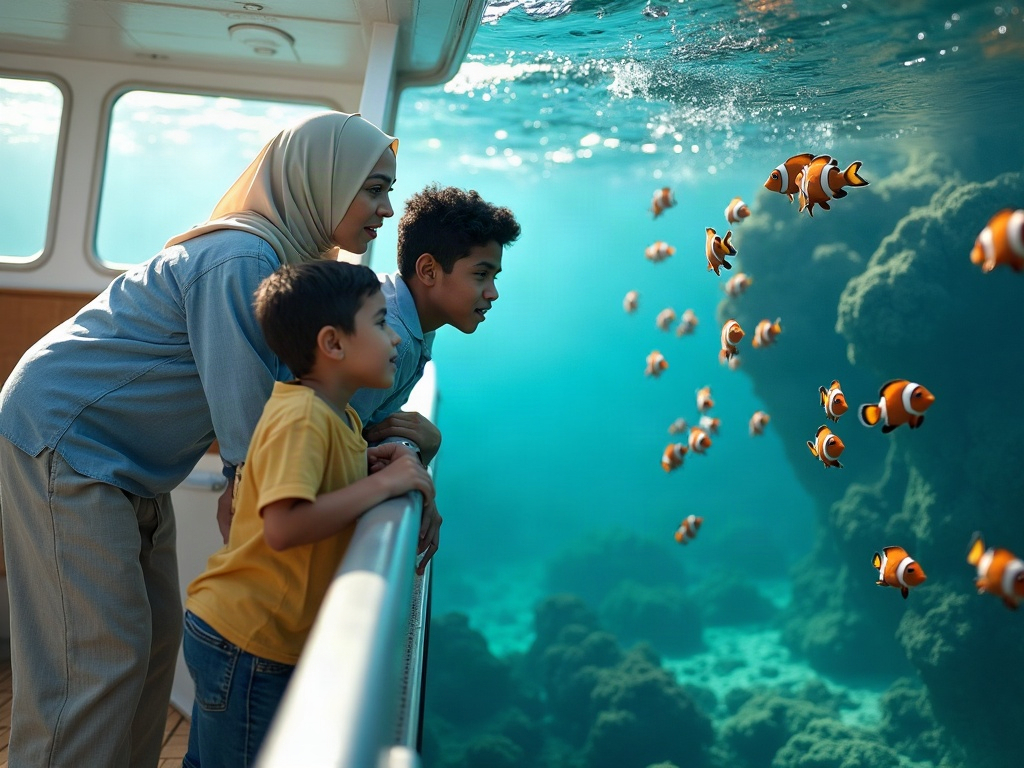
Young children delighting in the underwater world from the safety and comfort of a glass-bottom boat, an ideal activity for non-swimmers or very young toddlers.
© WovenVoyages.com
For families with very young children, understanding calm-water coastal destinations with the best tide pools can be a perfect complement to reef exploration.
3. How Can Families Maximize Their Coral Reef Experience During a Family Vacation?
Maximizing a coral reef family vacation involves strategic planning and embracing diverse activities that cater to all age groups and interests within the family.
Pre-trip preparation, including education about the marine environment, can significantly enhance the on-site experience and foster deeper appreciation.
Engaging with certified guides and choosing age-appropriate tours ensures both safety and optimal learning opportunities.
Booking guided excursions in advance, especially with PADI (Professional Association of Diving Instructors) certified operators, is advisable during peak seasons to secure spots.
Encouraging interactive learning, such as identifying different fish species, transforms sightseeing into an active scavenger hunt, making it more engaging for children.
| Activity | Recommended Age | Gear Required | Pro Tip |
|---|---|---|---|
| Snorkeling | 5+ (supervised), 10+ (independent) | Mask, Snorkel, Fins, Life Vest | Practice in a pool first; ensure proper mask fit to avoid leaks. |
| Glass-Bottom Boat Tour | All ages (especially 2-6) | None | Choose tours with knowledgeable guides for educational commentary. |
| Junior Marine Biologist Program | 7+ | Enclosed shoes, hat, water bottle | Look for programs endorsed by organizations like NOAA Coral Reef Conservation Program. |
| Underwater Photography/Videography | 10+ | Waterproof camera or phone case | Learn basic photography skills to capture stunning marine memories. |
A family participating in a guided snorkeling tour, emphasizing the safety and educational benefits of exploring coral reefs with certified professionals.
© WovenVoyages.com
What Are the Best Activities for Kids and Parents on a Coral Reef Family Vacation?
The best activities for a coral reef family vacation are those that allow for varying levels of engagement simultaneously, such as guided family snorkeling tours where parents can explore deeper areas while children stay in the shallows with a guide.
Guided tours often provide specialized equipment and safety briefings, crucial for an enjoyable experience.
In the Florida Keys, families can look for tour operators that are Blue Star recognized for responsible and sustainable tourism.[1]
A Buddy System is a mandatory safety protocol in snorkeling and diving where two people are paired together and are responsible for monitoring each other’s safety and position in the water at all times.
For toddlers (ages 2-4), engaging in tide pooling along the shore, using glass-bottom boats, or simply playing in shallow, calm waters provides safe sensory experiences.
Young children (ages 5-9) can benefit from guided snorkeling in very shallow, protected areas, marine-themed craft activities at resorts, and visits to local aquariums.
Teens and parents (ages 10+) can enjoy more extensive snorkeling excursions, introductory scuba diving lessons (often with PADI certification options), and participate in coral restoration projects.
Author’s Experience: Abdullahi Azaam Adan
“As a parent and avid traveler, I’ve seen firsthand how a well-planned coral reef trip transforms children’s understanding of our oceans. Guiding my own children through the vibrant ecosystems of the Great Barrier Reef Marine Park fostered a deep sense of connection and responsibility that no textbook could ever achieve.”
What Essential Gear and Safety Measures Are Needed for a Coral Reef Family Vacation?
The most essential gear for a coral reef family vacation includes reef-safe sunscreen containing non-nano zinc oxide, properly fitting masks for all family members, and full-body rash guards to prevent both stings and sunburn.
Preparing with the right equipment ensures both safety and enjoyment for the entire family.
A well-fitting snorkel mask prevents water leakage, which is a primary cause of panic for first-time child snorkelers.
Reef-Safe Sunscreen is formulated without chemicals like oxybenzone and octinoxate, which have been scientifically shown in studies published in journals like *Science* to cause coral bleaching and damage marine DNA.
Rash guards offer crucial UV protection and minimize contact with potential irritants in the water.
At Makena Beach, the waves can be powerful and the currents strong, so it’s not recommended for inexperienced swimmers, underscoring the need for awareness of local conditions.[3]
Other essential items include water shoes to protect feet from sharp coral or rocks and a small, dry bag for valuables.
Family Reef Safety Kit Checklist
- ☐ Properly fitted snorkeling masks and snorkels for each family member.
- ☐ Fins appropriate for each person’s foot size.
- ☐ Full-body rash guards (with UPF protection) for sun and sting protection.
- ☐ Reef-safe sunscreen (mineral-based with non-nano zinc oxide or titanium dioxide).
- ☐ Water shoes or reef booties.
- ☐ Basic first-aid kit with antiseptic wipes, bandages, and a small bottle of white vinegar for minor stings.
- ☐ A whistle for each person for emergencies.
- ☐ Reusable water bottles to stay hydrated.
For families eager to discover the diverse creatures inhabiting these underwater worlds, consider reviewing beach destinations offering the best marine wildlife for a family vacation.
4. What Are the Common Challenges and Risks of a Coral Reef Family Vacation?
While incredibly rewarding, a coral reef family vacation comes with potential challenges and risks that require proactive awareness and preparation.
Understanding these challenges is the first step towards mitigating them, ensuring a safe, responsible, and enjoyable trip for everyone.
The primary concerns typically fall into two categories: environmental/safety risks within the marine ecosystem and health/logistical risks related to travel and personal well-being.
These can range from encounters with marine life to sunburn, dehydration, and unexpected travel disruptions.
Responsible eco-tourism practices are essential to protect the delicate reef environment while simultaneously protecting one’s family.
A crucial warning sign educating visitors on responsible interaction with coral reefs, highlighting common environmental and safety concerns.
© WovenVoyages.com
How Can Families Mitigate Environmental and Safety Concerns on a Coral Reef Family Vacation?
Families can mitigate environmental and safety concerns on a coral reef family vacation by adopting a strict “look, don’t touch” policy and exclusively choosing tour operators with verified eco-certifications.
Educating children about reef etiquette before entering the water is paramount to protecting both them and the fragile ecosystem.
Always maintain a distance of at least 3 feet from coral formations and marine life; touching coral scrapes off its protective mucus layer, making it vulnerable to disease.
Never stand on or touch any coral, as it can easily be damaged and takes decades to recover.
More than 70 percent of the beach on the Hawaiian island of Kauai is eroding, partly because of the construction of seawalls and jetties, emphasizing human impact on coastal areas.[3]
Coral Bleaching is the process where corals, under stress from factors like increased water temperature or pollution, expel the symbiotic algae living in their tissues, causing them to turn completely white and increasing their risk of death.
Choosing operators that adhere to strict environmental guidelines, perhaps recognized by the NOAA Coral Reef Conservation Program, ensures that your family’s visit contributes positively to conservation efforts.
Reef Etiquette: Dos and Don’ts
- ✓ Do: Maintain a respectful distance from all marine life.
- ✓ Do: Use only reef-safe sunscreen.
- ✓ Do: Secure all gear to prevent it from dropping and damaging the reef.
- ✗ Don’t: Touch, stand on, or collect coral or other marine organisms.
- ✗ Don’t: Feed fish, as this disrupts their natural feeding behaviors.
- ✗ Don’t: Kick up sand or stir sediment, which can smother corals.
These simple guidelines help preserve the beauty and health of the reefs for future generations.
What Health and Logistical Precautions Should Families Take for a Coral Reef Family Vacation?
The primary health precautions for a coral reef family vacation involve preventing severe sunburn, dehydration, and minor marine stings by using protective wear and carrying a basic first-aid kit with vinegar for jellyfish stings.
Prolonged exposure to tropical sun can lead to severe sunburn and heatstroke, especially for children.
Rash Guard: This is a snug-fitting athletic shirt made of spandex, nylon, or polyester, designed to protect the skin from sun exposure (UPF), abrasions from sand or gear, and stings from small marine organisms like sea lice.
Dehydration is another common risk in warm climates, necessitating constant fluid intake.
At Cape Lookout National Seashore, swimming is allowed as long as there isn’t a rip current advisory in effect, which are posted at park visitor centers, emphasizing the importance of heeding local warnings.[3]
Minor marine stings from jellyfish or sea urchins can occur; prompt treatment with a basic first-aid kit is essential.
Families should also consider travel insurance that covers marine-related medical emergencies, especially when traveling with children.
Essential Health & Logistical Pre-travel Checklist
- ☐ Consult with a healthcare professional regarding recommended vaccinations for the destination.
- ☐ Pack a comprehensive first-aid kit, including over-the-counter pain relievers, anti-itch cream, and any necessary prescription medications.
- ☐ Bring plenty of high-SPF reef-safe sunscreen and broad-brimmed hats.
- ☐ Ensure all family members have adequate hydration bottles and drink water regularly.
- ☐ Purchase travel insurance that specifically covers medical emergencies and potential evacuations.
- ☐ Research local emergency contacts and medical facilities prior to arrival.
- ☐ Keep copies of passports, visas, and important documents in a separate, secure location.
5. References & Sources
6. Frequently Asked Questions (People Also Ask)
What is the primary benefit of a coral reef vacation for families?
How can families ensure safety while snorkeling in coral reefs?
What are the most family-friendly coral reef destinations?
Why is reef-safe sunscreen important for a coral reef family vacation?
What Are the Final Thoughts on Maximizing a Beach Destinations with Coral Reefs for a Family Vacation?
A successful coral reef family vacation hinges on informed planning and responsible behavior, balancing adventure, education, and safety.
Choosing the right destination for your family’s specific needs and acting as a responsible visitor to the marine environment ensures a rewarding experience that benefits both your loved ones and the delicate ecosystem.
While coral reefs offer unique natural wonders, families might also explore different types of trips, such as discovering the best urban destinations for a family vacation.