What Are the 6 Types of Family Vacation Destinations?
Table of Contents
The 6 primary types of family vacation destinations are Coastal, Urban, Wilderness, Extreme Landscape, Freshwater, and Rural.
Understanding these categories is critical for aligning a family’s specific needs with the destination’s inherent characteristics.
This involves considering the Environmental Diversity, which matches climate, terrain, and natural features to family preferences.
The Activity Spectrum defines the range of available activities, from relaxation to high adventure.
Finally, Logistical Complexity sets expectations for travel, accommodation, and accessibility.
1. Why Is Understanding Diverse Destination Types Crucial for a Family Vacation?
Understanding diverse destination types is crucial because it enables families to make informed choices that align expectations with realities, preventing mismatches in activity spectrum, logistical complexity, and environmental suitability.
This framework ensures a systematic approach to selecting the most appropriate vacation environment for specific family profiles, leading to higher satisfaction and fewer unexpected challenges.
By categorizing family vacation destinations into distinct types like Coastal, Urban, and Wilderness, families can objectively evaluate which environment best suits their travel objectives.
This strategic perspective moves beyond generic travel advice, focusing instead on the intrinsic characteristics of each destination type to ensure optimal alignment with family needs.
The World Travel & Tourism Council (WTTC) emphasizes data-driven decision-making in tourism, a principle highly applicable to family travel to ensure positive outcomes.
Choosing the right destination type significantly impacts the overall experience, from activity engagement to relaxation levels for all family members.

An infographic summarizing the 6 core destination types and their key characteristics, providing a visual decision-making framework for family vacation destinations.
© WovenVoyages.com
What Defines a Coastal Area for a Family Vacation?
A Coastal Area for a family vacation is a destination defined by its immediate proximity to an ocean or sea, with its core appeal rooted in saltwater-based recreation, marine ecosystems, and beach-centric infrastructure.
This environment focuses on activities such as swimming, surfing, and tide pooling, offering a blend of relaxation and water-based adventure.
Accommodation options often include resorts, condos, and vacation homes designed for family comfort.
Maui (Hawaii), Cancun, and the Algarve in Portugal are prime examples of this destination type, providing extensive sandy or rocky shores for family activities.
Cancun, a popular coastal destination, features 14 miles of beaches suitable for various family activities.[1]
The Littoral Zone, defined as the near-shore area of a sea where sunlight penetrates to the sediment, is where most family beach activities, such as tide pooling and shallow-water swimming, occur.
Families exploring specific options can explore top coastal destinations for a family vacation to find suitable locations for their needs.
For those seeking more opulent options, it’s beneficial to understand which tropical island destinations have the best resorts for a family vacation.
What Characteristics Make an Urban Center a Family Vacation Destination?
An Urban Center becomes a family vacation destination due to its high concentration of cultural institutions, diverse culinary scenes, robust public transportation networks, and varied entertainment options that cater to multiple age groups simultaneously.
This destination type offers a structured, man-made environment contrasting significantly with natural settings.
It provides unique educational opportunities and convenient access to attractions via extensive networks of subways and buses.
London (UK), New York City, and Tokyo exemplify urban family vacation destinations, each offering distinct cultural immersion.
In New York City, children aged 10 or older are recommended for tours of the 9/11 museum, highlighting age-specific cultural activities.
The concept of a Metropolitan Statistical Area (MSA) defines the functional boundaries of such urban destinations, encompassing areas with high population density and economic ties.
Families focused on cultural enrichment can discover the best urban destinations with world-class museums for a family vacation.
How Does a Wilderness Environment Cater to a Family Vacation?
A Wilderness Environment caters to a family vacation by offering immersion in undeveloped natural landscapes, where activities are centered on wildlife observation, physical challenges like hiking, and disconnection from urban infrastructure.
This destination type emphasizes self-reliance and the potential for managed risk, providing experiences focused on ecological exploration and outdoor adventure.
It stands distinct from more developed travel options, offering a chance to engage directly with nature.
Yellowstone National Park, the Canadian Rockies, and the Amazon Rainforest are exemplary wilderness family vacation destinations.
Planning for a trip to Yellowstone National Park can involve choosing from at least 15 kid-friendly hiking trails.
The term Backcountry refers to areas without maintained facilities or roads, demanding greater self-sufficiency compared to frontcountry areas.
For those prioritizing wildlife observation, it is beneficial to learn more about top safari destinations for a family vacation.
What Defines an Extreme Landscape as a Family Vacation Option?
An Extreme Landscape is defined as a family vacation option by its geologically unique and often harsh environments—such as deserts, polar regions, or high-altitude mountains—that demand specialized planning and offer highly specialized, science-focused experiences.
These destination types prioritize geological features over biological ecosystems, appealing to families seeking educational adventures and unique natural phenomena.
They often require specific preparedness due to their challenging conditions.
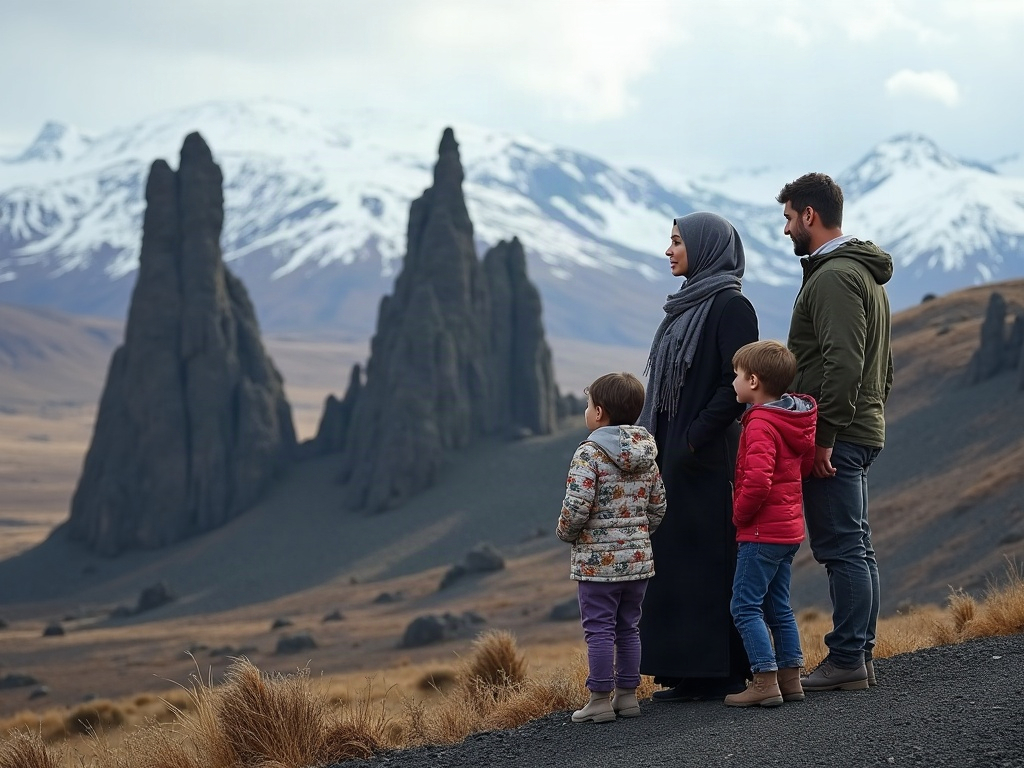
The Icelandic Highlands, the Atacama Desert, and Patagonia are excellent examples of extreme landscape family vacation destinations.
The best time to visit Reykjavik, Iceland, for a chance to see the Northern Lights is between November and March.
Geomorphology, the scientific study of landforms and their evolution, forms the core educational appeal of such destinations.

A family marveling at unique geological formations in the Icelandic Highlands, showcasing the distinctive appeal of an extreme landscape family vacation destination.
© WovenVoyages.com
Why Choose a Freshwater Destination for a Family Vacation?
A Freshwater Destination is chosen for a family vacation for its focus on inland, non-saline bodies of water like lakes and rivers, which provide a calmer, often more accessible alternative to coastal areas for water sports and recreation.
These settings offer opportunities for activities such as boating, swimming, and fishing in tranquil environments.
The conditions are often less intense than those found in open oceans.
Lake Tahoe (USA), the Lake District in England, and the Great Lakes in North America are prime examples of freshwater family vacation destinations.
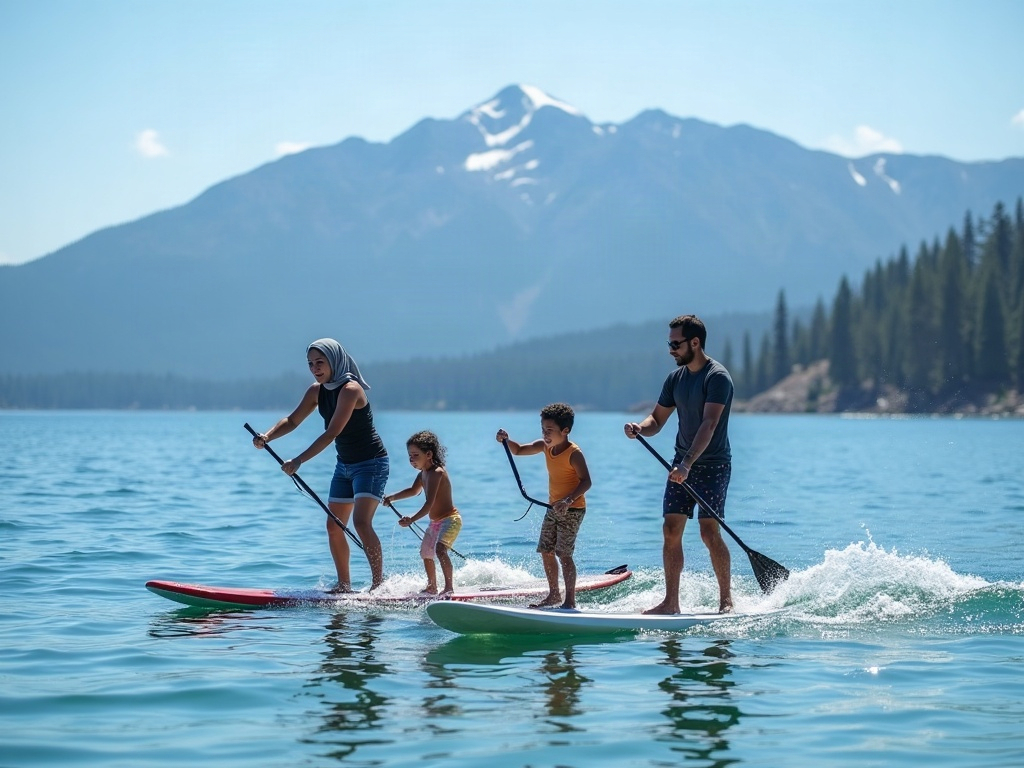
While paddleboarding up the Anahulu River in Oahu, one family travel writer reported seeing five large sea turtles.
The Riparian Zone, which is the interface between land and a river or stream, is crucial for both ecological health and recreational access, such as fishing and launching kayaks.
For those seeking tranquil waters, one can find the best calm-water lake destinations for swimming during a family vacation.
What Benefits Does a Rural Setting Offer for a Family Vacation?
A Rural Setting offers the primary benefits of immersion in agricultural landscapes, interaction with local non-tourist economies, and a slower pace of life, providing a distinct contrast to the high-stimulus nature of urban or theme-park destinations.
This destination type provides experiences like farm stays, local market visits, and scenic drives, emphasizing cultural components and community engagement.
These tranquil environments offer a unique perspective on local life.
Tuscany (Italy), the Cotswolds in England, and Provence in France are iconic rural family vacation destinations, each offering rich cultural components.
At Silvies Valley Ranch, a rural dude ranch experience in Oregon, the property features four distinct golf courses for guests.
Agritourism, or Agrotourism, which involves visitors experiencing an agriculturally based operation, is a cornerstone of the rural vacation model.
2. Which Factors Should Influence Choosing the Best Destination Type for a Family Vacation?
Choosing the best destination type for a family vacation depends on three key factors: age composition of travelers, budgetary constraints, and desired activity level.
The “best” choice is not universal but a function of matching these family-specific variables to the inherent characteristics of Coastal, Urban, Wilderness, Extreme Landscape, Freshwater, or Rural environments, optimizing trip success.
A clear understanding of family demographics, including the ages of men and women traveling, allows for precise selection among the diverse destination types.
The goal is to align the family’s profile with the logistical and environmental realities of each location, ensuring a harmonious and engaging experience.
| Destination Type | Best For Age Group | Typical Cost Index ($-$$$$) | Pace/Activity Level | Logistical Complexity |
|---|---|---|---|---|
| Coastal | All ages (calm beaches for toddlers, water sports for teens) | $$-$$$ | Medium (relaxation to moderate activity) | Low-Medium |
| Urban | Older children, teenagers, adults | $$$-$$$$ | High (constant stimulation, cultural exploration) | Medium (public transport, navigation) |
| Wilderness | School-aged children, teenagers, adults | $$-$$$ (high gear cost, low accommodation cost) | Medium-High (hiking, wildlife observation) | High (self-reliance, planning) |
| Extreme Landscape | Teenagers, adults (science-focused, specialized activities) | $$$$-$$$$$ (specialized gear, guides) | High (demanding physical challenges) | Very High (specific preparedness) |
| Freshwater | All ages (calm water for young children, boating for families) | $$-$$$ | Medium (water sports, fishing) | Low-Medium |
| Rural | Young children, families seeking slower pace | $-$$ | Low-Medium (farm stays, local markets) | Medium (car needed) |
A visual representation of how factors like age, budget, and desired activity level critically influence the selection of family vacation destinations.
© WovenVoyages.com
Which Destination Types Are Best Suited for Toddlers on a Family Vacation?
The destination types best suited for toddlers on a family vacation are Coastal (specifically on calm-water beaches) and certain Rural settings, as they offer controlled environments, minimal transit needs, and amenity-rich accommodations.
These options provide predictability and safety, which are essential for young children’s routines and comfort.
Such environments are ideal for family relaxation and gentle exploration with minimal stress.
Resorts in places like Orlando, San Diego, Mallorca, and Center Parcs are often designed with toddler-friendly amenities.
LEGOLAND resorts, for example, are specifically designed for children in the 2-12 age range, offering contained and stimulating environments.
A Contained Environment refers to a travel setting with clear physical boundaries and predictable stimuli, significantly reducing stress for parents of toddlers.
What Destination Types Are Ideal for Teenagers on a Family Vacation?
The destination types ideal for teenagers on a family vacation are Urban centers and Extreme Landscapes, which provide opportunities for independence, high-energy activities, and engaging, novel experiences that counter boredom.
These environments cater to teenagers’ desire for exploration, cultural immersion, and physical challenges.
They offer a balance of structured activities with opportunities for personal discovery and adventure.
Destinations like Costa Rica (for adventure) or Berlin (for history and autonomy) are well-suited.
An adventure travel package to Croatia designed for families with teenagers has garnered significant interest, with over 184 reviews.[2]
Structured Independence, which allows teenagers autonomy within a safe and predefined framework, is a key aspect of successful trips for this age group.
How Do Budgetary Constraints Impact the Choice of a Family Vacation Destination Type?
Budgetary constraints directly impact the choice of a family vacation destination type by dictating the feasibility of transportation, accommodation, and activity costs, with Wilderness and Rural types generally offering the lowest baseline cost while Urban and Extreme Landscape types demand the highest.
Understanding per diem costs for each destination type is critical for accurate financial planning.
Budget serves as the primary logistical filter, immediately excluding certain destination types that exceed a family’s financial capacity.
For example, Wilderness trips might have high gear costs but lower accommodation expenses, while Urban vacations are characterized by higher lodging and food expenditures.
In Varna, Bulgaria, a family of five can dine for less than $20-$30, illustrating potential cost savings in certain locales.[3]
Per Diem, the fixed average daily expenditure for lodging, meals, and incidentals, is a crucial metric for comparing total costs across diverse destination types.
Which Destination Types Offer the Best Value for a Multi-Generational Family Vacation?
The destination types offering the best value for a multi-generational family vacation are structured, amenity-rich Coastal resorts and cruise ships, as their centralized, all-inclusive model accommodates a wide spectrum of ages, mobility levels, and interests with predictable costs.
These models provide a broad range of simultaneous activities, from relaxation to adventure, within a single, manageable location, maximizing satisfaction per dollar spent.
Such settings are particularly effective for groups with diverse needs, including younger children and older men and women.
Decentralized destination types like Wilderness or unguided Urban travel can be logistically complex and therefore offer lower “value” for multi-generational groups.
SixSuitcaseTravel, established in 2008, specifically aids families of 5, 6, 7, or 8 men and women in finding suitable accommodations.
A Variable Activity Spectrum, characterized by a wide range of simultaneous activities from low-impact (spa, reading) to high-impact (water sports, excursions) in one location, is a key feature of these multi-generational destinations.
When planning for diverse age groups, considering which theme park destinations are best for a multigenerational family vacation can also offer a wide array of activities.
3. How Can Specific Destination Types Be Maximized for a Memorable Family Vacation?
Maximizing specific destination types for a memorable family vacation involves proactive, type-specific pre-planning that moves beyond generic advice.
This includes strategic packing, integrating authentic local experiences, and selecting optimal transportation tailored to the environment.
Effective execution ensures the family’s profile aligns with the destination’s unique characteristics and opportunities.
Pre-planning is crucial for optimizing the experience within each destination type, from a serene Freshwater retreat to a bustling Urban exploration.
| Destination Type | Core Activity | Cultural Immersion Tactic | Logistical Tip |
|---|---|---|---|
| Coastal | Beach recreation, water sports | Visit local fish markets | Pack water-resistant electronics bags |
| Urban | Museums, historical sites, city tours | Use public transportation like locals | Pre-book major attraction tickets |
| Wilderness | Hiking, wildlife observation | Engage with park rangers for local insights | Carry a water filtration system |
| Extreme Landscape | Geological exploration, specialized tours | Learn about indigenous land practices | Invest in robust, layered technical clothing |
| Freshwater | Boating, swimming, fishing | Support local artisan shops by the lake | Check local regulations for watercraft |
| Rural | Farm visits, scenic drives | Participate in a cooking workshop | Rent a car for flexibility |
What Are Essential Packing Strategies for Each Family Vacation Destination Type?
Essential packing strategies are dictated by the specific environmental and infrastructural realities of each destination type, requiring specialized gear for Wilderness and Extreme Landscapes versus versatile, layered clothing for Urban and Rural settings.
Strategic packing involves non-obvious, essential items tailored to mitigate specific risks and maximize comfort in the chosen environment.
For instance, a family vacation to the Icelandic Highlands (an Extreme Landscape) will demand different items than a trip to Maui (a Coastal destination).
When visiting a wilderness area like Mount Hood National Forest, planning for an extended stay is often necessary for a comprehensive visit, impacting packing needs.
A Layering System, involving a base, mid, and shell layer for weather protection, is non-negotiable for Wilderness or Extreme Landscape trips.
Coastal Destination Packing
- UV-protective rash guards: Essential for extended sun exposure on beaches, reducing the need for constant sunscreen reapplication, especially for children.
- Dry bags: Crucial for protecting electronics and personal items during boat trips, paddleboarding, or sudden downpours typical of many coastal areas.
- Water shoes: Provide protection from sharp shells, rocks, or marine life on diverse beach terrains, enhancing comfort and safety.
Wilderness & Extreme Landscape Packing
- Water filter/purifier: To mitigate the risk of waterborne illnesses like giardia from natural water sources, critical for trips to Yellowstone National Park or similar areas.
- Headlamps with spare batteries: For navigating trails or camps after dark, essential in environments with limited artificial lighting.
- Bear spray (where applicable): A non-lethal deterrent for unexpected wildlife encounters, vital for safety in certain Wilderness environments.
Urban Destination Packing
- Portable power bank: For keeping phones charged during long days of navigation and photography in bustling cities like London or New York City.
- Anti-theft daypack: To secure valuables in crowded areas, providing peace of mind against pickpocketing.
- Comfortable, water-resistant walking shoes: Essential for extensive exploration on foot, regardless of weather conditions.
A downloadable infographic providing a type-specific packing checklist for various family vacation destinations, covering Coastal, Wilderness, and Urban environments.
© WovenVoyages.com
How Can Authentic Local Experiences Be Integrated into Any Family Vacation Destination Type?
Authentic local experiences can be integrated into any family vacation by prioritizing participation in the non-tourist economy, such as visiting local food markets, attending community events, or engaging in skill-based workshops like regional cooking classes.
Moving beyond traditional tourist attractions allows for genuine cultural immersion, fostering deeper connections and unique memories across diverse destination types.
Authenticity requires intentionally seeking out interactions and activities that are part of the everyday life of the local people, not just those curated for visitors.
One recommended authentic travel plan involves a 5-day itinerary for Marrakesh, which allows for deep immersion in local culture.[4]
A Homestay, where a family rents a room from local residents, offers a direct and immersive cultural experience common in Rural and some Urban destinations.
Examples of Authentic Integration
- Urban: Instead of tour buses, utilize the local public transit system to navigate the city, observe daily commutes, and discover less-trafficked neighborhoods.
- Rural: Arrange a visit to a local farm during harvest season, allowing children and adults to participate in agricultural activities and understand food production firsthand, especially in areas like Tuscany.
- Coastal: Purchase fresh seafood directly from local fishermen at the dock or visit a bustling morning fish market to experience the local culinary scene authentically in places like Maui.
What Are the Best Transportation Options for Navigating Different Family Vacation Destination Types?
The best transportation options are dictated by the destination’s infrastructure density: public transit systems are superior for Urban centers, rental cars are essential for navigating sprawling Rural and Coastal areas, and guided/specialized vehicles are often required for Wilderness and Extreme Landscapes.
Understanding these requirements, including “last-mile transit” challenges, is crucial for efficient and safe family travel.
The choice of transport profoundly influences accessibility and the overall flow of the trip, especially with varying family sizes and mobility needs.
In the urban area of Cluj-Napoca, Romania, a 15-minute cab ride costs approximately five dollars, demonstrating the affordability of local transport in some cities.
Last-Mile Transit refers to the final step of the journey from a major transportation hub to the final destination, which often poses the greatest logistical challenge in Rural and Wilderness settings.
Optimal Transportation Modes
- Urban Centers: Extensive public transit networks (subways, trams, buses) are often the most efficient and cost-effective, allowing families to avoid traffic and parking hassles common in cities like London or New York City.
- Rural & Coastal Areas: Rental cars provide necessary flexibility to explore dispersed attractions, especially in regions like Tuscany or the Algarve, where public transport may be limited.
- Wilderness & Extreme Landscapes: Specialized tour vehicles, guided expeditions, or 4×4 rentals are frequently required for safe access to remote areas such as Yellowstone National Park or the Icelandic Highlands. Ride-sharing services are generally unavailable or highly impractical in these areas.
Author’s Experience: Abdullahi Azaam
“My extensive experience in family travel planning has shown that the biggest differentiator for a successful trip is how accurately a family’s needs are matched to the inherent characteristics of the destination type. Generic planning leads to friction; specialized strategy creates flow and memorable experiences, whether navigating the Urban sprawl of Tokyo or the serene Freshwater lakes of Lake Tahoe.”
4. What Are the Common Pitfalls Across Different Family Vacation Destination Types?
Common pitfalls across different family vacation destination types include specific safety concerns, environmental impacts, and unexpected weather disruptions.
Proactive awareness and tailored mitigation strategies are essential for each type—like situational awareness in Urban areas or gear redundancy in Wilderness—to ensure a smooth, problem-free, and enjoyable family travel experience.
Every destination type carries inherent risks, and foresight is the most effective tool for mitigation.
An infographic outlining common pitfalls encountered in family vacation destinations and their corresponding type-specific solutions.
© WovenVoyages.com
How Can Safety Concerns Be Addressed for Varied Family Vacation Destinations?
Safety concerns are addressed by matching mitigation strategies to the specific risks of each destination type: situational awareness for crime in Urban centers, and gear redundancy and formal training for environmental hazards in Wilderness and Extreme Landscapes.
A problem/solution format ensures actionable advice for diverse safety challenges encountered by families.
Travel safety reports indicate that certain areas, even within popular destinations like the Bahamas, can have high crime rates outside main tourist zones.[5]
Situational Awareness is the practice of being constantly aware of one’s surroundings, a critical skill for safety in unfamiliar Urban environments.
Safety Mitigation Strategies
- Urban: Issue: Pickpocketing in crowded areas. Mitigation: Use a cross-body bag or money belt and avoid displaying expensive electronics.
- Wilderness: Issue: Wildlife encounters or getting lost. Mitigation: Carry a GPS device, know basic first aid, and inform park rangers of your hiking route and expected return time.
- Coastal: Issue: Strong currents or jellyfish stings. Mitigation: Always swim near lifeguards, heed local warnings, and educate children about marine life safety.
What Environmental Impacts Should Be Considered for a Sustainable Family Vacation?
The primary environmental impacts to consider are waste generation in resource-strained Coastal areas, ecosystem disruption from overuse in Wilderness parks, and carbon emissions from long-haul travel, which can be mitigated by following Leave No Trace principles and choosing certified eco-lodges.
Mitigation involves adhering to responsible practices and making conscious choices that reduce the family’s footprint.
Supporting the preservation of natural and cultural sites is paramount for a sustainable family vacation.
The Greek island of Crete, a major tourist destination, boasts over 1,000 kilometers of coastline, an environment vulnerable to tourism-related impacts.
Leave No Trace, a set of seven outdoor ethics principles, serves as the foundational framework for responsible behavior in Wilderness and Rural destinations.
Environmental Mitigation Strategies
- Coastal: Problem: Plastic waste in oceans. Solution: Participate in beach clean-ups and use reusable water bottles and bags.
- Wilderness: Problem: Trail erosion and wildlife disturbance. Solution: Always stay on marked paths and observe wildlife from a respectful distance without feeding them.
- Freshwater: Problem: Freshwater pollution from motorboats. Solution: Choose non-motorized water activities like kayaking or paddleboarding, or select eco-friendly boat rentals.
How Can Unexpected Weather Disruptions Be Managed on Any Family Vacation Type?
Unexpected weather disruptions are managed through proactive planning, which includes purchasing travel insurance that covers weather events, packing layered clothing suitable for a range of conditions, and having a pre-researched list of indoor, non-weather-dependent backup activities.
Recognizing shoulder season’s variability and having a “Plan B” are crucial for flexibility.
The “Plan B” is as important as “Plan A” for any family vacation, ensuring enjoyment even when forecasts change.
For travel planning to Costa Rica, it is known that the dry season, with more predictable weather, runs from December to April.
Shoulder Season is the travel period between peak and off-peak seasons, often presenting the highest weather variability and thus the greatest need for flexible planning.
Weather Preparedness Strategies
- Urban: Pre-book museum tickets online for a rainy day, or identify indoor cultural centers and family-friendly cafes in cities like Paris.
- Coastal: Identify local aquariums, indoor play spaces, or covered markets that can serve as alternative activities during unexpected storms, especially in popular beach destinations.
- Wilderness: Know the location of the nearest ranger station or visitor center for shelter, and pack emergency communication devices in case of severe weather.
5. Logistics: Family Vacation Preparation Checklist
Use this interactive checklist to ensure you’ve covered all the critical logistical bases for your trip. Click the squares to check them off as you plan.
| Checklist Item / Tactic | Status |
|---|---|
| Pre-Departure Essentials | |
| Confirm all passports and visas are valid for all men and women traveling, with at least six months validity beyond return date. | ⬜ |
| Purchase comprehensive travel insurance covering medical emergencies, trip cancellations, and weather disruptions for all family members. | ⬜ |
| Notify banks and credit card companies of travel dates to prevent fraud alerts or service interruptions. | ⬜ |
| Destination-Specific Preparations | |
| Research and pre-book at least one “Plan B” indoor activity for each day in case of unexpected weather, especially for Coastal or Freshwater destinations. | ⬜ |
| Verify transportation options for your chosen destination type; secure rental cars for Rural areas or public transit passes for Urban centers. | ⬜ |
| Prepare type-specific first aid kits, including items like water purification tablets for Wilderness trips or anti-chafing cream for humid Coastal environments. | ⬜ |
| Download offline maps and essential travel apps for navigation and communication, especially critical in Extreme Landscapes with limited connectivity. | ⬜ |
6. Frequently Asked Questions (People Also Ask)
How do family demographics influence destination type choice?
What are essential items to pack for a toddler’s beach vacation?
What travel destinations offer adventure sports for teens?
References & Sources
What Are the Final Thoughts on Maximizing a Destination Type for a Family Vacation?
The core thesis is that a successful family vacation results from a rational process: matching a family’s profile (ages, budget, interests) to a destination type’s fixed characteristics.
The six-category framework of Coastal, Urban, Wilderness, Extreme Landscape, Freshwater, and Rural serves as a powerful tool to eliminate unsuitable choices and significantly increase the probability of a positive, low-friction, and memorable travel outcome for everyone involved.
2 Responses