Do Children Need Passports for a Family Vacation?
Table of Contents
Yes, children of all ages require their own passport for international air travel, though a birth certificate is usually sufficient for domestic trips or specific land and sea crossings.”
Children need passports for international family vacations to meet legal entry and re-entry requirements of all countries, including their home nation. This applies to all minors, from infants to teenagers, ensuring their identity and citizenship are verifiable. Importantly, a child’s passport also provides a crucial layer of protection against international parental child abduction.
Before diving into the specifics of travel documents, it’s often helpful to first consider how to set family vacation goals everyone will enjoy, which lays the groundwork for your entire trip.
To ensure a smooth journey, remember that understanding passport requirements is a crucial part of planning a family vacation step by step.
2. Why Do Children Need Passports for International Family Vacations?
Children’s passports are essential for international family vacations because they serve as the primary, universally recognized document that verifies a child’s identity and citizenship.
A passport is required for a child during international family travel to comply with the legal entry requirements of foreign countries and to ensure re-entry into their home country. This applies to all children, including infants and newborns.
What is the fundamental requirement for children’s passports in international family travel?
The fundamental requirement for children’s passports in international family travel is that every minor, irrespective of age, must possess their own valid travel document to prove identity and citizenship.
All children, including newborns, require their own passport for most international family trips, especially air travel. This rule exists to satisfy international travel laws and security protocols.
The fundamental requirement for international family travel is that every minor, regardless of age—including infants and newborns—must possess their own valid passport. This document serves as indispensable proof of a child’s identity and citizenship, satisfying international travel laws and essential security protocols for entry into foreign countries and re-entry into their home nation.

Unlike adults, children’s physical appearances change rapidly. The 5-year validity of a minor’s passport reflects this, but it also means parents must be vigilant about photo resemblance to avoid issues with border agents, even if the passport is technically valid.
All children, including infants, must have their own travel documents, such as a passport or visa to enter the U.S.
3. When Are Children’s Passports Required for Family Travel by Destination and Mode?
The requirement for children’s passports during family travel is determined by the destination, the mode of transportation, and specific international agreements like the Western Hemisphere Travel Initiative.
A child’s passport book is always required for international air travel. For land or sea travel to certain nearby countries like Canada, Mexico, or parts of the Caribbean, alternatives like a passport card or birth certificate may be permissible under specific circumstances.
The “closed-loop” cruise exception is a common point of confusion. Explain that this exception is an agreement between the cruise line and CBP, not the foreign ports of call. If a family emergency requires flying home from a foreign port (e.g., Jamaica or Cozumel), a child without a passport would face significant delays and complications.
Closed-Loop Cruise: A cruise that begins and ends at the same U.S. port. This specific itinerary type allows U.S. citizens, under WHTI guidelines, to travel with less documentation than a standard passport, but it carries risks.
If your family vacation involves flying over any international border, securing a passport book for your child is non-negotiable. For land or sea travel, evaluate the risk of needing to fly home unexpectedly before relying on alternative documents.
Now that we’ve seen when a passport is required, let’s explore the specific alternative documents that can sometimes be used for family travel.
Are children’s passports always necessary for international air travel?
Yes, children’s passports are always necessary for any international air travel, regardless of the child’s age or the destination.
A valid passport book is mandatory for any child, including an infant, who is flying to or from a foreign country. Airlines will deny boarding to a child without a valid passport for an international flight.
Yes, children’s passports are always necessary for international air travel, universally required regardless of the child’s age, including infants. A valid passport book is mandatory for flights to or from any foreign country. Airlines strictly enforce this rule, denying boarding to any child without proper documentation to avoid legal penalties and ensure compliance with international aviation regulations.

This rule is enforced by both airlines, which face heavy fines for transporting improperly documented passengers, and international aviation agreements. It’s an operational and legal requirement, not just a recommendation.
According to the Federal Aviation Administration (FAA), minors under 18 are not required to present identification when flying with an adult within the United States. However, all U.S. citizen children traveling by air to Canada or Mexico must have a U.S. passport.
Do children need passports for land or sea travel to contiguous countries?
No, children do not always need a full passport book for land or sea travel to contiguous countries like Canada and Mexico if they are under 16, as alternative documents are often acceptable.
Under the Western Hemisphere Travel Initiative (WHTI), U.S. citizen children under 16 can re-enter the U.S. from Canada or Mexico by land or sea using their original or a copy of their birth certificate. A passport card is also a valid and more secure alternative.
No, for land or sea travel to contiguous countries like Canada and Mexico, children under 16 may not need a full passport book. Under the Western Hemisphere Travel Initiative (WHTI), U.S. citizens aged 15 or younger can use their original or certified birth certificate for re-entry. A passport card offers a more secure and convenient alternative for these specific scenarios.
While U.S. rules may allow re-entry with a birth certificate, Canadian and Mexican border authorities have their own entry requirements. Canada, for instance, has stringent rules requiring proof of parental custody, especially for single parents, making a passport a smoother option.
Any kids 15 or younger can cross the U.S. border to Canada with a certified copy of their birth certificate; this type of trip does not require a passport.
What are the passport exceptions for children on closed-loop family cruises?
The primary passport exception for children on family cruises applies to “closed-loop” itineraries, which start and end in the same U.S. port.
For closed-loop cruises to destinations like the Caribbean, Bahamas, and Mexico, U.S. children can often travel using a government-issued birth certificate and a photo ID if available. However, a passport is still strongly recommended by the U.S. Department of State and cruise lines.
The exception for closed-loop family cruises (starting and ending in the same U.S. port) is that a birth certificate often suffices for travel to destinations like the Caribbean or Mexico. While an exception under WHTI, a passport book is still strongly recommended. This is because emergency disembarkation in a foreign port without a passport would lead to significant logistical challenges for flying home.
The critical risk is if a family member needs to disembark unexpectedly in a foreign port (e.g., for a medical emergency) and fly back to the U.S. Without a passport book, the child cannot board an international flight, leading to major logistical and consular hurdles.
For land or sea travel, U.S. children under age 16 can present an original or a certified copy of their birth certificate.
4. What Other Travel Documents Can Children Use for Family Vacations Instead of a Passport?
For specific family vacation scenarios not involving international air travel, several other official documents can substitute for a child’s passport book.
The main alternatives to a passport book for a child are a U.S. Passport Card (for land/sea travel to specific regions) and an original birth certificate (for closed-loop cruises and land travel for children under 16). In some cases, a foreign visa may also be required in addition to the passport.
Beyond a full passport book, children can utilize specific alternative travel documents for family vacations, primarily for non-air travel. These include a U.S. Passport Card, suitable for land and sea entry to Canada, Mexico, and certain Caribbean nations, and an original birth certificate, permissible for closed-loop cruises and land travel for children under 16. In some cases, a visa is also an additional requirement.
A key financial and logistical insight is that a Passport Card is significantly cheaper than a Passport Book. For families who frequently drive to Canada or Mexico for vacations, getting a Passport Card for each child is a savvy investment that is more secure and professional than carrying a fragile birth certificate.
Trusted Traveler Program (TTP): These are programs like NEXUS, SENTRI, and Global Entry, run by CBP, that expedite travel for pre-approved, low-risk travelers. A child’s NEXUS card, for example, can be used in lieu of a passport for travel between the U.S. and Canada by land, sea, or air.
Choose a passport card for your child if your family’s international travel is exclusively by car to Canada and/or Mexico. For all other scenarios, especially those involving flights or cruises with non-U.S. ports, the passport book remains the superior choice.
While these alternatives exist, the most robust and universally accepted process is applying for a child’s first passport, which will be detailed next.
When might a birth certificate be sufficient for a child’s family trip?
A birth certificate is only sufficient for a child’s family trip in two specific scenarios: land/sea travel to Canada or Mexico for children under 16, and for closed-loop cruises.
An original or certified copy of a child’s birth certificate can be used as proof of citizenship for re-entry into the U.S. under WHTI rules for specific travel types. It must never be used for international air travel.
A birth certificate is only sufficient for family trips exclusively in two narrow scenarios: re-entry into the U.S. from Canada or Mexico via land or sea for children under 16, and for passengers on closed-loop cruises. Critically, it must be the official certificate from a vital records office, not a hospital memento, and is never valid for international air travel.
The “type” of birth certificate matters. Hospitals often issue a commemorative certificate which is not a legal document. Parents must use the official certificate issued by the vital records office of the state or county of birth.
Children 15 or younger can cross the U.S. border to Canada with a certified copy of their birth certificate.
What is a passport card and when is it appropriate for children’s family travel?
A U.S. Passport Card is a wallet-sized travel document that is a cheaper, more convenient alternative to a passport book for certain types of family travel.
The passport card is appropriate for a child’s family travel only when entering the United States at land border crossings and sea ports-of-entry from Canada, Mexico, the Caribbean, and Bermuda. It cannot be used for any international air travel.
A U.S. Passport Card is a convenient, cost-effective alternative for children’s family travel, appropriate specifically for entry into the United States via land border crossings and sea ports from Canada, Mexico, the Caribbean, and Bermuda. This wallet-sized document is not valid for international air travel but provides a more secure option than a birth certificate for frequent cross-border family road trips or cruises.
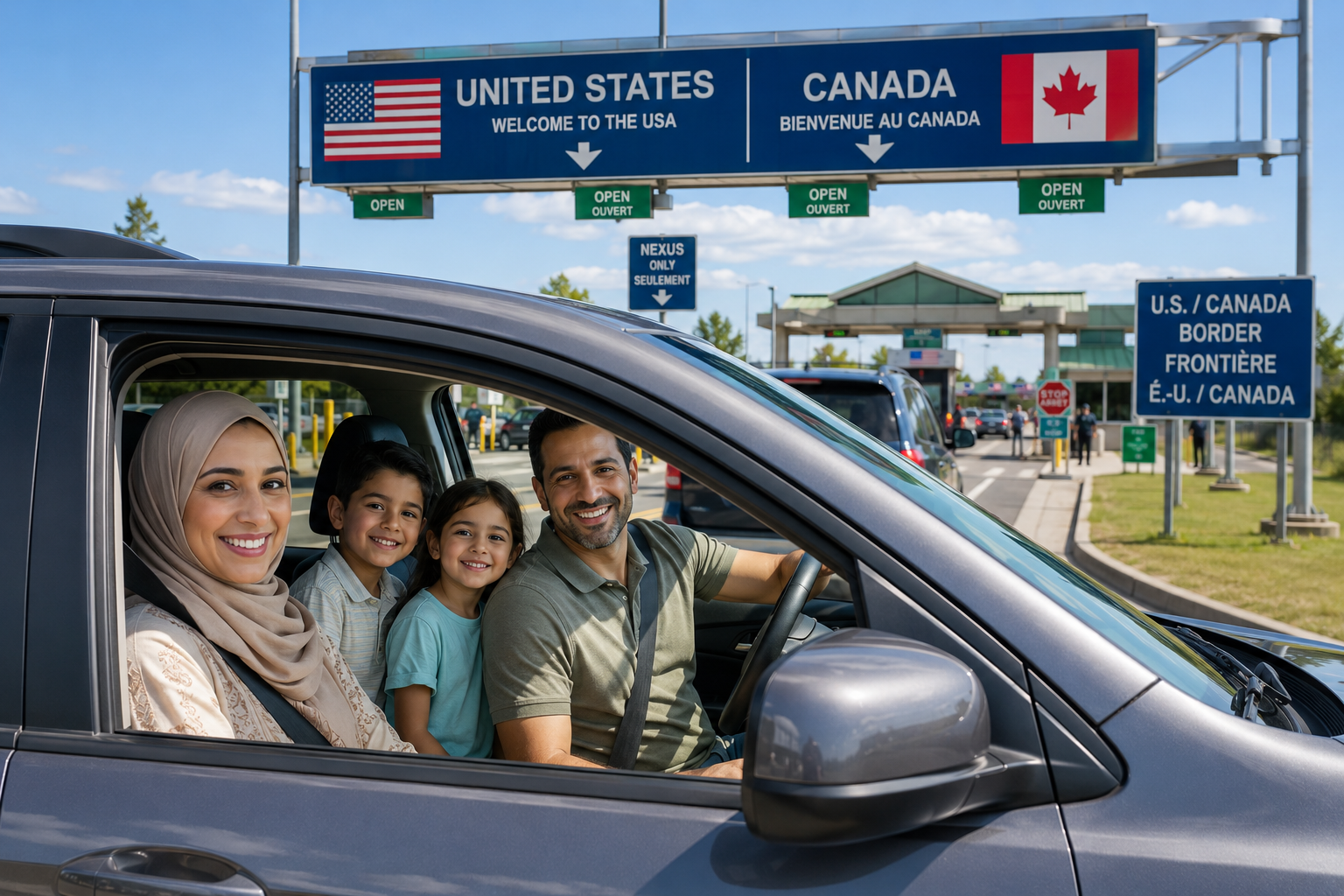
From a family budget perspective, a passport card for a minor is less than half the cost of a passport book. For a large family that frequently drives to Canada for vacations, this represents a significant saving while still providing a secure and official travel document.
To re-enter the U.S. from Canada, minors ages 16 to 18 must have a driver’s license, passport, or passport card.
Why might a visa be required for a child traveling internationally with family?
A visa might be required for a child traveling internationally with family because it is an official permission granted by a foreign country to enter their territory for a specific purpose.
A passport confirms a child’s identity and nationality, but a visa grants the right to enter a specific foreign country. Many countries do not require visas for U.S. citizens for short tourist visits, but some do, and the requirement applies to children as well as adults.
A visa might be required for a child traveling internationally with family because, unlike a passport which verifies identity, a visa is official permission granted by a foreign country for entry. While many nations offer visa-free travel for U.S. citizens on short tourist visits, certain destinations, like Brazil or China, mandate visas for all travelers, including minors. The application process for children often requires additional consent forms.
Visa requirements can be complex and change without notice. For example, countries like Brazil or China require visas for U.S. tourists, and the application process for a minor can involve additional documentation, such as letters of consent and copies of parents’ passports and visas. This adds another layer of planning to the family vacation timeline.
Minors in possession of valid visas are not required to produce identity documents already submitted as part of their visa applications.
5. How Do Parents Apply for a Child’s First Passport for a Family Vacation?
Parents apply for a child’s first passport for a family vacation by completing Form DS-11, gathering specific documents, and appearing in person with the child at a passport acceptance facility.
To get a first passport for a child under 16, both parents must apply in person with the child. You will need to provide proof of the child’s U.S. citizenship, proof of parental relationship, your own government IDs, and a compliant passport photo.
To apply for a child’s first passport for a family vacation, both parents and the child must appear in person at a passport acceptance facility. The process involves submitting a completed Form DS-11, providing proof of the child’s U.S. citizenship and parental relationship, presenting both parents’ government-issued IDs, and a compliant passport photo. This ensures identity verification and parental consent.
The “two-parent consent” rule is the most common procedural hurdle. If one parent absolutely cannot attend, they must provide a signed and notarized consent form (DS-3053). Understanding and preparing for this single requirement can save a family from a failed application attempt and a wasted trip.
Passport Acceptance Facility: An authorized location where you can apply for a passport in person. These are often post offices, public libraries, or clerk of court offices that have been certified by the U.S. Department of State to accept passport applications.
If your family vacation is less than 3-4 months away, you must consider paying the additional fee for expedited processing to ensure the passport arrives in time.
While applying for the first passport is an in-person process, managing its renewal for future family trips follows a different set of rules.
Which documents are essential for a child’s passport application?
The essential documents for a child’s passport application are the completed Form DS-11, evidence of U.S. citizenship, proof of parental relationship, parents’ government IDs, and a compliant photo.
You must bring your child’s original or certified birth certificate (not a copy), your own driver’s licenses or passports, and the unsigned DS-11 form. Forgetting any of these documents will result in your application being rejected.
Essential documents for a child’s passport application include the completed, but unsigned, Form DS-11; evidence of U.S. citizenship, typically the child’s original or certified birth certificate; proof of parental relationship; both parents’ government-issued identification; and a compliant passport photo. Forgetting any original document, especially the birth certificate, will cause immediate application rejection.

A common mistake is pre-signing the DS-11 form. The form must be signed in the presence of the acceptance agent. Signing it at home will invalidate the form and require you to fill out a new one on site.
The application process for children under the age of 16 needs to be completed in person. To fill out this application, at least one parent needs to appear.
What is the Child Passport Application Document Checklist?
The child passport application document checklist requires parents to physically gather specific legal and identity documents prior to their acceptance facility appointment.
Ensuring all these documents are correct and present is crucial to avoiding delays or rejection of the application.
| Checklist Item / Tactic | Status |
|---|---|
| Completed Form DS-11: This U.S. Passport Application form must be filled out but not signed until instructed by an acceptance agent. | ⬜ |
| Proof of U.S. Citizenship: Use an original or certified U.S. birth certificate or a previous, undamaged U.S. passport. | ⬜ |
| Parental Application: Both parents or the child’s legal guardians must appear with the child. | ⬜ |
| Parental Identification: Present a valid government-issued photo ID like a driver’s license or previous passport. | ⬜ |
| Proof of Parental Relationship: An original or certified birth certificate or adoption decree is required. | ⬜ |
| One Passport Photo: The photo must meet the strict government requirements for size, background, and appearance. | ⬜ |
| Application Fee: Include the required fees, with the execution fee paid separately to the acceptance facility. | ⬜ |
How do both parents provide consent for a child’s passport application?
Both parents provide consent for a child’s passport application by appearing in person with the child and presenting their own government-issued identification.
The standard procedure requires both parents listed on the birth certificate to attend the passport appointment. If one parent cannot attend, they must provide a signed and notarized Statement of Consent, Form DS-3053.
Both parents typically provide consent for a child’s passport application by appearing in person with the child and presenting their government-issued identification. If one parent cannot attend, they must provide a signed and notarized Statement of Consent (Form DS-3053). For sole custody situations, the applying parent needs to submit court orders granting them sole legal authority to apply for the child.
Author’s Experience
“Navigating the two-parent consent rule for my daughter’s first passport was surprisingly smooth, thanks to careful preparation. Having the notarized Form DS-3053 ready prevented a potential headache when my spouse couldn’t attend. That small step saved us significant stress and precious vacation planning time, ensuring our trip started without a hitch.”
For families in sole custody situations, the applying parent must submit evidence of their sole legal authority to apply for the child, such as a complete court order granting them sole legal custody. This is a different and more complex requirement than simply having the other parent absent.
If the child is traveling with one custodial parent, the letter of consent should be from the other parent. If the child is traveling with a guardian or alone, both parents should sign the letter.
What is the application process at a passport acceptance facility for children?
The application process at a passport acceptance facility for a child involves the acceptance agent verifying the family’s documents, witnessing the parental signatures, and formally accepting the application package for processing.
At the facility, an agent will review your child’s unsigned DS-11 form, check the original birth certificate against your IDs, and confirm the child’s identity. Once verified, you will sign the form, pay the required fees, and the agent will mail the entire package to the Department of State.
At a passport acceptance facility, the application process for children involves an agent verifying documents and identities. The child’s unsigned Form DS-11, original birth certificate, and parents’ IDs are reviewed. Parents then sign the form in the agent’s presence, pay fees, and the complete application package, including original documents like the birth certificate, is mailed to the Department of State for processing.
Parents should be prepared that the acceptance agent will take the child’s original birth certificate and mail it with the application. The Department of State will return it separately from the passport, which can be alarming if not expected.
It takes roughly three weeks to process the passport. If you need it quickly, a one-week fast track service could shorten that waiting time.
6. What is the Process for Renewing a Child’s Passport for Ongoing Family Trips?
The process for renewing a child’s passport for ongoing family trips is identical to applying for a new one; it cannot be done by mail.
Passports issued to children under age 16 cannot be renewed by mail. You must submit a new Form DS-11 and apply in person with your child and the other parent, bringing the child’s old passport along with the other required documents.
Renewing a child’s passport for ongoing family trips requires the same in-person application process as obtaining their first passport. Passports issued to children under 16 cannot be renewed by mail. Parents must submit a new Form DS-11, appear in person with the child and the other parent, and present the child’s expiring passport along with all other required documents.
This is a critical distinction from adult passport renewals. Many parents assume they can renew their child’s passport by mail like their own, but this is not the case. This rule exists because a child’s appearance changes so much in five years that a new in-person identity verification is required by law.
Passport Validity: The length of time a passport can be used for travel. For U.S. adults (16 and older), it is 10 years. For children (under 16), the passport validity is only 5 years, requiring more frequent renewal planning for families who travel often.
If your child’s passport was issued when they were 15 and they are now 16 or 17, they may be eligible for a simplified renewal process. However, for most children, you must budget time for the full in-person application process every five years.
Understanding these application and renewal processes is the first step, but proactive management is key to preventing common passport problems that can derail a family vacation.
Can a child’s passport be renewed by mail for family travel?
No, a child’s passport issued before they were 16 cannot be renewed by mail for family travel.
The renewal process for a minor’s passport requires you to complete a new application (Form DS-11) and appear in person at an acceptance facility. The mail-in renewal form (DS-82) is strictly for passports issued to adults.
No, a child’s passport issued before age 16 cannot be renewed by mail for family travel. Unlike adult passports, which can utilize Form DS-82 for mail-in renewal, a minor’s passport always requires a new application (Form DS-11) submitted in person at an acceptance facility, with both parents and the child present, due to rapid appearance changes and legal identity verification requirements.
Attempting to mail a child’s renewal application will result in the package being returned unprocessed, potentially wasting weeks or months of critical time before a planned family vacation. This is one of the most common and costly mistakes in family travel planning.
The application process for children under the age of 16 must be completed in person.
What documents are needed to renew a child’s passport?
The documents needed to renew a child’s passport are nearly identical to a first-time application, with the crucial addition of the child’s previous passport.
To renew, you must bring the completed, unsigned Form DS-11, the child’s most recent passport, evidence of parental relationship (birth certificate), parents’ IDs, and a new passport photo. The old passport will be cancelled and returned to you.
To renew a child’s passport, parents need to gather the completed, unsigned Form DS-11; the child’s most recent passport; evidence of parental relationship, such as an original birth certificate; both parents’ government-issued identification; and a new, compliant passport photo. The previous passport serves as primary proof of citizenship and will be canceled and returned separately from the new document.
The child’s previous passport serves as primary evidence of their U.S. citizenship. This can simplify the process if the original birth certificate is difficult to locate, but you should still bring the birth certificate as proof of parental relationship.
A passport is universally accepted as identification, which is helpful since many minors are too young to have a state-issued picture ID.
How early should parents renew a child’s passport before a family vacation?
Parents should renew a child’s passport at least six to nine months before its expiration date or any planned international family vacation.
You should begin the renewal process when the passport has about nine months of validity remaining. Many countries require passports to be valid for at least six months beyond your planned departure date, and standard processing times can take several months.
Parents should renew a child’s passport at least six to nine months before its expiration date, or well in advance of any planned international family vacation. This proactive approach accounts for typical processing times and, crucially, satisfies the “Six-Month Validity Rule” enforced by many foreign countries, preventing potential denied boarding. Early renewal avoids costly expedited fees and last-minute travel stress.
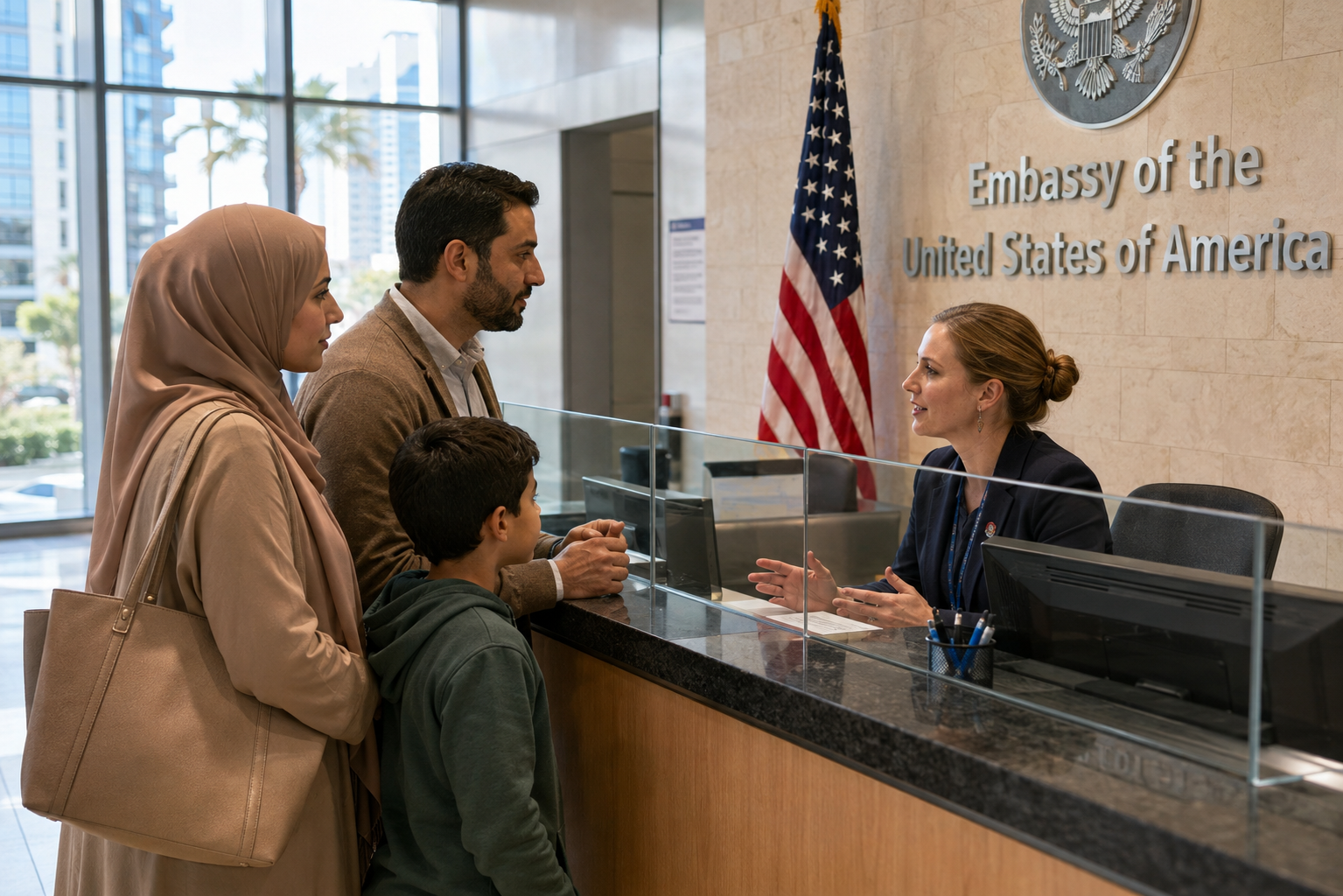
For comprehensive guidance on all necessary travel documents and application deadlines, understanding when to apply for family vacation travel documents is key to avoiding last-minute stress.
For a deeper understanding of these timeframes, exploring the specific passport validity rules for family travel can prevent unexpected issues.
The “Six-Month Validity Rule” is a foreign entry requirement, not a U.S. rule. A family can be denied boarding for a flight to Europe if their child’s passport expires in five months, even though the passport is still technically valid. Renewing early eliminates this entire category of risk.
A parental consent letter from a non-traveling parent must not be older than six (6) months from the date presented.
7. How Can Families Avoid Common Passport Problems for Children During Vacations?
Families can avoid common passport problems for children during vacations through proactive planning, careful document management, and knowing the correct emergency procedures.
The most common problems are overlooking the six-month validity rule, dealing with a lost or stolen passport, and not having proper consent documents for single-parent travel. Prevent these by renewing early, keeping digital and physical copies, and carrying a notarized consent letter.
Families can avoid common child passport problems during vacations through proactive planning and careful document management. Key strategies include renewing passports well before the six-month validity rule becomes an issue, maintaining secure digital and physical copies of all documents, and ensuring appropriate notarized consent letters are carried for single-parent travel. Knowing emergency procedures for lost or stolen passports is also vital.
Indeed, careful document management and awareness of emergency procedures are critical elements within the broader scope of how to plan for family vacation safety.
A practical tip for families is to take a high-quality photo of each child’s passport information page and store it in a secure cloud service (like Dropbox or Google Drive) and also email it to themselves. In an emergency, having immediate access to the passport number, issue date, and expiration date can dramatically speed up the replacement process at a U.S. embassy.
U.S. Embassy or Consulate: These are the U.S. government’s diplomatic missions in foreign countries. If a child’s passport is lost or stolen abroad, the nearest U.S. embassy or consulate is the only place that can issue an emergency, limited-validity replacement passport.
Before any international family trip, create a “Go-Folder” with physical photocopies of all passports, birth certificates, and parental consent letters. Keep this folder separate from the actual passports.
By understanding the rules and preparing for these potential problems, families can ensure their child’s passport is a key to adventure, not a source of stress.
What if a child’s passport is lost or stolen before or during a family vacation?
If a child’s passport is lost or stolen during a family vacation, you must immediately contact the nearest U.S. embassy or consulate to begin the replacement process.
First, report the passport as lost or stolen to the U.S. Department of State to prevent fraudulent use. Then, schedule an emergency appointment at the local U.S. embassy, where you will need to apply for an emergency limited-validity passport to allow your child to return home.
If a child’s passport is lost or stolen before or during a family vacation, immediate action is crucial. First, report it as lost or stolen to the U.S. Department of State to prevent fraudulent use. Then, contact the nearest U.S. embassy or consulate to schedule an emergency appointment. There, you can apply for a limited-validity emergency passport to allow the child to return home, but a new full passport will be required later.
The emergency passport issued abroad is typically valid for a very short period and for direct return to the U.S. only. Upon returning home, the family will need to go through the full application process again to get a new, 5-year validity passport for the child. The emergency passport is not a long-term solution.
Parents should enroll the minor in the Department of State Smart Traveler Enrollment Program, which enables the Department of State to quickly contact parents in the event of an emergency.
How should parents manage passport expiration dates for children’s future family trips?
Parents should manage passport expiration dates for children by setting calendar alerts one year before expiration and by checking validity before booking any international family trip.
The best practice is to create a digital calendar event for each child’s passport that repeats annually, set to remind you one year before the 5-year expiration date. This provides a large buffer to renew without paying for expedited service.
Parents should proactively manage children’s passport expiration dates by setting digital calendar alerts at least one year before the 5-year expiration. This provides ample time to complete the in-person renewal process without needing expedited services. Regularly checking passport validity against the “Six-Month Rule” before booking any international family trip prevents denied boarding and ensures a stress-free travel experience.
A “Family Travel Hub” is an effective management technique. Use a simple spreadsheet or a dedicated app to track the passport numbers, issue dates, and expiration dates for the entire family in one place. This provides a single source of truth for all travel planning.
TSA may ask teens aged 16-17 to show ID, which happens more often when they look older or travel alone.
What are the implications of single-parent travel with a child’s passport?
The primary implication of single-parent travel with a child’s passport is the heightened scrutiny at border crossings, requiring the traveling parent to prove they have the right to take the child out of the country.
Even with a valid passport, a single parent traveling with their child should always carry a signed and notarized letter of consent from the non-traveling parent. If the parent has sole custody, they should carry a copy of the court order.
Single-parent travel with a child’s passport involves heightened scrutiny at international border crossings due to concerns about child abduction. To avoid delays or denied entry, the traveling parent must carry explicit documentation proving their legal right to travel with the child. This typically includes a signed and notarized letter of consent from the non-traveling parent or, for sole custody, a copy of the official court order granting full legal authority.
For more specific details on parental consent requirements, particularly for single or divorced parents, learning if you need a permission letter for a family vacation is highly recommended.
This is not just a U.S. requirement; many foreign countries (like Canada and Mexico) are extremely strict on this to prevent international child abduction. A border agent in another country has the authority to deny entry to a family if they suspect a custody issue, regardless of what U.S. law allows.
Any passenger under 18 traveling alone to or from Mexico must have a notarized letter with authorization from a parent and translated in Spanish, otherwise they will be refused entry.
Sources
Resolution
Ultimately, securing and managing a passport for your child is a foundational step in responsible international family travel planning. While exceptions exist for specific land and sea travel, a passport book is the single most reliable and universally accepted document that ensures your child can travel internationally by air and smoothly navigate border crossings. The proactive management of this document is a key component of stress-free family vacations. Securing and managing a passport for your child is a foundational step for responsible international family travel. While limited exceptions exist for certain land or sea journeys, a passport book remains the most reliable and universally accepted document for air travel and smooth border crossings. Proactive planning and management transform this essential document from a potential hassle into a key that unlocks stress-free global adventures for your family.