How to Set Family Vacation Goals Everyone Will Enjoy
Table of Contents
Essential family vacation goals provide the foundational blueprint for a successful trip, ensuring every family member’s needs and desires are acknowledged and integrated into the planning process from the start.
Setting clear family vacation goals is essential because it aligns expectations and prevents the common conflicts that arise from mismatched desires. This collaborative process transforms vacation planning from a top-down decision into a shared project, increasing buy-in from all members. Understanding the ‘why’ behind vacation goals is a foundational step in the broader process of how to plan a family vacation step by step.
2. Why are family vacation goals essential for everyone’s enjoyment?

Setting clear family vacation goals is essential because it aligns expectations and prevents the common conflicts that arise from mismatched desires. This collaborative process transforms planning into a shared project, increasing buy-in from all members for a less stressful, more enjoyable trip.
Beyond simple happiness, shared goals directly impact vacation ROI (Return on Investment). By pre-emptively eliminating activities no one truly wants, families can reallocate budget towards high-value shared experiences, maximizing the emotional and financial return of their trip.
Micro-Glossary: Travel Style
A family’s collective preference for the pace, budget, and type of activities on a vacation, ranging from fast-paced and budget-conscious to relaxed and luxurious. Understanding this is a core outcome of goal setting.
Invest 60 minutes in a goal-setting session if your primary objective is to reduce planning stress and increase the likelihood of universal trip satisfaction.
The benefits of goal-setting include:
- Aligns Expectations: Eliminates surprises by clearly outlining what each family member anticipates from the trip, guaranteeing a shared understanding.
- Secures Budget Efficiency: Builds a framework that directs spending toward activities and experiences that genuinely excite the entire family, eliminating wasteful expenditures.
- Fosters Ownership: Guarantees that every family member feels their voice is heard and valued, building collective buy-in and enthusiasm for the vacation’s success.
3. What makes clearly defined family vacation goals beneficial for every family member?
Clearly defined family vacation goals are beneficial for every family member because they foster a sense of individual ownership and collective excitement, directly linking personal desires to the shared trip experience.
Clearly defined family vacation goals are beneficial as they foster individual ownership and collective excitement. For children, goals provide structure and a voice, making them feel valued. For parents, they reduce the mental load, leading to a more relaxing planning process and vacation.
The act of defining goals serves as a “pre-vacation” bonding activity. It creates a positive feedback loop where shared planning enhances relationships before the trip even begins, setting a cooperative tone for the actual travel.
According to a survey, mothers are the primary vacation planner 90% of the time, highlighting the importance of a collaborative process that distributes the mental load.
Benefits of Individual Ownership
Clearly defined goals ensure each family member, from toddlers to teens, finds value and purpose in the trip, making them invested participants rather than passive observers. This commitment to inclusive family travel validates preferences and boosts engagement for everyone.
Author’s Experience
“One trip, I tried to dictate every detail, thinking I knew best. It was chaos! The next time, involving my kids, even the little ones, in choosing just one activity each transformed the entire experience. Their ownership made all the difference, and the vacation was genuinely enjoyed by everyone.”
4. What defines truly enjoyable and inclusive family vacation goals?
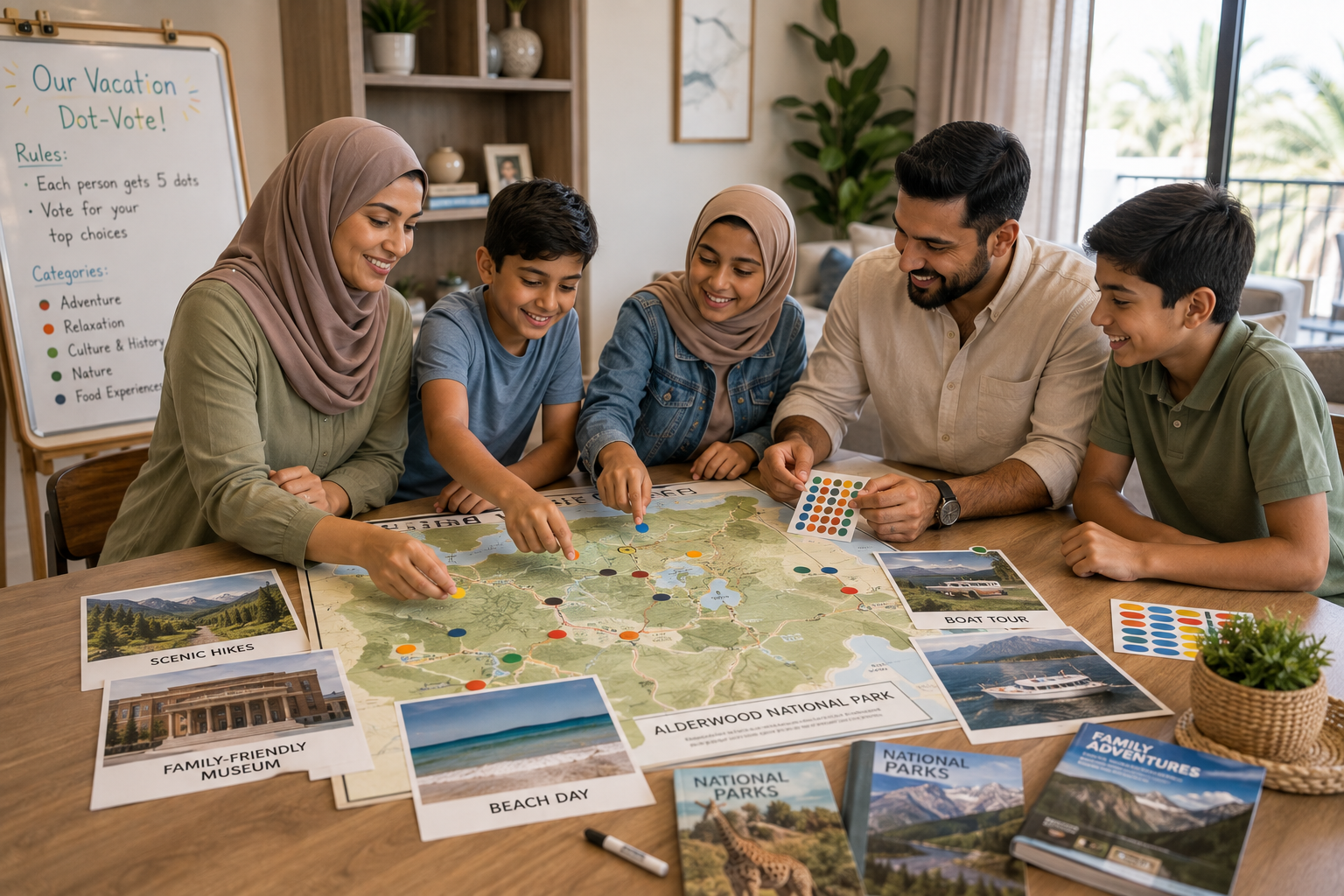
Truly enjoyable and inclusive family vacation goals are defined by four key attributes: they are collaborative, specific, realistic, and balanced, ensuring they cater to the entire family’s diverse needs.
Truly enjoyable and inclusive family vacation goals are defined by four key attributes: they are collaborative, specific, realistic, and balanced, ensuring they cater to the entire family’s diverse needs. They balance different energy levels, interests, and age requirements, moving beyond simple destinations to desired experiences.
The most successful goals have both a ‘what’ (the activity) and a ‘how’ (the feeling or outcome). A goal of “visit a museum” is weak; “discover something new together at a hands-on science museum” is a strong, inclusive goal because it focuses on the shared emotional outcome.
Key Attributes of Effective Vacation Goals
Micro-Glossary: Non-Negotiables
The 1-2 core activities or conditions that are absolutely essential for a specific family member’s enjoyment, which must be protected during planning (e.g., daily quiet time for a parent, a pool for a child).
Collaborative
Effective goals arise from open discussions where every family member contributes, ensuring mutual buy-in. This means the goals delineate preferences, not just dictate them.
Specific
Goals should clearly define desired experiences and outcomes, moving beyond vague statements. For example, instead of a “city break,” aim for “a cultural immersion in Rome focusing on ancient history and pasta-making classes.”
Realistic
Goals must align with practical constraints like budget, time, and physical limitations of all family members. An all-inclusive resort for families with small children might be more realistic than a multi-country European backpacking trip.
Balanced
They account for diverse interests and energy levels, providing a mix of adventure, relaxation, and individual pursuits. A family trip to a Theme Park should also include downtime.
Focus on creating goals that define shared *experiences* (like “family adventure” or “total relaxation”) rather than just locations, as this makes finding a suitable destination easier.
5. How do age and interests influence setting family vacation goals that cater to all?
Age and interests critically influence the setting of family vacation goals by dictating the required pace, complexity, and type of activities needed to ensure engagement and prevent boredom or overstimulation for any single member.
Age and interests critically influence family vacation goals by dictating the required pace, complexity, and type of activities needed for engagement. A successful process explicitly maps activities to age groups, balancing a teenager’s need for thrills with a toddler’s need for safety and routine.
When considering diverse interests and ages, carefully defining a family-friendly vacation destination becomes paramount to ensuring everyone finds joy.
The key is not to find one single activity everyone loves equally, but to structure the vacation with “turn-taking” in mind. A successful goal framework ensures that a day with a “teen-focused” activity is balanced by a day with a “young-child-focused” activity, with parents’ relaxation integrated throughout.
Once you’ve considered how different ages and interests shape your goals, it’s also important to understand why balancing structured activities and free time is important on family vacations to prevent burnout.
Veteran parents know that the best vacations for babies and toddlers are simple and short, as they will not remember an expensive trip and are not developmentally ready for complex activities.
Catering to Diverse Age Groups
Toddlers & Young Children
Rule: Prioritize routine, safety, and sensory experiences. Reason: Young children thrive on predictability and simple joys. Example: A destination with a shallow pool and a dedicated play area, ensuring nap times are respected.
School-Age Kids
Rule: Incorporate opportunities for exploration and learning. Reason: They are curious and eager for new discoveries. Example: A children’s museum, interactive exhibits, or scavenger hunts in a new environment.
Teens
Rule: Offer independence, adventure, and social connection. Reason: They seek autonomy and thrilling experiences. Example: A destination with water parks, zip-lining, or distinct areas for them to explore with some freedom, effectively balancing teen and toddler needs.
The goal is not to force a teen to enjoy a petting zoo, but to find a destination that offers both a petting zoo and a zip line.
6. How can families balance diverse interests to choose vacation goals everyone will enjoy?

Families balance diverse interests to choose enjoyable vacation goals by using structured decision-making frameworks, like a decision matrix, to visually map out and prioritize competing desires against practical constraints.
Families can balance diverse interests by using structured decision-making frameworks, such as a decision matrix, to visually map out and prioritize competing desires against practical constraints. This transforms disagreement into a collaborative problem-solving task, focusing on finding common ground.
The “One Veto, Three Votes” system is a powerful balancing tool. Each family member gets one “veto” to eliminate an idea they absolutely cannot tolerate and three “votes” to apply to their favorite ideas, quickly revealing the most popular and least offensive options.
Using a Decision Matrix for Balancing Family Vacation Goals
Micro-Glossary: Decision Matrix
A simple grid used to evaluate multiple options (e.g., vacation goals) against a set of weighted criteria (e.g., budget, interest level) to produce a logically-derived top choice.
| Criteria | Weight (1-5) | Option A Score (1-10) | Option B Score (1-10) | Option C Score (1-10) |
|---|---|---|---|---|
| Budget Compatibility | 5 | 8 | 6 | 7 |
| Overall Family Interest | 4 | 7 | 9 | 5 |
| Age Appropriateness | 4 | 9 | 7 | 8 |
| Relaxation Potential | 3 | 6 | 8 | 9 |
| Adventure / Novelty | 3 | 9 | 5 | 6 |
| Educational Value | 2 | 5 | 7 | 9 |
| Weighted Total Score | 157 | 145 | 149 |
To use the matrix, systematize vacation goals by listing potential options. Quantify preferences by assigning a weight to each criterion (e.g., budget, interest level) and a score (1-10) for each option against that criterion. Resolve conflicts by calculating weighted totals to logically derive the top choice.
Use the provided Decision Matrix template if your family is deadlocked between two or more fundamentally different vacation types (e.g., an adventure trip vs. a city break).
7. Which strategies help prioritize competing family vacation desires for a harmonious trip?
Strategies like a simple voting system or the “must-have vs. nice-to-have” categorization are the most effective ways to prioritize competing family vacation desires for a harmonious trip.
Strategies like a simple voting system or “must-have vs. nice-to-have” categorization effectively prioritize competing family vacation desires. A dot-voting exercise, for instance, provides an instant visual hierarchy of the family’s collective priorities, engaging all ages and preventing vocal members from dominating.
Prioritization is not just about choosing ‘what’ but also ‘when’. A high-energy, “must-do” activity for the kids should be scheduled for the morning, while a lower-priority, relaxing activity can be a flexible afternoon option, respecting the family’s natural energy cycles.
One study found that 40% of families dedicate 3-6 months to vacation planning, indicating that successful prioritization is a deliberate and time-intensive process.
Prioritization Strategies
Voting System (Dot-Voting)
Rule: Each family member gets a set number of “votes” (e.g., 3 stickers) to place on their favorite ideas. Reason: This democratizes the decision-making, giving everyone a say and creating clear visual consensus. Example: A whiteboard with brainstormed activities, where everyone places their stickers next to their top choices, leading to a family travel consensus on core activities.
Must-Have vs. Nice-to-Have
Rule: Categorize all desired activities into absolute essentials versus desirable extras. Reason: This clarifies core expectations and identifies flexible components, simplifying compromise. Example: A snorkeling trip is a “must-have” for one child, while visiting a specific gift shop is “nice-to-have.”
8. Which types of family vacation goals cater best to different travel styles and budgets?

The types of family vacation goals that cater best to different travel styles and budgets are categorized by their core purpose, such as Relaxation, Adventure, Cultural, or Educational goals.
Family vacation goals cater to different travel styles and budgets when categorized by purpose: Relaxation, Adventure, Cultural, or Educational. Matching the goal type to the family’s core travel style (e.g., an all-inclusive for relaxation vs. national park for adventure) is critical for destination selection.
To properly match your goals with your financial capabilities, you’ll want to dive deeper into how to create a baseline budget for a family vacation that supports your chosen travel style.
The “hybrid goal” is an advanced strategy. Instead of a purely “Relaxation” trip, an effective goal is “80% Relaxation, 20% Culture,” which immediately guides destination choice to places like coastal Italy or Mexico’s Riviera Maya, which offer both, rather than a secluded Caribbean island.
Comparison Table: Vacation Goal Types & Suitability
Micro-Glossary: Shoulder Season
The travel period between the peak and off-peak seasons, which often provides the best balance of good weather, fewer crowds, and lower prices for many destinations.
| Goal Type | Travel Style | Budget Suitability | Example Activity |
|---|---|---|---|
| Relaxation | Low-stress, predictable | Mid to High (e.g., All-Inclusive Resort) | Beach vacation, spa retreat |
| Adventure | Active, exploratory | Low to Mid (e.g., National Park trip) | Hiking, kayaking, safaris |
| Cultural | Immersive, learning-focused | Mid to High (e.g., European city break) | Museum visits, local festivals |
| Educational | Enriching, knowledge-seeking | Mid to High (e.g., historical tours) | Historical site exploration, workshops |
Choose your primary goal type *before* you start researching destinations. This single decision narrows your options from thousands to a manageable few.
9. How do budget and available time impact selecting realistic family vacation goals?
Budget and available time are the two primary constraints that impact the selection of realistic family vacation goals by defining the geographic scope and duration of the trip.
Budget and available time are primary constraints impacting realistic family vacation goals. Limited resources suggest focusing on local or regional destinations like road trips. Conversely, a larger budget and timeframe enable international travel and deep cultural immersion, optimizing experience-time versus travel-time and cost.
Frame time not just as “number of days” but as “number of quality hours.” A 7-day trip to Europe from the US involves nearly two full days of travel, leaving only 5 days for activities. A 7-day regional road trip might yield 6.5 days of activity time, representing a more than 20% increase in usable vacation time for the same duration.
For multi-generational trips, budget conversations are critical as surveys show half of grandparents (50%) end up paying for the entire vacation, while 48% split costs with their adult children.
Conditional Advice for Budget & Time
- If your realistic vacation budget is limited and time is short, do consider road trip planning with kids or staycations, resulting in maximized experience-time and minimized travel costs.
- If you have a generous budget and extended time, do explore international travel and deep cultural immersion, resulting in diverse, enriching experiences.
- Stress that a smaller budget does not mean a less enjoyable vacation; it simply re-orients the goals toward creativity and local exploration.
10. What steps should families take to collaboratively set enjoyable vacation goals?
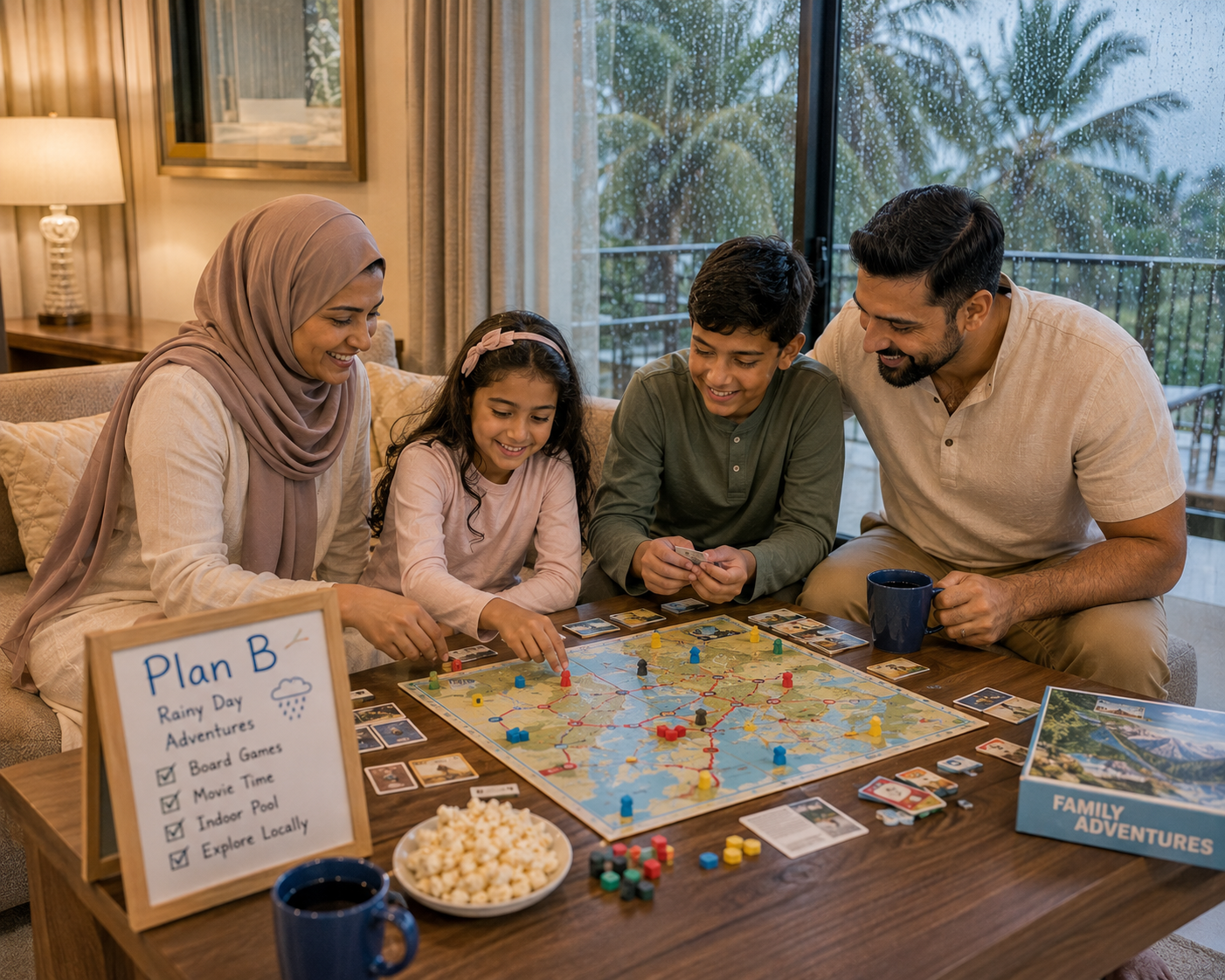
Families should take seven specific steps to collaboratively set enjoyable vacation goals, starting with scheduling a dedicated meeting and ending with documenting the agreed-upon outcomes.
Families should take seven specific steps to collaboratively set enjoyable vacation goals, starting with scheduling a dedicated meeting. This structured “family meeting” involves brainstorming, identifying common themes, discussing constraints, and prioritizing 3-5 core goals, ensuring every voice is heard for a true team effort.
A key benefit of a collaborative approach is that it can significantly make family vacation planning less stressful for everyone involved, especially the primary planner.
The most crucial, often-skipped step is #3: Identify common themes. Before voting, group individual ideas (e.g., “swimming,” “surfing,” “boating”) under a broader theme like “Water Activities.” This helps family members see they have more in common than they realize, making prioritization easier.
Collaborative Family Vacation Goal-Setting Process
Micro-Glossary: Dynamic Itinerary
A flexible travel plan that sets 1-2 “anchor activities” per day but leaves significant room for spontaneous choices, which is ideal for families with varying energy levels.
- Schedule a dedicated “Vacation Summit”: Frame this as the official “kick-off” to the vacation to build excitement.
- Brainstorm individual desires without judgment: Encourage everyone, including younger children, to share their ideas, no matter how outlandish.
- Identify common themes and interests: Group similar ideas to reveal underlying shared desires (e.g., “water activities” or “historical exploration”).
- Discuss budget and time constraints openly: Clearly present the practical limitations to ground expectations in reality.
- Prioritize top 3-5 core goals using a voting system: Employ methods like dot-voting to democratically select the most popular and feasible goals.
- Document the agreed-upon goals and vision: Create a shared document or visual aid that solidifies the collective decision.
- Create a “Plan B” for each primary goal: Proactively plan for potential disruptions to ensure flexibility and reduce stress.
Use the provided checklist as your exact agenda for a 60-minute “Vacation Summit” to guarantee an efficient and productive planning session.
11. How can parents facilitate open communication when setting family vacation goals?
Parents can facilitate open communication when setting family vacation goals by acting as neutral moderators, using open-ended questions, and practicing active listening to validate every family member’s input.
Parents can facilitate open communication by acting as neutral moderators, using open-ended questions like, “What would be most exciting to discover?” This prompts creative, detailed responses and actively listening to validate every family member’s input, preventing conversation shutdown.
Introduce the “idea parking lot” concept. When an idea is too expensive, off-topic, or impractical for this trip, don’t just say “no.” Write it down on a separate sheet of paper labeled “Future Trip Ideas” to validate the suggestion and the person who made it, while keeping the current meeting on track.
Recent data shows 47% of families use professional travel advisors to access amenities and benefits they can’t find on their own, a strategy that can reduce planning stress and facilitate better family communication.
Communication Techniques for Parents
Rule: Use Open-Ended Questions
Reason: These encourage broader thinking and detailed responses, rather than simple yes/no answers that can shut down conversation. Example: Instead of “Do you want to go to a museum?”, ask “If we were exploring a new city, what kind of things would be most exciting to discover?”.
Rule: Practice Active Listening
Reason: This ensures every family member feels heard and understood, validating their input and building trust. Example: Rephrase a child’s idea by saying, “So, it sounds like you really want to spend time building sandcastles at the beach, is that right?”. Emphasize that the parent’s role is “facilitator,” not “dictator.”
12. How can families formalize and document their vacation goals for clarity and excitement?
Families can formalize and document their vacation goals for clarity and excitement by creating a simple, one-page “Family Vacation Vision Statement” or a physical vision board.
Families can formalize and document vacation goals by creating a simple, one-page “Family Vacation Vision Statement” or a physical vision board. This transforms abstract ideas into a concrete pact, serving as a constant reference point during booking and a source of shared anticipation.
The documentation should include a “Family Excitement Score” for each goal. Having each member rate their excitement (1-5) for the top goals provides a nuanced, at-a-glance view of the collective energy, helping to prioritize the most universally thrilling activities during detailed itinerary planning.
Framework: Documenting Your Family Vacation Goals
Micro-Glossary: Vision Board
A collage of images, words, and drawings representing the desired feelings and experiences of a vacation. It’s a powerful, non-verbal tool for aligning a family around a shared vision.
- Goal Title: [e.g., “Coastal Adventure & Relaxation”]
- Primary Objective: [e.g., “To connect as a family while exploring new beaches and enjoying quality downtime.”]
- Key Activities: [e.g., “Snorkeling, Building Sandcastles, Local Seafood Dinners, One Museum Visit.”]
- Why it’s important to us: [e.g., “Mom wants relaxation, Dad wants good food, Kids want beach time.”]
- Family Excitement Score: [e.g., Average 4.5/5]
- Associated “Plan B” (if applicable): [e.g., “Indoor aquarium if weather is bad, board games if too tired.”]
Create the “Documenting Your Family Vacation Goals” framework as a shared digital document (e.g., Google Doc) that all family members can access and contribute to.
14. What common mistakes should families avoid when setting vacation goals that everyone will enjoy?
The most common mistake families should avoid when setting vacation goals is failing to involve all family members from the very beginning of the planning process.
Families must avoid four critical mistakes: excluding younger members, ignoring budget constraints, over-scheduling the itinerary, and having unrealistic expectations. Each error directly undermines the inclusivity and enjoyment of the trip, making the process of goal-setting as important as the goals themselves.
By understanding these common errors, families can also learn how to prevent family arguments on family vacation, ensuring a smoother journey for all.
A subtle but damaging mistake is “implicit goal setting,” where one person (usually a parent) assumes they know what’s best and plans the entire trip, only to be met with disappointment. The core principle is that the *process* of setting goals is as important as the goals themselves.
Common Mistakes and Their Fixes
Micro-Glossary: Trip-Related Stress
The measurable psychological strain experienced during the planning and execution of a vacation, often caused by financial worries, logistical complexity, and interpersonal conflict.
Mistake: Excluding Younger Members
Fix: Involve everyone from the start in age-appropriate ways. This is key to avoiding vacation planning mistakes.
Mistake: Ignoring Budget Constraints
Fix: Make budget the second agenda item in your planning meeting, right after brainstorming, to set realistic expectations upfront.
Mistake: Over-scheduling the Itinerary
Fix: Build in mandatory downtime and free days, allowing for spontaneity and relaxation.
Mistake: Having Unrealistic Expectations
Fix: Focus on memorable moments and connection, not achieving “perfection,” and prepare for the inevitable bumps in the road.
If you recognize your family making one of these mistakes, immediately pause the planning process and schedule a “reset” meeting using the collaborative checklist from the previous section.
15. How do unrealistic expectations jeopardize enjoyable family vacation goals?
Unrealistic expectations, particularly over-scheduling, jeopardize enjoyable family vacation goals by eliminating spontaneity and creating a stressful, pressure-filled environment where rest is impossible.
Unrealistic expectations, particularly over-scheduling, jeopardize enjoyable family vacation goals by eliminating spontaneity and creating a stressful, pressure-filled environment. A successful vacation requires significant built-in downtime for rest, spontaneous discovery, and simply being together without a rigid schedule.
The “One-Third Rule” is a practical guardrail against unrealistic expectations: one-third of the vacation should be planned activities, one-third should be rest (including sleep), and one-third should be completely unscheduled free time. This structure builds resilience and relaxation into the trip’s DNA.
To counter unrealistic financial expectations, project managers advise adding a contingency amount of about 10 percent to a vacation budget for unexpected expenses.
The Danger of Over-Planning
Mistake: Expecting a “Perfect” Vacation
Fix: Define “downtime” as a critical, non-negotiable activity in itself. The goal is a “memorable and restful” trip, not a “perfectly executed” one.
16. How can families troubleshoot and adapt their vacation goals when plans change or disagreements arise?
Families can troubleshoot and adapt their vacation goals by embracing flexibility as a core principle and having pre-determined backup plans for common issues like bad weather or activity closures.
Families can troubleshoot and adapt vacation goals by embracing flexibility as a core principle and having pre-determined backup plans for issues like bad weather. Referring to the original shared vision helps pivot creatively, turning problems into opportunities and dramatically reducing in-the-moment stress.
Create a “Plan B” list during the initial goal-setting phase. For each primary goal, brainstorm one indoor and one outdoor alternative in the chosen destination. This pre-planning dramatically reduces in-the-moment stress and decision fatigue when plans are disrupted.
Strategies for Adapting Vacation Goals
Micro-Glossary: Flexibility
In travel, this is not just a mindset but a planned strategy that involves building buffer time into an itinerary and having pre-vetted alternative activities to deploy when necessary.
- Build buffer time into your itinerary: Allow for unexpected delays or spontaneous opportunities.
- Have pre-vetted alternative activities: Research rainy-day options or less-crowded alternatives in advance.
- Focus on the shared vision, not rigid plans: If a specific activity is cancelled, pivot to another that fulfills the same underlying desire (e.g., “adventure”).
Before finalizing your destination, research and document at least three rainy-day activities that align with your family’s goals. This is a critical stress-reduction step.
17. What strategies help resolve conflicts over family vacation goals effectively?
The most effective strategy to resolve conflicts over family vacation goals is to pause the discussion and employ active listening, ensuring each person feels their perspective is fully heard and validated before seeking a compromise.
The most effective strategy to resolve conflicts over family vacation goals is to pause, employ active listening, and use phrases like, “It sounds like what’s most important to you is…” This de-escalates tension, validates perspectives, and enables compromise, fostering a more rational discussion.
Implement a “cool-down” period. When a disagreement becomes heated, agree to pause the conversation for a set amount of time (e.g., 30 minutes). This allows emotions to settle and enables a more rational, less reactive discussion when you reconvene.
To avoid conflict, experts recommend starting to plan multigenerational trips six to nine months in advance, giving multiple households plenty of time to coordinate and resolve disagreements without pressure.
Effective Conflict Resolution Techniques
Rule: Shift from Debating to Understanding
Reason: Focusing on understanding the underlying needs behind a desire de-escalates tension. Example: Use phrases like, “It sounds like what’s most important to you is…” to rephrase the other person’s position. This demonstrates respect, making compromise possible. Remember, Active Listening is a learnable skill, not an innate trait.
18. Logistics: Collaborative Family Vacation Goal-Setting Process
| Checklist Item / Tactic | Status |
|---|---|
| Step 1: Schedule a dedicated “Vacation Summit” | ⬜ |
| Step 2: Brainstorm individual desires without judgment | ⬜ |
| Step 3: Identify common themes and interests | ⬜ |
| Step 4: Discuss budget and time constraints openly | ⬜ |
| Step 5: Prioritize top 3-5 core goals using a voting system | ⬜ |
| Step 6: Document the agreed-upon goals and vision | ⬜ |
| Step 7: Create a “Plan B” for each primary goal | ⬜ |
Resolution
Ultimately, setting family vacation goals everyone will enjoy is an engineering discipline in family dynamics, transforming a potentially stressful process into the first step of a memorable shared journey.
The core process hinges on collaborative planning, clear communication, and a documented shared vision. By investing time in this framework before booking, you guarantee a vacation that is not just taken together, but is truly *built* together.
The skills developed during collaborative vacation planning—negotiation, empathy, compromise, and shared decision-making—are valuable life skills that strengthen family bonds long after the vacation is over. The trip becomes a training ground for a more cohesive family unit.
Your final action is to schedule your family’s first “Vacation Summit” within the next seven days to put these principles into immediate practice.