How to Plan a Family Vacation Step by Step
Table of Contents
Foundational planning is crucial for a successful family vacation because it systematically transforms potential chaos into a structured, cost-effective, and enjoyable experience for all family members.
Meticulous foundational planning for a family vacation directly reduces stress by pre-empting common travel problems and saves significant money by unlocking early booking discounts. This proactive approach ensures the vacation’s primary goal—family bonding and enjoyment—is achieved. Learn more about how to plan the best time for a family vacation considering peak, off-season, and school schedules.
2. Why is foundational planning crucial for a successful family vacation?
Foundational planning is crucial for a successful family vacation because it systematically transforms potential chaos into a structured, cost-effective, and enjoyable experience for all family members.

How does early planning for a family vacation prevent stress and save money?
By planning a family vacation 6-12 months in advance, you gain access to a wider selection of flights and lodging at lower prices, often saving a significant percentage on total trip costs. This proactive approach also minimizes the stress of limited options and forced compromises.
When budgeting for vacation food, a common guideline is to add 10%-15% to your regular grocery bill to account for higher prices and splurges at your destination.
Airlines release their cheapest fare classes first. Early booking doesn’t just find a deal; it captures a specific inventory tranche that physically disappears as the departure date nears. This is a supply-and-demand function, not just a marketing tactic.
Author’s Experience
“As a parent of two, I’ve learned that the secret to joyful family travel isn’t luck, but meticulous planning. I once transformed a chaotic trip to Disney into a smooth sailing adventure by pre-booking everything, building in rest, and involving the kids in decisions. It made all the difference.”
What unique considerations define successful family vacation planning?
Successful family vacation planning requires balancing the needs and interests of different age groups, from toddlers to teenagers, and prioritizing their safety and comfort above all. Involving children in the planning stages fosters their cooperation and excitement for the trip.
Successful family resorts often structure activities around specific age segments, such as a Toddler Program for children ages 3-4.
The concept of “vacation buy-in” is critical. When a child has chosen an activity, they have a vested interest in its success, dramatically reducing the likelihood of complaints or disinterest during that part of the trip.
Understanding the advantages of early planning directly connects to optimizing your travel dates. Learn more about how to plan the best time for a family vacation considering peak, off-season, and school schedules.
3. What are the initial steps to define your family’s vacation vision and goals?
The initial steps to define your family’s vacation vision and goals are to host a family meeting to align on the desired trip style and then establish a comprehensive and realistic budget.

How can you align everyone’s expectations for a family vacation?
Host a family meeting with the explicit goal of creating a “vacation wish list.” This process gives every member a voice, helps identify shared interests, and makes the process of compromise transparent and collaborative.
Some families travel as a party of 4 approximately five times a year, which requires significant alignment of expectations for each trip.
Use a “veto rule.” Each family member gets one “veto” to use on a destination or activity they strongly oppose. This empowers individuals and prevents someone from being forced into an experience they will genuinely dislike.
What factors should you consider when setting your family vacation budget?
A realistic family vacation budget must account for all major expenses, including flights or fuel, lodging, a per-diem food allowance, tickets for attractions, and local transport. Crucially, always add a 10-15% contingency for unexpected costs.
As a general guideline, financial experts suggest that a family vacation budget can range from 5% to 10% of your total annual income.
Most families underestimate the “miscellaneous” category. This includes costs like baggage fees, travel-size toiletries, destination-specific clothing (e.g., rain gear), and daily treats like ice cream, which can accumulate significantly.
Building on these considerations, it’s helpful to understand the foundational process of budget creation. Learn more about how to create a baseline budget for a family vacation to ensure all expenses are covered.
4. How do you choose the best family vacation destination for your budget and interests?
You choose the best family vacation destination by systematically comparing different vacation types against your pre-defined budget, travel time constraints, and the collective interests of your family.

Which types of family vacations best suit different ages and preferences?
All-inclusive resorts and beach vacations are ideal for families with toddlers due to their self-contained environments and amenities. In contrast, national parks or adventure-focused trips offer the stimulation and challenge that teenagers often seek.
To cater to teenagers, some resorts offer dedicated teen programs for the 15-17 age group, understanding their need for independent, age-appropriate activities.
The “containment factor” is a key reason resorts appeal to parents of toddlers. A safe, enclosed environment with a kids’ club and shallow pools allows parents moments of genuine relaxation, a primary goal of the vacation.
What criteria should you use to evaluate potential family vacation destinations?
When evaluating a potential family vacation destination, prioritize three key factors: the overall safety and security of the area, the ease of access to medical care and family-friendly amenities, and the variety of activities that will engage your specific children.
A key criterion for evaluation can be the dining options available; some premium all-inclusive resorts feature as many as 21 restaurants on-property.
Go beyond “kid-friendly” and look for “family-proof.” This means not just having a kids’ menu, but having high chairs readily available, changing tables in restrooms (for all genders), and staff who are accustomed to the noise and mess that can accompany young children.
Once you’ve aligned on a vision, understanding the financial framework is the next logical step. Dive deeper into how to plan the budget for a family vacation covering transportation, accommodation, and activities to solidify your travel plans.
5. What factors help you decide on the ideal timing and duration for your family vacation?
The factors that help you decide the ideal timing and duration for your family vacation are primarily the school calendar, work schedules, and the significant cost differences between peak and shoulder seasons.
How can you minimize costs by selecting flexible family vacation dates?
Traveling in the shoulder seasons, such as May or September for European destinations, drastically reduces costs for flights and accommodations. This flexibility allows you to enjoy pleasant weather with significantly fewer crowds and lower prices.
As an example of cost savings, one family of 6 was able to book a trip to Costa Rica for a total of just $1,623 by being flexible with their travel plans.
The “mid-week travel” hack is a powerful form of date flexibility. Flying on a Tuesday or Wednesday instead of a Friday or Sunday can often result in substantial savings on airfare, even within the same travel week.
What is the optimal length for a family vacation to balance relaxation and exploration?
To balance relaxation and exploration, plan for at least two full “down days” within any 7-day family vacation itinerary. For international trips, a 10-14 day period is more effective, as it accounts for jet lag and allows for a more relaxed pace of discovery.
To prevent meltdowns and exhaustion, travel experts recommend limiting daily time in theme parks to a maximum of six to eight hours.
Consider a child’s “endurance clock.” A 10-day vacation might sound ideal, but for a young child, the novelty can wear off after day 7, leading to diminishing returns. Sometimes a shorter, more focused 5-7 day trip is more successful than a longer, drawn-out one.
Once you have an understanding of the overall factors, diving deeper into specific seasonal choices becomes essential. Discover more about how to decide between peak and off-season travel for a family vacation.
6. How do you book essential logistics for your family vacation, from flights to accommodation?
You book essential logistics for your family vacation by following a sequential process: first secure flights, then book family-friendly accommodation, and finally arrange ground transportation and purchase travel insurance.

What are the best strategies for finding family-friendly accommodation?
To find truly family-friendly accommodation, prioritize properties that offer more space and convenience, such as vacation rentals with separate bedrooms or hotels with suites and kitchenettes. Always verify amenities like pools or kids’ clubs are operational during your travel dates.
Finding lodging can be a primary challenge, as many standard accommodations are not designed to house a family of 6 in one room.
The term “family-friendly” is unregulated. The most reliable indicator is an “aparthotel” (apartment hotel), which specifically combines the space and amenities of an apartment (kitchen, living area) with the services of a hotel (reception, cleaning).
How can you secure cost-effective and convenient family travel?
To reduce costs, investigate vacation packages offered by airlines and travel agencies, as these bundles can offer significant savings over booking components separately. Additionally, leveraging loyalty programs for flight or hotel redemptions can dramatically lower the out-of-pocket expense of family travel.
A common budgeting rule for families is to refuse to book travel unless flights can be found for under $400 per person.
“Positioning flights” can be an advanced cost-saving strategy. If flights from a nearby major hub airport are significantly cheaper, it can be worth booking a separate, cheap regional flight or driving to that hub to save hundreds on the main international leg of the journey for a family.
7. What steps are involved in creating a practical and engaging family vacation itinerary?
Creating a practical and engaging family vacation itinerary involves mapping out key activities, scheduling them with realistic travel times, and deliberately building in significant downtime for rest and spontaneity.
How do you balance planned activities with spontaneous family moments?
The key to balancing a family vacation itinerary is to resist the urge to over-schedule. Plan one anchor activity for the morning when energy levels are highest, and keep the afternoon intentionally flexible for naps, pool time, or simply exploring the local neighborhood.
To prevent over-scheduling and burnout, experienced family travelers recommend planning no more than one major activity per day.
The most cherished family vacation memories often come from unplanned moments. Building “empty space” into your schedule is not a lack of planning; it is the deliberate planning *for* spontaneity to occur.
What are effective ways to incorporate everyone’s interests into the family vacation itinerary?
To ensure a fair itinerary, dedicate different days or half-days to an activity chosen by a specific family member. This guarantees that everyone, from the history-buff parent to the thrill-seeking teenager, has a part of the trip they are personally invested in.
Incorporating interests across different age groups is critical, as tweens in the 11-14 age bracket have different vacation priorities than younger children.
Create a “family activity draft,” similar to a fantasy sports draft. After creating a list of potential activities, each family member takes a turn picking one for the itinerary until the main slots are filled. This gamifies the process and makes it collaborative and fun.
With your core logistics booked and confirmed, the next task is to build a detailed yet flexible daily itinerary for your trip.
8. How should you prepare your family and essentials for a smooth vacation experience?
You prepare your family and essentials for a smooth vacation experience by organizing all travel documents, packing efficiently using a master list, and arranging for home and pet care well in advance.
What key documents are essential for international family travel?
For any international family travel, you must have passports with at least six months of validity beyond your return date. Additionally, you need to secure any necessary visas in advance and carry copies of birth certificates and a parental consent letter if applicable.
A crucial rule for international travel is that passports must have at least 6 months of validity remaining before expiration.
A parental consent letter is not just a recommendation; border officials in many countries (including Canada and Mexico) are legally required to look for them to prevent international child abduction. Its absence can result in being denied entry.
Specifically, when considering international travel with minors, one common question arises. Find out do children need passports for a family vacation and what regulations apply.
How can you pack efficiently for a family vacation with different needs?
Efficient family packing relies on two key tools: packing cubes to organize and compress clothes within a suitcase, and a shared master packing list to prevent forgetting essentials. Assigning older children responsibility for their own packing (using the list) also teaches valuable life skills.
When packing a carry-on, all liquids and gels are subject to the TSA’s 3oz limitation, not including breast milk or formula.
Pack one complete outfit for each family member in each checked bag. That way, if one suitcase is lost or delayed, every person still has at least one full change of clothes, rather than one person having no clothes at all.
To ensure nothing is forgotten and the packing process is streamlined, a comprehensive checklist is invaluable. Learn more about how to create a family vacation packing list tailored to your family’s specific needs.
9. Logistics: Essential Family Vacation Preparation Checklist
| Checklist Item / Tactic | Status |
|---|---|
| Verify Passports & Visas: Ensure all family members have valid passports with at least six months’ validity beyond return date and obtain any necessary visas. | ⬜ |
| Prepare Parental Consent Letter: If one parent is traveling alone with a minor, get a notarized letter of consent from the absent parent. | ⬜ |
| Create Master Packing List: Develop a detailed, itemized list for each family member, including specific clothing, toiletries, and gear. | ⬜ |
| Use Packing Cubes: Employ packing cubes to organize and compress clothing within suitcases for efficiency. | ⬜ |
| Pack a “Go-Bag”: Prepare a carry-on with 24-hour essentials (outfit, medications, chargers) in case of lost luggage. | ⬜ |
| Secure Home & Pet Care: Arrange for mail holds, house-sitting, and pet sitters well in advance. | ⬜ |
10. How can you avoid and fix common challenges during a family vacation?
You can avoid and fix common challenges during a family vacation by building flexibility into your itinerary to prevent burnout and by having pre-researched contingency plans for likely disruptions like travel delays.
What are the best strategies to manage unexpected travel delays or cancellations?
When faced with a cancellation, immediately contact both the airline to understand rebooking options and your travel insurance provider to start a claim for expenses. Having pre-researched nearby hotel options on your phone can save critical time and stress.
A travel delay can severely impact a shorter trip, such as a planned 5-night vacation, making contingency plans essential.
Download the airline’s app before you travel. In many cases of delays or cancellations, the app will allow you to rebook your family onto a new flight faster than waiting in a long customer service line at the airport.
How do you handle family disagreements or meltdowns during a vacation?
When a meltdown occurs, the first step is to remove the child or family member from the over-stimulating environment. Then, calmly address their basic needs (food, drink, rest) before attempting to discuss the disagreement.
Disagreements often stem from differing energy levels and interests, a common occurrence when planning for diverse age groups such as school-aged children in the 8-10 range.
Institute a “tap out” signal. Any family member who is feeling overwhelmed can use the signal, and without judgment, they are given 15-30 minutes of quiet, solo time (with supervision for kids) to reset. This empowers individuals to manage their own emotions before a meltdown occurs.
11. How do you adapt a family vacation for special needs or unforeseen circumstances?
You adapt a family vacation for special needs by proactively communicating with airlines, hotels, and tour operators well in advance to confirm and arrange necessary accommodations.
What considerations are vital for traveling with family members with disabilities or specific health needs?
When traveling with family members with health needs, you must carry all necessary medications in their original packaging, along with a doctor’s note. Furthermore, you must contact all travel providers weeks in advance to arrange for specific needs like wheelchair assistance, refrigeration for medicine, or special meals.
When booking lodging, a rental listed with 4 beds provides a data point on capacity but gives no information on crucial accessibility features like ramp access or bathroom grab bars.
Research the “medical landscape” of your destination. Know the location of the nearest reputable hospital, pharmacy, and the local equivalent of an emergency number (it’s not always 911). Share this information with your travel insurance provider before you depart.
How should you respond to minor injuries or illnesses during a family vacation?
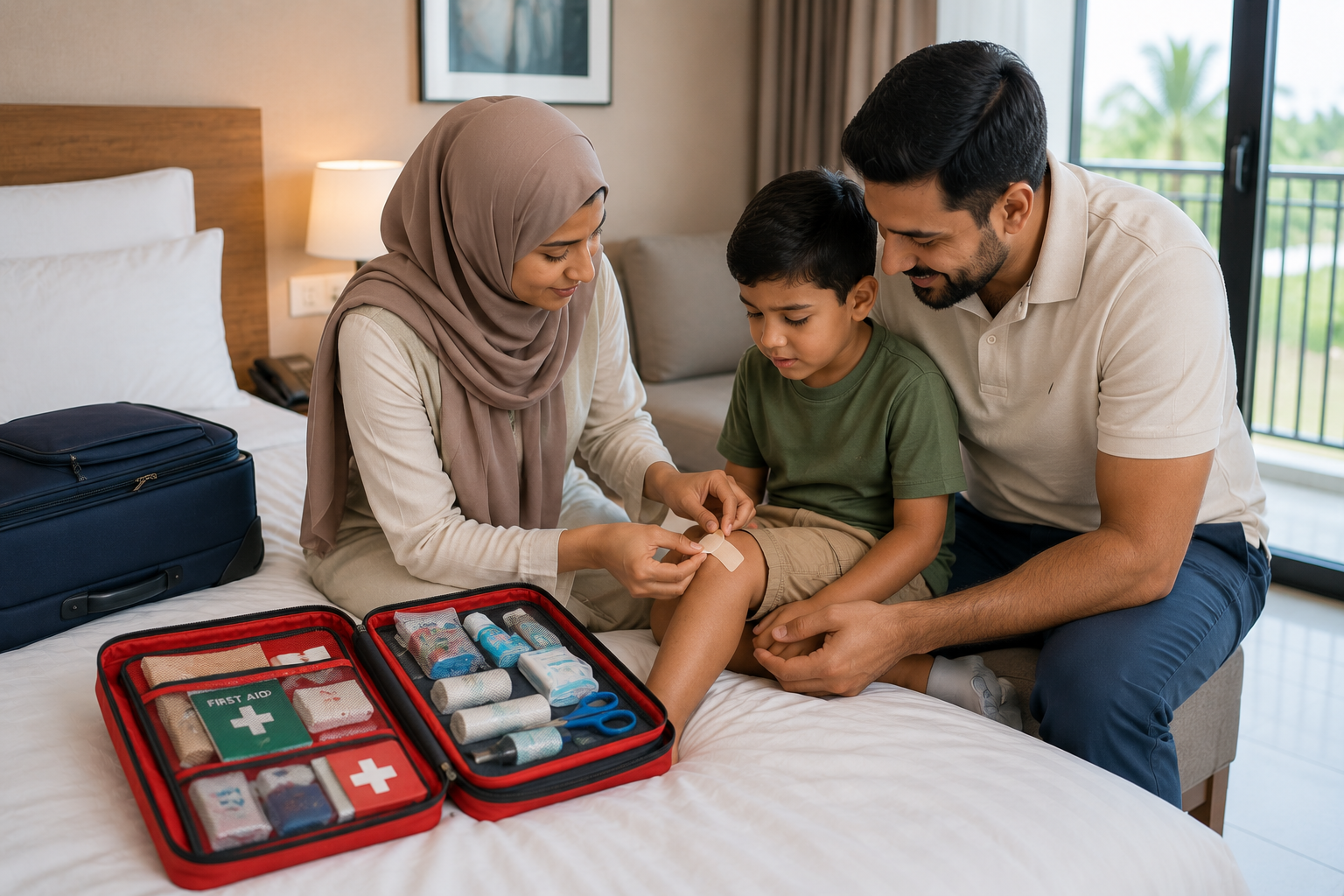
For any minor medical issue, first use your comprehensive travel first-aid kit to manage the symptoms. If the issue persists or worsens, use your travel insurance’s 24/7 assistance line to find a vetted local doctor or clinic.
For the youngest travelers, some resorts provide specialized Infant Programs for ages 0-2, where staff are trained to handle common minor issues.
Before you go, download a translation app that has an offline mode. Being able to translate terms like “fever,” “stomach ache,” or “allergic reaction” for a local pharmacist in their language can be incredibly important and reassuring.
Ultimately, the ability to plan for every eventuality—from the initial vision to handling unforeseen challenges—is what defines a truly successful family vacation.
Resolution
This step-by-step guide demonstrates that meticulous planning transforms the potential stress of family travel into a rewarding and seamless experience. By following this framework, you architect a vacation that prioritizes connection, enjoyment, and safety for the entire family.
2 Responses