Do You Need a Permission Letter for a Family Vacation?
Table of Contents
Yes, you absolutely need a permission letter for a family vacation if a minor is traveling internationally without both legal parents or guardians present. This notarized document acts as the primary legal proof required by border officials to authorize the trip, prevent delays, and verify that the child is not being wrongfully removed from their home jurisdiction.
This document is a proactive risk management tool that shifts the burden of proof from verbal claims to a verifiable, sworn statement. Border officials are explicitly trained to look for this documentation to combat international child abduction. To comprehensively understand how this fits into your broader trip organization, consider exploring our full guide on how to plan the travel documents for a family vacation.
2. What exactly constitutes a valid Child Travel Permission Letter?
A valid child travel permission letter is a formal, notarized document that explicitly grants authorization for a minor to travel with one parent, a relative, or another designated adult. It serves as sworn proof that the non-traveling parent(s) or legal guardian(s) are fully aware of and consent to the specific trip itinerary.
Without this document, the accompanying adult risks severe scrutiny. Border control agents possess discretionary power to deny exit or entry if they suspect a child is being moved against the custody rights of an absent parent.
Accompanying Adult: Any individual who is not a legal parent or guardian but is traveling with and responsible for a minor child during the specified travel period.
Why Do Family Vacations Sometimes Require a Child Travel Consent Document?
Family vacations require a Child Travel Consent Document primarily when a minor travels across borders without both legal parents to provide border officials with unequivocal proof of permission from the absent parent(s).
This requirement is enforced to comply with international and domestic child protection laws aimed at preventing parental child abduction. The letter demonstrates that the child is not being wrongfully removed from their home country or jurisdiction against a parent’s legal rights. For example, to avoid border complications, any child under the age of 19 should carry a consent letter when travelling abroad without both parents or persons with decision-making responsibility.
The term “sometimes” is key; the requirement is triggered by the travel scenario, not the destination itself. A family vacation to Orlando with both parents needs no letter, but the same trip with only one parent and a friend’s child instantly triggers the strong recommendation for two separate consent documents.
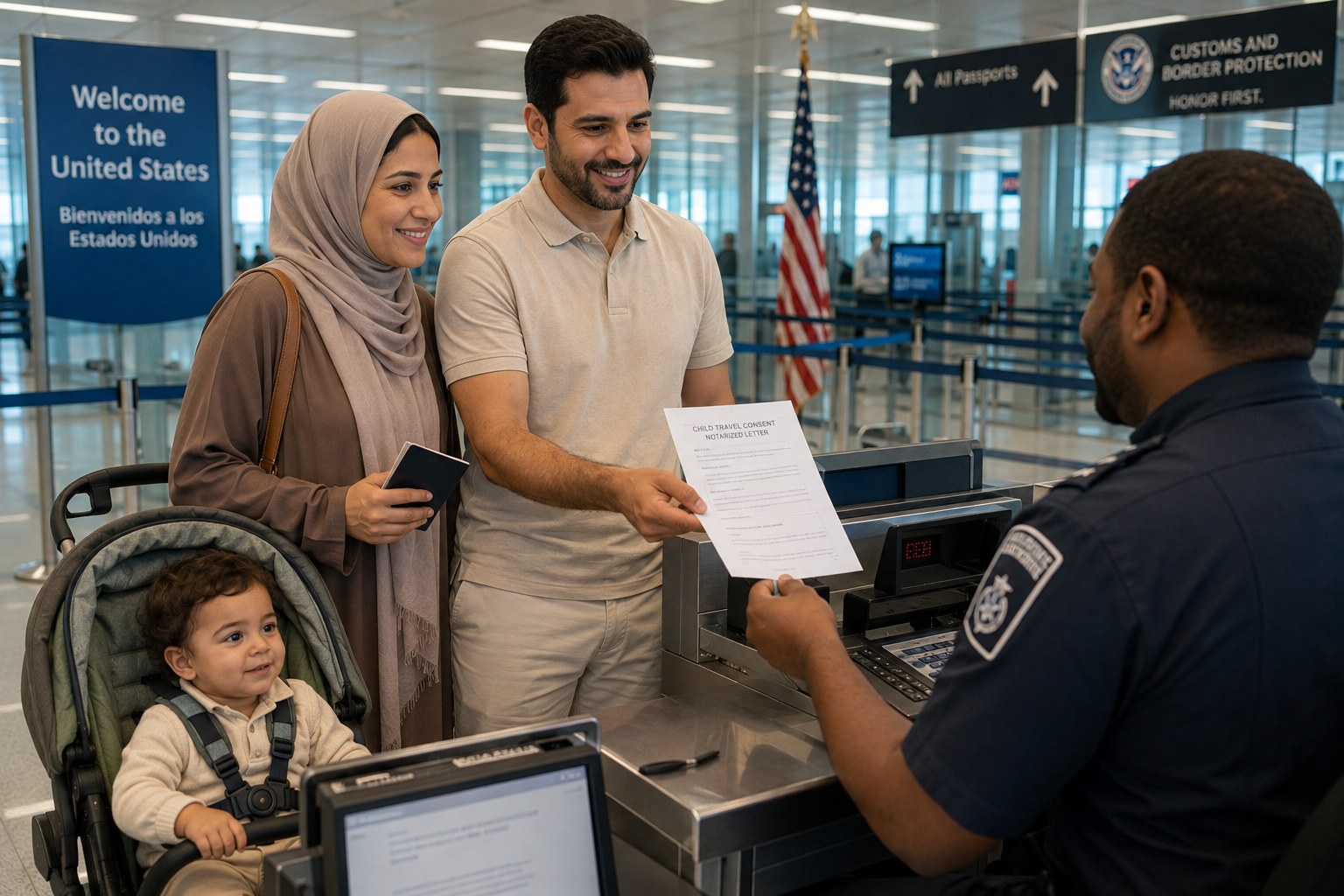
For deeper insights into the process and checks you might encounter, learn more about what to expect at border control when traveling with family.
3. What Legal Basis Supports Requiring Permission Letters for Child Travel?
The legal basis supporting the requirement for Permission Letters for Child Travel stems directly from international treaties and national laws designed to combat international child abduction.
The primary legal framework is the Hague Convention on the Civil Aspects of International Child Abduction, which is recognized by many countries. Additionally, the immigration laws of individual nations and the policies of transportation carriers (airlines, cruise lines) create a de facto requirement to prove consent.
Hague Convention on the Civil Aspects of International Child Abduction: An international treaty that provides a rapid method to return a child internationally abducted by a parent from one member country to another.
How Do International Child Protection Laws Influence Family Vacation Documentation?
International child protection laws directly influence family vacation documentation by compelling border authorities in signatory countries to verify that a minor is not being transported across borders without the consent of all legal guardians.
These laws create a global standard where proof of parental consent is expected. Consequently, a notarized permission letter becomes the primary piece of documentation to satisfy this legal expectation during immigration checks. If a parent travels abroad with a child without the proper permissions, the act may be considered international parental kidnapping.
The influence is preventative; these laws obligate countries to be vigilant. This means a border agent isn’t just following a bureaucratic whim when asking for your letter; they are fulfilling a legal duty imposed by international treaty to protect the child.
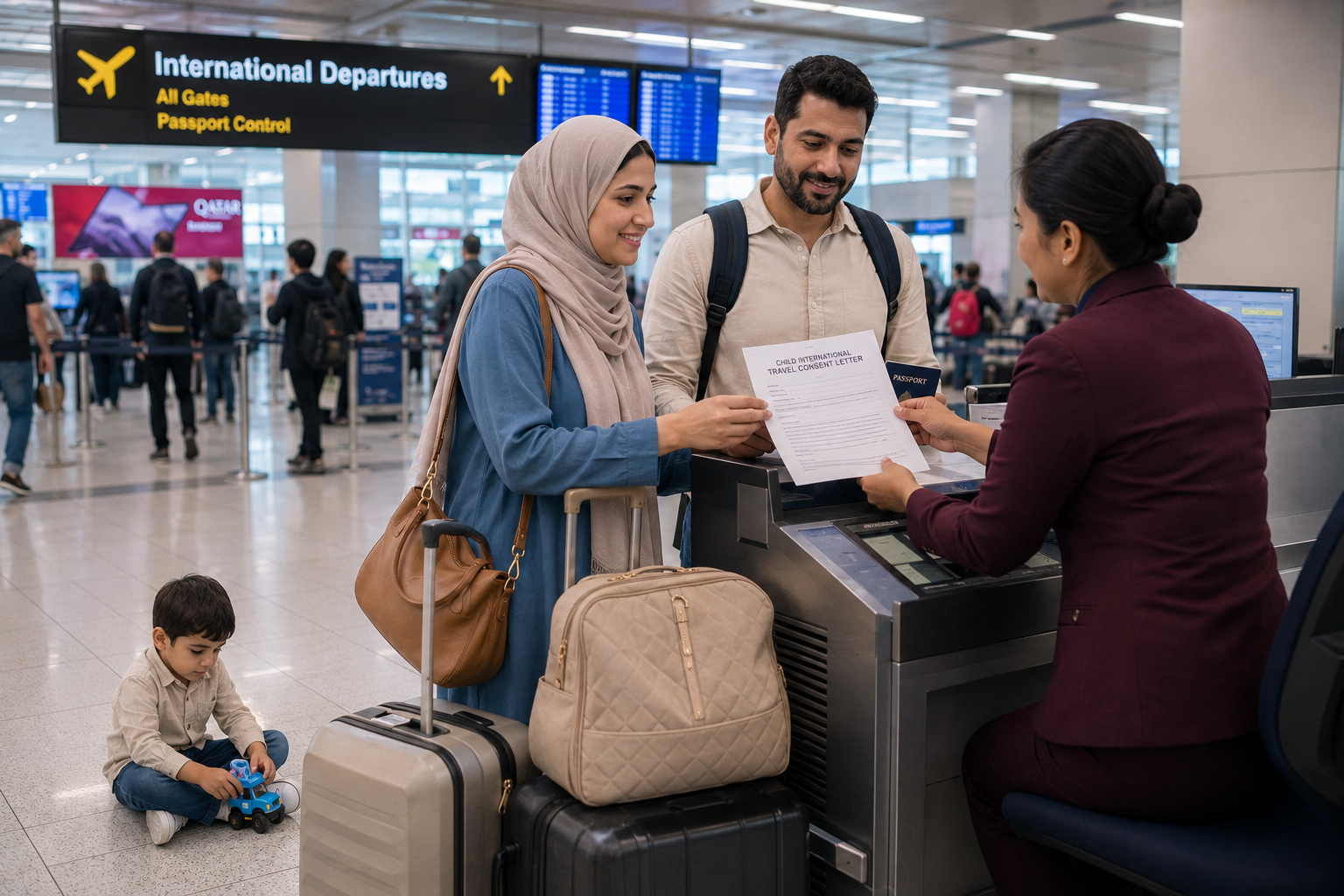
This legal framework also underpins the requirement for other crucial travel documents, such as clarifying whether children need passports for a family vacation.
4. When is a Permission Letter Absolutely Essential for a Child’s Family Vacation?
A Permission Letter is absolutely essential for a child’s family vacation in any scenario involving international travel where the child is not accompanied by both legal parents or guardians.
It is most critical when a child travels abroad with only one parent, with other relatives like grandparents, or as part of a group. For many countries, and for reentry into your home country, this document is a mandatory requirement to proceed past immigration.
Entry Requirements: The complete set of rules, including documentation and visa stipulations, that a foreign national must meet to be legally allowed into a specific country.
Are There Different Requirements for Domestic vs. International Family Vacations?
Yes, the requirements for a permission letter are distinctly different for domestic versus international family vacations, with international travel having far stricter and more consistently enforced documentation rules.
For international family vacations, a notarized consent letter is highly recommended or often required by border control. For domestic trips within your own country, it is generally not required by law but may be requested by some airlines. Most airlines allow children to travel alone starting at age five on domestic flights, but rules differ greatly once borders are crossed.
The key differentiator is the entity enforcing the rule. Domestically, the concern is primarily airline policy or state-specific custody laws. Internationally, the enforcer is a federal border agent representing national sovereignty and international law, a much higher authority.

5. What Specific Information Must a Child Travel Consent Letter Include for Family Trips?
A valid Child Travel Consent Letter for family trips must include comprehensive information identifying the child, the traveling and non-traveling parents, the accompanying adult, and the specific details of the vacation itinerary.
Essential information includes the full names and contact details of all parties, the child’s date of birth, specific travel dates and destinations, and the notarized signature of the non-traveling parent(s). Omitting any of these details can render the letter invalid at a border crossing.
Notarization: The official process where a licensed Notary Public verifies the identity of the person signing a document and witnesses the signature, adding a layer of legal authenticity.
Does the Letter Need to Specify Medical Authorization for the Child?
Yes, specifying medical authorization in the permission letter for a child is a critically important inclusion for any family trip to ensure prompt medical care can be administered in an emergency.
Including a medical authorization clause grants the accompanying adult permission to consent to emergency medical treatment. Without this, doctors and hospitals in a foreign destination may delay care while attempting to contact legal guardians. If a single parent has sole custody, having this documented clearly alongside medical consent ensures zero ambiguity at hospitals or borders.
This clause financially protects the family; it demonstrates to medical providers that an authorized adult is present, which can streamline insurance processing and billing, preventing the need for massive upfront payments in a foreign currency during a stressful emergency.
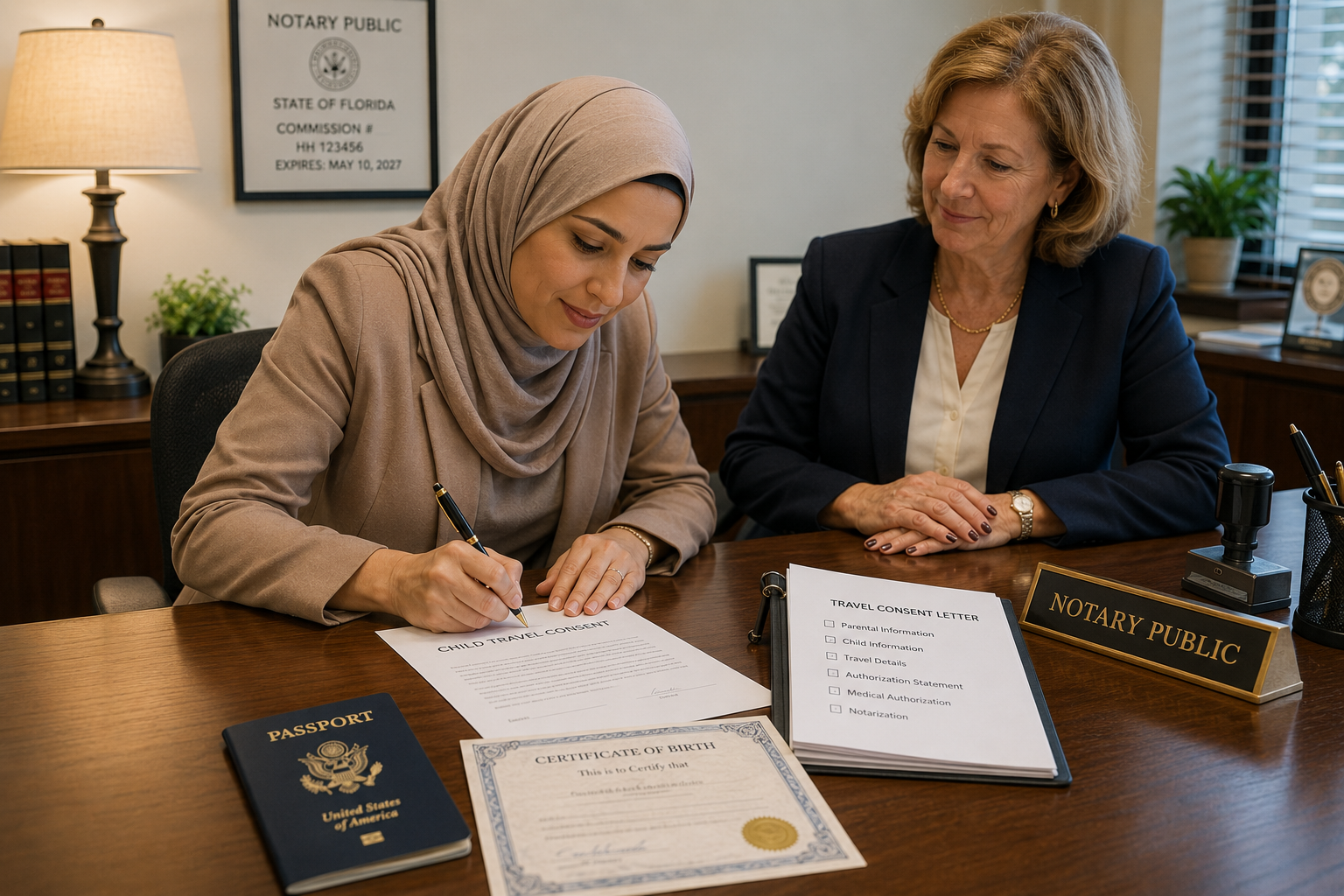
To ensure full preparedness for health-related eventualities, it is prudent to understand which medical paperwork is needed for a family vacation.
6. How to Legally Prepare and Authenticate a Child’s Family Vacation Permission Letter?
To legally prepare and authenticate a child’s family vacation permission letter, you must draft a comprehensive document, obtain the required signatures, and have it officially notarized by a licensed Notary Public.
The process involves gathering all necessary information, writing the letter using an authoritative template, having the non-traveling parent(s) sign it, and finally, taking the document to a notary who will verify identities and affix their official seal. This final step of notarization is what provides the primary layer of legal authentication.
Supporting Documents: A set of official records (e.g., birth certificate, custody order, parent’s passport copy) attached to the consent letter to corroborate the identities and legal relationships stated within it.
Is Notarization Always Required for a Child Travel Consent Document?
While not a universal legal mandate in every single jurisdiction, notarization is almost always required for a child travel consent document to be considered fully authenticated and credible by border officials, especially for international family vacations.
Notarization is considered a best practice and is highly recommended by government bodies. Because border agents have discretionary power, a notarized document removes doubt and is far less likely to be questioned than a simple signed piece of paper.
The financial aspect of this is that the small fee for a notary is an inexpensive insurance policy against a trip-ruining event. The cost of a denied entry—including lost flights, hotels, and vacation time—is thousands of times greater than the cost of notarization.
7. Where Can You Find Reliable Templates for a Child Travel Permission Letter?
You can find reliable templates for a Child Travel Permission Letter from authoritative government websites, the websites of legal aid organizations, and sometimes directly from airlines.
The most trustworthy source is typically your government’s travel or foreign affairs department website. These templates are legally vetted and free, providing the best starting point for most family vacation scenarios.
Generic Template: A basic, one-size-fits-all document that may lack the specific clauses needed for complex travel situations or the entry requirements of a particular destination country.
Should You Consult a Lawyer When Drafting a Permission Letter for a Child?
Yes, you should consult a lawyer when drafting a permission letter for a child if your family’s situation involves complex legal factors, such as ongoing custody disputes, international adoption, or travel that contradicts a court order.
For most simple family vacations, a notarized government template is sufficient. However, a lawyer is essential if the travel permission could have legal repercussions or if the non-traveling parent is uncooperative, ensuring the document is ironclad and protects your parental rights.
8. What Are the Risks of Not Having a Child Travel Permission Letter for Your Family Vacation?
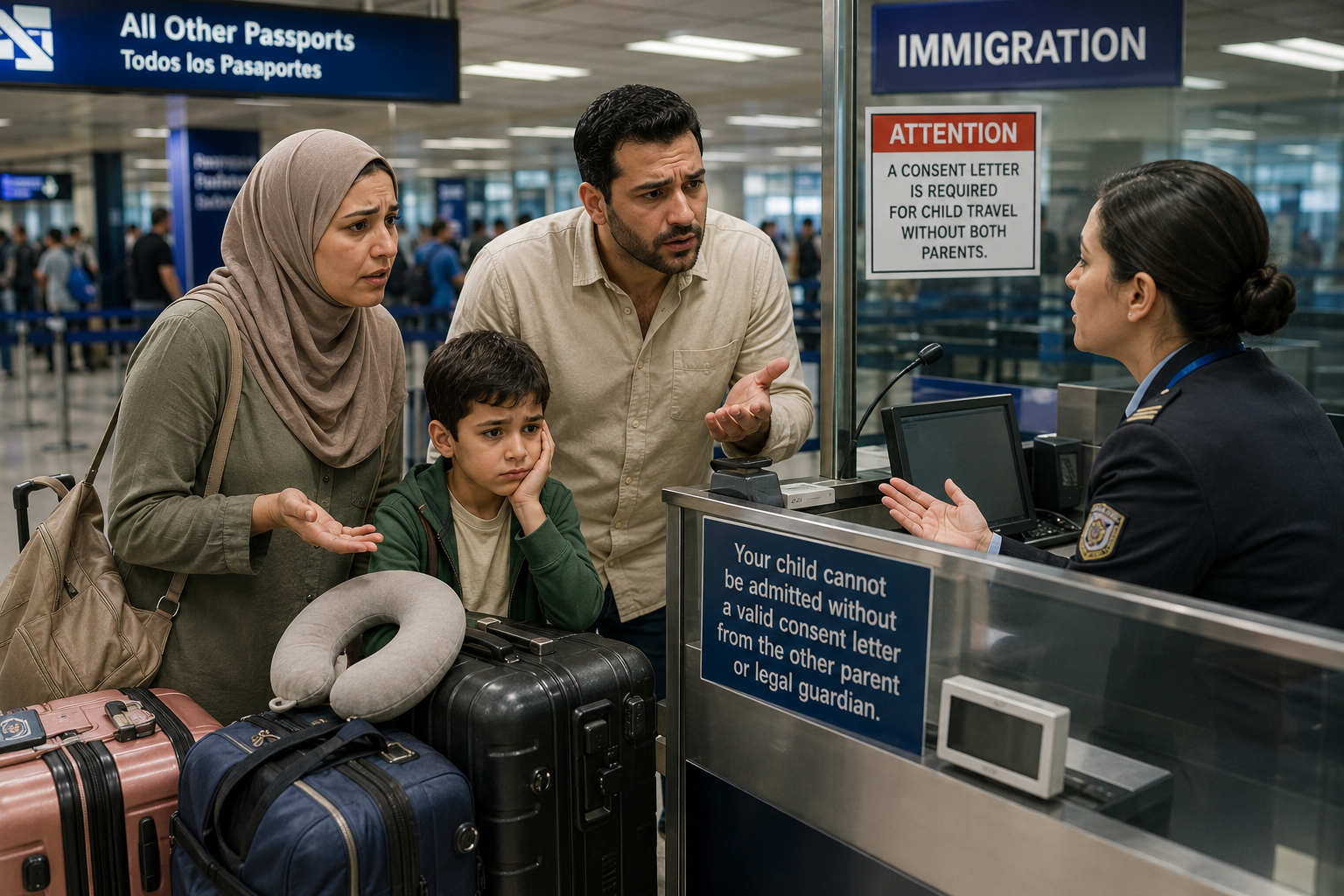
The primary risk of not having a Child Travel Permission Letter for your family vacation is being denied entry to a destination country or being denied boarding by your airline, resulting in the immediate termination of your trip.
Without a letter, you risk significant travel delays, intensive questioning by border officials suspecting child abduction, and in the worst-case scenario, being separated from the child while the situation is investigated.
Denied Entry: The formal decision by a country’s immigration authorities to refuse a traveler admission at a port of entry (airport, land border), forcing them to return to their country of origin.
Can Airlines Deny Boarding for a Child Without a Consent Letter?
Yes, airlines absolutely can and frequently do deny boarding for a child traveling without a required consent letter, as they are held financially liable for transporting passengers with improper entry documentation.
Airlines act as the first line of defense for immigration compliance. Canada requires children who are not traveling with both parents to present a consent letter; airlines flying there will check this to avoid the cost of returning an inadmissible passenger.
9. Child Travel Consent Checklist
| Checklist Item / Tactic | Status |
|---|---|
| Gather Information: Collect full names, contact details of all parties, child’s DOB, and specific travel itinerary. | ⬜ |
| Draft Letter: Use an authoritative template to draft the consent letter. | ⬜ |
| Obtain Signatures: Have the non-traveling parent(s) sign the letter in front of a notary. | ⬜ |
| Notarize Document: Get the document officially notarized by a licensed Notary Public. | ⬜ |
| Prepare Supporting Documents: Attach copies of birth certificate, parent passports, and custody agreements. | ⬜ |
Resolution
Navigating the requirement for a permission letter for your family vacation is a simple act of proactive planning that safeguards your financial investment and ensures a seamless travel experience for your child. If a child is crossing an international border without both legal parents, a comprehensive, notarized permission letter accompanied by supporting documents is not optional, but essential. By having it prepared, you are taking control of your family’s travel experience and demonstrating to authorities that you are a responsible, prepared guardian.