How to Plan a special needs family vacation?
Table of Contents
Careful planning is super important for a special needs family vacation. Thinking ahead about health, safety, and getting around easily turns a trip that could be very stressful into a wonderful time away.
Knowing what you need for a special needs vacation adds to the basics of planning a family vacation step by step.
1. Why is detailed planning crucial for a special needs family vacation?
It is very important to plan ahead so you can avoid health risks, keep everyone safe, and make sure you can go to all the places you want to visit on your vacation.
This kind of careful planning is a must. You have to make sure your family member gets their medicine, that there are no stairs in the way, and that you stick to their daily routine so they don’t get upset. This careful planning is what allows everyone to actually relax and have fun.
Along with the special needs side of things, it is smart to learn about safety for any family vacation.
On a normal vacation, you can just go with the flow. But for a special needs vacation, you want “planned spontaneity.” This means you figure out options ahead of time (like knowing where a quiet room is) so you can change plans quickly without ruining the day.
Respite Care: This is a service that some special resorts offer where trained people look after your child or adult with special needs for a short time, giving the rest of the family a little break.
Make a promise to plan the details if you want a vacation where the whole family can truly take it easy, instead of just dealing with everyday problems in a new place.
How does proactive planning enhance a special needs family vacation experience?
By thinking ahead, you can remove surprises, make your family feel more confident, and spend more time having fun instead of solving problems. It helps handle medical and sensory needs, setting clear expectations for everyone so anxiety is lowered and you can create happier memories.
Author’s Experience
“Having planned numerous trips for my own family with special needs, I’ve learned that preparation isn’t a limitation; it’s liberation. Knowing every detail allows me to truly relax and focus on creating cherished memories, turning challenges into unique adventures.”
A big benefit is what I call the “confidence dividend.” When parents and children know what is going to happen (by using social stories or a detailed schedule), they aren’t as worried about new things, and they are more willing to try fun activities. For example, the Air Carrier Access Act (ACAA) helps people with disabilities travel with service animals, and knowing this lets you plan a better vacation.[1]
When parents and children know what is going to happen, they approach new situations with much less anxiety, which often leads to a greater willingness to try new activities.
Benefits of planning ahead:
- You are much safer
- You feel less worried
- You have way more fun
- You stay in control of your money
What unique factors should you consider when planning a special needs family vacation?
You need to think about four main areas: medical needs (like equipment or medicines), sensory limits (like dealing with crowds or loud noises), physical access (like ramps or lifts), and how ready your family member is emotionally for a vacation. These factors will guide every choice you make.
One thing parents often forget is the “endurance profile” of the whole family, including the helpers. You have to plan for times when the caregivers get tired, making sure there is time to rest for everyone, not just the person with special needs. Studies show that a lot of children with Autism Spectrum Disorder have trouble sleeping, so keeping their bedtime routine normal is very important.[2]
A critical but often overlooked factor is the “endurance profile” of the entire family, including caregivers. Planning must account for caregiver fatigue and build in downtime for everyone.
2. What key elements define a successful special needs family vacation?
The main things that make a special needs vacation successful are setting goals you can actually reach, keeping track of your budget, and focusing on having fun together rather than trying to see too many things.
A good vacation means doing the simple things you planned, staying within your budget, and making sure everyone feels safe and happy. You measure success by the smiles and good memories, not by checking off a huge list of tourist spots.
The best sign of success is when you get home and feel like the vacation was so good that you want to do it all over again. That shows your hard work in planning paid off.
Pacing Strategy: This means you carefully plan exciting activities and mix them with quiet time or naps during the day so nobody gets too tired or overwhelmed.
Decide what a good vacation looks like for your family before you start planning. That way, you know what you are aiming for.
How do you establish clear goals for your special needs family vacation?
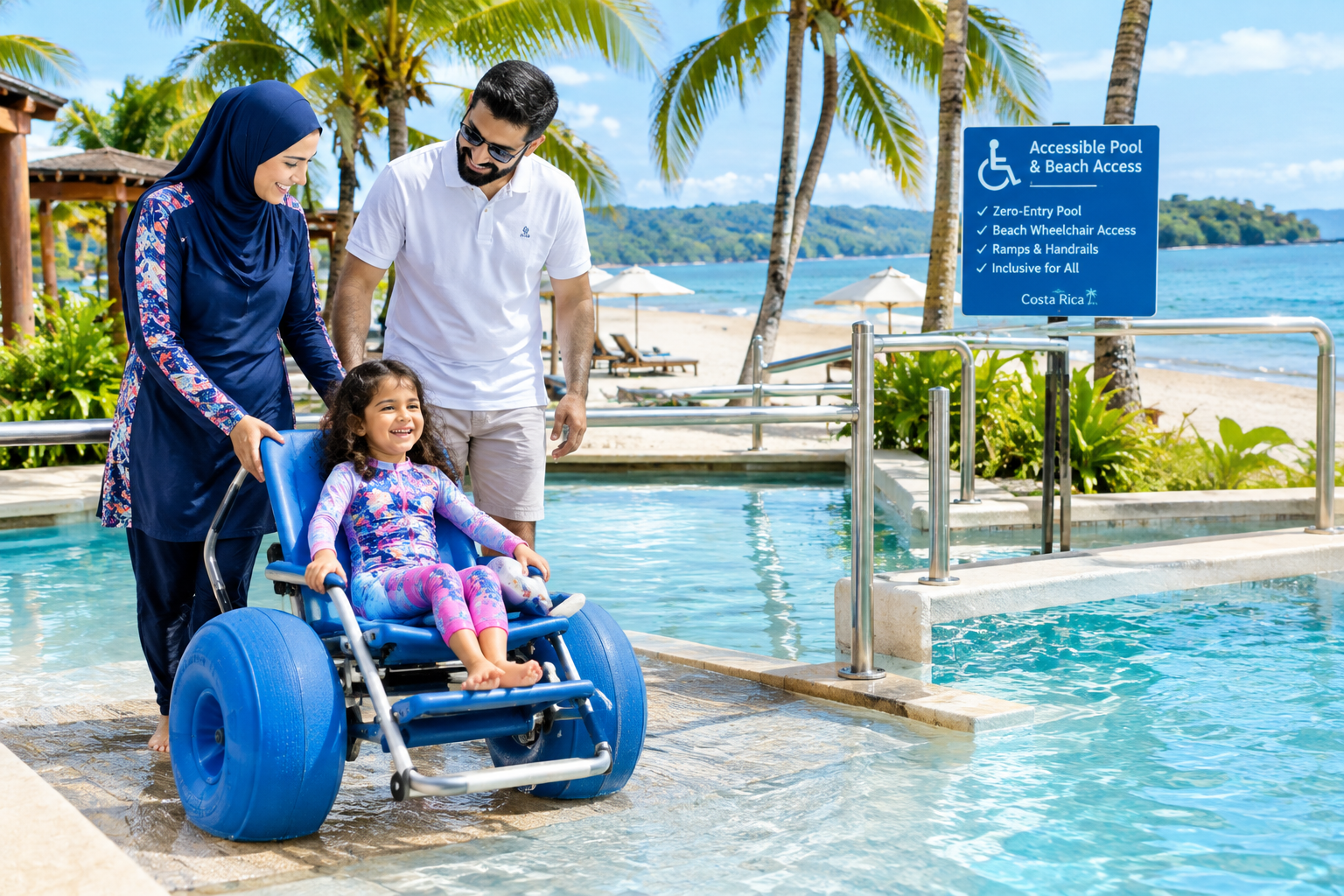
Talk as a family and pick one or two main goals that focus on what your family member can do and will enjoy. The goals should be about the experience (like “spend time together at a zero-entry pool“) rather than trying to do too much (like “visit three museums”).
Try using a “Goal-Barrier-Solution” idea. If your goal is “eat at a restaurant together,” think about what might stop you, like noise or long waits (the barriers). Then, plan a solution, like bringing noise-canceling headphones and booking a quiet table early. One family who traveled with a mother who had Parkinson’s found that the small things, like watching the kids play, meant the most to them.[3]
Use a “Goal-Barrier-Solution” framework. For a goal like “eat at a restaurant together,” identify barriers (noise, waiting) and pre-plan solutions (noise-canceling headphones, choosing a restaurant with reservations and a quiet corner).
Which financial considerations are essential for a special needs family vacation?
You need to save money for extra things like renting medical equipment, paying a little more for a hotel room that fits a wheelchair, buying good vacation insurance, and keeping a little extra cash for medical surprises.
For more tips on paying for your hotel, read about how to budget accommodation costs for a family vacation.
An important thing to think about is paying for “convenience.” This means spending a little extra money to make things easier and less stressful, like buying a direct flight instead of one with long layovers, or picking a hotel that has trained helpers. For families with a permanent disability in California, you can get a discount pass for state parks to help save money on activities.[4]
A crucial financial consideration is the cost of “convenience buys” that reduce stress, such as paying for direct flights to avoid chaotic layovers or choosing a slightly more expensive hotel because it offers verified respite care services.
Hidden costs to watch out for:
- Extra fees for vans with ramps
- Baggage fees for medical gear
- Paying for a helper to travel with you
3. How do you choose accessible destinations for a special needs family vacation?
Picking the right place for your vacation means looking closely at how easy it is to get around, what trained help they have, and if it matches exactly what your family needs.
First, make a list of things you absolutely must have, like a ramp or quiet hours. Then, look for places that are known for helping families, like spots that are called a “Certified Autism Center.” Make sure to double-check everything before you pay for the trip.
You have to look at the whole picture. If the hotel is great but there are no taxis that fit a wheelchair from the airport, the vacation won’t work. Every step of the journey needs to be easy.
Certified Autism Center (CAC): This is a special award given to places where the staff has had a lot of training on how to help people with autism or sensory needs so they feel safe and comfortable.
Pick a place that clearly talks about how they help people with special needs. If they have special awards for it, it means they really care about doing a good job.
Which criteria help evaluate destination accessibility for special needs families?
Look for places that have things like zero-entry pools (pools you can roll right into), beach wheelchair rentals, easy-to-use buses, and theme parks that have quiet rooms. Keep a list and compare different places to see which one fits your family the best.
It’s important that the place gives you good, updated information. If a hotel has a special webpage about how they help guests and gives you a phone number to call, that is much better than a place that just says “we are accessible.” For example, the city of Indianapolis provides free wheelchairs at big museums and has an official guide for travelers with needs.
A critical evaluation criterion is the quality and recency of information. A destination with a dedicated, recently updated accessibility page on its website, including contact information for an accessibility coordinator, is a much better bet than one with a vague “we are ADA compliant” statement.
Things to check before you book:
- Where you will sleep (Lodging)
- How you will get around (Transportation)
- Where you will have fun (Attractions)
- Who can help you (Services)
How can you research and verify accessibility features of potential destinations?
Start by reading blogs from other parents who travel with special needs. After you find a place you like, call the hotel, airline, or park directly. Ask them very specific questions and ask if they can email you a picture of the room or the ramps.
Always double-check what you are told. See it online, call and talk to a real person (write down their name!), and then send them an email so you have it in writing. Experts agree that sometimes places say they are accessible when they really aren’t, so getting proof is the best way to be safe.
Use the “triple-confirmation” method: 1) See it advertised online. 2) Call and get verbal confirmation from a staff member (and get their name). 3) Follow up with an email summarizing the conversation, creating a written record of the promised accommodations.
Ways to double-check information:
- Read reviews from other parents from the last 6 months
- Call the front desk of the hotel
- Talk to a travel agent who understands special needs
4. Which accommodations best support a special needs family vacation?
The best places to stay are those that have ramps and wide doors, let you keep your daily routines, offer options for special diets, and are close to things you need.
Hotels with suites or mini-apartments are great because they have kitchens to cook special meals and extra space to relax. If someone uses a wheelchair, make sure you ask for a room with a roll-in shower.
To see what kind of hotel might work best for you, check out these types of places to stay on a family vacation.
Think about how loud or busy the hotel is. A giant resort with loud music and lots of people running around might be too much for some kids. A smaller, quieter hotel might be a much better choice.
Connecting Rooms: These are two hotel rooms next to each other with a private door in between. This is great for parents who need a little quiet space but still want to be right next to their kids to keep them safe.
Renting a house or a suite is usually the smartest move if you need to keep a strict schedule or need a quiet place for your child to relax.
How do you select lodging with appropriate accessibility features for diverse needs?
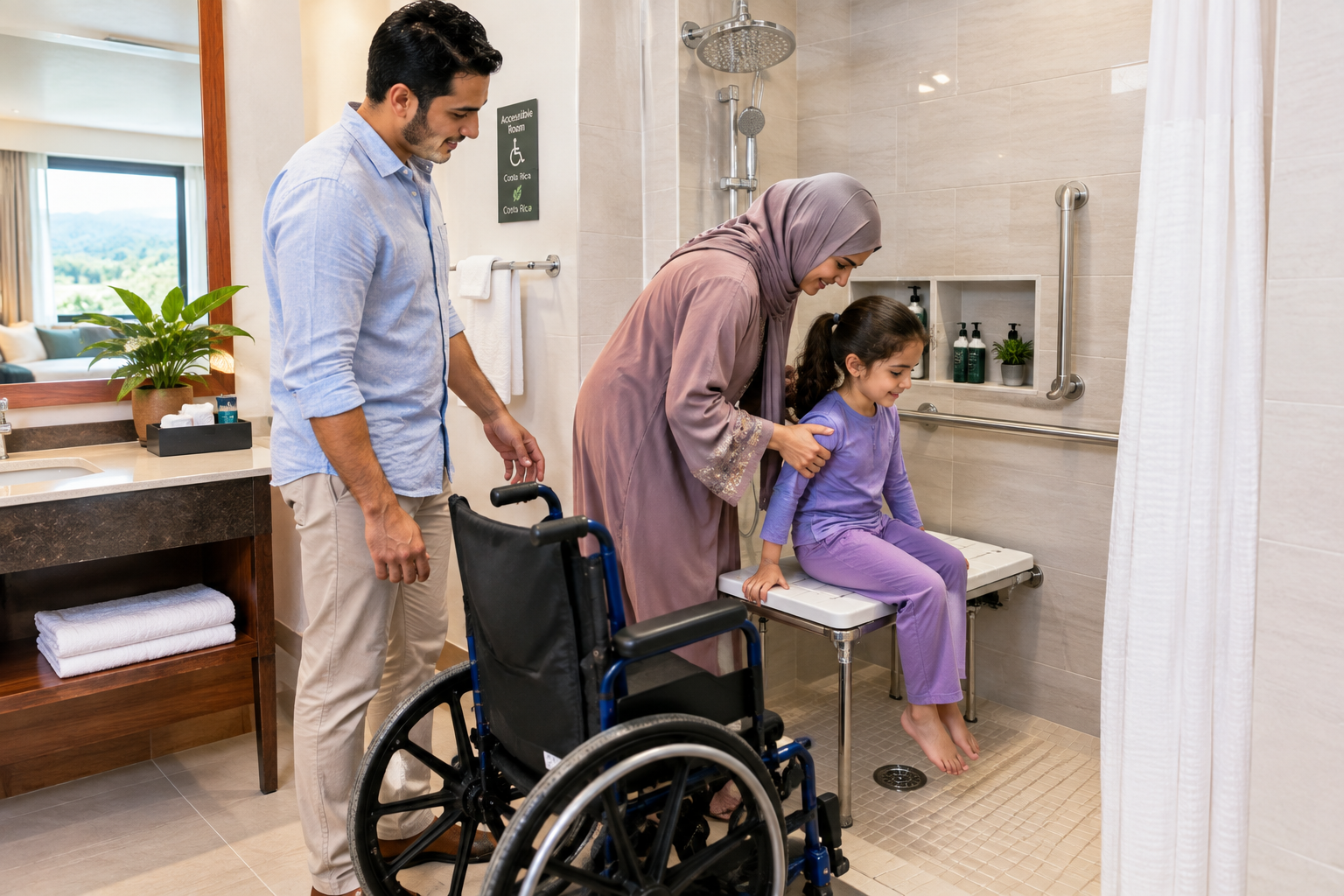
Make a list of exactly what you need and ask the hotel specific questions. Instead of just asking for a wheelchair room, ask if they have a “roll-in shower,” “grab bars,” and what the “bed height” is. If you need a quiet room, ask to be placed far away from elevators and ice machines.
The phrase “accessible room” means different things to different people. One hotel might just have a grab bar by the toilet, while another has a flat shower you can roll right into. You have to ask them to describe the room to you. In places like Costa Rica, there are laws that require every hotel to have these special rooms.
The term “accessible room” is not standardized. One hotel’s accessible room may have a bathtub with a grab bar, while another has a full roll-in shower. You must ask for descriptions of the features, not just confirmation of the room type, to avoid dangerous mismatches.
Questions to ask the hotel:
- For Wheelchairs:
- Do you have a roll-in shower?
- Where are the grab bars located?
- How high is the bed?
- Is there room for a lifting machine?
- For Sensory Needs:
- Can we have a room far from the elevator?
What questions should you ask about medical support and routine accommodations at hotels?
Ask if they can put a mini-fridge in your room to keep medicines cold. Check if you can mail medical supplies to the hotel before you arrive. Also, ask if the maids can clean the room at a specific time so it doesn’t mess up your child’s nap or routine.
Ask the hotel staff what they do if there is an emergency. A good hotel will know exactly how far the closest hospital is and might even have a doctor you can call. Many resorts and cruises are starting to offer special help for kids who get overwhelmed easily, so it is always a good idea to ask what kind of support they offer.
Ask about the hotel’s emergency protocol and their relationship with local medical services. A prepared hotel will be able to tell you the name and distance to the nearest hospital and whether they have a doctor on call.
Important things to check:
- Is a medicine fridge guaranteed in our room?
- Can we mail boxes of food or supplies ahead of time?
- Can we pick a specific time for the room to be cleaned?
- Is there a quiet corner in the lobby if my child needs a break?
5. How do you select transportation that meets special needs family vacation requirements?
Figuring out how you will travel means making sure the vans have ramps, the airlines know about your medical gear, and the ride isn’t too overwhelming.
If you are flying, call TSA Cares so they can help you at security, and tell the airline exactly what you need. If you are driving or taking taxis, book a van with a wheelchair ramp before you leave home because trying to find one at the last minute is very hard.
For more tips on airports and airplanes, read how to plan air travel with children during a family vacation.
Consider getting a “Hidden Disabilities Sunflower Lanyard.” It is a special green lanyard that tells airport workers that you might need a little extra time or help, without you having to explain it out loud.
TSA Cares: This is a free phone number you can call before you fly. They will set up a helper at the airport to walk your family through security, making it much easier if you have medical gear or a child who is scared of the machines.
Always try to buy direct flights, even if they cost a little more. Changing planes with a lot of medical equipment or a child who needs routine is very stressful.
Which factors determine the best accessible transportation for your family?
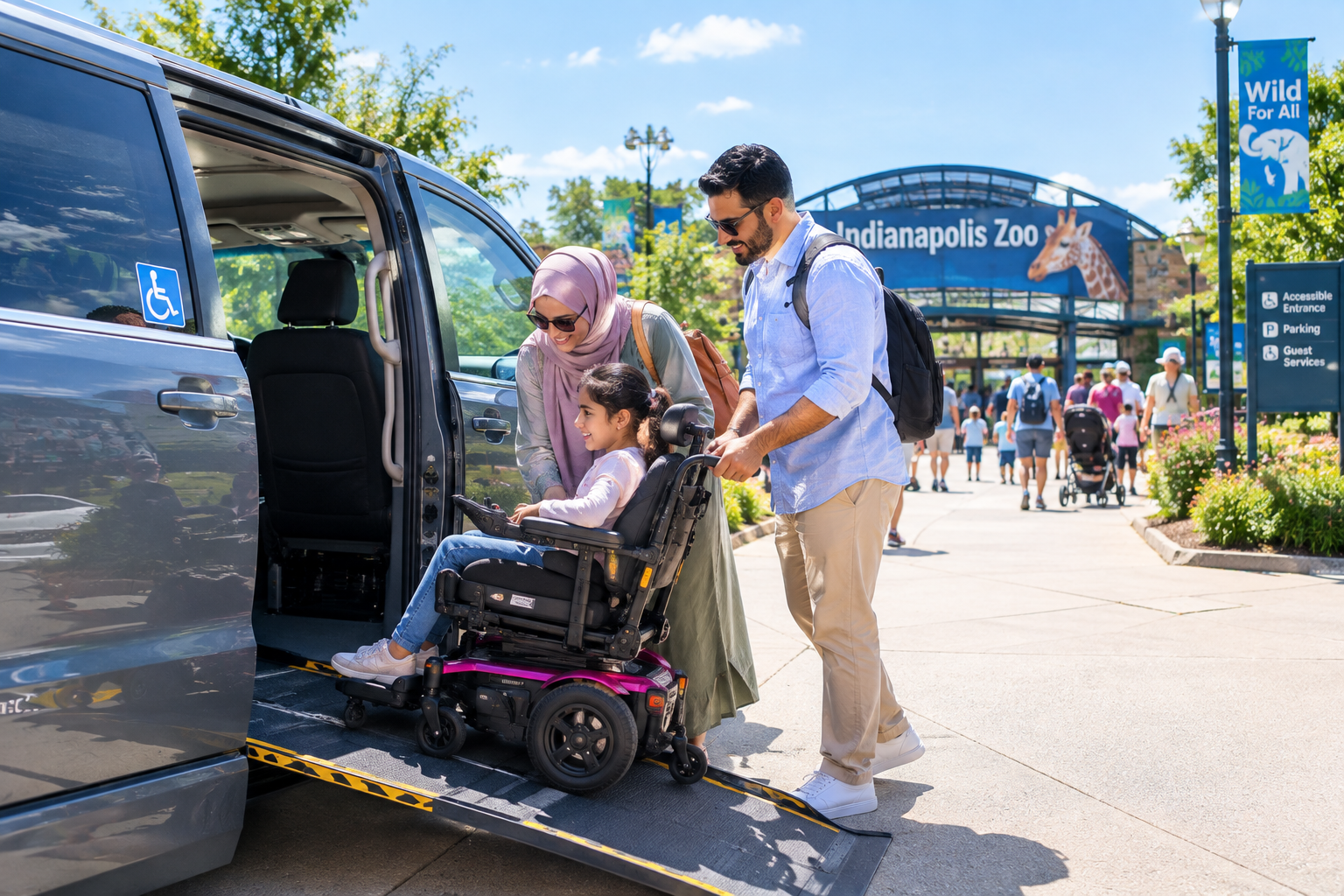
To pick the best way to get around, think about how big the wheelchair is, how much medical gear you have, and if you are going to a busy city. If you have a large motorized wheelchair, you probably need to rent your own accessible van. If your child can walk but gets tired, a city with good buses and a rented stroller might be perfect.
Think about how hard it is to move from a car to a wheelchair (this is called the “transfer gap”). The best way to travel is the one where you don’t have to get in and out of the car too many times. Fun fact: if you fly on a Boeing 787 airplane, they can open a door between two bathrooms to make one large bathroom that fits a wheelchair.
Consider the “transfer gap”—the physical space and process of moving from a vehicle to a wheelchair or vice versa. The best transportation option minimizes the number and difficulty of transfers required throughout the day.
Comparing Ways to Travel:
| Option | Pros | Cons |
|---|---|---|
| Accessible Van Rental | Plenty of space, you control the schedule, easy to get in and out. | Costs more, must book way ahead of time. |
| Accessible Taxis / Ride Shares | Very convenient when you need a quick ride. | Might not be available when you need one, costs a lot per trip. |
| Public Transit (Buses/Trains) | Cheap and great for exploring a city. | Can be very crowded and loud, which might be scary for some kids. |
How can you coordinate medical equipment and assistance during travel?
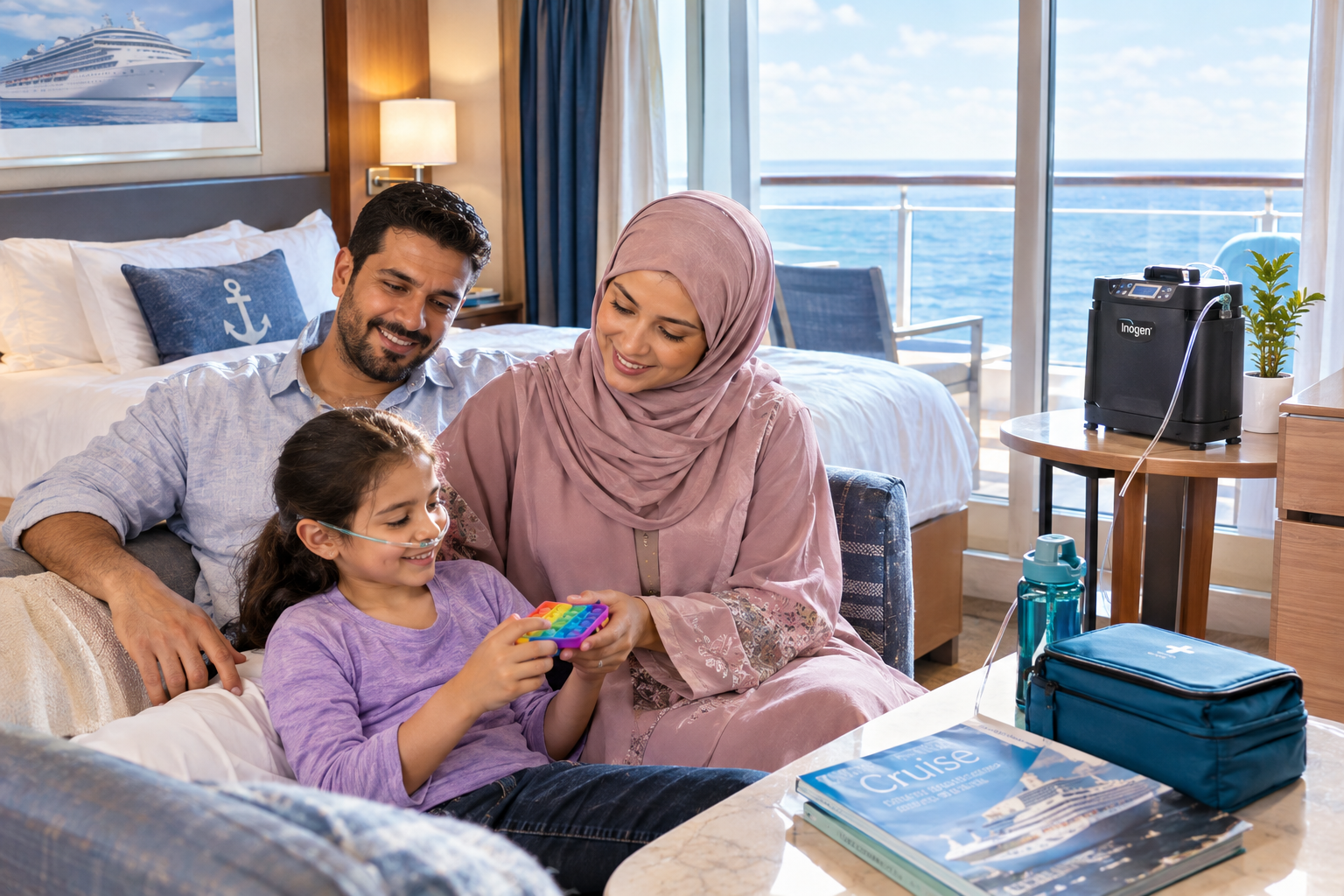
You need to talk to the airlines, rental shops, and your hotel a few weeks before you leave. Tell the airline if you are bringing an oxygen machine (like a Portable Oxygen Concentrator) or a feeding pump. For bulky items like a medical bed, rent it from a company that will drop it off right at your hotel.
Many cruise ships and large resorts work with special companies like Special Needs at Sea that will bring medical gear straight to your room and set it up for you. This is the easiest way to do it. Also, remember to call the TSA Cares program at least three days before your flight so they can help you at the airport.
Many cruise lines and major resorts partner with specific companies like Special Needs at Sea to deliver and set up medical equipment directly in your stateroom or room. This is the most seamless option.
To-Do List for Medical Gear:
- Get a Letter of Medical Necessity from your doctor
- Check how many batteries you are allowed to bring on the airplane
6. How do you proactively plan for medical support during a special needs family vacation?
To be ready for anything, you need to pack a really good medical kit, find out where the nearest hospital is, and make sure everyone in the family knows what to do if there is an emergency.
This means packing extra medicine and important doctor’s papers, looking up the closest 24-hour pharmacy, and having a plan just in case.
Take pictures of all your important papers (like prescriptions and insurance cards) and save them on your phone or computer using a service like Dropbox or Google Drive. This way, if you lose your bag, you still have all your important medical information.
Letter of Medical Necessity: This is a note from your doctor explaining why you absolutely need to travel with certain medicines or equipment. The airport guards will want to see this.
If your child has complex medical needs, pick a vacation spot that has excellent hospitals nearby and buy travel insurance that will pay for an emergency flight home if needed.
What essential medical documentation and supplies should you prepare for travel?
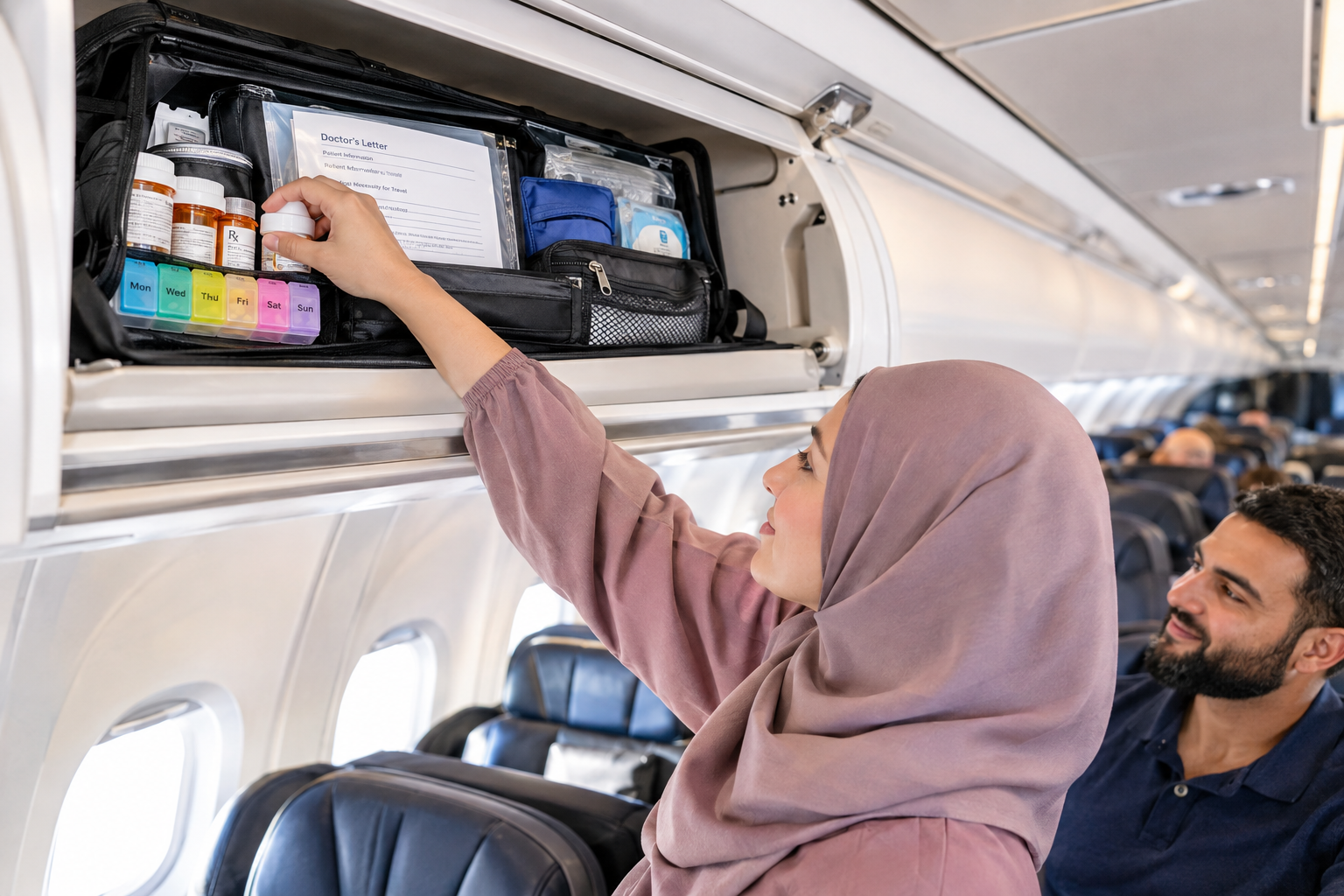
You must bring a letter from your doctor, copies of all prescriptions, your insurance cards, and pack double the amount of medicine you think you will need, plus a full first-aid kit. Pack all of this in a special “Go-Bag” that you carry onto the airplane with you—never put it in your checked luggage!
You can find more ideas on what to put in your family first-aid kit here.
Ask your doctor to write a short, one-page “summary of condition” letter. This explains your child’s health in simple terms so that if you have to go to an emergency room in a new city, the doctor there can understand what is going on right away. This piece of paper is incredibly important for saving time in an emergency.
In addition to prescriptions, include a “summary of condition” letter from a primary physician. This one-page document, written for a non-specialist, can be invaluable for an ER doctor in a foreign city to quickly understand the patient’s baseline health.
Important Papers to Bring:
- Doctor’s letter
- Copies of prescriptions
- Insurance information
- Letter of Medical Necessity
- List of all allergies
Important Supplies:
- Double the medicine you need
- First-aid kit
How can you identify and connect with local medical services at your destination?
Before you leave home, open up Google Maps and find the closest children’s hospital and a 24-hour pharmacy near your hotel. Save those phone numbers in your phone so you have them ready just in case.
If you are traveling outside the country, check your country’s embassy website. They usually have a list of good doctors and hospitals where people speak English. This is much safer than just searching the internet. It is also a smart idea to ask your doctor at home if they know anyone in the city you are visiting.
Your embassy or consulate in the destination country often maintains a list of recommended, English-speaking doctors and hospitals. This can be a more reliable resource than a random internet search.
How to prepare for an emergency:
- Use Google Maps to find the nearest hospital and 24-hour pharmacy.
- Save their phone numbers in your cell phone.
- Look up the embassy’s list of English-speaking doctors.
- Keep your travel insurance emergency number handy.
- Save the local “911” equivalent number in your phone as soon as you arrive.
How do you manage medication schedules and medical equipment while traveling?
Use a pill box and set alarms on your cell phone to remind you to take medicine on time, especially if you change time zones. Make sure all your medical equipment batteries are fully charged and that you have the right wall plugs if you are in a different country.
If you are flying to a place with a big time difference, talk to your doctor or pharmacist *before* you leave. They can help you figure out a schedule to slowly change the time you take your medicine so it keeps working perfectly. Remember that airplanes have strict rules, so keeping all medicine in its original bottle with the label on it is very important.
To manage time zone changes for critical medications, consult with your doctor or pharmacist *before* the trip. They can provide a specific schedule for gradually shifting dosage times.
Tips for taking medicine on vacation:
- Set alarms on your phone
- Use a pill organizer
- Never pack medicine in your checked suitcases
- Ask your doctor how to handle changing time zones
7. Logistics: Special Needs Vacation Planning Checklist
| Checklist Item / Tactic | Status |
|---|---|
| Define Needs: Make a clear list of what your family must have for a safe vacation, like a roll-in shower or a quiet room. | ⬜ |
| Verify Details: Don’t just trust a website. Call the hotel, airlines, and attractions to confirm they have what you need and get their names. | ⬜ |
| Prepare the Doctor File: Put together a travel folder with doctor’s notes, prescriptions, and an emergency plan. Keep a digital copy on your phone, too. | ⬜ |
Resolution
Having a wonderful special needs family vacation all comes down to planning ahead. By making sure your hotel is easy to get around, packing your medicines carefully, and keeping some of your daily routines, you can turn a stressful trip into a joyful adventure. Taking the time to plan these details means your family can relax, feel safe, and focus on making beautiful memories together.