How to Budget Accommodation Costs for a Family Vacation
Table of Contents
Budgeting family vacation accommodation costs is essential because lodging represents the largest or second-largest single expenditure, directly controlling the financial feasibility and quality of the entire trip.
This strategic budgeting prevents overspending and frees up funds for activities, dining, and souvenirs that define the family vacation experience. Without a dedicated accommodation budget, families risk compromising other critical aspects of their trip or accumulating debt, making robust budgeting crucial for overall financial health and trip enjoyment.
1. Why Is Budgeting Family Vacation Accommodation Costs Essential?
Budgeting family vacation accommodation costs is essential because lodging represents the largest or second-largest single expenditure, directly controlling the financial feasibility and quality of the entire trip. This strategic budgeting prevents overspending and frees up funds for activities, dining, and souvenirs that define the family vacation experience. Without a dedicated accommodation budget, families risk compromising other critical aspects of their trip or accumulating debt, making robust budgeting crucial for overall financial health and trip enjoyment. Understanding how to manage these specific costs is a crucial component of the larger journey of planning your entire family vacation.

Alongside accommodation, planning for family vacation transportation is often another significant financial consideration to factor into your overall travel budget.
The core benefit of accommodation budgeting extends beyond mere savings; it provides decision-making clarity. It forces a family to prioritize what matters most—space, location, or amenities—turning a vague “trip to Florida” into a concrete plan for either a spacious Orlando villa or a beachfront Miami hotel, each with a clear price tag, leading to more informed choices.
**Micro-Glossary:** **Total Trip Cost (TTC)** is the comprehensive sum of all vacation expenses, including accommodation, transportation, food, activities, and incidentals, which accommodation budgeting aims to control.
Choose to create a detailed accommodation budget if your goal is to maximize the vacation experience within a fixed financial limit, ensuring you don’t sacrifice fun for lodging.
How do accommodation costs impact the overall family vacation budget?
Accommodation costs fundamentally impact the overall family vacation budget by typically consuming the largest portion of funds, often between 30% and 50% of the total trip cost. This significant percentage means that every dollar saved on lodging is directly reallocated to enhancing other parts of the vacation, such as activities, dining, or extending the trip’s duration. Conversely, an unmanaged accommodation expense can quickly derail the entire budget, underscoring its pivotal role.
Lodging typically accounts for roughly 40% of total vacation spending across all budget ranges, according to Avantstay.com (2023).
The impact is not linear; it’s exponential. A 10% saving on a $2,000 accommodation bill ($200) can fund an entire day of family fun, like theme park tickets or a special dinner, demonstrating how small efficiencies in lodging yield outsized experiential returns for the family.
What key factors influence family accommodation prices?
The key factors that influence family accommodation prices are destination popularity, seasonality (peak vs. shoulder season), accommodation type, and the required room size or number of beds. Popular destinations during school holidays will always have higher prices, while traveling in the shoulder season offers significant savings. Therefore, a family’s choices regarding *where* and *when* they travel, alongside the *type* of lodging and *size* needed, are the most powerful levers for controlling accommodation costs.
Peak season rates in popular markets can run 200% to 300% higher than off-peak pricing, as reported by StuffedSuitcase.com (2023).
Beyond the obvious factors, a “hidden” driver is event-based demand. A major convention, festival, or sporting event in a city can inflate hotel prices by 200-300%, a variable that families must research before setting their dates to avoid unexpected cost surges.
Key factors impacting accommodation prices for families include:
- **Destination Popularity:** High-demand locations command higher prices.
- **Seasonality:** Travel during “shoulder season” offers significant savings compared to “peak season.”
- **Accommodation Type:** Hotels, vacation rentals, and aparthotels have different price structures.
- **Family Size/Room Needs:** Larger families often need more space or connecting rooms, impacting costs.
For instance, a two-bedroom suite in San Diego during July will likely be significantly more expensive than a similar-sized vacation rental in a less-trafficked coastal town.
2. Which Accommodation Types Offer the Best Value for Family Budgets?
The accommodation types that offer the best value for family budgets are typically vacation rentals and aparthotels, as they provide more space and kitchen facilities, which reduces overall trip costs. While hotels offer convenience and amenities, vacation rentals provide a better cost-per-square-foot value and allow families to save significantly by preparing their own meals. The best choice depends on a family’s priorities regarding space, amenities, and dining habits, making an informed decision critical.
When evaluating hotel options, a deeper dive into which family-friendly hotel amenities matter most can reveal what truly elevates your family’s stay.
The “value” of an accommodation type is a function of trip duration. For a short weekend trip (1-2 nights), a hotel’s simplicity may offer the best value. For a week-long vacation, the savings from a vacation rental’s kitchen almost always outweigh a hotel’s convenience, making it the superior value proposition for extended stays.
**Micro-Glossary:** **Aparthotel** (Apartment Hotel) is a type of lodging that offers apartment-style units with hotel services, providing a hybrid option with kitchens, living space, and amenities like a front desk and housekeeping.
Choose a vacation rental if your family vacation is longer than three nights and you want to reduce food costs. Choose a hotel for shorter trips where convenience and on-site amenities are the priority.
How do vacation rentals compare to traditional hotels for family budgets?
For family budgets, vacation rentals compare favorably to traditional hotels by offering lower per-person costs, more space, and the significant financial benefit of a full kitchen. While a hotel’s nightly rate might seem competitive, a vacation rental’s value emerges when factoring in the ability to cook meals and accommodate the entire family in one unit versus needing multiple hotel rooms or an expensive suite, especially for families of four or more and longer stays.
A vacation rental’s kitchen alone can cut food costs by 50% to 70% compared to restaurant dining, according to insights shared on NerdWallet (2023).
The comparison must include “hidden” value attributes: vacation rentals often include free parking and no resort fees, which can add $50-$100 per day to a hotel bill in a tourist destination like Hawaii or Las Vegas.
When should families consider all-inclusive resorts for potential accommodation savings?
Families should consider all-inclusive resorts for potential accommodation savings when their vacation priority is budget predictability and they plan to spend the majority of their time at the resort itself. These resorts bundle lodging, meals, drinks, and often activities into a single upfront price, eliminating surprise expenses. This strategy is most effective in destinations like Cancun or the Dominican Republic where off-site dining and activity costs for a family can be high and unpredictable, making budgeting simpler.
A 2023 Accrue Savings survey highlighted that 20% of people say they’ve gone into debt to pay for a vacation, showing the importance of predictable costs offered by all-inclusives.
The “break-even point” for an all-inclusive is key. Families must calculate if the resort’s per-person daily cost is less than what they would spend a la carte on food, drinks, and entertainment. For families with teenagers who have large appetites and participate in many activities, all-inclusive resorts frequently offer superior value.
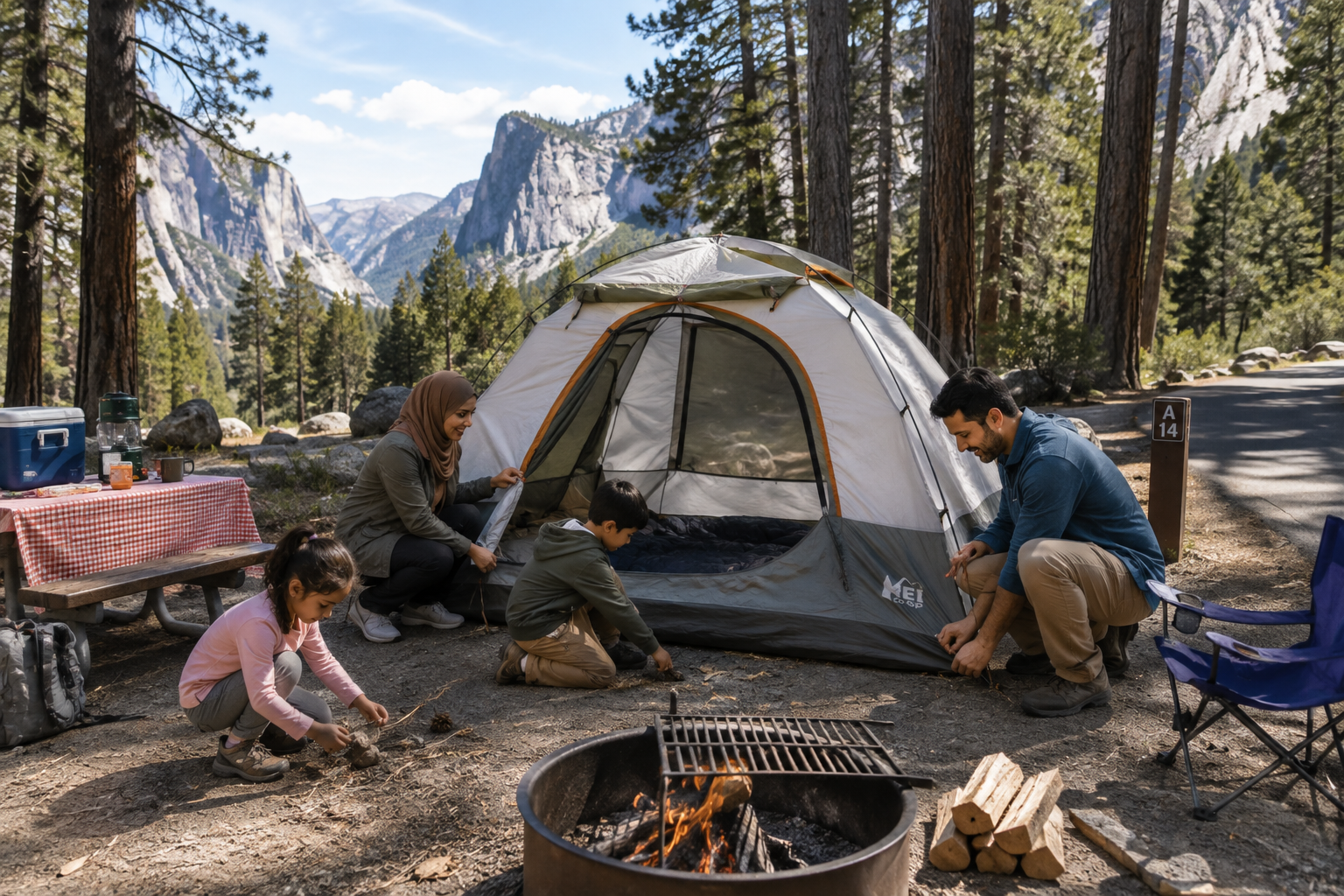
What are the budget benefits of alternative family lodging like campgrounds or guesthouses?
The primary budget benefit of alternative family lodging like campgrounds or guesthouses is a dramatically lower nightly rate, often reducing accommodation costs by 70-90% compared to traditional hotels. Campgrounds offer the absolute lowest cost per night, ideal for nature-focused trips to National Parks, while guesthouses provide low-cost urban stays with local culture. These options trade traditional amenities for significant financial savings, making them attractive for very tight budgets or specific travel styles.
Depending on preferences, families may opt for budget-friendly options like motels or Airbnb rentals, which can range from $50 to $200 per night, states Bankrate.com (2024).
The budget benefit of these alternatives extends to “forced savings.” Camping, by its nature, encourages low-cost activities like hiking and campfires over expensive commercial entertainment, helping families stay on budget for the entire trip, not just on lodging, thus reducing total trip cost.

3. How Can Families Choose the Best Booking Strategies to Reduce Accommodation Costs?
Families can choose the best booking strategies to reduce accommodation costs by aligning their booking method with their trip’s flexibility and planning timeline. Booking far in advance typically secures the best prices and availability for high-demand family destinations, while leveraging last-minute deals works well for flexible, spontaneous trips. Using price comparison tools and loyalty programs are consistently effective strategies for all trip types to optimize spending.
The most advanced strategy is “hybrid booking.” A family might book the critical, non-negotiable portion of their trip (e.g., a week at Disney World) far in advance, but leave the preceding or following few days open to snag a last-minute deal in a nearby, less-trafficked area, blending security with opportunistic savings.
**Micro-Glossary:** **Rate Parity** is an agreement between hotels and online travel agencies (OTAs) to provide the same rates for the same room, regardless of the distribution channel. Understanding this helps explain why sometimes booking direct doesn’t yield a lower price, but may offer other perks.
Choose to book early if you are traveling to a popular destination during peak season with specific needs (e.g., connecting rooms). Choose last-minute strategies if your dates and destination are flexible and your primary goal is the lowest possible price.
Is booking family accommodations far in advance always the cheapest option?
Booking family accommodations far in advance is not always the cheapest option, although it is the most reliable strategy for securing availability and reasonable prices during peak travel periods. For travel during the shoulder or off-season, prices often drop closer to the travel date as hotels try to fill unsold rooms. Therefore, the “cheapest” time to book is dependent on the destination’s demand cycle, requiring research into specific market dynamics rather than a blanket approach.
Families can save 15% to 50% by traveling during shoulder seasons compared to peak season.
The exception to this rule is for non-refundable rates. Booking a “pay now, non-refundable” rate 6-9 months in advance can often be the absolute cheapest price available, but it sacrifices all flexibility—a significant risk for family travel where plans can change due to illness or other factors.
For a comprehensive understanding, exploring how to decide between peak and off-season travel can further inform your booking strategy.
What are the advantages of using bundled vacation packages or loyalty programs for families?
The primary advantages of using bundled vacation packages and loyalty programs for families are significant cost savings, added convenience, and access to valuable perks like free nights and upgrades. Bundled packages (flight + hotel) simplify planning and often provide a discount not available when booking separately. Loyalty programs reward repeat business with points redeemable for free stays, an extremely effective way to eliminate accommodation costs for future trips, offering substantial long-term value.
Using a rewards credit card can generate cash back rewards of $50 monthly that can be put toward travel, according to WECU (2023).
The “stacking” of these strategies offers maximum advantage. A family can book a bundled package through a portal that also earns them hotel loyalty points, and pay with a co-branded credit card to earn even more points, creating multiple layers of value from a single transaction.
How can families find last-minute accommodation deals without compromising quality?
Families can find high-quality, last-minute accommodation deals by using dedicated mobile apps with “tonight-only” deals, monitoring hotel websites for un-booked inventory, and being flexible with location. Apps like HotelTonight specialize in selling unsold premium rooms at a discount, ensuring quality. Furthermore, looking for lodging in a business-focused district on a weekend or a slightly-outside-the-center neighborhood can yield high-quality hotels at a lower price point than central tourist areas.
Flexible travelers can find savings as midweek stays (Sunday through Thursday) typically cost 15% to 25% less than weekends.
A key strategy is to search for “newly listed” properties on platforms like Vrbo or Airbnb. New hosts often price their properties aggressively to attract their first reviews, allowing families to book a high-quality rental at a below-market rate.
4. How Do Families Create a Realistic Accommodation Budget for Their Vacation?
Families create a realistic accommodation budget for their vacation by first researching average costs in their chosen destination and then setting a firm “per-night” or “total stay” spending limit based on their overall trip finances. This process involves investigating real-time prices on booking sites, accounting for all taxes and hidden fees, and establishing a clear cap on spending. This transforms the budget from a vague idea into a concrete financial plan, ensuring financial control and preventing surprises.
A “realistic” budget includes a 10-15% contingency fund. This is not for overspending, but to allow for opportunistic upgrades (e.g., a hotel offers a suite upgrade for a small fee at check-in) or to cover unforeseen costs without derailing the entire vacation’s finances, providing financial resilience.
**Micro-Glossary:** **Rack Rate** is the official, non-discounted price of a hotel room, from which all discounts and deals are calculated. Knowing this term helps families understand the “list price” they are negotiating down from.
Choose to build your budget based on a “per-night” limit if your trip length is flexible. Choose a “total stay” limit if your overall vacation fund is fixed and you need to make the accommodation cost fit within it.
What initial steps should families take to accurately estimate accommodation expenses?
The initial step families must take to accurately estimate accommodation expenses is to perform “ghost bookings” for their desired dates and destination across multiple booking platforms. This involves going through the booking process right up to the final payment screen to reveal the total price, including all taxes and fees. Averaging the total cost from 2-3 different accommodation types provides a highly accurate budget baseline, preventing budget shortfalls later.
For a vacation in the United States, you can expect to spend an average of $284 per person each day.
The most accurate estimates come from searching in an “incognito” or “private” browser window. This prevents booking sites from using cookies to track your search history and potentially inflate prices based on repeat interest, ensuring you see genuine market rates.

How can families effectively factor in hidden costs and extra fees for lodging?
Families can effectively factor in hidden costs and extra fees for lodging by meticulously reading the fine print before booking and adding a specific line item in their budget for “Resort/Cleaning Fees & Taxes.” Never assume the advertised nightly rate is the final price. Always look for mandatory resort fees, cleaning fees, local occupancy taxes, and potential parking charges, adding them to your estimate to prevent budget surprises. This comprehensive approach ensures the total cost is accurately reflected.
Families should expect to add 25% to 40% on top of the advertised nightly rate to cover hidden costs like cleaning fees, service fees, and local taxes, according to Midmembers.org (2023).
The most effective tactic is to call the property directly before booking online. Ask the front desk agent to verbally confirm all mandatory fees, per-night taxes, and the total, all-inclusive cost for your intended stay, ensuring complete transparency.

What role does building flexibility play in setting accommodation budget limits?
Building flexibility into accommodation budget limits plays the critical role of enabling opportunistic savings and mitigating the financial impact of unexpected changes. A flexible budget might mean setting a range (e.g., “$200-$250 per night”) rather than a single number. This allows a family to splurge on a better property if a great deal appears or to pivot to a cheaper option if their first choice is unavailable, all without breaking their overall financial plan.
Flexibility with dates can lead to significant savings, as midweek stays (Sunday through Thursday) typically cost 15% to 25% less than weekends.
Flexibility also applies to location. Budgeting for a “central location” but being willing to stay 10-15 minutes outside the main tourist zone can often unlock a higher quality hotel for the same or lower price, trading a short commute for better amenities.
If your budget for a Paris hotel is €300, being flexible enough to consider an aparthotel in the 15th arrondissement instead of a hotel in the 6th can get you double the space for the same price.
5. What Practical Strategies Can Families Use to Track and Save on Accommodation During Their Trip?
The most practical strategies families can use to track and save on accommodation during their trip involve leveraging technology for expense tracking and utilizing in-room amenities to reduce ancillary spending. Using a budgeting app to log every expense provides real-time visibility into spending, while choosing accommodation with a kitchenette allows for meal preparation, drastically cutting down on food costs. These on-the-go actions ensure the family stays within the pre-planned budget, maintaining financial discipline throughout the journey.
A powerful savings strategy is the “one-night pivot.” If a week-long trip includes a destination with exceptionally high weekend rates (e.g., a popular beach town), the family can plan to spend that one expensive night in a cheaper, nearby inland town, saving hundreds of dollars with a minor itinerary adjustment.
**Micro-Glossary:** **Ancillary Spending** is the money spent on items other than the core purchase, such as food, parking, and activities, which in-room amenities like kitchens are designed to reduce.
Choose to prioritize a kitchenette if your family has dietary restrictions, young eaters, or your trip is longer than three days. Choose to prioritize location if your trip is short and your goal is to minimize transit time and costs.
How can families leverage in-room amenities to significantly save on food costs?
Families can leverage in-room amenities to significantly save on food costs by booking accommodations with a kitchenette or full kitchen and preparing their own breakfast and packing lunches. The simple act of eating breakfast in the room and preparing sandwiches for lunch can save a family of four over $100 per day. This strategy turns the accommodation choice into an active tool for managing the separate, and equally large, food budget, enabling substantial savings.
Utilizing a kitchen in a vacation rental can cut a family’s food costs by 50% to 70% compared to dining out for every meal.
The “first-night grocery run” is the key execution tactic. Upon arrival, families should immediately go to a local supermarket and stock up on breakfast items, snacks, and lunch supplies for the duration of their stay, maximizing savings from day one and minimizing impulsive restaurant visits.
Once you master reducing accommodation costs by utilizing kitchens, you’ll also want to explore effective ways to manage your family’s food and dining expenses throughout your vacation.
When is it more cost-effective to choose family accommodation outside central tourist areas?
It is more cost-effective for a family to choose accommodation outside central tourist areas when the savings on the nightly rate significantly outweigh the added costs and time of daily transportation. In cities with excellent, affordable public transportation like London or Tokyo, staying a few metro stops away can cut lodging costs by 30-50% with minimal inconvenience. However, in car-dependent cities like Los Angeles, the cost of a rental car and parking might negate the savings, requiring careful calculation.
Families should budget for added transportation costs, which can be around $40 daily for rideshares or a rental car when staying outside a central area.
The calculation must include the “time cost.” The 30 minutes spent commuting each way is an hour less for sightseeing. This trade-off is often acceptable for longer trips (a week or more) but is generally not worth it for short weekend getaways where time is the most valuable commodity for the family.
This works well in New York City (using the subway) but poorly in Orlando (where you need to be close to the parks).
What are the most effective ways for families to track their accommodation spending while traveling?
The most effective way for families to track their accommodation spending while traveling is by using a dedicated budgeting app or a simple digital spreadsheet shared between parents. Apps like Trail Wallet or a shared Google Sheet allow for immediate entry of any expenses, from the hotel bill to a parking fee, providing a live running total against the budget. This constant visibility is key to preventing incremental overspending and ensuring adherence to the financial plan.
A good practice is to include a buffer of at least 10% in your budget for unexpected expenses that arise during travel.
The “envelope method” is a powerful analog alternative. A family can use a physical envelope labeled “Lodging” with the budgeted cash or a dedicated pre-paid debit card inside. When the envelope is empty, the budget is spent, providing a tangible, foolproof tracking system that avoids digital distractions.
6. How Can Families Avoid Common Mistakes When Budgeting Accommodation Costs?
Families can avoid common mistakes when budgeting accommodation costs by diligently accounting for all hidden fees, resisting impulsive booking decisions, and building a contingency plan into their budget. The most frequent errors are underestimating taxes and fees and booking a non-refundable room to save a small amount, only to lose the entire cost when plans change. A disciplined, research-based approach prevents these costly missteps, ensuring the budget remains intact and adaptable.
A subtle but common mistake is “amenity overvaluation”—paying a premium for a resort with a massive pool complex and kids’ club, only to spend every day at a theme park. Families must honestly assess which amenities they will *actually use* to avoid paying for features they don’t need, optimizing value.
**Micro-Glossary:** **Dynamic Pricing** is the strategy where businesses set flexible prices for products or services based on current market demands. This is the reason why the same hotel room can have a different price every time you look it up.
Choose to always read the cancellation policy twice before booking, especially for “deal” rates. The flexibility to cancel is often worth more to a family than a 10% non-refundable discount.
What are the risks of overlooking hidden fees and taxes in accommodation bookings?
The primary risk of overlooking hidden fees and taxes in accommodation bookings is a final bill that is 15-40% higher than budgeted, causing immediate financial stress and potentially forcing cutbacks on planned activities. A $200/night room can easily become a $250/night room after a mandatory $35 resort fee and 15% occupancy tax are added. For a five-night stay, this overlooked $250 can be the difference between a memorable family dinner and eating fast food, significantly degrading the vacation experience.
Hidden costs can add 25% to 40% to the base rate of an accommodation, including cleaning fees, service fees, and local taxes.
The risk extends beyond the financial; it creates a negative emotional start to the vacation. The feeling of being “tricked” or “ripped off” at the check-in desk can cast a pall over the first day of a long-awaited family trip, impacting overall satisfaction.
To fully protect your finances, it’s crucial to understand how to identify all potential hidden family vacation costs beyond just those for lodging.
How can families prevent overspending due to last-minute or impulsive booking errors?
Families can prevent overspending from impulsive booking errors by implementing a mandatory “24-hour cooling-off period” before finalizing any non-refundable travel purchase. When you find what seems like a perfect deal, save it or screenshot it, but do not book it for 24 hours. This delay prevents emotion-driven decisions and allows time to re-verify that the choice aligns with the pre-established budget and family needs, ensuring informed decisions.
A 2023 Credit Karma report found that 76% of Gen Z respondents were willing to go into debt to fund summer travel and holiday vacations, according to Credit Karma (2023).
Another preventative technique is the “two-person confirmation” rule. For any booking over a certain threshold (e.g., $500), both parents must review and agree to the purchase before it’s made, providing a crucial check-and-balance against impulsive buys.
Author’s Experience
“As a parent who’s juggled family trips, I know the sting of a budget overrun. One time, not accounting for resort fees nearly ate into our activity fund, teaching me the hard way to scrutinize every booking detail. Now, I always add a 10% buffer and double-check all fine print.”
What strategies help adjust the accommodation budget when unexpected changes or opportunities arise?
The most effective strategy to adjust an accommodation budget for unexpected changes is to leverage the pre-allocated contingency fund and actively look for offsetting savings in other budget categories. If an unavoidable cost arises (e.g., the only available hotel is $50 over budget), that extra expense should first be drawn from the contingency. If that’s not enough, the family can decide to offset the cost by, for example, eating an extra meal in their room instead of dining out.
Financial planners advise factoring in a 10 to 15 percent buffer into your vacation budget for unexpected expenses.
A sophisticated strategy is to have a “Plan B” lodging option pre-researched. If your primary choice falls through or a problem arises at check-in, you aren’t scrambling to find a replacement; you can immediately pivot to your vetted, pre-budgeted alternative, maintaining control of the situation and minimizing stress.
7. Logistics: Family Accommodation Budgeting Checklist
| Checklist Item / Tactic | Status |
|---|---|
| STEP 1: Research average costs for your destination. | ⬜ |
| STEP 2: Perform “ghost bookings” to reveal total costs including all taxes and fees. | ⬜ |
| STEP 3: Set a firm “per-night” or “total stay” spending limit. | ⬜ |
| STEP 4: Factor in a 10-15% contingency fund for unexpected expenses or opportunistic upgrades. | ⬜ |
| STEP 5: Compare vacation rentals, hotels, and all-inclusive resorts for best value based on trip duration and family needs. | ⬜ |
| STEP 6: Align booking strategy (early vs. last-minute, bundled packages, loyalty programs) with trip flexibility. | ⬜ |
| STEP 7: Utilize in-room amenities like kitchenettes to save on food costs during your trip. | ⬜ |
| STEP 8: Track all accommodation-related spending in real-time using a budgeting app or shared spreadsheet. | ⬜ |
| STEP 9: Implement a 24-hour cooling-off period before finalizing non-refundable bookings. | ⬜ |
| STEP 10: Have a “Plan B” lodging option pre-researched for flexibility and stress reduction. | ⬜ |
Resolution
Ultimately, successfully budgeting accommodation costs for a family vacation is an engineering discipline that transforms a trip from a source of financial stress into a well-managed, enjoyable experience. By systematically researching costs, choosing the right lodging type, employing smart booking strategies, and tracking expenses, any family can gain complete control over this major expense. This financial mastery is the foundation of a truly relaxing and memorable vacation, leading to lasting positive memories. The process of budgeting is itself a valuable family exercise. It teaches financial literacy and the concept of trade-offs, and it involves the entire family in the shared goal of creating the best possible vacation experience within their means. This collaborative effort builds essential life skills. The final decision is to treat your accommodation budget not as a restrictive document, but as the architectural blueprint for your family’s vacation success.