How do you ensure vacation child safety? | WovenVoyages

How do you ensure vacation child safety?

Table of Contents

Ensuring vacation child safety requires caregivers to implement proactive risk management, utilize specialized travel gear, and execute strict emergency protocols. This guide equips parents with a comprehensive, step-by-step framework to actively protect their children across airports, hotels, and crowded tourist attractions.

Proactive risk management guarantees vacation child safety. Risk Management constitutes the active anticipation and mitigation of physical and digital threats before these threats occur. The absence of familiar spatial boundaries combined with extreme sensory stimulation entirely disrupts a toddler’s innate hazard recognition pathways. Restoring safety mandates an inflexible adherence to established security protocols.

2. Why is vacation child safety crucial for preventing travel disasters?

Prioritizing vacation child safety establishes a vital psychological baseline that actively prevents catastrophic travel disasters. Baseline rules prevent travel disasters entirely.

The summer travel period triggers a massive surge in unintentional injuries among children aged 0 to 14, documented directly by Safe Kids Worldwide. Unintentional falls generate $1.1 billion in annual emergency expenses. Drowning remains the leading cause of death for ages one to four during transit and holiday periods.

Establish baseline safety rules before departure

Establishing baseline safety rules before departure firmly sets parental expectations before environmental distractions overwhelm the child’s processing capabilities. Simulated scenarios solidify short-term memory.

Biological facts prove that children subjected to intense auditory and visual overstimulation lose the cognitive bandwidth required to encode new behavioral directives.

Rule: Establish safety rules before leaving the house.

Reason: Kids operating outside their normal routine easily suffer from fatal distractions.

Example: Practice the “stop and yell” game in the driveway before initiating the trip.

Recognize the impact of routine disruption on kids

Recognizing the impact of routine disruption on kids forces parents to increase active supervision levels immediately. Unfamiliar sights trigger profound fascination.

Jet lag, altered sleep schedules, and dietary changes severely impair pediatric impulse control and diminish hazard recognition speeds drastically.

Rule: Assume kids will instantly forget everyday street smarts.

Reason: Visual overstimulation overrides established hazard awareness.

Example: A child walking directly into a busy resort street while staring at a theme park mascot.

3. Why does oversharing online threaten vacation child safety?

Oversharing online severely threatens vacation child safety by broadcasting a family’s exact geographical location to potential predators. Digital footprints expose physical locations.

Digital Footprint constitutes the trail of real-time location data left behind by social media tags. Real-time updates dismantle physical privacy boundaries instantly. These updates expose vulnerable tourists to organized theft rings and malicious actors monitoring open-source intelligence databases continually.

Delay social media posts to protect location privacy

Delaying social media posts protects location privacy and completely severs the link between your digital footprint and your physical vulnerability. Delayed broadcasting neutralizes tracking weapons.

Uploading vacation photography chronologically after the trip concludes provides threat actors with outdated intelligence, rendering physical interception impossible.

Rule: Never post real-time location tags.

Reason: Predators easily track predictable routines at specific resorts or theme parks.

Example: Post your entire album of vacation photos only after you return home.

Identify the physical risks of digital footprints

Identifying the physical risks of digital footprints prevents malicious actors from leveraging online data to initiate real-world contact. Visual breadcrumbs pinpoint exact coordinates.

Capturing a hotel room number painted on a door, reflecting a street sign in sunglasses, or displaying a unique resort pool logo betrays a family’s physical sanctuary instantly.

If: You accidentally post a photo showing your hotel room number.

Do: Delete the photo immediately and alert the front desk to monitor unauthorized visitors.

Result: You eliminate a direct physical vector targeting your family.

Figure 1: Digital Footprint Exposure Vector
Post Geo-Tag Threat Physical Interception

Visualizing how real-time social media posts bypass physical privacy perimeters and expose families to threat actors.

© WovenVoyages.com

4. How do you pack a comprehensive vacation child safety kit?

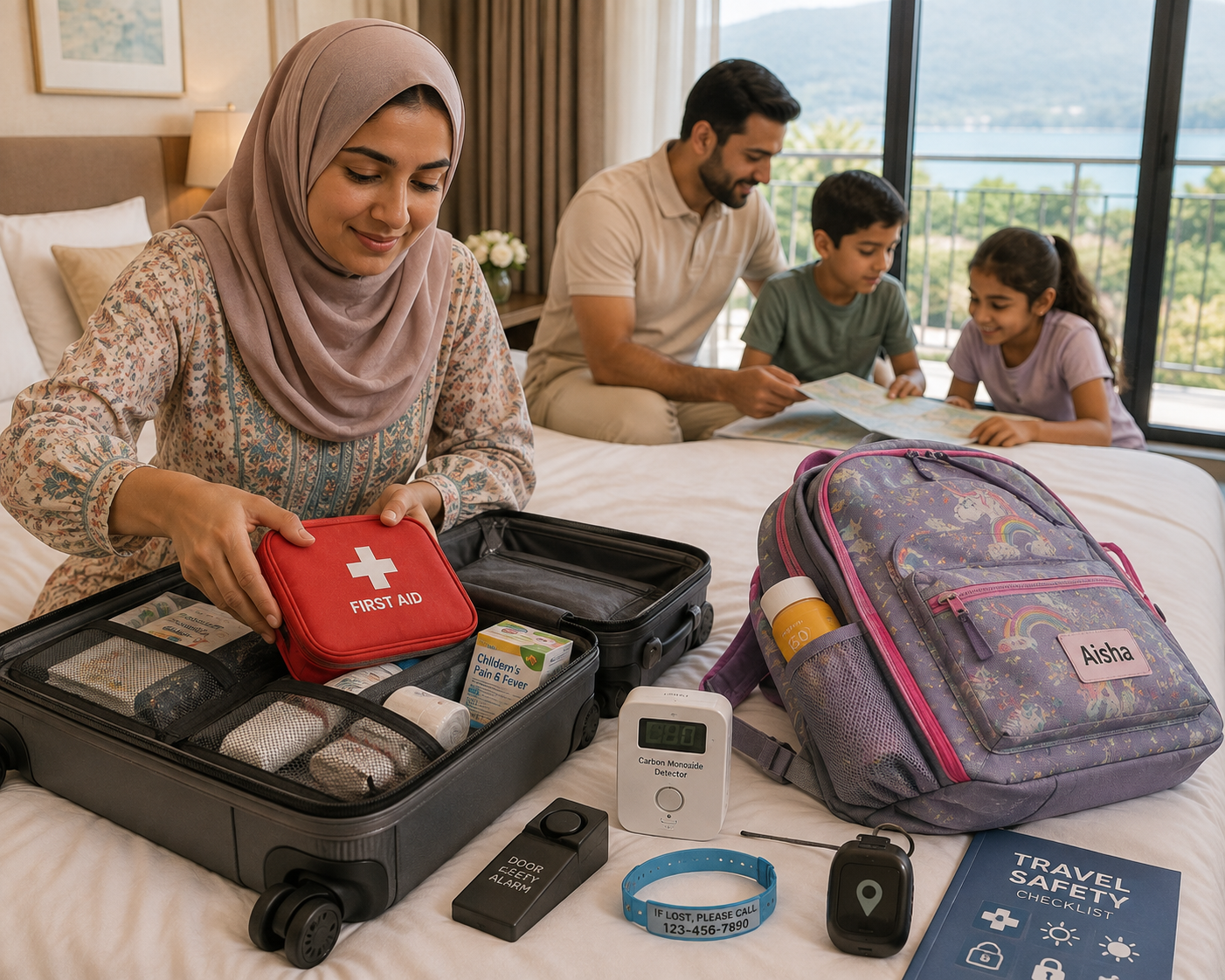
Packing a comprehensive vacation child safety kit guarantees immediate access to critical first aid and rapidly mitigates pediatric travel emergencies. Safety kits eliminate external dependencies during high-stress crises.

Nonmedical expenses associated with pediatric hospitalizations cost caregivers an average of $51.40 daily in lost wages and logistical friction alone. Carrying robust first-aid supplies prevents minor scrapes from escalating into hospital visits.

Assemble essential first-aid and medical supplies

Assembling essential first-aid and medical supplies provides the primary defense against common travel ailments and minor injuries. Immediate responses neutralize unexpected fevers.

Commercial aircraft cabins and crowded transit hubs accelerate the transmission of infectious pathogens, requiring rapid pharmacological relief.

The Ultimate Child Travel Safety Checklist
Verification StatementStatus
We packed pediatric antiseptics, digital thermometers, and waterproof bandages.
We secured age-appropriate liquid ibuprofen and chewable antihistamines.
We included prescribed EpiPens and emergency inhalers in carry-on luggage.

Organize identification and emergency contact documents

Organizing identification and emergency contact documents ensures immediate, frictionless interaction with foreign medical services. Comprehensive documentation eliminates administrative roadblocks instantly.

International hospitals frequently demand explicit proof of guardianship and formal medical consent before initiating invasive procedures or administering controlled substances to minors.

  • Step 1: Print physical copies of medical consent forms.
  • Step 2: Place an updated, clear photo of your child in your physical wallet.
  • Step 3: Save digital backups to a secure, offline folder on your smartphone.

5. What are the rental car rules for vacation child safety?

Mastering rental car rules guarantees vacation child safety by perfectly aligning transit protection with specific local auto safety laws. Auto safety laws dictate booster seat usage rigidly.

Deploying a 5-point harness restraint system reduces the risk of serious injury by 28% compared to standard seat belts, matching Graco safety data. Certain jurisdictions completely prohibit children under 13 from sitting in the front seat.

Verify local booster seat laws and compliance

Verifying local booster seat laws guarantees absolute compliance and prevents lethal mistakes during international road trips. Legislative research prevents catastrophic liability.

Advanced international regulations mandate rigorous side-impact testing, strict ISOFIX installation, and extended rear-facing protocols up to 15 months or 76 centimeters, differing wildly from weight-based systems outlined by Koopers.

Rule: Always research the specific destination’s auto laws prior to arrival.

Reason: Seat requirements change drastically across international borders.

Example: European Union booster seat height requirements differ entirely from United States weight limits.

Inspect rental car seat installation standards

Inspecting rental car seat installation standards prevents families from relying on compromised, expired, or structurally damaged safety equipment. Parental inspection rejects damaged equipment decisively.

Invisible hairline fractures sustained in previous unreported collisions fundamentally compromise the structural integrity of the plastic shell, rendering the seat useless during a high-speed impact.

If: The rental agency provides a booster seat exhibiting frayed straps or stress fractures.

Do: Refuse the seat entirely and purchase a cheap, certified replacement at a local retailer.

Result: You avoid placing your child in compromised safety gear.

6. How can you ensure vacation child safety in hotel rooms?

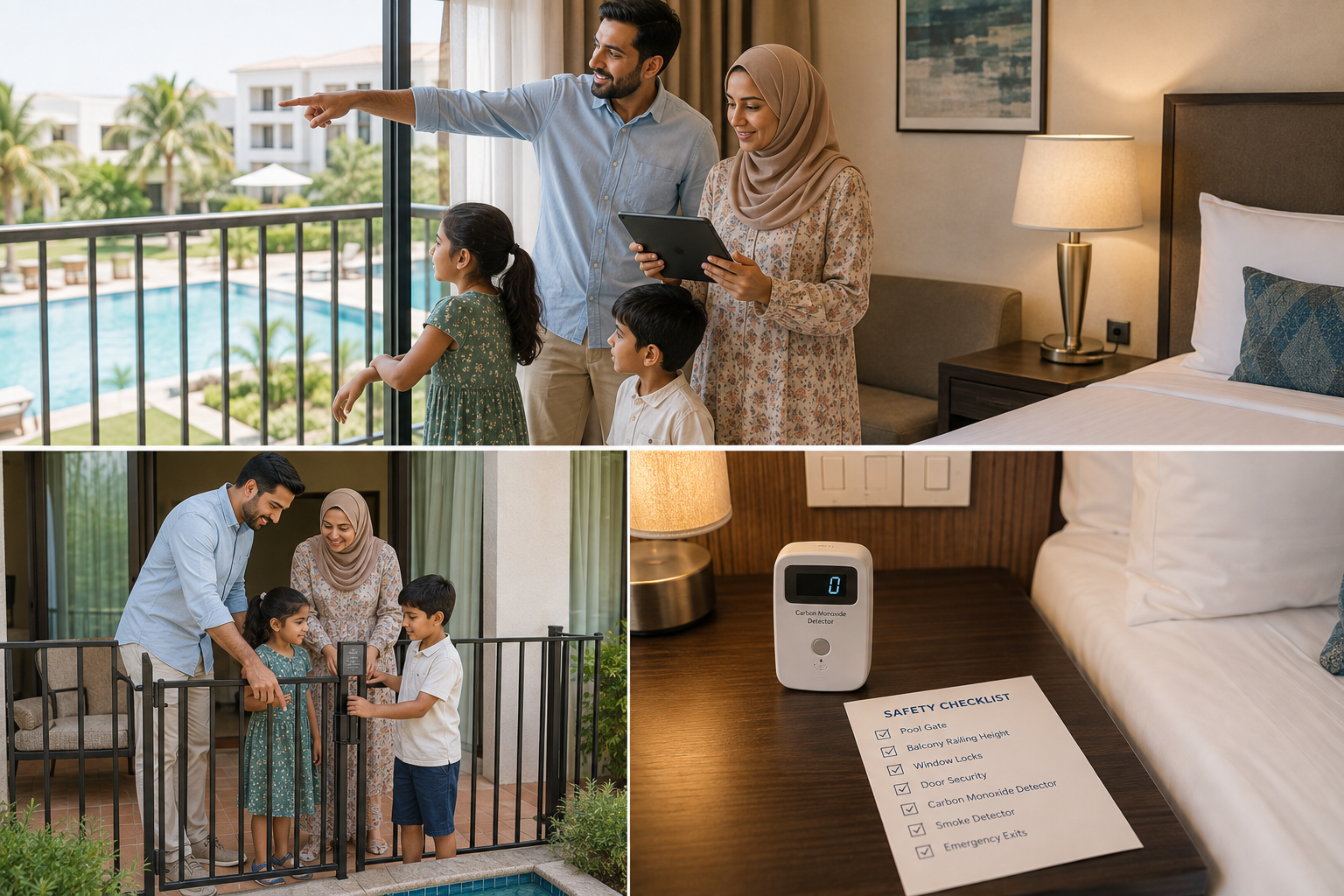
Ensuring vacation child safety in hotel rooms requires parents to execute a rigorous babyproofing sweep immediately upon check-in. Visual inspections neutralize environmental hazards proactively.

Falls involving furniture, beds, and baby products frequently result in traumatic brain injuries among infants within hospitality environments.

Conduct a 5-minute room hazard sweep

Conducting a strict 5-minute room hazard sweep neutralizes hidden dangers and instantly establishes a safe sleep environment. Rapid sweeps eliminate choking hazards left by previous guests.

Heavy dressers and unanchored flat-screen electronics present massive tipping hazards for toddlers attempting to climb furniture exploring new accommodation spaces.

5-Minute Hotel Childproofing Sweep
Hazard ZoneIdentified Risk1-Minute Fix
Floor / CarpetsDropped pills or small choking hazards.Crawl the perimeter using smartphone flashlight.
TV / DressersUnanchored tipping hazards.Move heavy items back; block dresser drawers.
Cords / BlindsStrangulation risk from dangling cables.Tie cords high out of reach using travel tape.
Figure 2: The 5-Minute Hotel Hazard Sweep
Lock Tip Risk Floor Hazards

Mapping the primary vulnerability zones within a standard hotel room requiring immediate parental intervention upon check-in.

© WovenVoyages.com

Secure balcony doors and accessible locks

Securing balcony doors and accessible locks physically blocks wandering toddlers from entering high-risk exterior zones. Portable locks grant perimeter authority.

Retrospective analysis of 86,500 balcony fall-related injuries reveals structural failures contribute heavily to incidents with disproportionately high skull fracture rates, while window falls average over £4,400 per patient in ICU treatment costs.

Rule: Install a temporary travel lock high on the main door.

Reason: Sleepwalking or curious toddlers easily manipulate standard hotel levers.

Example: Secure the perimeter using a $10 portable door alarm loop.

7. How do you ensure vacation child safety around resort pools?

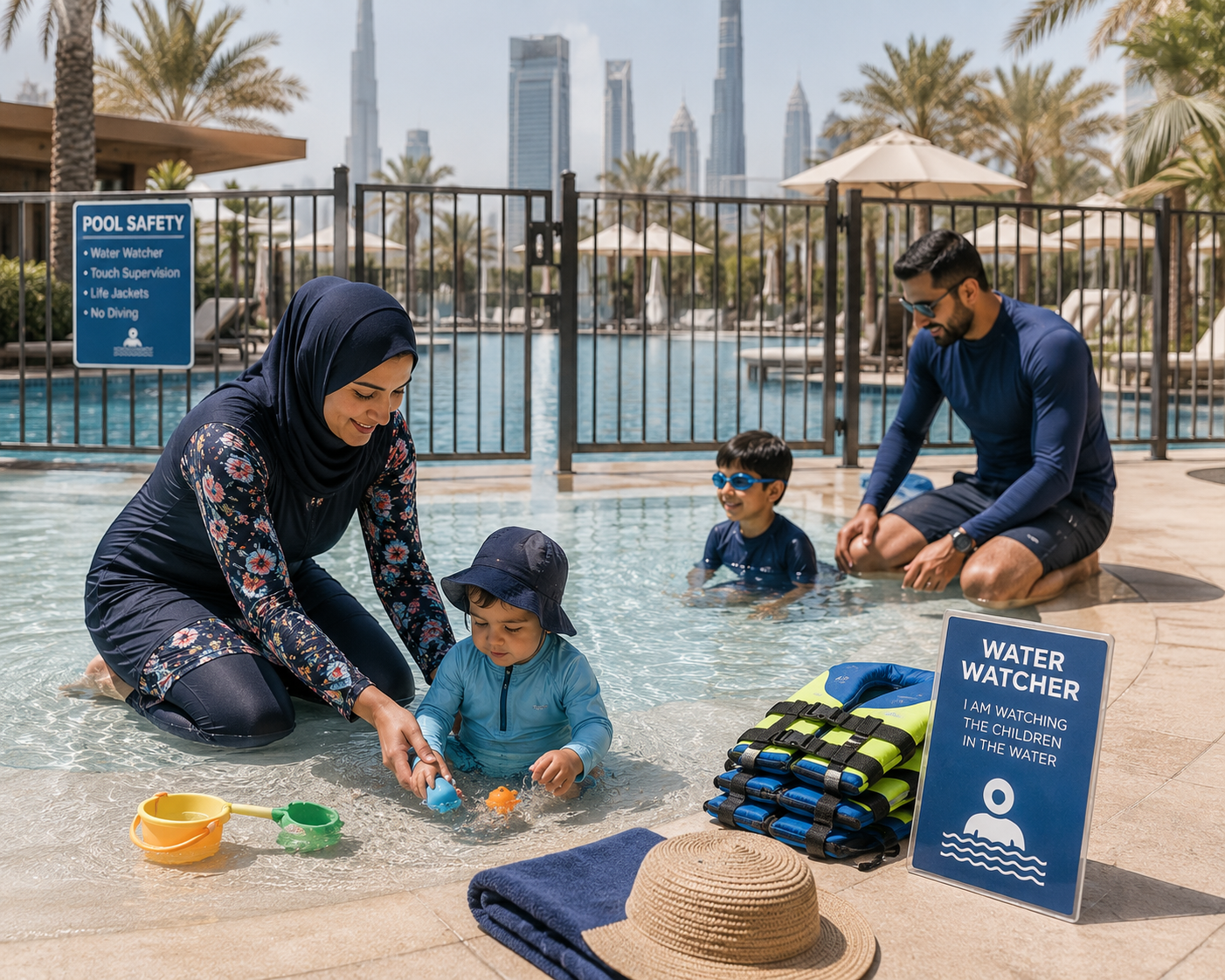
Ensuring vacation child safety around resort pools demands uninterrupted active supervision to prevent tragic drowning accidents. Active supervision prevents pool accidents.

Over 4,500 fatal drownings occur annually, with 79% of pool or spa drowning fatalities involving victims younger than five, according to CPSC reporting. Drowning happens completely silently without cinematic splashing.

Designate an official water watcher

Designating an official water watcher eliminates the fatal assumption that surrounding adults are actively monitoring the pool area. Tangible objects enforce supervision mandates.

The psychological phenomenon of the diffusion of responsibility proves that the presence of multiple adults surrounding a pool almost guarantees that no single person actively monitors the dependent.

Rule: Assign a single, completely undistracted “Water Watcher.”

Reason: Assuming “everyone is watching” universally translates to “no one is watching.”

Example: Utilize a physical lanyard passed explicitly between adults to transfer supervision duty.

Implement strict physical boundaries near water

Implementing strict physical boundaries near water provides a mandatory safety buffer between walking paths and the deep end. Strict boundaries prevent accidental submersions.

Biomechanical reality confirms that toddlers lack the physical coordination required to arrest their forward momentum when running near slippery pool copings.

If: A child walks near the pool edge without wearing an approved floatation device.

Do: Enforce the “arm’s reach” rule instantly, moving them back from the perimeter.

Result: You prevent accidental slips into deep water.

8. How do food allergies impact vacation child safety?

Food allergies severely impact vacation child safety by introducing the constant threat of cross-contamination into everyday dining experiences. Foreign destinations compound culinary vulnerabilities.

Cross-contamination constitutes the dangerous transfer of microscopic allergens between cooking surfaces. Nearly half of fatal food allergy reactions stem from restaurant environments, yet fewer than half of commercial restaurant staff receive adequate allergy management training regarding cross-contact hazards.

Utilize translated chef cards for dining out

Utilizing translated chef cards for dining out removes fatal language barriers and explicitly communicates dietary restrictions to kitchen staff. Written documentation establishes definitive accountability.

Verbal instructions fail routinely in loud, chaotic restaurant environments where servers rush constantly between tables.

Chef Translation Card Template
English ComponentTranslation Purpose
“My child has a severe, life-threatening allergy to [Allergen].”Establishes extreme severity immediately.
“Please use clean pans, utensils, and separate cutting boards.”Instructs on cross-contamination protocols.

Pack emergency allergy medication in carry-on bags

Packing emergency allergy medication exclusively in carry-on bags guarantees immediate access to epinephrine autoinjectors during transit. Carry-on storage guarantees pharmacological intervention.

The incidence of severe in-flight allergic emergencies requiring epinephrine administration occurs at a calculated rate of one event per 12.5 million passengers.

Rule: Never check life-saving EpiPens inside hold luggage.

Reason: Checked bags frequently get lost, leaving families without any emergency medical response.

Example: Keep critical antihistamines securely stored inside your personal under-seat backpack.

9. How do you maintain vacation child safety in transit hubs?

Maintaining vacation child safety in chaotic transit hubs requires strict crowd control tactics and visual identification strategies. Crowd control tactics intercept wandering behaviors before disappearance occurs.

High passenger volumes overwhelm sensory processing instantly, causing toddlers to detach from their guardians rapidly amidst booming intercoms and sweeping patrols.

Assign a strict adult-to-child ratio

Assigning a strict adult-to-child ratio ensures every single child possesses a dedicated guardian navigating the terminal. Physical contact anchors traveling dependents securely.

Group travel frequently triggers the bystander effect; assigning a dedicated 1-to-1 ratio anchors the child securely against the pushing forces of the surrounding crowd.

  • Step 1: Assign a 1-to-1 adult-to-child ratio defense grid before entering the terminal.
  • Step 2: Hold hands or utilize a toddler harness continuously in high-traffic zones.
  • Step 3: Relocate the family to a quiet gate corner immediately after clearing security.

Dress children in high-visibility clothing

Dressing children in high-visibility clothing drastically cuts visual search times and prevents separation anxiety in dense crowds. Unnatural colors break visual patterns immediately.

Human eyes naturally struggle to track muted colors across architecturally complex backgrounds, whereas bright, unnatural colors pierce visual clutter and enable rapid scanning.

Rule: Dress kids exclusively in bright neon colors on heavy travel days.

Reason: High-visibility clothing pierces through visual clutter in dense transit environments.

Example: Outfit all siblings in matching neon green hats.

10. Which GPS trackers offer the best vacation child safety?

Selecting the optimal GPS tracker maximizes vacation child safety by providing a reliable digital tether to wandering toddlers. GPS trackers establish digital tethers.

Mechanical differences matter: smart tags rely entirely on proximity to third-party smartphones via mesh networks, while dedicated GPS watches ping global positioning satellites directly utilizing cellular data.

Compare smart tag devices against dedicated GPS watches

Comparing smart tag devices against dedicated GPS watches reveals critical differences in real-time location network coverage. Hardware choices dictate geographical monitoring.

Bluetooth-based smart tags fail entirely in remote wilderness areas and do not provide continuous live tracking or geo-fencing boundary alerts like dedicated units.

Tracking Tech Matrix
Device TypeNetwork DependencyIdeal Use Case
Smart Tags (AirTags)Nearby SmartphonesCrowded Theme Parks
Dedicated GPS WatchCellular Data / SatellitesRemote Beach/Resort Borders

Evaluate low-tech ID bands for toddlers

Evaluating low-tech ID bands proves that wearable silicone technology frequently outperforms easily removed electronic devices for young toddlers. Silicone bracelets secure contact information.

Electronic devices fail catastrophically when exposed to resort pool water or when internal batteries unexpectedly drain mid-transit.

Rule: Use physical ID bracelets for all children under four years old.

Reason: Toddlers habitually remove electronics, but custom silicone bands remain permanently secured.

Example: Attach a bright band engraved with the phrase “If lost, call [Phone Number]”.

11. Which portable travel car seats maximize vacation child safety?

Selecting the correct portable travel car seat maximizes vacation child safety without burdening parents with unmanageable luggage weight. Equipment selection balances logistical mobility.

Hauling heavy 30-pound seats physically exhausts parents, and airlines routinely subject checked plastic shells to extreme impact forces that completely compromise their structural integrity.

Contrast bulky everyday seats with lightweight travel options

Contrasting bulky everyday seats against lightweight travel options helps parents balance supreme auto safety with necessary logistical mobility. Lightweight hardware optimizes transit safety.

Dedicated travel seats successfully drop the carrying weight to under 10 pounds while maintaining absolute compliance with federal crash deceleration standards.

Car Seat Logistics Comparison
Seat MetricBulky Everyday SeatsLightweight Travel Options
Weight25-35 lbsUnder 10 lbs
Safety RatingMaximum ProtectionFederal Compliant
Setup Time5+ Minutes (Complex)1-2 Minutes (LATCH)

Assess FAA-approved flight harnesses

Assessing FAA-approved flight harnesses provides parents with a highly secure, airline-approved alternative to dragging heavy plastic seats through airport security. Flight harnesses restrain pediatric torsos.

Federal Aviation Administration (FAA) Approved refers directly to specific safety restraint testing parameters legally permitted during takeoff and turbulence. Severe, unpredictable turbulence causes dozens of injuries annually, generating up to 4,950 pounds of sheer force on a 30-pound unrestrained infant, proving that holding a lap child provides absolutely zero physiological protection.

If: You are flying with a 3-year-old and utilizing public transport upon arrival.

Do: Choose an FAA-approved 5-point flight harness.

Result: You ensure rigorous flight safety without lugging an unnecessary plastic seat.

12. How do you enforce vacation child safety in crowded attractions?

Enforcing vacation child safety in crowded attractions requires proactive crowd management and pre-planned separation strategies. Pre-planned strategies neutralize panic responses.

Approximately 2,000 children disappear in theme parks every single year due to massive crowds, aggressive characters, and flashing lights inducing severe sensory overload.

Take daily full-body identification photos

Taking daily full-body identification photos provides authorities with exact visual data necessary to execute a rapid visual scan protocol. Digital images eliminate visual ambiguity.

Human memory degrades instantly under crushing stress, causing panicking parents to provide inaccurate clothing descriptions that severely delay dispatched search teams.

If: You are entering a highly congested theme park.

Do: Take a full-body photo of your child every single morning documenting that exact day’s outfit.

Result: You possess an exact, current visual to hand immediately to security personnel.

Establish a clear home base at every new location

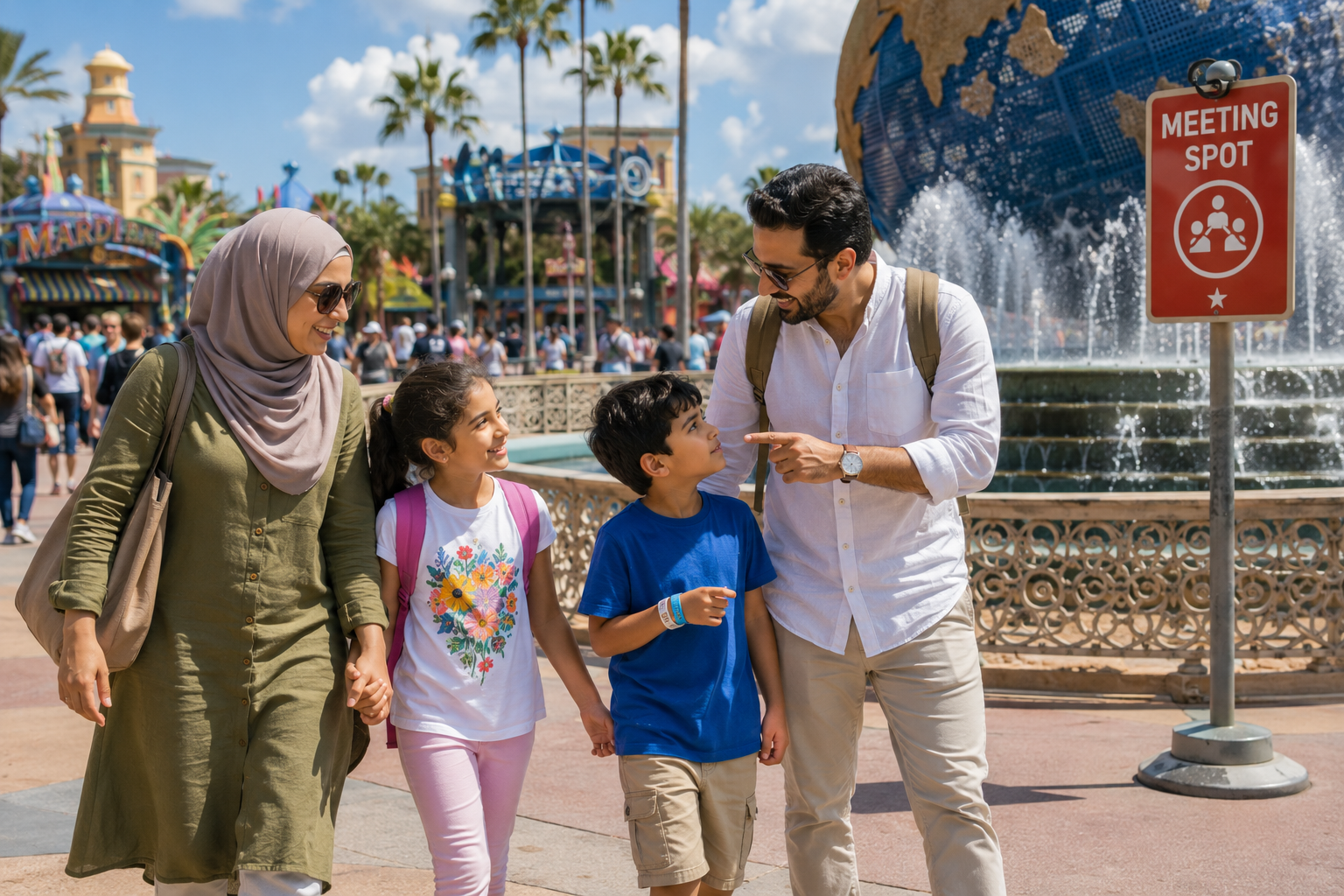
Establishing a clear home base at every new location gives panicking children a concrete destination to target if separated. Static landmarks override aimless running.

Young children completely lack spatial mapping skills; when separation occurs, pure fear paralyzes critical thinking, necessitating a highly visible, static rendezvous point.

Rule: Pick a highly visible landmark immediately upon entering any new attraction.

Reason: Lost kids panic instantly and require a highly visible, concrete destination for survival.

Example: Instruct the child: “If you cannot see me, go stand directly under the giant clock tower.”

13. How do you prevent heat from compromising vacation child safety?

Preventing severe heat from compromising vacation child safety requires aggressive temperature regulation and hyper-vigilance during climate acclimatization. Temperature regulation intercepts thermal exposures.

Hyperthermia identifies an abnormally high body temperature caused by a failure of the heat-regulating mechanisms. Relocating a family from a temperate climate to an equatorial destination completely overwhelms a toddler’s biological ability to shed heat efficiently.

Recognize early signs of dehydration and sunstroke

Recognizing the early signs of dehydration and sunstroke allows parents to intercept heat exhaustion before it becomes a critical medical emergency. Physiological indicators signal fluid deficits.

Clinical facts dictate that children possess a significantly higher surface-to-mass ratio than adults, causing them to dehydrate much quicker and altering their body cooling mechanisms.

Rule: Strictly monitor urine output and sweat levels in hot climates.

Reason: Children dehydrate and succumb to sunstroke significantly faster than mature adults.

Example: A severely flushed face presenting with absolutely zero visible sweat serves as an immediate red flag.

Execute immediate cooling protocols

Executing immediate cooling protocols rapidly stabilizes a child’s core temperature and actively reverses the physiological damage of hyperthermia. Evaporative cooling stops heatstroke progression.

Waiting for emergency medical services during an active hyperthermic event allows brain damage to compound; dropping the core temperature rapidly is the only viable intervention.

If: The child completely stops sweating and appears lethargic.

Do: Relocate to air conditioning immediately, apply cool wet cloths to the neck and wrists, and hydrate very slowly.

Result: The core temperature stabilizes safely before escalating into a hospital emergency.

14. How should you handle medical emergencies affecting vacation child safety?

Handling sudden medical emergencies affecting vacation child safety requires pre-established access to foreign healthcare networks and out-of-network coverage. Out-of-network coverage eliminates administrative friction.

Securing emergency transport via international medical evacuation services incurs catastrophic costs, which can frequently be prevented by purchasing specialized local subscriptions costing merely $35 to $255 annually.

Locate pediatric urgent care facilities in advance

Locating pediatric urgent care facilities in advance removes the desperate panic of navigating foreign medical infrastructure during an active crisis. Pre-mapping clinics ensures rapid triage.

Pre-mapping verified pediatric clinics ensures parents drive directly toward certified pediatric specialists rather than sub-standard general clinics during a trauma.

  • Step 1: Map the nearest urgent care facility to your hotel immediately upon booking.
  • Step 2: Call your health insurance provider to explicitly confirm out-of-network travel coverage.
  • Step 3: Save the local emergency medical dispatch number (e.g., 911 or 112) directly into your phone contacts.

Manage unexpected illnesses during transit

Managing unexpected illnesses during transit requires immediate triage using a fully stocked travel first aid kit. Primary responders suppress dangerous symptoms.

Airliners cruising at 35,000 feet represent highly isolated medical environments where flight crews possess extremely limited pediatric diagnostic tools and restricted pharmaceutical options.

If: A child suddenly spikes a high fever mid-flight.

Do: Administer pre-packed liquid ibuprofen and immediately notify the flight attendants of the medical situation.

Result: You successfully manage the acute symptoms until landing allows for proper pediatric care.

15. How do you restore vacation child safety if separation occurs?

Restoring vacation child safety if separation occurs requires parents to ruthlessly execute a standardized lost child protocol. Response algorithms neutralize emotional paralysis.

Biological reactions dictate that when an adult-to-child visual link snaps, panic triggers a massive adrenaline dump causing untrained parents to run frantically, actively exacerbating the distance.

Initiate the immediate area lockdown protocol

Initiating the immediate area lockdown protocol prevents frantic parents from accidentally running away from their wandering child. Floor-level scans reveal hidden toddlers.

Toddlers possess extremely short strides and rarely travel far within the first 60 seconds, almost always dropping beneath the adult eyeline to hide behind clothing racks or luggage carts.

  • Step 1: DO NOT leave the exact immediate area where you last saw the child.
  • Step 2: Execute a rapid 360-degree visual scan specifically targeting the toddler’s floor level.
  • Step 3: Assign one adult to stay anchored while the secondary adult begins an expanding spiral search.
Figure 3: Expanding Spiral Search Protocol
A1 Adult 2 Search Path Adult 1 Anchored

Visual representation of the anchored lockdown and expanding visual sweep required during an active lost child scenario.

© WovenVoyages.com

Alert authorities with specific visual descriptions

Alerting authorities with highly specific visual descriptions transforms the surrounding crowd into an active search party. Definitive identifiers pierce ambient noise.

Screaming a child’s first name accomplishes absolutely nothing in a crowd of strangers, but broadcasting exact clothing colors activates hundreds of peripheral eyes instantly.

Rule: Shout a detailed description of their clothing, never just their first name.

Reason: Strangers cannot identify “Timmy,” but they will immediately spot “a red shirt.”

Example: Yell loudly: “I am looking for a boy, age 4, wearing a bright yellow hat!”

16. How can enforcing vacation child safety rules guarantee stress-free trips?

Enforcing rigid vacation child safety rules paradoxically guarantees stress-free trips by transforming reactive parental panic into proactive peace of mind. Systematized protection layers eliminate continuous anxiety. Families establishing strict boundaries and deploying proper childproofing gear comprehensively remove the variables generating physiological and psychological stress.

Review daily safety protocols with the family

Reviewing daily safety protocols with the family actively solidifies critical rules deep within a child’s short-term memory. Interactive rituals focus situational awareness. Children require constant calibration to function safely within dynamic environments, and explicitly discussing specific daily hazards focuses their attention precisely on the upcoming terrain.

Rule: Make safety a mandatory 2-minute morning briefing over breakfast.

Reason: Repetition solidifies the rules and elevates the child’s situational awareness.

Example: Ask the kids to physically point out the “Water Watcher” lanyard every single morning.

Transition from reactive panic to proactive peace of mind

Transitioning from reactive panic to proactive peace of mind allows parents to finally relax and focus entirely on making memories. Thorough preparation funds unburdened joy. Actively mitigating digital footprint exposures and mastering auto safety laws validates that thorough preparation fundamentally secures the foundational elements of traveling with dependents.

If: You successfully execute this entire safety framework.

Do: Relax your posture and focus entirely on enjoying the destination.

Result: You enjoy your vacation knowing your baseline security is absolutely locked in.

17. What is the final checklist to ensure vacation child safety?

Executing a final checklist guarantees vacation child safety by forcing caregivers to verify critical security protocols before exposure. Systematic verification eliminates assumptions and actively neutralizes travel hazards.

Vacation Child Safety Execution Checklist
StepAction ItemStatus
1Conduct a 5-minute hazard sweep of the hotel room and install a portable travel lock.
2Designate an official, uninterrupted “Water Watcher” during all pool and beach activities.
3Delay all social media posting until after the trip concludes to protect real-time geographical location.
4Take daily full-body identification photos and establish clear home base landmarks at every attraction.

Resolution

Vacation child safety requires constant vigilance, but executing a systematized framework actively neutralizes threats before they materialize. By proactively managing digital footprints, mastering auto safety laws, and establishing unbreachable boundaries around water and transit hubs, parents remove the variables that cause travel disasters. Preparation replaces panic with absolute authority.

At WovenVoyages.com, we believe family travel should be measured by connection, not anxiety. By mastering these risk management strategies and executing strict safety protocols, you transform unpredictable environments into deeply woven, profoundly secure family memories.

Leave a Reply

Your email address will not be published. Required fields are marked *