Which Island Destinations Provide the Safest Sea Turtle Viewing for a Family Vacation?
Table of Contents
The safest island destinations for family sea turtle viewing are the Galápagos Islands, Ecuador; Maui, Hawaii; and Heron Island, Australia, due to their stringent regulations, government-protected marine parks, and long-standing conservation programs.
These locations excel by offering:
Regulated Encounters: Guided tours with certified naturalists ensure animal and family safety.
High Biodiversity: Protected waters result in healthy, high-density sea turtle populations.
Accessible Infrastructure: Family-friendly lodging and services are available near prime viewing sites.
Before diving deeper into specific island adventures, you might be interested in exploring What Are the 6 Types of Family Vacation Destinations? to see all the options available for your next family trip.
1. What Makes Island Destinations Ideal for Sea Turtle Viewing for a Family Vacation?
Island destinations are ideal for family sea turtle viewing due to their unique combination of regulated safety protocols, rich biodiversity supported by protected marine parks, and accessible family-friendly infrastructure.
These factors ensure guided, safe encounters and a high density of healthy sea turtle populations, making the experience both educational and memorable for families.
The controlled environments of protected island marine parks offer a stark contrast to often unregulated mainland coastal viewing, where consistent enforcement of viewing distances and ethical interactions can be challenging.
Islands frequently feature established tourism infrastructures that cater specifically to families, including accommodations and transportation options that facilitate access to prime sea turtle habitats.
For families considering various waterfront experiences, understanding the broader category of What Are the Top Coastal Destinations for a Family Vacation? can help in comparing the unique benefits of islands versus mainland coasts.
Why Is Sea Turtle Viewing a Valuable Educational Experience for a Family Vacation?
Sea turtle viewing provides a valuable educational experience for a family vacation by offering a direct, tangible interaction with concepts of marine biology, species conservation, and ecosystem interdependence.
This direct engagement fosters a deeper understanding of species survival challenges, like only 1 in 1,000 to 10,000 baby sea turtles surviving to adulthood, inspiring long-term environmental stewardship beyond passive learning.
Children can learn about migration patterns by observing Green Sea Turtles and Hawksbill Sea Turtles in their natural habitats.
The experience highlights the direct impact of plastic pollution on marine life, showing how easily these animals can mistake debris for food.
Families gain insight into the intricate sea turtle life cycle, from nesting behaviors observed on beaches in the Galápagos Islands to the crucial hatching process.
Unique Insight: Sea turtles are considered Charismatic Megafauna, defined as large animal species with symbolic value and widespread popular appeal, which makes them powerful ambassadors for broader conservation efforts when encountered respectfully.
What Factors Contribute to Safe Sea Turtle Encounters During a Family Vacation?
The primary factors that contribute to safe sea turtle encounters during a family vacation are the presence of legally enforced viewing distances, mandatory use of certified guides, and the operation of well-defined ecotourism regulations.
For instance, in Maui, a prime viewing location, regulations require maintaining a distance of at least 10 feet (3 meters) from Hawaiian Green Sea Turtles.[1]
These measures ensure protection for both families and wildlife, creating controlled environments like designated snorkeling trails that enhance safety.
Ecotourism is defined as responsible travel to natural areas that conserves the environment, sustains the well-being of the local people, and involves interpretation and education.
When selecting a tour operator for sea turtle viewing, families should look for several safety parameters:
- Certified guides with local knowledge and emergency training.
- Small group sizes to minimize disturbance to wildlife.
- Pre-tour safety briefings covering marine etiquette and local regulations.
- Operators that provide or recommend appropriate gear, such as Reef-Safe Sunscreen.
A controlled environment, such as a designated snorkeling trail within a marine park like Bonaire National Marine Park, inherently increases safety for both the family and the wildlife by limiting human impact and managing interactions.
Where Can Families Learn About Sea Turtle Conservation Efforts During a Family Vacation?
Families can learn about sea turtle conservation efforts during a family vacation by visiting dedicated research centers, participating in hatchery programs, and touring rescue facilities in destinations like the Galapagos Islands, the Great Barrier Reef, and Bonaire.
These locations offer insights into in-situ conservation, which is defined as the conservation of species in their natural habitats, showcasing efforts such as those at Saona Island, where turtle nesting populations have increased over 500% through active programs.[2]
In the Galapagos Islands, the Charles Darwin Research Station offers comprehensive educational programs about local marine life, including the resident sea turtle populations.
The Reef HQ Aquarium in Townsville, Australia, acts as the national education center for the Great Barrier Reef, featuring a turtle hospital and conservation exhibits.
Families visiting Bonaire National Marine Park can engage with local conservationists to understand their work in protecting Green Sea Turtles and Hawksbill Sea Turtles.
Differentiating between passive learning, such as visiting an interpretive center, and active participation, like joining a guided beach clean-up or a citizen science program, can significantly deepen the educational impact for families.
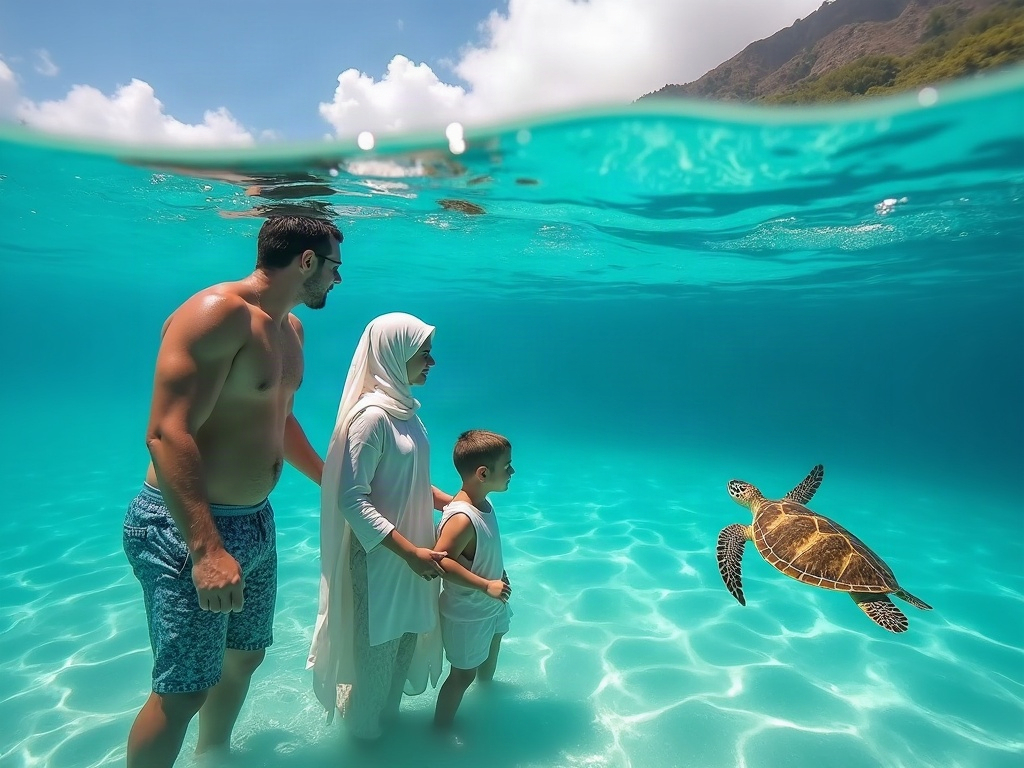
This infographic illustrates the key advantages of island destinations for safe and enriching family sea turtle encounters compared to mainland coasts.
© WovenVoyages.com
2. How Do Different Island Ecosystems Impact Sea Turtle Habitats for a Family Vacation?
Different island ecosystems significantly impact sea turtle habitats and species distribution.
Volcanic islands like Hawaii support Green Sea Turtles; coral atolls like the Gili Islands attract both Green Sea Turtles and Hawksbill Sea Turtles; and continental islands, such as the Yucatán Peninsula, host a diverse array including Loggerhead Sea Turtles.
Each unique geology provides specific foraging and nesting conditions, which in turn dictate which sea turtle species thrive in particular regions.
Understanding these ecological preferences helps families choose a destination that aligns with their desired sea turtle viewing experience.
Which Types of Island Environments Attract Specific Sea Turtle Species for a Family Vacation?
Specific island environments attract distinct sea turtle species for a family vacation; for example, the volcanic islands of Hawaii are prime foraging grounds for Green Sea Turtles, while the coral-rich Gili Islands support both Green Sea Turtles and Hawksbill Sea Turtles.
A foraging ground is defined as a specific area where sea turtles feed, which can be different from their nesting beaches and migratory routes, and is often the best place for viewing opportunities.
Mexico’s Akumal, abundant in seagrass, is a vital feeding area for Green Sea Turtles, demonstrating ecological specialization for different species.[3]
Here’s a breakdown of island environment types and their associated sea turtle species:
- Volcanic Islands (e.g., Maui, Hawaii): Characterized by black sand beaches and lush underwater environments, these are ideal for Green Sea Turtles due to abundant algae and seagrass beds for foraging.
- Coral Cays/Atolls (e.g., Heron Island, Great Barrier Reef, Gili Islands): These islands, formed from coral deposits, provide intricate reef systems that are perfect habitats for Hawksbill Sea Turtles (who feed on sponges) and Green Sea Turtles.
- Continental Islands (e.g., Yucatán Peninsula, Mexico): With diverse coastlines and proximity to mainland ecosystems, these areas attract a wider variety of species including Loggerhead Sea Turtles, known for feeding on crustaceans, alongside Green Sea Turtles and Hawksbill Sea Turtles.
This ecological diversity ensures that families can select a destination tailored to their specific interests in sea turtle observation.
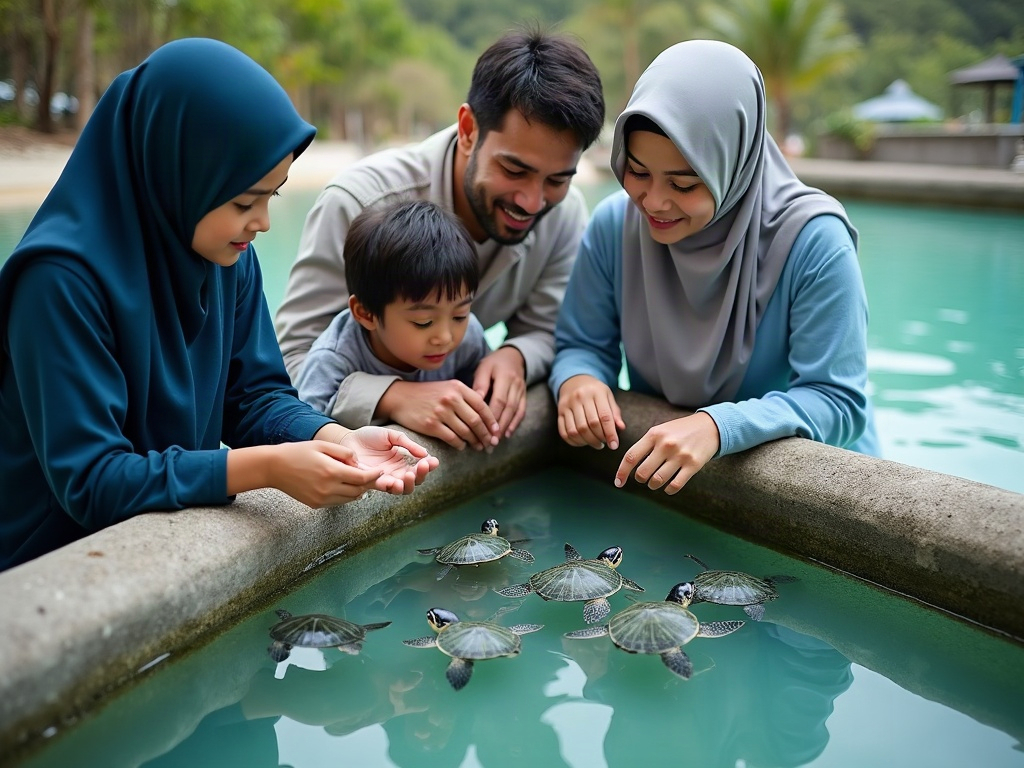
This map displays various island ecosystem types and the primary sea turtle species found within their waters, aiding in destination selection.
© WovenVoyages.com
3. How Do Families Choose the Best Island Destinations for Sea Turtle Viewing During a Family Vacation?
Families choose the best island destinations for sea turtle viewing by evaluating criteria such as budget, travel time, water conditions (calm vs. open ocean), and children’s ages.
A structured comparison framework, like a table detailing destinations, species, viewing seasons, costs, and safety scores, helps match a family’s specific needs with the optimal location.
For example, families with younger children might prioritize destinations with calm, shallow waters and easily accessible viewing points, while those with older children might seek more adventurous snorkeling or diving experiences.
Considering the travel time and potential jet lag is crucial for maintaining a positive family experience, especially for long-haul flights to remote islands like the Galápagos Islands.
When planning a family vacation, diverse needs arise; for those with very young children, you might be interested in researching Which Urban Destinations Are Most Stroller-Friendly for a Family Vacation with Babies? as an alternative or complementary travel idea.
For larger groups seeking ease and convenience, particularly when considering coastal experiences, discovering Which All-Inclusive Beach Destinations Are Best for Large Family Vacations? can simplify planning significantly.
Which Are the Top Island Destinations Known for Safe Sea Turtle Viewing for a Family Vacation?
The top island destinations known for safe sea turtle viewing for a family vacation are Maui (Hawaii), the Great Barrier Reef (Australia), the Galápagos Islands (Ecuador), Akumal (Mexico), and the Seychelles, each offering well-regulated tourism and high turtle populations.
Each offers well-regulated tourism, often within Marine Protected Areas (MPAs), which are defined as areas of the marine environment reserved by law or other effective means to protect part or all of the enclosed environment, and boasts high turtle populations, providing structured and secure opportunities for family encounters.
In Akumal, Mexico, a designated marine refuge, visitors can swim in green zones along the beach, but the red zones are protected and can only be entered with a guide.
| Destination | Predominant Turtle Species | Best Viewing Season | Average Cost Level ($-$$$) | Family Safety/Accessibility Score (1-5) |
|---|---|---|---|---|
| Maui, Hawaii | Green Sea Turtle | Year-round, peak summer for calm waters | $$$ | 5 (Easily accessible beach-based snorkeling) |
| Great Barrier Reef, Australia | Green Sea Turtle, Hawksbill Sea Turtle, Loggerhead Sea Turtle | November-March for nesting/hatching | $$$ | 4 (Well-regulated tours, some deeper water) |
| Galápagos Islands, Ecuador | Green Sea Turtle | December-June for nesting, year-round for foraging | $$$ | 4 (Strictly guided, limited access, educational focus) |
| Akumal, Mexico | Green Sea Turtle | May-November for nesting, year-round for foraging | $$ | 3 (Designated swim zones, guides recommended) |
| Seychelles | Hawksbill Sea Turtle, Green Sea Turtle | October-March for Hawksbill nesting, year-round for Green | $$$ | 4 (Protected beaches, luxury eco-resorts) |
What Are the Best Times of Year for Sea Turtle Viewing in Island Destinations for a Family Vacation?
The best times of year for sea turtle viewing in island destinations for a family vacation depend entirely on whether the goal is to see nesting or hatching, with distinct high seasons such as May-October for nesting in Barbados.
While foraging turtles are often seen year-round in many locations, witnessing an Arribada (a unique mass nesting behavior of Kemp’s Ridley and Olive Ridley Sea Turtles, where thousands of females come ashore to nest at the same time) is a highly seasonal, time-sensitive event unique to specific species.
In Tortuguero, Costa Rica, sandy beaches serve as a prime nesting sanctuary for Green Sea Turtles, Leatherback Sea Turtles, Hawksbill Sea Turtles, and Loggerhead Sea Turtles from May to November.
Here’s a brief overview of viewing seasons for different locations:
- Barbados: Nesting season is typically May-October, with hatching occurring 60-70 days later.
- Tortuguero, Costa Rica: Nesting season is May-November for various species, with prime viewing for Green Sea Turtles between July and October.
- Great Barrier Reef, Australia: Nesting season is November-February, and hatching season is January-March, particularly on islands like Heron Island.
- Galápagos Islands, Ecuador: Green Sea Turtles nest from December to June. Foraging turtles can be seen year-round.
- Maui, Hawaii: While nesting is less common, foraging Green Sea Turtles can be seen year-round in shallow reefs.
How Do Island Destinations Ensure the Ethical Treatment of Sea Turtles During a Family Vacation?
Island destinations ensure the ethical treatment of sea turtles during a family vacation through a combination of strict government regulations, certification programs for tour operators, and the establishment of “no-go” zones in sensitive habitats, as exemplified by Palau, the Philippines, and Australia.
Examples include Palau’s Pristine Paradise Pledge and specific measures in Australia.
These initiatives, coupled with economic incentives for local communities, protect turtles from light pollution (artificial light that disorients hatchlings) and human disturbance, ensuring sustainability.
On guided turtle walks with the Sea Turtle Conservancy, a key rule is to be very quiet and keep a decent distance between yourself and the turtles to avoid disruption.
Unique Insight: Light Pollution is a significant threat, as artificial light along coastlines can disorient hatchlings, leading them away from the ocean and often to their demise. Many conservation efforts focus on minimizing coastal lighting during nesting seasons.
Economic incentives play a crucial role; when local communities directly benefit financially from protected turtle populations, they become active stakeholders in conservation, ensuring long-term sustainable ecotourism.
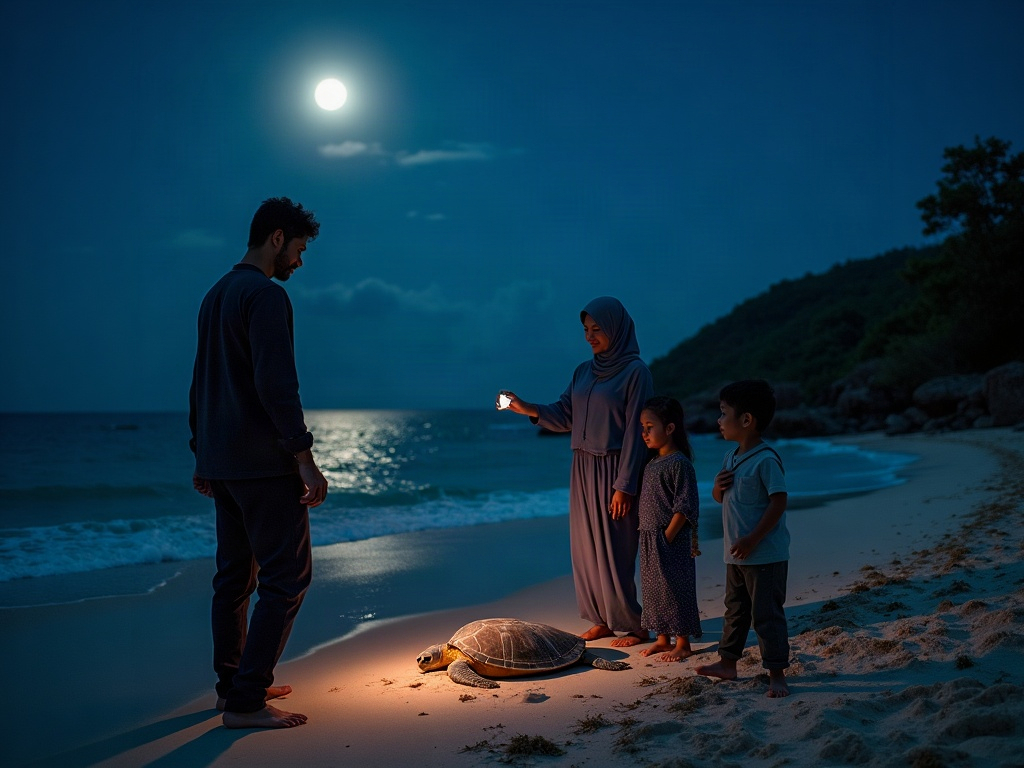
This image illustrates responsible tourism in action, with observers maintaining safe distances from sea turtles in their natural habitat.
© WovenVoyages.com
4. Which Lesser-Known Island Destinations Offer Unique Sea Turtle Experiences for a Family Vacation?
Lesser-known island destinations like São Tomé, Culebra, and Raja Ampat provide unique, less-crowded sea turtle encounters, appealing to adventurous families seeking distinct experiences beyond mainstream locations such as Hawaii or the Great Barrier Reef.
These hidden gems often offer more intimate interactions with wildlife and a deeper connection to local conservation efforts.
It is important to note that these destinations may have less-developed tourism infrastructure and may require more independent travel planning, setting realistic expectations for families.
What Hidden Gems Provide Excellent Sea Turtle Encounters for a Family Vacation?
Hidden gems that provide excellent sea turtle encounters for a family vacation include São Tomé and Príncipe for its critical nesting sites, Culebra, Puerto Rico for its calm-water snorkeling, and Raja Ampat, Indonesia for its unparalleled marine biodiversity.
Raja Ampat is recognized as a biodiversity hotspot, a biogeographic region with significant levels of biodiversity that is threatened by human habitation, making it a crucial area for marine conservation.
These destinations offer unique experiences like night tours to watch Leatherback Sea Turtles nest in São Tomé, contrasting with crowded mainstream destinations and providing more intimate, less-commercialized viewing opportunities.
Unlike the large tour groups in Akumal, Culebra offers snorkel-from-the-beach encounters with smaller groups, perfect for families seeking a peaceful interaction with Green Sea Turtles.
The unparalleled marine biodiversity of Raja Ampat means families can observe Green Sea Turtles, Hawksbill Sea Turtles, and sometimes even Leatherback Sea Turtles alongside a myriad of other marine species in pristine coral reef ecosystems.
While Australia’s Great Barrier Reef is a UNESCO World Heritage Site home to six of the world’s seven species of sea turtles, these lesser-known locales offer a distinct, often more rustic and personal encounter with these magnificent creatures.
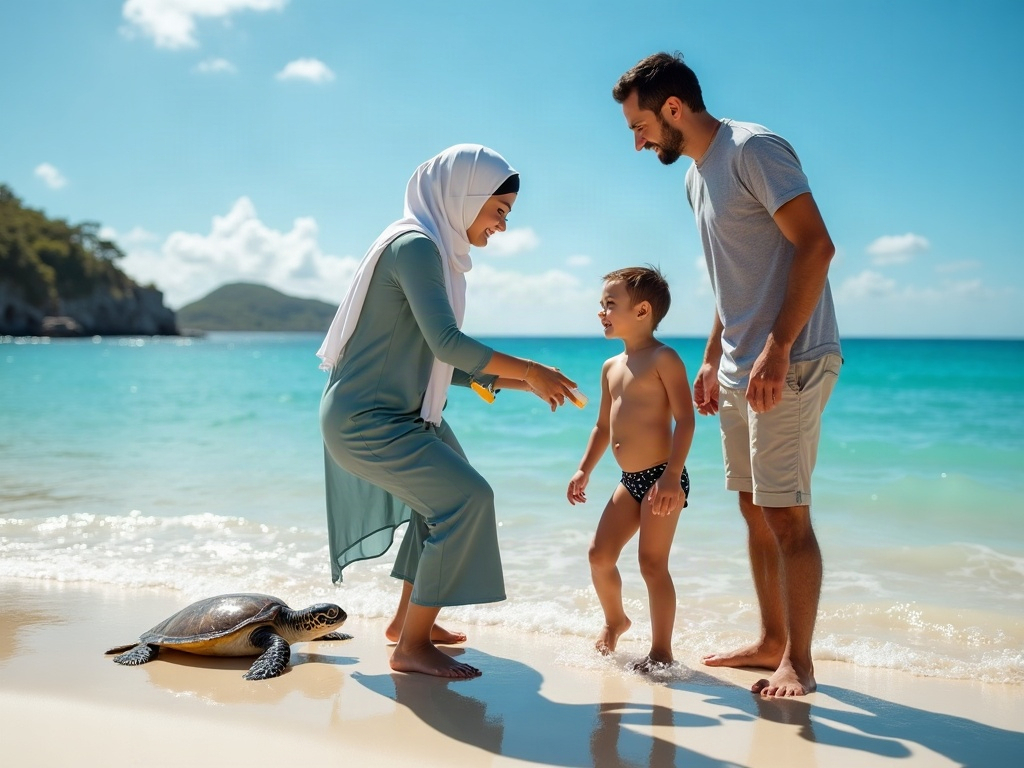
This collage features the pristine environments and diverse marine life found in lesser-known sea turtle viewing destinations.
© WovenVoyages.com
5. How Can Families Maximize Their Sea Turtle Viewing Experience on Island Destinations for a Family Vacation?
Families can maximize their sea turtle viewing experience through meticulous pre-trip planning, acquiring essential gear, and strict adherence to ethical guidelines.
This ensures a safe, educational, and impactful trip where encounters are responsible and respectful.
Emphasizing safety and ethics beyond just seeing turtles guarantees a memorable and meaningful family adventure.
A pre-trip framework involves researching the specific behaviors of sea turtle species in your chosen destination, understanding local regulations, and preparing children for respectful interactions.
On-trip best practices include always following certified guide instructions, maintaining appropriate distances, and minimizing noise and movement in turtle habitats.
Post-trip, families can extend their learning by engaging with conservation groups like the World Wildlife Fund (WWF) or NOAA Fisheries, further solidifying the educational value of their journey.
What Essential Gear and Preparation Are Needed for Sea Turtle Viewing During a Family Vacation?
The essential gear needed for sea turtle viewing during a family vacation includes properly fitting snorkel equipment, reef-safe sunscreen to protect marine ecosystems, and polarized sunglasses to reduce water glare for better spotting.
Reef-safe sunscreen is defined as sunscreen free of specific chemicals (oxybenzone, octinoxate) that are known to cause coral bleaching and damage marine life; these chemicals have been banned in eco-sensitive locations like Hawaii.
Chemicals in common sunscreens, like oxybenzone and octinoxate, are known to cause coral bleaching and are so harmful that they have been banned in eco-sensitive locations like Hawaii.
Preparation involves packing rash guards for sun protection, reducing sunscreen needs, and having specific in-water and on-shore items like red-light flashlights for night walks, ensuring safety and environmental responsibility.
Here is a scannable checklist of essential gear:
- ☐ In-Water Gear: Properly fitting snorkel mask, snorkel, and fins for each family member.
- ☐ In-Water Gear: Full-body rash guards or wetsuits for sun protection and jellyfish sting prevention.
- ☐ Health & Safety: Biodegradable, reef-safe sunscreen (check for zinc oxide or titanium dioxide).
- ☐ On-Shore Gear: Polarized sunglasses and wide-brimmed hats to reduce glare and protect from the sun.
- ☐ On-Shore Gear: Reusable water bottles and snacks to minimize plastic waste.
- ☐ Specialized Gear: Red-light flashlight for guided night walks to observe nesting turtles (white light can disorient them).
- ☐ Documentation: Waterproof camera or phone case to capture memories responsibly.
How Do Families Safely Interact with Sea Turtles and Their Habitats During a Family Vacation?
Families safely interact with sea turtles and their habitats during a family vacation by strictly adhering to the “no touch, no chase” rule, maintaining a minimum distance of 10-15 feet, and never blocking a turtle’s path to the surface for air.
Violations, like under the U.S. Endangered Species Act, incur substantial fines, often exceeding $100,000, and potential imprisonment.
Understanding the Benthic Zone, the ecological region at the lowest level of a body of water where turtles often rest and feed, and following certified guide instructions, as in Bonaire National Marine Park, ensures mutual safety and respect.
Here is a simple Code of Conduct for safe sea turtle encounters:
- Do not touch, feed, or chase sea turtles. Maintain a respectful distance of at least 10-15 feet.
- Never block a turtle’s path to the surface for air or its resting areas.
- Avoid flash photography, especially at night, as it can disorient nesting females and hatchlings.
- Listen to and obey all instructions from your certified tour guide or marine park rangers.
- Use reef-safe sunscreen and ensure no trash or foreign objects enter the water.
Locations like Ningaloo Reef in Australia enforce these rules strictly through mandatory briefings and guide supervision, highlighting the importance of responsible ecotourism.
What Other Marine Life Encounters Can Families Expect During an Island Destination for a Family Vacation?
In addition to turtles, families on an island destination for a family vacation can often expect other marine life encounters, such as spotting dolphins and whales off the coast of the Great Barrier Reef or seeing Hawaiian monk seals on the beaches of Hawaii.
The Maui Ocean Center in Hawaii, for example, provides immersive experiences with humpback whales, sharks, and rays in addition to their Turtle Lagoon.
These additional encounters, sometimes revealing symbiotic relationships (like cleaner fish picking parasites off a sea turtle’s shell), enrich the overall educational and experiential value.
Other high-interest species families might encounter include:
- Great Barrier Reef: Colorful coral fish, reef sharks (harmless to humans), manta rays, and various species of dolphins and whales during migration seasons.
- Hawaii: Spinner dolphins, Hawaiian monk seals (critically endangered, observe from a distance), and a diverse array of tropical fish in vibrant coral gardens.
- Galápagos Islands: Galápagos Sea Lions, marine iguanas, various seabirds, and endemic fish species, all thriving within its unique ecosystem.
These supplementary marine sightings enhance the family vacation, turning it into a broader exploration of ocean biodiversity and conservation.
Beyond sea turtles, families might find themselves wondering Which Beach Destinations Offer the Best Marine Wildlife for a Family Vacation? to enrich their overall oceanic adventure.
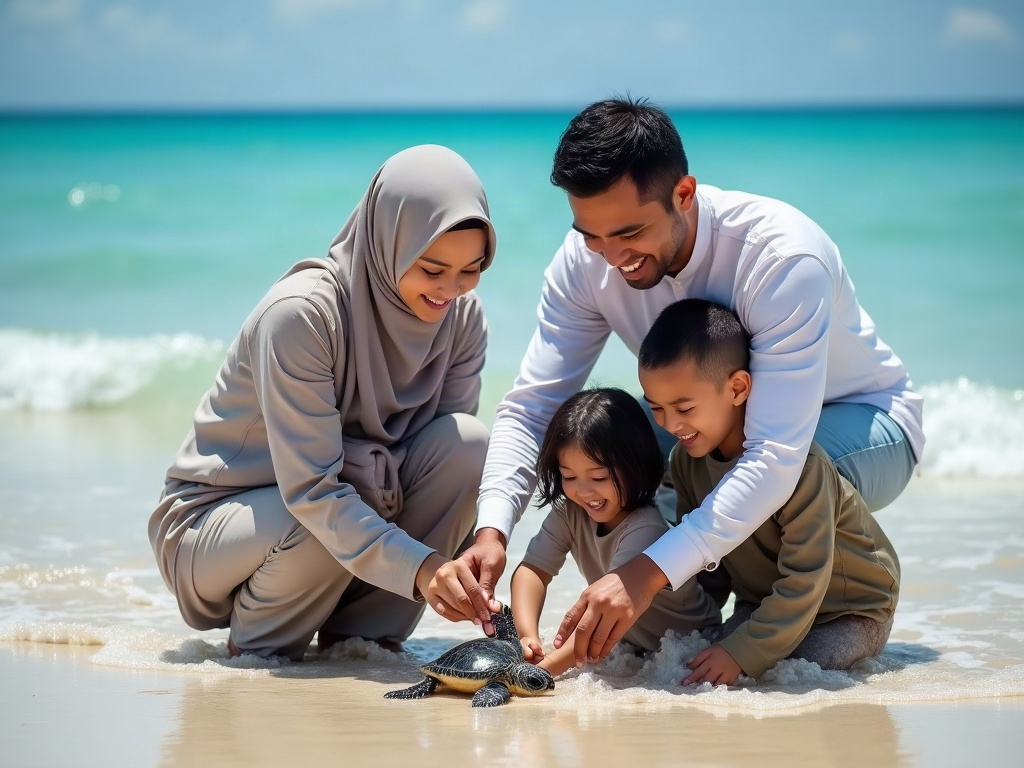
This image captures a family enjoying a safe and memorable snorkeling experience alongside sea turtles in a protected marine environment.
© WovenVoyages.com
6. How Can Families Engage in Conservation Activities During an Island Destination for a Family Vacation?
Families can actively engage in sea turtle conservation during their vacation through ethical tourism choices, hands-on programs, and supporting local initiatives.
This involves differentiating between financial support (ethical tours, donations) and direct participation (beach cleanups, citizen science).
Clarifying expectations is crucial, as direct animal interaction is typically reserved for trained professionals to ensure animal welfare.
By participating, families not only help protect sea turtles but also instill a deep sense of environmental responsibility in children.
Which Local Programs Offer Hands-On Sea Turtle Conservation for a Family Vacation?
Local programs that offer hands-on sea turtle conservation for a family vacation include the Gili Trawangan Turtle Hatchery in Indonesia, guided nesting tours with groups like Pacuare Reserve in Costa Rica, and supporting research via organizations like Grupo Tortuguero in Mexico.
These initiatives facilitate citizen science participation, defined as the collection and analysis of data relating to the natural world by members of the general public, typically as part of a collaborative project with professional scientists.
Families can learn about head-starting processes, aid in tank cleaning, or assist with data collection for critical conservation efforts.
On Gili Meno, a neighboring island to Gili Trawangan, families can visit a turtle sanctuary to see baby turtles and join release programs for a small donation.
At the Gili Trawangan Turtle Hatchery, families can learn about the head-starting process for hatchlings and assist with daily tasks such as tank cleaning, offering a direct glimpse into early-stage turtle care.
Guided nesting tours at Pacuare Reserve in Costa Rica provide families with the opportunity to observe nesting Leatherback Sea Turtles and contribute to data collection under expert supervision.
Organizations like Grupo Tortuguero in Mexico welcome families to participate in beach clean-ups and surveys, contributing to broader conservation research.
Before your trip, visit the organization’s website to check for age restrictions, booking requirements, and donation opportunities to ensure a smooth and impactful experience.
7. What Are the Potential Risks and Challenges of Sea Turtle Viewing During a Family Vacation?
Potential risks and challenges of family sea turtle viewing include marine life encounters (e.g., jellyfish, strong currents) and environmental impacts.
Unregulated tourism can lead to physical damage to coral reefs, wildlife stress from overcrowding, and pollution from plastics or chemical sunscreens.
Presenting these risks factually, paired with mitigation strategies, builds trust and encourages responsible travel.
Understanding both the risks to the family and the risks to the turtles is crucial for a safe and ethical ecotourism experience.
How Can Families Mitigate Risks from Marine Wildlife Encounters During a Family Vacation?
Families can mitigate risks from marine wildlife encounters during a family vacation by wearing protective gear like wetsuits or rash guards to prevent jellyfish stings and by always following the instructions of their certified guide.
Choosing reputable tour operators who provide safety briefings and enforce rules, especially in regulated areas like the Great Barrier Reef, is the most effective mitigation strategy.
Understanding dangers such as rip currents (a specific kind of water current that can occur near beaches, which can be escaped by swimming parallel to the shore) and how to escape them is also vital for water safety.
Here is a risk/mitigation guide:
| Issue | Mitigation Strategy |
|---|---|
| Jellyfish/Stingers | Wear a full-body rash guard or wetsuit; carry a small bottle of vinegar for immediate treatment of stings (if safe to do so). |
| Strong Currents (Rip Current) | Never snorkel alone; stay in designated calm-water areas; know how to spot and escape rip currents by swimming parallel to the shore. |
| Unpredictable Wildlife Behavior | Maintain required viewing distances (10-15 feet); avoid sudden movements; follow all guide instructions implicitly. |
| Sharp Coral/Rocks | Wear water shoes or fins; avoid standing on coral; practice good buoyancy control while snorkeling. |
The single most effective mitigation strategy is choosing a reputable, certified tour operator whose primary job is managing these risks and ensuring the safety of both tourists and marine life.
What Are the Environmental Impacts of Tourism on Sea Turtle Habitats During a Family Vacation?
The primary environmental impacts of tourism on sea turtle habitats during a family vacation include physical damage to coral reefs from careless swimmers, stress to wildlife from overcrowding, and pollution from single-use plastics and chemical sunscreens.
An estimated 14,000 tons of sunscreen are deposited in the world’s oceans annually, contributing to coral reef degradation and harming marine life that turtles depend on.
This influx of pollutants disrupts the trophic cascade, a process where a negative impact on one species (like coral) can have a chain reaction effect on the entire ecosystem that turtles depend on.
Dropping anchors or standing on coral, for instance, directly kills the living polyps that build the reef, essential habitats and food sources for many marine species, including Hawksbill Sea Turtles.
The presence of too many tourists can lead to wildlife stress, altering natural behaviors and potentially impacting reproduction or foraging success of Green Sea Turtles.
This highlights the need for solutions like using reef-safe sunscreen and adhering to ethical tourism practices to protect vital ecosystems.
Families interested in protecting these vital marine ecosystems might also want to explore Which Beach Destinations Feature the Best Coral Reefs for a Family Vacation? to better appreciate their beauty and fragility.
8. How Can Families Ensure a Sustainable and Ethical Sea Turtle Viewing Experience During a Family Vacation?
Families ensure a sustainable and ethical sea turtle viewing experience by adopting specific practices: reducing single-use plastics, choosing eco-certified tour operators (like Green Globe certified), and financially supporting local conservation.
This consolidates all responsible advice into an actionable Responsible Tourist Checklist, empowering families to leave a positive impact on global conservation efforts.
Every choice, from the sunscreen used to the tour operator selected, contributes to the long-term health of sea turtle populations and their habitats, including critical sites like those in the Galápagos Islands and the Great Barrier Reef.
Which Practices Support Long-Term Sea Turtle Conservation During a Family Vacation?
Practices that support long-term sea turtle conservation during a family vacation include actively reducing single-use plastic consumption, choosing only eco-certified tour operators, and financially supporting local conservation initiatives.
A single plastic bottle can take up to 450 years to decompose in the ocean, posing a long-term threat to sea turtles who can mistake plastic debris for food.
Eco-certified refers to a third-party certification that verifies a business or tour operator meets certain environmental and social sustainability standards, such as those set by Green Globe.
Families should educate themselves on local viewing regulations and commit to items on a Responsible Tourist Checklist for a positive collective impact.
Here is a Responsible Tourist Checklist for your family’s sea turtle viewing adventure:
- ☐ We will choose a tour operator with a valid eco-certification (e.g., Green Globe, Blue Flag).
- ☐ We will eliminate all single-use plastics from our beach bags and personal items.
- ☐ We will educate ourselves on local viewing regulations before entering the water, including required distances from Green Sea Turtles and Hawksbill Sea Turtles.
- ☐ We will use only reef-safe sunscreen free of oxybenzone and octinoxate.
- ☐ We will support local conservation efforts through donations or participation in approved citizen science programs.
- ☐ We will never touch, chase, or harass any marine wildlife, including sea turtles.
- ☐ We will ensure our children understand and adhere to all ethical viewing guidelines.
The collective impact of individual family choices, when aligned with these practices, significantly contributes to global sea turtle conservation efforts, ensuring future generations can also experience these incredible creatures.
Author’s Experience: Abdullahi Azaam
“As a marine biologist and a parent, I’ve had the privilege of witnessing first-hand the impact of responsible tourism on sea turtle populations in places like the Galápagos Islands and the Great Barrier Reef. Guiding eco-tours and organizing family conservation trips for over a decade has taught me that the most memorable and meaningful experiences are those where education and ethical practices go hand-in-hand. Protecting these vulnerable species for our children means making conscious choices today.”
9. Frequently Asked Questions (People Also Ask)
What are the primary factors to consider when choosing an island for family sea turtle viewing?
What essential gear is required for safe and ethical sea turtle viewing?
How can families contribute to sea turtle conservation during their vacation?
What are the environmental risks associated with sea turtle tourism?
What Are the Final Thoughts on Maximizing Island Destinations for a Family Vacation?
Maximizing an island destination for a family sea turtle viewing vacation ultimately hinges on prioritizing safety and ethics.
By choosing regulated tours, practicing responsible interaction, and supporting conservation, families ensure memorable, meaningful, and educational encounters.
This approach reaffirms that a well-planned, conscious trip enriches both the family’s experience and the future of sea turtle populations.
10. References & Sources
- [1] explore.com – Best Family Friendly Destinations For Sea Turtle Lovers
- [2] lopesan.com – Sea Turtle Sanctuary On Saona Island
- [3] familytravelmagazine.com – Family Vacations For Turtle Lovers
- newyorkfamily.com – Nevis Caribbean Island Turtles
- whereverfamily.com – 3 Destinations For Sea Turtle Release Experiences