What Are the Top Coastal Destinations for a Family Vacation?
Table of Contents
The top coastal destinations for a family vacation include Maui, Hawaii; the Algarve, Portugal; and Australia’s Whitsunday Islands, selected for their superior blend of safety, activities, and amenities.
These premier locations excel because they provide access to safe water recreation suitable for all ages.
They offer varied natural landscapes from sandy beaches to protected coves.
These destinations also feature accessible resort infrastructure and family-oriented amenities.
To fully explore all your options, consider learning more about What Are the 6 Types of Family Vacation Destinations? before finalizing your travel plans.
2. What Unique Benefits Do Coastal Destinations Offer for a Family Vacation?
Coastal destinations provide a unique combination of sensory experiences, physical activities, and educational opportunities that differentiate them from other vacation types.
The sound of waves, the refreshing sea air, and the vast open spaces contribute to a calming yet stimulating environment for families.
Physical activities such as swimming, snorkeling, and building sandcastles are inherently engaging for children of all ages.
These environments also offer unparalleled educational opportunities, particularly in marine biology, allowing children to learn about ecosystems firsthand.
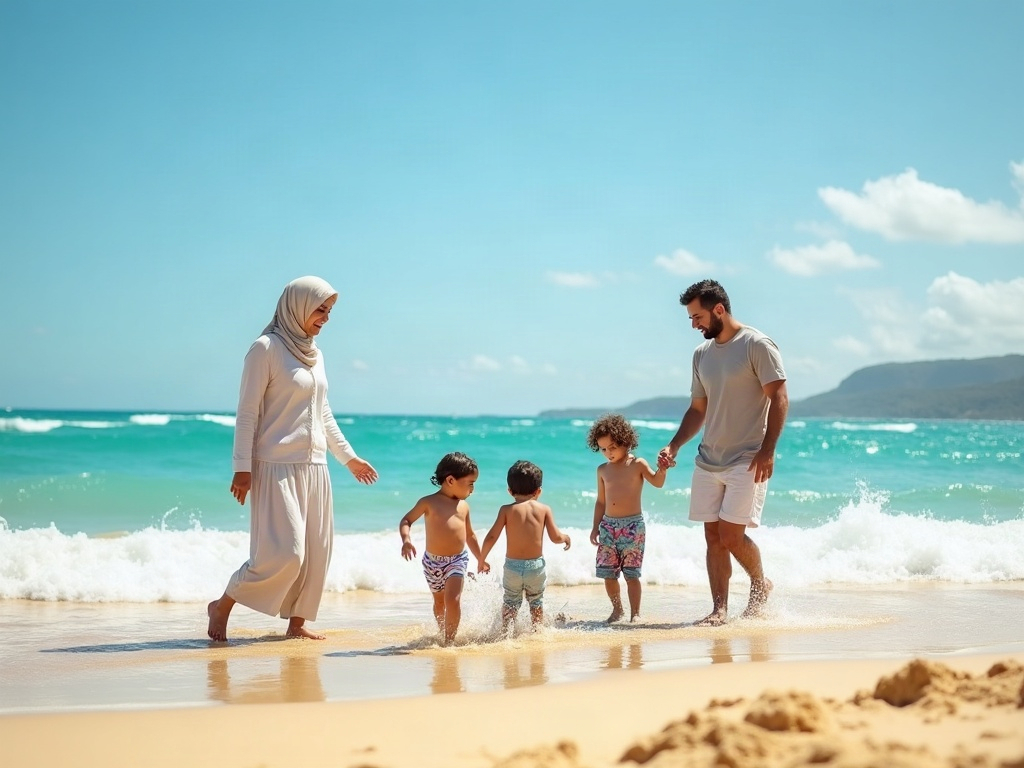
A family enjoying a coastal vacation, highlighting the joy of sandcastle building and beach activities.
© WovenVoyages.com
Which Coastal Environments Are Most Suited for a Diverse Family Vacation?
The most suitable coastal environments for a diverse family vacation are categorized by primary activity type and geology, including calm-water sandy beaches for relaxation (Gold Coast, Australia), rugged cliffside coastlines for exploration (Amalfi Coast, Italy), and biodiverse volcanic islands for unique adventures (Bora Bora, French Polynesia).
According to the 2023 U.S. Family Travel Survey, 57% of parents are interested in beach vacations, underscoring the popularity and diverse appeal of these destinations.
The littoral zone, defined as the coastal area from the high water mark to the shallow offshore waters, is critically important for both marine biodiversity and safe family exploration.
Unique Insight: Understanding the specific geological features and primary activity offerings of a coastal area, such as the calm waters of Gold Coast or the dramatic cliffs of the Amalfi Coast, allows families to tailor their vacation to their preferred style, ensuring maximum enjoyment and suitability for all members.
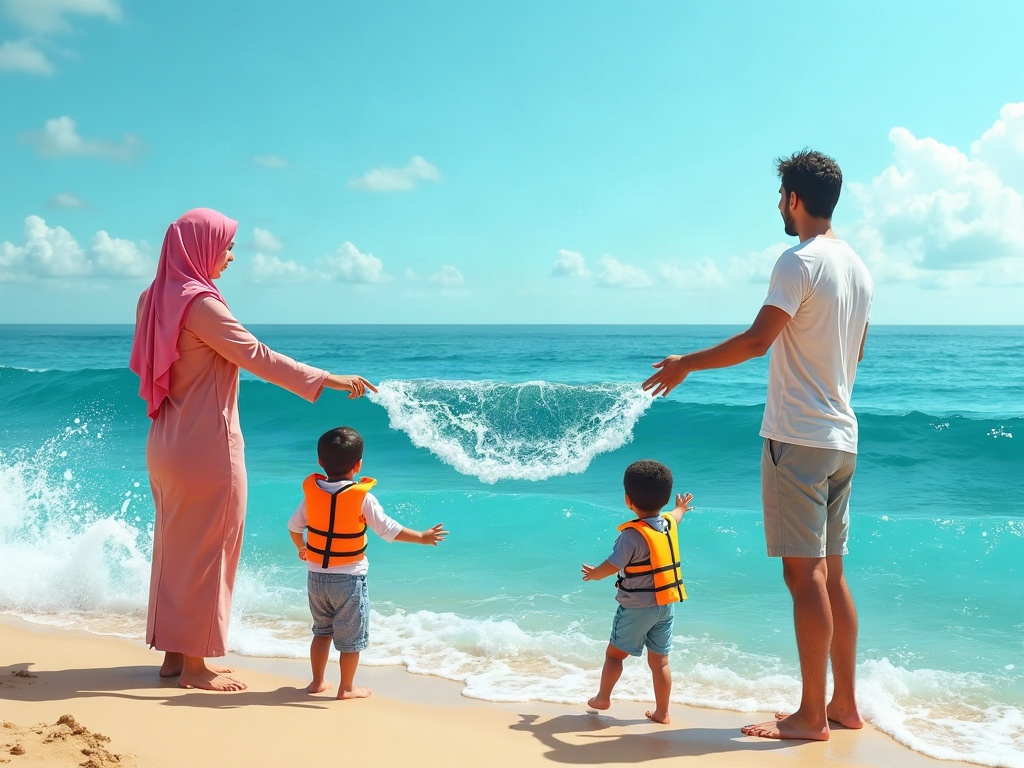
A visual representation of diverse coastal environments, from sandy beaches to rugged cliffs and volcanic islands.
© WovenVoyages.com
3. How Can Families Ensure Safety and Enjoyment at Coastal Destinations During a Family Vacation?
Ensuring safety and enjoyment at coastal destinations requires a proactive, multi-faceted approach addressing specific hazards of the marine environment.
Families should implement a three-phase safety framework encompassing pre-trip research, diligent on-site vigilance, and post-activity checks.
This structured approach directly mitigates risks such as rip currents, marine animal encounters, and excessive sun exposure, which are common to coastal areas.
Proper sun protection, for instance, prevents painful sunburns that would otherwise cut short valuable vacation time, directly linking safety measures to enhanced enjoyment.
What Are the Essential Safety Considerations for Children at Coastal Destinations?
The essential safety considerations for children at coastal destinations are dominated by water safety protocols to prevent drowning, rigorous sun protection to avoid UV radiation damage, and hazard awareness to prevent injuries from marine life or terrain.
Drowning is the leading cause of death for children 1-4 years old and the second leading cause of unintentional injury death for children 5-14, highlighting the critical importance of constant supervision [1].
A rip current is a powerful, narrow channel of water flowing away from the shore; visual cues for identification include a channel of churning, choppy water or a line of foam moving out to sea.
Unique Insight: Implementing a “Water Watcher” tag system, where one adult is assigned 15-minute intervals of constant, undistracted visual supervision, is a highly effective tactic to prevent water-related incidents with children.

Diagram illustrating key visual indicators to identify potentially dangerous rip currents for swimmers.
© WovenVoyages.com
4. How Should Families Choose the Ideal Coastal Destination for Their Family Vacation Needs?
Choosing the ideal coastal destination for a family vacation involves a structured decision-making process that aligns family profiles with optimal destination attributes.
This process typically involves defining the family’s travel style, establishing a realistic budget, considering the age-appropriateness of available activities, and assessing logistical factors.
By systematically evaluating these criteria, families can ensure they select a destination that best meets their specific needs and preferences for a memorable coastal experience.
Which Are the Top Coastal Destinations for a Family Vacation Globally?
The top coastal destinations for a family vacation globally, based on amenity access, safety, and activity diversity, are Maui, Hawaii (USA); the Algarve region, Portugal; the Whitsunday Islands, Australia; Bali, Indonesia; and Riviera Maya, Mexico.
The Algarve region in Portugal features a coastline of more than 150 kilometers, offering numerous family-friendly beaches and coves.
A Blue Flag beach is an international certification awarded for meeting stringent standards in water quality, safety, and environmental management, ensuring a high-quality family experience.
Unique Insight: For families seeking calm, protected waters perfect for young children, Maui’s crescent-shaped bays offer ideal conditions for snorkeling, while Riviera Maya excels with all-inclusive resorts featuring dedicated kids’ clubs and family entertainment.
What Coastal Destinations Offer Unique Experiences for a Specialized Family Vacation?
For a specialized family vacation, coastal destinations offering unique experiences include the Galápagos Islands, Ecuador for wildlife ecotourism; Venice, Italy for historical urban waterways; and the coast of Costa Rica for rainforest-meets-ocean adventure.
There are 118 islands in the Venetian Lagoon, providing ample opportunities for exploration and cultural immersion for families interested in history and architecture.
Ecotourism involves responsible travel to natural areas that conserves the environment, sustains the well-being of local people, and includes interpretation and education, making destinations like the Galápagos Islands ideal for families with science-loving teenagers.

Images depicting unique coastal experiences, from wildlife encounters in the Galápagos to cultural tours in Venice.
© WovenVoyages.com
5. What Are the Budgetary Considerations for a Coastal Family Vacation?
Budgetary considerations for a coastal family vacation primarily revolve around identifying and managing the core cost drivers: transportation, accommodation, food, and activities.
Understanding how these components contribute to the overall expense is crucial for effective financial planning.
Coastal destinations can often inflate costs in specific categories like accommodation and dining due to premium views and desirable locations, requiring careful consideration during the planning phase.
Which Coastal Destinations Offer the Best Value for a Family Vacation?
Coastal destinations offering the best value for a family vacation, balancing low costs with high-quality experiences, include Hoi An, Vietnam; the Outer Banks, North Carolina, USA; Krabi, Thailand; and Sunny Beach, Bulgaria.
A three-course meal for two people in a mid-range restaurant in Hoi An costs on average less than $25, illustrating significant cost savings compared to other popular destinations [2].
The shoulder season, the travel period between peak and off-peak seasons, offers a strategic balance of lower costs, fewer crowds, and favorable weather, providing excellent value for families.
Unique Insight: Destinations like Krabi, Thailand, provide exceptional value due to favorable exchange rates and a dominance of affordable guesthouses and local eateries, offering a stark contrast to more expensive counterparts such as Phuket or the French Riviera.
6. How Can Families Maximize Experiences During a Coastal Family Vacation?
Maximizing experiences during a coastal family vacation involves strategic planning to optimize on-the-ground time and engage all family members effectively.
This approach ensures that activities cater to diverse age groups and interests, fostering greater enjoyment and creating lasting memories.
By thoughtfully structuring daily itineraries, families can achieve a higher activity density while maintaining a flexible framework that allows for spontaneous discovery.
What Are the Best Coastal Activities for Children of All Ages on a Family Vacation?
The best coastal activities for children on a family vacation are those that can be scaled in complexity by age, such as sandcastle construction for toddlers, snorkeling in shallow waters for young children, and learning to surf for teenagers.
The PADI Bubblemaker program allows children as young as 8 years old to experience scuba diving in a pool or confined water, demonstrating options for various age groups.
Bio-fluorescence, where marine organisms absorb light and re-emit it as a different color, is a key feature of popular night-diving and snorkeling tours, offering a unique educational experience.
Unique Insight: A “Theme of the Day” strategy, such as “Marine Biology Monday” or “Tidal Pool Tuesday,” can build anticipation and structure diverse activities, ensuring engagement across different age groups, for example, while teenagers learn to surf, toddlers can safely play in the whitewater wash.
What Are the Optimal Accommodation Choices for a Coastal Family Vacation?
The optimal accommodation choices for a coastal family vacation are determined by family size and desired autonomy, ranging from full-service all-inclusive resorts for convenience to multi-bedroom vacation rentals for space and self-catering capabilities.
The global vacation rental market is projected to grow from $91.19 billion in 2022 to $117.44 billion in 2023 at a compound annual growth rate (CAGR) of 28.8%, indicating a strong preference for flexible lodging options [3].
An aparthotel, or apartment hotel, combines hotel amenities with apartment facilities like a kitchen, offering a balanced solution for family needs.
Unique Insight: For families with specific dietary restrictions or those preferring home-cooked meals, vacation rentals with full kitchen facilities offer significant advantages over all-inclusive resorts, providing greater control and cost savings.
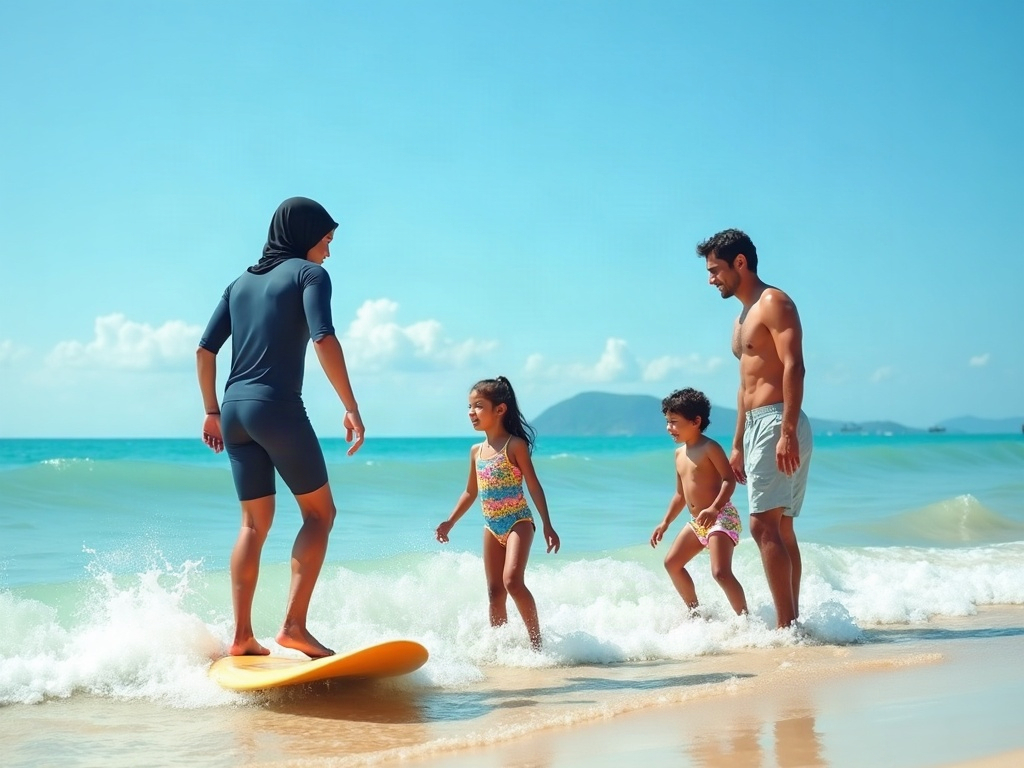
Examples of optimal accommodation types for coastal family vacations, from resorts to rentals.
© WovenVoyages.com
7. What Essential Items Should Families Pack for a Coastal Family Vacation?
Packing efficiently for a coastal family vacation is crucial to prevent common problems and ensure a smooth experience.
A curated packing list focusing on items specific to the coastal environment minimizes stress and maximizes enjoyment.
This strategic approach ensures families are prepared for various situations, from sun protection to unexpected marine encounters, ultimately preventing common coastal vacation problems.
What Often Overlooked Items Are Crucial for a Smooth Coastal Family Vacation?
Crucial but often overlooked items for a smooth coastal family vacation include a waterproof dry bag to protect electronics, long-sleeve rash guards for UV protection and abrasion prevention, and a small container of vinegar to neutralize jellyfish stings.
A UPF 50+ fabric blocks 98% of the sun’s rays, providing superior sun protection compared to standard clothing.
UPF (Ultraviolet Protection Factor) is a rating system for apparel that indicates how effectively fabrics shield skin from ultraviolet radiation, distinct from the SPF rating for sunscreens.
Unique Insight: To combat sand infiltration, a mesh beach bag is invaluable, allowing sand to sift out before returning to accommodations, thus preventing frustrating clean-up issues and protecting electronics.
8. What Common Pitfalls Should Families Avoid During a Coastal Family Vacation?
Families can significantly enhance their coastal vacation by proactively identifying common pitfalls and implementing preventative strategies.
Awareness of potential problems, from environmental risks to over-scheduling, enables families to apply targeted mitigation techniques.
This approach transforms potential vacation disruptors into opportunities for a smoother and more enjoyable experience, ensuring a positive trip.
How Can Families Mitigate Health and Environmental Risks at Coastal Destinations?
Families can mitigate health and environmental risks at coastal destinations by using physical barriers like wetsuits against jellyfish, choosing reef-safe sunscreens to protect coral, and adhering strictly to posted water quality and wildlife advisories from local authorities.
Sunscreen chemicals like oxybenzone and octinoxate are recognized as threatening to coral reefs, with some estimates stating that 14,000 tons of sunscreen end up in the world’s oceans each year [4].
Zooxanthellae are symbiotic algae living within coral polyps, and chemical sunscreens can cause coral bleaching by expelling them, emphasizing the importance of reef-safe products.
Unique Insight: To prevent dehydration and sunstroke, a concrete mitigation strategy involves packing and consuming one 16-ounce bottle of water per person for every two hours of beach time, especially for active children.
What Strategies Can Prevent Overcrowding and Overtourism from Affecting a Family Vacation?
To prevent overcrowding and overtourism from negatively affecting a family vacation, the primary strategies are traveling during the “shoulder season” (e.g., May or September for the Mediterranean), exploring secondary beaches away from main access points, and starting beach days earlier than the general public.
Data from the World Travel & Tourism Council shows that in 2023, the travel and tourism sector’s GDP contribution grew by 24.7% to reach $7.7 trillion, highlighting the increasing pressure on popular destinations [5].
Demarketing in a tourism context involves official boards actively steering visitors away from hotspots towards lesser-known areas to distribute tourist load and reduce congestion.
Unique Insight: Instead of joining the crowds at a popular spot like Maya Bay in Thailand during peak season, a family can charter a boat to the less-visited Hong Islands in the shoulder season, leveraging a “demarketing” strategy promoted by local authorities for a more serene experience.
9. Logistics: Family Coastal Vacation Planning Checklist
Use this interactive checklist to ensure you’ve covered all the critical logistical bases for your trip.
Click the squares to check them off as you plan.
| Checklist Item / Tactic | Status |
|---|---|
| Health & Safety Preparations | |
| Verify travel insurance covers marine activities and emergency medical evacuation. | ⬜ |
| Pack a marine-specific first-aid kit including motion sickness remedies and sting treatment. | ⬜ |
| Accommodation & Logistics | |
| Confirm accommodation features like kitchen facilities and laundry access for family convenience. | ⬜ |
| Research local transport options, including car rental and public ferries. | ⬜ |
| Activity Planning & Packing | |
| Plan a flexible daily itinerary with age-appropriate coastal activities, including buffer time. | ⬜ |
| Ensure all family members have UPF-rated sun protective clothing and reef-safe sunscreen. | ⬜ |
10. Frequently Asked Questions (People Also Ask)
What are the best coastal activities for children of all ages?
The best coastal activities for children of all ages are those that can be scaled in complexity, such as sandcastle construction for toddlers, snorkeling in shallow waters for young children, and learning to surf for teenagers.
How can families ensure safety at coastal destinations?
Families can ensure safety at coastal destinations by establishing a three-phase safety framework: pre-trip research (checking tides and warnings), on-site vigilance (active supervision), and post-activity checks (for sun exposure and marine encounters).
What essential items should families pack for a coastal family vacation?
Essential items include high-SPF (30-50), broad-spectrum, water-resistant sunscreen; wide-brimmed hats; long-sleeve rash guards; a waterproof dry bag; a mesh beach bag; and a basic first-aid kit with remedies for minor cuts, stings, and motion sickness.
Which coastal environments offer unique experiences for specialized family vacations?
For specialized family vacations, coastal destinations like the Galápagos Islands offer unparalleled wildlife ecotourism, Venice provides historical urban waterways for cultural immersion, and the coast of Costa Rica offers rainforest-meets-ocean adventures.
What Is the Definitive Verdict on Booking Coastal Destinations for a Family Vacation?
Coastal destinations represent an optimal choice for families prioritizing a blend of relaxation, physical activity, and nature-based educational opportunities.
While considerations like safety and cost require proactive planning, the unique benefits, diverse environments, and enriching activities offered by coastal locales make them highly suitable for memorable family experiences.