Which Black Sand Beach Destinations Are Safe for a Family Vacation?
Table of Contents
The safest black sand beach destinations for a family vacation are Playa Jardín (Tenerife), Kamari Beach (Santorini), and Punalu’u Beach (Hawaii) due to their combination of lifeguard services, calm water conditions, and accessibility.
These destinations are safest because they actively mitigate the inherent risks of volcanic coastlines.
- Engineered Safety: Man-made breakwaters and designated swimming zones.
- Official Oversight: Presence of lifeguards and official safety ratings (e.g., Blue Flag).
- Family Amenities: Proximity to facilities, food, and emergency services.
Before diving into the unique aspects of black sand beaches, you might be interested in exploring What Are the 6 Types of Family Vacation Destinations? to compare various travel options.
As a specific category within coastal travel, black sand beaches offer distinct experiences, but if you’re exploring all your options, consider What Are the Top Coastal Destinations for a Family Vacation?.
Author’s Experience: Abdullahi Azaam
“As a marine biologist and a parent, I’ve had the unique opportunity to explore volcanic coastlines with my family across four continents. This firsthand experience has given me a deep appreciation for the geological wonders of black sand beaches, but more importantly, a critical eye for the safety measures essential when traveling with children to these distinct environments.”
1. What Makes Black Sand Beaches Unique for a Family Vacation?
Black sand beaches offer distinct geological and experiential attributes compared to their white sand counterparts, making them unique destinations for family travel.
These unique characteristics, rooted in their volcanic origins, provide opportunities for geological education and unique photographic moments that differ significantly from typical beach experiences.
How Do Black Sand Beaches Form, and Does This Impact a Family Vacation?
Black sand beaches form from the erosion of dark-colored volcanic rock, primarily basalt, which directly impacts a family vacation by causing significantly higher sand temperatures and creating a coarser, heavier sand texture.
As lava at a temperature of around 1200°C touches ocean water, it rapidly cools and cracks into the fine sand that forms the beach [1].
This volcanic origin inherently explains the sand’s high heat absorption, posing a burn risk for bare feet.
The United States Geological Survey (USGS) classifies this material as basalt, a dark-colored, fine-grained, igneous rock formed from the rapid cooling of magnesium- and iron-rich lava.
The high iron content of basalt contributes directly to its superior thermal conductivity and heat retention, which means the sand can get exceptionally hot under direct sunlight.
Parents must ensure all family members, especially children, wear water shoes to mitigate the burn risk posed by scorching sand.
This aerial perspective illustrates the stark contrast and unique geological composition of a black sand beach, showcasing how volcanic materials form distinct coastal landscapes.
© WovenVoyages.com
Unique Insight: The coarser texture of black sand means it can be heavier and less prone to blowing around than finer silica sand, which can be an advantage on windy days, though it also means footwear is essential for comfort and safety.
What Unique Experiences Do Black Sand Beaches Offer for a Family Vacation?
Unique experiences at black sand beaches for a family vacation stem directly from their volcanic origin, offering tangible opportunities for geological exploration, viewing unique wildlife like sea turtles that favor dark sand for nesting, and dramatic landscape photography.
Families can engage in geological education by observing various types of lava rock formations that characterize these volcanic coastlines.
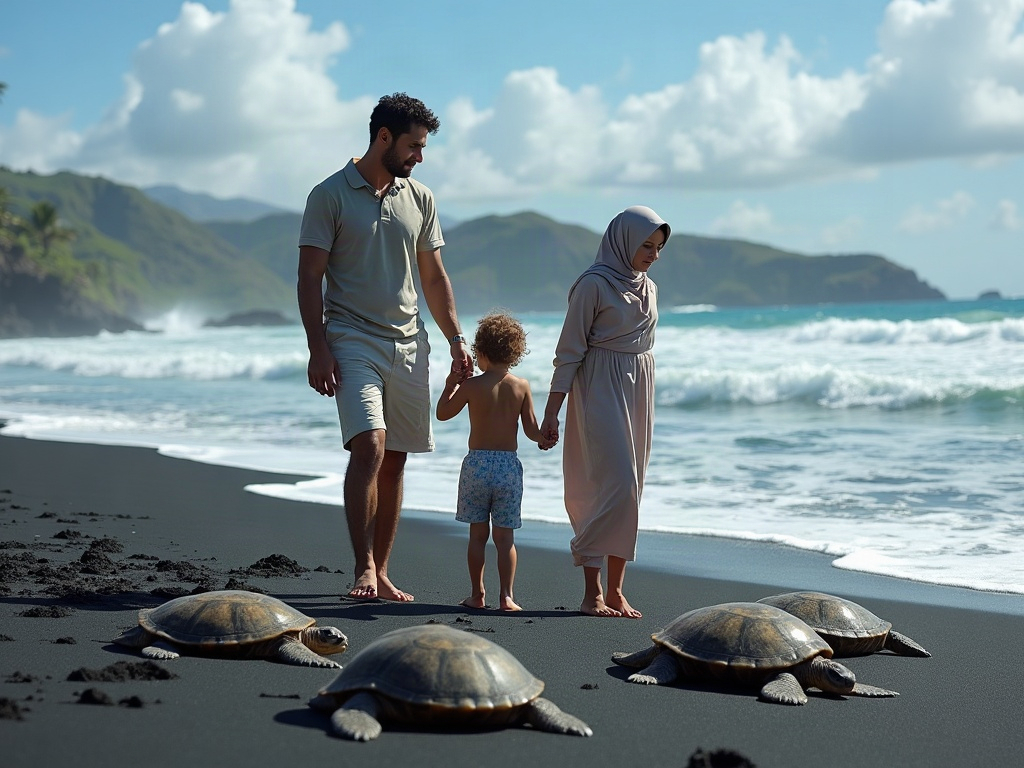
For example, Punalu’u Black Sand Beach on Hawaii’s Big Island is home to endangered Hawksbill turtles and green sea turtles that are known to sun themselves on the black sand, providing unparalleled wildlife observation opportunities [2].
The striking contrast of white ocean foam against the dark sand creates exceptional photographic opportunities, capturing the raw beauty of nature.
Stromboli, an active volcano in Italy, has been erupting continually for more than 2,000 years, creating several black sand beaches on the island, offering a dramatic backdrop for family adventures [3].
Exploring tide pools on volcanic coastlines, an activity known as Tide Pooling, reveals unique marine life often trapped between wave cycles, providing an engaging and educational experience for children.
Activities such as observing the basalt columns at Reynisfjara Beach in Iceland or discovering green olivine crystals at Papakōlea Beach (Green Sand Beach) in Hawaii highlight the diverse geological features available for family exploration.
2. Are Black Sand Beaches Inherently Safe for a Family Vacation?
No beach is inherently safe, and black sand beaches possess a unique risk profile that necessitates careful management and parental vigilance.
The safety of these volcanic coastlines is less about the sand color and more about specific environmental factors like wave dynamics, beach slope, and local safety infrastructure.
Families must approach black sand beach visits with a proactive understanding of these unique variables to ensure a safe and enjoyable vacation.
What Common Safety Concerns Are Associated with Black Sand Beaches for a Family Vacation?
The most common safety concerns associated with black sand beaches for a family vacation are severe sand heat capable of causing burns, powerful and unpredictable sneaker waves on steep shorelines, and the presence of sharp, abrasive lava rock fragments in the sand and water.
The sand gets its color from obsidian, a black volcanic glass that forms when lava cools very quickly, which explains its intense heat absorption on sunny days.
Reynisfjara Beach in Iceland is famously known for deadly sneaker waves, prompting the installation of a color-coded warning light system (Green, Yellow, Red) to alert visitors to current danger levels [4].
A Sneaker Wave is a coastal wave that is unexpectedly larger than preceding waves, capable of surging high up the beach without warning and pulling individuals into the water, particularly hazardous on steeply sloped volcanic beaches.
Mitigation strategies include ensuring all family members wear water shoes to protect against hot sand and sharp rocks.
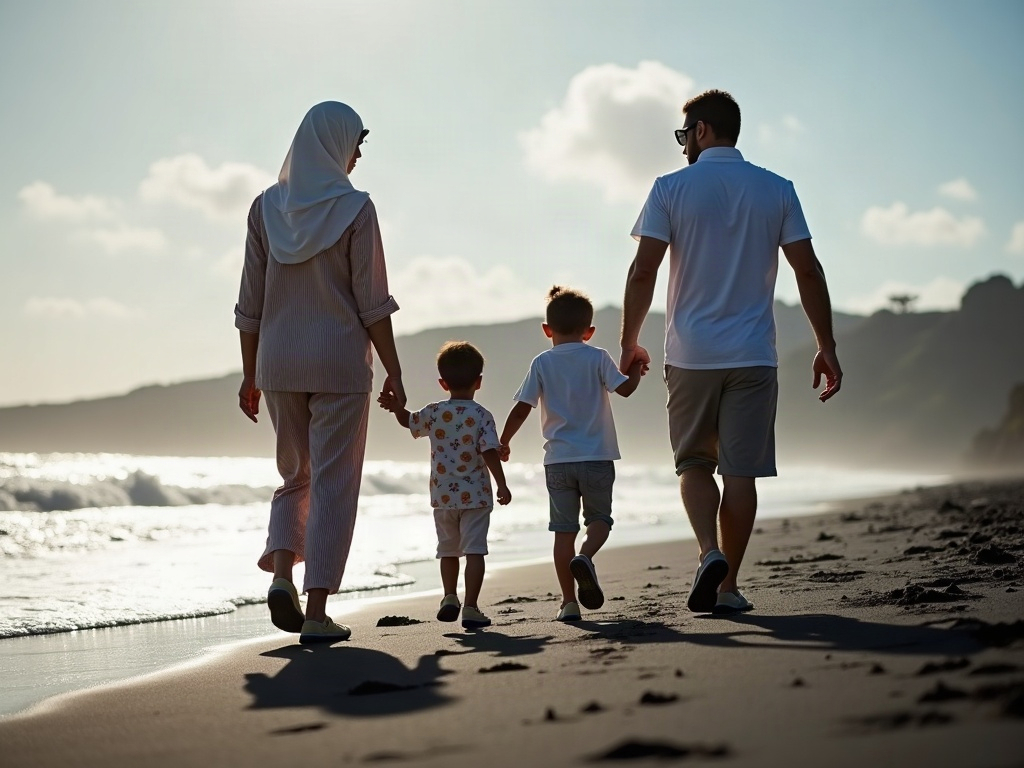
Constant supervision of children and strict adherence to warning signs and local advice are paramount to avoid the dangers of sneaker waves and strong currents.
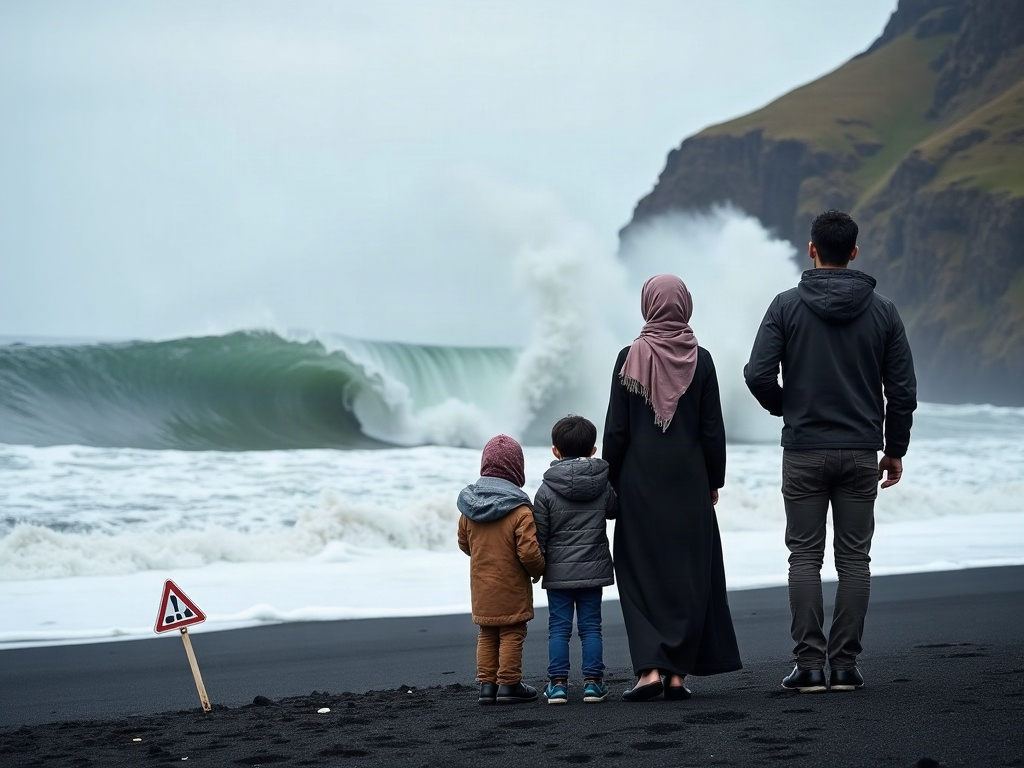
This visual illustrates the critical importance of heeding safety warnings, especially concerning unpredictable sneaker waves, at geological formations like black sand beaches.
© WovenVoyages.com
How Do Black Sand Beaches Compare to White Sand Beaches in Terms of Family Vacation Safety?
Compared to white sand beaches, black sand beaches present a greater safety risk regarding sand temperature and often feature steeper drop-offs and stronger currents due to their volcanic geography, whereas white sand beaches are typically flatter with gentler wave action.
Volcanic coastlines like Karekare Beach in New Zealand are known for powerful surf and strong rip currents, making them more dangerous than typical sedimentary beaches.
The National Ocean Service defines a Rip Current as a powerful, narrow channel of water flowing rapidly away from the shore, which can swiftly carry even strong swimmers out to sea.
The dark sand can reduce water visibility, making it harder to spot underwater hazards compared to the reflective quality of white sand beaches.
A steep Offshore-Drop, common at volcanic beaches, means the seafloor descends sharply away from the shoreline, which prevents incoming wave energy from dissipating gradually and results in more powerful shore breaks.
While different, the risks at both beach types are manageable with appropriate awareness and precautions, focusing on local warnings and safety provisions.
| Safety Factor | Black Sand Beaches | White Sand Beaches |
|---|---|---|
| Sand Temperature | Significantly higher due to volcanic minerals (e.g., basalt, obsidian) absorbing more heat. Essential to wear footwear. | Generally cooler due to silica composition reflecting more sunlight. Comfortable for bare feet. |
| Water Visibility | Can be lower due to darker sediment and coarser grains, making underwater hazards harder to spot. | Typically clearer due to finer, lighter sand, allowing for better visibility of the seafloor. |
| Wave Energy & Currents | Often higher due to steep offshore-drops and exposed volcanic coastlines, increasing risks of sneaker waves and strong rip currents. | Generally lower with gentler wave action and less frequent strong currents due to flatter, more gradual slopes. |
| Beach Slope | Commonly steeper, leading to quicker drop-offs into deeper water. | Typically flatter and more gradual, allowing for safer wading and entry into the ocean. |
| Presence of Lifeguards | Variable, but crucial for safety. Designated safe beaches (e.g., Playa Jardín, Kamari Beach) often feature them. | More common in popular tourist areas, but not universal. Verification still necessary. |
3. Which Regions Offer Black Sand Beach Options for a Family Vacation?
Black sand beaches are exclusively found in areas with past or present volcanic activity, which naturally limits their global distribution to specific volcanically active regions.
These regions offer unique opportunities for families to explore diverse geological formations and coastal landscapes that are vastly different from traditional white sand destinations.
Where Can You Find Major Black Sand Beach Concentrations Suitable for a Family Vacation?
Major black sand beach concentrations suitable for a family vacation are found in specific volcanically active zones, primarily in Hawaii (USA), Iceland, the Canary Islands (Spain), and parts of the Caribbean and Indonesia.
Dotted around the world, there are approximately 30 black sand beaches, with notable concentrations in the Pacific, including Japan, French Polynesia, and Hawaii [5].
The Canary Islands are entirely of volcanic origin; La Palma not only has ‘truly deep black’ sand beaches but is also a protected UNESCO Biosphere Reserve, offering both scenic beauty and ecological significance.
These regions often form a Volcanic Archipelago, a chain or cluster of islands created by volcanic activity, which is the most common geographic setting for discovering multiple black sand beaches.
This map visually delineates the primary global concentrations of black sand beaches, illustrating their direct correlation with volcanically active zones suitable for family exploration.
© WovenVoyages.com
- 🌍 Iceland: Known for its dramatic landscapes and unique geological features, perfect for families interested in natural wonders.
- 🌍 Canary Islands, Spain: Offers a warmer climate with well-developed tourist infrastructure, ideal for comfortable family holidays.
- 🌍 Hawaii, USA: Provides warm-water swimming and opportunities to observe unique wildlife like sea turtles.
- 🌍 Indonesia: Features diverse volcanic islands with stunning and geologically rich coastal experiences.
While black sand beaches offer unique coastal experiences, families looking for a different type of environment might consider exploring What Are the Best Urban Destinations for a Family Vacation? for cultural and city-based adventures.
4. How Do You Choose the Safest Black Sand Beach for a Family Vacation?
Choosing the safest black sand beach for a family vacation involves actively assessing specific safety features such as lifeguard presence, water conditions, and proximity to amenities, rather than relying solely on aesthetic appeal.
Families must act as active risk assessors, diligently researching potential destinations beyond typical tourist brochures.
The “safest” black sand beach is ultimately one where natural hazards have been effectively mitigated by comprehensive man-made safety infrastructure and robust oversight.
Which Are the Top Black Sand Beach Destinations Recognized for a Family Vacation?
The top black sand beach destinations recognized for a family vacation due to their established safety infrastructure are Playa Jardín in Tenerife, Spain; Perissa and Kamari Beaches in Santorini, Greece; and Punalu’u Black Sand Beach in Hawaii, USA.
Perissa Beach in Santorini offers amenities for active pursuits, where visitors can rent water sports equipment for activities like diving in its crystal clear azure waters.
Punalu’u Beach on Hawaii’s Big Island is easily accessible, has a picnic area, and offers families a chance to see sea turtles, indicating a managed and safe environment.
The Blue Flag Certification is an internationally recognized standard awarded by the Foundation for Environmental Education (FEE) to beaches meeting stringent criteria for water quality, safety, environmental management, and services.
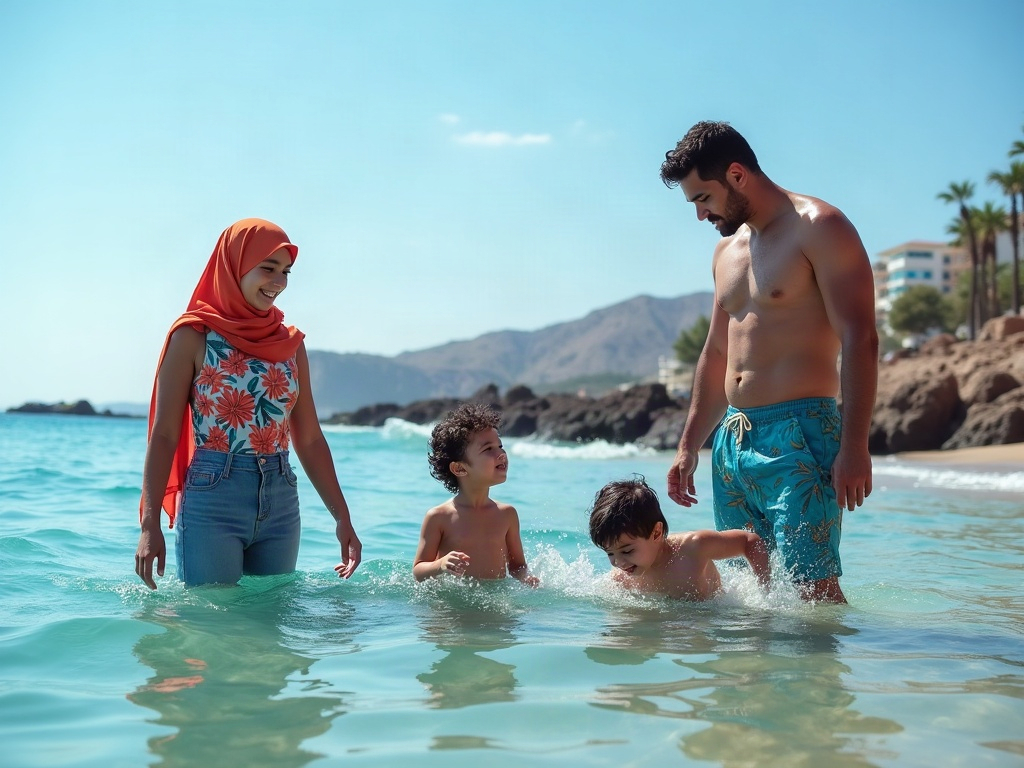
Playa Jardín is notable for its man-made breakwaters that create calm lagoons, specifically designed to enhance swimming safety for families.
Kamari Beach, another Blue Flag certified location, boasts well-organized facilities and calm, clear waters, making it highly suitable for children.
This image captures families enjoying a safe and calm black sand beach, illustrating how engineered safety features like breakwaters contribute to a secure environment.
© WovenVoyages.com
What Safety Features Should You Prioritize When Selecting a Black Sand Beach for a Family Vacation?
When selecting a black sand beach for a family vacation, you must prioritize verifiable safety features in this order: 1) consistent lifeguard presence during operating hours, 2) designated safe swimming zones with calm water, and 3) easily accessible emergency and family facilities.
Many accidents at dangerous beaches happen because visitors focus on photos instead of watching the waves; a lifeguard provides a crucial layer of expert oversight.
A Breakwater is a man-made offshore structure, typically made of rock, designed to absorb wave energy and create a calmer, safer area for swimming close to shore.
In La Palma, Canary Islands, many natural swimming pools have been developed that allow swimmers to enjoy fresh ocean water without the danger of waves, making them ideal for children.
This prioritization forms a non-negotiable checklist for parents researching potential destinations online before their trip.
- Consistent Lifeguard Presence: Ensure there are trained lifeguards on duty during all planned swimming times.
- Designated Safe Swimming Zones: Look for areas clearly marked for swimming, often protected by breakwaters or natural coves to minimize strong currents.
- Accessible Emergency and Family Facilities: Proximity to restrooms, first aid stations, food vendors, and shaded areas is critical for family comfort and rapid response in emergencies.
To enhance safety at any beach, including black sand varieties, learning about Which Beach Destinations Offer the Best Lifeguard-Patrolled Areas for a Family Vacation? can provide crucial peace of mind.
5. Which Black Sand Beaches Are Best Suited for a Family Vacation with Young Children?
Identifying black sand beaches best suited for young children, defined as toddlers to pre-teens, requires focusing on specific characteristics that account for their low risk awareness and developing swimming abilities.
For this age group, safety features are not merely a bonus but an absolute requirement to prevent accidents and ensure a stress-free family vacation.
What Specific Characteristics Make a Black Sand Beach Ideal for Young Children on a Family Vacation?
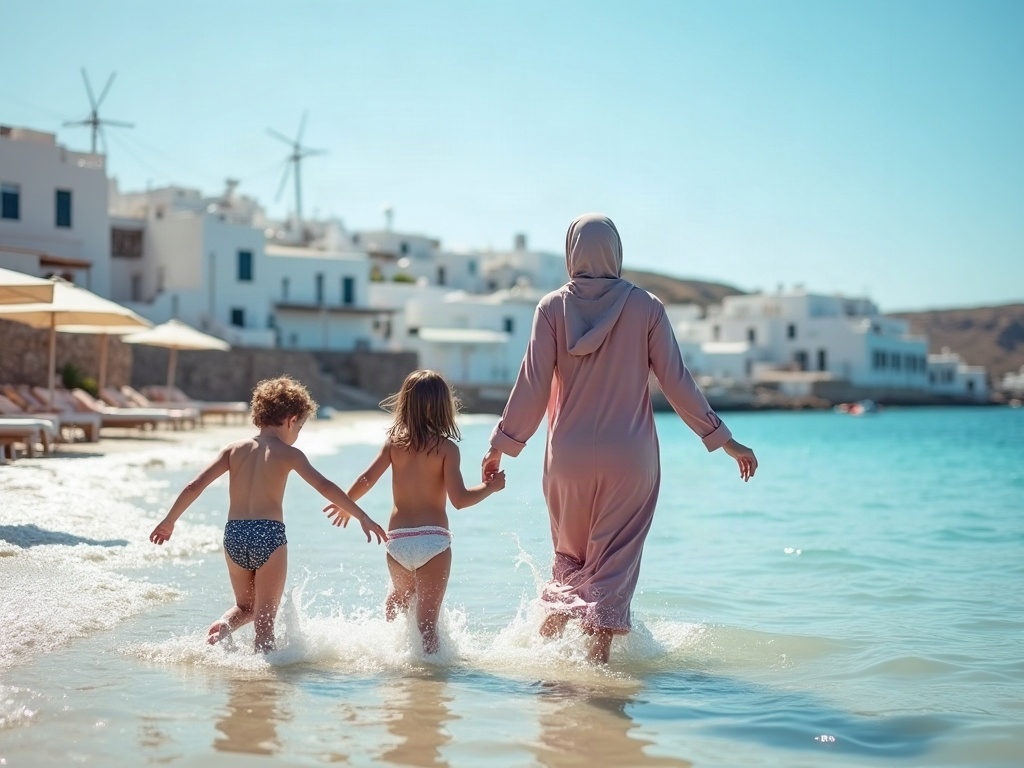
The specific characteristics that make a black sand beach ideal for young children on a family vacation are a shallow, gradual water entry, the presence of natural or man-made breakwaters to ensure calm, waveless water, and direct access to amenities like playgrounds and shaded areas.
Los Gigantes Beach in Tenerife is noted for having mostly calm waters and lifeguards, making it perfect for swimming with the family.
Anse Couleuvre in Martinique is nestled at the foot of steep cliffs in a remote cove, offering a calmer and more sheltered environment than exposed shorelines.
A Shallow-Water Entry provides a very gentle slope of the beach into the water, allowing children to wade safely without sudden drop-offs or unexpected deep spots.
Kamari Beach, Santorini, and Anse Turin, Martinique, are prime examples exhibiting these child-friendly traits due to their protected waters and amenities.
Conversely, places like Stokksnes, Iceland, while scenic, are suitable for viewing only due to cold water temperatures and dangerous wave conditions, rendering them unsafe for young children.
- Shallow, Gradual Water Entry: Allows young children to play safely at the water’s edge without immediate deep drop-offs.
- Natural or Man-Made Breakwaters: Crucial for creating calm, waveless environments, shielding against strong ocean currents and large waves.
- Direct Access to Amenities: Proximity to playgrounds, shaded areas, clean restrooms, and food options enhances convenience and safety for families with young children.
For families specifically seeking very calm swimming environments, it’s worth investigating Which Protected Bay Destinations Offer Wave-Free Swimming for a Family Vacation? to ensure the safest conditions.
This visual demonstrates key elements that make a black sand beach ideal for young children, emphasizing shallow water and close parental supervision.
© WovenVoyages.com
Are There Any Black Sand Beaches to Avoid for a Family Vacation with Toddlers?
Yes, families on vacation with toddlers must absolutely avoid black sand beaches notorious for sneaker waves and strong rip currents, specifically Reynisfjara Beach in Iceland and sections of Honokalani Beach in Maui, Hawaii.
Reynisfjara Beach is widely considered one of Iceland’s most dangerous attractions due to “sneaker waves” that can suddenly surge far up the beach without warning, pulling visitors into the freezing ocean.
Kehena Beach on Hawaii’s Big Island is known for strong undertows and rip currents, and swimming is not advised when the surf is up, making it unsuitable for weak swimmers like toddlers.
An Undertow is a current flowing below the surface away from the shore, distinct from a rip current but equally perilous for inexperienced swimmers.
Honokalani Beach’s unpredictable currents, stemming from its exposed location, also pose severe risks to young children.
These locations, while visually stunning, demonstrate that natural beauty does not equate to family-friendly safety, especially for toddlers with minimal water awareness.
6. Logistics: Black Sand Beach Safety Checklist for Families
Use this interactive checklist to ensure you’ve covered all the critical logistical bases for your trip to a black sand beach. Click the squares to check them off as you plan.
| Checklist Item / Tactic | Status |
|---|---|
| Before You Go | |
| Research specific beach safety warnings and current conditions for your chosen black sand beach. | ⬜ |
| Check local weather and tide forecasts, especially for potential sneaker waves or rip currents. | ⬜ |
| Pack appropriate water shoes for all family members to protect against hot sand and sharp volcanic rock. | ⬜ |
| At the Beach | |
| Identify lifeguard stations, emergency exits, and first aid points immediately upon arrival. | ⬜ |
| Stay strictly within designated safe swimming zones, especially if accompanied by young children. | ⬜ |
| Maintain constant visual supervision of children, never turning your back on the ocean. | ⬜ |
| Be highly aware of warning signs for sneaker waves and rip currents, and educate older children on how to identify them. | ⬜ |
7. Frequently Asked Questions (People Also Ask)
What makes black sand hotter than white sand?
Are all black sand beaches dangerous?
Can children swim at black sand beaches?
Why are sneaker waves common at some black sand beaches?
Which Black Sand Beach Destinations Are Safe for a Family Vacation?
Choosing a safe black sand beach for a family vacation involves a proactive assessment of geological risks and the presence of robust safety infrastructure. Destinations like Playa Jardín, Kamari Beach, and Punalu’u Beach stand out due to their integrated safety features, such as lifeguard services, calm swimming zones, and accessibility. By prioritizing these verifiable safety characteristics, families can transform the unique geological wonder of black sand beaches into an educational and memorable experience, rather than a risky endeavor.