Which Beach Destinations Offer the Best Lifeguard-Patrolled Areas for a Family Vacation?
Table of Contents
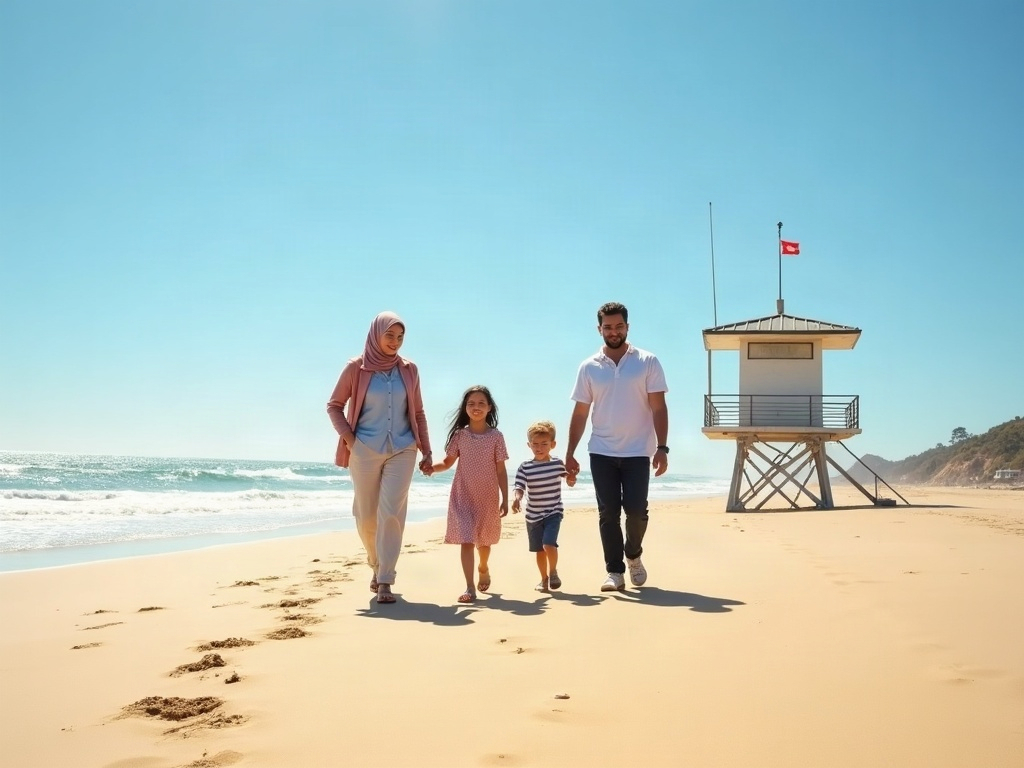
This image illustrates the ideal setting of a lifeguard-patrolled beach, emphasizing the critical role of vigilant lifeguards in ensuring family safety.
© WovenVoyages.com
The best lifeguard-patrolled beach destinations for a family vacation are Coronado Beach, USA; Gold Coast, Australia; and the Algarve, Portugal.
These locations are superior due to their certified services, verifiable standards, and family-centric design.
Lifeguards at these destinations are certified by internationally recognized bodies like United States Lifesaving Association (USLA) and Surf Life Saving Australia (SLSA).
Many of these beaches hold Blue Flag status, guaranteeing excellent water quality and robust safety infrastructure.
They offer calm, designated swimming areas and accessible amenities, making them ideal lifeguard-patrolled beach destinations for a family vacation.
Understanding the diverse options available is key to planning any family trip.
Before diving deeper into specific beach destinations, you might want to consider what are the 6 types of family vacation destinations that best suit your family’s needs and interests.
1. What Defines the Best Lifeguard-Patrolled Beach Destinations for a Family Vacation?
The best lifeguard-patrolled beach destinations for a family vacation are defined by three core pillars: professional lifeguard standards, verifiable environmental and safety ratings, and family-specific infrastructure.
These pillars collectively create a comprehensive safety system that extends beyond mere lifeguard presence, establishing a robust framework for family safety.
Professional lifeguard standards are paramount, ensuring that personnel are expertly trained in rescue techniques, first aid, and preventative measures.
Verifiable environmental and safety ratings, such as the globally recognized Blue Flag Programme, confirm adherence to strict criteria for water quality, environmental management, and safety services.
Lastly, family-specific infrastructure, like calm, designated swimming areas and readily accessible amenities, ensures the environment is suitable for all ages.
| Criterion | Description | Impact on Family Safety |
|---|---|---|
| Professional Lifeguard Standards | Adherence to training protocols by organizations like USLA or SLSA. | Ensures rapid rescue, effective first aid, and preventative actions against hazards. |
| Verifiable Environmental & Safety Ratings | Possession of Blue Flag certification for water quality, services, and management. | Guarantees clean water, well-maintained facilities, and transparent safety information. |
| Family-Specific Infrastructure | Presence of calm, designated swimming zones, accessible restrooms, and shaded areas. | Provides a comfortable and secure environment tailored to the needs of men, women, and children. |
Why Are Lifeguard-Patrolled Areas Essential for a Family Vacation at the Beach?
Lifeguard-patrolled areas are essential components of the best Lifeguard-Patrolled Beach Destinations for a Family Vacation because the presence of professionally trained lifeguards reduces the risk of drowning in supervised zones by providing rapid intervention, preventative actions, and expert medical response.
The role of a lifeguard transcends passive observation; it involves active, systematic surveillance of designated water zones, directly contrasting with a parent’s typically less structured supervision.
This active surveillance is crucial for identifying potential dangers before they escalate.
Lifeguards perform millions of preventative actions annually, from warning swimmers about Rip Current Dynamics to enforcing safety rules.
Preventative Officership describes this proactive practice by lifeguards of identifying and neutralizing potential dangers—such as moving swimmers away from a developing rip current—before an incident occurs, accounting for millions of annual safety actions.
Their training encompasses not just rescue techniques, but also advanced first aid and emergency medical response, making them the first line of defense in water-related incidents.
The World Health Organization (WHO) emphasizes that drowning is a significant public health issue globally, underscoring the critical need for supervised aquatic environments.
Lifeguards certified by associations like the United States Lifesaving Association (USLA) are equipped to handle diverse emergency scenarios, ensuring a safer environment for families.
Unique Insight: The value of lifeguard services is not solely measured by rescues, but overwhelmingly by successful preventative actions, which often go unnoticed but avert countless potential tragedies, especially for families enjoying lifeguard-patrolled beach destinations for a family vacation.
This image showcases lifeguards actively patrolling a beach, highlighting their critical responsibility zones and the systematic approach to water safety.
© WovenVoyages.com
Which Safety Standards Should Beach Destinations Meet for a Family Vacation?
To qualify as top Lifeguard-Patrolled Beach Destinations for a Family Vacation, they must meet critical safety standards including the internationally recognized Blue Flag certification for environmental and safety excellence and adherence to operational protocols set by the International Life Saving Federation (ILS).
The Blue Flag Programme is a globally recognized eco-label awarded to beaches that meet stringent environmental, educational, safety, and accessibility criteria.
These criteria are categorized into Environmental Education and Information, Water Quality, Environmental Management, and Safety and Services.
For families, Blue Flag status directly translates to cleaner waters, well-maintained facilities, and readily available safety information and equipment.
The International Life Saving Federation (ILS) provides global guidelines for lifeguarding, including standards for training, equipment, and lifeguard-to-Bather Load ratios.
Bather Load is a calculated metric representing the maximum number of swimmers a specific beach area can safely accommodate, used by safety authorities to determine required lifeguard staffing levels and resource allocation.
For instance, iconic beaches such as Bondi Beach in Australia operate under stringent Surf Life Saving Australia (SLSA) protocols, while many European beaches in the Algarve adhere to Blue Flag standards.
Ensuring these standards are met significantly enhances the safety profile of a family vacation destination.
Author’s Experience: Abdullahi Azaam
“As a certified lifeguard and a parent of three, I’ve personally navigated the complexities of family beach travel across diverse coastlines, from the bustling shores of the Gold Coast to the tranquil coves of the Algarve, ensuring every family vacation balances adventure with paramount safety. My experience has shown me that verified certifications and robust safety protocols are non-negotiable for peaceful family trips.”
2. How Can Families Choose Top Lifeguard-Patrolled Beach Destinations for a Family Vacation?
Families can objectively choose the best lifeguard-patrolled beach destinations for a family vacation by employing an actionable framework that prioritizes verifiable safety metrics and robust infrastructure.
This approach frames the selection process as a risk-assessment, moving beyond marketing claims to concrete safety attributes.
Key considerations include evaluating the governing lifeguard body, checking for Blue Flag status, and assessing available family amenities.
For families with young children, calm, designated swimming areas are paramount.
When planning your trip, consider which calm-water coastal destinations offer the best tide pools for a family vacation, as these often feature gentle waters perfect for wading and safe exploration.
Beyond lifeguard presence, the practicality of a beach’s amenities is crucial for families.
It’s often beneficial to research which coastal destinations have the most stroller-accessible beaches for a family vacation to ensure ease of movement with little ones.
| Beach Destination | Governing Lifeguard Body | Blue Flag Status | Key Family Amenity |
|---|---|---|---|
| Coronado Beach, USA | United States Lifesaving Association (USLA) | Yes | Wide, flat sands and gentle surf. |
| Gold Coast, Australia | Surf Life Saving Australia (SLSA) | Yes | Extensive patrolled zones and Surf Life Saving Clubs (SLSC). |
| Algarve, Portugal | Instituto de Socorros a Náufragos (ISN) | Many Beaches have Blue Flag | Protected coves with calm waters. |
Which Are the Top Lifeguard-Patrolled Beach Options Globally for a Family Vacation?
The top Lifeguard-Patrolled Beach Destinations for a Family Vacation globally renowned for family vacation safety include Australia’s Gold Coast, the USA’s Outer Banks, Portugal’s Algarve region, and Mexico’s Cancun.
Each of these destinations offers distinct safety features supported by strong lifeguard services.
Australia’s Gold Coast is world-renowned for its extensive network of patrolled beaches and the dedicated efforts of Surf Life Saving Australia (SLSA).
The Surf Life Saving Club (SLSC) is a community-based organization, central to beach safety in Australia and New Zealand, providing volunteer and professional surf rescue services, first aid, and public safety education.
The USA’s Outer Banks benefit from comprehensive USLA-certified lifeguard services and robust Rip Current Dynamics education programs, crucial for visitor awareness.
Portugal’s Algarve boasts numerous Blue Flag beaches, indicating high standards of water quality and safety managed by municipal authorities and organizations like Instituto de Socorros a Náufragos (ISN).
Cancun in Mexico offers resorts with private, highly supervised beach areas and local lifeguard patrols adhering to international safety guidelines.
This visualization highlights prominent lifeguard-patrolled beach destinations across the globe, showcasing regions committed to exceptional family safety.
© WovenVoyages.com
What Distinguishes Coastal US Beach Destinations with Lifeguards for a Family Vacation?
Coastal US Lifeguard-Patrolled Beach Destinations for a Family Vacation are distinguished by a highly structured, often government-funded lifeguard system certified by the United States Lifesaving Association (USLA), with key regional differences in water conditions and beach morphology between the Atlantic, Pacific, and Gulf Coasts.
The USLA sets rigorous standards for lifeguard training and operations, ensuring a high level of professionalism and emergency preparedness.
For example, Clearwater Beach, Florida, on the Gulf Coast, is known for its calm, shallow waters, which require a different approach to lifeguard strategy compared to the dynamic Atlantic surf at Ocean City, Maryland.
Coronado Beach, California, on the Pacific Coast, offers a mild surf and wide, flat sands, influencing deployment strategies.
The presence of Littoral Current, a current that flows parallel to the shoreline, which can unexpectedly carry children and weak swimmers down the beach away from their families, is a key hazard addressed in USLA training protocols.
These regional variations necessitate adaptable lifeguard services that are well-versed in local marine conditions and potential hazards.
Which International Beach Destinations Offer Exceptional Lifeguard Services for a Family Vacation?
Top international Lifeguard-Patrolled Beach Destinations for a Family Vacation offering exceptional lifeguard services include Tenerife in Spain’s Canary Islands, Waikiki Beach in Hawaii, USA, and the beaches of Tel Aviv, Israel, all featuring municipally-managed, year-round professional lifeguard forces.
Tenerife benefits from highly trained Socorrista, the official Spanish designation for lifeguards, who undergo rigorous government-mandated certification in first aid and rescue.
Waikiki Beach, managed by the City and County of Honolulu Ocean Safety Division, is celebrated for its partitioned swim areas and dedicated surf rescue units.
The beaches of Tel Aviv feature an integrated public announcement system and well-staffed lifeguard towers that ensure constant vigilance across its urban coastline.
These destinations exemplify best practices in international beach safety, providing peace of mind for families seeking supervised environments.
3. How Can Families Maximize Their Lifeguard-Patrolled Beach Vacation Experience?
Families can maximize their safety and enjoyment at lifeguard-patrolled beach destinations by adopting core strategies that emphasize proactive safety measures and direct interaction with lifeguard services.
This proactive approach ensures that vacationers are active participants in their safety, rather than solely relying on lifeguards.
Engaging with the lifeguard-enforced safety system means understanding beach flags, identifying patrol zones, and knowing where to establish a “home base” near a lifeguard tower.
Maximizing the experience integrates safety practices seamlessly into the vacation, enhancing overall relaxation and enjoyment for all family members.
It’s about leveraging the professional oversight of lifeguards to empower responsible behavior.
| Activity | Target Age Group | Required Supervision Level | Primary Lifeguard-Related Precaution |
|---|---|---|---|
| Wading in Swash Zone | Toddlers (1-3) | Touch Supervision | Stay directly in front of occupied lifeguard tower. |
| Building Sandcastles | Young Children (4-8) | Constant Visual | Remain within designated, patrolled areas. |
| Beginner Bodyboarding | Pre-teens (9-12) | Close Proximity Visual | Stay between the flags, within sight of lifeguard. |
| Swimming | All Ages | Age-dependent, direct for children | Always swim within designated patrolled areas and between red and yellow flags. |
What Essential Safety Tips Should Families Follow at Lifeguard-Patrolled Beaches?
The most essential safety tip for families visiting Lifeguard-Patrolled Beach Destinations for a Family Vacation is to establish a home base and swim directly in the designated area in front of an occupied lifeguard tower, as statistics show the vast majority of rescues occur outside these supervised zones.
This simple yet critical action significantly increases the chances of rapid intervention by lifeguards if needed.
Familiarize your family with the universal beach flag warning system, which communicates current water conditions and hazards.
Rip Current is a powerful, narrow channel of water moving away from the shore, which is the leading surf hazard for all beachgoers and is responsible for over 80% of rescues performed by surf beach lifeguards.
Education on Rip Current Dynamics is vital for all beachgoers.
Always ensure children know what to do if they get separated, such as staying put and asking a lifeguard for help.
Universal Beach Flag Warning System
- ☐ Red Flag: High hazard, do not enter the water.
- ☐ Yellow Flag: Medium hazard, moderate surf and/or currents. Use caution.
- ☐ Green Flag: Low hazard, calm conditions.
- ☐ Purple Flag: Dangerous marine life (e.g., jellyfish, stingrays).
These flag systems are standardized internationally, often referencing standards like ISO 20712.
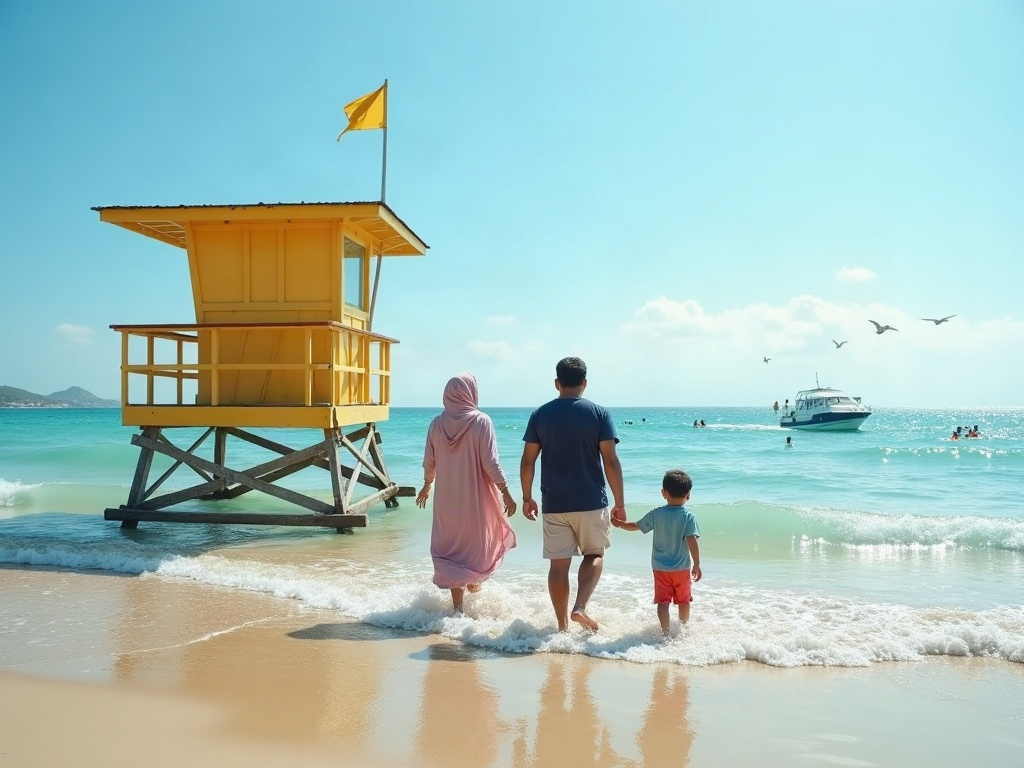
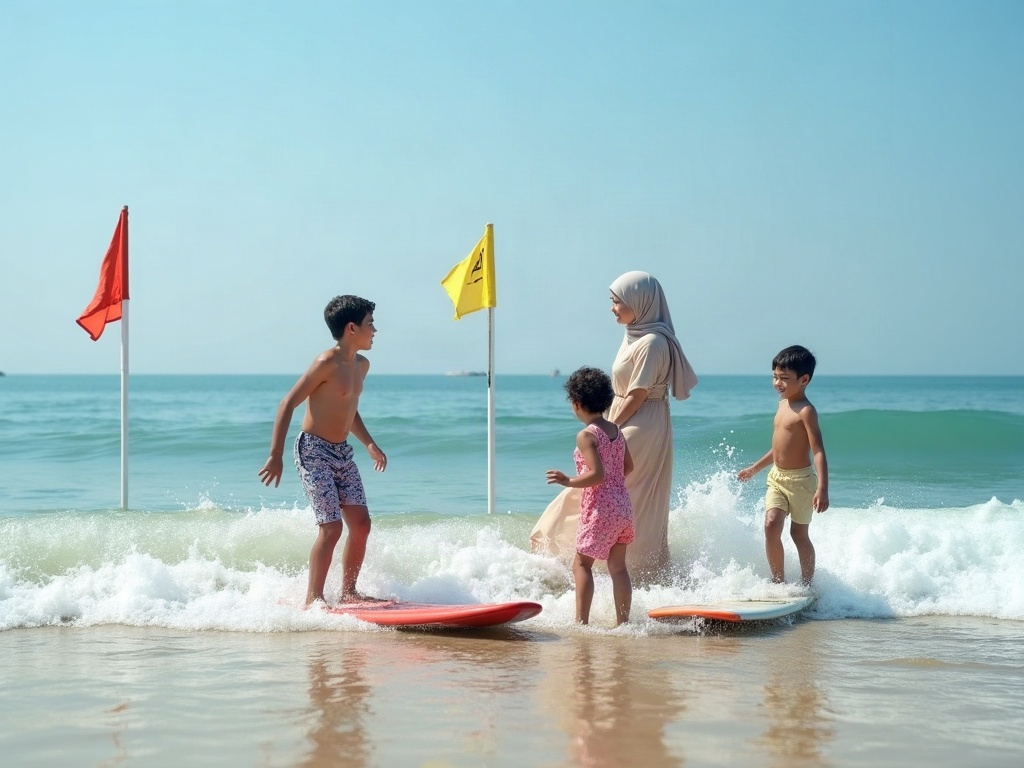
This image captures a family enjoying a lifeguard-patrolled beach, emphasizing the proximity to a lifeguard tower for enhanced safety and peace of mind.
© WovenVoyages.com
Which Activities Are Best for a Family Vacation at Lifeguard-Patrolled Beach Destinations?
The best and safest activities for a family vacation at Lifeguard-Patrolled Beach Destinations are those conducted within sight of a lifeguard and appropriate for the current conditions, such as building sandcastles in the Swash Zone, wading in designated areas, and beginner bodyboarding between the flags.
The Swash Zone, the section of the beach face where water from a breaking wave washes up and then recedes, is the safest location for supervised toddlers and very young children to play due to its shallow, gentle water movement.
For young children (ages 4-8), supervised sandcastle building and shell collecting in calm, visible areas are ideal.
Pre-teens (ages 9-12) can engage in beginner bodyboarding or paddling, always ensuring they stay between the designated flags and under the watchful eye of a lifeguard.
Always check with the local lifeguard for current conditions and recommended activities to ensure maximum safety.
4. What Common Misconceptions or Risks Exist for a Family Vacation at Lifeguard-Patrolled Beach Destinations?
The primary misconception is that lifeguard presence fully negates risk at lifeguard-patrolled beach destinations for a family vacation, emphasizing the continued necessity of active parental supervision.
Lifeguards are not babysitters; their role is broad surveillance and emergency response, covering large areas with many individuals.
This creates a “safety paradox,” where a feeling of enhanced safety can sometimes lead to riskier behavior by individuals.
Families must understand that constant vigilance and adherence to safety guidelines remain paramount, even in supervised environments.
Ignoring flag warnings, venturing outside patrolled zones, or underestimating ocean conditions like Rip Current Dynamics are significant risks.
This image visually contrasts the broad oversight of lifeguards with the focused attention of parents, emphasizing that both roles are crucial for a safe family beach vacation.
© WovenVoyages.com
How Can Families Avoid Overcrowding and Enhance Their Beach Vacation Experience?
Families visiting Lifeguard-Patrolled Beach Destinations for a Family Vacation can avoid overcrowding by traveling during the ‘shoulder seasons‘ (the months just before and after peak season, like May or September) or by planning beach time for early mornings before 10 AM.
Shoulder Season refers to travel periods between peak and off-peak seasons, characterized by lower visitor numbers, often reduced pricing, and continued good weather, representing an optimal time for a family visit.
Arriving early allows families to secure prime spots near lifeguard towers and enjoy calmer conditions.
Visiting mid-week instead of on weekends can also significantly reduce crowd density.
Exploring less famous, but equally safe and patrolled beaches slightly away from major tourist hubs can also offer a more serene experience.
While popular lifeguard-patrolled beaches offer unmatched safety, families often seek a quieter experience.
Exploring what are the best hidden gem beach destinations for a crowd-free family vacation can provide a more tranquil setting while still prioritizing safety.
What Are the Environmental Concerns at Beach Destinations for a Family Vacation?
The primary environmental concerns when visiting Lifeguard-Patrolled Beach Destinations for a Family Vacation are the ecological damage caused by chemical sunscreens to marine ecosystems like coral reefs and the pervasive issue of single-use plastic pollution.
Many traditional sunscreens contain chemicals like oxybenzone and octinoxate, which are harmful to coral and marine life, contributing to coral bleaching.
Reef-Safe Sunscreen is a sunscreen formulated without these chemicals, which have been scientifically shown to contribute to coral bleaching and damage to marine life.
Plastic pollution, particularly microplastics, poses a significant threat to ocean health and wildlife.
Families can mitigate their environmental impact by choosing reef-safe sunscreen, using reusable water bottles, and conscientiously disposing of all waste.
“Leave No Trace” Principles for Beaches
- ☐ Pack It In, Pack It Out: Take all trash, including food scraps, off the beach.
- ☐ Respect Wildlife: Observe marine life from a distance and avoid disturbing nesting areas.
- ☐ Leave What You Find: Do not remove shells, rocks, or sand.
- ☐ Use Designated Access Points: Stick to marked paths to protect sensitive ecosystems.
Understanding and protecting delicate marine ecosystems is part of being a responsible traveler.
If your family is interested in exploring underwater wonders, you might want to know which beach destinations feature the best coral reefs for a family vacation, where these ecosystems can be observed responsibly.
How Can Families Handle Unexpected Weather Changes During a Beach Vacation?
Families visiting Lifeguard-Patrolled Beach Destinations for a Family Vacation can handle unexpected weather changes like coastal thunderstorms by having a pre-identified sturdy shelter, monitoring a reliable marine weather application, and immediately obeying all audible warnings from lifeguard towers or beach-wide lightning detection systems.
Coastal weather can be unpredictable, making preparedness essential for family safety.
A Lightning Detection System is an automated safety network used at many modern beach destinations that triggers audible alarms and flashing lights across the beach when lightning is detected within a predefined radius (typically 8-10 miles).
Open-sided beach pavilions, umbrellas, and trees are not safe shelters during a thunderstorm.
3-Step Action Plan for Beach Weather Changes
- ☐ Listen for Warnings: Heed all lifeguard announcements and beach-wide alarm systems.
- ☐ Seek Sturdy Shelter: Move off the beach immediately to a hard-topped vehicle or a substantial building.
- ☐ Wait for All-Clear: Do not return to the beach until official “all-clear” signals are given.
5. Logistics: Family Beach Safety Checklist
Use this interactive checklist to ensure you’ve covered all the critical logistical bases for your trip. Click the squares to check them off as you plan.
| Checklist Item / Tactic | Status |
|---|---|
| Destination Research | |
| Verify Blue Flag status and/or USLA/SLSA lifeguard certification for chosen beach destinations. | ⬜ |
| Identify specific lifeguard patrol hours and designated swimming areas. | ⬜ |
| On-Site Preparedness | |
| Discuss beach flag meanings and Rip Current safety with all family members. | ⬜ |
| Establish a clear “home base” near an occupied lifeguard tower upon arrival. | ⬜ |
| Environmental Responsibility | |
| Pack reef-safe sunscreen and reusable containers to minimize environmental impact. | ⬜ |
6. Frequently Asked Questions (People Also Ask)
What is the primary role of a lifeguard?
The primary role of a lifeguard extends beyond rescue to include proactive surveillance, hazard identification, and preventative interventions to ensure overall beach safety.
How does Blue Flag certification contribute to family beach safety?
Blue Flag certification guarantees compliance with stringent criteria across water quality, environmental education, environmental management, and safety services, directly benefiting families through verified standards and reliable infrastructure.
What is a Rip Current and how should families react to one?
A Rip Current is a powerful, narrow channel of water moving away from the shore; families caught in one should remain calm, conserve energy, and swim parallel to the shoreline until out of the current, then swim to shore.
Why is active parental supervision still crucial at lifeguard-patrolled beaches?
Active parental supervision remains crucial because lifeguards provide broad surveillance and emergency response, not individual child monitoring, and their presence does not eliminate all risks, requiring constant vigilance from parents.
What Are the Final Thoughts on Maximizing Beach Destinations for a Family Vacation?
Maximizing the experience at Lifeguard-Patrolled Beach Destinations for a Family Vacation ultimately hinges on proactive safety planning, selecting beaches with certified lifeguard services and verifiable safety records, and maintaining active parental supervision.
The ultimate family beach vacation is a blend of professional lifeguard services and vigilant personal oversight.
Prioritize destinations with strong safety credentials like Blue Flag status and affiliations with reputable organizations like USLA or SLSA.
While a lifeguard-patrolled beach offers unique benefits, family vacations encompass a wide range of experiences.
For those considering different types of trips, perhaps which theme park destinations are best for a multigenerational family vacation could be an exciting alternative.