Multi-Generational Beach Trips: How Do You Plan for Grandparents and Kids?
Table of Contents
A successful multi-generational beach trip requires meticulously balancing the diverse physical, logistical, and emotional needs of every family member—from toddlers to grandparents—to foster connection without causing burnout.
By prioritizing flexible scheduling, inclusive low-impact activities, and strategic accommodations that cater to varying mobility and energy levels, you can engineer an environment that serves everyone. The primary measure of success is creating shared positive memories while ensuring every family member feels relaxed and considered. If you’re wondering what makes general beach vacations ideal, exploring foundational family travel strategies by checking how to choose the best beach destination can help set the stage for your large-group planning.
2. What defines a successful multi-generational beach trip?
You define a successful multi-generational beach trip not by the absence of logistical hiccups, but by achieving a harmonious environment where shared experiences are seamlessly integrated with necessary individual downtime for both toddlers and grandparents.
Why are multi-generational beach trips beneficial for families?
Multi-generational beach trips are beneficial for families because they provide a unique environment for strengthening intergenerational bonds, creating shared core memories, and distributing childcare and daily tasks across a wider support network.
Multi-generational travel has become one of today’s biggest travel trends, in part because it allows families to spend quality time together, according to AvantStay. These trips offer profound benefits by allowing grandparents to share stories and traditions, parents to receive support, and children to form deeper relationships with their extended family. The shared cost and responsibilities also make the vacation more accessible and less stressful than it might be otherwise.
The “memory dividend” is a key benefit; these trips create a concentrated cluster of memories that families draw upon for years. For children, it normalizes close relationships with elders, and for grandparents, it provides a powerful sense of legacy and connection.
How do multi-generational beach trips differ from typical family vacations?
Multi-generational beach trips differ from typical family vacations primarily in their logistical complexity, the necessity for decentralized decision-making, and the wider range of physical and dietary needs that must be accommodated.
Unlike a typical family trip planned by one or two adults, a multi-generational trip requires a “committee” approach to budgeting and scheduling. The pace is inherently slower to accommodate the youngest and oldest members, and accommodation choices are dictated by accessibility and space rather than just location. Because of the complexity of coordinating many schedules, it is recommended to start planning a multi-generational trip six to nine months ahead to secure dates and desirable large properties, as highlighted by Yahoo Travel Guides.
The critical difference is the shift in goal from “maximum fun and activity” to “maximum comfort and connection.” Success is measured by group harmony, not the number of attractions visited. This requires a fundamental mindset shift for the planners.

Demonstrating how shared, low-impact environments foster direct connection between grandparents and grandchildren.
© WovenVoyages.com
3. How can families choose the best beach destination for all ages?
Families can choose the best beach destination for all ages by prioritizing three core factors: accessibility, a variety of low-impact activities, and proximity to quality medical facilities. The best destinations feature drive-to accessibility to avoid airport stress, beaches with calm waters and gentle slopes, and a boardwalk for easy strolling.
Which types of accommodation suit diverse family needs on a beach trip?
The types of accommodation that best suit diverse family needs on a beach trip are large vacation rental homes with ground-floor master suites and condo resorts that offer a mix of private units and shared amenities.
A single large beach house fosters togetherness and is cost-effective for meals, but offers less privacy. Adjoining hotel or condo units provide more personal space and privacy but can fragment the group and increase costs. The best choice depends on your family’s desire for privacy versus communal living. The cost for a vacation home can be $50-$150 per person per night, while hotel rooms can range from $100-$250 per person, making vacation rentals a more cost-effective option for larger groups, according to tips from Emerald Isle Realty.
A “hybrid” model is often overlooked: renting a large anchor house for meals and gatherings, with a smaller, nearby condo or hotel room for a family unit that requires more privacy or quiet (e.g., a family with a baby). This balances togetherness with autonomy.
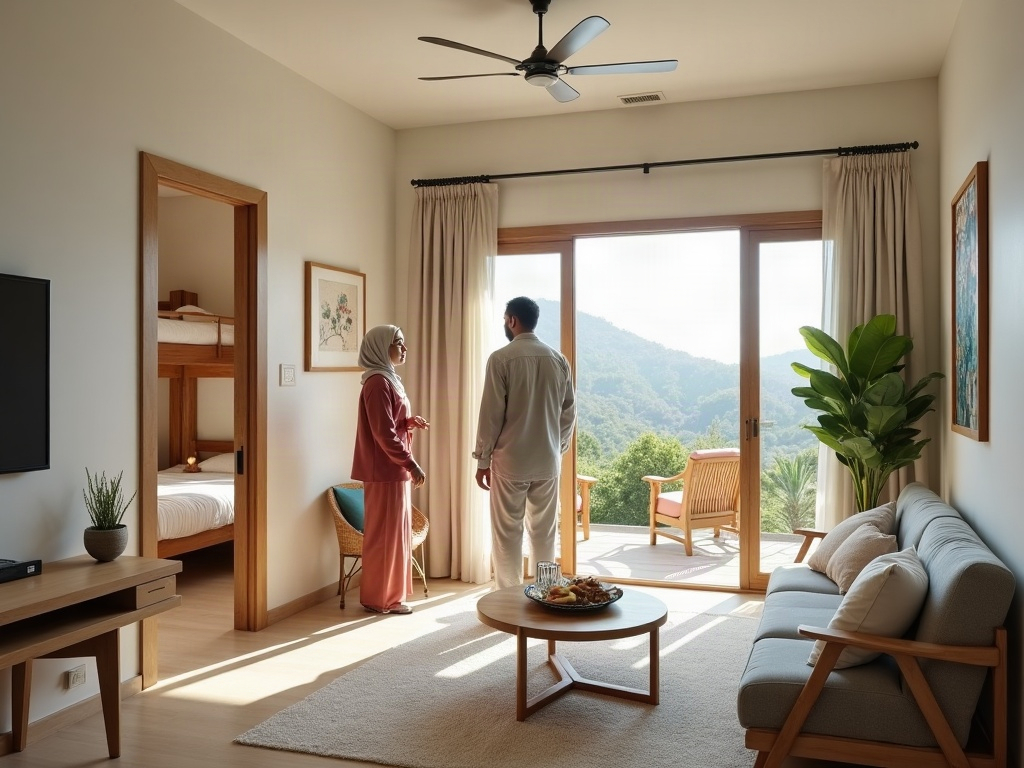
Showcasing the architectural advantages of a large, accessible vacation rental designed for multi-family dynamics.
© WovenVoyages.com
4. What activities ensure engagement for grandparents and kids at the beach?
Activities that ensure engagement for grandparents and kids at the beach are simple, sensory-focused, and collaborative, such as building sandcastles, collecting shells, and having a picnic on the sand. The most successful activities require minimal setup and allow for participation at different energy levels. This includes things like looking for dolphins, flying a kite, or reading stories together under a large beach umbrella. The key is shared focus, not shared physical exertion.
How do you balance relaxation and adventure for different age groups?
You balance relaxation and adventure for different age groups by implementing a structured daily rhythm that includes designated “downtime,” opt-in activities, and a single, low-pressure “all-hands” event each day.
The most effective method is to establish a “one main thing” rule for each day, such as a morning beach visit or an evening group dinner. All other time is flexible, allowing smaller groups or individuals to pursue adventures (like kayaking) or relaxation (like napping) as they see fit. For most families, a trip duration of a week or two is the sweet spot; any longer can lead to exhaustion for a large group, according to Bradenton Gulf Islands.
The “anchor and satellite” model is a key strategy. The “anchor” is the main house/condo where less mobile family members can relax comfortably. “Satellite” groups can then break off for more adventurous excursions and return to the anchor, ensuring no one feels left behind or pressured to participate.
Author’s Experience
“I’ve learned that the secret to multi-generational harmony lies in the unspoken rule of ‘choose your own adventure.’ Giving everyone space to opt-in or out of activities prevents burnout and ensures genuine enjoyment for all.”
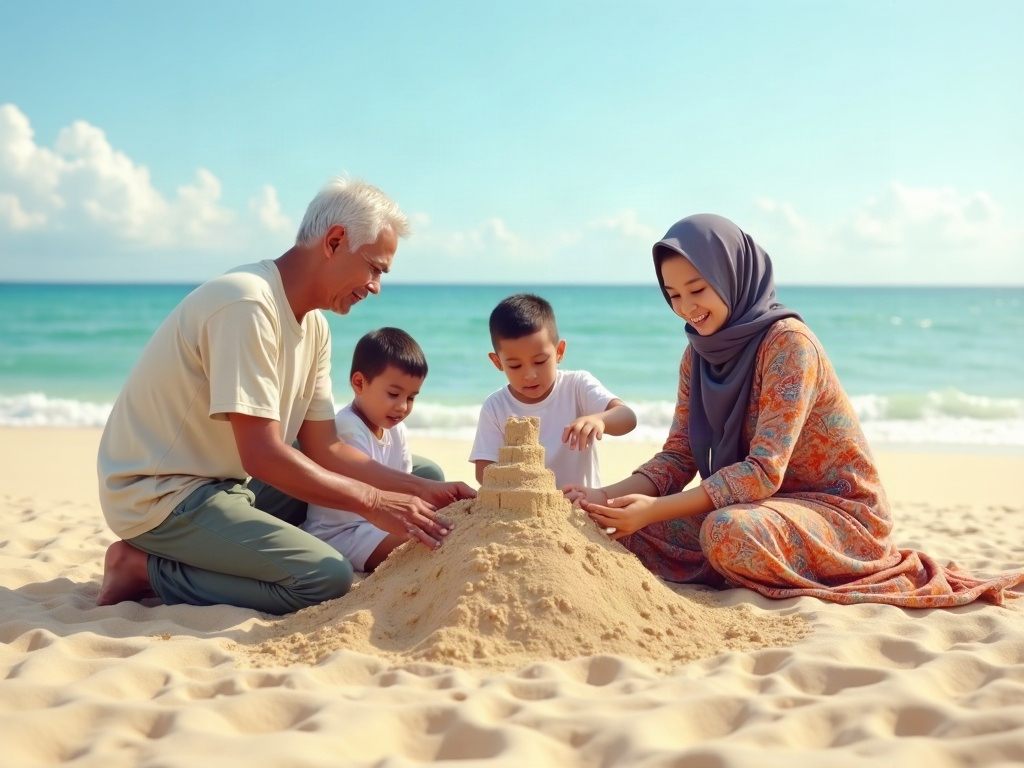
Visualizing low-barrier activities like sandcastle building that allow all age groups to participate comfortably.
© WovenVoyages.com
5. How do you effectively plan a multi-generational beach trip budget?
You effectively plan a multi-generational beach trip budget by first agreeing on a total per-person or per-family contribution, separating shared costs from individual costs, and designating a single person to manage the central funds.
The most effective method involves creating a shared spreadsheet listing all anticipated group expenses like lodging, communal groceries, and one group activity. Each family contributes their share to a central account, which the designated treasurer uses for all group payments.
What are key strategies for coordinating logistics with multiple families?
Key strategies for coordinating logistics with multiple families include appointing a single “central point person,” creating a shared digital information hub, and establishing clear communication channels well in advance of the trip. Use a free tool like a shared Google Doc or Sheet as a “trip bible” that contains all critical information.
Recent data shows 47% of families seek professional help for amenities and benefits they can’t access on their own, highlighting the logistical complexity of these trips, as noted by AFAR Magazine.
Create a “Shared Items Sign-up Sheet” within the central document. List bulky but necessary beach items (e.g., large cooler, beach wagon, extra umbrellas, portable speaker) and have each family unit sign up to bring one or two. This prevents both duplication and omission of key gear.
6. How can families create a flexible daily itinerary for beach days?
Families can create a flexible daily itinerary for beach days by adopting a “Blocks and Flows” structure, which designates specific blocks of time for key events like meals and downtime while allowing the flow of activities to remain fluid. A flexible itinerary establishes fixed anchor points, such as “Breakfast: 8-9 AM,” “Group Dinner: 6 PM,” and “Quiet Time: 1-3 PM.” The time between these anchors is left open for opt-in beach time, naps, or small group excursions, giving people autonomy within a predictable daily rhythm.
What essential items should a multi-generational beach packing list include?
An essential multi-generational beach packing list includes specific categories for health and safety, shared comfort, and group entertainment, in addition to individual clothing and toiletries. Beyond personal items, the list must include a comprehensive first-aid kit with medications for all ages, items that create shade and comfort on the beach (like a large canopy and beach wagon), and shared goods for the rental house like paper products and cleaning supplies. Reviewing what you need in advance by studying the essential items for a family beach vacation is critical to avoid duplication.
Instead of packing bulky specialty equipment, many beach destinations offer rental services for items like beach-friendly wheelchairs, strollers, cribs, and high-chairs.
The most overlooked category is “Comfort for a Crowd.” This includes packing power strips (old houses have few outlets), a white noise machine for light sleepers, a large-capacity coffee maker if one isn’t guaranteed, and a deck of cards or a puzzle for low-key group entertainment.
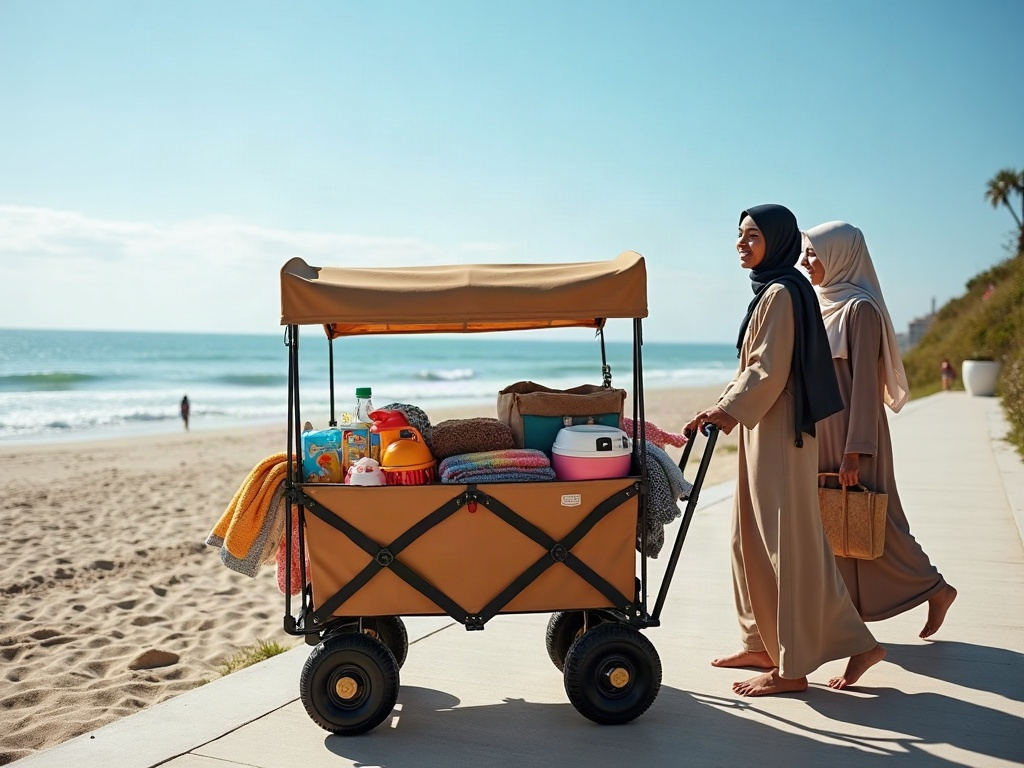
Illustrating how anchoring a day with communal meals while leaving afternoons unstructured prevents exhaustion.
© WovenVoyages.com
7. How do you ensure safety and accessibility for all generations at the beach?
You ensure safety and accessibility for all generations at the beach by proactively selecting a safe location, investing in accessibility-enhancing gear, and establishing clear safety rules for the entire group. Choose a beach with lifeguards and calm surf. Prioritizing safety is key, and understanding what conditions parents must check first for beach vacation safety can provide immense peace of mind. Renting a beachfront property with minimal stairs or an elevator is key for seniors, while using a beach wagon to transport gear and small children across the sand is essential. A “buddy system” for swimming is a non-negotiable rule for all ages.
Beach Safety Briefing Checklist
Review these points with your family on day one:
- ☐ Identify the lifeguard stand.
- ☐ Establish the swim buddy system.
- ☐ Designate a non-drinking water supervisor for the kids.
For accessible amenities, search for “[Destination Name] beach wheelchair rental” or “[Destination Name] grocery delivery service.”
What are practical tips for managing meals and dining with diverse preferences?
Practical tips for managing meals and dining with diverse preferences involve planning a simple meal rotation, assigning “cook teams,” and embracing “build-your-own” style meals. Plan to eat most breakfasts and lunches at the rental to save money and reduce stress. For dinners, create a simple schedule (e.g., Mon: Tacos, Tues: Grill Night, etc.) and assign a different family unit to be in charge each night. This distributes the labor and decision-making.
To accommodate large groups and provide private space, some families opt to rent duplex properties that feature two kitchens, which simplifies meal preparation for multiple family units.
The “Theme Night” strategy is the most effective. Instead of asking “what should we eat,” you decide on a theme (e.g., Taco Bar, Pasta Bar, Burger Bar). This allows individuals to customize their own plates according to their preferences (e.g., gluten-free tortillas, no cheese, extra veggies) while the core cooking is simple and unified.
One-Week Meal Plan Template
A sample “Theme Night” meal plan:
- Monday: Taco Bar (build-your-own)
- Tuesday: Grill Night (burgers/hot dogs with customizable toppings)
- Wednesday: Pasta Bar (different sauces and pasta types)
- Thursday: Local Seafood Night (optional group dining reservations)
- Friday: Pizza Night (delivery or make-your-own)
- Saturday: Leftover Extravaganza / Potluck
- Sunday: Simple Breakfast (cereal, toast, fruit)
Integrate grocery delivery service to simplify meal preparation.
8. How can families avoid common pitfalls in multi-generational beach planning?
Families can avoid common pitfalls in multi-generational beach planning by managing expectations through open communication, avoiding over-scheduling, and establishing a clear financial plan before any money is spent.
The most common pitfall is assuming everyone has the same vacation goals. Avoid this by circulating a simple pre-trip survey asking about priorities (e.g., “rate the importance of: Relaxation, Adventure, Fine Dining”). This surfaces misaligned expectations early so they can be addressed.
5 Common Pitfalls and How to Avert Them
Here’s how to preempt common issues:
- Pitfall: The Over-Scheduled Itinerary. Aversion: Institute a mandatory “do nothing” afternoon every other day.
- Pitfall: Unequal Financial Burden. Aversion: Establish a clear, upfront “all-in” budget contribution.
- Pitfall: Communication Breakdown. Aversion: Designate a single “central point person” and use a shared digital “trip bible.”
- Pitfall: Differing Vacation Goals. Aversion: Circulate a simple pre-trip survey asking about priorities (e.g., “rate the importance of: Relaxation, Adventure, Fine Dining”).
- Pitfall: The Martyr Planner. Aversion: Delegate entire domains of responsibility (e.g., “Aunt Sue is in charge of all Food Planning,” “Uncle Bob is the Director of Beach Gear”).
What are solutions for unexpected weather or travel disruptions?
Solutions for unexpected weather or travel disruptions rely on pre-trip preparation, including purchasing travel insurance, packing a “rainy day” kit, and researching indoor local attractions. For weather, have a pre-packed bag of board games, puzzles, and craft supplies. For travel disruptions like flight delays, ensure all family members have each other’s contact information and the address of the rental property saved on their phones. Purchasing comprehensive travel insurance is the most critical financial safeguard.
Research one good, all-ages indoor activity near your destination *before* you go (e.g., a local aquarium, a small museum, a movie theater with recliner seats). Having this “ace in the hole” ready prevents the frantic, stressful group scramble of “what do we do now?” when a beach day is rained out.
How do you address conflicts or differing expectations during the trip?
You address conflicts or differing expectations during the trip by having a designated neutral mediator, using “I” statements to express feelings, and creating physical space for a cool-down period. When conflict arises, the designated “point person” or another calm family member should intervene to pause the conversation. The best strategy is to separate the individuals involved, give them time to cool off, and then address the issue privately rather than in front of the entire group.
Implement the “24-Hour Rule” for non-urgent conflicts. Unless it’s a safety or logistics issue, agree as a group before the trip that minor annoyances will be shelved for 24 hours. Often, after a good night’s sleep, the issue seems trivial and resolves itself without a confrontation. If family members truly desire highly structured environments that inherently reduce daily group decision-making, exploring options like family cruise vacations might be an optimal alternative.
Conflict Resolution Strategies
When conflicts arise, remember these strategies:
- Designated Mediator: Have a neutral family member step in to pause the discussion.
- “I” Statements: Encourage expressions like “I’m feeling a bit overstimulated and would appreciate some quiet time” instead of “You’re being too loud.”
- Cool-Down Periods: Separate individuals involved and address the issue privately after a break.
- 24-Hour Rule: For non-urgent conflicts, agree to shelf minor annoyances for 24 hours; often, they resolve themselves.
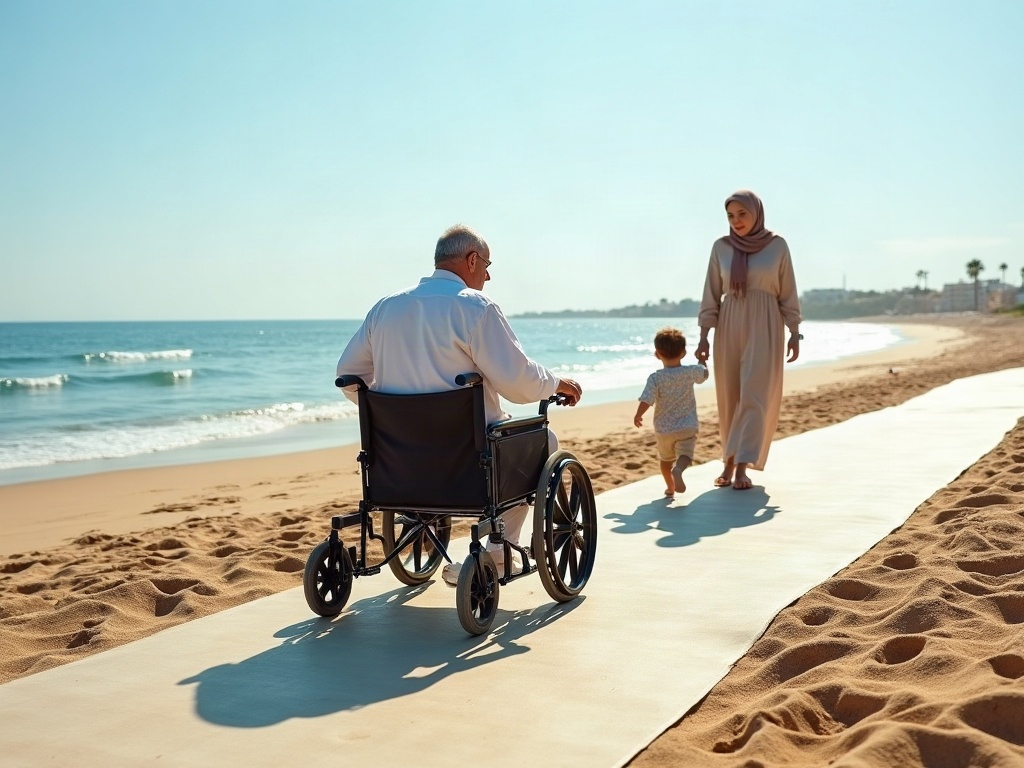
Depicting the necessity of open communication and designated cool-down periods to resolve differing expectations during a group trip.
© WovenVoyages.com
9. Logistics: Multi-Generational Beach Trip Planning Checklist
| Checklist Item / Tactic | Status |
|---|---|
| Agree on Goals: Clearly define the primary objectives and expectations for the trip. | ⬜ |
| Choose Destination: Select a beach destination that accommodates all age groups and mobility levels. (e.g., Gulf Shores or Outer Banks, NC) | ⬜ |
| Select Accommodation: Book lodging that provides both communal space and individual privacy. | ⬜ |
| Plan Budget: Establish a transparent financial plan for shared and individual costs. | ⬜ |
| Coordinate Logistics: Appoint a central point person and create a shared information hub. | ⬜ |
10. Frequently Asked Questions (People Also Ask)
What defines a successful multi-generational beach trip?
How can families choose the best beach destination for all ages?
What activities ensure engagement for grandparents and kids at the beach?
Resolution
The successful planning of multi-generational beach trips ultimately hinges on a commitment to clear communication, flexible planning, and a shared focus on connection over perfection. This guide provides the architectural blueprint for planning a successful multi-generational beach trip. The core principles are to prioritize accessibility, balance group time with individual downtime, and manage expectations from the very beginning. The effort invested in the complex planning of a multi-generational trip is a direct investment in your family’s “memory bank.” The logistical challenges are temporary, but the shared stories and strengthened bonds are the permanent return on that investment. By architecting your trip with care and empathy, you’re not just planning a vacation; you’re building a legacy of family connection, one sandy footprint at a time.