Family Cruise Vacations: How Do You Choose the Perfect Ship and Itinerary?
Table of Contents
Choosing the perfect ship and itinerary for a family cruise vacation requires ruthlessly auditing the vessel’s specific demographic targets—matching your family’s exact tolerance for high-density stimulation against the ship’s architectural scale and onboard programming.
A cruise vacation is a highly specialized travel product combining lodging, international transit, and age-specific entertainment into a singular, floating ecosystem. It offers a structured yet flexible environment designed explicitly to eliminate the logistical stress of multi-destination travel. To understand how this format competes against land-based options, evaluate our definitive breakdown detailing exactly what the 10 core types of family vacations are.
1. What Exactly Defines a Family Cruise Vacation?
A family cruise vacation is a specialized travel product engineered to eliminate logistical friction for multi-generational groups by consolidating lodging, international transit, and heavily segmented entertainment into a single, floating resort ecosystem.
What core benefits do family cruise vacations offer?
The primary benefits of a family cruise vacation are the absolute eradication of daily transit planning, a predictable baseline expenditure model, and the deployment of simultaneous, age-stratified activities that satisfy wildly divergent family interests.
By functioning as a mobile resort, families unpack their luggage exactly once while the vessel physically transports them across international borders overnight, entirely bypassing airports and rental car agencies.
A critical, often overlooked benefit is the highly controlled environment, which grants older children and teenagers a level of supervised independence—allowing them to navigate the ship autonomously—that is impossible to safely replicate in a foreign City Break or a sprawling, uncontained Beach vacation.
Unmatched Family Advantages
- “Unpack Once” Operations: Complete elimination of the physical exhaustion associated with multi-city hotel transfers.
- Built-In Value Base: Significant baseline value, with primary accommodations, meals, and theatrical entertainment structurally included in the upfront fare.
- Simultaneous Satisfaction: Cruising solves the intractable problem of entertaining vastly different ages simultaneously, operating effectively as an all-inclusive family cruise.

Demonstrating the primary logistical advantage of cruising: the ability to traverse multiple international ports without the friction of continuous packing and unpacking.
© WovenVoyages.com
Which family demographics are best suited for cruising?
Families mathematically best suited for cruising are multi-generational groups, households possessing children across a wide age spread (e.g., a toddler and a teenager), and highly fatigued parents seeking a vacation that demands zero daily execution planning.
Cruises work exceptionally well for multi-generational trips because the infrastructure enforces shared evening experiences (like formal dining and theater) while granting total autonomy during the day, allowing grandparents to utilize spas while teenagers utilize water slides. CruiseDirect data corroborates this usage.
While heavily marketed toward large groups, modern mega-ships are exceptionally optimized for single parents. The secure environment, built-in pediatric social infrastructure (kids’ clubs), and total relief from the relentless pressure of logistical planning provide single parents with actual, verifiable rest.
If your family fundamentally rejects rigid dining schedules or structured group activities, you must evaluate the immense itinerary flexibility provided by a Family Road Trip vacation as a countermeasure.
2. How Do Family Cruises Cater to Diverse Age Groups Simultaneously?
Family cruise vacations cater to diverse age brackets by deploying heavily segmented, supervised youth programs (e.g., ages 3-5, 6-8, teen lounges) that operate simultaneously, allowing adults to utilize dedicated quiet zones or specialty dining without sacrificing pediatric entertainment.
What specific activities are engineered for young children?
For young children (ages 3-11), mega-ships deploy massive, supervised kids’ clubs executing heavily structured programming that includes interactive science experiments, proprietary character integration, and heavily monitored physical play zones.
To accommodate infants and toddlers, select premium cruise lines offer dedicated, fee-based nursery services for children aged six to 36 months, an operational necessity for parents requiring temporary relief. Industry analysis confirms this offering.
A critical, elite-level differentiator is the availability of “in-port” childcare. Premium lines frequently maintain kids’ club operations while the ship is docked. This allows parents to execute grueling, physically demanding shore excursions (like jungle hikes) with absolute peace of mind, knowing their youngest children are secure onboard.
Author’s Experience: Abdullahi Azaam
“Navigating family cruises with toddlers taught me the immutable value of rigorous, background-checked childcare. The ability to execute a quiet, two-hour adult dinner while knowing my children were safely engaged with age-appropriate programming transformed the trip from a ‘parenting trip’ back into an actual vacation.”
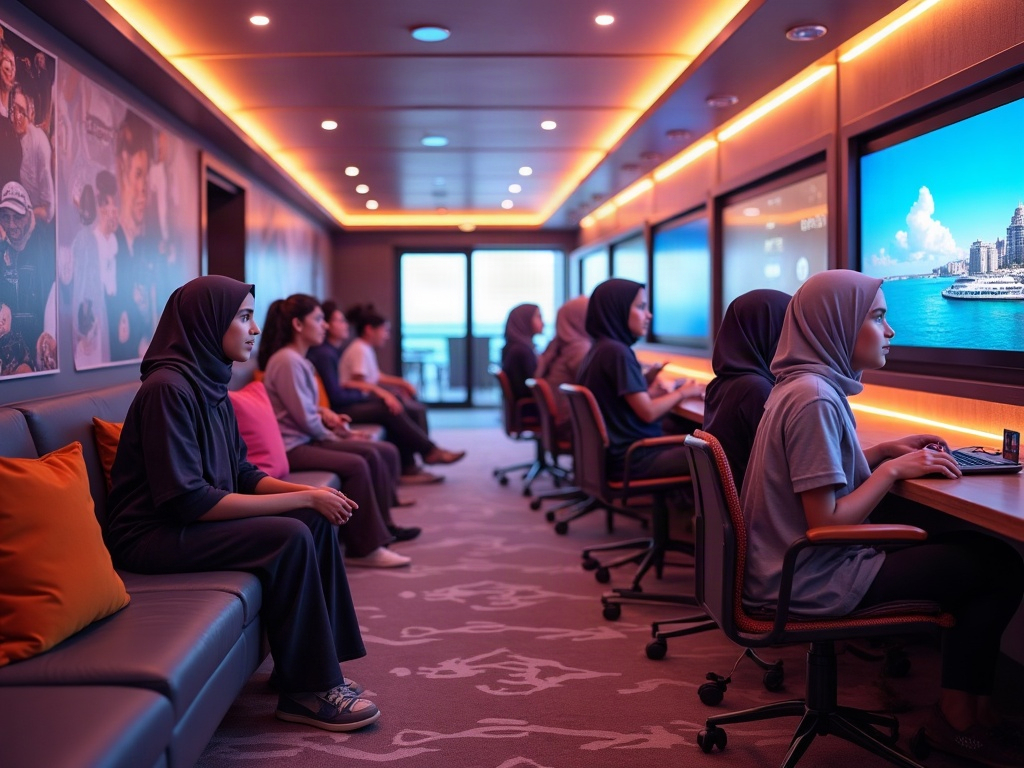
Highlighting the robust infrastructure of onboard kids’ clubs, which provide structured, safe engagement for children while parents recover.
© WovenVoyages.com
How do specialized teen programs prevent vacation boredom?
Teen programs prevent boredom by deliberately abandoning rigid schedules in favor of providing “parent-free” social zones, exclusive after-hours events, and heavily branded environments that mimic high-end lounges.
For example, Norwegian Cruise Line’s Entourage club (ages 13–17) is aggressively marketed not as a “club,” but as an exclusive hangout featuring video arcades, nighttime dancing, and activities tailored to respect their demand for autonomy. NCL officially details these programs.
The most successful teen programs operate under the “home base” philosophy. They are managed by “directors” rather than “counselors,” granting teenagers the absolute freedom to drop in and out. This structural respect for their autonomy is the only way to prevent outright rejection of the programming.
3. How Do You Select the Best Family-Friendly Cruise Ship?
You select the optimal family-friendly cruise ship by rigorously auditing its physical scale (mega-ship vs. mid-size) against your family’s stimulation tolerance, and by verifying the availability of connecting staterooms to prevent bathroom bottlenecks.
Which ship scale (size) is mathematically ideal for your family?
The ideal ship scale depends entirely on your family’s demand for kinetic activities. Mega-ships provide overwhelming amenity density (water slides, go-karts) but suffer from high crowd friction; mid-size ships offer intimate navigation but lack extreme adrenaline infrastructure.
Royal Caribbean’s Icon class ships, currently the largest maritime passenger vessels, feature eight distinct “neighborhoods” and a dedicated Surfside Family Neighborhood, deliberately engineering separate ecosystems to handle massive capacity without feeling claustrophic.
The ship’s physical size directly dictates the psychological “vibe.” Mega-ships function as floating Theme Parks, demanding high energy to navigate. If your primary goal is decompression, booking a 6,000-passenger mega-ship is a fundamental strategic error.

Visualizing the extreme architectural density of a modern mega-ship, designed specifically to overwhelm passengers with high-kinetic options.
© WovenVoyages.com
What cabin configurations eliminate family friction?
The cabin configurations that mathematically eliminate friction are connecting staterooms (providing two distinct bathrooms) and dedicated family suites featuring separate, partitioned living areas to isolate noise.
Attempting to force four individuals, including teenagers, into a standard 180-square-foot interior cabin with a single bathroom guarantees severe operational stress before 8:00 AM.
An elite booking tactic is the “Cove Balcony” strategy. Located on lower decks, these balconies are sheltered by the ship’s hull. They lack sweeping top-down views but offer superior protection from wind and rain, greater privacy from neighbors above, and a visceral proximity to the waterline—often at a lower price tier.
4. Which Family Cruise Lines Align with Specific Family Demands?
Selecting the correct operator requires matching the cruise line’s core brand identity—such as Disney’s aggressive IP integration or Royal Caribbean’s adrenaline-focused infrastructure—directly against your family’s primary vacation objective.
How do major cruise lines differentiate their family products?
Cruise lines differentiate their products through exclusive entertainment partnerships, the intensity of their physical attractions, and the massive capital invested in their proprietary “private island” destinations.
Royal Caribbean’s private island, Perfect Day at CocoCay, features a Thrill Waterpark with record-breaking slides, explicitly differentiating it from the tranquil, beach-focused private islands of competitors.
The private island reveals the brand’s true DNA. Royal Caribbean’s island is an adrenaline-fueled water park. Disney’s “Castaway Cay” is a highly controlled, classic beach day dripping with character interactions. You must choose the island that fits your family’s speed.
| Cruise Line | Core Competency & Target Demographic | Key Differentiator |
|---|---|---|
| Disney Cruise Line | Premium, immersive storytelling; ideal for families with young children (3-9). | Unmatched IP integration (Marvel, Star Wars) and rotational dining logic. |
| Royal Caribbean | High-adrenaline infrastructure; the definitive choice for active teenagers. | Mega-ships featuring surf simulators, ice rinks, and zip lines. |
| Norwegian Cruise Line | Highly modular, relaxed atmosphere; excellent for multi-generational groups. | “Freestyle Dining” completely eliminates rigid dinner schedules. |
| Carnival Cruise Line | High-energy, budget-friendly “fun”; ideal for cost-conscious, active families. | Aggressive value pricing and extensive included quick-service food options. |
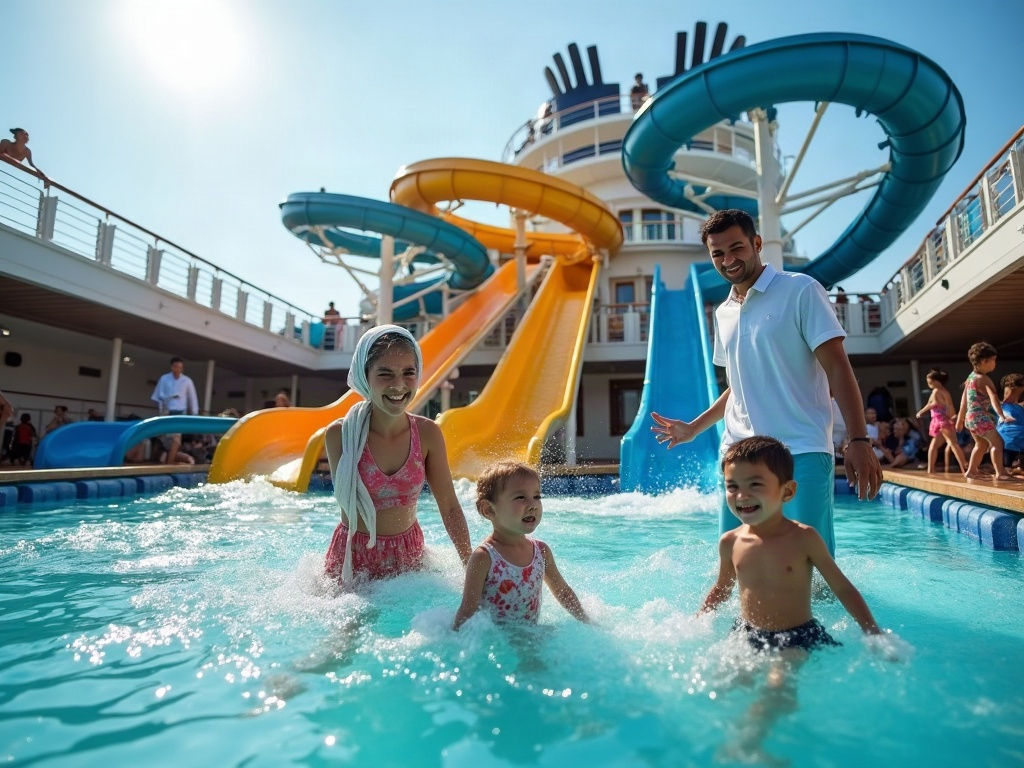
Demonstrating how Royal Caribbean utilizes massive adrenaline infrastructure on its private island, Perfect Day at CocoCay, to reinforce its brand identity.
© WovenVoyages.com
5. How Do You Choose the Perfect Family Cruise Itinerary?
You select the perfect family cruise itinerary by ruthlessly balancing your desired geographic region against the physical endurance of your children (duration) and the meteorological realities of the travel season.
Which geographic regions are highly optimized for families?
The Caribbean remains the apex family region due to short transit times and beach access, while Alaska serves as the premier destination for families demanding high-yield wildlife and geographical education.
Cruises to the Bahamas are heavily utilized by first-time cruisers because they feature short, low-risk 3-to-4-day itineraries operating on massive ships packed with distraction amenities.
Do not ignore “tender ports” when evaluating an itinerary. If a port requires tendering (taking a small boat from the ship to the shore), it will consume a massive amount of morning time and is highly frustrating when maneuvering double strollers. Prioritize itineraries with deep-water docks where you can walk directly off the vessel.
How does cruise duration dictate the vacation’s success?
Cruise duration dictates success by establishing the “exhaustion threshold.” A 3-night cruise is a frantic sprint to consume amenities, while a 7-night itinerary allows for essential, mandated days of rest at sea.
The 5-to-7-night duration is the mathematical “sweet spot” for families. It provides enough time to unpack and acclimate to the ship’s geography, allows visits to 2-4 distinct ports, and crucially, provides enough “sea days” to recover from port-intensive excursions.
6. How Must Families Budget for a Cruise Vacation?
Families must budget by aggressively separating the “Base Fare” from the inevitable “Onboard Spends” (gratuities, internet, specialized dining) that frequently inflate the final invoice by 30-40%.
What is actually included in the standard fare?
A standard fare legally guarantees cabin accommodation, basic transport between ports, access to main dining rooms (excluding specialty restaurants), and entry to generalized theatrical entertainment and pools.
The most dangerous assumption a first-time cruiser makes is that “all-inclusive” means everything is free. It does not. You will pay extra for soda, Wi-Fi, premium desserts, and mandatory daily gratuities (often $15-$20 per person, per day, automatically charged to your room).
✅ Protected Base Fare Inclusions
- Stateroom lodging and basic cabin stewardship.
- Meals consumed exclusively in the Main Dining Room or buffet.
- Access to supervised kids’ clubs (during standard hours).
❌ Standard Upcharge Vectors
- Mandatory Gratuities (crew service charges).
- All alcoholic beverages and carbonated sodas.
- Access to Specialty Restaurant dining venues.
7. What Critical Mistakes Destroy Family Cruise Vacations?
The most lethal mistake is “Loyalty Blindness”—continuing to book the exact same cruise line out of habit, failing to recognize that a ship perfect for your 5-year-old is likely completely inadequate for your 15-year-old.
How do you prevent catastrophic cabin misallocation?
You prevent cabin misallocation by meticulously studying the vessel’s deck plans to avoid booking staterooms located directly underneath the 24-hour buffet, the nightclub, or the ship’s anchor mechanism.
To mitigate extensive walking requirements for exhausted toddlers, families must aggressively secure cabins located centrally, immediately adjacent to elevator banks that service the kids’ club and dining decks.

Visualizing the necessity of analyzing deck plans to identify “noise bleed” from upper-deck pools or lower-deck theaters before securing a cabin.
© WovenVoyages.com
8. Logistics: Execution Checklist
| Tactical Execution Step | Status |
|---|---|
| Evaluate Ship Scale: Commit to either the overwhelming amenity density of a mega-ship or the navigable intimacy of a mid-size vessel. | ⬜ |
| Audit Cabin Geometry: Secure connecting staterooms or family suites to mathematically eliminate single-bathroom bottlenecks. | ⬜ |
| Align Brand Identity: Match the cruise line’s core competency (e.g., Disney’s IP vs. Royal’s Adrenaline) directly to your family’s profile. | ⬜ |
| Verify Tender Ports: Review the itinerary to confirm deep-water docking, avoiding the massive logistical friction of tender boats with strollers. | ⬜ |
Resolution
Choosing the perfect family cruise vacation is not a subjective art; it is an objective process of aligning your family’s biological energy levels and stimulation thresholds against the hard data of a ship’s architectural scale and brand operating procedures.
By ruthlessly auditing deck plans to avoid noise pollution, demanding connecting cabins to preserve parental sanity, and refusing to book high-friction “tender port” itineraries with toddlers, you neutralize the standard threats to maritime travel. A cruise is the ultimate logistical cheat code for multi-generational vacations—but only if you deploy the correct vessel. Use this framework to eliminate incompatible ships, secure your stateroom, and transform a highly complex travel objective into a frictionless, floating reality.
The WovenVoyages Standard
At WovenVoyages, we reject the premise that booking a cruise is a gamble. By deploying rigorous Decision Intelligence—analyzing “Loyalty Blindness,” auditing hidden base-fare upcharges, and categorizing ships by their actual pediatric infrastructure—we equip you to execute flawless maritime travel. We ensure you select a vessel engineered specifically to absorb the stress of multi-generational dynamics, allowing you to actually experience the vacation you paid for.
One Response