Beach Vacation Essentials: What Must You Pack for a Family Vacation?
Table of Contents
Executing a flawless family beach vacation requires an aggressive departure from solo packing habits; you are no longer packing a suitcase, you are provisioning a mobile command center designed to sustain multiple dependents in a high-exposure environment.
The uniqueness stems from balancing the needs of different age groups—from infant feeding schedules to teenager entertainment—within limited luggage space. This transforms packing from a personal task into a logistical project focused on group safety, health, and enjoyment. To understand how this fits into your broader travel strategy, explore our definitive matrix on the 10 core types of family vacations.
1. Understanding Unique Family Beach Packing Challenges
The primary challenge of family beach packing is engineering a finite luggage capacity to successfully accommodate the wildly divergent biological, safety, and entertainment needs of infants, toddlers, and teenagers simultaneously.
Beyond just more items, family beach packing is an exercise in risk management. A forgotten item for a solo traveler is an inconvenience; a forgotten item for a child (like specific medication or a comfort object) can derail an entire day of the vacation.
“Multi-Item Redundancy”: The need to pack multiples of critical items (e.g., two pairs of kids’ sunglasses, backup swim diapers) to mitigate loss, breakage, or unexpected needs, a concept rarely considered in solo travel.
Prioritize creating a master checklist if your family includes children in different developmental stages (e.g., a toddler and a tween) to ensure no critical category is overlooked. For deeper insights on choosing the ideal coastal setting, evaluate what makes family beach vacations ideal.
How do families address age-specific needs for beach essentials?
Families must address age-specific needs for beach essentials by categorizing gear into passive protection for infants (shade, hydration) and active engagement tools for older children (water safety gear, durable toys).
An infant requires shade and specific feeding items, a toddler needs constant supervision and engaging toys, and a teenager may need more robust sun protection and entertainment options. Ignoring these distinct needs leads to safety risks and vacation dissatisfaction.
The primary shift is from passive to active needs. Infants have passive needs (being kept cool, shaded, fed), while older children have active needs (safe toys, water safety gear, appropriate activities) that require different types of essentials.
Author’s Experience
“As a parent of three, I’ve mastered the art of packing for diverse beach needs, from toddler sandcastle engineers to teen surf enthusiasts in places like Maui. My strategies ensure every family member is safe, comfortable, and entertained, turning potential chaos into cherished memories.”
How does family beach packing contrast with solo travel?
Family beach packing contrasts with solo travel by shifting the operational focus from personal aesthetic preference to rigorous risk mitigation and multi-item redundancy.
A solo traveler packs for one person’s comfort and can be minimalist, whereas a family packs a “mobile command center” for multiple dependents. The focus shifts from “what I want” to “what they will need” for every possible scenario.
The biggest difference is the “just-in-case” inventory. A solo traveler might risk not packing a first-aid kit, but for a family, a comprehensive health and safety kit is non-negotiable, representing a fundamental shift in risk tolerance.
| Solo Traveler Focus | Family Traveler Focus |
|---|---|
| Personal Comfort and Preference | Collective Necessity and Risk Mitigation |
| Minimalist approach | “Mobile Command Center” for dependents |
| Packs for opportunity | Packs for prevention |
While this article focuses on coastal setups, similar intensive logistical preparedness is required when executing Theme Park Family Vacations.
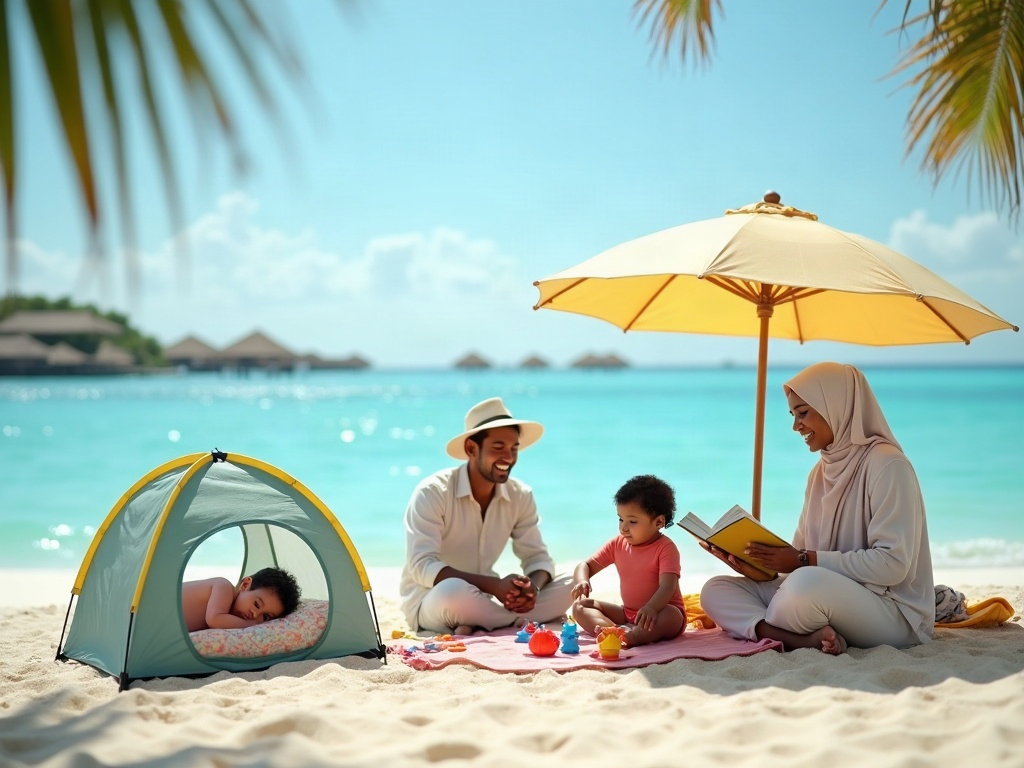
Demonstrating how packing for a multi-generational coastal vacation requires distinct sub-kits tailored to the biological and entertainment needs of different age brackets.
© WovenVoyages.com
2. Selecting Optimal Sun Protection for Families at the Beach
Families select optimal sun protection by deploying a non-negotiable, multi-layered defense system that combines broad-spectrum mineral sunscreens with physical UPF 50+ barriers.
The best approach involves more than just sunscreen. It requires a system: selecting the right type of sunscreen for a child’s skin, using protective clothing like rash guards and hats, and ensuring access to a beach tent or umbrella during peak UV hours.
The most experienced families understand that the “best” sun protection is the one their child will tolerate. This means factoring in sensory issues (e.g., non-greasy lotions for some kids) and ease of application (e.g., spray vs. stick for faces).
What are the safest and most effective sunscreens for children?
The safest and most effective sunscreens for children are mineral-based formulas relying on zinc oxide or titanium dioxide to physically block UV rays without chemical absorption.
Mineral sunscreens are recommended by pediatricians because their active ingredients sit on top of the skin. Look for “broad-spectrum” to protect against both UVA and UVB rays and “water-resistant” for effectiveness during swimming in destinations like Florida.
While sprays are convenient, lotions are often recommended for better coverage as it’s easier to see if you’ve missed a spot. For the face and around the eyes, a sunscreen stick provides excellent, targeted application without dripping.
Which clothing and gear are essential for sun exposure protection?
Essential protective clothing strictly requires long-sleeved UPF 50+ rash guards, full-coverage swimsuits, and wide-brimmed hats that shield the neck and ears.
The most crucial items are long-sleeved rash guards and hats with at least a 3-inch brim. This gear provides constant protection that doesn’t wear off or require reapplication like sunscreen.
A high-quality, densely woven dark-colored rash guard can have a UPF of 50+, even when wet. This is often superior to a standard wet cotton T-shirt, whose UPF can drop to as low as 3, offering minimal protection.
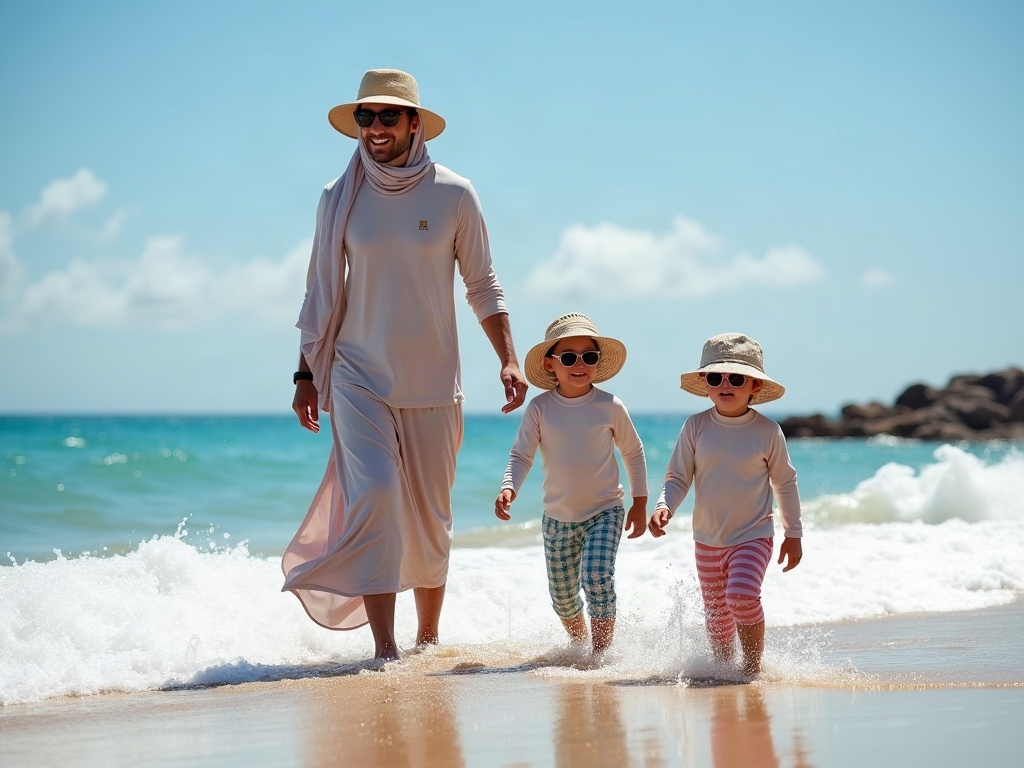
Showcasing the critical combination of physical clothing barriers (UPF 50+) and structured shade, minimizing reliance on topical sunscreen alone.
© WovenVoyages.com
3. Clothing and Swimwear Essentials for Family Beach Vacations
The absolute essentials for your family’s beach wardrobe are highly versatile, quick-drying poly-spandex blends that minimize chafing and reduce overall luggage bulk.
This includes at least two swimsuits per person, UPF 50+ rash guards, lightweight cover-ups, and comfortable outfits for evenings. The key is packing items that can serve multiple purposes and are made from breathable fabrics.
The “two swimsuit” rule is critical for kids. It ensures a dry swimsuit is always available, which helps prevent skin irritation and “swimmer’s rash” (chafing) and allows one suit to fully dry while the other is in use.
How should you select comfortable and versatile beach outfits?
Select comfortable beach outfits by prioritizing breathable cotton or linen sets that easily transition from the sand to a restaurant without requiring a full wardrobe change.
Comfort is key; avoid scratchy tags and tight clothing that can trap heat and sand. Versatility comes from packing items like a simple cotton dress that works as a swim cover-up and an outfit for dinner.
For toddlers and younger children, prioritize outfits that are easy for parents to take on and off for quick diaper changes or potty breaks. Rompers with snaps or two-piece outfits are far more practical on the beach than complex dresses.
What are the best swimwear options for active family water play?
The best swimwear options for active water play are secure, two-piece tankinis or rash guard sets that pass the ‘tug test’ when dry to guarantee they won’t shift when wet.
For kids, these options provide maximum sun protection and are less likely to ride up during vigorous play. For adults, look for secure straps and a snug fit to avoid embarrassing slips while chasing children.
The “tug test” is a crucial pre-purchase check. Gently pull on the straps, leg openings, and chest area of a swimsuit in the store. If it gapes or shifts easily when dry, it will be a major problem when wet and heavy with water.
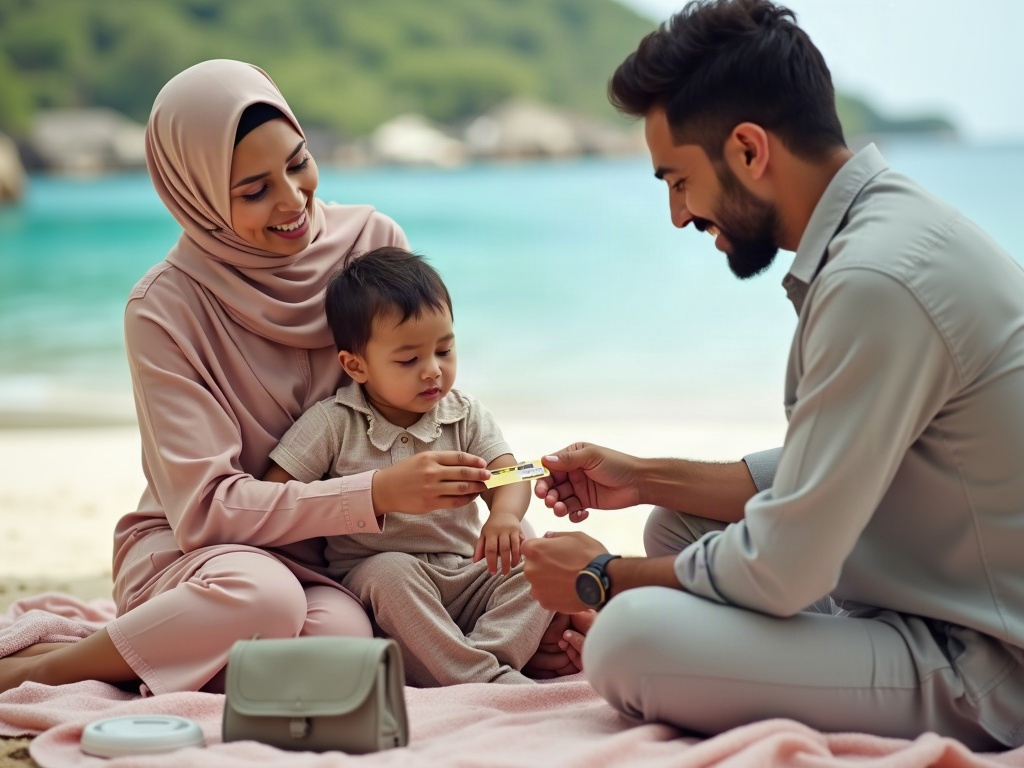
Displaying how utilizing quick-drying, poly-spandex blends drastically reduces necessary luggage volume while providing all-day comfort for active children.
© WovenVoyages.com
4. Health and Safety Essentials for a Family Beach Vacation
A family’s health and safety essentials mandate a customized, scenario-specific first-aid kit specifically calibrated to handle coastal threats like jellyfish stings, severe sunburns, and sand abrasions.
A pre-made first-aid kit is a good start, but it must be supplemented. The goal is to be fully prepared for minor cuts, scrapes, sunburn, and insect bites specific to coastal areas.
Create two kits: a main kit that stays in the hotel room and a smaller, “day-trip” kit in a waterproof pouch that goes in the beach bag. This ensures you have immediate access to essentials like bandages and wipes without carrying the entire supply.
Which first-aid items are crucial for common beach injuries?
Crucial first-aid items for common beach injuries must include waterproof bandages, fine-tipped tweezers, instant cold packs, and a sterile saline spray for flushing out wounds.
Your kit must be equipped to handle cuts from shells (antiseptic), scrapes from rocks (gauze), and splinters from boardwalks. Including a children’s pain/fever reducer and an antihistamine is also critical.
Pack a small, clean spray bottle. It’s invaluable for rinsing sand out of a cut or scrape with clean water before applying antiseptic, a step that is often overlooked but is crucial for preventing infection.
What are effective family-friendly bug repellents and after-bite remedies?
Effective bug repellents for families utilize Picaridin or oil of lemon eucalyptus as safe alternatives to high-concentration DEET, paired with topical hydrocortisone for rapid after-bite relief.
For children over 2 months, the CDC and AAP recommend repellents with Picaridin (20% concentration). For after-bite care, a topical steroid reduces itching, while a cold pack can provide immediate relief.
The “Flick and Scrape” method is vital for bee stings at a beach picnic. Do not pull the stinger out with tweezers, as this can squeeze more venom into the skin. Instead, flick it sideways with a credit card to remove it.
A visualization of an upgraded first-aid module, specifically calibrated with saline and sting relief to manage unique shoreline injuries.
© WovenVoyages.com
5. Entertainment and Activity Essentials for Engaged Kids at the Beach
Entertainment essentials for engaged kids rely on open-ended, highly durable tools—like collapsible silicone buckets and sturdy shovels—that facilitate imaginative play over single-use plastic molds.
The key is to pack a mix of creative and active toys. A quality set of buckets fuels imagination, while a simple ball game encourages movement and family interaction.
The most valuable beach “toy” is often a large, old bedsheet instead of multiple towels. Kids can play on it without getting as sandy, it defines a clear “home base,” and you can pick it up by the corners to easily funnel out sand.
How to choose durable and travel-friendly sand toys?
The most durable and travel-friendly sand toys are manufactured from thick silicone and packed within a breathable mesh tote to easily rinse away sand before transport.
Look for collapsible silicone buckets that pack flat in a suitcase. For games, choose items that are lightweight and have minimal pieces, like a waterproof frisbee or a neoprene paddle ball set.
A mesh bag is the single most important accessory for sand toys. It allows you to rinse all the toys at once in the ocean and then let them air dry on the walk back, keeping sand out of your vehicle.
What is the essential water safety gear for non-swimmers?
Essential water safety gear strictly requires U.S. Coast Guard-approved life jackets or Puddle Jumpers for all non-swimmers, completely rejecting unsafe inflatable water wings.
For non-swimmers and toddlers, a “Puddle Jumper” style device provides buoyancy and stability. For any boating activities in deeper waters, a properly fitted Type II or Type III life vest is non-negotiable.
Water wings (inflatable arm bands) are NOT considered safety devices and can create a false sense of security. They can slip off or deflate, and they teach a dangerous, vertical “drowning position” in the water.
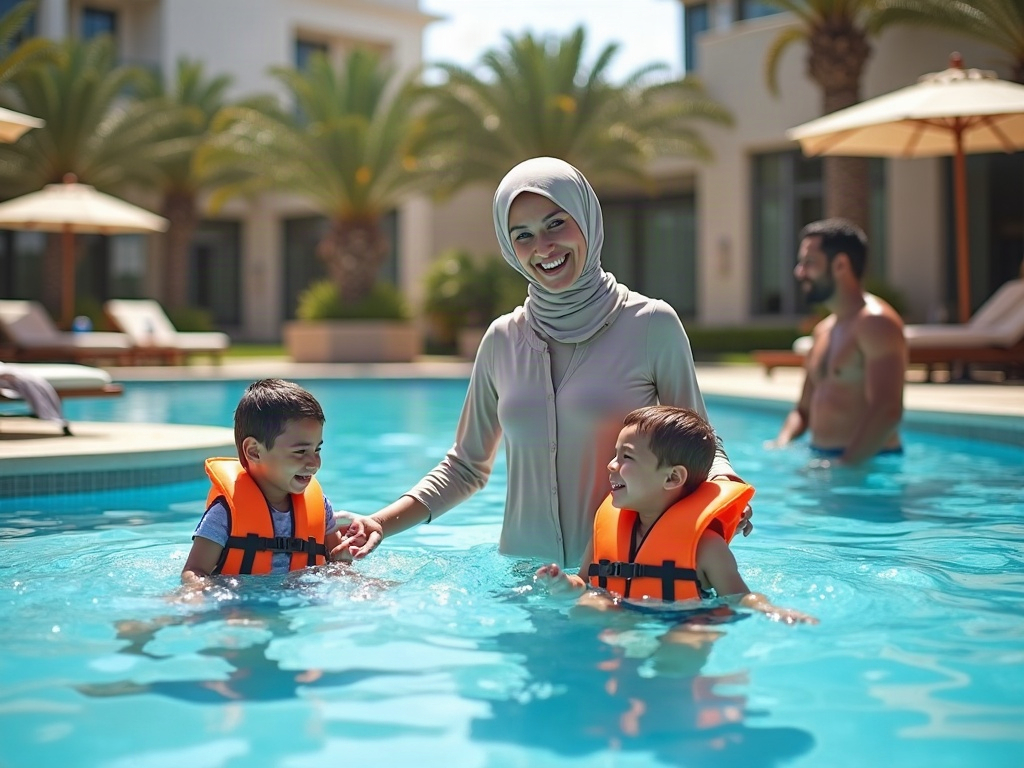
Highlighting the mandatory requirement of U.S. Coast Guard-approved flotation gear (like Puddle Jumpers) over unsafe, inflatable water wings.
© WovenVoyages.com
6. Efficiently Packing All Beach Essentials for a Family Vacation
You efficiently pack all beach essentials by ruthlessly compartmentalizing your gear into individual packing cubes and consolidating daily transit into a high-capacity, all-terrain beach wagon.
The strategy is to compartmentalize. Use packing cubes to separate outfits for each family member, have a dedicated “beach bag” for on-sand items, and a separate cooler for food and drinks.
The “One-Trip Rule” is the ultimate goal. A collapsible beach wagon with all-terrain wheels allows a parent to haul a cooler, chairs, umbrella, and beach bag in a single trip, preventing parental burnout before the day even begins.
Which luggage solutions are smartest for the beach?
Smart luggage solutions employ a large, structured, waterproof tote bag as the primary daily command center, supplemented by dedicated wet-dry bags for soiled swimwear.
A large, structured tote bag with multiple pockets serves as the perfect beach bag. Supplement this with a collapsible cooler and a dedicated waterproof pouch for electronics and keys.
A simple blue IKEA Frakta bag is a cult favorite among experienced beach families. It’s huge, incredibly durable, waterproof, easy to rinse out, and cheap enough that you don’t mind it getting beaten up.
How do you organize beach essentials for easy access?
Organize beach essentials by utilizing the ‘kit’ method, grouping items into smaller, easily identifiable sub-pouches (e.g., ‘Sunscreen Kit’, ‘First-Aid Kit’) to pass the one-hand grab test.
This prevents you from having to dump the entire bag to find one small item on a crowded beach in Australia.
Pre-pack outfits for each child for each day in a gallon-sized Ziploc bag or packing cube. Include a shirt, shorts, underwear, and socks. This eliminates morning arguments and makes getting dressed fast.
7. Preparing for Unexpected Situations with Beach Essentials
Preparing for unexpected situations requires packing a dedicated contingency module containing lightweight rain shells, backup power banks, and emergency identification tags.
This means having a backup power bank for electronics, and including a small sewing kit or multi-tool for emergency repairs. It’s about building resilience into your packing list.
Pack one “cozy” outfit for everyone (e.g., sweatpants and a sweatshirt), even if you’re going to a hot destination. An unexpected chilly, rainy day or a bad sunburn can make this the most valuable item you brought.
What emergency items are essential for family beach bags?
Essential emergency items for your beach bag include a fully charged multi-port power bank, a loud signaling whistle, and a waterproof pouch securing physical cash and ID.
The power bank ensures you can always call for help, the whistle can signal for help or locate a lost child in a crowd, and the waterproof pouch protects essential documents.
Write your cell phone number in permanent marker on your child’s arm or on a Tyvek wristband. In the event of a brief separation on a crowded beach, this allows another parent or a lifeguard to contact you immediately.
How should you pack for varying beach weather conditions?
To pack for varying beach weather, enforce a strict layering system, ensuring every family member has a wind-resistant outer shell and a warm mid-layer regardless of the tropical forecast.
The key is layering. A light rain jacket can block both wind and rain, and can be worn over a sweatshirt for warmth. This system is more versatile and less bulky than packing a single heavy coat.
A large, quick-drying travel towel or Turkish towel has multiple uses in changing weather. It can be a warm wrap when the wind picks up or an impromptu blanket for a cool evening.
8. Avoiding Common Family Beach Packing Mistakes
The most common packing mistakes are over-indexing on ‘nice-to-have’ clothing while under-packing critical multi-use utility items and forgetting to verify local rental availability.
Families often err by packing too many “nice” outfits that never get worn, while under-packing functional items like extra swimwear or first-aid supplies.
The “Rental Trap”: a common mistake is packing bulky items that are easily and cheaply rented at the destination, such as beach chairs, umbrellas, and even high-quality coolers.
How can families prevent overpacking for the beach?
Prevent overpacking by committing to a mid-week laundry cycle, cutting required clothing volume in half, and enforcing the ‘Rule of Three’ for mix-and-match outfits.
The laundry plan is the biggest lever; it allows you to cut the amount of clothing packed. Packing multi-use items like a sarong that can be a dress, a cover-up, or a towel drastically reduces bulk.
Use the “Rule of Three.” For a week-long vacation, pack three outfits per child that can be mixed and matched, in addition to swimwear and layers. Trust that you will re-wear items.
What crucial beach items do families often forget?
Crucial items frequently forgotten include baby powder for frictionless sand removal, a dedicated pop-up trash bag, and extra hair ties to manage windblown hair.
While everyone remembers sunscreen, it’s these small “utility” items that make the biggest difference in comfort and convenience. Baby powder magically removes stubborn, wet sand from skin.
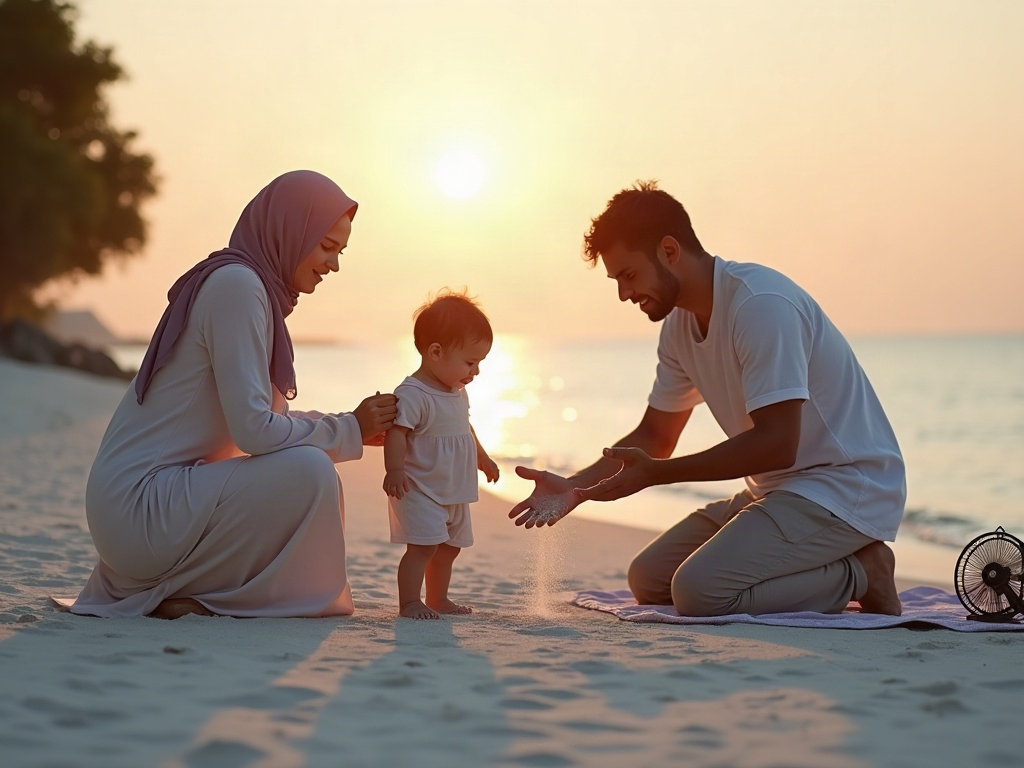
A portable, battery-operated fan. For families with infants or toddlers who still nap on the beach, a small fan clipped to the stroller or beach tent can provide critical air circulation and prevent overheating.
9. Mastering Family Beach Packing: Final Strategy
Mastering your final packing strategy requires transitioning from passive accumulation to systematic, defensive provisioning designed specifically to preserve parental peace of mind.
A successful vacation is built on a foundation of a multi-layered sun protection strategy, a well-stocked and customized first-aid kit, and an organized packing system that reduces stress.
The ultimate goal of this meticulous preparation is to allow yourself, the parent, to be present. When you know you have the essentials covered, you can put the logistics out of your mind and fully engage in the joy of the vacation.
10. Frequently Asked Questions (People Also Ask)
Why is family beach packing more challenging than solo travel?
What are the most effective sunscreens for children?
How can families prevent overpacking for the beach?
Resolution
The core of packing beach vacation essentials for a family vacation is not about bringing everything, but about bringing the right things through systematic preparation and a focus on safety and versatility. A successful vacation is built on a foundation of a multi-layered sun protection strategy, a well-stocked and customized first-aid kit, and an organized packing system that reduces stress. By anticipating needs and preparing for contingencies, you create the space for your family to relax and make memories.
Sources
- https://www.cnn.com/cnn-underscored/travel/family-beach-vacation-packing-list
- https://mahalores.com/blog/beach-vacation-packing-list
- https://www.familycantravel.com/beach-vacation-family-packing-list/
- https://www.adventurousfamilywithkids.com/blog/family-vacation-beach-packing-list-printable
- https://theeverymom.com/what-to-pack-for-a-beach-or-lake-house-vacation-with-the-kids/
2 Responses