How to Use Weather to Choose the Best Time for a Family Vacation
Table of Contents
Weather matters when choosing the best time for a family vacation because it directly dictates the safety, comfort, and feasibility of activities, ultimately controlling the overall success and enjoyment of the trip.
Weather is a critical factor for family vacation planning as it directly impacts safety, comfort, and activity feasibility, profoundly influencing the overall success and enjoyment of the trip. Ignoring historical patterns often leads to dissatisfaction, cancelled plans, and wasted funds. This detailed guide focuses on weather, but it’s part of a larger process. To get a comprehensive overview of all the steps involved, consider reviewing how to plan a family vacation step by step.
Recognizing the financial implications of weather is crucial for overall trip management. A well-considered budget factors in all potential costs, so learning how to plan the budget for a family vacation is a vital step.
1. Why does weather matter when choosing the best time for a family vacation?
Weather matters when choosing the best time for a family vacation because it directly dictates the safety, comfort, and feasibility of activities, ultimately controlling the overall success and enjoyment of the trip.

What specific weather factors impact family vacation experiences?
The specific weather factors that most impact family vacation experiences are temperature, precipitation, humidity, wind, and the number of daily sunshine hours. These core factors directly influence physical comfort, the viability of planned activities like swimming or sightseeing, and even the mood of children. Secondary factors like UV index and air quality also play a critical role in family health and safety during a trip.
In Orlando, the months of December through February bring pleasant 70-degree highs, which are more comfortable for families than the extreme summer heat, as discussed by Endless Travel Plans.
The combination of factors is more important than a single metric. For example, a “perfect” 80°F day becomes miserable for a toddler with 90% humidity, a detail often overlooked by planners.
“Climate normals” are the 30-year averages of weather data for a specific location, providing the most reliable baseline for long-term vacation planning, distinct from a short-term forecast.
Author’s Experience
“Having planned countless family trips, I’ve seen firsthand how a sudden downpour can derail a carefully planned day. This is why I meticulously analyze historical weather data and always have a Plan B for indoor fun. It’s about ensuring comfort and joy, no matter what the skies decide.”
How does predictable weather enhance family vacation planning?
Predictable weather enhances family vacation planning by reducing uncertainty, allowing for more confident scheduling of activities and simplified packing. When weather is stable and follows historical norms, parents can reliably book outdoor tours, plan beach days, and pack lighter, which minimizes stress and logistical complexity. This predictability transforms the itinerary from a hopeful guess into a dependable schedule.
Destinations like San Diego offer predictable, mild weather, with mid-60s highs and almost no rain from December through March, according to Living Lesh.
Frame predictable weather as a form of “trip insurance.” It insures the value of your non-refundable park tickets and pre-booked excursions against the risk of a weather-related cancellation, providing peace of mind.
2. What types of weather should families consider for different vacation activities?
Families should consider specific weather profiles for different vacation activities, matching temperature, precipitation, and sun exposure to the demands of their chosen destination type. The ideal weather for a beach vacation is completely different from the ideal weather for a European city tour or a national park hiking trip. Aligning the weather with the primary activity is the core task of successful vacation timing.
When is warm, sunny weather best for family vacations?
Warm, sunny weather is best for family vacations centered on water-based activities, such as beach resort stays, lake trips, and resort pool lounging. These conditions are optimal for swimming, sunbathing, and most watersports, which are the primary draws of tropical and coastal destinations. Warm sun is also a psychological benefit, strongly associated with the traditional “vacation” feeling.
In destinations like Phoenix and Scottsdale, winter temperatures in the 60s and 70s are ideal for activities like hiking and swimming, offering a pleasant alternative to summer heat, as detailed by Stuffed Suitcase.
Differentiate between “warm” and “hot.” For families with young children, ideal “warm” weather is 75-85°F (24-29°C), whereas temperatures above 90°F (32°C) significantly increase the risk of heat exhaustion and require more logistical planning.
Which weather types are ideal for active family adventures like hiking or skiing?
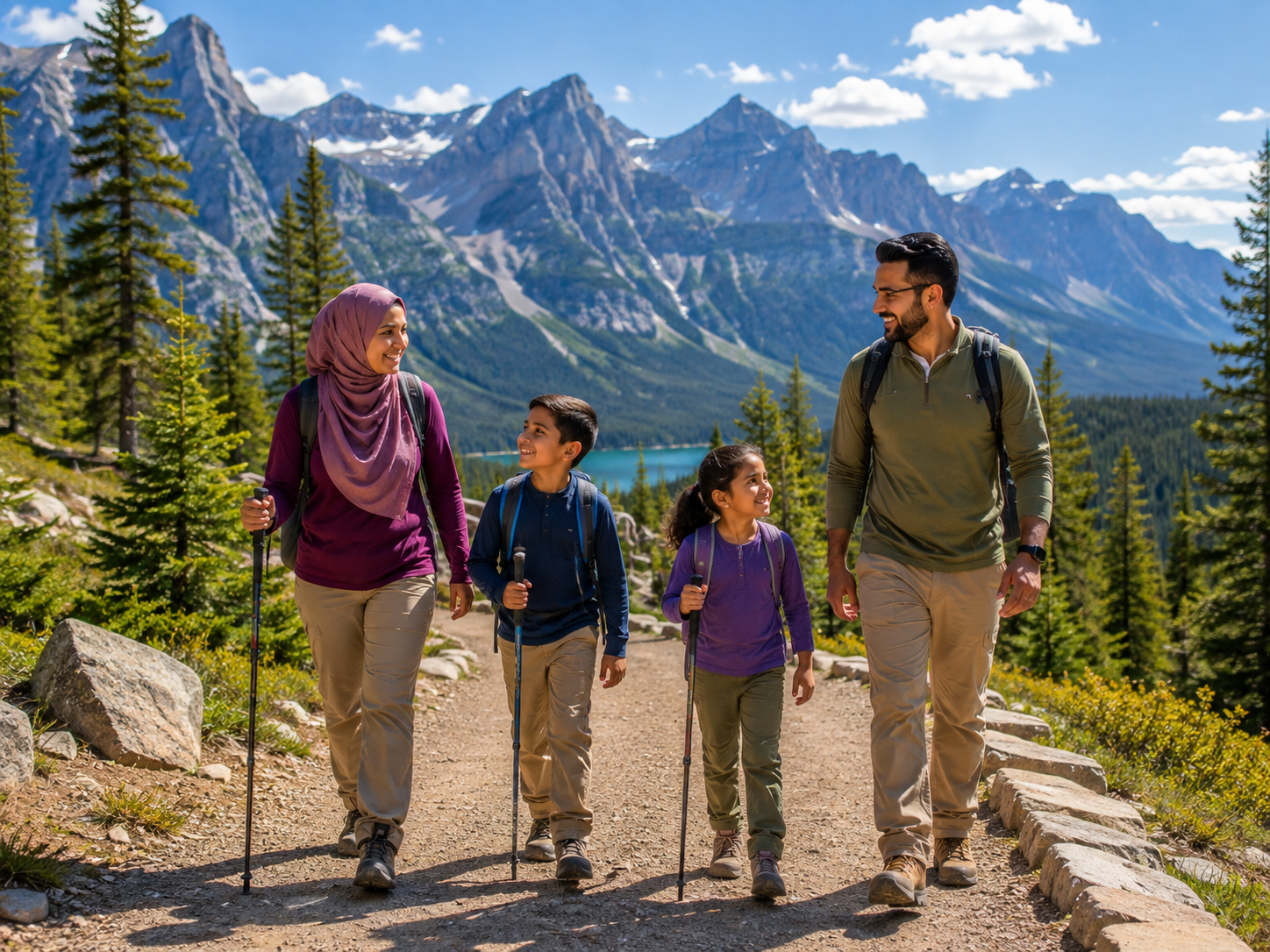
The ideal weather types for active family adventures are mild, dry, and cool conditions for hiking, and consistently cold temperatures with significant snowfall for skiing. For hiking, temperatures between 50-70°F (10-21°C) prevent overheating while clear skies ensure safe trail conditions. For skiing, a solid snow base requires sustained below-freezing temperatures, making early or late season trips a gamble.
In Smugglers’ Notch, Vermont, lift tickets can be as low as $59 midweek, making it a more affordable option for a family ski trip.
For mountain hiking, explain that morning is often best, as afternoon thunderstorms are a common weather pattern in ranges like the Rockies, even on otherwise clear days. This is a critical safety insight.
How does urban or cultural family travel benefit from specific weather patterns?
Urban or cultural family travel benefits from specific weather patterns, primarily mild temperatures and low precipitation, which facilitate extensive walking and a mix of indoor-outdoor activities. The best weather for a city break involves temperatures that do not require heavy coats or cause excessive sweating, making it comfortable to walk for hours and pop in and out of museums, shops, and cafes. Extreme heat or cold can ruin an urban vacation by making the primary mode of transport—walking—untenable.
The spring season in Washington, D.C. brings warm temperatures and iconic cherry blossoms, making it a great time for educational and cultural experiences.
Highlight that mild weather in cities often coincides with the “shoulder season,” creating a dual benefit: the most comfortable conditions for exploring AND lower crowd levels at major attractions, a huge win for families.
“Thermal comfort” is the subjective feeling of a person’s satisfaction with the thermal environment, which for families is influenced by temperature, humidity, air movement, and the metabolic activity level of their planned excursions.
3. How do families research weather and climate data to choose the best vacation time?
Families research weather and climate data by using a combination of government-run climate portals, commercial weather websites, and qualitative local sources like tourism boards and travel blogs. The most effective research strategy involves starting with broad, long-term climate averages from sources like NOAA to identify viable seasons, then narrowing down with historical monthly data for precipitation and temperature. Finally, consult local insights for activity-specific advice.

Where can families find reliable historical weather patterns for potential destinations?
Families can find reliable historical weather patterns on official government meteorological agency websites, university climate data centers, and reputable long-standing commercial weather providers. The most authoritative sources are national agencies like the U.S. National Oceanic and Atmospheric Administration (NOAA) and the UK‘s Met Office, which provide decades of free, searchable climate data. For global destinations, sites like World Weather Online aggregate this information into user-friendly charts.
Historically, coastal areas like San Francisco experience cool, foggy summers, with average August temperatures around 60°F (15°C), a stark contrast to inland regions.
Advise parents to specifically search for “monthly climate averages” or “climate normals” for their destination, as these terms yield more useful long-term planning data than a simple “weather” search.
A “climatograph” is a graphical representation of a location’s basic climate, typically showing monthly temperature and precipitation data in a single chart, providing an at-a-glance tool for comparing seasons.
What is the difference between climate and weather when planning a family trip?
The difference between climate and weather when planning a family trip is that climate is what you expect based on long-term averages, while weather is what you actually get on a specific day. You plan your vacation timing (months in advance) using climate data, which tells you that July in Spain is typically hot and dry. You pack your suitcase (days in advance) using the weather forecast, which tells you if a specific day during your trip will be unusually rainy.
The Going-to-the-Sun Road in Glacier National Park, a 50-mile scenic route, is only seasonally accessible due to long-term climate patterns of heavy snowfall.
Use the analogy: “Climate helps you choose the restaurant (the destination and season), while weather tells you the daily specials (the actual conditions on a given day).” This makes the concept instantly understandable.
4. Which weather-related factors should influence a family’s decision on vacation timing?
The weather-related factors that should most influence a family’s decision on vacation timing are the age of the children, the family’s tolerance for heat and cold, and the risk of severe seasonal events like hurricanes. A family with a toddler has a much lower tolerance for extreme heat than a family with teenagers, making temperature a higher-priority factor. All families must treat seasonal event risk (hurricanes, monsoons) as a critical, non-negotiable factor that can veto a potential travel window.

How does family age group affect ideal weather preferences for vacations?
Family age group dramatically affects ideal weather preferences because infants, toddlers, and seniors have a narrower range of comfortable and safe temperatures than school-aged children and adults. Families with infants and toddlers must prioritize mild temperatures (60-80°F) and low humidity to avoid overheating and dehydration risks. Families with teenagers can tolerate a wider range of conditions, but may have lower tolerance for “boring” rainy days that limit high-energy activities.
Some ski resorts, like Snowmass in Colorado, have kids’ programs that take children as young as 3, which is a key factor for families with young children considering cold weather destinations.
Point out that while teens are physically more resilient to heat, they are often less mentally resilient to “bad weather.” A rainy day can lead to more complaints from a bored teen stuck indoors than from a toddler happy with indoor play.
When should families consider shoulder seasons for weather benefits and cost savings?
Families should consider shoulder seasons when they want to balance pleasant weather with significant cost savings and lower crowd levels. Shoulder seasons, the months just before and after the high season (like May/June and September/October in Europe), often feature the most comfortable weather of the year. This timing allows families to avoid both the extreme heat and crowds of summer and the unpredictable cold of winter, while saving on flights and accommodation.
A midweek departure, on a Tuesday or Wednesday, tends to shave $100 to $200 per airline ticket during shoulder seasons.
The financial benefit is twofold: not only are flights and hotels cheaper, but the milder weather means less spending on “escape” activities like expensive indoor attractions or constant air-conditioned taxis needed during peak summer heat.
Exploring options like shoulder season travel is just one of many ways to keep your trip affordable. For a broader look at managing expenses, discover what are the most effective cost-saving strategies for family vacations.
5. How can families match specific destination microclimates to their vacation goals?
Families can match specific destination microclimates to their vacation goals by researching how local geography like mountains, coastlines, and valleys creates distinct weather pockets within a single region. This means that even within one destination, like a large island or a mountainous area, you can choose a specific location for your stay based on weather. For example, on Hawaii‘s Big Island, you can choose the sunny, dry Kona side for beach days or the wetter, cooler Hilo side for rainforest exploration.
What are microclimates, and why are they important for family vacation timing?
Microclimates are small, localized areas where the climate differs from the surrounding region, and they are important for family vacation timing because they allow for more precise weather planning. A large mountain, a dense forest, or a coastline can create a unique “weather bubble” in a small area. This is important because it means you can choose a hotel on the sunny side of an island, or plan a hike in a valley that’s protected from the wind, optimizing your comfort and activity success.
In the North Cascades, the 140-mile designated byway runs through multiple distinct climate zones, from dense old-growth forest to open alpine terrain, showcasing varied microclimates.
The “urban heat island” effect is a common microclimate families experience. Cities are often several degrees warmer than their surrounding suburbs, which is a negative in summer (more oppressive heat) but can be a positive in shoulder seasons (extending the comfortable outdoor season).
How do local geographic features create diverse weather experiences within one region?
Local geographic features like mountains, bodies of water, and elevation changes create diverse weather experiences by altering wind patterns, temperature, and precipitation. Mountains block rain, creating dry “rain shadows” on one side and wet conditions on the other. Large bodies of water like oceans or great lakes moderate temperatures, making coastal areas cooler in summer and warmer in winter than inland areas at the same latitude.
In Hawaii, the windward (eastern) side of islands receives significantly more rainfall due to trade winds hitting mountains, averaging over 100 inches annually, while the leeward (western) side remains much drier, creating distinct microclimates within a short distance.
Explain the concept of “aspect” in mountains – the direction a slope faces. In the Northern Hemisphere, south-facing slopes get more sun and are warmer and drier, which is a crucial detail when choosing a hiking trail or a ski resort location for optimal conditions.
6. How should families integrate weather considerations into their vacation booking process?
Families should integrate weather considerations into their vacation booking process by making weather research a formal step that precedes shortlisting destinations and clicking “purchase.” This involves creating a “weather profile” of your family’s needs, using historical climate data to vet potential destinations against that profile, and confirming cancellation policies before committing funds. This process turns a hopeful gamble into a data-informed decision.

What steps should families take to confirm optimal weather conditions before booking?
The steps families should take to confirm optimal weather conditions before booking include cross-referencing multiple data sources, reading recent traveler reviews, and checking long-range forecasts. First, verify your chosen travel window against historical climate data from an official source like NOAA. Second, search for travel blogs or forum posts from people who visited the same destination at the same time in previous years. Finally, look at a 10-to-14 day extended forecast right before you book to spot any unusual developing weather patterns.
A five-day trip for a family of four to San Diego during the pleasant winter season typically runs $2,500 to $4,000, assuming ideal weather.
An expert tip is to check the social media location tags for your destination in the week before booking. This provides a real-time, visual confirmation of the current weather and how people are dressing and acting, which is often more telling than a simple temperature number.
How can flexible booking policies help manage potential weather changes for family trips?
Flexible booking policies can help manage potential weather changes for family trips by allowing for cancellations or date changes without significant financial penalties. Policies like “free cancellation until 48 hours before check-in” or “flight changes with no fees” act as a financial safety net. They give families the power to adapt to a sudden dire weather forecast (like a looming hurricane) without losing their entire vacation budget.
Weather cancellations are more common in winter than any other season, making flexible or refundable lodging a key financial protection strategy.
Frame flexible booking not as a cost, but as a feature to shop for. Teach parents to use search filters on booking sites like Booking.com or Airbnb for “free cancellation” and to view it as a valuable amenity, just like a pool or free breakfast.
“Force majeure” is a common clause in travel contracts which removes liability for natural and unavoidable catastrophes, which can include severe weather events, making it critical for families to understand their financial risk.
Just as important as considering weather risks is choosing the right place to stay. Learn more about how to plan accommodation for a family vacation, covering types, booking timelines, and evaluating location and safety.
7. How can families create a weather-resilient itinerary once a vacation time is chosen?
Families can create a weather-resilient itinerary by pre-planning a mix of indoor and outdoor activities and adopting a flexible mindset. A weather-resilient itinerary is not a rigid minute-by-minute schedule, but a curated list of potential activities, including a “Plan A” for sunny days and a “Plan B” for rainy days. This proactive approach eliminates in-the-moment scrambling and disappointment.
What are effective strategies for packing for unpredictable weather on a family vacation?
The most effective strategy for packing for unpredictable weather on a family vacation is to use a layering system. Packing lightweight layers—such as t-shirts, long-sleeved shirts, fleeces, and a waterproof outer shell—allows each family member to adapt to a wide range of temperatures and conditions by adding or removing items. This is far more effective and space-efficient than packing bulky, single-purpose items like heavy winter coats.
For unpredictable weather in Iceland, it is recommended to pack layers and rain gear as conditions can change quickly throughout the day.
A “packing cube” system is the logistical key to successful layer packing. Assign one cube per person for base layers, one for mid-layers, etc., to keep luggage organized and make daily dressing decisions simple. Also, always pack one more pair of socks per person than you think you need.
How do families find suitable indoor activities if unexpected bad weather occurs?
Families can find suitable indoor activities during unexpected bad weather by consulting pre-researched lists, using map applications, and asking local hotel staff. The best approach is to have a pre-saved list of nearby museums, aquariums, and indoor play centers on your phone. If you don’t have a list, use Google Maps to search for “indoor activities for kids near me” and check recent reviews. As a final resort, the hotel concierge is an excellent source of local, up-to-date recommendations.
Weatherproof options like Great Wolf Lodge guarantee a good time by keeping its indoor waterpark at a consistent 84 degrees, regardless of the weather outside.
Advise parents to look for local libraries. They are a fantastic, free, and often overlooked indoor option that usually have dedicated children’s sections, clean restrooms, and community events.
While weather resilience is key, it’s also important to have a broader framework for your trip. For detailed guidance on structuring your days, explore how to plan a family vacation schedule effectively.
8. What common weather-related mistakes should families avoid when planning a vacation?
The most common weather-related mistake families should avoid when planning a vacation is assuming the weather they see at home or on a forecast app is representative of the actual on-the-ground climate experience. Major errors include booking travel during a known hurricane or monsoon season to save money, failing to research humidity levels in tropical destinations, and ignoring the weather tolerance of the youngest family members. These mistakes lead to disappointment, discomfort, and potentially wasted vacation funds.
How does failing to check climate averages lead to vacation disappointment?
Failing to check climate averages leads to vacation disappointment by creating a fundamental mismatch between a family’s activity plans and the destination’s typical seasonal conditions. A family might book a trip to Southeast Asia in July based on a sunny 5-day forecast, only to arrive and discover it’s the middle of monsoon season, as historical climate averages would have predicted. This error results in cancelled tours, washed-out beach days, and a trip spent indoors.
Costa Rica‘s dry season runs from November to April, which lines up perfectly with winter break for many families and avoids the rainy season from May to November.
The “it was nice last year” fallacy is a common trap. A friend’s good experience one year is an anecdote, not data. Climate averages, compiled over 30 years, provide the only statistically reliable picture of what to expect.
Why is overlooking family-specific weather tolerance a significant planning error?
Overlooking family-specific weather tolerance is a significant planning error because a vacation’s success is dictated by the happiness of its least comfortable member. Choosing a hot, humid destination without considering a toddler’s low heat tolerance will inevitably lead to a miserable toddler, which in turn leads to stressed parents and a failed vacation, no matter how much the adults might enjoy the heat. The plan must be built around the family’s weakest link in terms of weather resilience.
Summer heat in Texas and Arizona can be extreme, so unless there is reliable pool access, travel during these months should be avoided for most families with young children.
A simple pre-planning “family vote” on weather preferences can prevent this. Ask everyone, “Would you rather be a little too hot or a little too cold?” The collective answer provides a powerful directive for your planning.
What are the risks of ignoring seasonal weather events like hurricanes or monsoons?
The risks of ignoring seasonal weather events like hurricanes or monsoons range from complete trip cancellation and financial loss to extreme danger and physical harm. Booking a trip during a known high-risk season exposes a family not only to the possibility of a ruined vacation but also to logistical chaos, including flight cancellations, evacuations, and overburdened local infrastructure. The potential cost savings are never worth the risk to your family’s safety and financial investment.
The Atlantic hurricane season runs from June to November, a period to avoid for travel to the Caribbean and Gulf Coast if seeking guaranteed clear weather.
Explain that even if a hurricane doesn’t make a direct hit, a storm hundreds of miles away can still ruin a trip by causing huge ocean swells (unsafe for swimming), days of torrential rain, and high winds, a fact many travelers don’t consider.
9. How can families adapt their vacation plans if unexpected weather changes occur?
Families can adapt their vacation plans to unexpected weather changes by activating their pre-planned indoor alternatives, maintaining a positive attitude, and leveraging travel insurance where applicable. When an unexpected storm rolls in, the first step is to calmly pivot to the “Plan B” list of indoor activities you created. A positive parental attitude is crucial in framing this change as a new adventure rather than a disappointment for children.
What are a family’s immediate steps when a forecast changes drastically mid-trip?
A family’s immediate steps when a forecast changes drastically mid-trip are to confirm the information, assess its impact on planned activities, and communicate the new plan to everyone. First, verify the forecast on a reliable local weather source. Second, immediately decide which upcoming activities are now impractical or unsafe and pivot to your pre-researched indoor alternatives. Third, gather the family and present the new plan positively, focusing on the fun things you will do instead.
In winter, a single storm can close a ski resort’s airport for days, highlighting the need for a backup plan and prompt action for mid-trip changes.
If the new plan involves a popular indoor attraction (like an aquarium on a suddenly rainy day), book tickets online *immediately*. These venues fill up fast when the weather turns, and you can beat the rush by being decisive.
How can travel insurance help mitigate financial losses from severe weather disruptions?
Travel insurance can help mitigate financial losses from severe weather disruptions by reimbursing you for non-refundable, pre-paid trip costs under its trip cancellation or trip interruption clauses. If a named hurricane forces you to cancel your trip or evacuate your destination, a comprehensive travel insurance policy can cover the money you’ve already spent on flights, hotels, and tours. It is a financial tool that transfers the risk of a catastrophic weather event from your family to the insurance company.
Travel insurance is worth the 5 to 8 percent premium for winter trips, which have a higher likelihood of weather-related cancellations, offering a crucial layer of financial protection.
It is critical to understand that most policies do not cover simply “bad weather.” The policy is triggered by specific, severe events, such as official government-issued hurricane warnings or mandatory evacuations. Fear of a storm is not a covered reason; an official evacuation order is.
“Trip interruption coverage” as a specific component of a travel insurance policy that can reimburse non-refundable costs if a vacation is cut short for a covered reason, which may include severe, named weather events.
10. Weather-Smart Family Vacation Checklist
| Checklist Item / Tactic | Status |
|---|---|
| STEP 1: Create a “weather profile” outlining your family’s specific needs and tolerances. | ⬜ |
| STEP 2: Use historical climate data to vet potential destinations against your family’s weather profile. | ⬜ |
| STEP 3: Confirm cancellation and refund policies related to weather before committing funds. | ⬜ |
| STEP 4: Cross-reference official historical climate data with recent traveler reviews for the chosen time and destination. | ⬜ |
| STEP 5: Check the 10-to-14 day extended forecast right before purchasing to identify any unusual developing weather patterns. | ⬜ |
| STEP 6: Pre-plan a diverse mix of indoor and outdoor activities, creating a “Plan A” and “Plan B.” | ⬜ |
| STEP 7: Adopt a layering system for packing clothes to adapt to varied temperatures and conditions. | ⬜ |
| STEP 8: Maintain a positive attitude and use the “special treat” strategy if unexpected bad weather occurs. | ⬜ |
11. Resolution
Ultimately, using weather to choose the best time for a family vacation is about shifting from passive hope to active, data-driven planning. By treating weather as a primary planning pillar alongside budget and destination, you empower your family to minimize risk, maximize enjoyment, and take control of your vacation experience. This methodical approach transforms potential weather-related stress into the confidence of a well-executed plan.