Why Is Balancing Structured Activities and Free Time Important on Family Vacations?
Table of Contents
Balancing structured activities and free time is essential for family vacations because it directly prevents the two primary failure points of a trip: child/parental burnout and a lack of genuine family connection.
A balanced family vacation schedule is crucial for preventing emotional meltdowns and physical exhaustion. This equilibrium ensures that shared experiences feel joyful rather than forced, leading to higher overall vacation satisfaction.
1. Why is Balancing Structured Activities and Free Time Essential for Family Vacations?
Balancing structured activities and free time is essential for family vacations because it directly prevents the two primary failure points of a trip: child/parental burnout and a lack of genuine family connection.
A balanced family vacation schedule is crucial for preventing emotional meltdowns and physical exhaustion. This equilibrium ensures that shared experiences feel joyful rather than forced, leading to higher overall vacation satisfaction.
The balance of structured activities and free time on family vacations prevents burnout and ensures joy, creating higher overall satisfaction by avoiding over-scheduling or boredom.
The “vacation happiness curve” often dips when itineraries are either too packed (stress) or too empty (boredom). The goal isn’t a 50/50 split, but a “rhythm” that matches the destination type—a city break in Rome requires a different rhythm than a beach resort in Cancun.
Travel Fatigue: the cumulative physical and mental exhaustion resulting from a disrupted routine, new environments, and sustained activity, which is more pronounced in children and can manifest as irritability or meltdowns.
Choose to prioritize balance if your past vacations have ended with feelings of exhaustion rather than rejuvenation, or if you are traveling with multiple age groups (e.g., toddlers and teens).
Understanding these core benefits is the first step; next, we will explore how this balance specifically prevents common vacation stressors like burnout and meltdowns.
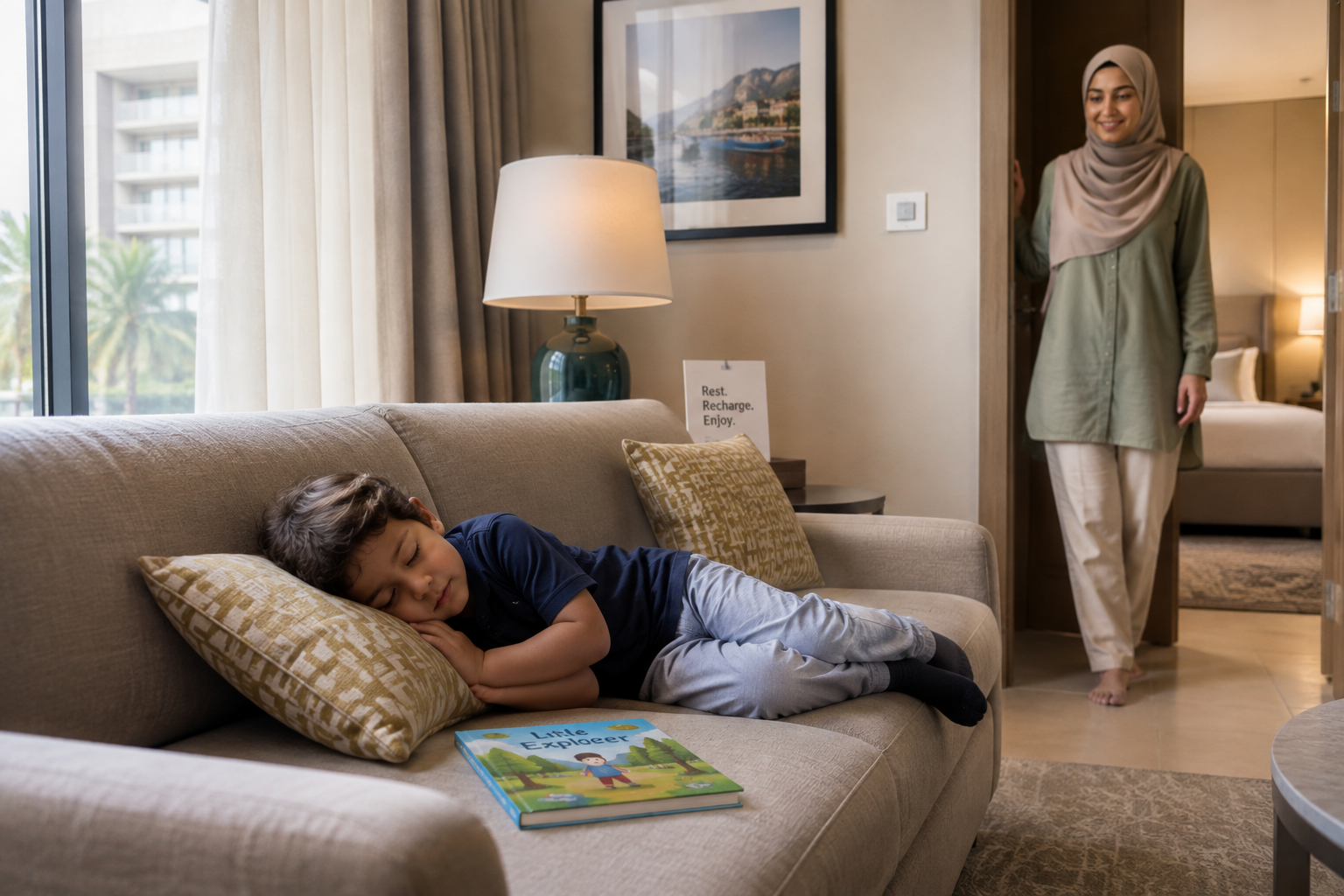
How Does the Balance of Structured Activities and Free Time Prevent Family Vacation Burnout and Meltdowns?
The balance between activity and rest directly prevents family vacation burnout and meltdowns by regulating children’s physical and emotional energy levels.
By strategically scheduling downtime, parents provide crucial recovery periods that prevent overstimulation and fatigue. These breaks act as a pressure-release valve, averting the emotional explosions common in over-scheduled children. Strategically scheduling downtime in family vacations provides essential recovery periods, preventing overstimulation and fatigue in children, which acts as a pressure-release valve to avert emotional meltdowns common in over-scheduled scenarios.
A child’s “meltdown threshold” is significantly lower in unfamiliar environments. A balanced schedule respects this by treating rest not as a luxury but as a necessary logistical input, as critical as booking a flight.
Scheduled downtime → prevents → child sensory overload.
A 2021 study found that people who regularly travel at least 75 miles from home report being about 7% happier overall than those who travel rarely or not at all, highlighting the well-being benefits of well-managed trips (thecentercounseling.org).
Meltdowns happen when children are overstimulated and exhausted. Preventing travel burnout is key to avoiding child sensory overload. For instance, contrasting a back-to-back theme park day with a day that includes a mid-day hotel pool break can illustrate the importance of strategic rest. For more on handling cumulative physical and mental exhaustion, see our guide on coping with travel fatigue in kids.

Author’s Experience
“On a WovenVoyages team trip to Rome, we discovered that implementing a mandatory 2-hour ‘quiet time’ mid-day drastically reduced afternoon meltdowns, turning potentially frustrating moments into peaceful reading or nap times for the children, and even offering parents a quiet coffee break.”
What are the Benefits of Blending Scheduled Fun with Spontaneous Exploration for Family Bonding?
Blending scheduled fun with spontaneous exploration provides the dual benefit of creating shared “peak” memories during planned activities and fostering authentic connection during unplanned discoveries.
This blended approach creates the optimal environment for family bonding. The structure provides shared goals, while the freedom allows for natural, unforced interactions and collaborative problem-solving. Blending scheduled fun with spontaneous exploration optimizes family bonding by providing shared goals during planned activities and fostering authentic, unforced interactions during unexpected discoveries, leading to deeper connections and unique shared memories.
Family bonding is often strongest during “micro-explorations”—finding a unique gelato shop, discovering a hidden path, or navigating a local market together. A rigid schedule eliminates the possibility for these moments to occur.
Spontaneous exploration → fosters → authentic family connection.
According to a 2009 study, family leisure time provides crucial opportunities for families to bond, strengthen relationships, and improve problem-solving skills (extension.usu.edu).
Contrast the type of memory created by a “must-do” activity (e.g., Eiffel Tower photo) with the memory from a spontaneous discovery (e.g., a funny moment on the Paris Métro). For shared goals and more ideas, visit our guide on creative family bonding activities.

How Does Balancing Activities Cater to Diverse Family Member Needs and Interests?
Balancing activities is the most effective strategy for catering to diverse family member needs because it allows for both collective experiences and individual pursuits.
A balanced schedule allows you to design a vacation with “something for everyone.” It intentionally creates space for a teen to have quiet time, a toddler to nap, and parents to relax, preventing resentment and accommodating different energy levels. Balancing activities effectively caters to diverse family needs by allowing for both collective experiences and individual pursuits, creating intentional space for different energy levels and interests, such as quiet time for teens or naps for toddlers.
This isn’t just about different activities; it’s about respecting different social batteries. An introverted child or parent may need the “free time” slots not for exploration, but for solitary quiet time to recharge for the next family activity.
A balanced itinerary → accommodates → diverse age gaps and energy levels.
Research indicates that teenagers may view balance leisure activities like vacations as more important and impactful than their parents do, highlighting the need to cater to their desire for autonomy and free time (pedsteam.com).
Provide specific examples for different age groups: a toddler’s need for a nap, a grade-schooler’s need for active play, a teenager’s need for autonomy or Wi-Fi. The goal is not to make everyone happy 100% of the time, but to ensure everyone feels their needs are considered and met at key points during the trip, especially when balancing teen and toddler needs through age-appropriate vacation planning. For more tips on catering to diverse family member needs, see our guide on multi-generational travel tips.
2. How Can Families Choose the Right Mix of Planned Activities and Downtime for Their Vacation?
Families can choose the right mix of planned activities and downtime for their vacation by evaluating three key variables: the age and energy of family members, the destination type, and their collective travel style.
To choose your ideal mix, first assess your family’s endurance and interests to create a “traveler profile.” Then, match that profile to your destination; a fast-paced city requires more scheduled downtime than a slow-paced beach resort. Families can choose the right mix by evaluating age, energy, destination type, and collective travel style, then matching their “traveler profile” to the location, recognizing that a fast-paced city demands more intentional scheduled downtime than a slow-paced beach resort.
The “right mix” is a dynamic ratio, not a fixed number. A family might be 70% structured for a Disney World trip but shift to 30% structured for a trip to a national park like Yosemite, demonstrating that the destination is a primary determinant.
Travel Style: a family’s collective preference for pace, activity level, and structure, ranging from “Adventurous Sightseers” who prioritize seeing as much as possible to “Relaxed Unwinders” who prioritize rest and spontaneity.
Use the “Decision Matrix: Family Vacation Activity Balance Considerations” to plot your family’s profile. If you land in two or more columns, default to the more balanced approach to minimize risk. To simplify this decision, the following matrix provides a clear framework for aligning your family’s characteristics with a recommended vacation structure.

What Factors Influence Your Family’s Ideal Activity-to-Relaxation Ratio on Vacation?
The primary factors that influence your family’s ideal activity-to-relaxation ratio are the ages and personalities of your children, and the established energy levels and interests of the adults.
A family with young children requiring naps needs a much higher relaxation ratio. Conversely, a family with high-energy teenagers eager for adventure can sustain a more activity-heavy schedule. The ideal activity-to-relaxation ratio is primarily influenced by children’s ages and personalities, alongside adult energy levels. Young children necessitate more relaxation time due to nap schedules, while high-energy teenagers can manage more activities.
The “invisible factor” is parental energy. A vacation’s pace is ultimately limited by the parents’ capacity for planning, navigating, and managing children. Acknowledging this and planning for parental downtime is not selfish; it’s a strategic necessity.
Child’s age → directly influences → required downtime.
Research shows that overtired children often struggle more with emotional regulation, attention, and sensory tolerance, making age and energy levels a critical factor in planning (cneschools.org).
Use precise examples: “A 4-year-old’s nap schedule is non-negotiable,” “A 14-year-old may value an hour of independent exploration over another group tour.” The vacation must be planned for the family you have, not the family you wish you had, considering age gaps and the family’s pace. For guidance on this, refer to our guide on planning travel with young children.
How Does Your Chosen Destination Type Affect Balancing Vacation Schedules?
Your chosen destination type fundamentally affects how you balance vacation schedules by dictating the density of attractions and the inherent pace of the location.
A destination like a major city (e.g., New York, London) has a high density of “must-see” sights, demanding more intentional scheduling of downtime. In contrast, a remote beach or mountain retreat has a naturally slower pace, requiring more intentional scheduling of activities to prevent boredom. Destination type fundamentally affects vacation schedule balance; high-density cities require intentional downtime scheduling, while slow-paced retreats necessitate intentional activity planning to prevent boredom, dictating the inherent pace and attraction density.
The “trap” of a high-density destination is feeling obligated to see everything. The expert travel strategy is to be ruthless in prioritizing a few key experiences and using the saved time for wandering, which often yields better memories than a third museum in one day.
A major city destination → requires → more intentionally scheduled free time.
According to a U.S. Department of Education study, children who travel more score higher on academic achievement tests, with even greater improvements for those who took educational vacations, suggesting the destination type matters (cneschools.org).
Compare and contrast two distinct destination types, such as a theme park (e.g., Orlando) and a national park (e.g., Zion). If you choose a bustling city, plan fewer activities, which results in less stress, integrating a theme park itinerary strategy or city break with kids planning for successful trips. For city travel tips, see our urban family travel guide, and for relaxing options, explore our relaxing beach vacations for families.
3. How Can Families Implement Effective Strategies for Balancing Activities and Free Time on Vacation?
Families can implement effective strategies for balancing activities and free time on vacation by using a “tentpole” scheduling method, where 1-2 core activities anchor the day, leaving the surrounding time flexible.
The most effective strategy is to involve the entire family in identifying a few “must-do” activities before the trip. Pre-book only these essential items and intentionally leave large blocks of time on the calendar as “Free Exploration” or “Pool Time.” Families can effectively balance activities and free time by using a “tentpole” scheduling method, where 1-2 core activities anchor the day, while intentionally leaving large blocks of time free on the calendar for “Free Exploration” or “Pool Time.”
Treat “downtime” as an actual, schedulable event. By putting “2 hours of Pool Time” on the itinerary, it signals that this rest is as important and non-negotiable as the museum visit, preventing it from being accidentally filled.
Buffer Time: intentionally unscheduled blocks of time (30-60 minutes) inserted between planned activities to account for travel delays, tired kids, or spontaneous photo opportunities, preventing a domino effect of lateness.
Implement the “one-pick” rule: allow each family member (including parents) to choose one non-negotiable activity for the entire trip. This guarantees buy-in and simplifies prioritization. To translate these strategies into a concrete plan, use the following checklist to architect your balanced family vacation itinerary.

What are Practical Tips for Integrating Both Scheduled and Spontaneous Moments into Your Vacation?
A practical tip for integrating scheduled and spontaneous moments is to adopt a “morning for structure, afternoon for freedom” rhythm.
Book your high-energy, must-do tour or museum visit for the morning when the family is fresh. Leave the entire afternoon open for naps, wandering, or whatever the family feels like doing in the moment. Integrate scheduled and spontaneous moments by adopting a “morning for structure, afternoon for freedom” rhythm. Book high-energy tours for mornings and leave afternoons open for flexible exploration, leveraging geography to minimize travel and maximize discovery.
Use geography to your advantage. If your pre-booked activity is in a certain neighborhood, plan for your “spontaneous” time to be exploring that same area to minimize travel time and increase opportunities for authentic discovery.
The “morning structure, afternoon freedom” rule → optimizes → family energy levels.
Studies find that even the act of planning a vacation can provide the same stress relief as taking the trip, supporting the strategy of pre-planning a few key activities (firsttee.org).
Use the n-gram “scheduling buffer time for travel.” Provide a specific example: “Book tickets for the 9 AM entry to the Colosseum, then plan to wander and find lunch in the Monti neighborhood afterward without a specific restaurant reservation.” Reiterate the “pre-book wisely” concept, framing it as a tool for creating spontaneity, not eliminating it. For more on pre-booking wisely, check out our guide to pre-booking attractions.
How to Build Flexibility into Your Family Vacation Itinerary Effectively?
Building flexibility into your family vacation itinerary is achieved by creating a “Plan B” for every major activity and by mentally framing the written schedule as a suggestion, not a mandate.
The most effective way to build in flexibility is to list alternative, low-key activities (e.g., a cool local playground, a movie, a special cafe) for each day. This gives you a ready-made alternative if the original plan is derailed by weather or a child’s mood. Building flexibility involves creating “Plan B” options for major activities and viewing the schedule as a suggestion rather than a mandate. Listing alternative, low-key activities for each day prepares families for unexpected changes, reducing stress and enhancing adaptability.
True flexibility comes from a mindset shift. The goal of the trip is family connection, not ticking off a checklist. Reminding yourself of this primary goal makes it easier to abandon a “must-do” activity in favor of a moment of peace or unexpected fun.
A “Plan B” mindset → reduces → stress from unexpected changes.
Experts note the best vacation plans can be disrupted by weather, sickness, or other complications, making it essential to prepare for the unexpected with a list of ‘rainy day’ options (cneschools.org).
Embrace a ‘plan B’ mindset. Being flexible means you can pivot to a free activity like a park visit instead of pushing through a costly museum visit with a tired child. This strategy is key for handling unexpected vacation changes. See our guide on creating family backup plans when discussing “Plan B.”
When Should Families Schedule Dedicated Downtime and Relaxation on Their Vacation?
Families should schedule dedicated downtime and relaxation during three key periods: mid-day to avoid peak heat and crowds, after a high-intensity activity to aid recovery, and whenever the family’s energy is visibly low.
The best times to schedule downtime are during natural lulls in the day, like the post-lunch period, or immediately following a major planned excursion. Treating this downtime as a mandatory appointment on your schedule ensures it happens. Families should schedule dedicated downtime mid-day to avoid crowds and heat, immediately after high-intensity activities for recovery, and whenever energy visibly dips. Treating these rest periods as mandatory appointments ensures they occur and prevents cumulative travel fatigue.
A powerful but underused strategy is the “pre-emptive strike” downtime. Schedule a quiet hour before you think the kids will get tired, especially on Day 3 of the trip, which is often when cumulative travel fatigue peaks.
Mid-day downtime → prevents → afternoon meltdowns.
Children benefit from regular quiet moments throughout the day, such as reading, listening to music, or having quiet playtime, to reset before becoming overwhelmed by vacation activities (pedsteam.com).
Use commanding language: “Schedule downtime during peak heat,” “Allocate a rest period after every major tour.” Include a variety of downtime examples: swimming, reading, screen time, naps, or even just quiet time in the hotel room. Using dedicated downtime prevents cumulative travel fatigue. For more on managing travel fatigue, see our guide on managing travel fatigue.
4. Logistics: Effective Strategies for Balancing Activities and Free Time on Vacation
| Checklist Item / Tactic | Status |
|---|---|
| Use Tentpole Scheduling: Anchor your day with 1-2 core activities, leaving surrounding time flexible. | ⬜ |
| Involve Family in Must-Dos: Identify a few “must-do” activities with the entire family and pre-book only these essential items. | ⬜ |
| Schedule Downtime Intentionally: Intentionally leave large blocks of time on the calendar as “Free Exploration” or “Pool Time.” | ⬜ |
5. How to Avoid Common Pitfalls When Balancing Family Vacation Schedules and Expectations?
The most effective way to avoid common pitfalls when balancing family vacation schedules is to actively fight the urge to over-schedule and to communicate clear expectations with the entire family before the trip begins.
The biggest pitfall is over-scheduling; fix this by prioritizing your top 3-5 experiences for the entire trip and considering everything else a bonus. The second pitfall is mismatched expectations; fix this by having a family meeting to discuss what everyone wants from the vacation. Avoid common pitfalls by resisting over-scheduling and setting clear expectations. Prioritize 3-5 key experiences and communicate what everyone wants from the vacation in advance, ensuring “realistic scheduling” that accounts for the family’s true capacities.
A major pitfall is “aspirational scheduling”—creating an itinerary for an idealized, perfect version of your family. The fix is “realistic scheduling”—planning for the family you actually have, including their real-world stamina, interests, and potential for conflict.
Expectation Hangover: the feeling of disappointment or frustration that occurs on vacation when the reality of travel with children (e.g., mess, meltdowns, fatigue) does not match the pre-trip vision of perfect family harmony.
If you find yourself adding “just one more thing” to an already full day on your draft itinerary, this is a red flag for over-scheduling. Force yourself to remove one activity for every new one you add. Understanding these general principles is key, but let’s examine the most common scheduling error—over-scheduling—and its direct consequences.
What Happens When You Over-schedule Your Family Vacation Itinerary?
When you over-schedule your family vacation itinerary, it directly causes increased stress, exhaustion, a lack of flexibility, and ironically, a lower overall return on your vacation investment.
Over-scheduling transforms a vacation from a relaxing escape into a stressful logistical exercise. It leaves no room for error or spontaneity, leading to frustrated parents and exhausted, irritable children. Over-scheduling transforms family vacations into stressful logistical exercises, causing increased stress, exhaustion, and reduced flexibility. It often leads to a lower return on investment due to negative memories and frustration, ironically diminishing overall vacation satisfaction.
The financial consequence of over-scheduling is often overlooked. It pressures families to “get their money’s worth” from each activity, leading to pushing through even when kids are miserable, resulting in money spent on experiences that create negative memories.
Over-scheduling → causes → negative vacation memories.
Experts warn not to overschedule summer plans, as too much stimulation can leave children feeling exhausted and dysregulated, a risk that is magnified in unfamiliar vacation environments (cneschools.org).
List the negative outcomes as a series of clear, impactful statements: 1. Stress levels skyrocket. 2. Spontaneity dies. 3. The budget suffers. An over-scheduled itinerary is like a travel day with no layover—any small delay creates a cascade of disaster. Avoiding over-scheduling vacation is crucial. For more on maximizing vacation value, see our article on maximizing vacation value.
How Can Families Handle Unexpected Changes to Their Balanced Itinerary Gracefully?
Families can handle unexpected changes to their balanced itinerary gracefully by adopting a flexible mindset and having a pre-prepared list of low-effort backup activities.
The key to handling unexpected changes is preparation and perspective. Prepare by having a “rainy day” or “low-energy” plan ready, and maintain perspective by remembering the ultimate goal is positive family time, not perfect adherence to a schedule. Families can gracefully handle unexpected itinerary changes by adopting a flexible mindset and preparing a list of low-effort backup activities. Maintaining perspective on the ultimate goal of positive family time, rather than perfect adherence to a schedule, is key.
The parent’s reaction sets the tone for the entire family. If a parent reacts to a closed attraction or a sudden downpour with frustration and anger, it creates stress. If they react with a calm, “Okay, time for Plan B!” it models resilience and turns a potential disaster into a minor course correction.
The parent’s calm reaction → models → resilience for children.
When plans change, child development experts advise that parents should first acknowledge their children’s sadness at the change before staying flexible and making new plans for fun (cneschools.org).
Emphasize the importance of the parent’s emotional regulation as a core strategy. Provide concrete examples of “Plan B” activities: a deck of cards, a local library or bookstore, a special snack at a cafe, or finding the best hot chocolate in the area. This embraces a “Plan B mindset” and helps in handling unexpected vacation changes. For more low-effort backup activities, consult our guide on rainy-day vacation ideas.
Beyond structuring your activities and preparing for the unexpected, ensuring comfortable and suitable planning accommodation for a family vacation is another crucial element for a stress-free trip.
Resolution
Balancing structured activities with essential free time on family vacations is not merely a suggestion, but a strategic imperative. By intentionally designing itineraries that prevent burnout, foster genuine family bonding, and accommodate the diverse needs of all members, you transform potential stress into shared joy and lasting positive memories. This balanced approach ensures every trip is a rejuvenating experience that strengthens family connections.