Which Calm-Water Coastal Destinations Offer the Best Tide Pools for a Family Vacation?
Table of Contents
The best calm-water coastal destinations for a family vacation focused on tide pools are La Jolla, California; Maui, Hawaii; and the Algarve region of Portugal.
These locations are superior because they consistently offer:
- Geographic Protection: Natural coves and rock formations create low-energy wave environments, ensuring child safety.
- High Biodiversity: Stable conditions support dense populations of visible marine life like sea stars and anemones.
- Accessibility: Established access points and proximity to family-friendly amenities reduce logistical challenges.
1. What Makes Calm-Water Coastal Destinations Ideal for a Family Vacation with Tide Pools?
The primary appeal of calm-water coastal destinations for tide pooling lies at the intersection of enhanced safety and unparalleled discovery for families.
These unique environments provide a secure setting for children to engage with marine biology firsthand, fostering a deeper appreciation for the Intertidal Zone.
By structuring the vacation around these protected areas, families can enjoy both thrilling educational opportunities and relaxing beach time, ensuring a holistic experience.
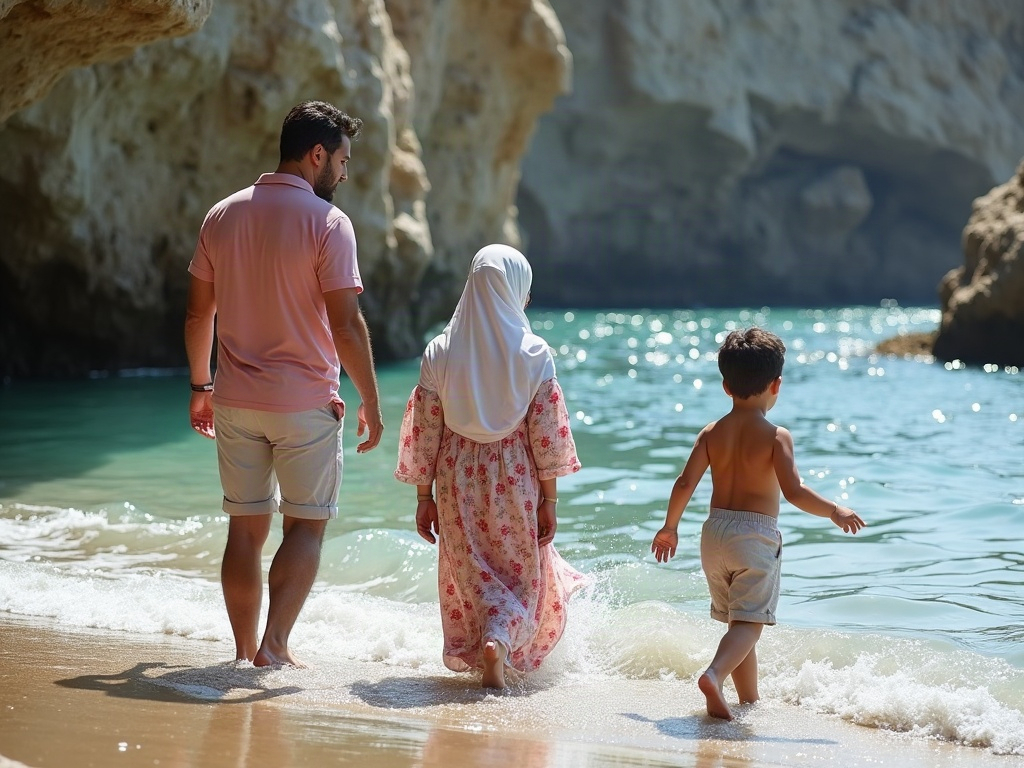
This illustration depicts how natural landforms like coves and rock formations reduce wave impact, creating calm, safe areas for tide pools.
© WovenVoyages.com
Why Are Tide Pools in Calm Waters Safer for a Family Vacation?
Tide pools in calm waters are safer for a family vacation because their geographic features—such as the protective coves of La Jolla, California or the shallow lagoons of the Algarve, Portugal—naturally dissipate wave energy, minimizing the risk of slips, falls, and unexpected currents.
At Little Corona Del Mar, a calm-water spot, “the waves are small and kids can wade into the water without too much worry.”[4]
For safety, families should always consult the National Oceanic and Atmospheric Administration (NOAA)’s Tide Predictor online before their visit.
Unique Insight: The term Fetch refers to the length of water over which a given wind has blown without obstruction. Calm-water destinations are characterized by a very short fetch, which prevents the formation of large, hazardous waves, thereby increasing safety for families.
This reduced fetch is a key characteristic that differentiates safe tide pooling environments from more exposed coastal areas.
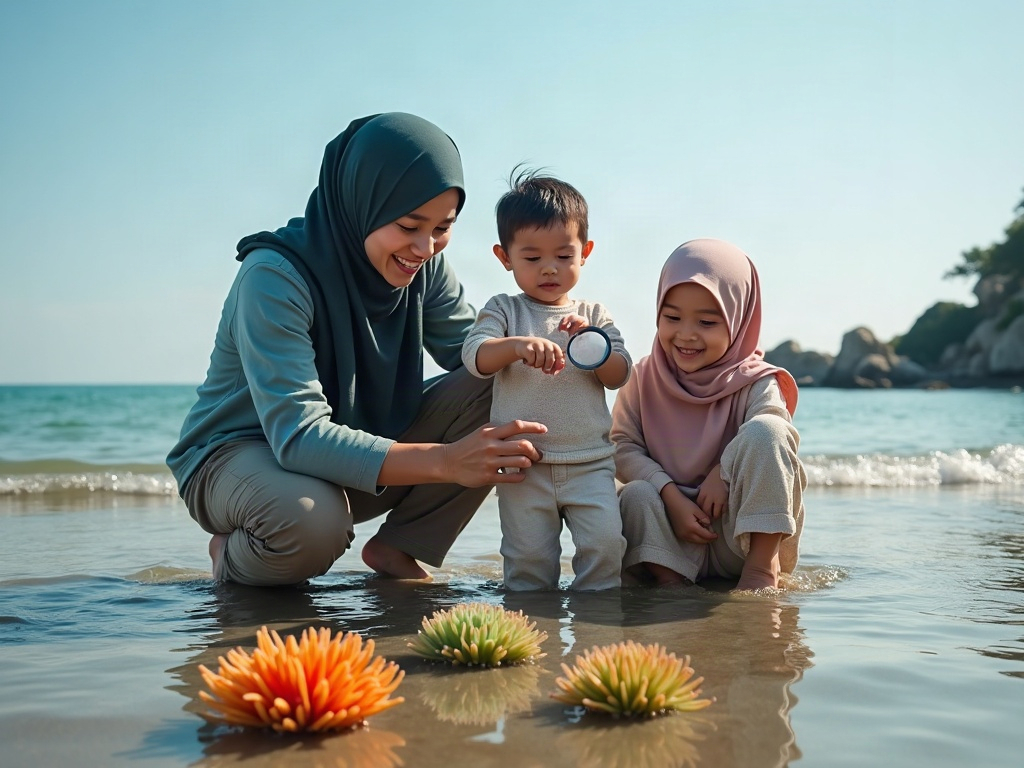
This visual guide demonstrates how geological formations like coves and rock barriers effectively mitigate incoming wave energy, resulting in the calm, protected waters essential for safe family tide pool exploration.
© WovenVoyages.com
Core Safety Advantages
- Reduced risk of sneaker waves: Protected areas naturally limit the size and unpredictability of incoming waves.
- Lower slip-and-fall potential on non-turbulent surfaces: Stable water conditions mean less slippery surfaces from constant wave wash.
- Contained marine life with fewer dangerous species: While marine life is diverse, the calmer environment often means fewer large, fast-moving, or venomous predators.
The south-facing cove of La Jolla provides exceptional wave protection, making it an ideal spot for children.
Similarly, Maui‘s fringing reefs offer natural barriers, creating serene tide pools within Kapalua Bay.
The shallow lagoons of the Algarve Coast also exemplify geologically protected conditions, ensuring a secure environment for exploration.
Understanding the overall landscape of Top Coastal Destinations for a Family Vacation can help you choose the ideal region before narrowing down to specific calm-water locations for tide pooling.
For families with very young children, exploring destinations with Shallow Lagoon Beaches for Toddlers might be an even better fit for splashing and gentle water play, complementing the tide pool experience.
What Unique Marine Life Can a Family Vacation Discover in Calm Tide Pools?
In the calm tide pools of a family vacation destination, a family can discover unique marine life that thrives in stable, low-energy intertidal zones, including sessile organisms like sea anemones and sponges, and mobile creatures like hermit crabs, sea stars, and blennies.
The tidepools at Cobble Beach at Yaquina Head Outstanding Natural Area contain remarkably varied inhabitants like sea stars, urchins, anemones, mussels, hermit crabs, shore crabs, chitons, limpets, sculpins, nudibranchs, and barnacles.[5]
Unique Insight: Sessile describes an organism that is fixed in one place and cannot move, such as a barnacle or a sea anemone, which are common and easily observable in calm tide pools, making them perfect subjects for young explorers.
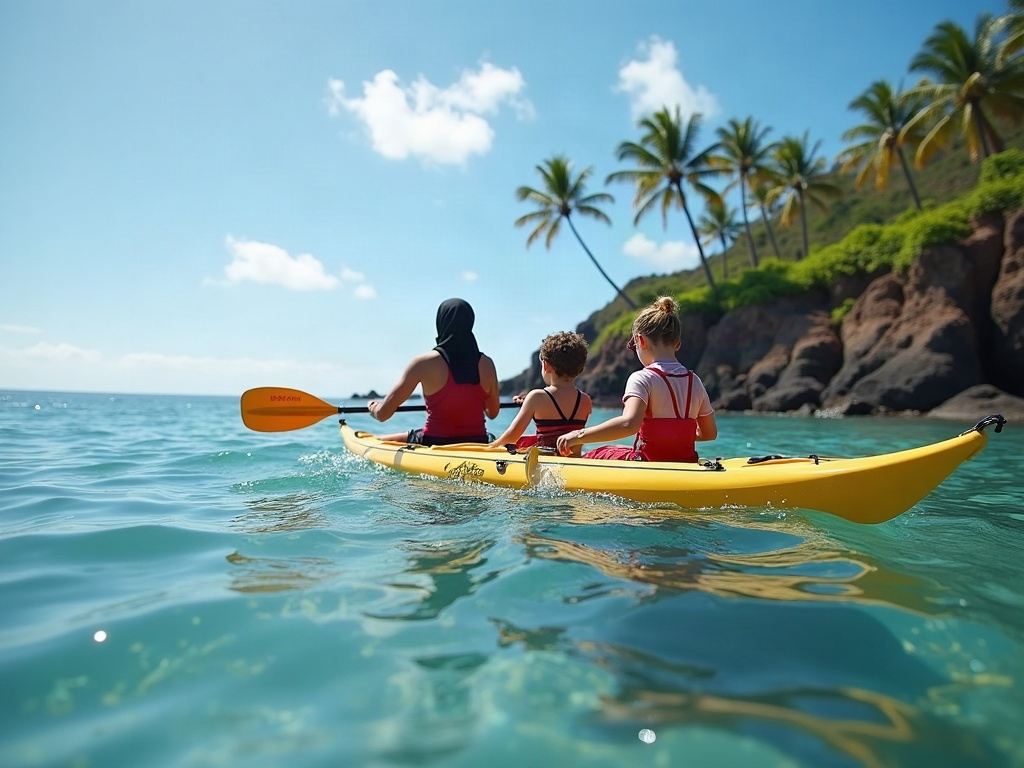
This infographic showcases several common and easily identifiable marine species thriving in calm tide pools, illustrating the rich biodiversity that families can discover.
© WovenVoyages.com
Marine Life Categories & Examples
- Crustaceans: Hermit crabs and shore crabs are often found scuttling across the rocks or within small crevices, particularly in La Jolla Cove.
- Mollusks: Limpets and various snails cling to rocks, filtering nutrients, and are abundant in the Algarve‘s rocky shorelines.
- Echinoderms: Sea stars (or starfish) and sea urchins are iconic tide pool residents, visible in the clear waters of Kapalua Bay, Maui.
- Cnidarians: Sea anemones, with their flower-like appearance, are commonly anchored to rocks in many calm-water areas, including the Florida Keys.
Beyond tide pools, if you’re interested in diverse aquatic ecosystems, you might also want to research Beach Destinations with the Best Marine Wildlife for a Family Vacation to broaden your family’s understanding of ocean inhabitants.
How Do Calm-Water Coastal Environments Support a Holistic Family Vacation Experience?
Calm-water coastal environments support a holistic family vacation experience by allowing tide pooling to be seamlessly integrated with other low-risk, high-value activities such as beginner snorkeling, shallow-water swimming, and kayaking in protected bays.
Destinations like Bahia Honda State Park in the Florida Keys offer world-class beaches and tide pools, allowing families to combine educational exploration with traditional beach activities in a single location.[1]
Unique Insight: The Intertidal Zone is the area of the marine shoreline that is exposed to the air at low tide and submerged at high tide. Calm-water destinations provide safer and more prolonged access to this zone, extending opportunities for family exploration.
Vacation Benefits
- Extended Water Activities: The calm waters are perfect for beginner snorkeling, allowing children to observe marine life in its natural habitat after exploring tide pools.
- Educational Opportunities: Many such locations are near marine centers or offer ranger-led programs, enhancing the learning experience beyond self-discovery.
- Logistical Ease: Proximity of amenities like restrooms, parking, and cafes to calm beaches makes the overall family experience more convenient and enjoyable.
Snorkeling in the clear, calm waters of Kapalua Bay, Maui, after exploring the adjacent tide pools, offers a seamless transition between activities.
The presence of accessible facilities and organized educational programs at locations like La Jolla Cove further streamlines the family outing.
While coastal destinations offer unique experiences, you might also consider what Theme Park Destinations for a Multigenerational Family Vacation can offer for a different type of holistic family experience, providing a contrast to nature-focused travel.
2. How Can a Family Choose the Best Calm-Water Coastal Destination for Tide Pool Exploration?
The best choice for a calm-water coastal destination for tide pool exploration depends on balancing biodiversity, accessibility, and the family budget.
Making an informed decision requires a systematic evaluation of several factors to ensure the destination aligns with your family’s specific needs and expectations.
A comparison table serves as a primary tool for making a data-driven decision, enabling families to weigh the pros and cons of various locations.
| Destination | Predominant Marine Life | Accessibility for Children | Best Exploration Months |
|---|---|---|---|
| La Jolla, California | Sea stars, anemones, hermit crabs, Garibaldi fish | High (protected coves, established access) | Winter (King Tides) and Summer mornings |
| Maui, Hawaii (Kapalua Bay) | Tropical fish, sea urchins, reef crabs, sea turtles | High (shallow, clear waters, fringing reefs) | Year-round, best in drier months |
| Algarve, Portugal | Mollusks, small fish, crabs, sea slugs | Medium (shallow lagoons, some rocky access) | Spring and early Fall |
| Baja California Sur, Mexico | Colorful fish, small rays, various crustaceans | Medium (some remote areas, requires guidance) | Fall and Winter |
| Florida Keys, USA | Caribbean fauna, corals, small crabs, sponges | High (limestone formations, calm inlets) | Winter and Spring |
Which Are the Top Calm-Water Coastal Destinations for a Family Vacation Focused on Tide Pools?
The top calm-water coastal destinations for a family vacation focused on tide pools are La Jolla, California; Maui, Hawaii; the Algarve, Portugal; Baja California Sur, Mexico; and the Florida Keys, USA, each offering a unique combination of accessibility and marine biodiversity.
Many of the best tide pool locations are within state or national parks; for example, Yaquina Head Outstanding Natural Area on the Oregon Coast requires a $7/vehicle entrance fee to access its world-class tide pools.[5]
Unique Insight: Bioluminescence is the production and emission of light by a living organism. Some calm-water destinations, like certain bays in the Florida Keys or Baja California Sur, offer nighttime tours to see bioluminescent plankton, adding another layer of wonder to marine exploration.
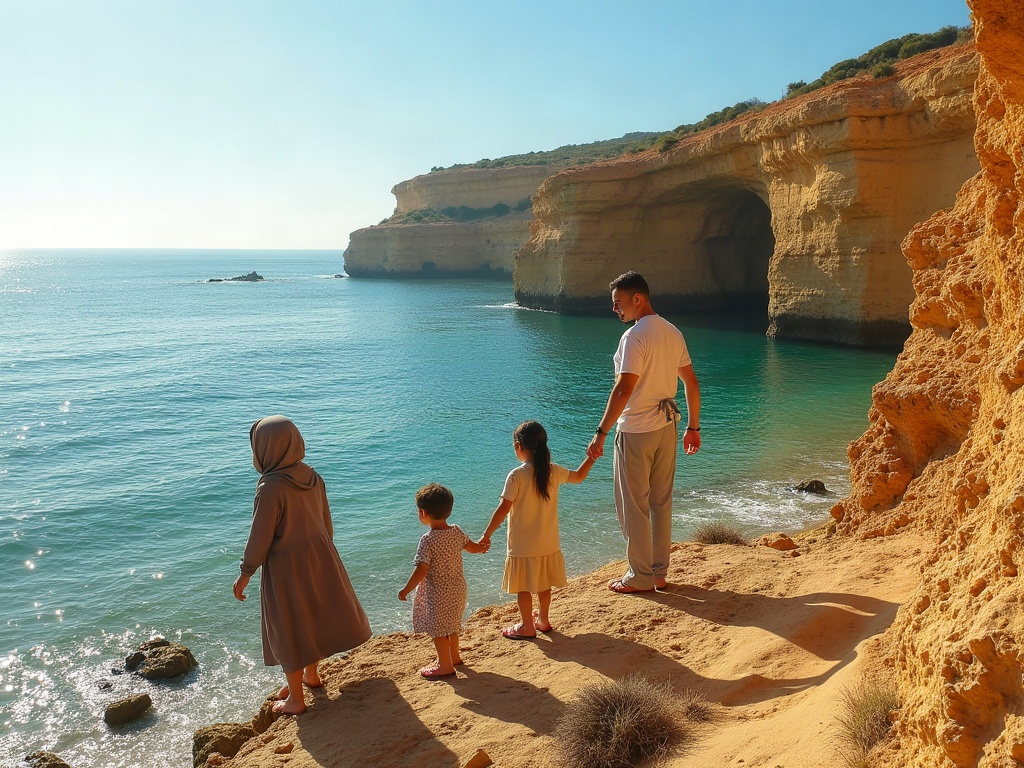
This map visually presents the geographic spread of the top calm-water tide pool destinations, making it easier for families to identify potential vacation spots.
© WovenVoyages.com
Detailed Destination Breakdown
La Jolla, California: Renowned for its protected La Jolla Cove and a high density of sea stars and anemones, it provides excellent accessibility through established pathways and clear water conditions.
Maui, Hawaii: Kapalua Bay, with its calm, shallow waters and fringing reefs, is a prime location for observing tropical fish and sea urchins in a safe environment.
Algarve, Portugal: Characterized by its stunning grottoes and accessible lagoons, the Algarve Coast offers unique geological formations and a rich diversity of mollusks and small crustaceans.
Baja California Sur, Mexico: Known for its rugged beauty and clear waters, particularly around the Sea of Cortez, where families can find vibrant fish and occasional rays.
Florida Keys, USA: Unique for their limestone rock formations and rich Caribbean fauna, offering numerous shallow, protected areas ideal for tide pooling, such as those found in Bahia Honda State Park.
How Do Different Coastal Regions Compare for Tide Pool Quality and Accessibility for a Family Vacation?
Different coastal regions compare for tide pool quality and accessibility based on their underlying geology and oceanography; for instance, the rocky Pacific Northwest offers dramatic tide pools with cold-water species, while the sandy Gulf Coast has fewer traditional tide pools but offers calm-water jetty ecosystems.
The California Coast experiences “king tides,” which boast the lowest low tides, during the winter months of November, December, January, and February, making these the best windows for tide pooling.[3]
Unique Insight: The term Substrate refers to the surface or material on or from which an organism lives, grows, or obtains its nourishment. Tide pool quality is highly dependent on a hard substrate (rock) versus a soft substrate (sand), as rocky environments generally support greater diversity.
Regional Comparisons
Pacific Coast (USA): This region, including areas like La Jolla and the Oregon Coast, boasts high biodiversity with dramatic rocky tide pools. Accessibility can sometimes be challenging due to slippery basalt rocks, requiring careful navigation.
Atlantic/Gulf Coast (USA): While traditional rocky tide pools are less common, areas like the Florida Keys and parts of the Gulf Coast offer calm-water jetty ecosystems and limestone formations, providing unique opportunities for discovery.
International (Mediterranean/Caribbean): Regions such as the Algarve and parts of Mexico’s Pacific coast present diverse marine life in sheltered bays, often with good tourist infrastructure.
For families planning a beach trip with toddlers, considering Coastal Destinations with Stroller-Accessible Beaches for a Family Vacation is crucial for ensuring ease of movement and comfort alongside tide pool exploration.
What Factors Influence the Suitability of a Calm-Water Coastal Destination for a Family Vacation with Young Children?
The factors that most influence the suitability of a calm-water coastal destination for a family vacation with young children are the physical accessibility of the tide pools, proximity to essential amenities like restrooms, and the presence of adjacent, non-tide-pool activities like sandy beaches for play.
When planning a trip with children, a tide pool adventure takes planning; for example, Little Corona is located at the bottom of a small hill, and street parking can be hard to find during busy times, which are important considerations for families.[4]
Unique Insight: Zero-Depth Entry describes a beach or pool access point that slopes gradually from the surface to deeper water, without any steps. Highlighting this as a key safety feature for toddlers at adjacent beaches significantly enhances overall family suitability.
Evaluation Criteria Checklist for Families
- Shallow Entry Points: Look for tide pools with easy, gradual access points, minimizing the risk of slips or falls for young children.
- Proximity to Restrooms/Parking: Convenient access to facilities and parking reduces logistical stress for families with small children.
- Adjacent Sandy Areas: A nearby sandy beach provides an alternative play space if children tire of tide pooling, offering diversified fun.
- Availability of Ranger-Led Programs: Guided tours can enhance the educational experience and provide a structured, safe introduction to marine life.
- Low-Density Crowds: Visiting during off-peak times or seasons can provide a more relaxed and less overwhelming experience for young children.
3. How Can a Family Maximize Their Tide Pool Experience During a Calm-Water Coastal Vacation?
Maximizing a family’s tide pool experience involves thoughtful preparation, adherence to etiquette, and strategic timing to ensure both safety and educational enrichment.
This actionable guide outlines the necessary steps to plan the perfect tide pooling excursion, transforming a simple visit into a memorable learning adventure.
By focusing on essential gear, respectful interaction, and optimal conditions, families can fully engage with the marine environment.
| Activity | Required Gear | Safety Precaution | Educational Goal |
|---|---|---|---|
| Observing Anemones | Magnifying glass | Do not touch, as human oils are harmful | Identify tentacles and mouth structure |
| Spotting Hermit Crabs | Small bucket (for temporary observation) | Handle gently, return quickly to original spot | Learn about shelter and adaptation |
| Examining Seaweed | Field guide | Avoid pulling or disturbing attached algae | Identify different types of marine flora |
| Rock Turning | Careful movement, supervision | Always return rocks to original position gently | Discover hidden organisms, understand micro-habitats |
What Essential Gear Should a Family Pack for a Tide Pool Adventure on a Calm-Water Coastal Vacation?
The essential gear a family should pack for a tide pool adventure on a calm-water coastal vacation includes closed-toe water shoes with rubber soles for grip, a small bucket for temporary observation (using the ‘catch, observe, release’ method), and a magnifying glass to inspect small organisms.
Authoritative sources like the Washington Trails Association recommend outfitting kids with waterproof boots and considering gardening gloves if you are exploring an area with barnacles.[3]
Unique Insight: A Refractometer is a simple tool used to measure the salinity (salt content) of water, which can be a fascinating educational tool for older children to see how it varies in different pools.
Tide Pooling Packing List
- Essential Footwear: Closed-toe water shoes with robust rubber soles are crucial for navigating slippery rocks and protecting feet.
- Observation Tools: A small, clear bucket for temporary observation and a magnifying glass transform passive viewing into interactive learning.
- Safety/Comfort Items: Reef-safe sunscreen, a wide-brimmed hat, first-aid kit, and plenty of water are vital for extended outdoor exploration.
- Field Guide: A field guide specific to the region (e.g., a Pacific Coast marine life guide) transforms observation into active learning.
How Can a Family Ensure Safe and Educational Tide Pool Etiquette During Their Vacation?
A family can ensure safe and educational tide pool etiquette during their vacation by adhering to the core principle of “touch with your eyes, not your hands,” walking on bare rock instead of on living organisms like mussels, and always returning any overturned rocks to their original position.
According to guidelines from the Washington Trails Association, visitors should not take home shells or animals, as they are integral components of the ecosystem.[3]
Unique Insight: Desiccation is the state of extreme dryness. Leaving an organism or the underside of a rock exposed to the sun can cause fatal desiccation for the life attached to it, emphasizing the importance of careful handling.
Tide Pool Commandments for Families
- Never turn your back on the ocean: Always be aware of incoming waves, even in calm areas.
- Step on bare rock, never on living carpets of life: Avoid trampling delicate organisms like barnacles and mussels.
- Look, but do not touch or remove any organism: Observe marine life in its natural habitat without disturbance.
- If you observe in a bucket, use water from the same pool and release the creature within minutes: Minimize stress and temperature changes for marine animals.
- Always return overturned rocks gently to their original position: This protects the organisms living underneath from exposure.
Exploring tide pools is just one way to enjoy the shore. For families interested in other ways to interact with coastal environments, consider learning about Coastal Destinations for Fossil Hunting and Shelling for a Family Vacation to discover even more treasures of the beach.
What Are the Best Times and Tidal Conditions for a Family to Explore Tide Pools?
The absolute best time for a family to explore tide pools is during a negative tide (a tide lower than the average low-water mark), specifically in the one to two hours leading up to the point of lowest tide, as this exposes the maximum area of the intertidal zone.
For the best viewing, families should consult NOAA’s Tide Predictor online and time their visit for an hour before low tide, as a negative tide exposes more tide pools.[2]
Unique Insight: A Spring Tide describes the especially high and low tides that occur during new and full moons, when the gravitational pull of the sun and moon align. These are the optimal times for tide pooling, offering the lowest low tides and maximum exposure of the intertidal zone.
Understanding Tide Charts
- High Tide: The period when the sea level is at its highest, typically covering tide pools and making them inaccessible.
- Low Tide: The period when the sea level is at its lowest, exposing the tide pools for exploration.
- Negative Tide: An exceptionally low tide that exposes areas of the intertidal zone usually underwater, offering the best viewing opportunities.
To plan effectively, search online for “[Destination Name] tide chart” and aim to visit during the lowest point of a daytime low tide.
This careful timing will reveal the richest biodiversity, ensuring a fruitful and memorable tide pooling experience.
4. What Are the Common Pitfalls of a Calm-Water Coastal Family Vacation and How to Avoid Them?
While calm-water tide pools are relatively safe, risks from slips, sun exposure, and unintentional environmental damage still exist but are easily mitigated with proper planning.
By understanding common pitfalls, families can implement specific safety and conservation measures, ensuring a positive and responsible tide pool adventure.
Structuring the approach to address physical safety, environmental hazards, and ecological impact proactively ensures a rewarding experience.
| Checklist Item / Tactic | Status |
|---|---|
| Pre-Visit Planning | |
| I have checked the NOAA tide chart for the day and time of our visit. | ⬜ |
| All family members have appropriate closed-toe water shoes with good grip. | ⬜ |
| On-Site Safety & Etiquette | |
| We will adhere to the “look, don’t touch” rule for all marine life. | ⬜ |
| We will walk only on bare rocks and avoid stepping on living organisms. | ⬜ |
| We will pack out all trash and leave no trace of our visit. | ⬜ |
How Can a Family Prevent Injuries While Exploring Tide Pools on a Calm-Water Coastal Vacation?
A family can prevent the most common injuries while exploring tide pools, primarily slips on wet rocks, by mandating that every family member wear closed-toe water shoes or sandals with high-traction rubber soles.
While tide pool bottoms can have smooth rocks, some have sharper rocks where “a good pair of water shoes would be useful” to prevent cuts and provide better gripping.[3]
Unique Insight: Algal Film refers to the thin, often invisible layer of algae that grows on intertidal rocks, which becomes extremely slippery when wet and is the primary cause of falls. Awareness of this phenomenon is key to preventing injuries.
This graphic illustrates appropriate footwear and safe movement strategies for navigating rocky, potentially slippery tide pool environments, emphasizing proper technique to prevent injuries.
© WovenVoyages.com
Injury Prevention: Issue & Mitigation
- Issue: Slips and Falls. Mitigation: Wear closed-toe water shoes or sandals with high-traction rubber soles for maximum grip.
- Issue: Cuts from sharp rocks or shells. Mitigation: Practice slow, deliberate movements and maintain awareness of surroundings; closed-toe shoes provide protection.
- Issue: Encounters with stinging organisms. Mitigation: Adhere strictly to the “look, don’t touch” rule to avoid accidental contact with jellyfish or certain anemones.
What Environmental Hazards Should a Family Be Aware of in Calm-Water Tide Pools?
Beyond slippery rocks, the main environmental hazards a family should be aware of in calm-water tide pools are intense sun exposure reflected off the water and potential contact with stinging organisms like jellyfish or the stinging tentacles of some anemone species.
When visiting tide pools, “unless you’ve brought an umbrella or some sort of tent for shade, there is typically no reprieve from the sun,” making reef-friendly sunscreen essential.[2]
Unique Insight: A Nematocyst is a microscopic, stinging, harpoon-like cell found in the tentacles of cnidarians (jellyfish, anemones, corals) that injects venom upon contact. Understanding this helps avoid contact with potentially irritating marine life.
Environmental Hazard Categories
- Atmospheric Hazards: High UV exposure and heat stress are significant concerns. Apply broad-spectrum, reef-safe sunscreen of SPF 30 or higher every 80 minutes, and wear protective clothing and hats.
- Biological Hazards: Stinging creatures and sharp shells pose risks. Educate children on identifying potentially hazardous organisms and reinforce the “look, don’t touch” rule.
How Can a Family Contribute to the Conservation of Tide Pool Ecosystems During Their Vacation?
A family can directly contribute to the conservation of tide pool ecosystems by practicing Leave No Trace principles, which means leaving all shells, rocks, and living creatures exactly as they were found and packing out all trash.
The Washington Trails Association officially states, “Please do not take home shells or animals; they are all integral components of the ecosystem,” a key rule for conservation.[3]
Unique Insight: Bio-turbation is the disturbance of sediment or substrate by living organisms. Explain that human actions, like moving rocks, are a harmful form of bio-turbation that disrupts the ecosystem and should be avoided to protect sensitive marine life.
Positive Actions for Eco-Heroes
- Leave everything as you found it: Resist the urge to collect shells, rocks, or marine specimens.
- Use only reef-safe sunscreen: Chemical sunscreens can harm marine ecosystems, even in tide pools.
- Participate in a local beach cleanup: Engage in community efforts to protect coastal environments.
- Share conservation knowledge with others at the site: Educate fellow visitors about responsible tide pooling practices.
Author’s Experience: Abdullahi Azaam
“As a marine enthusiast and parent, I’ve had the joy of exploring tide pools with my children across various continents, from the vibrant shores of La Jolla to the serene coves of the Algarve. Witnessing their awe at discovering a sea anemone or a scuttling crab in its natural, calm habitat reinforces the importance of choosing safe, biodiverse locations for family marine adventures.”
5. Frequently Asked Questions (People Also Ask)
What geological formations create calm tide pool conditions?
Calm conditions in tide pools are primarily formed by natural coves, bays, rock outcroppings, and fringing reefs that act as physical barriers against strong ocean waves.
These features dissipate wave energy, creating sheltered environments ideal for diverse marine life and safe family exploration.
What is the best way to observe a sea anemone without harming it?
The best way to observe a sea anemone without harming it is to maintain a respectful distance and avoid touching it.
Human oils can be detrimental to their delicate tissues.
Observe them with your eyes or a magnifying glass, and never attempt to remove them from their attached surface.
What is the typical cost range for a family vacation to these destinations?
The cost range for a family vacation to calm-water tide pool destinations varies significantly based on location, time of year, accommodation type, and activities.
Destinations like La Jolla, California, or Maui, Hawaii, can range from moderate to high, while some areas in Baja California Sur or the Algarve, Portugal, might offer more budget-friendly options, especially outside peak season.
Families should budget for travel, lodging, food, and potential activity fees.
Are there any dangerous creatures to watch out for in these tide pools?
While calm-water tide pools are generally safe, families should be aware of potential stinging organisms like certain species of jellyfish or anemones, whose nematocysts can cause minor irritation.
Always practice the ‘look, don’t touch’ rule and consult local marine guides or park rangers for specific warnings about indigenous species.
What Are the Final Thoughts on Maximizing a Calm-Water Coastal Destination for a Family Vacation?
A successful family tide pool vacation results from a combination of careful planning, acute safety awareness, and a deep respect for the marine environment. By choosing destinations like La Jolla, Maui, or the Algarve, and adhering to responsible exploration practices, families can create invaluable memories while fostering a love for nature and conservation.