What Are the Passport Validity Rules for Family Travel?
Table of Contents
Understanding passport validity is a critical component of successful family travel. To manage all the intricacies of travel, you’ll need a comprehensive guide on How to Plan a Family Vacation Step by Step.
Passport validity rules are crucial for family travel because a single non-compliant passport, whether for an adult or a child, results in denied boarding or entry for the entire family, causing catastrophic trip cancellation and significant financial loss. A family’s trip is contingent on every single passport meeting the requirement, making proactive validity checks non-negotiable.
2. Why Are Passport Validity Rules Crucial for Family Travel?
Given the potential for significant financial loss and trip disruption, it’s wise to consider How to Plan Travel Insurance for a Family Vacation to protect your investment.
Passport validity rules are crucial for family travel because a single non-compliant passport, whether for an adult or a child, results in denied boarding or entry for the entire family, causing catastrophic trip cancellation and significant financial loss. The rules are crucial because airlines and foreign governments strictly enforce them, and a family is only as strong as its weakest passport. Failure to comply with a destination’s validity requirements for even one family member can instantly invalidate the entire vacation at the airport check-in counter.
Passport validity rules are crucial for family travel to prevent denied boarding or entry, as even one non-compliant passport in the family can lead to the entire trip’s cancellation and significant financial losses, enforced strictly by airlines and destination countries.
The core risk for families is the “single point of failure” dynamic. Unlike a solo traveler, a family’s trip is contingent on every single passport meeting the requirement. The financial and emotional cost is amplified as the entire group’s investment is lost, not just one person’s.
“Denied Boarding” is the official action taken by an airline to prevent a passenger from boarding a flight, most commonly due to improper or invalid travel documentation like a passport that fails to meet the destination country’s validity rules.
What Happens If Family Passports Do Not Meet Validity Rules?
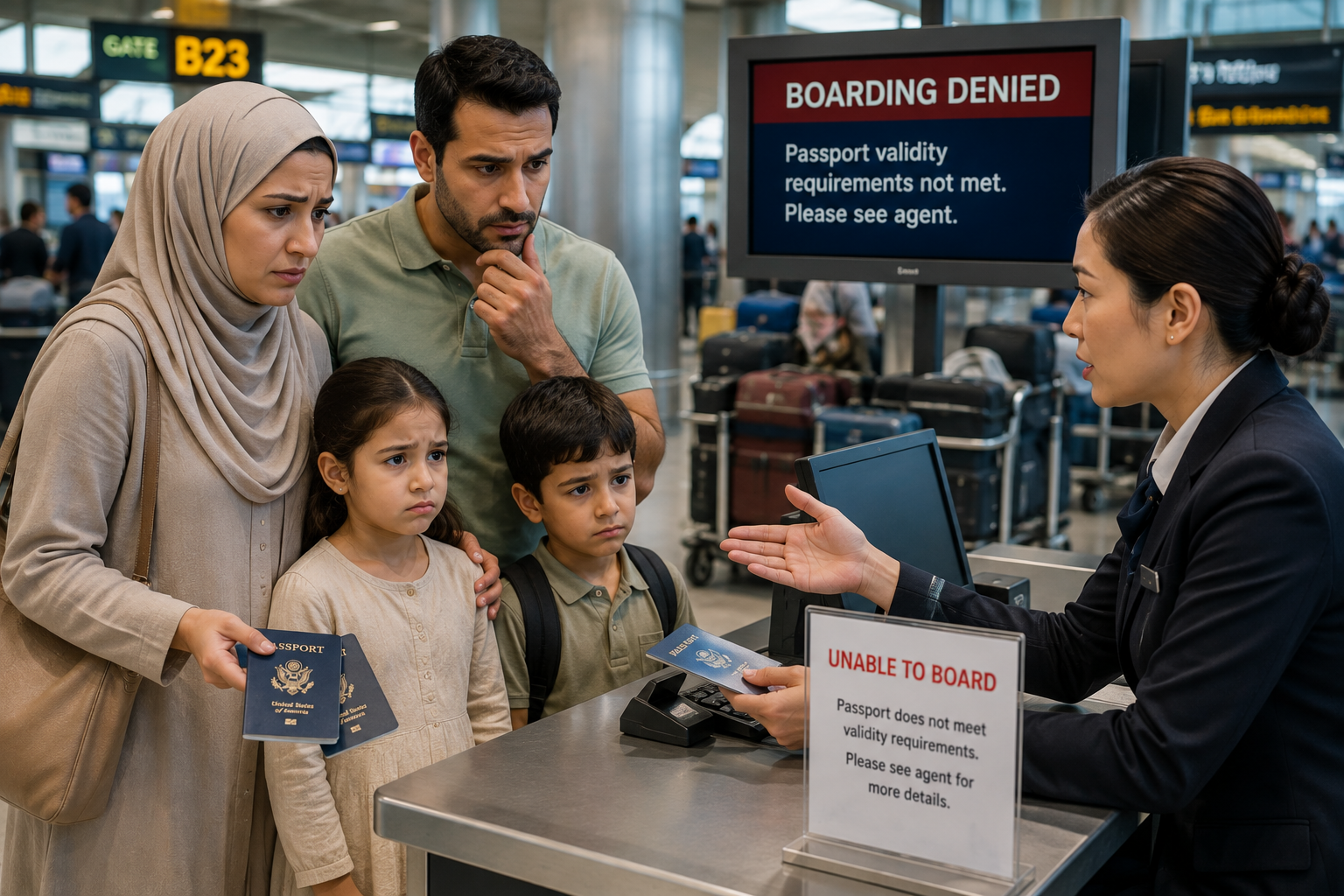
If family passports don’t meet validity rules, airlines deny boarding at departure to avoid fines, or foreign immigration officials refuse entry, leading to an immediate, self-funded return trip. The family’s entire travel plan is instantly invalidated due to the insufficient passport validity.
The financial liability shifts to the airline if they transport a passenger with invalid documents. This is why airline check-in agents are the primary enforcers and are extremely strict—they are protecting their company from fines, which makes them inflexible to traveler pleas.
In some cases, American Airlines and other airlines don’t allow passengers holding passports with a validity period of under six months to board flights to access these destinations.
Author’s Experience
“As a parent who once almost missed a crucial international flight because I overlooked a child’s passport expiration by a mere two weeks, I can attest to the sheer panic and frantic last-minute expenses involved. It taught me to build a meticulous tracking system.”
3. What Are the General Passport Validity Requirements for Families?
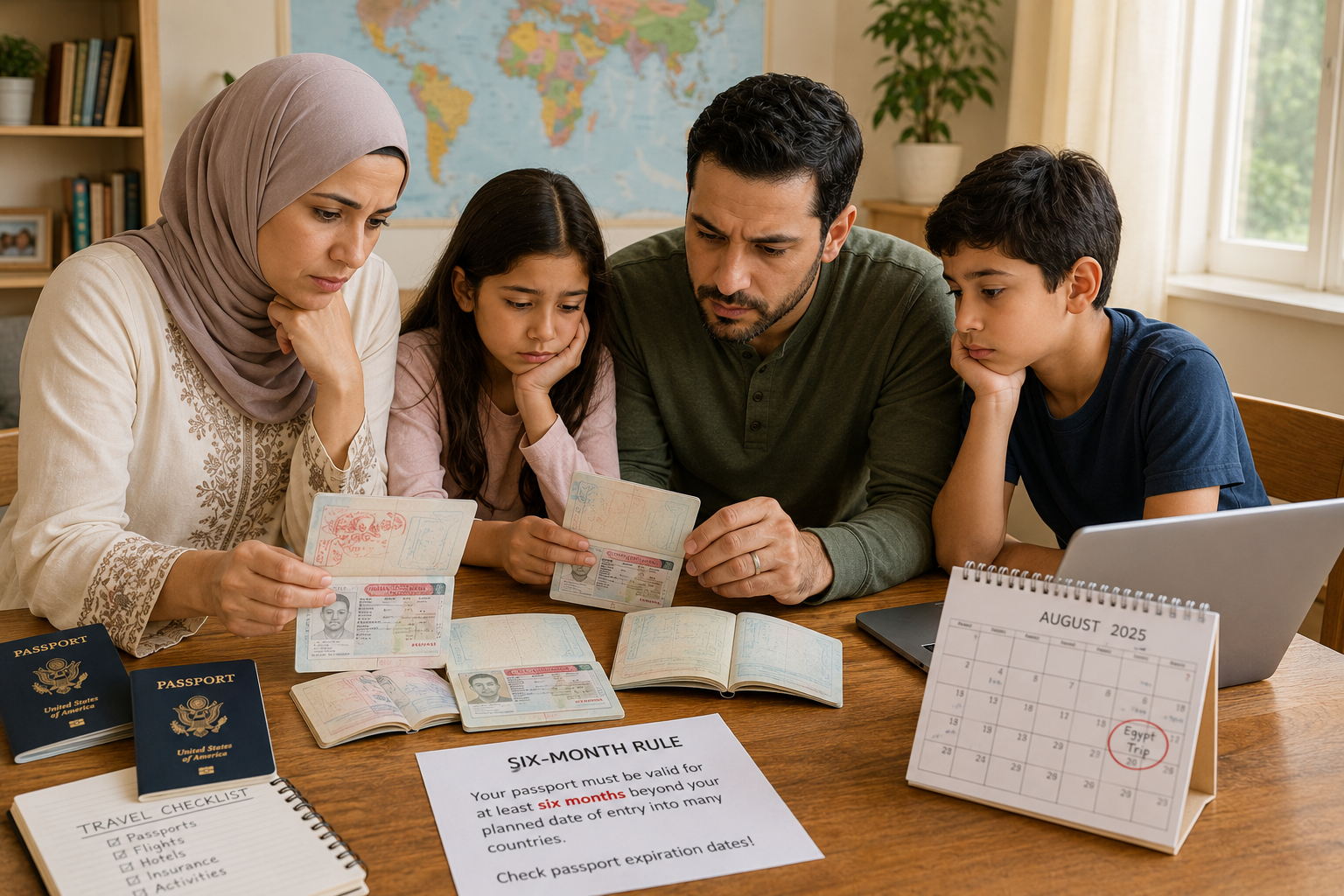
The primary general passport validity requirement for families is the “Six-Month Rule,” mandating every family member’s passport be valid for at least six months past the planned return date of an international trip to prevent denied boarding or entry.
The rule exists to account for unforeseen circumstances, such as medical emergencies, natural disasters, or travel disruptions that could extend a family’s stay abroad. A country does not want foreign nationals to have their primary travel document expire while they are still within its borders.
The “Six-Month Rule” is a common entry requirement for many countries, mandating that a traveler’s passport must have a minimum of six months of validity left from their date of entry or, more strictly, their planned date of departure.
How Does the “Six-Month Rule” Apply to Family Passports?
The Six-Month Rule applies individually to each family passport, requiring every member, including infants, to have at least six months of validity beyond the planned return date. A single non-compliant passport will jeopardize the entire family’s travel plans, regardless of others’ validity.
A common mistake is calculating from the departure date. The rule is almost always calculated from the *planned date of return*. For a two-week trip, this adds another 14 days to the required validity window, a small but critical detail.
CIBTvisas notes that numerous countries in the Asia-Pacific and Middle East regions require a U.S. passport to have at least six months of validity remaining, including mainland China, Mongolia, Vietnam, Cambodia, Laos, Thailand, Malaysia, Singapore, Indonesia, India, Israel, Egypt, and the United Arab Emirates.
4. How Do Passport Validity Rules Vary by Destination for Family Travel?
Once you grasp the varied rules, the next crucial step in your journey is determining How Do You Plan a Family Vacation Destination?
Passport validity rules for family travel vary significantly by destination. European and Asian countries often enforce a strict Six-Month Rule, while nearby destinations like Mexico and Canada may only require validity for the trip’s duration, impacting family travel planning choices.
The variation in rules often correlates with the visa policies and geopolitical relationships between countries. Destinations that are part of large economic or political blocs (like the EU’s Schengen Area) have standardized, strict rules, while bilateral agreements often lead to more lenient policies (like between the U.S. and Canada).
The “Schengen Area” is a zone of 27 European countries that have officially abolished all passport and all other types of border control at their mutual borders, creating a single jurisdiction for international travel purposes with a unified visa policy.
Which Countries Have Stricter Passport Validity for Family Visitors?
Countries with stricter passport validity for family visitors include the Schengen Area nations, the UK, China, India, and the UAE, which rigorously enforce the six-month validity rule and sometimes require a minimum number of blank passport pages for entry.
The “blank pages” requirement is a common secondary rule in stricter countries. Destinations like South Africa or China may deny entry not just for validity but also if a passport lacks 2-4 consecutive blank pages for entry and exit stamps, a crucial detail for frequent family travelers.
Delta Airlines notes that countries within the Schengen Area, such as France, Germany, and Italy, require your passport to be valid for three months beyond your intended departure date, while many other countries like mainland China and Thailand enforce a stricter six-month validity rule.

5. Which Passport Validity Period Applies to Children Versus Adults in a Family?
For family travel, adult passports are valid for 10 years, whereas children’s passports (under 16) are only valid for five years. This shorter validity period for minors necessitates more frequent renewal and careful monitoring by parents to avoid trip disruptions.
The five-year validity for children’s passports exists because a child’s physical appearance changes rapidly. The shorter renewal cycle ensures the passport photo remains a reasonable likeness of the child, a key security feature for preventing international parental child abduction.
A “Minor” in the context of U.S. passports is any individual under the age of 16. This age cutoff determines the validity period (5 years) and the more stringent application requirements (e.g., parental consent).
Are There Different Rules for Renewing a Child’s Passport Validity for Family Trips?
Beyond renewal rules, you might be wondering about the initial requirements: Do Children Need Passports for a Family Vacation?
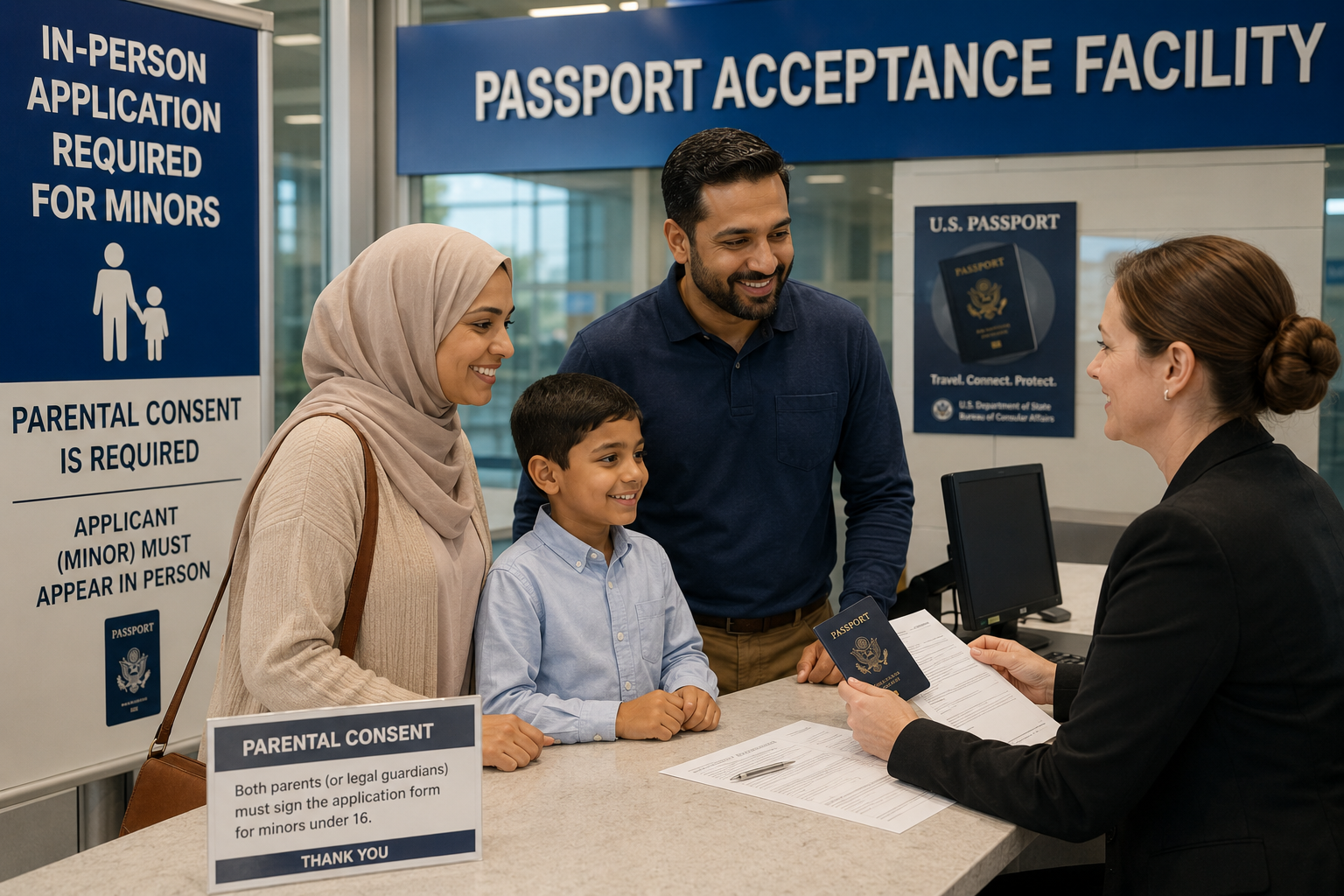
Yes, child passport renewals for family trips are stricter than adult renewals; minors cannot renew by mail, requiring an in-person application at a passport acceptance facility with the child, plus proof of parental relationship and consent from both parents.
This isn’t a simple renewal; every 5 years, it’s treated as a new application. The previous passport must be submitted, but the process mirrors a first-time application, requiring an original birth certificate to re-establish parental rights at each renewal.
According to USA.gov, a U.S. passport for a child under age 16 is only valid for five years, unlike an adult passport which is valid for 10 years.
6. How Can Families Effectively Check and Manage All Passport Validity?
Effective passport management is just one part of your broader Family Travel Document Planning.
Families can effectively manage passport validity by creating a centralized digital record for all family members’ passport data (name, number, dates) and setting calendar alerts 12-18 months before each expiration date, allowing ample time for renewal without stress.
The “12-18 month” alert window is key. It’s not just about the renewal processing time; it’s about the booking window. Families often book major international trips 9-12 months out. An alert at this time prevents you from booking a non-refundable trip with a passport that will be invalid by the travel date.
A “Digital Copy” is a scanned image or clear photograph of the main information page of each passport, stored securely in the cloud (e.g., Google Drive, Dropbox) or on a phone, serving as a critical backup if a physical passport is lost or stolen during travel.
What Is the Best Timeline for Families to Check Passport Expiration Dates Before Travel?
Aligning passport renewal with your broader travel plans is essential. Consider how this fits into How to Plan Booking Timelines for a Family Vacation.
The optimal timeline for families to check all passport expiration dates is 9 to 12 months before any planned international travel. This buffer allows sufficient time for routine renewals for multiple family members, avoiding costly expedited services and aligning with major booking windows.
The 9-12 month timeline aligns with three critical cycles: 1) Standard passport renewal times (can be up to 3 months), 2) Peak international vacation booking windows, and 3) The required 6-month validity period itself. It systematically de-risks the entire process.
7. What Steps Should Families Take to Renew Passports for an Upcoming Trip?
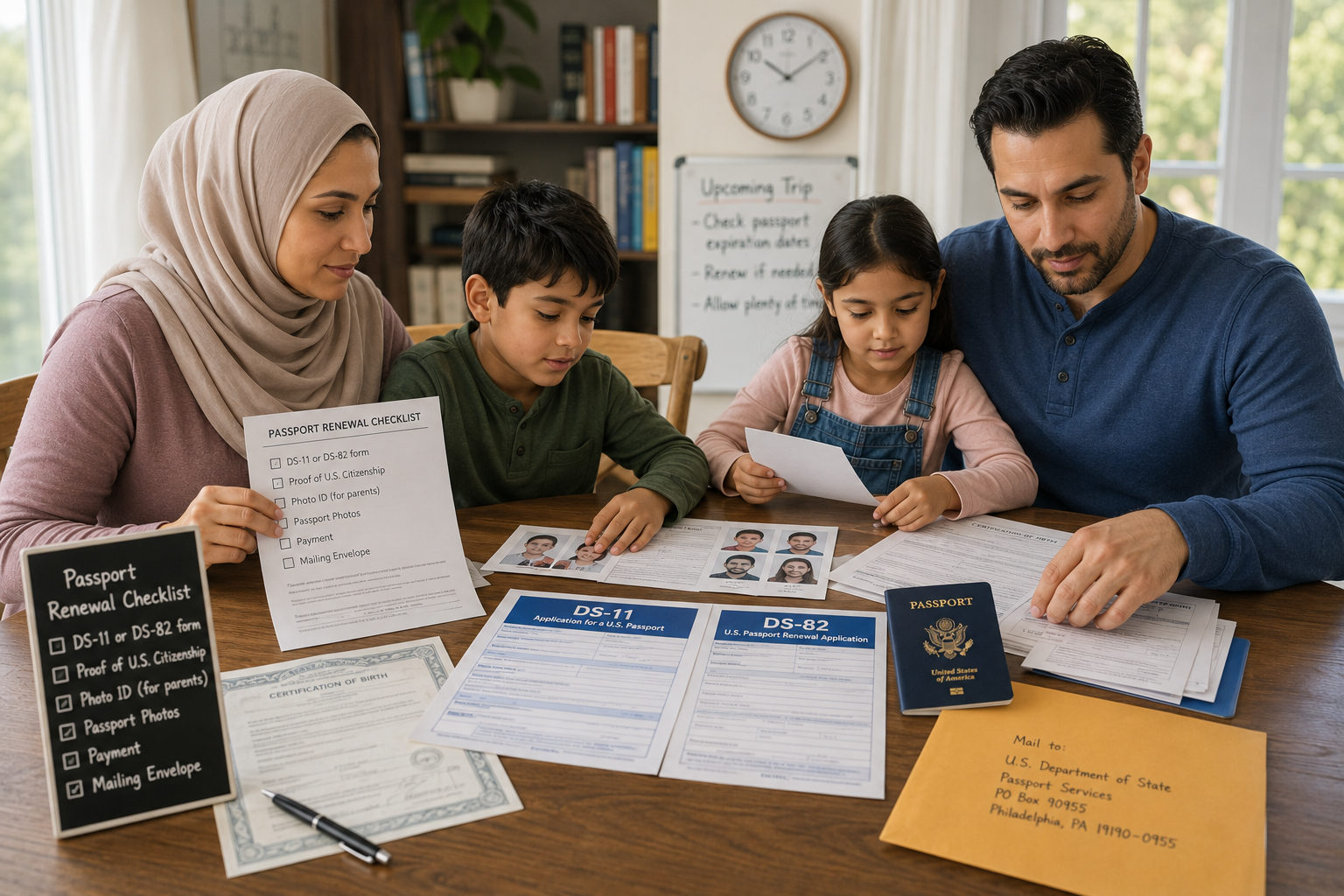
To renew family passports, first categorize members by adult (mail-in DS-82) or minor (in-person DS-11). Then, gather documents, take new photos, complete appropriate forms, and submit applications with fees either by mail or during a scheduled in-person appointment.
A common mistake is using a single check for multiple applications. Each passport application is a separate transaction and requires its own payment. Bundling payments can lead to the entire batch of applications being rejected.
A “Passport Acceptance Facility” is an authorized location (often a Post Office, public library, or municipal office) where first-time passport applicants and all minors must submit their application in person before a certified agent.
How Do Families Expedite Passport Renewals for Urgent Travel?
Families can expedite urgent passport renewals by paying an extra government fee for expedited service, or for very immediate needs, by securing an in-person appointment at a regional passport agency, often requiring proof of imminent international travel.
The “proof of travel” is the key that unlocks emergency services. You cannot get an urgent appointment without a confirmed itinerary (flight or cruise booking) showing international travel within 14 days. This creates a high-stakes situation where you must often book a trip before you know for sure if your passport will be ready.
8. What Common Passport Validity Mistakes Should Families Avoid?
Families should avoid common passport validity mistakes like assuming children’s passports have 10-year validity, miscalculating the six-month rule from the departure date instead of return, and failing to research specific destination rules. These errors can lead to denied travel.
Another subtle mistake is overlooking a child’s “milestone” birthday. If a child turns 16, they are now eligible for a 10-year adult passport. Renewing just before they turn 16 means getting another 5-year passport, whereas waiting until after their birthday grants them a 10-year one, saving a renewal cycle.
A “Passport Card” is a wallet-sized travel document that is cheaper and more portable than a passport book. Crucially, it is ONLY valid for land and sea travel to Canada, Mexico, Bermuda, and the Caribbean and is NOT valid for any international air travel.
How Do Families Prevent Denied Entry Due to Insufficient Passport Validity?
Families prevent denied entry due to insufficient passport validity by universally adhering to the Six-Month Rule for all passports and verifying specific country entry requirements, including blank pages, directly on official government travel advisory websites before booking any travel.
Do not rely on information from travel blogs, forums, or even the airline’s website as the single source of truth. These can be outdated. The only true authority is the destination country’s own immigration ministry or the official travel advisory website of your home government (e.g., U.S. Department of State).
LegalShield advises that if parents share custody, carrying proper documentation, including potentially a court order or notarized consent, is vital to prevent denied entry or delays when traveling internationally with a minor.
9. How Can Families Resolve Urgent Passport Validity Problems Before Departure?
Families facing urgent passport validity problems before departure must immediately pursue emergency options: either securing an in-person appointment at a regional passport agency (requiring proof of imminent travel) or engaging a registered passport courier service for a substantial fee.
These emergency appointments are not a secret back-door; they are a formal system for life-or-death emergencies and then, if available, for urgent travel (with proof). The appointment supply is extremely limited and requires persistence to secure one through the official phone system.
A “Registered Courier Service” is a private company, authorized by the U.S. government, that can submit expedited passport applications on behalf of customers. They cannot get a passport any faster than an individual at an agency can, but they offer a service of waiting in line and managing the submission process for a high fee.
What Are the Options for Emergency Passport Services for a Family?
For families, emergency passport options include securing an in-person appointment at a government passport agency (requiring proof of urgent travel within 14 days) or hiring a registered passport expediting courier service for a premium fee.
There is no “family appointment.” Each person needing a passport, even an infant, requires their own appointment slot. Securing four or five simultaneous slots for a family at an agency for the same day is practically impossible, which is why renewals for children often must be handled well in advance.
10. Checklists for Family Passport Validity
| Checklist Item / Tactic | Status |
|---|---|
| Create a Master List: Compile every family member’s name, passport number, issue date, and expiration date. | ⬜ |
| Set Calendar Reminders: Set digital alerts for 12-18 months prior to each passport’s expiration date. | ⬜ |
| Adopt “Check Before You Book” Policy: Verify all passports meet the Six-Month Rule before booking any international travel. | ⬜ |
| Secure Digital Copies: Store scanned images or photos of passports securely online as backup. | ⬜ |
| Teach Passport Responsibility: Educate older children about their passport’s importance and expiration. | ⬜ |
| Checklist Item / Tactic | Status |
|---|---|
| Adult Renewal (DS-82 Mail-in): Gather previous passport, new photo, and fee; mail application. | ⬜ |
| Minor Renewal (DS-11 In-person): Schedule appointment at acceptance facility with child and both parents; bring birth certificate, previous passport, new photo, and fee. | ⬜ |
| Separate Payments: Ensure each passport application has its own payment, do not bundle checks. | ⬜ |
Sources
- https://cibtvisas.com/blog/us-passport-validity-guide
- https://www.usa.gov/travel-documents-children
- https://www.legalshield.com/blog/travel-laws-for-minors-what-parents-need-to-know
- https://www.aa.com/i18n/travel-info/international-travel/international-travel.html
- https://www.delta.com/us/en/children-infant-travel/country-specific-regulations
Resolution
The final and most critical thought on passport validity rules for family travel is that proactive, meticulous management is the only strategy that guarantees a successful start to an international vacation. Ultimately, the responsibility for ensuring every family member’s passport is valid rests with the parents and trip planners. By creating a simple tracking system and adhering to the Six-Month Rule, you can eliminate the single greatest non-medical risk to your international family vacation.
Viewing your family’s passports not as individual documents but as a single, interconnected “travel portfolio” is the key mindset shift. The entire portfolio must be in perfect order for the investment (your vacation) to be safe.