How Do You Plan the Travel Documents for a Family Vacation?
Table of Contents
Plan and travel documents are crucial for a family vacation’s success because they serve as the foundational layer of legal compliance, health preparedness, and logistical smoothness, directly preventing trip-ending disruptions.
This comprehensive guide on travel documents is an essential part of understanding how to plan a family vacation step by step, ensuring every aspect of your trip is covered from start to finish.
2. Why Are Organized Travel Documents Crucial for a Family Vacation’s Success?
Meticulously organized travel documents are the cornerstone of a successful family vacation, ensuring you can legally cross borders, prove guardianship of minors, and access emergency medical care. This preparation mitigates the significant financial and emotional risks associated with denied boarding, entry refusal, or legal challenges abroad.
Beyond simple entry, organized documents act as a family’s “legal and medical resume” for foreign authorities. A complete file demonstrates responsible guardianship and preparedness, which can de-escalate scrutiny at border crossings, especially for families with different last names or single parents.
**Proof of Relationship:** A collection of documents (e.g., birth certificates, adoption papers) used to formally establish the legal relationship between an adult and a minor, a requirement that is increasingly scrutinized by border officials to prevent child trafficking.
What Risks Does Poor Document Planning Pose for Family Travelers?
The primary risks of poor document planning are logistical, legal, and medical crises during your vacation. These range from having a passport with insufficient validity leading to denied boarding to lacking a consent letter, which can trigger child abduction investigations at a border.
Beyond trip cancellation, poor planning for children traveling alone can lead to extra costs, as most airlines have mandatory unaccompanied minor services for children aged 5-11 with fees that are typically $50-150 each way.
A less-obvious risk is insurance invalidation; some travel insurance policies may refuse to cover losses (e.g., a cancelled trip) if the cause was a foreseeable documentation error, such as an expired passport.
Author’s Experience
“As a parent, I’ve learned that a disorganized document can unravel an entire trip. Once, forgetting a child’s medical consent form nearly delayed urgent care abroad. That scare solidified my commitment to meticulous planning, ensuring every family vacation is smooth and worry-free. It’s a small effort for immense peace of mind.”
3. What Core Identity Documents Do All Family Members Need for Travel?

For any international family vacation, every traveler, regardless of age, must have a valid passport. For domestic air travel within the U.S., adults will need a REAL ID-compliant driver’s license or other accepted photo ID, while rules for minors vary. Delving deeper into this topic can help clarify whether children need passports for a family vacation, a common question for parents preparing for international trips.
The “Passport Card” is a common point of confusion. It is a valid identity document but is only acceptable for land and sea travel to specific North American destinations (Canada, Mexico, Caribbean, Bermuda), not for international air travel. This distinction is critical for family cruise vs. flight planning.
**REAL ID Act:** A U.S. federal law that sets minimum security standards for state-issued driver’s licenses and ID cards. After the enforcement deadline, standard licenses are not accepted for federal purposes, including boarding domestic flights.
How Do Passports and IDs Vary for Different Family Members?
The main variations concern validity and application. An adult passport is valid for 10 years, whereas a passport issued to a minor under 16 is only valid for 5 years, requiring more frequent renewal. Furthermore, obtaining a passport for a minor requires the consent of both parents.
For domestic travel, TSA does not require ID for minors under 18; however, for adults, beginning May 7, 2025, a REAL ID or another acceptable form of identification will be required for domestic flights.
The “Two-Parent Consent Rule” for U.S. minor passports is strict. If one parent cannot appear, they must provide a signed, notarized consent form (DS-3053). This is a critical planning step for divorced, separated, or single-parent families.
4. What Are the Specific Legal and Consent Document Needs for Traveling with Minors?
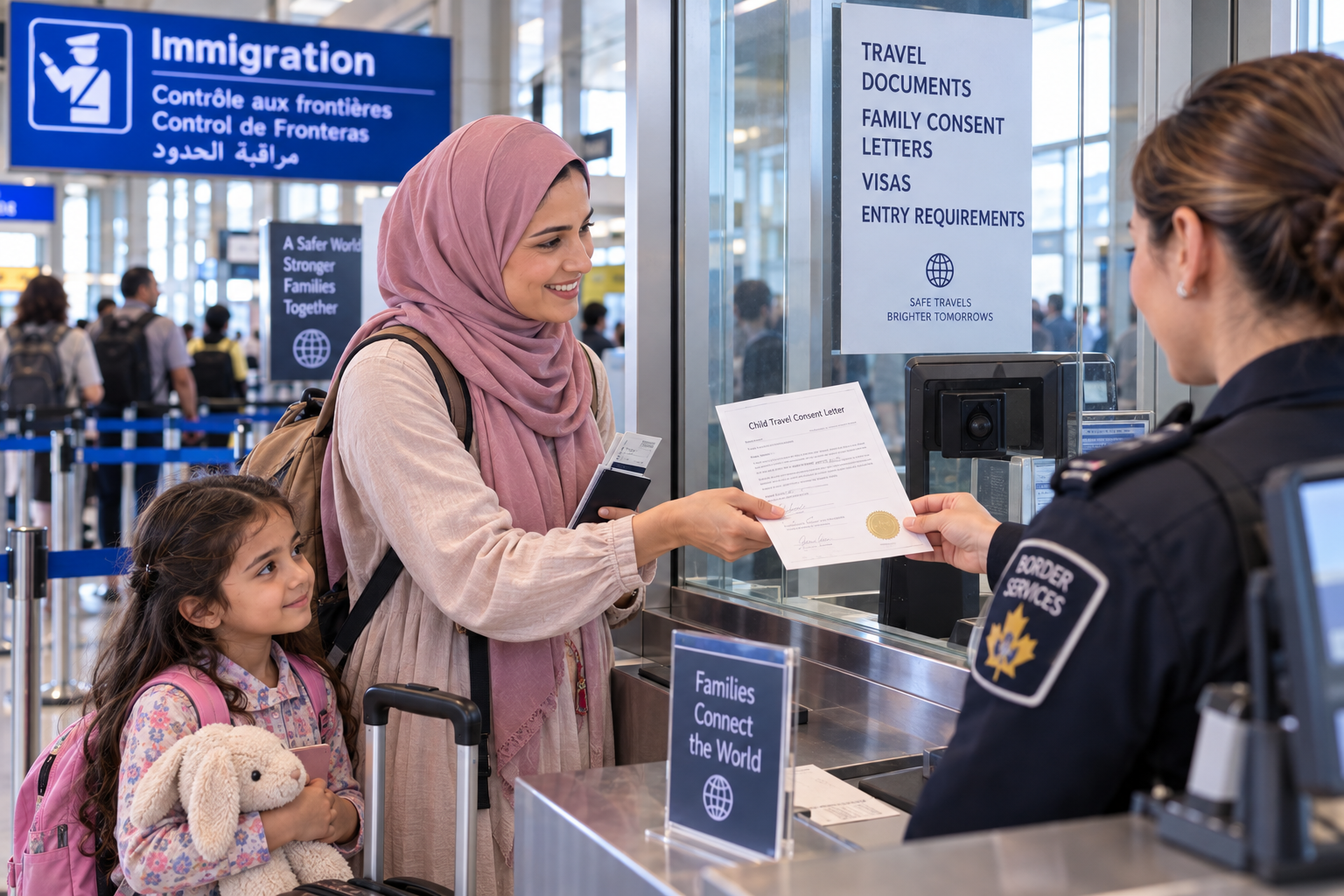
When traveling internationally with a minor without both parents present, you must have a notarized Child Travel Consent Letter from the non-traveling parent(s). Additionally, carrying copies of birth certificates or adoption decrees is a best practice to prove your relationship to the child if questioned by border officials.
The specificity of the consent letter matters. A generic letter is good, but a great letter includes detailed information: the traveling parent’s name, the child’s name, destination, specific travel dates, and contact information for the non-traveling parent. This level of detail removes ambiguity for border agents.
**Notary Public:** A public officer constituted by law to witness the execution of certain private documents, like consent letters, to attest to their authenticity. A notarized document carries significant legal weight.
When Do You Need a Child Travel Consent Letter for Your Family Vacation?
A Child Travel Consent Letter is mandatory for most international travel when a minor is accompanied by only one parent or no parents. This legal document, signed by the non-traveling parent(s) and notarized, grants permission for the trip and is a critical tool to prevent border delays or accusations of child abduction.
The need for consent letters and unaccompanied minor procedures is significant, as around 7 million minors travel alone in the United States each year.
Even in cases of sole custody, carrying a copy of the court order demonstrating this is more effective than traveling without any documentation. For parents whose last name differs from their child’s, this letter combined with a birth certificate is a crucial combination.
5. Which Health and Medical Documents Should You Prepare for Different Family Vacation Types?
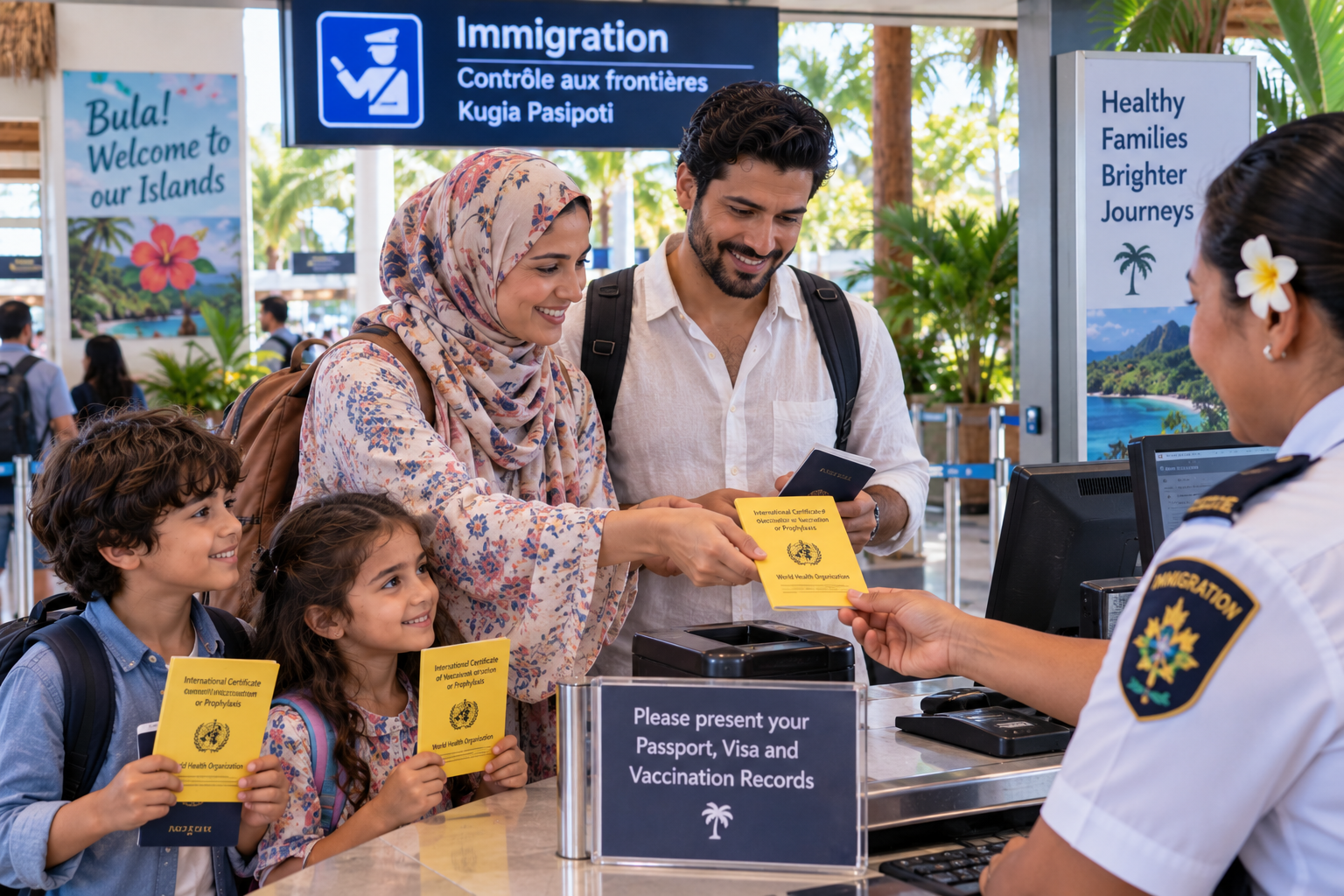
For any family vacation, carry copies of health insurance cards and a list of routine medications and allergies for each family member. For international trips, add vaccination records, doctor’s notes for prescription medications, and potentially a destination-specific health declaration form. Understanding these document requirements is a key component of learning how to plan for family vacation health needs comprehensively.
The format of a doctor’s note is critical for international travel. It should not only authorize the carrying of prescription medication but also list the generic name of the drug, as brand names vary globally and may not be recognized by foreign customs officials.
**Prophylaxis:** Medical action taken to prevent disease. In travel, this refers to specific vaccinations or medications (like for malaria) required or recommended before visiting a region where certain diseases are endemic.
How Do Vaccination Records and Medical Histories Impact International Family Travel?
Many countries require proof of vaccination for diseases like yellow fever for entry, making your family’s vaccination records a non-negotiable travel document. A detailed medical history is also crucial for getting proper treatment in an emergency, especially for family members with chronic conditions or severe allergies.
Be sure to see your physician 4-6 weeks before travel, as some required vaccines need multiple injections that must be administered over a specific period of time.
The “Yellow Card,” or International Certificate of Vaccination or Prophylaxis (ICVP), is an official, WHO-regulated document. For travel to certain parts of Africa and South America, this is as important as a passport and must be presented at immigration.
6. What Visa and Entry Requirements Apply to Your Family’s Specific Destination?
To determine your family’s entry requirements, you must consult the official embassy or consulate website of your destination country for your specific citizenship. Some countries require a full visa applied for in advance, while others, like the U.S. (ESTA) or Canada (eTA), use a simpler online authorization system for visa-waiver countries. The visa and entry requirements are a major factor to consider when deciding how to plan your family vacation destination, as these can vary significantly by country.
A critical error is assuming a visa-free agreement for adults automatically applies to a family trip. Every single family member, including infants, must individually qualify and have their own separate visa or eTA if required. There is no such thing as a “family visa” for tourism in most cases.
**Visa-Waiver Program (VWP):** A program that allows citizens of specific countries to travel to a destination for tourism or business for up to 90 days without having to obtain a traditional visa. Travel under the VWP requires an eTA.
Where Can Families Verify Current Destination-Specific Travel Document Compliance?
The most authoritative sources for verifying travel document compliance are twofold: the official embassy or consulate website of the country you are visiting, and the travel advisory website of your own government (e.g., the U.S. Department of State). Cross-referencing these two sources ensures you have the most accurate and current information.
It’s critical to verify compliance because rules can change; for example, beginning May 7, 2025, any U.S. traveler 18 years and older who flies domestically will need a REAL ID-compliant license.
A pro-tip is to also check the “Timatic” database via an airline’s website. Airlines use this database to determine if a passenger has the correct documents for travel, so checking it in advance lets you see the exact information the airline agent will see at check-in.
7. How Can Families Efficiently Organize and Secure All Travel Documents for a Vacation?

To organize your family’s travel documents, create both physical and digital copies of every document. Keep the originals in a dedicated, waterproof travel organizer, store physical copies in a separate piece of luggage, and save encrypted digital copies to a secure cloud folder accessible via your phone. For comprehensive guidance on what to bring and how to pack it efficiently, including all your important papers, you can refer to our guide on how to plan what to pack for a family vacation.
The “two-adult” system is a best practice for security. One adult carries the primary folder with all original passports and visas. The second adult carries a backup folder with physical photocopies and has primary access to the digital copies, ensuring redundancy if one person’s bag is lost or stolen.
**Encrypted Cloud Storage:** An online data storage service that scrambles your data, making it unreadable without a specific key or password. This is the minimum security standard for storing digital copies of sensitive documents like passports.
What Digital and Physical Copies of Family Travel Documents Should You Prepare?
For every family member, prepare at least two physical photocopies and one digital copy of their passport photo page, any visas, and the child travel consent letter. Also include copies of birth certificates (to prove parent-child relationships) and the front and back of credit cards and health insurance cards.
If your passport is lost or stolen while abroad, having access to a copy will greatly speed up the process of obtaining a new one; a temporary passport can often be issued within 24 hours if you have the proper documentation prepared.
When making digital copies, don’t just take a photo. Use a scanner app on your phone (like Adobe Scan or the native Notes app on iOS) to create clean, high-resolution PDF files. These are more professional and legible than a simple photo if you need to present them to an embassy or official.
8. What Steps Should Families Take to Renew or Obtain New Passports and Visas?
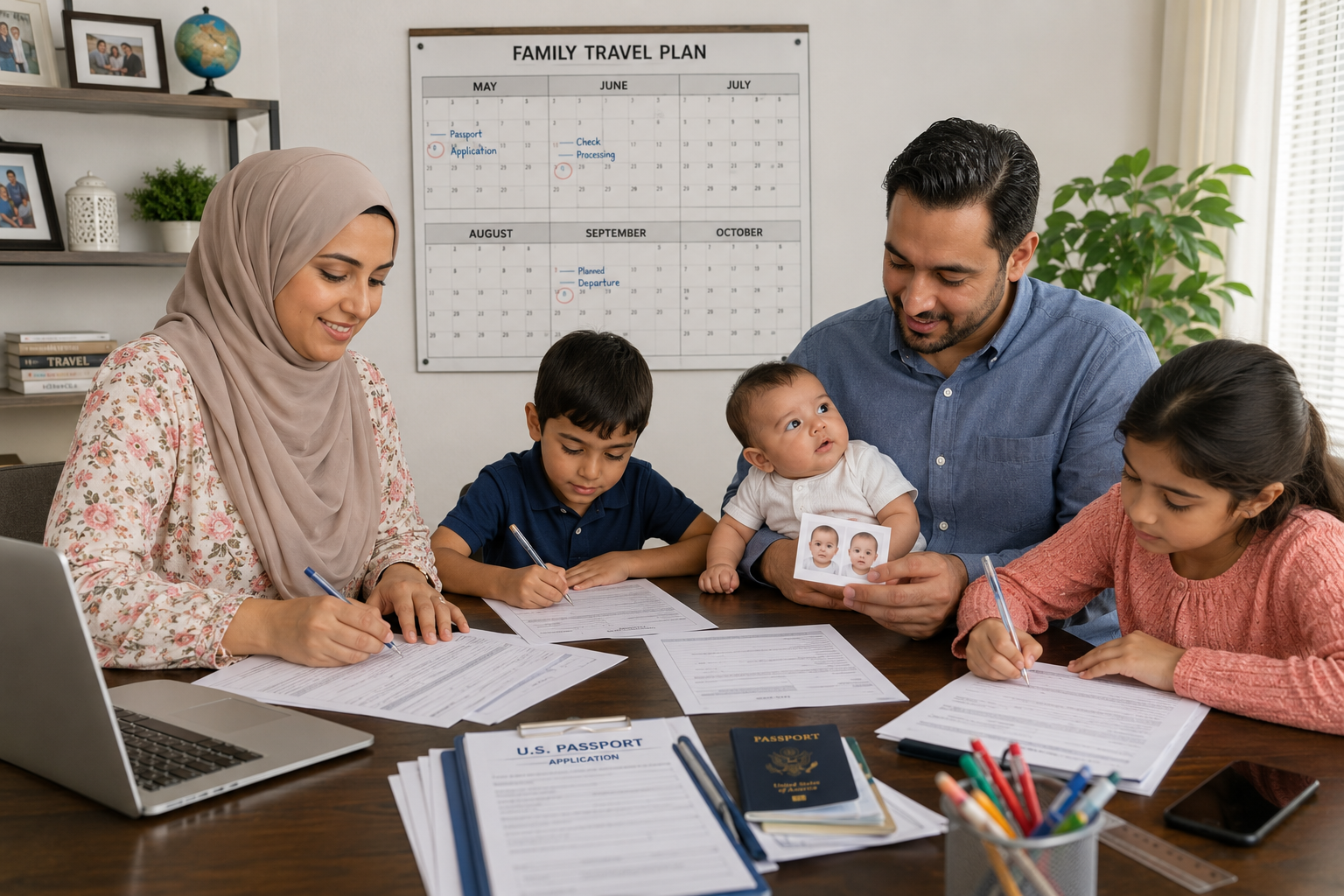
To get new passports or visas, first check all expiration dates, noting the shorter 5-year validity for children’s passports. Then, use official government websites to download the correct forms, gather required documents like birth certificates, get compliant photos, and submit the complete application package for each family member, allowing for extended processing times.
A common family mistake is with photos. A child’s passport photo must be taken within the last 6 months, and for infants, it’s notoriously difficult. The photo must show their eyes open with no one else in the picture; a pro-tip is to lay the baby on a plain white sheet on the floor and take the photo from above.
**Passport Acceptance Facility:** An authorized location (often a Post Office or public library) where you can submit a new passport application in person. First-time applicants and all minors under 16 must apply at one of these facilities.
How Far in Advance Should Your Family Apply for Travel Documents to Avoid Delays?
To avoid stressful delays, check all passport expiration dates the moment you begin thinking about a trip. Apply for new or renewed passports a minimum of six months before travel; for complex visas, the process can take just as long, so start the research and application process at the same time.
The requirement for some countries is that your passport must be valid for at least six months beyond your planned travel dates.
The “6-month validity rule” is a critical factor. Many countries will not admit a traveler if their passport expires within six months of their planned departure *from that country*. Therefore, a passport is effectively “expired” for international travel purposes long before its printed expiration date.
9. How Can Families Prevent Common Travel Document Mistakes Before Vacation?
The most effective way to prevent travel document mistakes is to perform a final audit 1-2 weeks before your trip. Verify that all passports are valid for 6 months post-travel, that the names on tickets exactly match the names on passports, and that you have the required notarized consent letters if applicable.
A frequently overlooked mistake is related to maiden names. If a mother’s passport is in her maiden name but her children’s is in their father’s, or tickets were booked under a married name, this discrepancy can cause issues. It’s best to ensure all documents and bookings are consistent, or travel with a marriage certificate to prove the connection.
**Name Consistency:** The requirement that the name on a passenger’s government-issued ID must be an exact match to the name on their travel reservations (flight, cruise, hotel). Even minor discrepancies can cause delays or denied boarding.
What Are the Most Overlooked Document Details for Family International Travel?
Beyond validity dates, two frequently overlooked details are the number of blank passport pages and transit visas. Some countries require travelers to have two to four blank pages in their passport for entry stamps, and a connecting flight in a third country may require a separate transit visa, even if you don’t leave the airport.
An often-overlooked detail involves specific medications; for example, there are some inhalers that are legal in the U.S. but are illegal in Japan.
The “blank pages” rule is enforced strictly. If a passport is full, it is considered invalid for travel to these destinations, regardless of the expiration date. This can be a major issue for frequent travelers, and families should check the requirements of their specific destination.
10. What Should Families Do if Travel Documents are Lost or Stolen During a Trip?
In the event of lost or stolen travel documents abroad, immediately file a report with the local police to get an official record of the event. With that report, contact your country’s nearest embassy or consulate to report the loss and begin the process of applying for an emergency travel document to allow your family to return home.
The digital and physical copies you prepared are now invaluable. The copies will not get you on a plane, but they contain all the necessary information (passport numbers, issue dates) that the embassy will require to verify your identity and issue an emergency passport, dramatically speeding up the process.
**Emergency Passport (Limited-Validity Passport):** A temporary travel document issued by an embassy or consulate when an applicant’s regular passport is lost or stolen abroad. It is typically valid only for the direct return journey to the home country.
How Do Embassies and Consulates Assist Families with Lost Travel Documents Abroad?
When you lose your travel documents, your country’s embassy or consulate becomes your primary lifeline. Their consular officers will guide you through the application for an emergency passport (Form DS-11 and DS-64 for U.S. citizens), which requires proof of identity (your copies are key) and a new passport photo.
In an emergency, a temporary passport can usually be issued within 24 hours, and it is typically valid for up to a year after its issuance.
Embassies operate on a specific schedule and are often closed on local and home-country holidays. A critical part of the process is checking their hours of operation and potentially traveling to a different city where the embassy is located, adding time and expense to the emergency.
11. Logistics: Essential Checklists for Family Travel Documents
| Checklist Item / Tactic | Status |
|---|---|
| Check Eligibility and Expiration Dates: Verify passport expiration dates for all family members, noting the shorter 5-year validity for children’s passports. Ensure passports will be valid for at least six months beyond your planned travel dates. | ⬜ |
| Gather Required Documents: Collect birth certificates, previous passports, proof of parental relationship, and other supporting documents for each family member as specified by official government websites. | ⬜ |
| Complete Forms and Obtain Photos: Download and accurately fill out the correct application forms from official government websites. Obtain compliant passport photos for each applicant, ensuring they meet specific requirements (e.g., recent, proper lighting, expression). | ⬜ |
| Submit Applications: Submit the complete application package, either by mail or in person at a Passport Acceptance Facility, as required for first-time applicants and all minors under 16. | ⬜ |
| Track Status and Allow Time: Track the status of your applications online. Allow for extended processing times, especially during peak travel seasons, and consider expedited services if your travel date is within 3-5 months. | ⬜ |
| Checklist Item / Tactic | Status |
|---|---|
| Gather All Originals: Collect all original passports, visas, birth certificates, consent letters, and other critical documents for every family member. | ⬜ |
| Create Physical Copies: Make at least two physical photocopies of every critical document (passport photo page, visas, birth certificates, consent letters, insurance cards, credit cards). | ⬜ |
| Create Digital Copies: Scan all critical documents to create high-resolution PDF digital copies. Do not just take photos. | ⬜ |
| Consolidate Originals Securely: Keep all original documents in a single, dedicated, waterproof travel organizer or wallet. Consider an RFID-blocking organizer. | ⬜ |
| Separate Physical Copies: Store one set of physical copies in a separate piece of luggage (e.g., a carry-on different from where originals are kept) and leave another set with a trusted person at home. | ⬜ |
| Secure Digital Copies: Save the encrypted digital copies to a secure cloud folder (e.g., Google Drive, Dropbox with password protection) accessible via your phone and another device. Share access with a trusted non-traveling relative. | ⬜ |
Sources
- https://www.lawdistrict.com/articles/minor-traveling-without-parents
- https://www.generalitravelinsurance.com/travel-resources/travel-documents.html
- https://www.negrabohemian.com/blog/2018/9/2/five-documents-needed-for-family-travel-abroad
- https://www.lawdepot.com/us/resources/family-articles/documents-every-parent-needs-when-traveling-with-children
- https://www.usa.gov/travel-documents-children
Resolution
Meticulous travel document planning is the single most effective way to safeguard your family’s vacation investment and ensure a smooth, secure journey. By systematically gathering, verifying, and organizing your family’s identity, legal, and health documents, you build a foundation of preparedness that protects against the most common and disruptive travel disasters. The process of document planning itself is a valuable exercise, forcing families to confront and plan for contingencies (like medical emergencies or custody questions) long before they are in a stressful travel situation.