Educational Family Vacations: How Can You Make Learning Fun for Kids?
Table of Contents
An educational family vacation transforms standard travel into a purpose-driven expedition, seamlessly weaving hands-on discovery into your itinerary to directly boost a child’s cognitive development.
These specialized trips integrate interactive learning with environmental exploration, ensuring academic concepts become tangible realities rather than abstract textbook facts. By prioritizing curiosity in real-world contexts, parents can foster a lifelong passion for discovery outside the classroom. To see how this approach complements other travel structures, you should review our definitive guide to various destination types.
2. Understanding: What are educational family vacations and why do they matter for children?
These intentional getaways matter because they convert abstract textbook concepts into tangible, multi-sensory experiences, fundamentally anchoring a child’s curiosity in the real world.
An educational family vacation is a trip where the destination and activities are chosen specifically to provide learning opportunities, such as visiting historical sites or science museums. The primary differentiator is intent: a traditional vacation prioritizes relaxation, while an educational vacation prioritizes curiosity and discovery, using the destination as a living classroom.
Experiential Learning: The process of learning through direct experience, or “learning by doing.” On vacation, this means touching artifacts in a children’s museum or identifying bird calls on a nature trail, rather than just reading about them.
How do educational family vacations differ from traditional trips?
Educational family vacations differ from traditional trips primarily in their purpose, itinerary structure, and activity selection. The key difference is the trip’s central goal: educational vacations are built around learning and discovery, while traditional trips focus heavily on leisure and relaxation.
Traditional trips often aim to escape routine, whereas educational trips aim to engage with a new environment in a meaningful way. The “souvenir” from an educational trip is knowledge and a new perspective.
According to research, early family life experiences like educational trips can significantly improve a child’s cognitive skills and academic achievement.
| Attribute | Traditional Vacation | Educational Vacation |
|---|---|---|
| Primary Goal | Leisure and relaxation | Learning and discovery |
| Typical Activities | Beach time, theme parks | Museum visits, guided tours, hands-on activities |
| Pacing | Relaxed, unstructured | Structured learning balanced with downtime |
What are the core benefits of learning through travel?
The core benefits of learning through travel for children include making abstract concepts concrete, developing critical thinking, and building cultural empathy.
Learning through travel provides real-world context for classroom subjects, like standing in the Roman Forum to understand ancient history. This direct experience improves memory retention and builds soft skills like adaptability and problem-solving as children navigate new environments.
A key benefit is the development of “cognitive flexibility,” the ability to see a problem or situation from multiple perspectives. Witnessing a different culture’s way of life firsthand is a powerful lesson that cannot be replicated in a textbook.
One study noted that screen-free road trips encourage family bonding, stimulate creativity, and enhance observation skills.

Demonstrating experiential learning where a child directly engages with the physical environment to cement biological concepts.
© WovenVoyages.com
3. Defining: What defines an educational family vacation?
An educational family vacation is defined by its intentional focus on learning through curated destinations, engaging hands-on activities, and personalized experiences tailored to a child’s interests. It integrates enriching elements to foster curiosity rather than relying on passive observation.
True educational travel is not about creating a “school trip.” It is defined by its ability to spark and satisfy curiosity in a low-pressure, fun environment. The measure of success is a child asking “why?” more often.
Which elements create a truly enriching travel experience?
The elements that create a truly enriching travel experience are a mix of hands-on participation, access to expert knowledge, and opportunities for reflection. An enriching experience is built from elements like interactive exhibits, workshops led by museum educators or park rangers, and activities that connect to a child’s existing interests.
An often-overlooked element is pre-trip and post-trip “bridging.” Enrichment is amplified when you build anticipation beforehand (e.g., watching a documentary) and reinforce learning afterward (e.g., creating a scrapbook).
The experience of one large family showed it was possible to cover over 4,600 miles on a 19-day educational road trip, maximizing experiential exposure.
What role do children’s interests play in shaping these vacations?
A child’s personal interests are paramount in shaping successful educational family vacations, serving as the primary guide for selecting destinations and activities. Aligning the trip theme with existing passions guarantees higher engagement.
The role of a child’s interest is to provide an “entry point” to broader learning. A love for video games can be a gateway to a vacation exploring tech museums in Silicon Valley; a love for fantasy novels can lead to exploring castles in Scotland.
The travel company Scott Dunn, with 40 years of experience as family travel specialists, emphasizes customizing itineraries specifically to a child’s individual interests to secure buy-in.
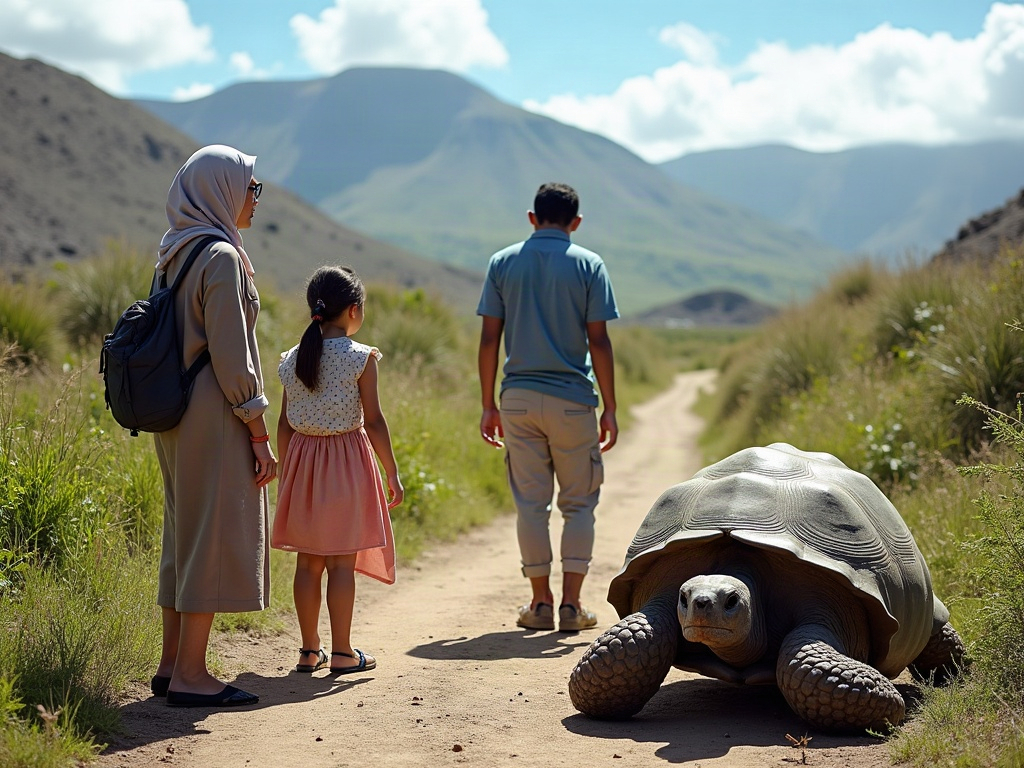
Mapping a child’s inherent fascination directly to a physical location ensures the highest possible engagement metrics during the trip.
© WovenVoyages.com
4. Choosing: How do you choose the right educational family vacation for your kids?
To select the ideal educational family vacation, begin by identifying your child’s core interests, then align these with suitable destination themes, and finally filter choices by age-appropriateness.
For example, find destinations that cater to specific passions, such as visiting Kennedy Space Center for a space lover or Washington D.C. for a history buff. The “right” vacation achieves a balance between the child’s interest and the “zone of proximal development”—an experience that is slightly challenging but not overwhelming.
Which types of educational destinations spark curiosity?
Educational destinations that effectively spark curiosity are typically immersive and interactive, like living history museums, national parks, and science centers, where children can actively participate through hands-on exhibits rather than passively observe.
Curiosity is often sparked by novelty and scale. Therefore, destinations that offer experiences impossible to have at home—like standing next to a space shuttle, walking on a glacier, or exploring ancient ruins—are uniquely powerful.
Colonial Williamsburg is the world’s largest living history museum, offering a highly immersive experience of 18th-century life that naturally prompts questions from children.
How can you match vacation themes to children’s age and interests?
Match vacation themes to a child’s age by opting for sensory, play-based activities like zoos for younger kids, and more complex, narrative-driven experiences such as historical tours or tech hubs for older children and teens.
The key is to match the *activity style* to the developmental stage. A 5-year-old and a 15-year-old can both enjoy a history museum, but the 5-year-old needs a scavenger hunt while the 15-year-old can engage with a docent-led tour discussing the exhibit’s context.
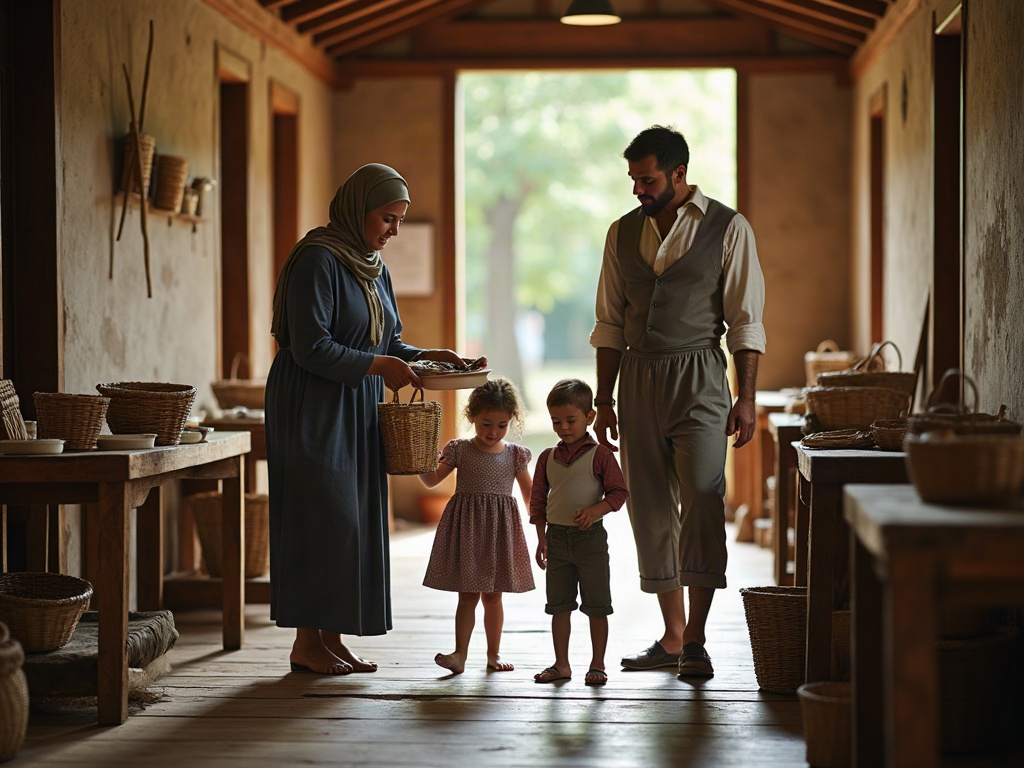
Visualizing how a single destination can provide complex narrative engagement for older children while offering safe, tactile exploration for toddlers.
© WovenVoyages.com
5. Options: Which specific educational family vacation types offer the most engaging learning?
The most engaging educational family vacations are immersive experiences like living history settlements, National Park explorations, and science-focused city breaks. These types provide hands-on learning opportunities that feel adventurous.
Engagement is highest when the learning is multi-sensory and part of a compelling narrative. If you are exploring wildlife conservation angles, it is highly recommended to study how to ensure safety while exposing young children to safari environments.
What are the best educational family vacation ideas for younger children?
The best educational family vacation ideas for younger children emphasize tactile, play-based learning through destinations such as children’s museums, farm stays, and interactive aquariums.
For younger kids, focus on vacations where learning is synonymous with playing. Ideas include visiting the Please Touch Museum in Philadelphia, or staying at a working farm where they can interact directly with agriculture.
What are engaging educational family vacation options for older children and teens?
Engaging educational family vacations for older children and teens often involve real-world challenges, complex narratives, and fostering independence. Options include STEM-focused tours like exploring the Galápagos Islands, or visiting ancient ruins in Rome and Athens.
The most successful teen-focused trips often include an element of skill-building or “resume-building,” like a volunteer component, a language immersion class, or a specialized workshop. At the Bunratty Castle Medieval Banquet in Ireland, teenage visitors can learn historical customs actively rather than passively.
6. Planning: How can you plan an educational family vacation that keeps kids engaged?
To plan an educational family vacation that consistently keeps kids engaged, involve them in choices, build flexibility into the itinerary, and gamify learning activities.
A powerful engagement strategy is to assign each family member a “job.” One child could be the “Official Photographer,” another the “Chief Navigator,” and another the “Lead Researcher.” This creates ownership and purpose, much like delegating responsibilities during an active adventure trip.
What are effective strategies for researching educational opportunities at destinations?
Effective research strategies for educational opportunities involve checking official destination websites for specific “Education” or “Family” sections, contacting museum education departments directly, and consulting local family travel blogs for insider recommendations.
The National Inventors Hall of Fame® Museum in Alexandria, Virginia, is an excellent example of a site discovered by looking specifically for dedicated educational zones within municipal limits.
How do you set realistic learning objectives without overwhelming children?
Set realistic learning objectives for children by focusing on one or two “big ideas” per day, framed as engaging questions rather than rote memorization tasks. This approach gamifies learning and keeps goals tangible.
The “one thing” rule is a powerful tool: for each major activity, aim for the child to remember just *one* interesting fact, story, or feeling. This drastically reduces pressure on both parent and child.

Demonstrating how setting simple, visual objectives (like a scavenger hunt) prevents information overload and keeps children actively engaged.
© WovenVoyages.com
7. Tools: How can technology enhance learning during educational family vacations?
Technology enhances learning on educational family vacations by providing instant contextual information via museum apps or QR codes, enabling interactive exploration through tools like geocaching, and facilitating effective pre-trip preparation.
The best use of technology is as an “invisible layer” on top of reality. Instead of replacing the experience, it should augment it. A star-gazing app doesn’t replace looking at the night sky; it enhances it by overlaying constellations.
How can you use digital tools to prepare kids before the trip?
Use digital tools to prepare kids before a trip by virtually exploring destinations with Google Earth, watching relevant documentaries, and collaboratively creating digital itineraries. This builds excitement and provides crucial context.
A highly effective tool is creating a shared digital ‘mood board’ using Canva. Let kids add pictures of places they want to see, foods they want to try, and questions they have. This visual planning process builds massive buy-in.

Utilizing digital tools like virtual tours or map applications before departure to build anticipation and geographic awareness for children.
© WovenVoyages.com
8. Preventing: How can you prevent kids from losing interest during educational travel?
Prevent kids from losing interest during educational travel by balancing the itinerary with ample downtime, giving children agency over daily choices, and being flexible enough to pivot plans when fatigue sets in.
To prevent burnout, strictly limit “learning” activities to one major site per day and always pair them with something purely fun, like a trip to a playground or an ice cream shop. The “one for them, one for me” rule is a crucial preventative strategy.
9. Logistics: Planning Your Educational Family Vacation Checklist
| Checklist Item / Tactic | Status |
|---|---|
| Research: Involve kids in destination choices to secure buy-in early. | ⬜ |
| Balance: Apply the “one for them, one for me” rule to the daily itinerary. | ⬜ |
| Gamify: Create or download scavenger hunts for major museum or historical site visits. | ⬜ |
10. Frequently Asked Questions (People Also Ask)
How do educational family vacations differ from traditional trips?
How do you choose the right educational family vacation for your kids?
How can you prevent kids from losing interest during educational travel?
Resolution
The ultimate key to making learning fun on educational family vacations is to prioritize curiosity and connection over a perfectly executed itinerary. By centering the destination around your child’s innate interests, you automatically secure their initial engagement.
From there, the strategy relies on aggressive gamification—turning passive museum walks into active scavenger hunts—and strict pacing that respects their biological stamina. Remember, the goal is not for them to master an academic subject, but to associate discovery and travel with joy. By balancing structured educational anchors with generous, unscripted downtime, you transform a trip into a foundational experience that cultivates a lifelong desire to explore and learn.
The WovenVoyages Standard
At WovenVoyages, we reject the premise that educational travel must resemble a rigid classroom curriculum. By deploying Decision Intelligence—specifically the “Anchor and Options” planning framework and the “One-for-Them, One-for-Me” rule—we equip you to construct itineraries that absorb pediatric resistance. We ensure you architect an environment where learning occurs organically through high-sensory, interactive experiences, allowing your family to actually achieve the profound bonding and cognitive growth you invested in.