Why is family vacation downtime important for children?
Table of Contents
Family vacation downtime is crucial for kids because it gives them a much-needed break from the physical and mental exhaustion of busy travel schedules.
Traveling to new places is exciting, but it can also be very overwhelming for children. By making time for free play and rest, you give their brains a chance to recharge and process all the fun they are having. This prevents the dreaded “vacation burnout” and helps ensure everyone comes home happy instead of cranky and tired.
Content last verified and updated: August, 2026
1. Why is family vacation downtime crucial for children’s well-being?
Family vacation downtime is crucial for your child’s well-being because it directly fights off the exhaustion that comes from constant sightseeing and being in a new place.
Giving kids a break helps their brains rest and gives them space to manage big feelings. Without these breaks, kids often end up acting out and feeling more drained than when they left home. To make sure you can afford a trip with a nice, relaxed pace, you might want to read up on How to Plan the Budget for a Family Vacation so you aren’t rushing to get your money’s worth every single minute.
The best part of a family trip isn’t checking off a massive list of tourist spots. It is about connecting with each other and making happy memories. Taking a break actually helps cement those memories in your child’s brain, making your trip a truly valuable experience.
**Sensory Overload:** This happens when a child’s brain gets hit with too many new sights, sounds, and smells all at once. It quickly leads to stress, anxiety, and meltdowns. If you want a trip that brings your family closer—instead of a stressful tour that leaves everyone crying—you have to schedule time to simply *be*. To figure out the best ways to structure your trip for your child’s age, check out our guide on How to Plan Family Vacation Activities.
What are the main benefits of free time for kids on a trip?
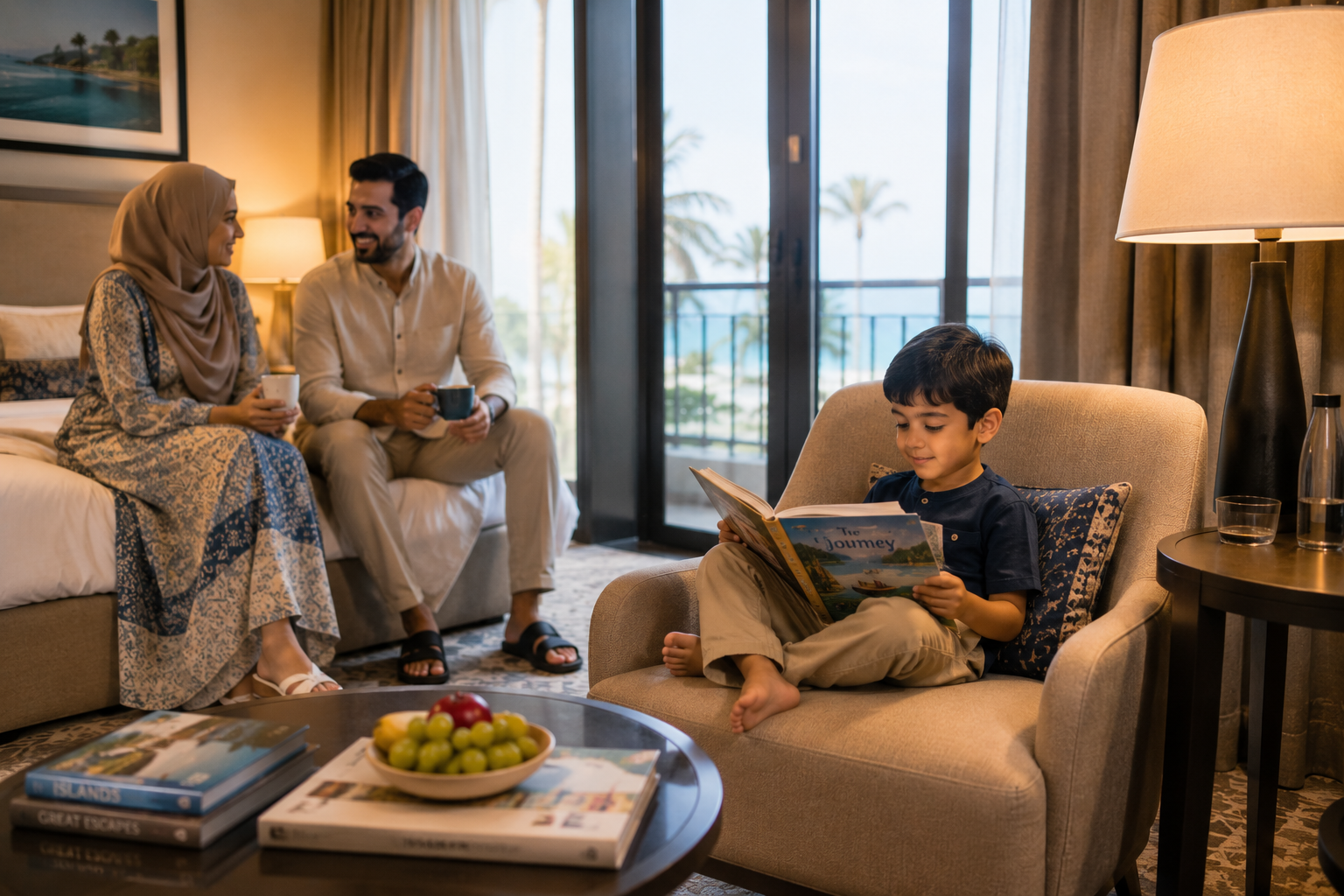
The main benefits of free time on a trip are letting kids rest their brains, keeping their emotions steady, and helping your family connect better. Scheduled rest stops kids from getting overwhelmed and throwing tantrums. It also gives them time to understand all the new things they are seeing. Plus, it allows your family to just laugh and play together without the pressure of a strict schedule.
According to a 2021 study, people who travel away from home regularly report being about 7% happier overall than people who rarely travel.
A huge benefit that parents often forget is “processing time.” When a kid visits a new city or a loud theme park, their brain is working overtime to take it all in. Free time is when their brain finally gets to organize all that information, turning a quick visit into a lasting memory.
Author’s Experience
“As a parent who has navigated countless family trips, I’ve seen firsthand how a simple quiet hour can transform a tantrum-filled afternoon into a joyful memory. It’s truly the secret ingredient for a smooth, connected family vacation.”
How does vacation downtime help kids handle their emotions?
Vacation downtime helps kids handle their emotions by giving them a safe, calm space to deal with all the excitement and stress of travel. Away from the loud noises and crowds, kids can calm themselves down without feeling rushed. This “emotional reset” stops small annoyances from turning into massive meltdowns.
According to the American Psychological Association, vacations help lower stress because you are stepping away from the daily things that usually cause you stress.
Controlling emotions is a skill that takes practice. Family vacations are highly stimulating, making them a great testing ground. Downtime acts like a “practice session” where kids can figure out their feelings in a low-pressure setting, which builds resilience they will use for the rest of their lives.
2. What brain benefits do children gain from family vacation downtime?
The main brain benefits kids gain from vacation downtime are better creativity, stronger problem-solving skills, and a much better ability to remember the trip.
When kids have free time to play without adults telling them what to do, they are forced to use their imaginations. Plus, giving their brains a rest helps them store all the cool new things they’ve learned about the world. Where you stay plays a big part in this, so read our tips on How to Plan Accommodation for a Family Vacation to find a place that actually lets your family relax.
Our brains have a specific “resting state” that only turns on when we aren’t focused on a task. This resting state is super important for creativity. A packed vacation schedule turns this helpful brain network off, but scheduling downtime turns it back on.
**Saving Memories:** Just like saving a file on a computer, your brain needs quiet time to hit “save” on all your new memories. This happens best when a child is resting or sleeping. If you want your kids to actually remember the trip, choose places to stay that have quiet areas, like a rental home with a yard instead of a cramped hotel room.
How does free play on vacation boost a child’s creativity?
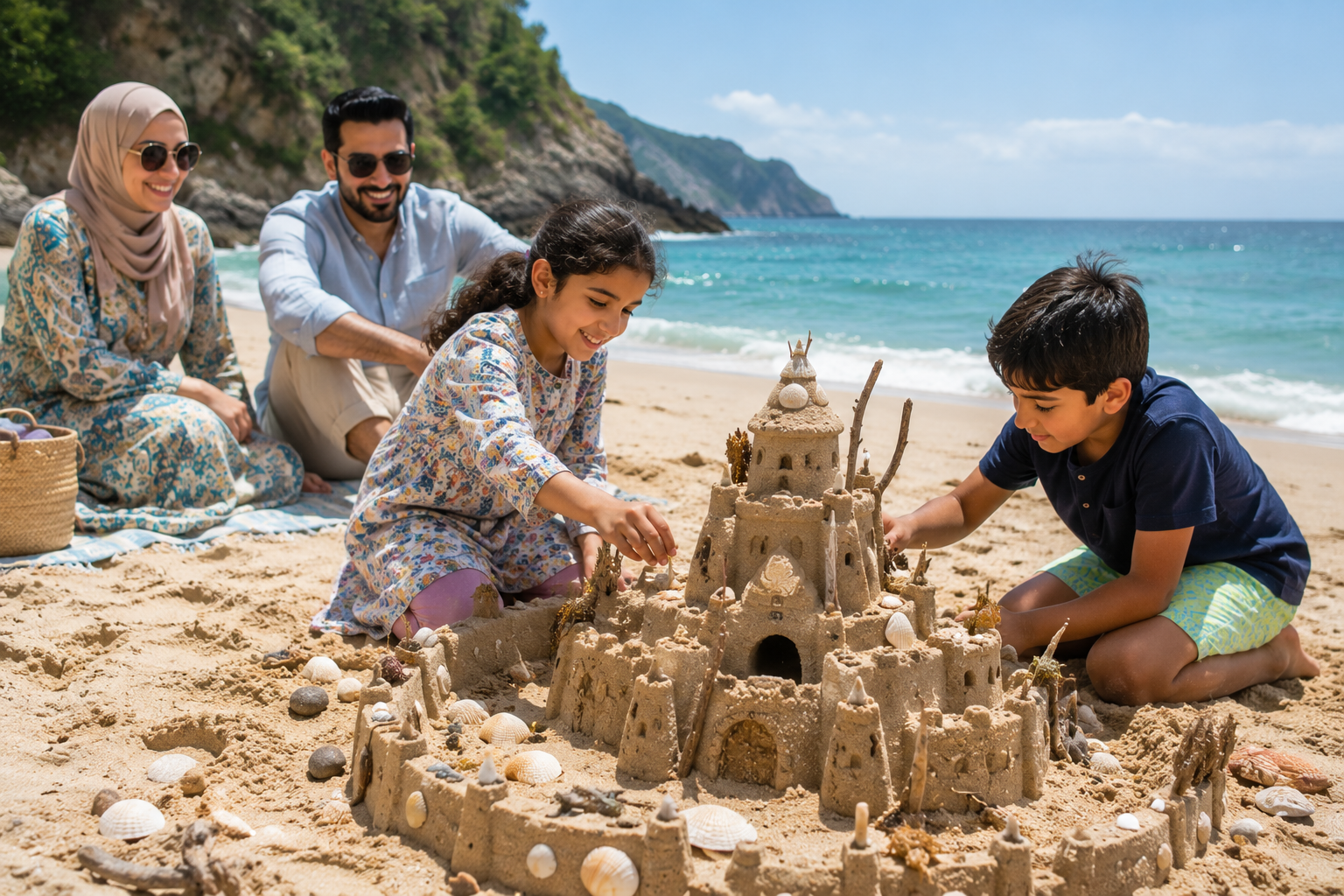
Free play on vacation boosts a child’s creativity because there are no set rules, and they have to figure out how to have fun in a totally new place with limited toys. When a kid has to invent a game in a strange hotel room or on an empty beach, they are learning to “think outside the box.” This helps them become better problem solvers in a way that taking a guided tour simply can’t do.
A 2009 study found that having fun as a family gives everyone a chance to bond and actually improves how well kids can solve problems.
Kids are amazing at turning random objects into toys. On vacation, a hotel blanket and a plastic cup can turn into a fort and a telescope. Watching them re-use simple objects in a new environment is proof that their creative problem-solving skills are growing.
Can downtime help a child remember the trip better?
Yes, downtime directly helps a child remember the trip better by giving their brain the quiet time it needs to lock in new memories. Your brain can’t easily save new information if you keep throwing more new information at it. A quiet nap or a calm reading break after a busy morning is the exact moment when the brain moves the morning’s adventures into long-term memory.
According to a U.S. Department of Education study, kids who travel a lot often score higher on tests at school because of the varied things they learn.
Think of a busy morning of sightseeing like having twenty tabs open on your computer browser. Downtime is like bookmarking the important pages and closing the rest. If you don’t take a break to “bookmark” the memories, a meltdown or exhaustion might cause the brain to just “crash” and forget the best parts of the day.
3. Which types of downtime work best for kids on vacation?
The best types of downtime for kids are either “passive relaxation” (like reading or watching a movie) or “active free play” (like running in an open field).
Parents need to pick the right kind of rest based on how their child is acting. For example, if your child is physically exhausted from hiking, they need to sit quietly and read. But if they just sat in a car for four hours, they need active free play to run off that energy.
A great trick is to give your kid a “menu” of choices. Ask them, “Would you rather color or listen to an audiobook?” Letting them choose makes them much more likely to cooperate and actually relax.
**Active Free Play:** This means letting kids run around and play however they want, without any adult rules or structured games. Think of building a sandcastle or having a pillow fight. You should choose passive downtime (screens, reading) to help them recover from being tired or overwhelmed. You should choose active free play (swimming, parks) to help them burn off crazy energy after being stuck in a museum all day.

How do quiet activities compare to active free play?
Quiet activities and active free play are both important, but they fix different problems. Quiet activities, like watching a tablet, give the brain a break and are perfect when a child is totally exhausted or overwhelmed by crowds. Active free play, like running around a playground, lets kids blow off steam and is perfect when they are bursting with energy from sitting still too long.
For babies, getting to touch and smell new things on a trip (like sand and salty air) is a huge part of how they learn and develop in their first year.
The biggest mistake parents make is mixing these two up. If you force an exhausted kid to run around a park, they will probably cry. If you force an energetic kid to sit still and read, they will probably rebel. The secret to a peaceful trip is figuring out which type of rest they need in that exact moment.
4. How can parents balance busy plans with essential rest time?
Parents can balance busy plans with rest by using the “One-Big-Thing” rule and building “buffer time” into their daily schedules.
Instead of planning every single minute of the day, create a flexible plan with strict times for resting. Plan just one major activity a day, and leave plenty of empty time in between for bathroom breaks, snacks, and unexpected naps. If you want to master this, read our guide to planning a flexible family itinerary.
Smart parents know that taking a break isn’t “wasting time.” Taking a 90-minute nap in the afternoon might be the only reason your family can actually enjoy that expensive dinner reservation later that night without anyone crying into their pasta.
**The “One-Big-Thing” Rule:** This is a simple trick where you pick only ONE major attraction to visit each day. The rest of the day is left open for eating, resting, and seeing where the day takes you. If you are visiting a huge theme park or a busy city, using the One-Big-Thing rule is the best way to keep your family from burning out.
How does “buffer time” keep a trip from feeling rushed?
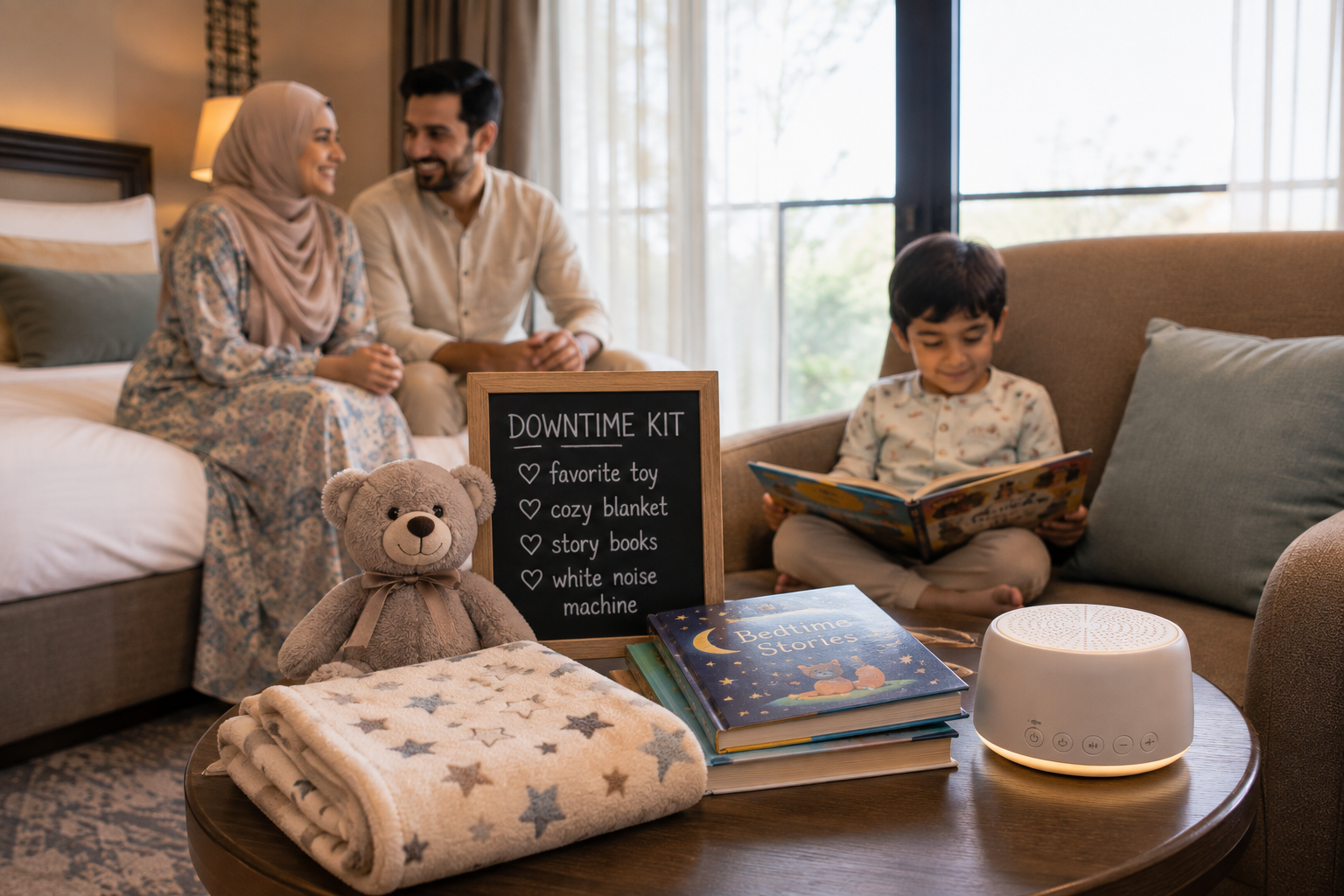
“Buffer time” keeps a trip from feeling rushed because you purposefully leave 30 to 60 minutes of blank space between your plans. Kids walk slower than adults, and they always need unexpected bathroom or snack breaks. Having buffer time means that when these delays happen, you don’t have to stress about being late.
According to travel planning experts, you should never plan more than two major activities per day if you want to keep everyone’s energy up.
Buffer time isn’t just empty time; it’s a smart scheduling strategy. The best way to do it is to check Google Maps to see how long it takes to get somewhere, and then add 50% more time to your schedule. This makes being flexible a habit, rather than an accident.
5. How can parents add unstructured moments to their travel days?
You can add unstructured downtime to your travel days by planning guaranteed rest stops during the morning, midday, and evening.
Try to start the day slowly instead of rushing out the door. Always plan to head back to your room in the middle of the day for a reset, and stick to a calming bedtime routine at night. Doing this ensures rest actually happens. Make sure you bring the right toys and comforts for these breaks by reading How to Plan What to Pack for a Family Vacation.
The most important trick is the “return.” When you get back to your hotel after a big outing, force everyone to have 30 minutes of quiet time before turning on the TV or heading to the pool. This helps everyone calm down and prevents arguments later that evening.
**Downtime Bag:** Pack a small bag with quiet, screen-free things your kid loves, like a coloring book or a puzzle. You can pull this out instantly at a restaurant or on a train. If you have a big rental house, definitely go back for an afternoon nap. If you are in a tiny hotel room, rely on your “downtime bag” and find a quiet park nearby to chill out.
What are some easy ways to make a strange hotel room feel calming?
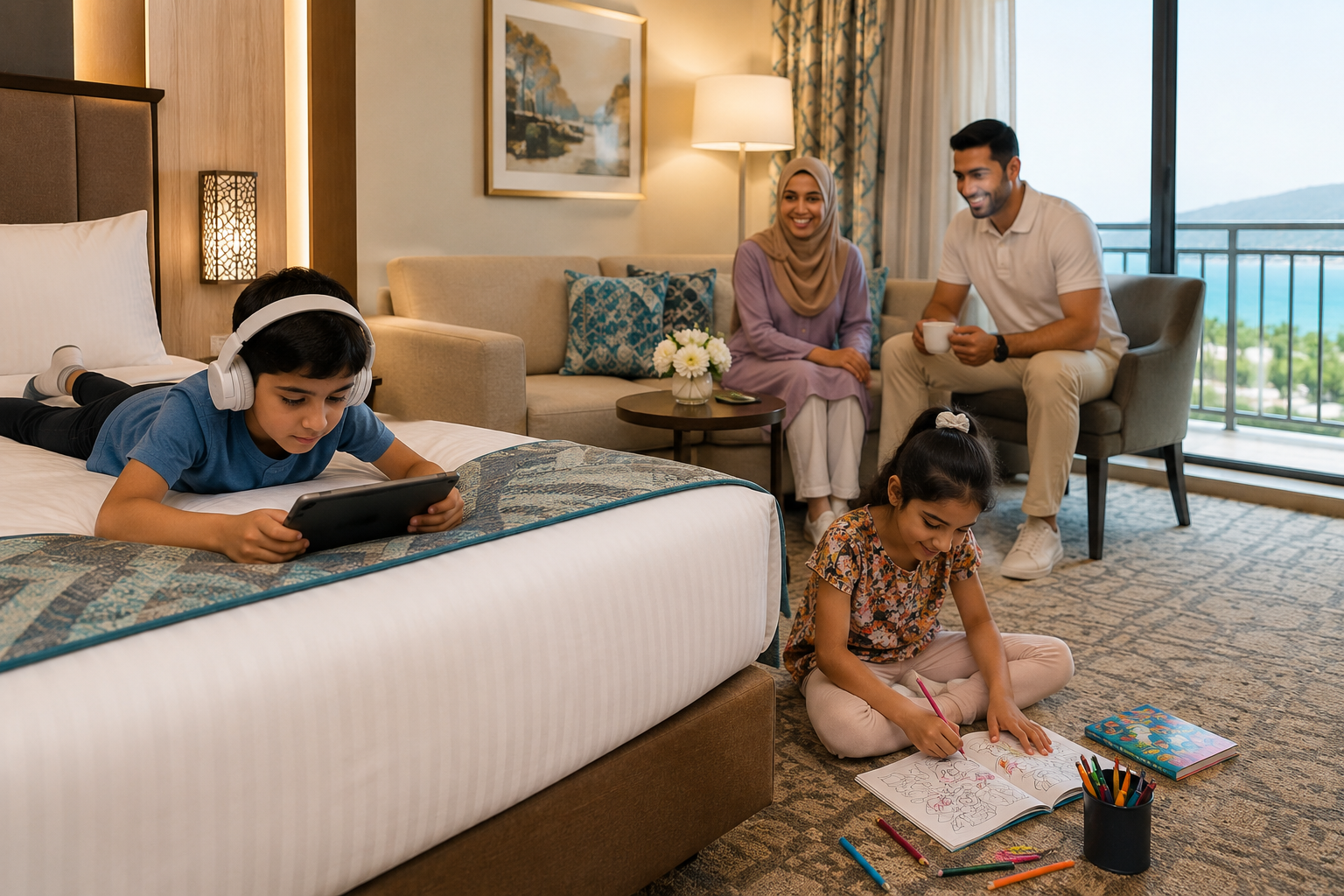
You can make a strange hotel room feel calming by bringing a few comforting things from home, like their favorite blanket, a beloved book, or a white noise machine. Also, if you do the exact same bedtime routine you do at home (like reading one story and singing one song), it tells your child’s brain that it is safe to go to sleep, no matter where they are.
A 2013 paper found that traveling and relaxing together might be the single most important thing families can do to build healthy relationships.
Using a familiar smell is a cool trick that works really well. If you spray a little bit of a calming scent (like lavender) in their room at home for a week before the trip, and then spray it in the hotel room, their brain will immediately recognize the smell and start to relax.
6. How do parents keep a relaxed mindset about taking breaks?
Parents can keep a relaxed mindset by measuring the success of their trip by how happy the family is, rather than how many tourist spots they visited.
You have to stop thinking of downtime as “doing nothing” and start seeing it as a super important activity that makes the whole trip better. You also have to let go of the “fear of missing out” (FOMO) and just focus on what your specific family needs that day. To help get everyone on the same page, you can read How to Balance Family Vacation Expectations.
Seeing other people’s “perfect” vacations on social media can make you feel like you aren’t doing enough. The best thing you can do is promise each other before the trip that you care more about having fun together than taking perfect photos. A lazy afternoon laughing in the hotel bed is just as much of a win as seeing a famous museum.
**Parental FOMO:** This is when parents get anxious that they are missing out on cool attractions, which usually causes them to push their kids way too hard. If you feel guilty about skipping a “must-see” spot so your kid can nap, remind yourself that you are choosing your family’s happiness over a stressful tourist trap.
What is the best way to talk to kids so they actually want to rest?
The best way to get kids to rest is to keep it positive and give them choices, instead of making it sound like a punishment. Instead of saying, “You have to go rest right now,” try saying, “It’s time for our cozy reading break so we have enough energy for the pool later!” Asking them if they want to do a puzzle or draw also gives them some control, which makes them less likely to fight you.
Families today spend way less time working together on shared goals than they did 100 years ago, which means vacations are one of the few times we have to actively act like a “team.”
Try giving downtime a fun name for your trip, like “Explorer’s Rest” or “Power-Up Time.” This turns a boring nap time into a special part of the vacation that they might actually look forward to.
7. What common mistakes stop kids from getting enough rest on vacation?
The biggest mistake that stops kids from resting is parents planning too many activities back-to-back because they don’t want to “waste” any vacation time.
This looks like rushing from one place to the next without any buffer time, and refusing to change plans even when a kid is clearly exhausted. Another big mistake is thinking that sitting on an airplane or in a car counts as “rest”—traveling is actually really tiring for kids!
A sneaky mistake parents make is putting all the most exciting activities on the very first day. This causes a massive energy crash right at the beginning, setting a grumpy tone for the whole week. It is much smarter to start slow and build up to the big adventures.
**Being Too Strict with the Plan:** This happens when parents refuse to change the schedule, even when their child is crying or exhausted. If your past trips have ended in arguments, look back and see if you were being too strict with your schedule. Figuring out what went wrong last time will help you plan a much better trip next time.
What happens when parents refuse to change their vacation schedule?
When parents refuse to change the schedule, it stresses children out and makes it impossible for them to relax. If you force a tired kid to keep sightseeing, they learn that the schedule matters more than how they feel. This makes them anxious, and they will likely start misbehaving because it’s the only way they can force you to stop and give them a break.
Experts say that because kids on vacation are out of their normal routine, it is much harder for them to behave, which makes being flexible way more important than sticking to a plan.
Being too strict breaks the promise of a vacation. Vacations are supposed to be a break from the strict rules of school and work. If you bring that same stressful schedule on your trip, your kids will quickly become frustrated and resentful.
8. How do you handle it when kids or family members fight downtime?
You can handle resistance to downtime by figuring out *why* they are fighting it, and then coming up with a specific fix.
If a child is fighting rest, it’s usually because they are bored or feel like they are being punished; the fix is to offer fun, quiet activities. If another adult (like a grandparent) is fighting it, it’s usually because they want to see more sights; the fix is to remind them that resting now prevents a meltdown later, or to let them go explore on their own.
The best trick is the “split and conquer” method. If one kid is tired but the other wants to play, or if a grandparent wants to keep walking, one parent can take the tired kid back to the hotel while the other parent keeps having fun with the rest of the group. Everyone wins!
**Downtime Negotiation:** This means talking with your older kids or other adults to agree on when to rest. Explain *why* you need a break, and offer a trade, like “If we have quiet time for one hour now, we can go get ice cream later.” When someone pushes back, ask yourself if they are bored, tired, or just want to keep moving, and fix that specific problem.
How do you stop siblings from fighting during quiet time?
To stop siblings from fighting during quiet time, you need to give them physical space and their own activities. Making kids share a toy or a tablet during rest time is guaranteed to cause an argument. The fix is to give them separate “quiet zones” in the room and give each child their own bag of activities that they really enjoy.
A 2009 study found that kids who travel with their families actually learn to share better and communicate in a much more positive way.
The “headphone rule” works like magic. Give each kid their own headphones so they can listen to their own music or watch their own show without bothering each other. This creates peace and quiet for everyone, even if you are all stuck in a tiny hotel room.
9. Checklist: Adding Rest to Your Day
| Simple Steps to Follow | Done? |
|---|---|
| STEP 1: Start the day slowly. Let everyone wake up and get ready without rushing out the door. | ⬜ |
| STEP 2: Take a midday break. Head back to the hotel or find a quiet park for a mandatory rest or nap. | ⬜ |
| STEP 3: Keep a bedtime routine. Do the same calming things before sleep that you do at home. | ⬜ |
Resolution
Making sure your kids have enough downtime is the most important thing you can do to guarantee a great family vacation. When you stop worrying about doing *everything* and start focusing on keeping everyone *happy*, your trip transforms from an exhausting marathon into a wonderful time to bond. Remember, taking a break isn’t wasting time—it’s the secret ingredient that makes the whole trip totally worth it.