Do Children Need Visas for an International Family Vacation?
Table of Contents
Yes, children of all ages strictly require their own visas for international travel to countries that mandate them, determined exclusively by their passport’s nationality. A child’s visa requirement is an independent legal necessity dictated by the destination country’s entry laws, not by their age or the fact they are traveling with parents.
This guide provides a definitive process for determining your child’s visa needs and navigating the complex consular application landscape. It is highly advanced preparation that architects the exact steps to verify documentation, execute an application, and avoid critical errors at the port of entry.
Preparing these clearances is a mandatory subset of broader travel compliance. You must also align this process with comprehensive travel document planning for your family vacation.
2. Why Do Visa Requirements Exist for Children?
Visa requirements exist for children because international law treats every traveler, from newborns to adults, as an individual crossing a sovereign border. A country’s border control mechanisms must uniformly track who enters, why they are visiting, and when they will leave. A child’s independent legal status necessitates individual visa consideration, distinguishing them as distinct international travelers from their parents.
While it may seem counterintuitive that a six-month-old needs permission to be a “tourist,” immigration systems do not grant automatic derivative entry rights simply because a parent holds a visa. Every person needs a clearance.
How Is a Child’s Nationality Determined for Visa Purposes?
A child’s nationality for visa purposes is determined strictly by the citizenship on their passport, which is based on the laws of the country where they were born (*jus soli*) or the nationality of their parents (*jus sanguinis*).
*Jus soli* (right of the soil) and *jus sanguinis* (right of blood) are the two primary legal principles governments use to grant citizenship at birth. This directly impacts a child’s visa needs, as their issued passport acts as the sole variable the destination country analyzes to decide if entry requires a visa.
For an extensive breakdown of identity documents, learning about passport requirements for minors on a family vacation is essential.
What Is the Difference Between a Passport and a Visa for a Child?
The difference between a passport and a visa for a child is that a passport proves their identity and citizenship from their home country, while a visa is an official permission granted by a foreign government to enter their specific borders.
The International Civil Aviation Organization (ICAO) sets global standards for passports. A passport is your child’s legal right to exist and travel globally representing their home nation. A visa (whether a physical sticker, an eVisa, or an electronic travel authorization) is a conditional, temporary privilege granted by another nation.
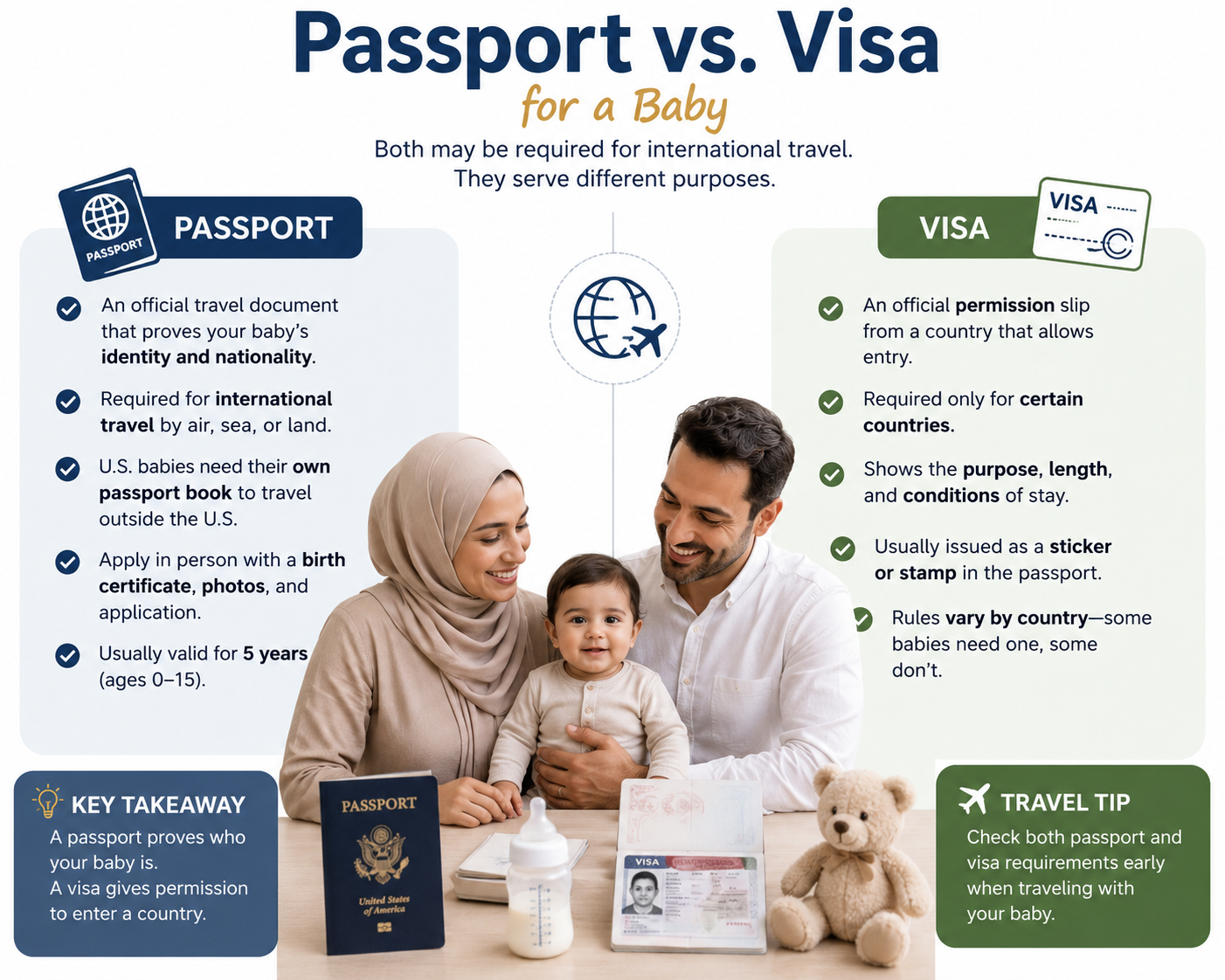
| Feature | Child’s Passport | Child’s Visa |
|---|---|---|
| Issuing Authority | Home Country’s Government | Destination Country’s Government |
| Purpose | Proves Identity & Citizenship | Grants Permission to Enter |
| Validity | Multiple Years (e.g., 5 years for U.S. minor) | Specific Trip Duration (e.g., 90 days) |
3. How Do You Determine if Your Child Needs a Visa?
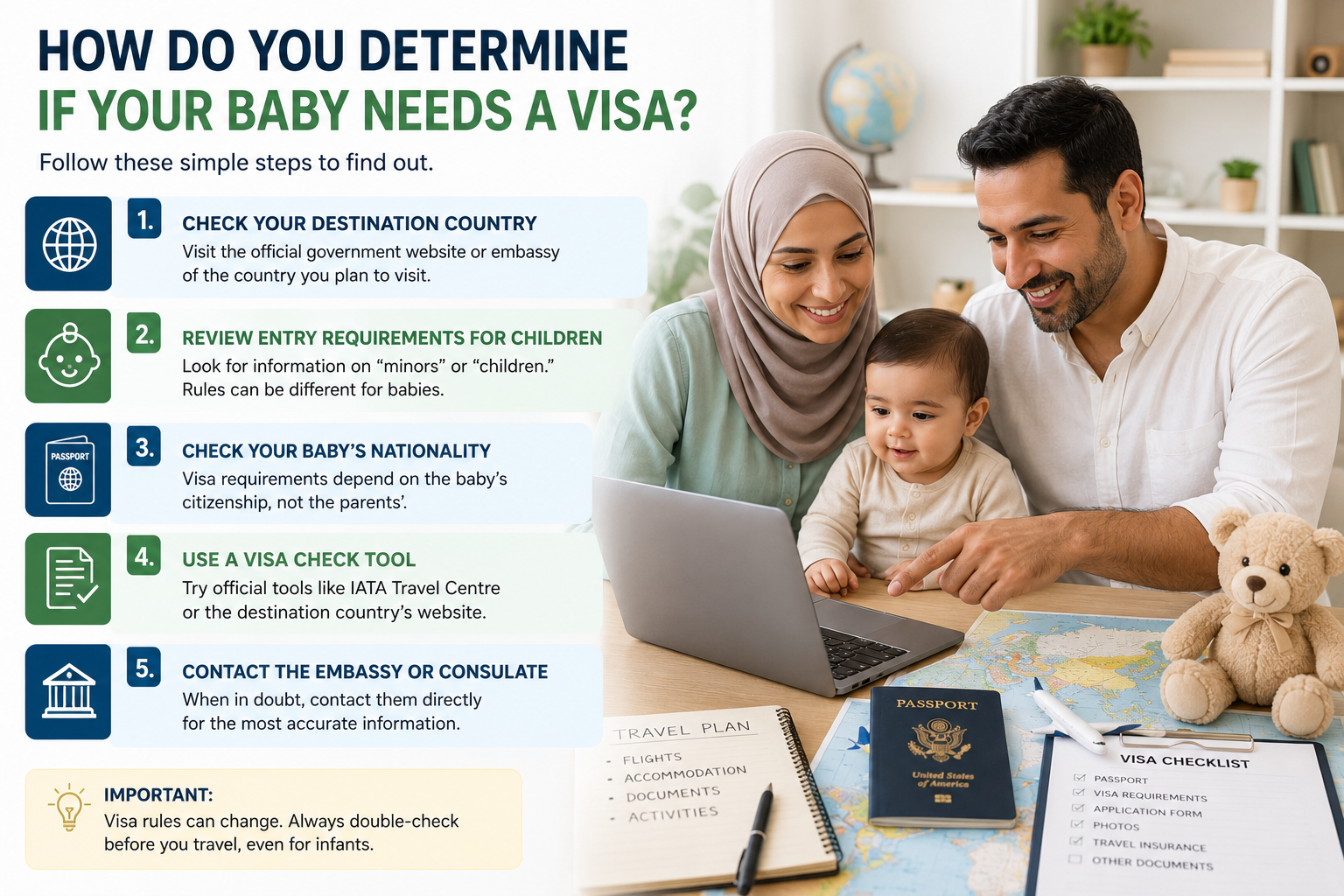
You determine if your child needs a visa by executing a strict verification protocol through authoritative diplomatic channels. This phase is purely about accurate task fulfillment. Using generalized information or assumptions based on adult travel rules frequently results in denied boarding at the airport.
What Is the Role of the Destination Country’s Embassy or Consulate?
The destination country’s embassy or consulate serves as the definitive and only official source for determining your child’s visa requirements, holding the sovereign authority on entry laws.
“Consular Services” refers to the specific department within an embassy responsible for all visa and citizen services. They are the exact entity parents must deal with for definitive information. Never rely on an airline representative’s verbal confirmation over written consular directives.
How Do Online Visa Checkers and Government Portals Help?
Official government portals help by providing the most reliable initial check for a child’s visa needs, allowing parents to verify requirements directly from the governing source rather than third-party aggregators.
Rely exclusively on official government websites (.gov, .gov.uk, etc.) for accuracy. Commercial services often contain outdated or generalized information that creates severe travel risks.
3-Step Verification Process
- Identify: Locate the official embassy or consulate website for the destination country.
- Navigate: Find the “Visas,” “Entry Requirements,” or “Consular Services” section.
- Verify: Check the specific requirements matching the passport nationality of your minor child.
4. What Is the Step-by-Step Process for a Child’s Visa Application?
The step-by-step process for a child’s visa application involves determining the requirement, assembling extensive legal documentation, submitting the application (often requiring a physical appointment), and complying with any biometric exemptions or mandates. Precision in this execution minimizes severe travel delays.
What Documents Are Required for a Child’s Visa?
The required documents for a child’s visa application universally include the child’s valid passport, a completed application form, passport-style photos meeting strict guidelines, the original birth certificate, and often a signed consent letter from both parents.
Depending on the destination, the Hague Apostille Convention of 1961 standardized the authentication process for public documents. This means you may need an apostille stamp on the child’s birth certificate to verify its legitimacy for the foreign consulate. Additionally, many applications demand proof of financial means and travel itineraries linked to the parents’ travel plans.
To ensure your core identification is ready prior to applying, understanding passport validity rules for family travel is critical.
How Do You Handle Biometrics and Photos for a Child?
You handle biometrics and photos for a child by adhering to strict photographic standards regarding background and eye contact, even though young children (typically under 12) are frequently exempt from fingerprinting requirements.
Photography for infants and toddlers is notoriously difficult. The eyes must be open, looking at the camera, with no pacifiers, hands, or shadows visible. Most consulates require the child to be physically present at the visa appointment to verify identity, even if their fingerprints are not collected.
What Are the Typical Processing Times and Fees?
Typical processing times for a child’s visa vary dramatically from a few days to over a year depending on the consulate’s backlog, and fees depend entirely on the destination country, the visa class, and the applicant’s age.
Never book non-refundable flights until the visa is in hand. Visa processing times fluctuate based on location and diplomatic staffing. Early application is your only defense against bureaucratic delays.
5. Do Children Need Visas for Specific Popular Destinations?
This section addresses specific, high-volume travel zones. The requirements for major tourism hubs serve as practical examples of how international visa frameworks apply to minors.
Do Children Need a Visa for Europe (Schengen Area)?
Yes, whether children need a visa for the Schengen Area in Europe is determined solely by their passport’s nationality; children holding passports from visa-exempt countries do not need one for short stays, while others must apply for a full Schengen visa.
The “Schengen Area” defines a zone of 29 European countries that have abolished border control at mutual borders. If a child requires a Schengen visa, they must submit a full application. However, under the Schengen Visa Code, children under 12 are generally exempt from providing fingerprints, and children under six years of age have the standard visa fee waived.
What Are the Visa Rules for Children Traveling to the USA?
The visa rules for children traveling to the USA are identical to those for adults; every child requires either an approved ESTA if they qualify under the Visa Waiver Program, or a formal tourist visa (B-2) obtained through a consulate.
Minors who are citizens of countries in the Visa Waiver Program (VWP) do not need a traditional sticker visa for tourism stays of 90 days or less, but they *must* obtain an approved Electronic System for Travel Authorization (ESTA) prior to travel. An ESTA is mandatory for all VWP travelers, including ticketed infants and lap infants, and must be applied for online at least 72 hours before departure.
6. How Can You Ensure a Smooth Journey with Your Child?
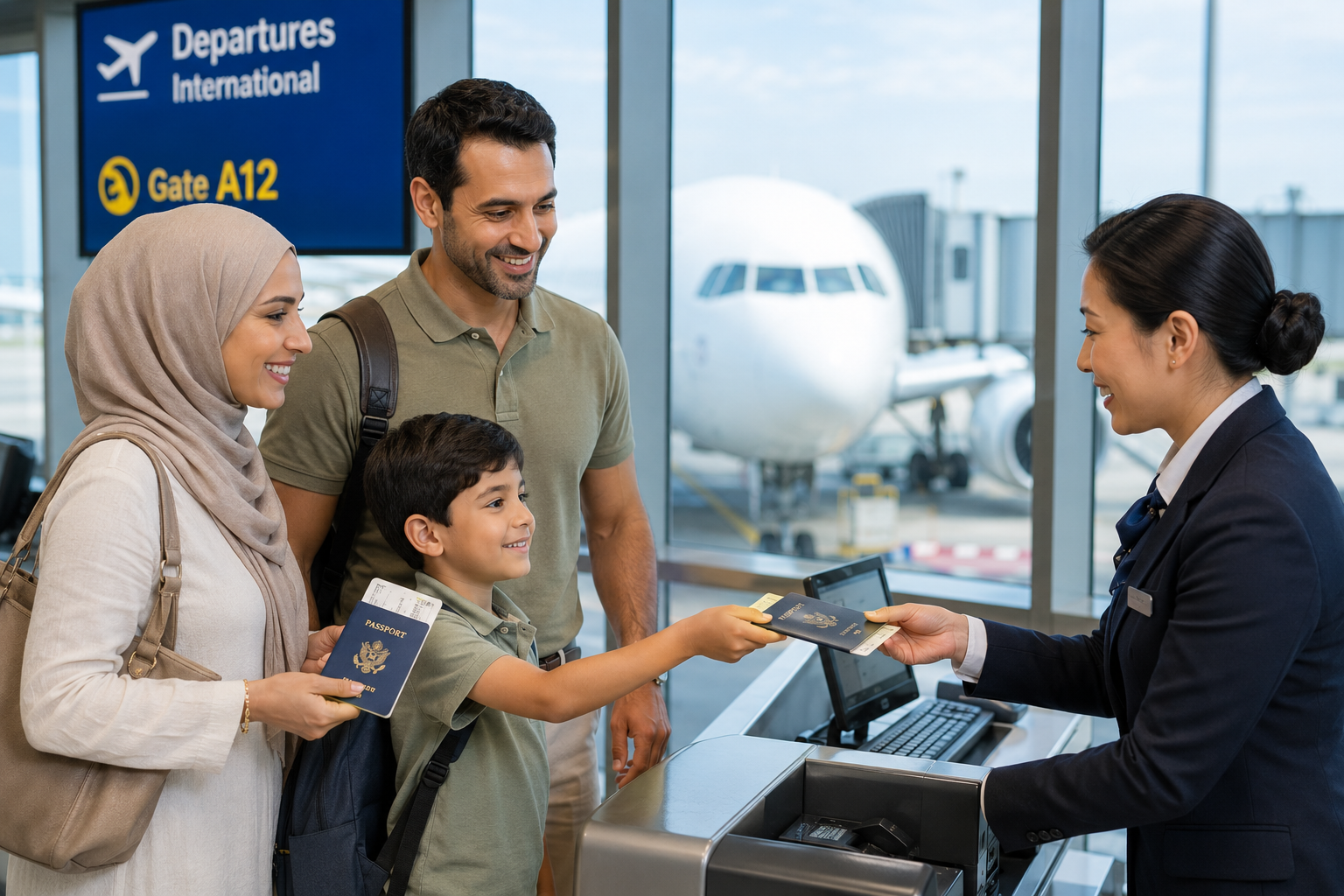
Ensuring a smooth journey with your child hinges on meticulous, uncompromising planning and proactive management of all visa and entry requirements. By treating the child’s paperwork with the same high-stakes diligence as an adult’s, parents can eliminate border control stress.
“When our first child was just six months old, we planned a trip to a country with notoriously complex visa procedures. I vividly remember spending weeks cross-referencing embassy websites and calling consular services multiple times to confirm every detail, including specific requirements for an infant’s photograph. This meticulous verification process felt tedious at the time, but it ensured a seamless application and stress-free entry, proving that early and thorough preparation is non-negotiable for international minor travel.”
7. Logistics: Child Visa Application Checklist
Finalizing the child visa application checklist guarantees extreme trip success by verifying the redundancy of all documentation and process steps before submitting the paperwork to the consulate.
| Checklist Item / Tactic | Status |
|---|---|
| Obtain Child’s Passport: Secure the minor’s valid passport with at least six months of remaining validity. | ⬜ |
| Gather Passport Photos: Obtain one or two passport-sized photos meeting strict dimension and background requirements. | ⬜ |
| Acquire Birth Certificate: Acquire the original or a certified copy of the child’s unabridged birth certificate. | ⬜ |
| Complete Application Form: Complete and sign the visa application form by both legal guardians. | ⬜ |
| Prepare Consent Letter: Prepare a letter of consent signed by any non-traveling parent or legal guardian. | ⬜ |
| Collect Parent’s Documents: Gather copies of the parents’ passports and their own valid visas, if applicable. | ⬜ |
| Provide Proof of Travel: Provide proof of travel, including flight itineraries and hotel accommodation bookings. | ⬜ |
| Demonstrate Financial Means: Submit proof of financial means to support the trip. | ⬜ |
Sources
Resolution
A child’s visa requirement is fundamentally governed by international law, based strictly on their nationality and the sovereign rules of the destination country. Parents must abandon assumptions and rely exclusively on official embassy directives to determine necessary entry clearances. Gathering unabridged birth certificates, executing notarized consent letters, and navigating complex biometric appointments for minors require significant lead time. By approaching a child’s visa application with systematic rigor, families prevent catastrophic boarding denials and secure the legal foundation required for a stress-free international adventure.