Which Coastal Destinations Have the Most Stroller-Accessible Beaches for a Family Vacation?
Table of Contents
The coastal destinations with the most stroller-accessible beaches for a family vacation are San Diego, CA; the Outer Banks, NC; and Australia’s Gold Coast, due to their combination of firm-packed sand, extensive boardwalks, and ADA-compliant amenities.
These locations provide:
- Guaranteed beach access via dedicated pathways like Mobi-Mats.
- Proximity of accessible restrooms and changing stations to the beachfront.
- Smooth, paved boardwalks for effortless navigation between attractions.
Choosing the right coastal destination for a family vacation with a stroller requires careful consideration of specific accessibility features.
This guide focuses exclusively on destinations offering verified infrastructure that supports families traveling with young children, ensuring a seamless and enjoyable beach experience.
1. What Makes a Coastal Destination Ideal for a Stroller-Accessible Family Vacation?
An ideal stroller-accessible coastal destination for a family vacation is characterized by firm, navigable surfaces like packed sand or paved boardwalks, robust access infrastructure such as ADA-compliant ramps and Mobi-Mats, and comprehensive support amenities including accessible restrooms and changing stations.
These features ensure seamless movement and comfort for families with strollers, transforming a potential logistical challenge into a relaxing experience.
The foundation of a truly accessible beach lies in its surface conditions and the engineered solutions implemented to overcome natural barriers.
Without these considerations, even the most beautiful coastal destination can become an insurmountable obstacle for families with strollers.
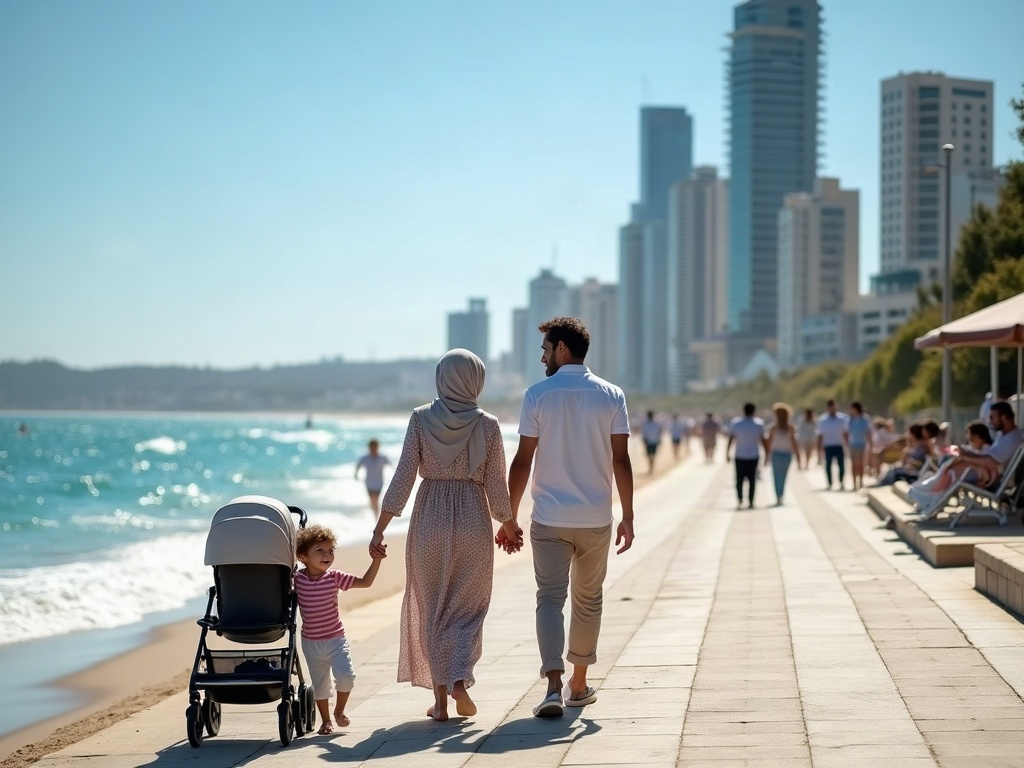
Illustration of a Mobi-Mat providing easy access across soft sand for strollers and wheelchairs, highlighting critical infrastructure for stroller-accessible beaches.
© WovenVoyages.com
How Do Beach Conditions Impact Stroller Accessibility for a Family Vacation?
Beach conditions directly impact stroller accessibility for a family vacation by determining the viability of wheel-based movement, where firm, packed sand and dedicated pathways are the most critical factors.
Firm, packed sand found in the intertidal zone during low tide provides a temporary natural surface for strollers, whereas soft, dry sand makes movement impossible without assistance.
The difference between these surfaces dictates whether a standard stroller can be used or if specialized equipment like an all-terrain stroller or Mobi-Mat is required.
While specific load-bearing capacity for portable mats is not readily available, manufacturers design them to support heavy wheelchairs and other power-driven mobility devices, far exceeding the needs of a stroller.
These geotextile sand mats are the gold standard for reliable access across soft sand, offering a consistent and stable path from the promenade to the shoreline.
Understanding these fundamental differences is crucial for families planning a truly stroller-accessible beach vacation.
Unique Insight: Even at seemingly inaccessible beaches, exploring the tide charts can reveal windows of opportunity, as low tide often exposes expansive stretches of naturally hard-packed sand suitable for standard strollers.
What On-Site Amenities Support Stroller Use During a Coastal Family Vacation?
On-site amenities that directly support stroller use during a coastal family vacation include ADA-compliant ramps, zero-entry beach access points, and family restrooms with integrated changing stations.
These amenities are categorized into ‘Access Infrastructure’, ‘Essential Facilities’, and ‘Convenience Services’ to comprehensively address the needs of families with strollers.
Access Infrastructure, such as ADA-compliant ramps and expansive boardwalks, removes the physical barrier of sand, allowing smooth transitions from parking to the beach.
The Americans with Disabilities Act (ADA) mandates that public ramps have a maximum slope of 1:12, which means for every inch of vertical rise, there must be at least 12 inches of horizontal run, ensuring safe and manageable access.[1]
Essential Facilities like accessible restrooms with changing stations, often located close to beach access points, eliminate the need for long treks to handle diaper changes or hygiene needs.
Zero-entry Access: A sloped transition point where a paved surface meets the beach sand at the same grade, eliminating any curb or step to allow seamless roll-on access for strollers and wheelchairs.
Lastly, Convenience Services, including beach wheelchair rentals and shaded pavilions, significantly enhance comfort and task fulfillment for parents managing strollers, enabling extended stays and greater enjoyment.
These comprehensive amenities are what truly elevate a coastal destination to an ideal status for a stroller-accessible family vacation.
Unique Insight: Many highly accessible beaches offer complimentary beach wheelchair rentals, allowing families to explore beyond the packed sand without relying solely on their stroller’s off-road capabilities.
Why is Stroller Accessibility Crucial for a Stress-Free Coastal Family Vacation?
Stroller accessibility is crucial for a stress-free coastal family vacation because it directly reduces the physical strain on caregivers, ensures equitable access for all family members, and streamlines the logistics of transporting essential gear.
The logistical challenges of a beach day with young children can be substantial.
According to a travel survey, families with young children often pack over 50 pounds of gear for a day trip, making stroller accessibility essential for managing the logistical load.[2]
Logistical Load: The total physical and cognitive effort required to manage transportation, child safety, and equipment in a given environment; this load is significantly reduced by engineered accessibility features.
The problem of physical exhaustion is solved by accessible ramps and smooth boardwalks that eliminate the need to carry heavy strollers and gear through soft sand.
The problem of gear transport is solved by wide, stable pathways suitable for strollers laden with beach bags, coolers, and toys.
The problem of family exclusion is solved by full access that allows every member, regardless of age or mobility, to partake in the joys of the beach.
Ultimately, stroller accessibility transforms the beach experience from a challenging obstacle into a relaxing, inclusive activity for everyone.
Unique Insight: A destination’s commitment to stroller accessibility often reflects a broader emphasis on family-friendly infrastructure, suggesting other amenities like accessible changing rooms and family-oriented dining options are also likely to be present.
Author’s Experience: Abdullahi Azaam
“As a parent of two young children, I have personally navigated countless beaches with strollers, from the expansive boardwalks of the Gold Coast to the challenging soft sands of less-developed areas. This firsthand experience has underscored the immense value of proper ADA-compliant infrastructure and dedicated Mobi-Mats, turning what could be a stressful outing into a joyous family vacation memory.”
2. How Can Families Choose the Best Stroller-Accessible Coastal Destinations for a Family Vacation?
Families can choose the best stroller-accessible coastal destinations for a family vacation by using a three-step framework: first, identify non-negotiable accessibility needs; second, score potential destinations using objective criteria like beach access type and amenity availability; and third, cross-reference these findings with budget and travel style for a tailored selection.
This systematic approach helps filter through options and pinpoint locations that genuinely meet specific requirements for a comfortable and enjoyable trip with young children.
The “Amenity Score” in the comparison table is a composite of restroom availability, changing stations, and accessible parking proximity, providing a quick reference for overall convenience.

A visual representation of the key decision points and criteria for selecting an ideal stroller-accessible coastal destination.
© WovenVoyages.com
Which Are the Top Coastal Destinations for a Stroller-Accessible Family Vacation?
The top coastal destinations for a stroller-accessible family vacation are San Diego, California; the Outer Banks, North Carolina; and the Gold Coast, Australia, all of which feature significant public investment in accessibility infrastructure.
These locations excel due to features like ADA-compliant pathways, extensive boardwalks, and even free beach wheelchair programs.
San Diego, California, for example, offers free manual and powered beach wheelchairs at 10 of its beaches, including Ocean Beach, Mission Beach, and Coronado Beach, ensuring access across the sand.[3]
Beach Wheelchair: A specially designed mobility device, often featuring large, inflatable “balloon” tires (e.g., from Wheeleez™), that can be pushed over soft sand and is frequently available for free rental at highly accessible beaches.
The Outer Banks, North Carolina, features numerous public beach accesses with paved ramps and robust Mobi-Mats, particularly in towns like Kill Devil Hills and Nags Head, facilitating stroller movement to the shore.
Gold Coast, Queensland, boasts an impressive network of wide, paved esplanades directly adjacent to iconic beaches like Surfers Paradise Beach, providing miles of smooth strolling with stunning ocean views.
Unique Insight: When evaluating top destinations, look beyond just beach access; consider the surrounding infrastructure like accessible playgrounds, cafes with ramp access, and shaded picnic areas to maximize the family experience.
Where Can Families Find Lesser-Known Gems for a Stroller-Friendly Coastal Family Vacation?
Lesser-known gems for a stroller-friendly coastal family vacation include Hilton Head Island, South Carolina, and Scheveningen, Netherlands, which offer high accessibility with significantly lower crowd density than major tourist hubs.
Hilton Head Island features over 60 miles of public pathways and shared-use trails, many of which are paved and provide direct access to its 12 miles of beachfront.[4]
The value of Hilton Head’s island-wide network of paved trails ensures continuous stroller accessibility across various points of interest, not just the beach itself.
Hard-packed Sand: A condition common during low tide where sand in the intertidal zone becomes firm and smooth enough from water saturation to support the weight and narrow wheels of a standard stroller.
Scheveningen, Netherlands, provides excellent accessibility through its expansive pier and beachfront boulevard complex, offering smooth surfaces for strollers along the North Sea coast.
These destinations are ideal for families seeking robust accessibility without the intense crowds often found in more globally renowned coastal destinations.
Unique Insight: “Lesser-known gems” often provide a more relaxed pace and a higher quality of local interaction, enhancing the authentic family vacation experience away from mass tourism.
What Factors Differentiate Stroller-Friendly Coastal Destinations for a Family Vacation?
The key factors that differentiate stroller-friendly coastal destinations for a family vacation are the type of access provided (natural hard-packed sand vs. man-made boardwalks/Mobi-Mats) and the surrounding environment (urban beach vs. natural preserve).
Understanding these differentiators is crucial for aligning your expectations with the realities of a chosen coastal destination.
The construction and maintenance of a public beach boardwalk is a significant municipal investment, with costs that can range from $200 to over $600 per linear foot depending on materials and location.[5]
Urban Beach Interface: The zone where a city’s paved infrastructure, such as promenades, piers, and streets, directly meets the beach, typically providing the highest and most reliable level of stroller and wheelchair accessibility.
| Factor | The Urban Beach (e.g., Waikiki) | The Natural Access Beach (e.g., select Outer Banks beaches) |
|---|---|---|
| Access Reliability | Highly reliable, engineered access (paved boardwalks, Mobi-Mats). | Variable; relies on natural hard-packed sand, tide conditions, or limited Mobi-Mat sections. |
| Proximity to Amenities | Directly adjacent to diverse amenities (restaurants, shops, accessible restrooms). | Amenities may be farther from the beach access points, requiring planning. |
| Crowd Levels | Generally higher crowd density due to ease of access and popularity. | Typically lower crowd density, offering a more serene experience. |
The Urban Beach archetype, exemplified by places like Waikiki, typically offers highly reliable, engineered access through extensive promenades and dedicated pathways.
In contrast, a Natural Access Beach, such as select locations in the Outer Banks, depends on tidal conditions and dedicated, often temporary, pathways for navigability, requiring more research.
Unique Insight: While urban beaches offer convenience, natural access beaches can provide a more immersive experience with fewer crowds, if you are prepared for potentially more variable stroller accessibility.
3. How Do Families Maximize Stroller Accessibility During a Coastal Family Vacation?
Families maximize stroller accessibility during a coastal family vacation by meticulously planning before departure.
This involves vetting destinations online for paved paths and specific accessibility features, confirming current conditions with local authorities, and packing specialized gear like all-terrain strollers.
Such proactive measures ensure a smooth, enjoyable beach experience, transforming potential hurdles into seamless transitions.
Success depends heavily on pre-trip intelligence gathering and preparing for specific conditions.
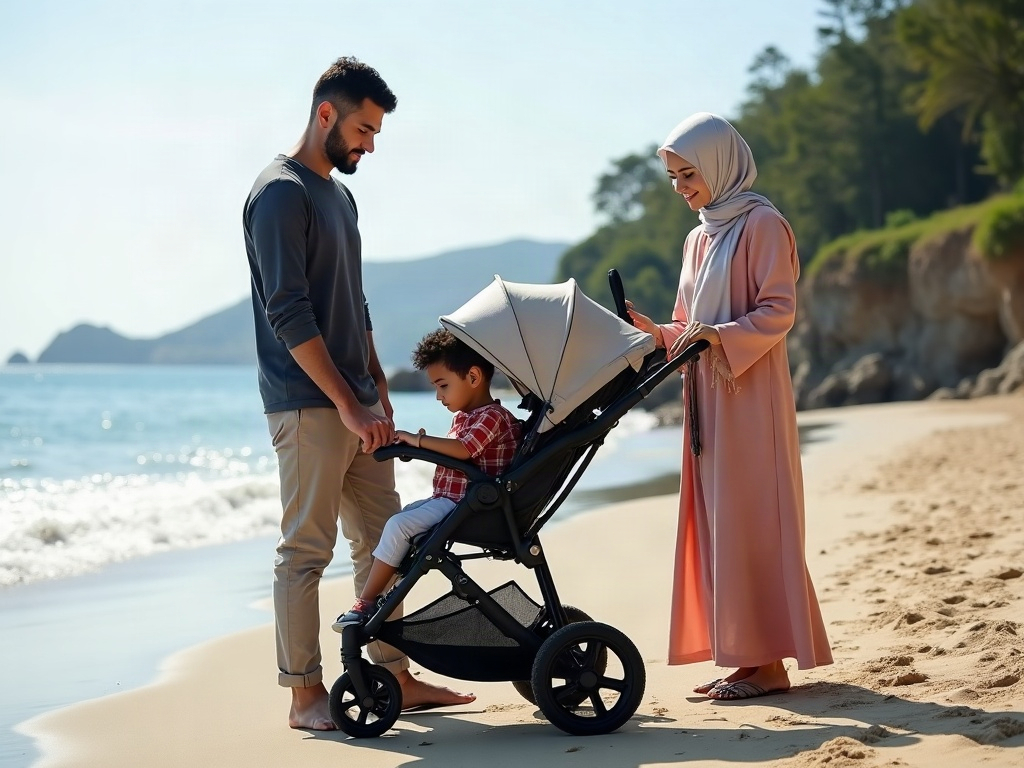
Demonstrating optimal conditions for stroller accessibility with a wide boardwalk leading to the beach, enhancing a coastal family vacation.
© WovenVoyages.com
What Essential Gear Should Families Pack for a Stroller-Accessible Coastal Family Vacation?
Essential gear families must pack for a stroller-accessible coastal family vacation includes an all-terrain stroller with large, air-filled tires, a universal stroller sunshade with a UPF 50+ rating, and a portable, battery-operated clip-on fan.
These items are crucial for navigating varied terrain, providing adequate sun protection, and ensuring comfort for the child in warmer beach environments, preventing common logistical challenges.
For optimal performance on varied terrain like packed sand, all-terrain strollers typically feature rear wheels with a diameter of 16 inches or more and front swivel wheels around 12 inches.
An All-Terrain Stroller: A stroller engineered with a heavy-duty suspension system and large-diameter, pneumatic (air-filled) tires designed to absorb shock and navigate uneven surfaces like packed sand far more effectively than standard strollers with small, plastic wheels.
The ‘Stroller System’ category focuses on the stroller’s suitability: large air-filled tires prevent the stroller from sinking into moderately firm sand.
‘Climate Control’ items, such as the UPF 50+ sunshade, offer critical protection from intense coastal sun, while a clip-on fan provides cooling in humid conditions.
‘Utility Items’ like oversized gear clips and a parent console are essential for keeping drinks, snacks, and small items organized and easily accessible on the go.
Unique Insight: Investing in an all-terrain stroller is a game-changer for beach trips, but supplementing it with a portable tire pump can save your day if you encounter an unexpected flat on soft surfaces.
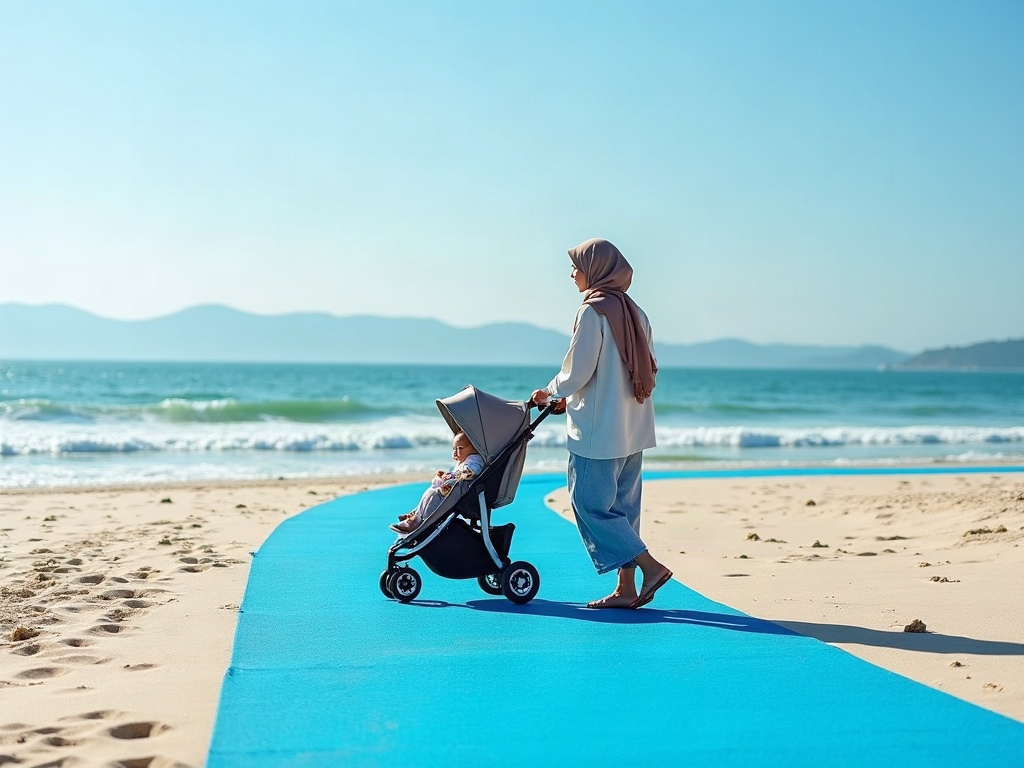
An example of an all-terrain stroller, crucial for navigating varied beach terrains and ensuring comfort during a coastal family vacation.
© WovenVoyages.com
What Stroller-Friendly Activities Can Families Enjoy at Coastal Destinations During a Family Vacation?
Stroller-friendly activities families can enjoy at coastal destinations during a family vacation extend beyond the sand to include exploring paved boardwalks and esplanades, visiting accessible fishing piers, and navigating waterfront parks with compliant playgrounds.
These options offer diverse entertainment without requiring strollers to navigate difficult sand, ensuring fun for all members of the family.
The National Park Service is committed to improving accessibility; for example, Gulf State Park in Alabama features 28 miles of paved trails and a beachfront lodge, making it highly accessible.
Accessible Playground: A playground built on a smooth, unitary rubber surface (not sand or wood chips) that features ramps onto play structures and ground-level interactive elements, allowing a stroller to be pushed directly to the activity zones.
Boardwalk Exploration allows for leisurely strolls with ocean views, as the smooth, paved surfaces are perfect for strollers.
Pier Fishing can be enjoyed with a stroller as many piers offer flat, accessible surfaces that extend over the water.
Waterfront Dining is made easy by restaurants with outdoor seating on promenades, providing direct stroller accessibility.
Visiting an Accessible Playground ensures children can play safely and easily, as these playgrounds feature smooth, unitary surfaces and ramps.
Coastal Nature Trails with paved or firm gravel paths offer a chance to explore local flora and fauna with a stroller.
Unique Insight: Many coastal destinations offer inclusive splash pads or water features in waterfront parks, providing a sensory-rich, stroller-accessible alternative to sandy beaches on hot days.
How Can Local Transportation Be Navigated with Strollers During a Coastal Family Vacation?
Local transportation can be navigated with strollers during a coastal family vacation by prioritizing public bus systems featuring low-floor entry and designated wheelchair/stroller areas, and by confirming vehicle size with ride-sharing services like UberXL or LyftXL before booking.
This strategic approach minimizes transit stress and ensures seamless movement across your chosen coastal destination.
According to the U.S. Department of Transportation’s ADA regulations, public transit vehicles must provide a clear floor space of at least 30 inches by 48 inches for a single wheelchair or occupied stroller.
Low-Floor Bus: A public transit vehicle designed with a flat floor and no interior steps, which allows for stepless boarding from a curb and often includes an automated ramp, enabling strollers to be rolled on and off without being collapsed or lifted.
For public transit, always check the destination’s transit authority website for an “accessibility” page, which will detail bus routes with low-floor buses and designated stroller spaces.
Utilize Google Maps Street View to inspect bus stops for shelters and paved waiting areas, ensuring comfort and safety while waiting.
Download the local transit app, which often provides real-time bus tracking and accessibility filters.
For ride-sharing services, be aware that standard vehicles are often too small to comfortably accommodate a non-collapsible all-terrain stroller, making the “XL” option critical.
Unique Insight: Many modern coastal destinations now offer dedicated “Family Zones” in public transport or at popular attractions, which may include priority boarding or larger designated spaces for strollers.
4. What Are the Common Challenges of a Stroller-Accessible Coastal Family Vacation and How Can They Be Avoided?
Common challenges for a stroller-accessible coastal family vacation, such as unexpected weather, crowded beaches, and safety hazards, can be proactively avoided through meticulous planning.
Implementing strategies like pre-researched rainy-day itineraries, utilizing off-peak hours, and adhering to strict safety protocols for heat and water exposure ensures a smoother, more enjoyable trip.
All common challenges are predictable and can be mitigated with forethought, focusing on pre-emptive actions rather than reactive solutions.
Illustrating a potentially challenging weather scenario for a coastal family vacation, underscoring the importance of preparedness for stroller accessibility.
© WovenVoyages.com
How Can Families Handle Unexpected Weather During a Coastal Family Vacation with a Stroller?
Families can handle unexpected weather during a coastal family vacation with a stroller by creating a pre-researched “Rainy Day Itinerary” of indoor, accessible attractions and by packing a dedicated weather kit that includes a form-fitting stroller rain cover.
This preparation prevents discomfort or instability and ensures alternative activities are readily available, maintaining the positive momentum of the family vacation.
Most stroller manufacturers advise against using canopies or umbrellas in winds exceeding 15-20 mph, as strong gusts can make the stroller unstable and create a tipping hazard.
Stroller Weather Shield: A transparent vinyl or plastic cover designed to conform to the shape of a specific stroller model, creating a waterproof and windproof cocoon that protects the occupant while maintaining their visibility.
Create a “Rainy Day Go-Bag” checklist with three essential items: a dedicated stroller weather shield, an extra blanket for warmth or added protection, and a list of 2-3 pre-vetted indoor locations like a local aquarium or children’s museum.
A dedicated weather shield is superior to a simple blanket because it prevents wind-driven rain and maintains the child’s field of vision, enhancing their comfort and experience.
Unique Insight: Beyond weather, unexpected closures of accessible pathways can occur; always have a backup accessible activity in mind that doesn’t rely on beach access, such as an indoor play area or a family-friendly cultural center.
What Strategies Help Families Navigate Crowded Beaches with Strollers During a Family Vacation?
Key strategies that help families navigate crowded beaches with strollers during a family vacation are to utilize non-peak “shoulder hours,” such as before 10 a.m. or after 4 p.m., and to deliberately use access points farther from main parking lots.
These strategies effectively reduce congestion and improve mobility, making the beach experience more pleasant and manageable.
Travel experts note that beach crowds can be up to 70% smaller on weekday mornings compared to weekend afternoons, making early visits a key strategy for easier navigation.
Tidal Timing: The advanced strategy of planning a beach visit to coincide with the hours around low tide, which not only provides a wider expanse of firm, stroller-friendly sand but also naturally disperses crowds over a larger area.
The “Shoulder Hours Strategy” is the single most effective method for avoiding crowds, enabling families to enjoy the beach with ample space and less traffic on accessible pathways.
Implement the “Walk 500 Yards” rule: The density of people on a beach drops exponentially after walking 500 yards from the primary entrance or amenity hub, offering more secluded spots for your stroller-accessible setup.
Unique Insight: Consider beaches with multiple access points; opting for a less-trafficked entrance, even if it requires a slightly longer walk from parking, can dramatically improve the initial entry experience with a stroller.
What Are the Key Safety Considerations for Strollers on Beaches During a Family Vacation?
The three key safety considerations for strollers on beaches during a family vacation are preventing infant overheating through adequate ventilation, engaging the brake lock on any surface that is not perfectly level, and maintaining a 50-foot minimum distance from the surf zone.
These measures mitigate risks like heatstroke, runaway strollers, and unexpected water exposure, prioritizing child safety and ensuring a secure coastal family vacation.
Child safety organizations warn that on a hot day, the temperature inside a covered stroller can rise to dangerous levels, increasing by as much as 20°F in just 10 minutes compared to the outside temperature.
Swash Zone: The turbulent area of a beach where waves wash up after breaking, which can produce an unpredictable surge of water capable of destabilizing and sweeping away a lightweight stroller.
1. Heat Risk: Overheating and Sunburn
Always ensure adequate air circulation around the child in the stroller, avoiding full covers that trap heat.
Position the stroller in shaded areas, under an umbrella or pavilion, and frequently check the child’s temperature.
Provide plenty of hydration and light clothing to prevent heatstroke.
2. Roll-away Risk: Inclines and Wind
Always engage the brake lock, even on seemingly flat surfaces, as slight inclines or unexpected gusts of wind can cause the stroller to roll.
Utilize a safety strap if available, wrapping it around your wrist, especially when near water or sloping terrain.
Consider anchoring the stroller with heavy items if you step away, even for a moment.
3. Water Risk: Rogue Waves and the Swash Zone
Maintain a minimum distance of 50 feet from the swash zone, the area where waves break and recede, as rogue waves can reach surprisingly far up the beach.
Always point the stroller parallel to the water, never facing it directly, to reduce the risk of it being pushed over by a wave.
Keep valuables and essentials elevated and away from potential water surges.
Unique Insight: Even a lightweight all-terrain stroller can become a hazard if not properly secured; utilize a small, collapsible beach anchor (like those for umbrellas) to provide extra stability on windy days.
5. Logistics: Stroller-Accessible Beach Trip Planning Checklist
Use this interactive checklist to ensure you’ve covered all the critical logistical bases for your trip. Click the squares to check them off as you plan.
| Activity | Required Gear | Accessibility Prerequisite | Optimal Time of Day |
|---|---|---|---|
| Beachfront Stroll | All-terrain stroller | Paved Boardwalk or Mobi-Mat | Early morning or late afternoon |
| Accessible Pier Visit | Standard or all-terrain stroller | Flat, paved pier access | Mid-morning or sunset |
| Waterfront Park Play | Standard stroller | Accessible playground surface | Any time, preferably shaded |
| Shaded Picnic | Stroller, picnic blanket | Accessible picnic tables/shelters | Lunchtime or early evening |
| Checklist Item / Tactic | Status |
|---|---|
| Destination Vetting | |
| Vet your coastal destination online using satellite maps to identify paved paths and Mobi-Mat locations. | ⬜ |
| Call the local parks department or tourism board to confirm current accessibility status and availability of amenities like beach wheelchairs. | ⬜ |
| Gear & Preparation | |
| Pack gear specifically for the identified conditions, including an all-terrain stroller if needed, and a stroller weather shield. | ⬜ |
| Prepare a “Rainy Day Itinerary” with accessible indoor alternatives for unexpected weather. | ⬜ |
| On-Site Execution | |
| Utilize non-peak “shoulder hours” (early morning/late afternoon) to avoid crowds and ensure easier navigation. | ⬜ |
| Always engage stroller brake locks, especially on varied terrain, and maintain safe distances from the surf zone. | ⬜ |
6. Frequently Asked Questions (People Also Ask)
What are common features of ADA-compliant beach infrastructure?
ADA-compliant beach infrastructure commonly features wide, firm pathways like Mobi-Mats or paved boardwalks, accessible ramps with a maximum slope of 1:12, and designated accessible restrooms with changing stations, ensuring ease of movement for strollers and wheelchairs.
How do I research specific beach accessibility before traveling?
To research specific beach accessibility, consult official park or tourism websites for accessibility maps, utilize satellite imagery (e.g., Google Maps Street View) to visualize pathways, and contact local parks departments directly for up-to-date information on conditions and amenities like Mobi-Mat availability or beach wheelchair rentals.
What should I do if a beach is unexpectedly inaccessible?
If a beach is unexpectedly inaccessible, activate your pre-planned rainy-day itinerary, which should include alternative accessible indoor activities like aquariums or museums.
This proactive approach minimizes disruption and ensures a positive family vacation experience despite unforeseen access challenges.
Where can I find real-time accessibility updates for beaches?
Real-time accessibility updates for beaches can often be found on the official websites of local park systems, city tourism boards, or dedicated accessibility travel apps.
Calling the local parks department or beach patrol directly is also a reliable method for the most current information regarding stroller accessibility.
References & Sources
What Are the Final Thoughts on Maximizing a Coastal Destination for a Family Vacation?
Maximizing a coastal destination for a stroller-friendly family vacation relies on rigorously aligning meticulous preparation with the destination’s verified accessibility features.
Success stems from knowing the criteria, making data-driven choices, proactive pre-planning, and anticipating potential problems.
A successful stroller-friendly beach vacation is not a matter of luck, but a direct result of meticulous, evidence-based planning.