How to Pack Light and Efficiently for a family vacation
Table of Contents
You pack light and efficiently for a family vacation by prioritizing versatile clothing, utilizing packing cubes for organization, and focusing only on items necessary for planned activities to drastically reduce luggage bulk.
Prioritizing light packing is a strategic choice for family travel that yields tangible benefits. It eliminates the cost of checked bags and the time wasted at baggage claim, while making it easier to navigate airports, public transport, and smaller accommodations with children in tow.
. Why should families prioritize packing light for vacation?
Families should prioritize packing light for vacation to reduce travel-day stress, save significant money on airline fees, and increase overall mobility and flexibility at the destination.
Considering how lighter bags can simplify airport navigation and movement through various types of family vacation accommodation is an important aspect of overall travel planning.
How does packing light save money and time for family travel?
Packing light saves money for family travel primarily by eliminating checked baggage fees and saves time by allowing families to bypass airport baggage claim and check-in queues.
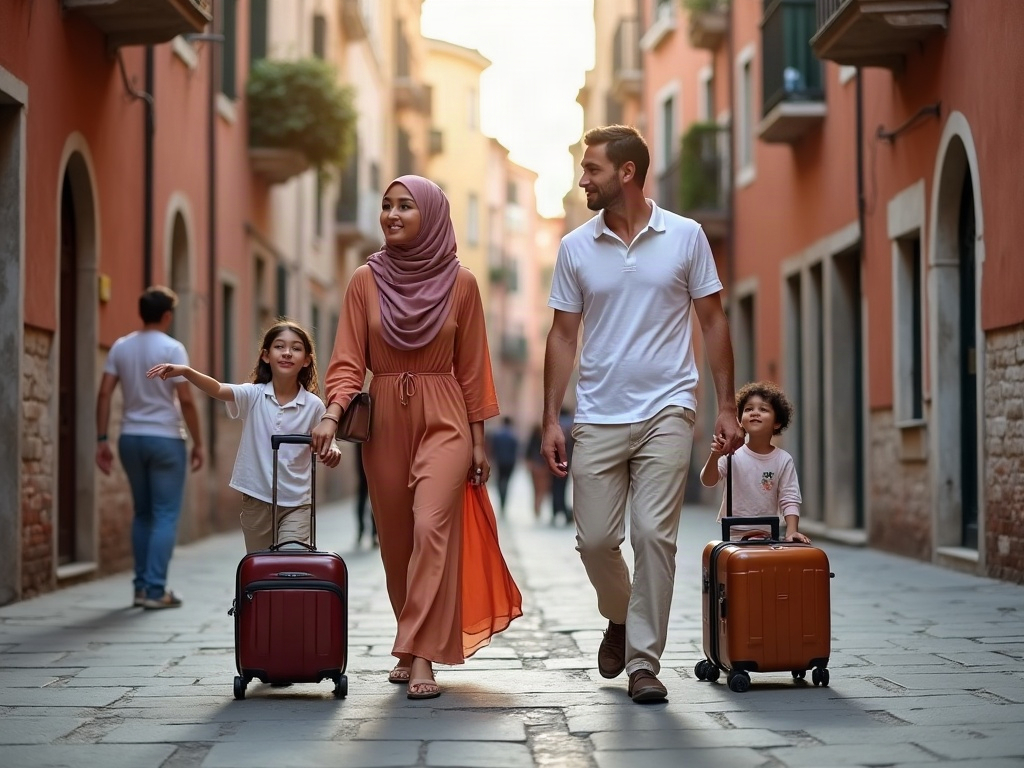
The most direct financial saving from packing light comes from avoiding airline checked bag fees, which can accumulate rapidly for a family of four. Time is saved at both departure (by using online check-in and going straight to security) and arrival (by avoiding the wait at the luggage carousel). By keeping packing weight well under 10kg (22 lbs) for even long trips, families can avoid costly checked bag fees on many airlines.
The savings extend beyond airlines. Packing light often means families can opt for smaller, more affordable rental cars and avoid paying for porters or luggage storage services at destinations.
 © WovenVoyages.com
Author’s Experience
“I once spent a week traveling through Europe with just a carry-on for my family of four. The freedom of not dragging heavy bags through train stations and ancient city streets was liberating. It was tough to pare down at first, but the time saved and the ease of movement made every moment more enjoyable. A truly transformative experience!”
What are the key benefits of efficient packing for family well-being?
The key benefits of efficient packing for family well-being include reduced parental stress, increased physical mobility, and a greater sense of freedom and spontaneity during the vacation.
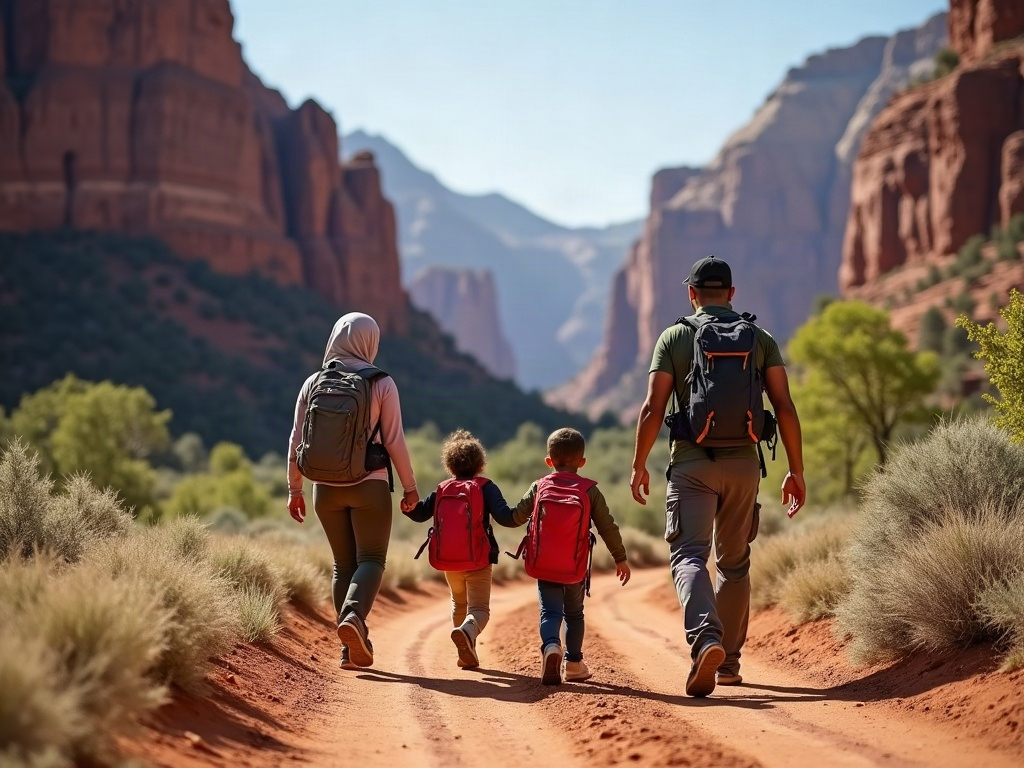
Efficient packing directly impacts family well-being by lowering the stress associated with managing luggage, which allows parents to be more present and patient. This newfound mobility also empowers families to navigate crowded areas, stairs, and public transport with ease, reducing physical strain and frustration. One travel writer documented how her family of 5 traveled around Europe for 30 days with only 1 backpack each, highlighting the enhanced mobility and reduced stress.
For children, a less-encumbered travel experience means less waiting and more engagement. When parents aren’t stressed about luggage, the emotional tone of the trip is more positive, which directly contributes to a child’s sense of security and enjoyment.
 © WovenVoyages.com
For a comprehensive guide to all stages of your trip, consider learning how to plan a family vacation step by step, of which efficient packing is a crucial element.
If you’re looking for even more ways to stretch your travel budget, you might explore the most effective cost-saving strategies for family vacations.
. What defines efficient and light packing for family vacations?
Efficient and light packing for family vacations is defined by a strategic methodology that prioritizes multi-use items, a coordinated color palette, and a commitment to packing only for planned activities and probable needs.
This packing approach is less about the total number of items and more about the versatility and interchangeability of each piece. It requires a shift in mindset from “just in case” to “what is essential,” focusing on creating a compact, cohesive travel wardrobe for every family member.
What essential principles guide light packing for multiple family members?
The essential principles that guide light packing for multiple family members are: coordinating a neutral color palette, choosing versatile and layerable clothing, and assigning ownership of packing space to each individual.
The core principle is coordination; by selecting 2-3 neutral base colors (e.g., navy, grey, tan) and 1-2 accent colors for the whole family, all items become more interchangeable. This is supported by the principle of layering, where a few thin layers provide more weather adaptability than one bulky coat. A common guideline is the 5-4-3-2-1 Clothing Countdown, which involves packing 5 tops, 4 bottoms, 3 pairs of shoes, 2 dresses or layers, and 1 set of accessories to create multiple outfits.
A crucial, often-overlooked principle is “shared gear, individual clothes.” Consolidate shared items like toiletries and electronics into one bag, but use packing cubes to give each family member, including children, a distinct, manageable set of clothing they are responsible for.
 © WovenVoyages.com
How do family-specific needs influence a minimalist packing approach?
Family-specific needs, such as diapers for an infant or specialized gear for a teen’s hobby, influence a minimalist packing approach by forcing a ruthless prioritization of non-negotiable items.
A minimalist approach for a family with a baby must still accommodate essentials like diapers, wipes, and a portable crib, which means other categories (like parental clothing) must be cut back even further. For families with teens, the challenge is managing electronics and chargers, which requires a focus on shared power banks and consolidated charging stations. Many minimalist travel experts note that involving young kids in pushing their own small, lightweight bags can support a minimalist approach.
The key is to distinguish between a “need” and a “want.” A baby’s car seat is a non-negotiable need. A toddler’s fifth favorite stuffed animal is a want. The minimalist approach forces a conversation about this distinction, which is a valuable life skill for children to learn.
Once you understand the mindset, a practical first step is to learn how to create a family vacation packing list that aligns with these minimalist principles.
. How do families decide what clothing and gear to pack for diverse needs?
Families decide what clothing and gear to pack for diverse needs by creating an activity-based itinerary first and then selecting versatile, high-performance items that serve multiple functions.
The decision process begins not with the closet, but with a list of planned activities (e.g., hiking, swimming, city touring, fine dining). Each family member’s clothing choices must then be justified against this list, prioritizing items that can be used for more than one type of activity.
Which versatile clothing items work best for different family vacation scenarios?
The most versatile clothing items that work best for different family vacation scenarios are merino wool base layers, neutral-colored convertible pants or zip-off shorts, and a packable, waterproof shell jacket.
For any destination, a merino wool t-shirt provides warmth when it’s cool, breathes when it’s hot, and resists odor, allowing for multiple wears. A single packable rain jacket for each family member can serve as a windbreaker, rain protection, and an extra layer for warmth, making it indispensable for unpredictable weather from Scotland to San Francisco. Adventure travel experts suggest a packed bag should weigh about 10 percent of your body weight; for a 150-pound person, this means a 15-pound pack, reinforcing the need for lightweight, versatile clothing.
For women and teen girls, a simple, dark-colored jersey or wrap dress is a packing powerhouse. It can be a casual swimsuit cover-up at a Caribbean resort, dressed up with a scarf for dinner in Paris, or layered over leggings for a comfortable travel day.
 © WovenVoyages.com
How can families select essential toiletries and first-aid items for a light bag?
Families can select essential toiletries and first-aid items for a light bag by switching to solid-form products, decanting liquids into travel-size reusable containers, and building a compact, customized first-aid kit.
The most effective strategy is to replace liquid toiletries with solid alternatives like shampoo bars, conditioner bars, and toothpaste tablets, which are smaller, lighter, and not subject to TSA liquid restrictions. For necessary liquids, use reusable silicone bottles (under 3.4oz/100ml) instead of buying bulky, disposable travel-sized versions of products. A key reason to switch to solid toiletries is that 70% to 90% of the weight of typical shower gel is just water, making it an inefficient item to pack.
Build a “dynamic” first-aid kit. Start with a base of essentials (band-aids, antiseptic wipes, pain reliever), but then customize it for the destination. Add insect repellent for a jungle trip, sting-relief for a beach vacation, and blister pads for a city walking tour.
Understanding how to effectively plan family vacation activities is key to making informed packing decisions for each family member.
For a detailed breakdown on ensuring health preparedness, dive deeper into what to include in a family vacation first-aid kit.
. Which specific packing techniques optimize space in family luggage?
The specific packing techniques that best optimize space in family luggage are the rolling method for soft clothing, the use of packing cubes for organization, and filling all dead space.
Tightly rolling clothes, rather than folding them flat, significantly compresses items and reduces wrinkles, allowing more to fit in a suitcase. This technique is enhanced by using packing cubes, which compartmentalize and compress rolled items for each family member, turning a chaotic bag into a modular system.
How does using packing cubes enhance efficiency for family members’ belongings?
Using packing cubes enhances efficiency for family members’ belongings by creating a modular organization system that allows for easy identification, access, and containment of each person’s clothes.
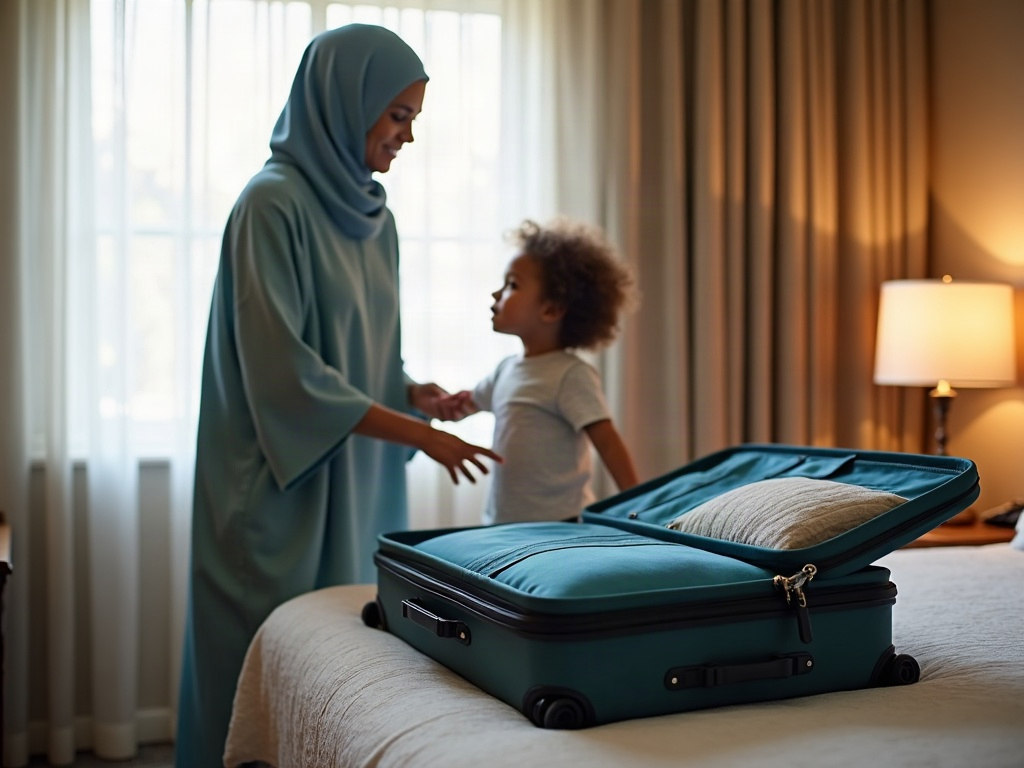
Packing cubes function like portable drawers. By assigning a different color cube to each family member, parents can instantly locate a child’s items without disrupting the entire suitcase, which is critical for quick changes at a hotel or Airbnb after a long travel day. Many travel experts demonstrate that by using packing cubes, an adult’s clothing could fit into two medium cubes, and the children’s clothes could fit into one large cube each, allowing all of the family’s cubes to fit into a single full-size piece of luggage.
The efficiency extends beyond the suitcase. Upon arrival at the destination, the cubes can be transferred directly into hotel drawers, keeping clothes organized and making repacking at the end of the trip a simple matter of refilling the cubes. It prevents the “suitcase explosion” that often happens in family hotel rooms.
When should families consider vacuum-seal bags for bulky items?
Families should consider vacuum-seal bags for bulky items only when packing non-compressible, puffy items like winter jackets or ski pants for a cold-weather destination, and when they have confirmed access to a vacuum cleaner at their destination.
Vacuum-seal bags are a specialized tool, not an everyday solution. Their primary function is to compress air out of lofty items, making them ideal for a family ski trip to Colorado or a winter visit to Iceland, but they are impractical for regular clothing as they create a dense, heavy, and wrinkled brick. To avoid the need for extreme compression tools, it’s often possible for travelers to get by with carry-on compliant luggage that has around 35 to 40 liters of capacity.
A major pitfall is the return journey. Without a vacuum cleaner at the hotel or rental home, it’s impossible to re-compress the bags, which can lead to a packing crisis and the need to purchase an extra suitcase. A more reliable alternative for most trips is a “compression packing cube,” which uses a zipper system to squeeze air out.
 © WovenVoyages.com
. Logistics: Family Light Packing Checklist
| Checklist Item / Tactic | Status |
|---|---|
| Step 1: Plan Activities First: Determine itinerary before selecting any items. | ⬜ |
| Step 2: Select Versatile Items: Choose multi-use, neutral-colored, and layerable garments. | ⬜ |
| Step 3: Apply the Rule of Three: Pack 3 tops for every 1 bottom. | ⬜ |
| Step 4: Coordinate Color Palette: Use a cohesive color scheme for the whole family. | ⬜ |
| Step 5: Utilize Rolling Method: Roll clothes tightly to save space and reduce wrinkles. | ⬜ |
| Step 6: Employ Packing Cubes: Assign colors to each family member to compartmentalize bags. | ⬜ |
| Step 7: Opt for Solid Toiletries: Replace liquids with shampoo and soap bars. | ⬜ |
| Step 8: Customize First-Aid Kit: Build a small kit tailored exactly to your destination. | ⬜ |
| Step 9: Fill Dead Space: Pack small items like socks inside shoes to maximize all available room. | ⬜ |
Frequently Asked Questions
How does packing light save money and time for family travel?
What are the key benefits of efficient packing for family well-being?
What essential principles guide light packing for multiple family members?
Which versatile clothing items work best for different family vacation scenarios?
How does using packing cubes enhance efficiency for family members’ belongings?
Resolution
Ultimately, learning how to pack light and efficiently for a family vacation is less about following rigid rules and more about adopting a mindset that values experiences over possessions. By prioritizing versatility, leveraging smart tools like packing cubes, and planning strategically around your destination’s needs, you transform packing from a dreaded chore into an integral part of your family’s travel success. This approach reduces stress, saves money, and opens up a world of greater freedom and enjoyment on your adventures.