How to Use Public Transport with Kids on Family Vacation
Table of Contents
Opting for public transport on family vacations delivers significant economic savings, deepens cultural immersion for children, and minimizes your environmental footprint.
Choosing local transit is a strategic component of a larger travel plan. For a complete guide on organizing your trip from start to finish, understanding how to plan a family vacation step by step provides the essential foundation.
1. Why Choose Public Transport for Family Vacations with Kids?
Choosing public transport for family vacations with kids offers significant cost savings by avoiding rental cars and parking, deeply immerses children in local culture, and reduces environmental impact.
It transforms mundane travel into an educational adventure, teaching kids practical navigation and social skills while creating authentic, lasting memories of the destination.
What are the economic advantages for families?
The primary economic advantage of using public transport for families is the direct and substantial savings from avoiding car rental fees, fuel costs, exorbitant city parking, and tolls. Families save money by eliminating the high daily costs associated with rental cars. Furthermore, many transit systems offer family passes, child discounts, or free travel for young children.
These direct savings on transportation are a fundamental aspect when considering budgeting for your family vacation effectively. Privately owned garages in major cities can be incredibly costly for just a few hours.
The economic benefit extends beyond direct travel costs. Many multi-day tourist transit passes bundle unlimited travel with free or discounted admission to major family-friendly museums and attractions, creating a secondary layer of significant savings on the activity budget.
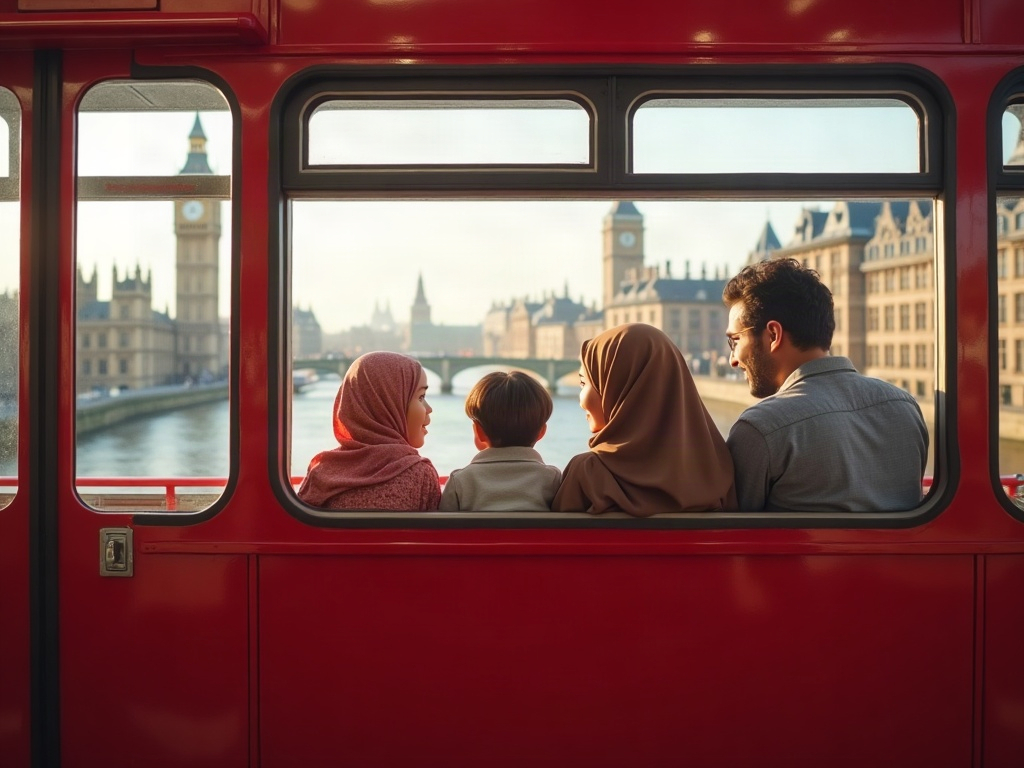
Public transport offers distinct economic, cultural, and environmental advantages.
© WovenVoyages.com
How does it enhance the cultural experience for children?
Using public transport on a family vacation enhances the cultural experience for children by immersing them directly into the daily life, sounds, and rhythms of the destination. Public transport transforms children from passive tourists in a car into active participants in the local culture. They observe daily routines, hear the local language, and see parts of the city they would otherwise miss.
This active engagement, like deciphering maps and navigating, builds confidence and problem-solving skills, creating vivid and memorable cultural experiences.
The act of navigating a foreign transit system—deciphering maps, listening for stops, and observing local etiquette—builds a child’s confidence and problem-solving skills. This active engagement creates more vivid and lasting memories than passively being driven.
What environmental benefits does it offer for family travel?
The key environmental benefit of using public transport for family travel is the significant reduction of the family’s carbon footprint by opting for a shared, more efficient mode of transit. By choosing buses, trains, or subways over a private rental car, a family dramatically lowers its per-person carbon emissions during their trip.
This action directly contributes to less air pollution and traffic congestion in the destination city.
Choosing a destination known for excellent electric-powered public transport (like many cities in Switzerland or Norway) allows families to travel with a near-zero carbon footprint. This provides a powerful, teachable moment for children about sustainable travel.
2. Which Types of Public Transport Work Best with Kids on Vacation?
For families, subways and trains generally offer optimal speed and capacity for city and intercity travel, respectively. Buses and trams provide detailed street-level access for shorter distances, while ferries offer scenic, entertaining rides.
Understanding these general types will help you consider more specific strategies for getting around your destination effectively. For a deeper dive into the decision process, consider a dedicated guide on choosing the best transportation type.
How do subways and trains compare for family travel?
For family travel, subways and trains both offer speed and predictability, but subways excel in urban core frequency while trains are superior for scenic, comfortable long-distance journeys between cities or to suburbs. Subways (or Metros) are unmatched for high-frequency, stop-and-go travel within a city center, but can be crowded and challenging with strollers.
Trains offer more space, dedicated luggage areas, and often a smoother, more scenic ride, making them ideal for day trips or airport transfers.
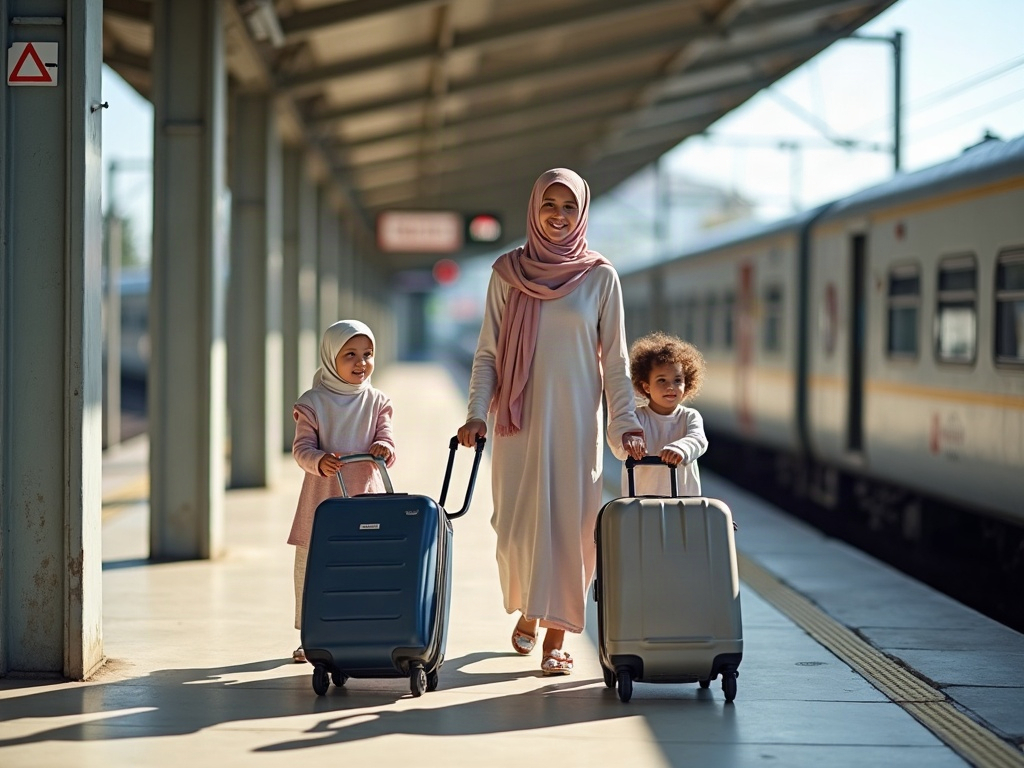
A key differentiator for families is station architecture. Older subway systems often lack elevators, making them extremely difficult with strollers, whereas modern systems and mainline train stations are typically designed with full accessibility.

Modern train stations often provide better accessibility for families with strollers.
© WovenVoyages.com
When should you consider buses and trams with children?
Families should consider buses and trams with children when their destination is not directly on a subway line or when they prefer a slower, street-level view of the city. Use buses and trams for “last-mile” travel from a subway station to a specific attraction, or as the primary mode of transport in smaller cities without a metro system.
Their frequent stops and street-level view make them a scenic, low-stress option for short hops.
In many historic European cities, trams are not just transport but a quintessential tourist attraction. Choosing a scenic tram route is an activity in itself, combining sightseeing with transportation in a way that is highly engaging for children.

Trams can double as entertaining sightseeing experiences for kids.
© WovenVoyages.com
Are ferries and boats a good option for families?
Ferries and boats are an excellent public transport option for families in waterside destinations, as they combine practical transportation with an inherently entertaining and scenic experience for children. In cities like Venice, Sydney, or Hong Kong, ferries are a core part of the transit network.
The ride itself is an attraction, offering unique photo opportunities and a break from crowded streets, which is highly appealing to children.
Beyond public ferries, many cities have smaller “water taxi” or “hop-on-hop-off” boat services that, while more expensive, can offer unparalleled convenience by connecting key tourist sites along a waterway. This can be a strategic splurge for families.

Ferry rides offer a break from city crowds and unique perspectives.
© WovenVoyages.com
What about ride-sharing or taxis with car seats?
Ride-sharing and taxis should be used strategically on family vacations, primarily for airport transfers or specific point-to-point trips, but are complicated by car seat laws and availability. While convenient, using taxis or ride-sharing services with young children presents a major challenge regarding car seats.
Families must research local laws and either bring their own approved travel car seat or use a specialized family taxi service that provides them. Addressing these logistics is a critical part of planning for family vacation safety.
The legality and cultural norm of children in taxis without car seats vary drastically by country. In some destinations it is common and legal, while in others it is illegal and strictly enforced. Assuming your home country’s rules apply abroad is a common mistake.
Always research local car seat regulations before relying on ride-shares.
© WovenVoyages.com
3. How Do You Select the Best Public Transport for Your Family’s Needs?
Selecting the optimal public transport for your family requires evaluating your children’s ages, the destination’s infrastructure, and your desired travel pace/luggage.
Toddlers need accessibility, teens handle complexity, and a city’s integrated system simplifies travel. Expert travelers often “stack” modes, combining fast trains with local buses or strategic taxi use. Selecting your transport method is integral to your overall travel rhythm, directly impacting your family vacation schedule.
What factors influence your choice with different age groups?
The critical factors that influence your choice of public transport with different age groups are mobility (strollers vs. walking), stamina, and attention span. For infants and toddlers, prioritize accessibility for strollers and shorter journey times to avoid meltdowns.
For school-aged kids, you can incorporate more walking and complex transfers. For teenagers, grant them the responsibility of helping navigate, and choose faster options to fit more into their schedules.
The “entertainment value” of the transport itself is a key factor that changes with age. A toddler might be fascinated by a short bus ride, while a school-aged child will love the novelty of a funicular or ferry, and a teenager will simply appreciate the efficiency of a high-speed train.
How does your destination’s public transport infrastructure impact decisions?
Your destination’s public transport infrastructure is a primary determinant of your travel strategy, dictating the feasibility, cost, and convenience of getting around with children. A destination with a modern, integrated, and accessible system (like Singapore or Tokyo) makes using public transport with kids simple and efficient.
Conversely, a city with an older, fragmented, or inaccessible system requires more careful planning, a slower pace, and potentially relying on a mix of walking and taxis.
Look for a “hub-and-spoke” system on transit maps. Cities with a clear, central hub where multiple lines converge are often easier for families to navigate, as you can base yourself near the hub and take direct “spokes” to major attractions.
What role does your family’s pace and luggage play?
Your family’s preferred travel pace and the amount of luggage you carry directly constrain your public transport options, with slower paces and lighter luggage allowing for greater flexibility. Families with a lot of luggage or those who prefer a fast-paced itinerary should prioritize transport with minimal transfers and dedicated luggage space.
Families who pack light and enjoy a leisurely pace can more easily use buses and subways with multiple transfers.
The “one-trip rule” is a key expert strategy: aim to be able to move all your luggage and children in a single trip without leaving anything unattended. If you cannot, your luggage load is too high for efficient public transport use, and you should schedule a car service.
4. Logistics: Family Public Transport Planning Checklist
| Checklist Item / Tactic | Status |
|---|---|
| TIER/STEP 1: Research Destination Transit System Accessibility | ⬜ |
| TIER/STEP 2: Plan Routes with Child-Friendly Transfers and Facilities | ⬜ |
| TIER/STEP 3: Secure Appropriate Ticketing (Family Passes, Child Fares) | ⬜ |
Frequently Asked Questions
Why choose public transport for family vacations with kids?
What are the economic advantages of public transit for families?
How do subways and trains compare for family travel?
How do you select the best public transport for your family’s needs?
Resolution
Using public transport with kids on a family vacation, when properly planned, transforms travel into an affordable, educational, and memorable adventure. By researching your destination, choosing the right mix of transport, and preparing for challenges, families can navigate any city with confidence, enriching cultural experiences and fostering a sustainable mindset. The most important takeaway is a mindset shift: view public transport not as a hurdle to be overcome, but as an integral and enjoyable part of the vacation experience itself. The journeys between the sights can become as memorable as the sights themselves.