How to Plan Family Vacation Meals?
Table of Contents
Planning family vacation meals is essential for a stress-free trip because it systematically reduces decision fatigue, controls costs, and ensures the well-being of all family members.
This proactive strategy mitigates the daily stress of deciding what, where, and when to eat, which is a major source of family friction during travel. By creating a structured yet flexible plan, parents can manage budgets, cater to dietary needs, and maximize actual vacation time. Understanding these core benefits is the first step; next, we will break down the specific benefits you can expect to achieve.
Successful meal planning is a key component of the larger endeavor of How to Plan a Family Vacation Step by Step, ensuring all elements of your trip come together smoothly.
Understanding how food costs fit into the bigger picture of your trip is crucial, and you can learn more about comprehensive financial strategies by checking out our guide on How to Plan the Budget for a Family Vacation.
1. Why is planning family vacation meals essential for a stress-free trip?
Planning family vacation meals is essential for a stress-free trip because it systematically reduces decision fatigue, controls costs, and ensures the well-being of all family members.
This proactive strategy mitigates the daily stress of deciding what, where, and when to eat, which is a major source of family friction during travel. By creating a structured yet flexible plan, parents can manage budgets, cater to dietary needs, and maximize actual vacation time.
Strategic planning for family vacation meals is crucial as it significantly reduces decision-making stress, effectively manages food costs, and helps meet diverse nutritional and dietary requirements for everyone, ultimately freeing up more time to enjoy the vacation itself.
The primary benefit isn’t just saving money; it’s conserving cognitive resources. Every “what’s for dinner?” question depletes a parent’s limited “decision-making battery,” leading to more expensive, less healthy impulse choices later in the day.
Decision Fatigue: A psychological state of impaired decision-making quality that occurs after a long session of making choices, highly prevalent among parents on vacation.
What benefits does strategic family meal planning offer for vacation meals?
Strategic family meal planning for vacation meals offers concrete benefits in four key areas: financial savings, time optimization, health and safety, and reduced stress.
The primary benefits include preventing last-minute, expensive restaurant choices, avoiding time wasted searching for suitable dining options, and maintaining control over nutritional content and allergen exposure. This structured approach transforms meal times from a source of chaos into a predictable and enjoyable part of the vacation.
Strategic family meal planning offers financial savings by avoiding costly impulse dining, optimizes time by reducing meal decision-making, improves health and safety through controlled nutrition and allergen management, and significantly reduces stress, leading to a more enjoyable and predictable vacation experience.
A key benefit is “experience curation.” Planning allows a family to intentionally choose to experience a local market for one meal, a specific highly-rated restaurant for another, and a simple home-cooked meal for a third, creating a more diverse and memorable culinary journey.
In a user study of a meal planning app, a combined 98% of participants had a somewhat to extremely positive view of whether the app was helpful for meal planning. >
To demonstrate cause and effect, here are the core benefits:
- Financial Savings: By planning ahead, you avoid expensive last-minute restaurant choices and impulse buys, keeping your budget for other vacation experiences.
- Time Optimization: Reduces the time spent daily deliberating where and what to eat, freeing up valuable moments for activities and relaxation.
- Health and Safety: Allows for control over nutritional content and managing food allergies, ensuring everyone, including active kids, stays healthy and safe in unfamiliar destinations.
- Reduced Stress: Transforms meal times from a source of chaos and decision fatigue into a predictable and enjoyable part of a stress-free vacation.

Author’s Experience
“On one trip, I forgot to plan meals, and every night became a scramble to find an open restaurant with space for a family of five. It added so much unnecessary stress; now I always have a flexible plan to keep things calm and enjoyable.”
How does meal planning for family vacations save time and money?
Meal planning for family vacations saves significant time and money by enabling bulk purchasing, minimizing impulse buys, and eliminating the time spent daily deliberating over dining options.
By creating a shopping list from a pre-set menu, you avoid both expensive convenience store prices and the food waste that comes from overbuying. Time is saved by reducing trips to the store and removing the 30-60 minutes per day families often spend debating where and what to eat.
Meal planning for family vacations saves money by facilitating bulk purchasing and preventing costly impulse buys, and saves time by streamlining grocery trips and eliminating the daily deliberation over dining choices, thus converting saved resources into more vacation enjoyment and relaxation.
The “time-saving” aspect is twofold: it saves “logistical time” (shopping, searching) and “cognitive time” (debating, deciding), the latter being more crucial for mental relaxation on a trip.
According to a 2018 Bureau of Labor Statistics study, U.S. families spent an average of $4,464 on food away from home, highlighting the significant potential for savings by cooking on vacation.
To gain a deeper understanding of maximizing your savings and efficiency, explore specific strategies for How to Plan Grocery Shopping for a Family Vacation to further optimize your trip’s food budget.
2. Which family vacation meal planning approach best suits your travel style?
The family vacation meal planning approach that best suits your travel style depends directly on your accommodation type, budget, and desired level of flexibility.
Families staying in vacation rentals with kitchens are best suited for a self-catering or hybrid approach to maximize cost savings and control. Those in traditional hotels or seeking maximum convenience may find an all-inclusive or dining-out strategy more fitting.
The ideal family vacation meal planning approach aligns with accommodation type (e.g., self-catering for rentals, all-inclusive for resorts), budget constraints, and desired flexibility; a hybrid model is often favored for balancing cost, convenience, and control over dietary needs.
The “best” approach is rarely a pure one. Most experienced family travelers use a “Hybrid-Dominant” model, designating 70% of meals to one strategy (e.g., self-catering) while intentionally planning for the other 30% (e.g., dining out for special experiences).
Self-Catering: A travel style where you stay in accommodation with kitchen facilities and are responsible for providing your own meals, distinct from hotel stays with no cooking options.
How to choose between cooking, dining out, or a hybrid approach for family vacation meals?
To choose between cooking, dining out, or a hybrid approach for family vacation meals, you must first assess your accommodation’s kitchen facilities, your destination’s restaurant density, and your family’s daily activity schedule.
A vacation rental with a full kitchen makes cooking the most cost-effective base strategy. Conversely, a packed itinerary of excursions across a city makes dining out more practical. Most families find a hybrid approach ideal, planning simple breakfasts and lunches at “home” and dining out for dinner.
Choosing between cooking, dining out, or a hybrid approach for family vacation meals requires assessing kitchen availability, local restaurant options, and your family’s itinerary; typically, a hybrid model offers the best balance, allowing for cost-effective home meals while reserving dining out for unique experiences.
The decision is not static. A smart plan might be hybrid, but skewed: 80% cooking at a remote cabin (low restaurant density) vs. 50% cooking in a city condo (high restaurant density).
One family of six adults reported a single restaurant meal on vacation cost $250, illustrating the high cost of dining out and the value of a hybrid approach.
The type of accommodation you choose heavily influences your meal options; delve deeper into finding the right place for your family by reading about How to Plan Accommodation for a Family Vacation: Types, Book Early, Evaluate Location & Safety.
What are the pros and cons of all-inclusive dining for family vacations?
The primary pro of all-inclusive dining for family vacations is predictable costs and high convenience, while the primary cons are often lower food quality, less flexibility, and limited exposure to local cuisine.
All-inclusive resorts offer a “financially safe” environment where kids can eat and drink freely without parents worrying about a running tab. However, this comes at the cost of being tied to the resort’s dining schedule and menu, which may not cater well to adventurous eaters or those with complex dietary needs.
All-inclusive dining for family vacations offers predictable costs and ultimate convenience, allowing kids to eat freely. However, potential downsides include lower food quality, limited menu flexibility, and reduced opportunities to experience local cuisine, making it essential to weigh these factors against your family’s priorities.
The “value” of all-inclusive is often miscalculated. Families should calculate the break-even point: (Cost of all-inclusive package – Cost of room only) / # of days = Daily food cost to break even. This often reveals that only families with teenagers or high consumption habits truly get a financial benefit.
A Bankrate survey found that families spend an average of $1,979 on total summer vacation costs, a figure that all-inclusive plans aim to address by offering predictable food expenses.
| Pros | Cons |
|---|---|
| Predictable Costs: No surprise bills, easy budgeting. | Lower Food Quality: Often mass-produced, less fresh. |
| High Convenience: Meals and drinks readily available. | Less Flexibility: Tied to resort dining schedule and menus. |
| Kid-Friendly: Kids can eat and drink freely. | Limited Local Cuisine: Miss out on authentic culinary experiences. |
| “Picky Eaters” often find something they like from buffet options. | May bore “picky eaters” due to lack of variety over several days. |
3. How do you balance nutrition, preferences, and dietary restrictions when planning family vacation meals?
You balance nutrition, preferences, and dietary restrictions when planning family vacation meals by establishing a clear hierarchy of needs, where safety (restrictions) is non-negotiable, followed by nutrition, and then accommodating preferences.
The most effective method is to build the meal plan around the dietary restrictions first, ensuring no cross-contamination risks. Then, layer in nutritional goals (e.g., one vegetable per meal), and finally, use choice and involvement to cater to picky eaters’ preferences within those safe, healthy boundaries.
Balancing nutrition, preferences, and dietary restrictions for family vacation meals involves prioritizing safety from restrictions as non-negotiable, then building in nutritional requirements, and finally integrating preferences for picky eaters through controlled choices, creating a functional meal plan for all.
Frame it as a “Venn diagram” problem. The goal is to find the “overlap” foods that satisfy all three criteria (e.g., grilled chicken, rice, and steamed broccoli is safe, nutritious, and generally accepted by kids). The plan should focus on maximizing these overlap meals.
Cross-Contamination: The process by which bacteria or allergens are unintentionally transferred from one food or object to another, a critical concern when managing food allergies in an unfamiliar kitchen.
What nutritional considerations are vital for family vacation meals?
The most vital nutritional considerations for family vacation meals are hydration, maintaining energy levels with complex carbohydrates and protein, and ensuring adequate fiber to prevent digestive issues.
Focus on packing or purchasing nutrient-dense snacks like fruits, nuts, and yogurt to avoid energy crashes from sugary treats. Prioritize a quality protein source at breakfast to fuel morning activities and ensure everyone drinks more water than usual, especially in warm climates.
Vital nutritional considerations for family vacation meals include ensuring adequate hydration, maintaining energy with balanced complex carbohydrates and protein, and prioritizing fiber to prevent digestive issues. Focus on nutrient-dense snacks and protein-rich breakfasts to fuel active days.
Don’t just focus on what to *eat*, but *when*. Align high-energy snacks about an hour before major physical activities (e.g., a long hike or swim) and plan for a protein-rich recovery snack afterward to prevent meltdowns. This is called “performance-based eating” and it works for kids, too.
A user study showed that individuals with hypertension who planned their own meals all exceeded the daily sodium limit, highlighting a common nutritional pitfall that vacation meal planning can correct.

How to accommodate diverse family preferences and picky eaters in vacation meal plans?
You accommodate diverse family preferences and picky eaters in vacation meal plans by offering controlled choices, involving them in the planning process, and creating “build-your-own” meal opportunities.
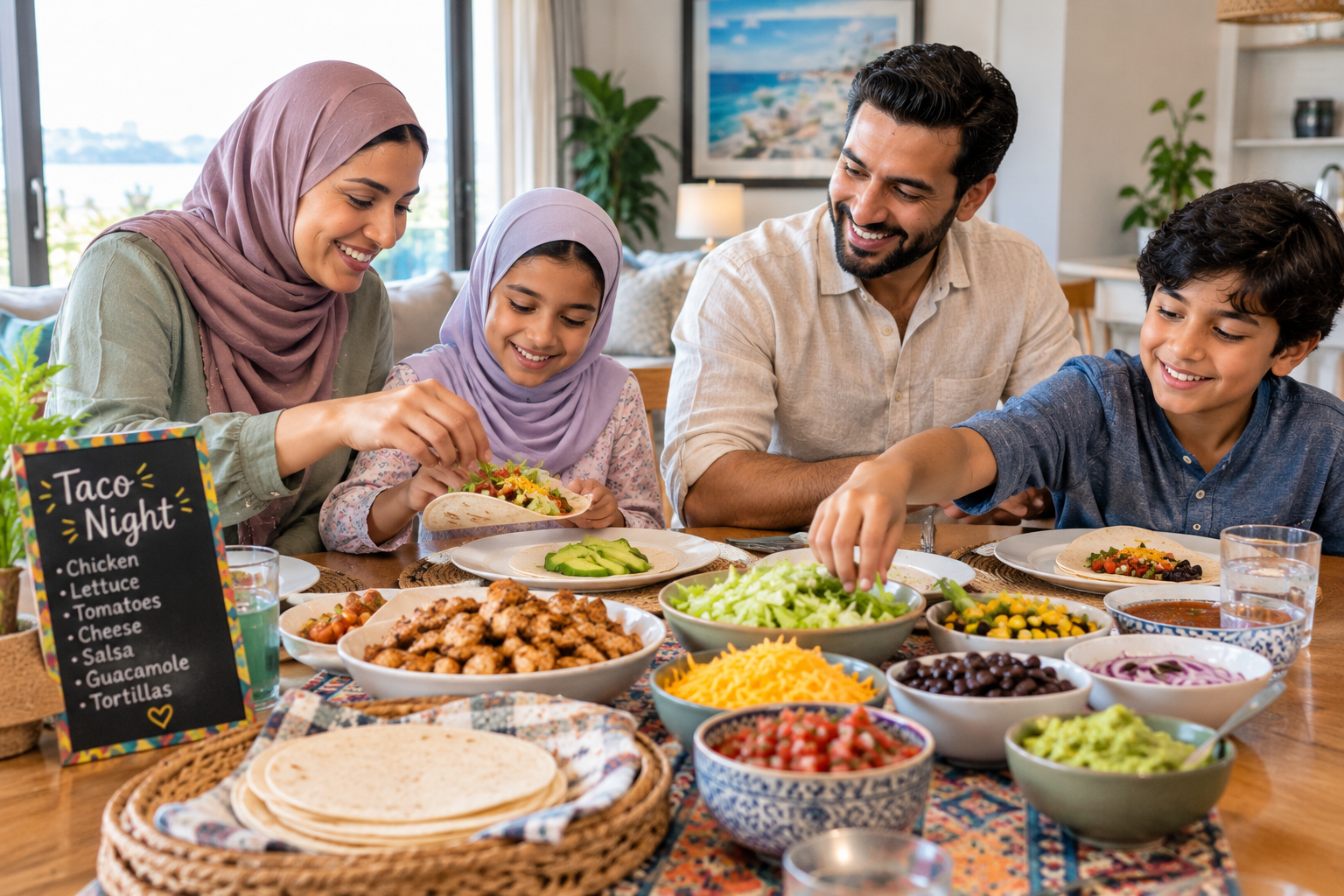
The key is to provide a sense of autonomy without relinquishing control. Instead of asking “What do you want for dinner?”, ask “Should we have pasta or tacos tonight?”. For meals, a “build-your-own” taco, pizza, or salad bar allows a picky eater to select only the components they like, ensuring they eat something without a battle.
Accommodating diverse family preferences and picky eaters in vacation meal plans involves offering controlled choices, engaging them in meal planning, and utilizing “build-your-own” meal concepts like taco bars. Introduce the “One Safe Food” rule for each meal to ensure minimal anxiety and reduce mealtime conflicts.
Introduce the “One Safe Food” rule. For every meal, especially when trying new local cuisine, ensure there is at least one simple, familiar food item on the table that you know the picky eater will eat (e.g., bread, rice, plain pasta, a familiar fruit). This lowers their anxiety and the pressure to try new things.
To simplify planning for a variety of preferences, know that most cooks typically rely on a core of about 10 favorite recipes for family meals.
Which strategies help manage dietary restrictions and allergies during family vacation dining?
The most crucial strategies to manage dietary restrictions and allergies during family vacation dining involve meticulous pre-trip research, carrying translated allergy cards, and creating a controlled food environment through self-catering.
Before your trip, research local grocery stores for safe brands and compile a list of “safe” restaurants. When dining out, always communicate directly with the chef or manager using a clear, concise allergy card (especially if there’s a language barrier), and never rely on a server’s assumptions.
Managing dietary restrictions and allergies during family vacation dining requires meticulous pre-trip research of local food options, carrying translated allergy cards for clear communication, and prioritizing self-catering to control the food environment and prevent cross-contamination.
The “Wipe-Down Rule”: When arriving at a vacation rental, the first step for any allergy family is to use their own cleaning supplies to wipe down all food preparation surfaces, the microwave, and refrigerator shelves to remove trace allergens from previous renters. This creates a “safe zone” kitchen.
The benefit of structured planning for dietary restrictions is clear, as one study showed that using a planning app improved the nutritional value score for diabetic users from 0.0561 to a much safer 0.8125.
Ensuring the safety of your family extends beyond dietary concerns; a comprehensive approach to How Do You Plan for Family Vacation Safety? will cover all aspects of your trip, providing peace of mind.
4. How to create a practical step-by-step meal plan for your family vacation?
Creating a practical step-by-step meal plan for your family vacation involves a five-stage process: assessment, research, drafting, listing, and packing.
First, assess your accommodation’s kitchen and your family’s needs. Second, research local grocery and restaurant options. Third, draft a flexible daily menu for breakfasts, lunches, dinners, and snacks. Fourth, create a detailed shopping list from that menu. Finally, pre-pack all non-perishable items from your list.
To create a practical family vacation meal plan, follow a five-stage process: assess kitchen resources and family needs, research local food options, draft a flexible daily menu including snacks, compile a detailed shopping list, and pre-pack non-perishable items, ensuring a smooth on-site experience.
The most efficient way to draft the menu is using a simple 3-column grid: “Day,” “Easy Meal (at rental),” and “Experience Meal (out).” This structure bakes flexibility and local experiences directly into the plan from the start, preventing it from feeling too rigid.
“Themed Nights”: A meal planning tactic where dinners are assigned a theme (e.g., Taco Tuesday, Pasta Night) to simplify planning and build excitement for kids, easily adaptable for vacation rentals.
- Assessment: Assess your accommodation’s kitchen facilities and your family’s specific needs, including dietary restrictions and preferences.
- Research: Research local grocery stores, farmers’ markets, and restaurant options at your destination to understand available resources.
- Drafting: Draft a flexible daily menu for all meals and snacks, incorporating both home-cooked and dining-out options.
- Listing: Create a detailed shopping list based on your drafted menu, organized by grocery store sections.
- Packing: Pre-pack all non-perishable items from your shopping list that you can bring from home to save space and money.

What pre-trip preparations should you make for family vacation meals?
The most important pre-trip preparations for family vacation meals include confirming your rental’s kitchen inventory, researching grocery delivery services at your destination, and pre-cooking or prepping key meal components.
Call your vacation rental owner to confirm specific appliances (e.g., blender, slow cooker) are available. Schedule a grocery delivery for your arrival day to avoid a chaotic first-day shopping trip. At home, you can chop vegetables, mix spices for specific recipes, or even cook and freeze a batch of chili or pasta sauce to bring with you.
Essential pre-trip preparations for family vacation meals involve confirming rental kitchen amenities, researching and booking grocery delivery services for your arrival, and strategically pre-cooking or prepping meal components at home to minimize on-site effort and maximize relaxation.
The “First Night Meal Kit” is a pro-level preparation. Pack a separate, easily accessible bag containing one complete, no-fuss meal (e.g., pasta, jar of sauce, parmesan) and all necessary tools. This eliminates the stress of cooking a full meal after a long travel day.
One traveler reported paying $180 for a grocery delivery service, budgeting it as $15 per month and calling it “worth every penny” for the time and stress it saved on arrival day.
How to build a flexible daily menu for family vacation dining?
You build a flexible daily menu for family vacation dining by planning meals based on components rather than fixed recipes and by creating a “dinner rotation” list instead of assigning specific meals to specific days.
Instead of planning “spaghetti bolognese,” plan on having components like “ground beef, pasta, sauce,” which could also become tacos or sloppy joes if plans change. Create a list of 4-5 dinner ideas for your trip and decide each morning which one best fits that day’s energy level and schedule, rather than locking in Monday for tacos and Tuesday for chicken.
Building a flexible daily menu for family vacation dining involves component-based meal planning and a rotating dinner list instead of rigid daily assignments. This approach, exemplified by the “Plan for Leftovers” rule, allows spontaneous adjustments while minimizing food waste and preparing for unexpected changes.
The “Plan for Leftovers” rule is key to flexibility. Intentionally plan one or two larger meals early in the week (e.g., a large roast chicken). The leftovers can then become a “free” and flexible lunch meal (chicken sandwiches) or dinner (chicken tacos) later in the week, creating an easy meal day.
To combat the tendency to under-prepare, which hinders flexibility, it helps to know that about one-fifth of Americans identify as chronic procrastinators, making a pre-trip menu draft crucial.
Integrating meal times seamlessly into your overall trip flow is essential for a smooth experience; learn more about managing your daily activities and travel flow in our guide on How Do You Plan a Family Vacation Schedule?.
Which tools and apps simplify family vacation meal planning?
The most effective tools and apps that simplify family vacation meal planning are collaborative note-taking apps like Google Keep, spreadsheet software like Google Sheets, and dedicated recipe management apps such as Paprika.
Google Keep or Notes are perfect for creating shared, checkable shopping lists. Google Sheets allows you to build a detailed menu grid that calculates an estimated budget. Recipe apps like Paprika are ideal for saving meal ideas and scaling ingredients for a shopping list automatically.
Effective tools for simplifying family vacation meal planning include collaborative note-taking apps like Google Keep for shared shopping lists, Google Sheets for menu and budget planning, and recipe management apps such as Paprika for organizing meal ideas, all designed to streamline the planning process.
The most underrated tool is the camera on your phone. Before you leave, take a picture of your home pantry and spice rack. This prevents you from buying duplicate items like olive oil or salt that you already have in travel-friendly sizes.
The value of planning tools is high; in a study of one meal planning app, 97% of users felt it did a positive job of considering their diet constraints and preferences.
5. How to manage grocery shopping, cooking, and storage for family vacation meals on-site?
You manage grocery shopping, cooking, and storage for family vacation meals on-site by navigating stores efficiently, simplifying cooking methods, and adhering to strict food safety protocols in an unfamiliar environment.
To manage shopping, go with a complete list and try to shop only once. For cooking, rely on one-pan meals or grilling to minimize cleanup. For storage, immediately unpack cold items and use a cooler for day trips to maintain food safety and quality.
Managing on-site family vacation meals involves efficient single-trip grocery shopping with a complete list, simplifying cooking via one-pan meals or grilling to minimize cleanup, and diligently adhering to food safety protocols like maintaining the cold chain for perishables with a cooler.
The “First In, First Out” (FIFO) principle is even more critical in a vacation rental. Place new groceries behind older items in the fridge and make it a rule to use up perishable items (like fresh berries or deli meat) from the first half of the week before opening new packages.
One-Pan Meal: A recipe where all ingredients (protein, vegetables, starch) are cooked together in a single skillet or sheet pan, ideal for vacation cooking due to minimal cleanup.
- Shop Efficiently: Go with a complete, categorized grocery list and aim for a single major shopping trip.
- Simplify Cooking: Prioritize one-pan meals, grilling, or “assembly-only” meals to minimize effort and cleanup.
- Adhere to Food Safety: Maintain the “cold chain” for perishables (e.g., with a cooler) and prevent cross-contamination.
- Proper Storage: Immediately unpack cold items into a properly set refrigerator (40°F/4°C or below).
- Utilize Leftovers: Implement the “First In, First Out” principle for perishables to reduce food waste.
What are smart grocery shopping tips for family vacation meals?
The smartest grocery shopping tips for family vacation meals are to shop only once with a complete list, buy local produce, and choose versatile ingredients that can be used in multiple planned meals.
Before entering the store, organize your list by category (produce, dairy, meat) to prevent backtracking. Stick to the perimeter of the store where whole foods are located and avoid the “snack aisle” until the very end to minimize impulse buys.
Smart grocery shopping tips for family vacation meals include consolidating to a single trip with a categorized list, prioritizing local produce, and selecting versatile ingredients. Shop the store perimeter first to minimize impulse buys and enhance efficiency, saving both time and money.
The “Buy Frozen” hack: For vegetables that you’ll use later in the week (e.g., peas, corn, broccoli for a stir-fry), buy them from the frozen section. They are just as nutritious, won’t spoil in the vacation rental fridge, and produce zero food waste if your plans change.
How to prepare simple, quick family meals while on vacation?
To prepare simple, quick family meals while on vacation, you should prioritize one-pan recipes, grilling, and “assembly-only” meals like salads and sandwiches.
Sheet pan dinners, where protein and vegetables are roasted together, are ideal as they require only one pan for cooking. Grilling burgers or chicken outside keeps the heat out of the kitchen and involves minimal cleanup. For the quickest option, a “snack board” dinner with cheese, crackers, fruit, and deli meats requires no cooking at all.
To prepare simple, quick family meals on vacation, prioritize one-pan recipes like sheet pan dinners for easy cleanup, utilize grilling to keep kitchens cool, and assemble no-cook options such as large salads or snack boards, maximizing relaxation time away from complicated cooking.
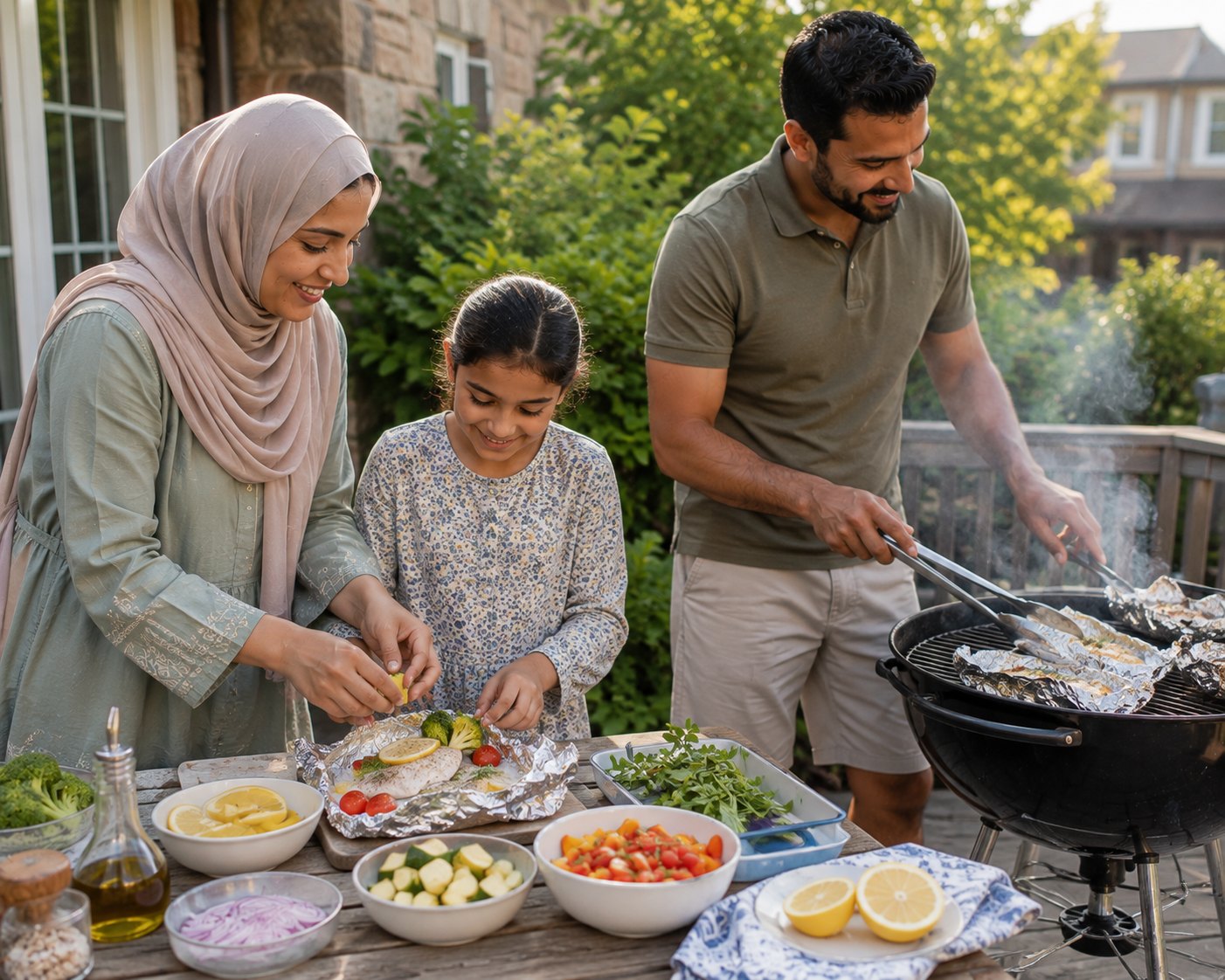
The “Foil Packet” method is the ultimate simple vacation meal. Each person can customize their own foil packet with fish or chicken, quick-cook vegetables (like zucchini and peppers), and a splash of lemon and herbs. They can be cooked on the grill or in the oven with zero pan-washing required.
Leaning on simplicity is a proven strategy, as most cooks rely on a core of about 10 favorite recipes for family meals, which can be adapted for easy vacation cooking.
Which food storage and safety practices are crucial for vacation dining?
The most crucial food storage and safety practices for vacation dining are maintaining the “cold chain” for perishable items, preventing cross-contamination, and understanding the 2-hour rule for food left at room temperature.
Ensure the vacation rental refrigerator is set to 40°F (4°C) or below. Use separate cutting boards for raw meat and produce to prevent cross-contamination. Any perishable food left out for more than two hours (or one hour if temperatures are above 90°F/32°C) must be discarded.
Crucial food storage and safety practices for vacation dining involve strictly maintaining the “cold chain” for perishables below 40°F (4°C), preventing cross-contamination with separate cutting boards, and adhering to the 2-hour rule for food at room temperature, making a quality cooler indispensable for day trips.
The “Cooler is King” rule. A high-quality cooler isn’t just for drinks. It’s your portable refrigerator for the drive to the rental, for keeping groceries cold if you can’t check in right away, and for safely packing lunches for beach days or hikes, making it the single most important piece of food safety equipment for a family vacation.
Nutritional safety is a key concern; for example, dietary guidelines for a person with hypertension recommend an ideal limit of 1500 mg of sodium per day, a crucial safety parameter to manage.
6. What common pitfalls should you avoid when planning family vacation meals?
The most common pitfalls you should avoid when planning family vacation meals are over-planning with a rigid schedule, underestimating quantities needed for active kids, and completely ignoring the local dining culture.
A schedule with no room for spontaneity will cause stress, while not planning for constant snacking will lead to hungry kids and emergency junk food purchases. Failing to budget for at least one or two meals out to experience local flavor is a missed opportunity that can breed resentment toward the meal plan.
Common pitfalls in family vacation meal planning to avoid include over-planning with rigid schedules, underestimating food quantities for active children, and neglecting local dining experiences. Prevent these by building in flexibility, accounting for frequent snacks, and intentionally budgeting for local culinary exploration.
A major pitfall is “Kitchen Assumption.” This is assuming the vacation rental kitchen will be stocked like your own. Most are not, lacking sharp knives, adequate cutting boards, or basic spices, which can derail a planned meal instantly. The fix is to pack a small “kitchen essentials” kit.
“Kitchen Essentials Kit”: A small, curated kit of items a traveler brings to supplement a rental kitchen, often including a good chef’s knife, a small cutting board, salt, pepper, and a favorite multi-purpose spice blend.
- Mistake: Over-planning with a rigid schedule. Fix: Build at least two “unplanned” or “leftover” nights into your weekly plan to create mandatory flexibility.
- Mistake: Underestimating quantities. Fix: Always account for frequent snacking and slightly more generous portions for active kids.
- Mistake: Ignoring local dining culture. Fix: Intentionally budget for at least one or two meals out to experience local flavor and prevent resentment towards the meal plan.
- Mistake: Kitchen Assumption. Fix: Pack a small “kitchen essentials kit” with a good knife, cutting board, and basic spices to supplement the rental kitchen.
How to prevent over-planning or under-preparing for family vacation meals?
You prevent over-planning or under-preparing for family vacation meals by adopting the “80/20 Rule”: plan the specifics for 80% of your meals (especially breakfasts and lunches) and leave 20% (a few dinners) intentionally open for spontaneity or dining out.
To avoid under-preparing, create a master list of all potential meals and their ingredients before you go. To avoid over-planning, do not assign these meals to specific days. This gives you a complete shopping list and a flexible “menu” to choose from daily.
Prevent over-planning or under-preparing for family vacation meals by implementing the “80/20 Rule,” where 80% of meals are planned (especially breakfasts/lunches) and 20% remain open. Create a master ingredient list but keep meal assignments flexible, acknowledging family energy levels to ensure adaptability.
The best way to find this balance is to “plan for the mood.” Your plan should include an “exhausted after a long day” meal (e.g., frozen pizza), a “feeling energetic” meal (e.g., something more complex), and a “celebratory” meal (e.g., a reservation at a nice restaurant). This acknowledges that family energy levels are a key variable.
A study on a meal planning app found that 95% of participants reported it helped them save time, directly combating the stress of under-preparing and last-minute decisions.
What are the best ways to adapt family vacation meal plans to unexpected changes?
The best ways to adapt family vacation meal plans to unexpected changes are to have a “Pantry-Staple Backup Meal” always on hand and to maintain a relaxed mindset focused on the overall vacation goal, not on sticking to the plan.
Your backup meal should be comprised of non-perishable items you brought from home (e.g., pasta, jarred sauce, mac and cheese) that can be made if a planned grocery run is delayed or a restaurant is unexpectedly closed. The most important strategy is psychological: view the meal plan as a helpful tool, not a strict contract. If a spontaneous beach bonfire with hot dogs presents itself, abandon the planned chicken dinner without guilt.
The best ways to adapt family vacation meal plans to unexpected changes involve preparing a “Pantry-Staple Backup Meal” from non-perishable items and cultivating a flexible mindset, understanding that the plan serves the vacation’s overall enjoyment, allowing for guilt-free spontaneity.
The “Ingredient Pivot” is an advanced adaptation skill. If you planned on grilling burgers but a thunderstorm rolls in, can you pivot those ingredients to make skillet-fried patties, meatloaf, or bolognese sauce instead? Planning with versatile ingredients like ground beef or chicken breast builds this adaptability into your plan.
A flexible adaptation strategy for a person with diabetes is to ensure each meal contains 3 to 5 carbohydrate choices (15g each), allowing for adjustments based on spontaneous activities.
Sources
- https://pmc.ncbi.nlm.nih.gov/articles/PMC10436119/
- https://oceancityvacation.com/resources/blog/meal-planning-for-your-beach-vacation/
- https://www.youtube.com/watch?v=EPVfSEznyqo
- https://hgic.clemson.edu/factsheet/planning-meals-for-a-family/
- https://caitlinhoustonblog.com/easy-vacation-meals-for-the-family/
Resolution
Ultimately, successfully planning family vacation meals is less about creating a perfect menu and more about designing a flexible system that reduces stress, manages costs, and meets your unique family’s needs for nutrition, preferences, and safety. By embracing a strategy that balances preparation with flexibility—like the 80/20 rule—and by using the tools and tactics outlined, you can transform mealtime from a source of friction into a positive and memorable part of your family’s travel experience. The goal is not to replicate your home routine, but to create a new, simplified routine that serves your vacation.