Family Safari Vacations: What Should You Pack for the Trip?
Table of Contents
What should you pack for a family safari? You must pack a minimalist collection of neutral-colored, layerable clothing, soft-sided duffel bags that meet strict bush plane limits (15-20kg), child-specific binoculars, and a comprehensive pediatric first-aid kit. Because safaris occur in isolated environments with extreme temperature swings, prioritizing durable, multi-functional gear over fashion is essential.
Understanding the specifics of this adventure can be better appreciated when viewed in the broader context of What Are the 10 Types of Family Vacations?
1. Why does packing for a family safari require unique considerations?
Packing for a family safari requires unique considerations primarily due to the stringent 15-20kg weight limits and soft-bag requirements of charter flights, coupled with the absolute isolation of safari camps. Unlike standard vacations where forgotten items are easily replaced, the African bush demands strategic self-sufficiency, meaning your luggage must serve as a complete resource for varying weather, wildlife engagement, and unpredictable medical needs.
A family safari packing strategy must account for variables not present in typical vacations, such as charter flight weight limits, lack of access to stores, and extreme temperature shifts. These factors demand a minimalist yet comprehensive approach focused on child-specific needs for comfort, safety, and entertainment. Similar considerations about balancing thrills and safety on family adventure vacations apply to many unique travel experiences.
Unlike a beach vacation where forgotten items can be easily purchased, a safari’s logistical chain is unforgiving. A forgotten prescription or preferred snack can become a significant issue in a remote camp, making the pre-trip packing phase a critical component of the entire experience’s success. The goal is strategic self-sufficiency.
Charter Flight Luggage Allowance: The strict weight and dimension limits, typically around 15-20 kg (33-44 lbs) per person, imposed by small aircraft used to transport guests to remote safari lodges. Luggage must often be soft-sided (no hard shells) to fit into the small cargo holds.
Choose to invest time in meticulous pre-trip planning if your family’s comfort and the overall success of a high-investment trip are top priorities. The packing list is not a suggestion; it is a core part of your trip’s risk management plan.
How do family needs influence safari packing decisions?
Family needs directly influence safari packing decisions by shifting the focus from individual gear to shared resources, prioritizing child-specific health and safety items, and requiring dedicated entertainment solutions for periods of downtime.
Family needs shift safari packing decisions by prioritizing child-specific health, safety, and entertainment over individual adult gear. This includes a comprehensive pediatric first-aid kit, age-appropriate distractions for long drives, and extra snacks, which often take precedence due to children’s unique requirements.
When packing for a family, priorities expand to include a more comprehensive first-aid kit with pediatric remedies, age-appropriate distractions for long drives, and extra snacks to manage children’s energy levels. These items often take precedence over redundant adult clothing or gear.
The “patience-to-weight” ratio is a key concept for family safari packing. A 500g tablet loaded with games and movies provides more value in ensuring a peaceful game drive than an extra pair of adult shoes. Packing decisions must be weighed against their potential to maintain family harmony.
Most safari lodges offer inexpensive laundry services, often costing just $1-2 per item (Typical lodge service costs), which allows families to pack fewer changes of clothes.
[Children’s needs] → [influence] → priority of comfort items over redundant gear.
Choose to invest in individual, kid-friendly binoculars if keeping children engaged and minimizing arguments during long game drives is a high priority. The cost is offset by the enhanced quality of the experience.
What distinguishes safari packing from other family trips?
The primary factors that distinguish safari packing from other family trips are the strict prohibitions on certain clothing colors, the critical need for dust and sun protection, and the absolute reliance on pre-packed items due to the remote, non-commercial nature of the destination.
Safari packing differs from other family trips due to strict prohibitions on certain clothing colors, critical needs for dust and sun protection, and absolute reliance on pre-packed items because of remote, non-commercial destinations. Unlike city or beach trips, forgotten items are often irreplaceable.
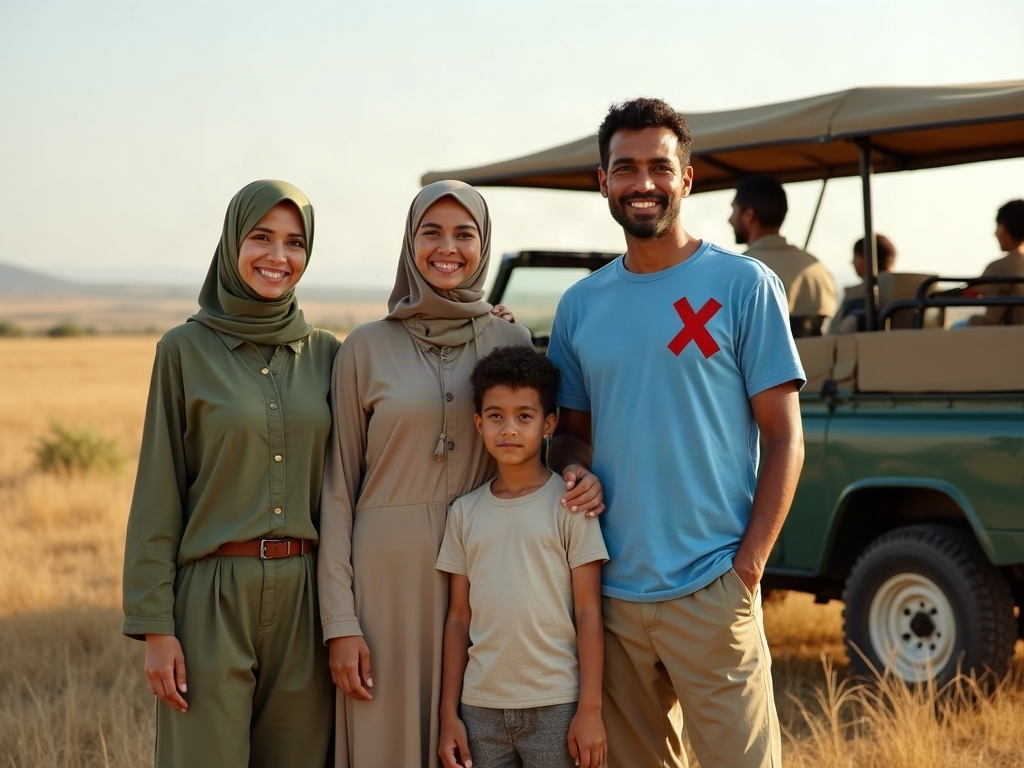
Unlike a trip to a city, a safari prohibits bright or dark blue/black clothing (which attracts insects like tsetse flies) and requires neutral, layered apparel. Furthermore, while you can buy forgotten sunscreen at a beach resort, safari lodges are isolated, making your suitcase the only available resource. For a different perspective on family trip preparations, explore What Must You Pack for a Family Beach Trip?
The concept of “sensory overload” for children is a key differentiator. A safari environment is new and intense. Packing familiar comfort items—a specific blanket, a favorite book—provides a crucial “sensory anchor” for a child, an item of little value on a theme park vacation but immense value in the African bush.
In some African countries like Zimbabwe, camouflage or military-inspired clothing is prohibited for civilians and should not be packed (Zimbabwe Parks and Wildlife Management Authority guidelines).
[Safari packing] → [is distinguished by] → color restrictions and logistical isolation.
Author’s Experience
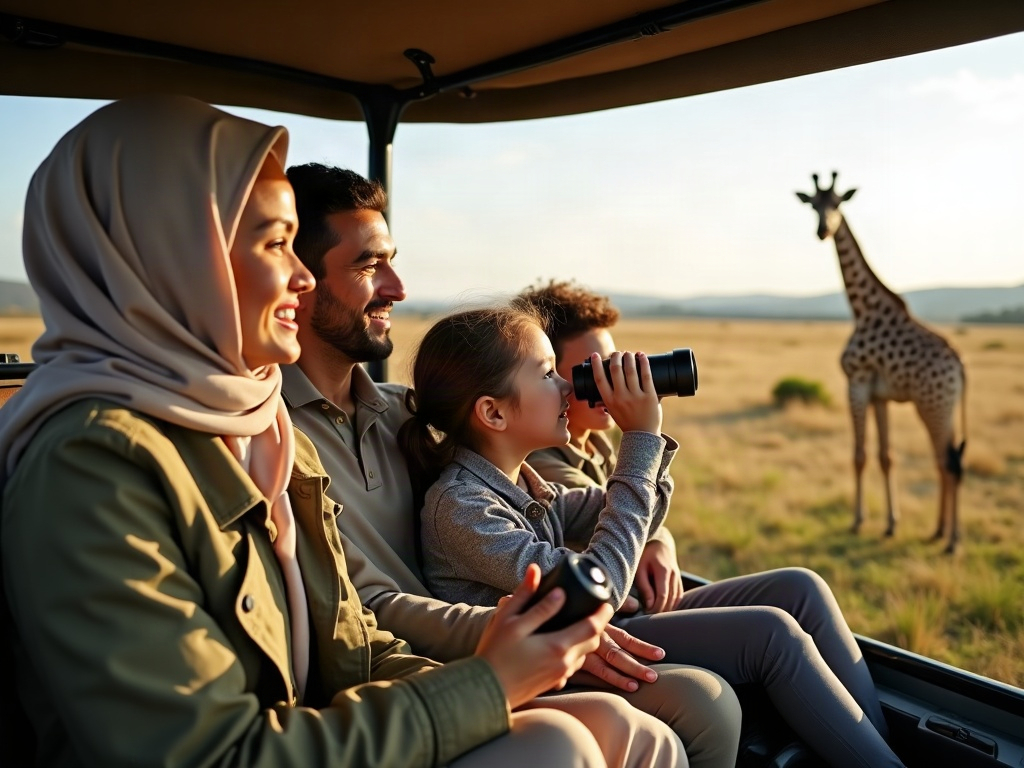
“On my first family safari, I quickly learned that an extra pair of binoculars for the kids saved endless squabbles! It transformed their game drives from passive waiting into an active, engaging hunt for wildlife, making everyone’s experience much more enjoyable.”
2. What essential clothing should you pack for a family safari?
The essential clothing you should pack for a family safari vacation consists of a layered system of neutral-colored, lightweight, and durable apparel designed for protection from the sun and insects and adaptable to significant temperature changes.
Essential clothing for a family safari includes a layered system of neutral-colored, lightweight, and durable apparel designed for sun and insect protection, adaptable to temperature changes. This typically means long-sleeved shirts, convertible trousers, a warm fleece, and a waterproof outer shell in earthy tones.
A family’s essential safari clothing includes long-sleeved shirts, convertible trousers, a warm fleece or mid-layer, and a waterproof outer shell for each member. These items must be in neutral earth tones (khaki, green, beige) to blend with the environment and avoid attracting insects.
The most overlooked clothing aspect for families is the “quietness” of the fabric. Swishy nylon pants that are fine for hiking can be disruptive on a silent game drive, alerting animals to your presence. Prioritize softer, quieter fabrics like cotton blends, merino wool, or brushed synthetics, especially for children who move around more.
Convertible Trousers: Pants with zippers at the knee that allow the lower leg sections to be removed, converting them into shorts. This provides two garments in one, saving valuable packing space and allowing for adaptation to changing temperatures throughout the day.
[Essential safari clothing] → [functions as] → a protective, adaptable layered system.
Choose convertible trousers for older children and adults to maximize versatility and save packing space. For younger children who may be irritated by zippers, opt for separate lightweight pants and shorts.
Which types of apparel offer protection and comfort on safari?
The types of apparel that offer the best protection and comfort on a family safari vacation are those made from breathable, moisture-wicking fabrics with a high Ultraviolet Protection Factor (UPF) and a loose fit.
Apparel offering best protection and comfort on safari includes long-sleeved shirts and trousers made from cotton-poly blends or merino wool for breathability. A wide-brimmed hat is crucial for sun protection, and permethrin-treated clothing provides an effective barrier against insects for the family.
Prioritize long-sleeved shirts and trousers made from cotton-poly blends or merino wool for their breathability and durability. A wide-brimmed hat is non-negotiable for sun protection, while clothing pre-treated with permethrin offers an effective barrier against insects for the whole family.
For maximum comfort on bumpy game drives, focus on waistbands. Elastic or soft-stretch waistbands on trousers are far more comfortable for children (and adults) when seated for hours than rigid, button-fly pants. This small detail significantly enhances the game drive experience.
A sunscreen with an SPF of 30 to 50 is recommended for protection against the direct UV light experienced at high altitudes on safari (American Academy of Dermatology).
[UPF-rated clothing] → [provides] → quantifiable sun protection.
How do you choose adaptable clothing for varying weather?
You choose adaptable clothing for the varying weather on a family safari vacation by packing a three-part layering system: a base layer, an insulating mid-layer, and a protective outer shell.
Adaptable clothing for safari involves a three-part layering system: a moisture-wicking t-shirt (base), a fleece or packable down jacket (insulation), and a waterproof/windproof outer shell. This allows family members to adjust to temperatures fluctuating from near-freezing mornings to hot midday sun.
An effective layering strategy involves a moisture-wicking t-shirt (base), a fleece jacket (insulation), and a lightweight waterproof/windproof jacket (shell). This system allows each family member to add or remove layers to stay comfortable as temperatures fluctuate from near-freezing on early morning drives to hot in the midday sun. These layering techniques are also crucial when preparing for family camping vacations, where weather can be equally unpredictable.
The “packable down” jacket is a superior mid-layer choice for families over bulky fleece. It offers a higher warmth-to-weight ratio and compresses into a tiny pouch, saving immense space in a child’s daypack and the main luggage—a critical advantage under strict weight limits.
In East Africa, temperatures can range from the 50s Fahrenheit (10-14°C) at night and in the early mornings to the 70s and 80s (22-31°C) during the day (Tanzanian Meteorological Agency).
[Layering system] → [enables] → thermoregulation across wide diurnal ranges.
What sleeping attire is best for diverse safari accommodations?
The best sleeping attire for diverse family safari accommodations is versatile, long-sleeved pajamas made from breathable fabric that provide both warmth and a physical barrier against insects.
For diverse safari accommodations, versatile long-sleeved pajamas made from breathable fabric are best for sleeping. These provide warmth and a physical barrier against insects, crucial for both comfort in chilly tented camps and protection against mosquitoes, even in sealed lodges.
Pack lightweight, full-length pajamas for every family member, regardless of the perceived luxury of the accommodation. Even in sealed lodges, this provides peace of mind and protection, while in tented camps, it is essential for warmth and as a barrier against mosquitoes that may enter the tent.
While lodges provide bedding, parents should consider packing a “dream sleeve” or silk sleeping bag liner for children. It weighs almost nothing but provides a familiar, consistent sleeping environment, which can be psychologically comforting for a child in a new bed each night and adds a surprising amount of warmth in a chilly tent.
To avoid being bitten by mosquitoes in the evenings, it is recommended to cover up by wearing trousers and long sleeves, as this is when they are most active (World Health Organization recommendations for malaria prevention).
[Long-sleeved pajamas] → [provide] → a physical barrier against insects.
3. Which specialized gear is essential for a family safari experience?
The specialized gear essential for a family safari vacation includes optical equipment for wildlife viewing, practical bags for excursions, and specific comfort items to make long vehicle-based journeys enjoyable for children.
Essential specialized gear for a family safari includes quality binoculars (one pair per two people), a user-friendly camera with good zoom, a small daypack for each family member, and a power bank. This equipment enhances wildlife spotting, organizes personal items, and keeps devices charged for a more enjoyable experience.
Essential gear for a family safari consists of at least one pair of quality binoculars per two people, a user-friendly camera with a good zoom, a small daypack for each family member, and a power bank. This equipment directly enhances wildlife spotting and ensures personal items are organized and devices remain charged.
The concept of “gear democracy” is crucial for family harmony. Instead of one “alpha” pair of binoculars, providing each child with their own lightweight, durable, and lower-magnification (e.g., 6x or 8x) pair empowers them, reduces squabbling, and keeps them actively engaged in “spotting” wildlife, transforming them from passive passengers to active participants.
Porro Prism vs. Roof Prism: The two main designs for binoculars. Porro prisms are the classic, wider-body style, often more affordable and offering a good 3D image. Roof prisms are the sleeker, straight-barrel design, generally more durable and compact, making them an excellent (though often more expensive) choice for the rigors of safari travel.
[Child-specific binoculars] → [foster] → active participation and engagement.
Choose to invest in individual, kid-friendly binoculars if keeping children engaged and minimizing arguments during long game drives is a high priority. The cost is offset by the enhanced quality of the experience.
What optics and photography equipment enhance wildlife viewing?
The optics and photography equipment that most enhance a family safari vacation are durable, easy-to-use binoculars with a moderate magnification and a “point-and-shoot” or “bridge” camera with a significant optical zoom.
To enhance wildlife viewing, a family safari needs durable, easy-to-use 8×42 binoculars for stable images and good light-gathering, alongside a point-and-shoot or bridge camera with at least 20x optical zoom to capture distant animals without complex equipment.
For binoculars, a specification of 8×42 is the ideal all-around choice, offering a stable image and good light-gathering. For photography, a camera with at least a 20x optical zoom is required to capture distant animals without needing the complexity and weight of a professional DSLR with multiple lenses. To delve deeper into selecting the perfect equipment, you might want to read more about Which Binoculars and Cameras Are Best for Family Safari Vacations?
The “Exit Pupil” diameter (objective lens diameter divided by magnification) is a more critical spec for safari than raw magnification. A larger exit pupil (e.g., >4mm) lets in more light, making it drastically easier to see animals during the “golden hours” of dawn and dusk, when wildlife is most active. This is a pro-level tip that significantly impacts user experience.
A binocular specification of 8×40 or 8×42 is the recommended standard for both birding and mammal viewing on safari (Source: Cornell Lab of Ornithology for birding recommendations, also applicable for safari mammals).
[8×42 Binoculars] → [offer] → an optimal balance of magnification and brightness.
How do you select appropriate backpacks and day bags for safari excursions?
You select appropriate backpacks and day bags for family safari excursions by choosing a lightweight, soft-sided model for each person that is large enough to hold essential daily items but small enough to not be cumbersome inside a safari vehicle.
Select appropriate day bags for safari excursions by choosing lightweight, soft-sided backpacks, 15-25 liters in volume, for each family member. These bags must hold daily essentials like water, layers, and snacks, fitting comfortably within the safari vehicle without being cumbersome.
An ideal daypack for a safari is between 15-25 liters in volume. It must be able to hold a water bottle, a warm layer, sunscreen, a hat, binoculars, and snacks, while still fitting comfortably at your feet or on your lap in a shared vehicle.
The most underrated feature for a safari daypack is the presence of external, easily accessible pockets. Fumbling inside a single large compartment to find a lens cap, snack, or wet wipe in a moving vehicle is frustrating. External mesh or zip pockets are critical for stowing frequently used items.
A daypack is considered very handy to transport the items you need while driving around in the safari vehicle, such as water bottles, snacks, and journals (Source: Many reputable safari tour operators’ packing guides).
[15-25 liter daypack] → [provides] → sufficient capacity without being cumbersome.
Which comfort items make long safari drives more enjoyable for children?
The comfort items that make long safari drives more enjoyable for children include a travel pillow for napping, a variety of non-messy snacks, and a dedicated “activity pack” with engaging, quiet diversions.
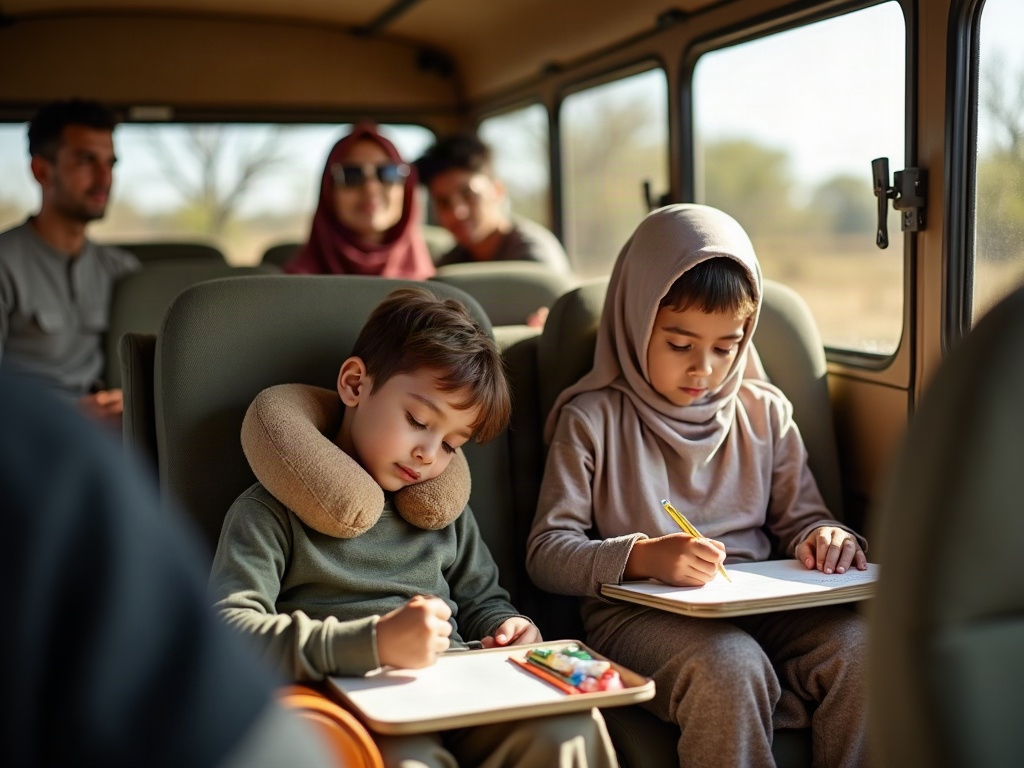
To make long safari drives enjoyable for children, pack a travel pillow for naps, a variety of non-messy snacks to prevent hunger-related crankiness, and an activity pack with quiet diversions like a journal, colored pencils, or a wildlife checklist for interactive engagement.
A small neck pillow allows a child to nap comfortably against the window of a bumpy vehicle, while a pre-packed bag of their favorite snacks can preemptively solve hunger-related crankiness. Additionally, a simple kit with a journal, colored pencils, and a wildlife checklist can transform passive observation into an interactive game. These strategies are also highly effective for making long drives enjoyable on family road trips.
Re-purpose a multi-pocket toiletry roll-up as a seat-back organizer. Hung over the back of the front seat, its various zippered compartments are perfect for organizing a child’s crayons, card games, snacks, and “treasures” (like cool rocks or feathers), keeping the vehicle tidy and the child self-sufficient.
In addition to electronics, bringing a simple pack of cards is a recommended super easy entertainment option that works well for families in a group environment (Source: Many family travel blogs and guides, e.g., TravelMamas.com).
[Seat-back organizer] → [creates] → an accessible, self-contained activity station for a child.
4. How can you organize medications and a first-aid kit for family safaris?
You can organize medications and a first-aid kit for a family safari vacation by creating a comprehensive, customized kit that is divided between your carry-on and checked luggage to ensure essential items are always accessible.
Organize family safari medications by creating a comprehensive, customized kit split between carry-on and checked luggage. All personal prescription medications, especially, must be in the carry-on, alongside a robust first-aid kit with pediatric and adult remedies, as this is your primary medical resource in remote areas.
A well-organized family safari medical kit must contain all personal prescription medications in your carry-on, alongside a robust first-aid kit with pediatric and adult versions of remedies for common ailments like pain, allergies, and digestive issues. This kit is your primary medical resource in remote areas.
Use a label maker or permanent marker to write the child’s name and correct dosage directly on the outside of each over-the-counter medicine bottle or blister pack. In an emergency or when you are sleep-deprived, this eliminates guesswork and reduces the risk of incorrect dosing, a simple step that adds a significant layer of safety.
[Divided medical kit] → [mitigates risk of] → total loss due to misplaced luggage.
Always choose to pack a more comprehensive first-aid kit than you think you will need. The peace of mind and potential utility in a remote location far outweigh the minor inconvenience of its weight and bulk.
What over-the-counter remedies should families include in their safari kit?
The essential over-the-counter remedies that families must include in their safari first-aid kit are treatments for pain, fever, allergies, digestive upset, and minor injuries.
Essential over-the-counter remedies for a family safari kit include pediatric and adult ibuprofen/paracetamol, antihistamine (like Benadryl), anti-diarrhea medication (like Imodium), oral rehydration salts, antiseptic wipes, assorted bandages, and DEET-containing insect repellent. These manage common travel-related health issues.
Your family’s kit must contain pediatric and adult ibuprofen or paracetamol, an antihistamine (like Benadryl), anti-diarrhea medication (like Imodium), oral rehydration salts, antiseptic wipes, assorted bandages, and a good quality insect repellent containing DEET. These items will manage the most common travel-related health issues.
Pack hydrocortisone cream (1%). It is a multi-tasking miracle for safari ailments, effectively treating the intense itch from insect bites, relieving mysterious rashes from plant contact, and calming minor allergic skin reactions. It’s one tube that solves three of the most common safari skin complaints for both kids and adults.
When traveling to Zambia, do not bring over-the-counter medications containing diphenhydramine (the active ingredient in Benadryl), as this is on Zambia’s list of controlled substances (Source: Zambia Medicines Regulatory Authority).
[Oral rehydration salts] → [prevent] → dehydration from traveler’s diarrhea.
How do you ensure prescription medications are securely packed and accessible?
You ensure prescription medications for your family are securely packed and accessible for a safari by carrying them exclusively in your hand luggage, keeping them in their original pharmacy packaging, and bringing a doctor’s letter for each prescription.
To ensure secure and accessible prescription medications for a safari, always carry them in your hand luggage, keep them in original pharmacy packaging, and obtain a doctor’s letter detailing each prescription. This protocol is crucial for both security and compliance with international travel regulations.
Never pack essential prescription medications in your checked baggage. All prescriptions must be in your carry-on bag, in their original containers with the pharmacy label intact, accompanied by a signed letter from your doctor detailing the medication, dosage, and medical necessity.
Pack a “decoy” or “overflow” pill case with just a few days’ worth of non-essential vitamins or supplements in your checked luggage. In the unlikely event of theft from a bag, this may satisfy a casual thief and leave your critical, clearly-labeled prescriptions in your carry-on untouched. This is a small but savvy security measure.
It is essential to put prescription medications in your hand luggage in case your checked bag goes astray (Source: TSA guidelines, international airline recommendations).
[Doctor’s letter] → [serves as] → legal verification of prescription necessity.
5. Which important documents and health preparations do families need for a safari?
The important documents and health preparations families need for a safari vacation include valid passports, any required visas, vaccination certificates, and documented proof of travel insurance.
Families need valid passports (6+ months validity), required visas, Yellow Fever vaccination certificates (if applicable), and comprehensive travel medical insurance for a safari. Additionally, copies of all critical documents, both physical and digital, are essential for smooth entry and a healthy trip.
Every family member, including infants, requires a passport valid for at least six months beyond your departure date. Additionally, you must carry your Yellow Fever vaccination certificate (if required for your itinerary), proof of comprehensive travel medical insurance, and copies of all key documents.
Create a “Digital Document Wallet” in a secure cloud service (like Dropbox or Google Drive) and on your phone. It should contain photos of every passport page, visa, birth certificate (for children traveling with one parent), flight itinerary, and insurance card. This digital backup is invaluable if physical documents are lost or stolen.
Yellow Fever Certificate (ICVP): An International Certificate of Vaccination or Prophylaxis is a medical passport issued by the World Health Organization. Many countries in Africa require you to present this document as proof of vaccination against Yellow Fever upon entry, especially if you are arriving from another country where the disease is endemic.
[Digital document wallet] → [provides] → redundant access in case of physical loss.
Choose to purchase comprehensive travel insurance that includes emergency medical evacuation. Standard health insurance rarely covers this, and the cost of an air ambulance from a remote safari camp can be astronomical.
How do you pack essential travel documents securely for easy access?
You pack essential family travel documents securely for easy access by using a dedicated travel document organizer and creating both physical and digital copies as a backup.
To pack essential travel documents securely, use a family-sized travel wallet or RFID-blocking pouch kept in your personal carry-on. Additionally, create physical and digital copies of all documents, and distribute critical papers between two adults to mitigate the risk of total loss.
Use a family-sized travel wallet or RFID-blocking pouch to keep all passports, boarding passes, and vaccination certificates in one place. Keep this wallet in your personal carry-on item at all times, never in an overhead bin or checked luggage.
The “two-person rule” is a sound security strategy for family documents. One adult carries the physical passports, while the other adult carries the physical birth certificates and a set of photocopies of the passports. This distribution prevents a single lost bag from causing a catastrophic loss of all critical identification.
It is wise to carry photocopies of your passport and important documents, and also store a digital back-up on your phone or iPad in case of loss (Source: U.S. Department of State travel recommendations).
[RFID-blocking pouch] → [protects against] → digital theft of passport information.
What health and immunization records should families bring?
The essential health and immunization records families should bring on a safari vacation include the mandatory International Certificate of Vaccination or Prophylaxis (ICVP) for Yellow Fever if required, and a detailed record of each family member’s routine immunizations and medical history.
Essential health records for a family safari include the mandatory Yellow Fever ICVP (if applicable), and detailed routine immunization records for each family member. Additionally, carrying a summary of chronic conditions, allergies, and an “Allergy Alert” card for severe allergies is highly recommended.
The Yellow Fever certificate is a non-negotiable legal document for entry to many safari countries. In addition, you should carry a printout from your pediatrician listing your child’s routine vaccination history (MMR, Polio, etc.) and a summary of any chronic conditions or allergies.
For a child with a significant allergy (e.g., peanuts, bee stings), create a small, laminated “Allergy Alert” card. Include the child’s photo, name, the specific allergen, symptoms of a reaction, and instructions for using an EpiPen. This simple visual tool transcends language barriers and can be quickly shown to lodge staff or a guide in an emergency.
A Yellow Fever vaccination is required for all travelers arriving from designated countries and must be administered at least 10 days before arrival (Source: World Health Organization International Health Regulations).
[Allergy Alert Card] → [provides] → critical information to first responders.
6. How do you keep children entertained and engaged during a family safari?
You keep children entertained and engaged during a family safari vacation by packing a curated selection of quiet, vehicle-friendly activities and educational tools that connect them directly to the environment they are experiencing.
To keep children entertained on safari, pack quiet, vehicle-friendly activities like travel journals and wildlife checklists for game drives, alongside active games for lodge downtime. A mix of lightweight, battery-free options fosters appreciation for the destination and prevents boredom.
To keep children engaged, pack a mix of quiet activities like travel journals and wildlife checklists for game drives, and more active games for downtime at the lodge. The key is to have a variety of options that are lightweight, require no batteries, and foster an appreciation for the destination.
Create a “Safari Sensory Kit” for younger children. In a small bag, include items that engage different senses: a small, rough rock; a smooth seed pod; a soft feather (found responsibly); a small vial with the scent of rain or savanna grass (essential oils). This tactile experience helps ground them in the environment and provides a calming, engaging activity.
Animal Scat & Tracks Guide: A small, laminated, and illustrated field guide that helps children identify animals not just by sight, but by the tracks and droppings they leave behind. This turns a simple walk or a stop on a game drive into a detective game, teaching them about animal behavior and ecology.
[Wildlife checklist] → [transforms] → passive viewing into an an active game.
Choose to invest in a few high-quality educational tools (like a good field guide or checklist) over numerous generic toys. The former enhances the core purpose of the trip, while the latter can be a distraction from it.
What quiet activities and games are suitable for safari vehicles?
The most suitable quiet activities and games for a family in a safari vehicle are those that are self-contained, have few or no small pieces, and encourage observation of the surroundings.
Suitable quiet activities for safari vehicles include “I Spy” (animal-themed), wildlife checklists, nature journals, or audiobooks with headphones. Classic card games like Uno or magnetic travel board games are also excellent, self-contained options that encourage observation without disruption.
Ideal in-vehicle activities include “I Spy” with an animal theme, using a wildlife checklist to track sightings, drawing in a nature journal, or listening to an audiobook with headphones. Classic card games like Uno or a magnetic travel board game (like checkers) are also excellent, compact options.
“Safari Bingo” is a superior alternative to a simple checklist. Create or download bingo cards with pictures of common animals, birds, trees, and other safari sights (e.g., “termite mound,” “ranger’s hat”). This gamifies the entire game drive and encourages kids to pay close attention, with a small prize for the first to get a “BINGO!”
Bringing a simple pack of cards is recommended as an easy and effective way to keep children occupied during travel days and downtime (Source: Common advice from family travel experts).
[Safari Bingo] → [gamifies] → the wildlife spotting experience.
Which educational tools help children appreciate the safari environment?
The educational tools that best help children appreciate the family safari environment include age-appropriate field guides, a pair of their own durable binoculars, and a dedicated nature journal.
Educational tools for safari include age-appropriate pictorial field guides (e.g., for East Africa or Southern Africa), providing durable binoculars to each child, and a “write in the rain” nature journal. These enable children to identify animals, document experiences, and learn about local ecosystems and constellations.
Provide your child with a pictorial field guide to the animals of the specific region (e.g., East Africa vs. Southern Africa) so they can identify and learn about their sightings. A “write in the rain” journal and waterproof pen encourages them to document their experience through drawing and writing, regardless of the weather.
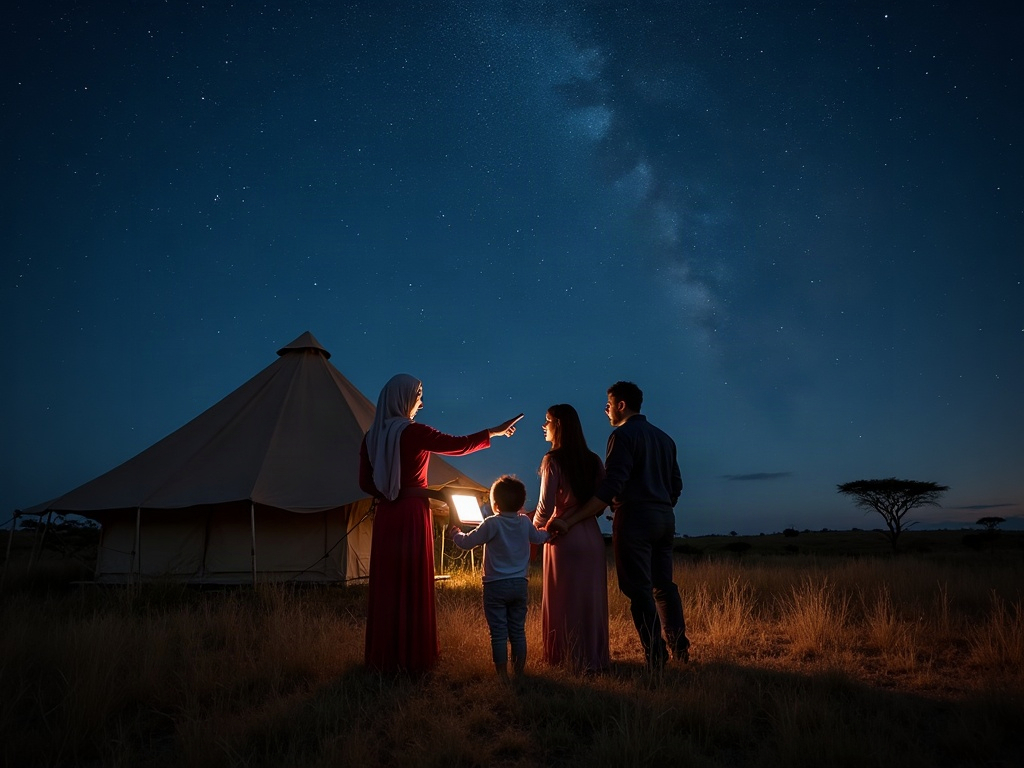
Download a star-gazing app (like SkyView Lite) onto a device before you leave. The night skies in the African bush are free from light pollution and are spectacular. This tool allows you to identify constellations, planets, and stars with your children, opening up a whole new dimension of the natural world after the sun goes down.
Many safari guides carry their own excellent identification books for birds, mammals, and trees, which they are happy to share with guests (Source: Common observation in safari lodges).
[Regional field guide] → [enables] → specific animal identification and learning.
7. What are the best luggage solutions for carrying family safari essentials?
The best luggage solutions for carrying family safari essentials are soft-sided, frameless duffel bags that conform to the strict weight and size restrictions of regional charter flights.
The best luggage solutions for family safari essentials are soft-sided, frameless duffel bags that meet strict charter flight weight and size limits (15-20kg). These bags must be pliable for small cargo holds. Combining them with packing cubes creates an organized, yet flexible, hybrid system.
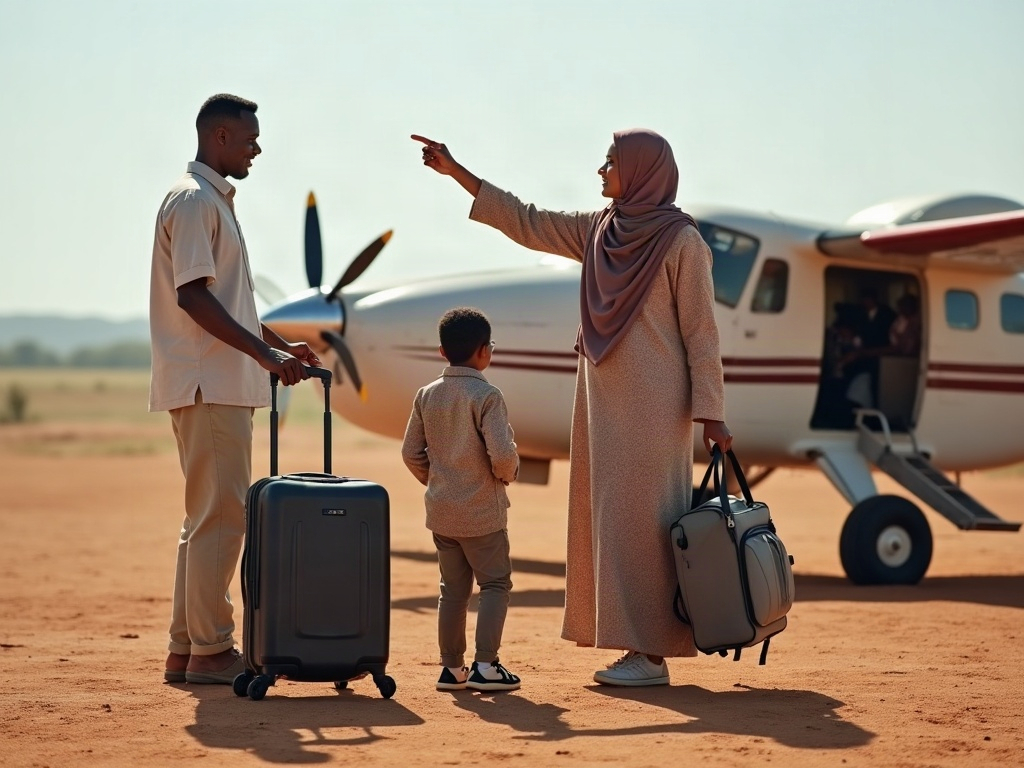
For a family safari, you must use soft-sided duffel bags, not hard-shell suitcases with wheels and frames. These bags must weigh no more than 15-20kg (33-44lbs) when full, as they need to be manipulated into the small cargo holds of bush planes.
The most effective family luggage system combines one primary soft-sided duffel bag per person with a set of packing cubes for internal organization. This hybrid system provides the required soft exterior for flights while creating a structured, modular, and easily accessible interior, preventing the “duffel bag black hole” where everything gets jumbled.
Soft-Sided Duffel: A type of luggage made entirely of flexible material (like canvas or nylon) with no rigid internal frame or wheels. This is the mandatory luggage type for most light aircraft transfers to safari camps and lodges in Africa.
[Soft-sided duffel bag] → [complies with] → bush plane luggage regulations.
Choose to purchase new, appropriate soft-sided luggage if your current suitcases are hard-shelled. Arriving at a charter flight with the wrong luggage type can result in being forced to repack into supplied bags or having luggage left behind.
How do you choose luggage that meets safari weight and size restrictions?
You choose family luggage that meets safari weight and size restrictions by selecting a soft-sided duffel bag that is no larger than approximately 62cm x 30cm x 25cm (24″ x 12″ x 10″) and weighs very little when empty.
To choose safari-compliant luggage, select a soft-sided duffel bag under 62cm x 30cm x 25cm (24″ x 12″ x 10″) that weighs less than 2 kg (4.4 lbs) empty. Ensure it lacks wheels or frames, as these add weight and bulk, to maximize the allowance for your essential gear within strict 15-20kg limits.
Look for duffel bags explicitly marketed for safari travel or those that fit the typical dimensions and lack wheels or frames, as these features add significant weight. Before you pack, weigh the empty bag itself—it should be under 2 kg (4.4 lbs) to maximize the allowance for your gear.
A “long-strap” duffel is superior to a short-handle one. A bag with a long, padded shoulder strap (in addition to standard handles) is far easier to carry through airports, especially when a parent is also trying to hold a child’s hand. This ergonomic detail makes a significant difference during transfers.
Weight restrictions for charter flights are strictly enforced and are typically a maximum of 33 lbs (15 kg), though this can be up to 44 lbs (20 kg) in parts of Southern Africa (Source: Specific airline operator websites for bush flights, e.g., Coastal Aviation, Safarilink).
[Frameless duffel bag] → [maximizes] → the weight allowance for contents.
Which packing strategies maximize space and accessibility for families?
The packing strategies that best maximize space and accessibility for families on safari are using packing cubes to compartmentalize clothing and employing the rolling method instead of folding.
To maximize space and accessibility for family safari packing, use packing cubes to compartmentalize clothing by type or by day for each family member. Additionally, tightly roll garments instead of folding to minimize wrinkles and compress items more effectively, preventing a “duffel bag black hole.”
Use packing cubes to separate items by type (shirts, trousers, underwear) or by day for each family member. Tightly rolling each clothing item before placing it in a cube minimizes wrinkles and compresses garments far more effectively than flat-folding.
The “outfit-in-a-cube” strategy is a game-changer for families. Pack a complete outfit for each child (shirt, pants, underwear, socks) into a single, smaller packing cube. In the morning, you can just hand the child their cube for the day, eliminating rummaging and arguments over what to wear.
Using packing cubes helps keep everyone’s clothes separate and organized, functioning like “drawers for your luggage” (Source: Various travel organization experts, e.g., KonMari method applied to travel).
[Packing cubes] → [create] → a modular, organized luggage system.
8. How can families avoid common packing mistakes for safari adventures?
Families can avoid common packing mistakes for safari adventures by consciously under-packing, strictly adhering to color guidelines, and creating a master checklist to prevent forgetting critical items.
Families avoid common safari packing mistakes by consciously under-packing, strictly adhering to neutral color guidelines (avoiding brights/dark blues that attract insects), and creating a master checklist to prevent forgetting critical health items. Overpacking or inappropriate clothing can significantly hinder the safari experience.
The most common packing mistakes are overpacking, bringing brightly colored or dark clothing, and forgetting essential health items like prescription medications or insect repellent. Avoiding these errors involves disciplined list-making and understanding the unique requirements of the destination.
A common mistake is packing for a fashion show. Most safari lodges offer inexpensive, rapid laundry services (often included). You can pack for 3-4 days and have clothes washed. This single piece of knowledge is the key to cutting your packed clothing volume in half and easily meeting weight limits.
“Sundowners”: A classic safari ritual of stopping the afternoon game drive at a scenic location to watch the sunset while enjoying drinks and snacks. It’s a civilized and memorable part of the safari experience, but does not require a fancy change of clothes—your daytime safari wear is perfectly acceptable.
[Lodge laundry service] → [enables] → drastically reduced clothing volume.
Choose to rely on lodge laundry services to avoid the mistake of overpacking. The convenience and space saved are well worth the small potential cost.
What items should families avoid overpacking for a safari?
The items families should avoid overpacking for a family safari vacation are excessive changes of clothes, multiple pairs of shoes, and bulky, non-essential electronics.
Families should avoid overpacking excessive changes of clothes, multiple pairs of shoes, and bulky, non-essential electronics for a safari. This means leaving behind high heels, fancy dinner outfits, more than three pairs of shoes, and single-purpose gadgets like personal hairdryers to comply with weight limits.
Leave behind high heels, fancy dinner outfits, and more than three pairs of shoes (walking shoes, camp shoes, sandals). Also, avoid packing single-purpose gadgets like hairdryers (most lodges provide them) or a different “just-in-case” outfit for every day of the trip.
Avoid packing white clothing. While it’s not a color that attracts insects, it’s a “dust magnet.” After one game drive on a dry savanna, white clothing will be permanently stained with red dust. Stick to khaki, beige, and green, which hide dirt remarkably well.
Several countries in East Africa, including Kenya, have banned single-use plastic bags, and visitors should avoid packing them in either checked or carry-on luggage (Source: National Environment Management Authority, Kenya).
[White clothing] → [becomes] → permanently stained by safari dust.
How do you prevent forgetting crucial safari necessities?
You prevent forgetting crucial safari necessities for your family by creating a master packing checklist well in advance and physically laying out every single item before it goes into a suitcase.
To prevent forgetting crucial safari necessities, create a detailed master packing checklist categorized by person and item type weeks in advance. The day before packing, physically lay out every item on a bed or floor, checking each off the list, then take a “Photo Checklist” for visual confirmation.
Weeks before your trip, create a detailed checklist categorized by person and item type (Clothing, Medical, Documents, Gear). The day before packing, lay everything on a bed or the floor, checking each item off the list as you see it. Only then should you begin to pack the bags.
The “Photo Checklist” method provides a final layer of security. Once all items are laid out, take a photo of each category (e.g., a photo of all the medical supplies, a photo of all the documents). If you have a moment of panic mid-flight (“Did I pack the EpiPen?”), you can visually confirm its presence by looking at the photo on your phone.
A critical pre-travel check is to ensure your passport is valid for at least 6 months beyond your return date, as this is a requirement for many African countries (Source: Entry requirements for countries like Tanzania, Kenya, South Africa).
[Physical layout method] → [provides] → visual confirmation of all items.
Frequently Asked Questions
How do family needs influence safari packing decisions?
Family needs shift safari packing decisions by prioritizing child-specific health, safety, and entertainment over individual adult gear. This includes a comprehensive pediatric first-aid kit, age-appropriate distractions for long drives, and extra snacks, which often take precedence due to children’s unique requirements.
What distinguishes safari packing from other family trips?
Safari packing differs from other family trips due to strict prohibitions on certain clothing colors, critical needs for dust and sun protection, and absolute reliance on pre-packed items because of remote, non-commercial destinations. Unlike city or beach trips, forgotten items are often irreplaceable.
What are the best luggage solutions for carrying family safari essentials?
The best luggage solutions for family safari essentials are soft-sided, frameless duffel bags that meet strict charter flight weight and size limits (typically 15-20kg). These bags are pliable enough for small cargo holds, and using packing cubes inside them keeps items organized and accessible.
Resolution
In conclusion, what you pack for a memorable family safari trip is a strategically chosen, minimalist collection of multi-functional clothing, essential gear, and health supplies that prioritizes your family’s comfort, safety, and engagement with the wild. The key to a successful family safari packing list is to focus on a neutral-colored layering system for clothing, essential optics and power for gear, a comprehensive medical kit, and all required travel documents. By packing smart, not heavy, you ensure your family is prepared for one of the world’s greatest adventures. The ultimate goal of this packing blueprint is to get the logistics so right that on the trip, you forget about your luggage entirely. A well-packed bag disappears into the background, allowing you to be fully present and share in the wonder of the African bush with your children.
The “Leave No Trace” Principle: While often associated with hiking, this is a core ethos of ecotourism and safaris. It means leaving the environments you visit exactly as you found them. This extends to packing: ensure you have a way to pack out all your personal trash, like used batteries or plastic wrappers, from remote camps.
[Effective packing] → [enables] → full presence and enjoyment of the experience.
Review this guide’s master checklist one final time, trust the minimalist philosophy, and get excited. The preparation is now done, and the adventure awaits.