Family vacation Road Trips: What Do Families Need for Long Drives?
Table of Contents
Family long drives demand specialized planning due to their unique challenges. Managing a confined, mobile environment for extended periods introduces distinct pressures not found in typical getaways, transforming the journey itself into a key part of the vacation experience.
This guide unpacks the logistical and psychological complexities of traveling with children, offering a systematic approach to ensure safety, comfort, and sustained engagement. By addressing common pitfalls proactively, families can transform potential stressors into memorable adventures, making the journey as rewarding as the destination itself, as detailed in our guide on family vacation planning.
1. Positioning: Why are family long drives different from other vacations?
Family long drives are fundamentally different from other vacations because the journey itself becomes a primary component of the experience, requiring management of a confined, mobile environment for an extended period.
Family long drives differ from other vacations by introducing unique challenges related to child comfort, continuous entertainment needs, and logistical complexities within a confined vehicle space. Unlike a flight, the entire duration is an active parenting and logistical exercise.
The core difference is the shift from a “destination-focused” mindset to a “journey-as-destination” reality. This means parental fatigue is a primary safety and enjoyment factor to manage, unlike in a stationary resort vacation where downtime is built-in.
“Travel Fatigue” is the cumulative physical and mental exhaustion from prolonged travel, heightened in families by the need for constant vigilance, child entertainment, and navigating unfamiliar routes.
Choose a family road trip over air travel if your vacation goals include flexibility, carrying more gear, and integrating the journey itself as part of the family adventure.
Now that you understand the core differences, what are the most immediate actions a family should take to prepare for such a unique journey? So what are the direct impacts on family dynamics and the preparations needed?
To truly appreciate the distinct nature of long drives with family, it helps to understand them within the broader context of What Are the 10 Types of Family Vacations?
How do long drives uniquely impact family dynamics on the road?
Long drives uniquely impact family dynamics on the road by compressing personal space and amplifying both positive and negative interactions, creating a high-pressure environment where patience and mood are tested.
The primary impact of long drives on family dynamics is the acceleration of emotional responses due to confinement and boredom. This can lead to increased squabbles and parental stress but also presents unique opportunities for bonding if managed well. The “sibling proximity friction” is a key dynamic; a lack of physical separation means minor annoyances can escalate quickly. Experienced parents plan for this by creating designated personal zones with individualized activities. On one 13-hour family road trip, teenage daughters listened to a three-hour concert movie twice, accounting for nearly half the drive time and demonstrating how shared entertainment can dominate the in-car experience, as noted by What’s Up Moms.
This dynamic is a key reason for proactive entertainment and comfort planning to survive a 10 hour car ride and maintain positive family dynamics on the road.
Author’s Experience
“Having navigated countless family road trips myself, I’ve seen firsthand how a little pre-planning makes all the difference. From managing sibling squabbles with creative games to having emergency snacks ready, these tips are born from real-world miles and the joy of seeing my kids discover new horizons.”
What specific preparations do families need for extended time in a vehicle?
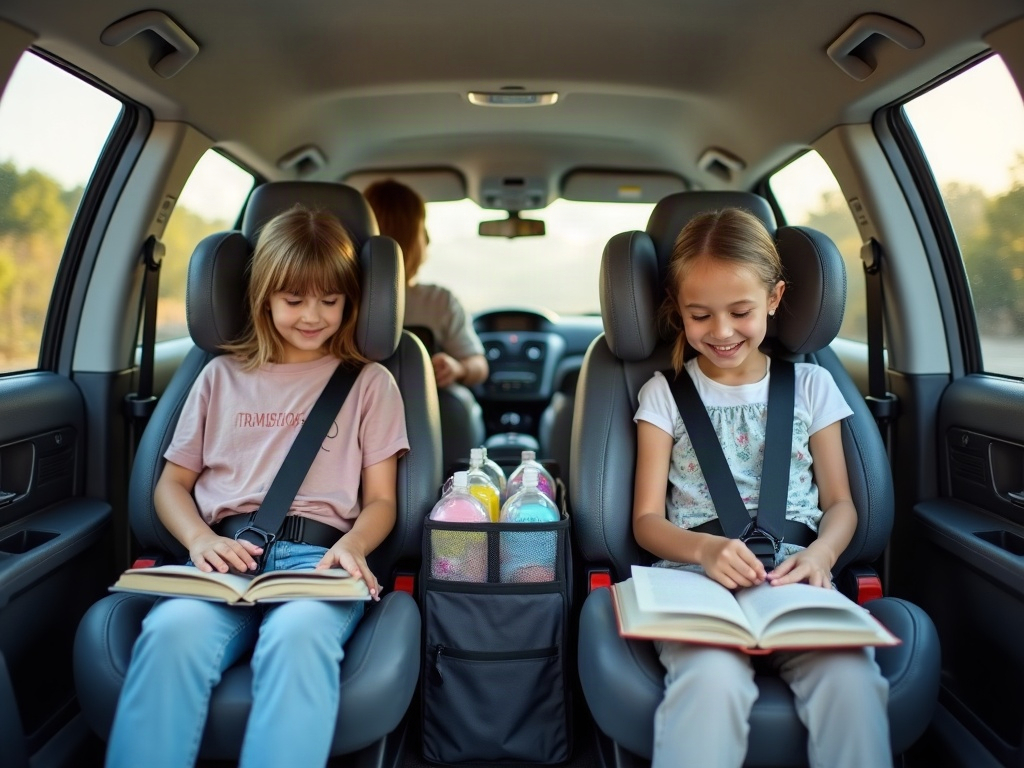
For extended time in a vehicle, families need specific preparations in four critical areas: vehicle safety, passenger comfort, accessible essentials, and structured entertainment.
Families must prepare their vehicle with pre-trip maintenance, pack for both comfort and emergencies, organize the car for accessibility, and plan a multi-layered entertainment strategy. These preparations are the foundation for a successful long drive. A common mistake is packing for the destination and not for the journey. Expert preparation involves creating a “car-ready” subset of luggage and supplies that are immediately accessible without stopping to unpack the trunk. To prepare for the drive itself, it’s recommended to get at least 7 hours of sleep for two consecutive nights before the road trip to build up energy reserves.
This section provides a mental checklist of major planning categories, utilizing tools like packing cubes for efficient organization.
Four Critical Areas for Family Road Trip Preparation:
- Vehicle safety
- Passenger comfort
- Accessible essentials
- Structured entertainment
The meticulous planning required for successful road trips often parallels the efforts needed to uncover the secrets to a perfect outdoor trip during family camping vacations.
2. Constraints: How to prepare your family’s vehicle for safe and comfortable long drives?
Preparing your family’s vehicle for safe and comfortable long drives requires a two-pronged approach: a thorough mechanical inspection to prevent breakdowns and a strategic interior organization to maximize space and accessibility.
To prepare your vehicle, perform essential maintenance checks on tires, brakes, fluids, and battery at least one week before departure. Simultaneously, organize the interior with seat-back organizers and cargo containers to ensure safety and comfort for all passengers.
Beyond standard checks, checking the manufacturing date of your tires is crucial. Tires older than six years have a significantly higher risk of failure on long, hot drives, even if the tread looks good.
“Tire Load Index” is the number on a tire’s sidewall that corresponds to the maximum weight it can support when properly inflated, a critical factor when a vehicle is fully loaded with family and gear.
Prioritize a professional mechanic’s inspection over a DIY check if you are not mechanically experienced or if the trip involves extreme temperatures or terrain.
Given the importance of tire age, what specific steps should I take to inspect my tires and ensure they are road trip ready before a family road trip? A prepared vehicle is the first step, and now the focus must shift to what happens inside it, starting with the most critical safety checks.
When planning for a comfortable journey, one key consideration for many families embarking on a long drive is exploring Which Cars and RVs Are Best for Family Travel?
What essential vehicle checks prevent roadside breakdowns for families?
The essential vehicle checks that prevent roadside breakdowns for families focus on five key systems: tires, brakes, fluids, battery, and lights.
Before a long drive, check tire pressure and tread depth, inspect brake fluid and pad life, top off all essential fluids (oil, coolant, washer), test the battery’s charge, and ensure all headlights, brake lights, and turn signals are functional. These checks are the most effective way to prevent common breakdowns. The “B-L-O-A-T” acronym (Brakes, Lights, Oil, Air, Tires) is a simple, effective mnemonic for remembering the five most critical pre-trip checks that prevent over 80% of common roadside issues. As part of vehicle cost preparation, research from Nationwide suggests the cheapest day of the week to buy gas tends to be Monday, while Wednesdays and Thursdays are the most expensive.
These checks are a family’s first line of defense against being stranded, and their meticulous execution enhances road trip safety significantly.
B-L-O-A-T Checklist for Vehicle Preparation:
- Brakes: Inspect brake fluid and pad life.
- Lights: Ensure all headlights, brake lights, and turn signals are functional.
- Oil: Top off engine oil and check for leaks.
- Air: Check tire pressure and tread depth, including the spare.
- Tires: Inspect for wear and tear, and check manufacturing date.
How to optimize car seating and space for family comfort on long journeys?
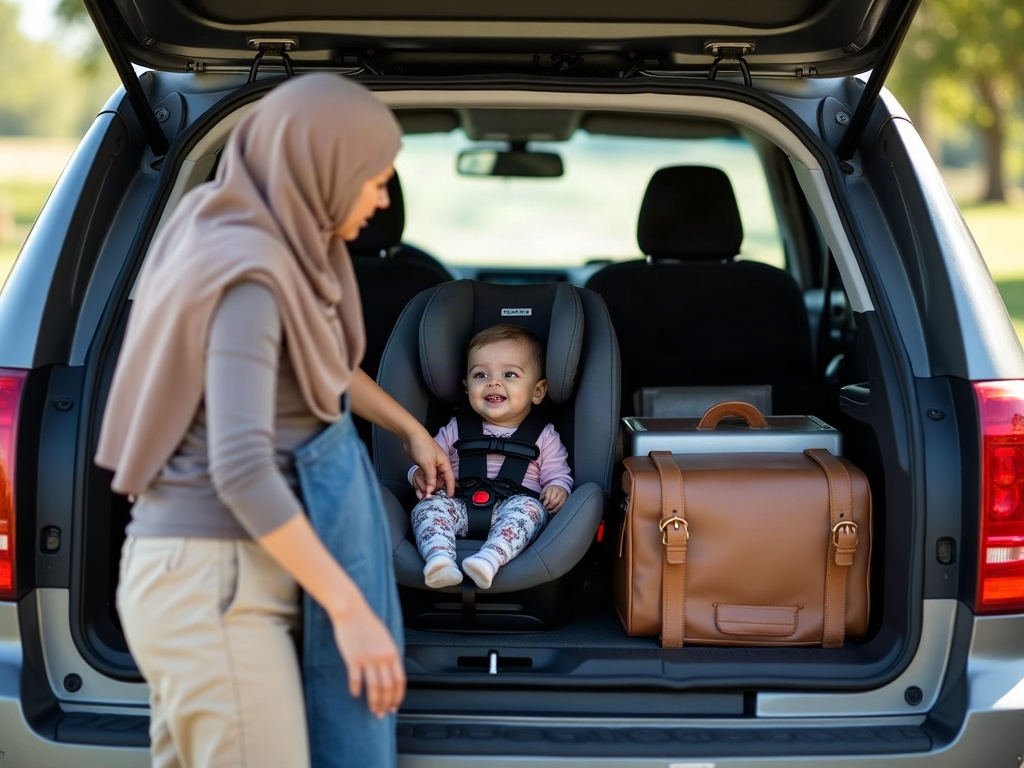
Optimizing car seating and space for family comfort on long journeys is achieved by assigning dedicated zones for each child and utilizing vertical and under-utilized spaces for storage.
To optimize space, use back-of-seat organizers for personal items, a slim-profile cooler between captain’s chairs, and a rooftop cargo carrier for bulky luggage. Strategically place older children where they can help younger ones to minimize parental intervention. The concept of “seating parity” is vital. When possible on multi-day trips, rotate children’s seating positions (if safety allows) to give each child a “good” and “bad” seat, preventing arguments over perceived favoritism. To illustrate how quickly items add up, one travel expert notes that if every person in a family of four brings three pairs of shoes, that alone adds 12 pairs of shoes to the packing list.
Concrete solutions involving seat-back organizers, rooftop cargo carriers, and packing cubes leverage under-utilized space and prevent a cramped car interior.

Which child safety measures are crucial for road trip travel with family?
The most crucial child safety measures for road trip travel with family are ensuring correct car seat installation, activating childproof locks, and never leaving a child unattended in the vehicle.
For maximum safety, ensure your child’s car seat is installed according to manufacturer and NHTSA guidelines, with a certified technician check if possible. Additionally, secure all loose items in the car, as they can become dangerous projectiles in a sudden stop. Beyond the car seat itself, a critical and often overlooked measure is ensuring all heavy or hard objects (coolers, electronics, luggage) are secured. An unsecured 20-pound object can exert forces equivalent to thousands of pounds in a crash. As an example of evolving safety needs, one family noted their daughters, ages 15 and 13, have outgrown child car seats, making proper seatbelt use the primary restraint system.
These measures are governed by law and best practices from authorities like the NHTSA, incorporating entities like car seat, booster seat, and LATCH system, underscoring the importance of safety.
3. Preparation: What essentials should families pack for extended car travel?
The essentials families should pack for extended car travel are categorized into three distinct kits: an in-car accessibility kit, a primary luggage kit, and a vehicle emergency kit.
For extended car travel, families must pack an accessible bag with snacks, entertainment, and comfort items for inside the cabin. Separate this from the main luggage in the trunk, and ensure a dedicated roadside emergency kit is also packed and easily reachable.
The “Three-Kit System” (Cabin Kit, Trunk Kit, Emergency Kit) is a professional travel organizer’s framework that prevents over-packing the cabin and ensures the right items are accessible at the right time without a full roadside unpack.
“Go-Bag” (or Cabin Kit) is a single, designated backpack or tote that contains all immediate needs for the next 2-4 hours of driving, including snacks, drinks, a charging cable, and one or two activities.
Adopt the Three-Kit System if your trip is longer than 4 hours or involves multiple stops, as it dramatically reduces stress and time spent searching for items.
What are the essential items to include in a child’s individual ‘Go-Bag’ for immediate access and entertainment during the journey? Mastering this packing system requires a detailed look at how to organize each component, starting with clothing and personal items.
The art of packing for a road trip shares fundamental principles with other forms of travel, such as preparing what must you pack for a family beach trip.
How to organize clothing and personal items efficiently for the car interior?
To organize clothing and personal items efficiently for the car interior, use a system of packing cubes for main luggage and a dedicated “overnight bag” for single-night stops.
Use packing cubes to compress clothing and separate items by day or by child, which simplifies finding outfits. For trips with overnight hotel stops, pack a single tote with one change of clothes and toiletries for the whole family to avoid hauling large suitcases in and out. The “one-bag overnight” strategy is a game-changer. Instead of four individual suitcases for a one-night hotel stop, one parent carries a single duffel with four packing cubes (one per person) and a toiletry bag. This transforms a 15-minute ordeal into a 2-minute task. For trips lasting more than a week, planning to do laundry mid-trip can cut the amount of clothing you need to bring in half.
This tangible, efficient packing solution, emphasizing packing cubes and a dedicated toiletry bag, shows experience in streamlining travel logistics.

Which critical travel documents and medications should families carry on long drives?
The critical travel documents families must carry on long drives include driver’s licenses, vehicle registration, and insurance cards, while essential medications include personal prescriptions and a well-stocked first-aid kit.
Always carry physical and digital copies of your license, registration, and insurance. For medications, pack all necessary prescriptions in their original bottles, along with a first-aid kit containing basics like bandages, antiseptic wipes, pain relievers, and any allergy medications. A crucial but often forgotten item is a printed list of emergency contacts and children’s medical information (allergies, doctor’s phone number). In an emergency where your phone is dead or unavailable, this physical document is invaluable for first responders. In one family’s road trip vehicle, a 2025 Honda Odyssey, the car was powered by a 3.5-liter V-6 engine, a specification critical for the driver to know for maintenance and fuel planning.
The importance of redundancy (physical and digital copies) for documents and medical info acts as a crucial E-E-A-T signal for preparedness.
Required Documents:
- Driver’s license
- Vehicle registration
- Insurance cards
Essential Medications:
- Personal prescriptions in original bottles
- Well-stocked first-aid kit with bandages, antiseptic wipes, pain relievers, and allergy medications
What emergency supplies are vital for family road trips?
The vital emergency supplies for family road trips include a standard roadside assistance kit, plus additional items for family-specific needs like extra water, non-perishable snacks, and blankets.
A vital family road trip emergency kit must contain jumper cables, a portable tire inflator, basic tools, and a flashlight. Augment this with a first-aid kit, emergency blankets, extra water, high-energy snacks like granola bars, and a portable phone charger. Beyond the standard kit, experienced family travelers include a roll of paper towels, a bottle of water (for cleaning, not just drinking), and a “boredom buster” emergency toy that is only brought out in a true delay situation like a breakdown or long traffic jam. This “break glass in case of emergency” toy can prevent a meltdown. Research suggests that heightened emotions and adrenaline during adventurous or challenging situations, like a breakdown, can actually work to draw family members closer together.
Providing a comprehensive list demonstrates an understanding of both vehicle and family needs, showcasing practical preparedness.
4. Engagement: How to keep children entertained and engaged during long road trip segments?
Keeping children entertained and engaged during long road trip segments is accomplished through a balanced rotation of screen time, non-screen activities, and interactive family games.
To keep children entertained, create a “fun bag” with a mix of new and favorite toys, audiobooks, and coloring supplies. Balance these individual activities with family-wide games and planned, limited screen time to prevent boredom and arguments.
The “Surprise and Delight” strategy is highly effective. Wrap small, inexpensive toys or activity books and hand one out every hour or after crossing a state line. The anticipation and novelty are powerful tools for managing long stretches of road.
“Activity Rotation” is a structured approach to entertainment where parents dictate a schedule, for example: 45 minutes of audiobooks, followed by 30 minutes of creative play (coloring/drawing), then 45 minutes of screen time, preventing kids from getting bored of any single activity.
Implement a structured activity rotation if your children have short attention spans or tend to argue when left to their own devices for too long.
How can parents manage arguments over shared entertainment resources or preferred activities during long drives with multiple children? A successful entertainment strategy requires a nuanced approach to each component, starting with the most controversial and powerful tool: screen time.
Strategies for keeping children engaged on the road are as vital as understanding how to maximize fun and save time during theme park family vacations.
What screen-time strategies keep kids occupied without overdoing it on the road?
Screen-time strategies that keep kids occupied without overdoing it on the road involve setting clear time limits, pre-loading approved content, and using screens as a reward or a tool for specific times.
To manage screen time, establish rules before the trip (e.g., one hour on, one hour off) and download movies, games, and educational apps that do not require Wi-Fi. Use headphones for each child to maintain a quiet car environment. A highly effective strategy is “geographic screen time.” For example, allow screens while driving through uninteresting stretches of highway but mandate “screens down” when passing through a scenic national park or approaching a fun landmark. This connects screen use to the journey itself. On a 12-day road trip, one family reported relaxing their usual rules to such a degree that the kids had more fast food than in the previous three years, a dynamic that often applies to screen time as well.
Pre-planning by downloading content is key to success, ensuring actionable and fair rules for parents using entities like tablet holder, headphones, and portable charger.
Which non-screen activities engage children of different ages during car travel?
The non-screen activities that best engage children of different ages during car travel are those that are self-contained, low-mess, and appeal to creative, narrative, or problem-solving skills.
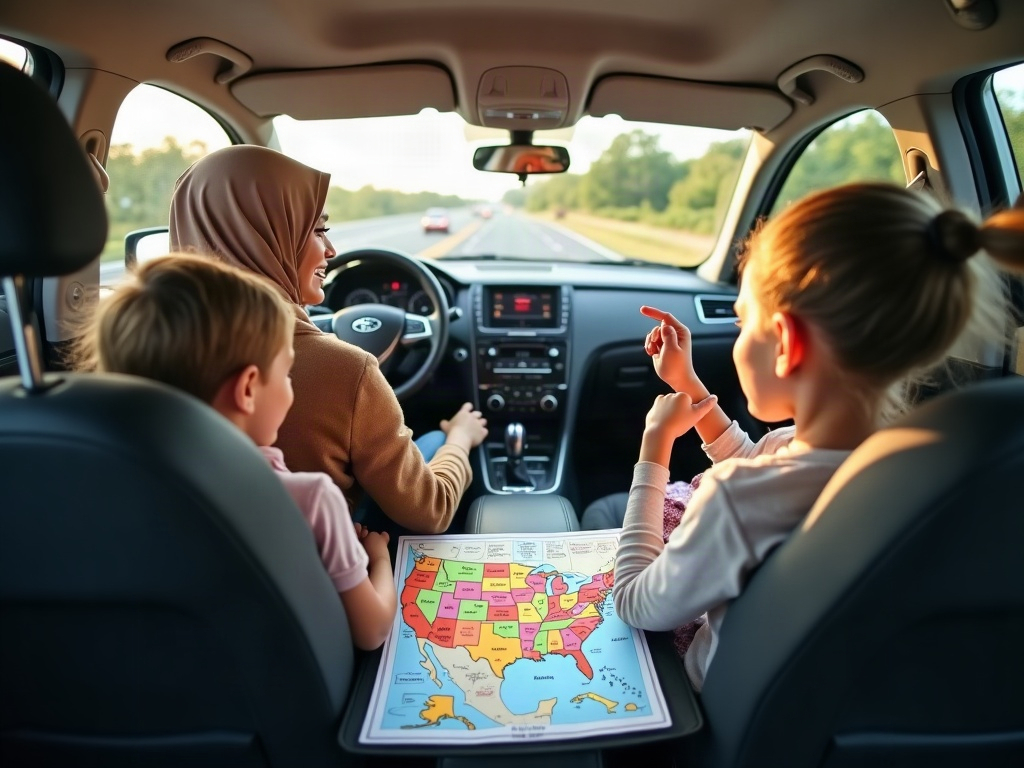
For younger children, pack sticker books, magnetic drawing boards, and sensory toys. For older children, provide chapter books, travel-sized board games (with magnetic pieces), and blank journals for drawing or writing about the trip. The “Road Trip Binder” is a superior non-screen tool. Create a 3-ring binder for each child with a mix of printable games (bingo, I-Spy), coloring pages, a map of the route to trace, and blank pages. It’s a single, organized activity hub. One family found success by having their 9-year-old twins select 15 to 20 books each from the library to read during long drives.
This section fulfills the user’s need by providing tangible ideas, organized by age group, emphasizing low-mess activities and entities like audiobooks, podcasts, and Mad Libs.
How can families incorporate road trip games and interactive elements for engagement?
Families can incorporate road trip games and interactive elements for engagement by planning a mix of classic observational games, creative storytelling games, and location-based challenges.
Play classic games like “I Spy” and the “License Plate Game” to keep everyone engaged with the scenery. Introduce creative games like “One-Word Story” or use road trip questions from a pre-made list to spark fun conversations. Elevate the License Plate Game by integrating a US map. Have children color in each state on a printed map as they spot the corresponding license plate. This turns a simple game into an interactive geography lesson and a visual record of the trip’s progress. The “50 Mile Game,” where children receive a small surprise—such as a snack or a small toy—every 50 miles, is cited by one family travel blog as “by far the best road trip advice I’ve ever heard.”
This section provides concrete game ideas that encourage family interaction, fulfilling the user’s need for the best travel games for kids.
5. Nourishment: What strategies help manage meals and snacks on family long drives?
Strategies that help manage meals and snacks on family long drives center on proactive planning of mess-free options, strategic cooler packing, and efficient use of rest stop breaks.
To manage road trip meals, pack a cooler with healthy options like string cheese and yogurt tubes, and a separate “snack bag” with non-perishable, easy-to-distribute items. Plan meal breaks around parks or rest areas with space for kids to run, rather than relying solely on fast-food drive-thrus.
The “Rule of Three” for snacks is a pro-traveler tip: always have a protein (jerky, cheese), a fruit/veg (apple slices, baby carrots), and a “fun” snack (crackers, pretzels) available. This combination prevents sugar crashes and keeps kids satisfied longer than a bag of chips alone.
“Snack Caddy” is a small, multi-compartment container (like a tackle box or bento box) given to each child. It is filled at the beginning of the day, and once it’s empty, snacking is done until the next planned stop, teaching portion control and preventing constant requests.
Adopt the Snack Caddy system if you have multiple children and want to create fairness and predictability around in-car snacking.
Beyond what to pack, what are the best strategies to prevent food waste and spoilage during a long family road trip? A successful food strategy starts with what you pack, leading directly into the specifics of planning healthy and mess-free snacks.
How to plan healthy and mess-free snacks for in-car consumption?
Planning healthy and mess-free snacks for in-car consumption requires choosing foods that are dry, non-crumbly, and portioned into individual servings before the trip begins.
Excellent mess-free snacks include string cheese, grapes, pre-sliced apples, baby carrots, pretzels, and granola bars. Avoid crumbly crackers, sticky fruits, and anything requiring utensils to minimize cleanup. The key is not just the snack itself, but the delivery system. For example, instead of a large bag of Goldfish crackers, portion them into small, resealable bags or snack-sized containers. This prevents a catastrophic spill of the entire container. One family on a 12-day trip noted their kids had more fast food than in the previous three years, highlighting how easily normal dietary habits can be disrupted on the road.
Presenting suggestions in a “Pack This, Not That” table emphasizes the “mess-free” attribute as the primary selection criterion for healthy car snacks for toddlers.
| Pack This | Not That |
|---|---|
| String cheese, grapes, pre-sliced apples, baby carrots, pretzels, granola bars. | Crumbly crackers, sticky fruits, anything requiring utensils. |
What are the best practices for packing a cooler and managing drinks for road trips?
The best practices for packing a cooler and managing drinks for road trips involve pre-chilling the cooler and its contents, using frozen water bottles as ice packs, and designating one cooler for drinks and another for food.
To maximize cooler efficiency, start with a cold cooler, add a layer of frozen water bottles at the bottom, then layer in your pre-chilled food and drinks, filling any empty space. For drinks, use spill-proof cups with straws for kids to prevent messes. A superior technique is to freeze about 75% of your water bottles solid before the trip. They act as large, long-lasting ice blocks, and as they melt, they provide a continuous supply of ice-cold drinking water, eliminating the need for bags of messy ice. A review of road trip gear identified a 23-quart portable electric refrigerator as the “family’s favorite thing,” which successfully kept food and drinks cold for a day-long trip without needing ice.
Step-by-step instructions for layering techniques ensure users learn how to pack a cooler like an expert, using entities like cooler, ice packs, and spill-proof cups.
How to choose family-friendly rest stops and meal breaks efficiently?
Choosing family-friendly rest stops efficiently involves using apps to pre-plan stops with playgrounds or green space and structuring the break time to maximize physical activity before getting back in the car.
Use apps like iExit or Google Maps to identify upcoming rest stops with amenities like playgrounds, picnic tables, and clean restrooms. Aim for a 20-30 minute break every 2-3 hours to allow children to run and burn off energy. A key efficiency strategy is to combine fuel, food, and fun. Choose a single stop that has a gas station, a quick-service restaurant, and a small play area. This “triple-threat stop” is far more efficient than making three separate stops. For driving stretches, some experienced family travelers find the sweet spot to be about three hours between major stops.
Emphasizing physical energy release and including app names helps users strategically make breaks restorative, rather than just delays.
6. Well-being: How to maintain comfort and well-being for all family members on long journeys?
Maintaining comfort and well-being for all family members on long journeys requires a combination of physical comfort accessories, a predictable schedule of breaks, and proactive management of common travel ailments.
To maintain comfort, ensure each family member has a travel pillow and blanket, and use sunshades to block glare. Schedule frequent breaks for stretching and movement, and be prepared with remedies for potential issues like motion sickness.
The concept of “micro-comforts” is key. Small, seemingly minor items have a cumulative positive effect. This includes things like having lip balm accessible, providing a favorite stuffed animal, or using a simple footrest (even a backpack) to change leg position.
“Sensory Regulation” in a travel context as the process of managing a child’s sensory inputs (sight, sound, touch) in a confined space to prevent overstimulation or under-stimulation, both of which can lead to restlessness and meltdowns.
Prioritize investing in comfort items like quality travel pillows if your drive is longer than 3 hours, as preventing neck strain and enabling naps is critical for mood.
How can I effectively manage temperature differences and individual comfort needs in a multi-passenger vehicle during a long road trip? These strategies are interconnected, and a good comfort plan begins with packing the right physical items.
What comfort items and accessories improve the ride experience for families?
The comfort items and accessories that most improve the ride experience for families are those that support sleep, reduce glare and noise, and provide personalized climate control.
Key comfort accessories include neck pillows for head support, lightweight fleece blankets for temperature changes, and window sunshades to block UV rays and glare. Additionally, individual headphones are essential for managing audio and creating personal space. An often-overlooked but highly effective comfort item is a small, portable footrest or even a sturdy, packed backpack placed on the floor. Elevating the feet slightly improves circulation and dramatically reduces lower back and leg fatigue on very long drives. During a 1700-mile road trip, a 2025 Honda Odyssey minivan achieved a fuel economy of around 26 miles per gallon, a key factor in budgeting for the cost and comfort of a long journey.
This section provides a “shopping list” of items (travel pillow, sunshades, headphones) that directly improve comfort by categorizing them into sleep support, climate/light control, and personal space.
How to schedule regular breaks to prevent fatigue and restlessness effectively?
To effectively prevent fatigue and restlessness, schedule a 15-20 minute break for every 2 hours of driving, with a longer 45-60 minute break for meals.
The most effective break schedule is the “2-Hour Rule”: drive for no more than two hours before taking a mandatory stop for everyone to get out and stretch. This schedule aligns with the attention span of most children and helps the driver stay alert. The effectiveness of a break is measured in activity, not time. A 15-minute break where kids run, jump, and play is far more effective at preventing restlessness than a 30-minute break spent sitting in a fast-food restaurant. The goal is a “full body reset.” One of the most crucial tips for long drives is to get out of the car and stretch your legs every two hours or so.
Stating the “2-Hour Rule” provides a clear, authoritative, simple, memorable, and actionable guideline for scheduling breaks proactively.
How often should we stop on a road trip?
It’s recommended to stop for 15-20 minutes every 2 hours of driving to prevent fatigue and restlessness.
How long should road trip breaks be?
Breaks should ideally be 15-20 minutes for stretching, with longer 45-60 minute stops for meals.
Which strategies address common car sickness or travel anxiety in children?
Strategies that address common car sickness in children involve optimizing their seating position and visual focus, while managing travel anxiety requires creating a predictable and reassuring environment.
To combat car sickness, seat the child where they can see out the front window and avoid reading or looking at screens. For anxiety, talk through the itinerary, provide comfort items like a favorite blanket, and use calming audiobooks or music. A key strategy is to stabilize the child’s inner ear by engaging their other senses. Provide cool sips of water, have them smell a freshly peeled orange or a peppermint stick, and ensure a steady flow of fresh, cool air from a vent. This sensory “re-grounding” can often short-circuit the nausea reflex. For managing motion sickness, chewable Dramamine is available as an option for children ages 2 and over.
This section provides both preventative measures and in-the-moment remedies to fully satisfy user intent, incorporating entities like motion sickness bands, Dramamine for Kids, and audiobooks.
Beyond road trips, strategies for managing motion sickness are equally valuable when considering how families can prevent motion sickness on cruise vacations.
7. Resilience: How to plan for common challenges and unexpected situations on family road trips?
Planning for common challenges and unexpected situations on family road trips requires adopting a mindset of “prepare for the worst, expect the best,” backed by a concrete emergency kit and a flexible itinerary.
To plan for challenges, assemble a comprehensive vehicle and first-aid emergency kit, have a roadside assistance plan like AAA, and build buffer time into your itinerary. The key is to have resources and plans ready before an issue arises.
The most important tool for handling unexpected situations is a “Plan B” for your itinerary’s key segments. For each major stop or overnight stay, have a backup option scouted in advance (e.g., a different hotel, an alternate route). This transforms a trip-ruining delay into a simple detour.
“Buffer Time” is extra, unscheduled time intentionally added to a travel itinerary between planned activities or driving segments to absorb unforeseen delays without causing stress or forcing rushed, unsafe driving.
Implement a formal ‘Plan B’ for each day if your trip is on a tight schedule or involves time-sensitive reservations.
What specific resources or apps are indispensable for identifying and navigating unexpected road closures or detours during a family road trip? Even with the best plans, minor issues can arise, and the next step is knowing how to handle them on the spot, starting with the most common: minor vehicle trouble.
How to troubleshoot minor vehicle issues on the road quickly?
Troubleshooting minor vehicle issues on the road quickly involves first ensuring safety by pulling over, then performing basic checks like inspecting a tire for a puncture or checking battery terminals for a secure connection.
For a flat tire, learn how to use a tire inflator and sealant kit, which is often faster and safer than a full change on a busy roadside. For a non-starting car, check that the battery cables are tight and free of corrosion before calling for help. Many modern “dead battery” issues are not the battery itself, but a simple electronic glitch. A “hard reset” – disconnecting the negative battery terminal for 60 seconds and reconnecting it – can often resolve mysterious electronic issues and get the car started. This is a last resort before calling for a tow. Experienced drivers recommend carrying a portable tire inflator and a portable jump starter, noting that these two items have “saved my bacon in the past” from roadside trouble.
Emphasizing safety first, this section focuses on 2-3 common issues, providing DIY solutions while clearly stating when professional help (like roadside assistance from AAA) is required.
What steps should families take in a medical emergency or breakdown away from home?
The first steps a family must take in a medical emergency or breakdown away from home are to secure the scene for safety, call for professional help, and provide essential information to first responders.
In any emergency, first ensure you are in a safe location away from traffic. Then, call 911 for medical issues or a roadside assistance service for breakdowns. Have your exact location (use your phone’s GPS), a description of the problem, and your vehicle information ready. Have a pre-written “Emergency Info” note on your phone’s lock screen or a physical card in the glove box. It should include: Your Name, Emergency Contacts, Your Blood Type, Allergies, and any major medical conditions for each family member. This gives first responders critical information even if you are unable to communicate. A well-stocked first-aid kit can be creative; one travel writer notes that tampons can serve as effective devices to stop nosebleeds, a common issue in the dry air or high altitude of some road trip destinations.
This section provides a clear, step-by-step emergency protocol, stressing calmness and clear communication with authoritative entities like 911, roadside assistance, and first responders.
Emergency Protocol Steps:
- Secure the scene for safety.
- Call for professional help (911 or roadside assistance).
- Provide essential information (exact location, problem description, vehicle info).
How to handle unforeseen delays and changes to the road trip itinerary with kids?
Handling unforeseen delays and changes to the road trip itinerary with kids is best managed by reframing the delay as an “adventure,” activating your pre-planned backup activities, and maintaining a calm, positive parental attitude.
When a delay occurs, openly acknowledge it to the kids, frame it as an unexpected part of the journey, and then deploy your “emergency boredom buster” kit or games. A parent’s calm reaction is the most important factor in keeping children from getting anxious. The “Adventure Proclamation” is a powerful psychological tool. Instead of saying “Ugh, we’re stuck in traffic,” a parent should say “Alright team, unexpected adventure! Let’s see if we can find 10 yellow cars while we wait. The winner gets to pick the next song.” This reframes the entire emotional context of the delay. When traveling with a newborn, one family’s rule of thumb was to add half the amount of travel time to Google Maps’ initial estimate to get a realistic arrival time, building in a buffer for delays.
Focusing on the parental mindset as the key tool for managing delays, this section provides concrete examples of reframing language to manage the emotional side of travel disruptions.
Resolution
Successfully navigating family road trips hinges on proactive planning and a resilient mindset. By prioritizing vehicle safety, optimizing interior comfort and organization, ensuring a well-stocked supply of entertainment and nourishment, and preparing for unexpected challenges, families can transform long drives from potential stressors into cherished memories. These strategies combine to resolve common travel constraints, ensuring every member of the family enjoys a smooth, engaging, and safe journey.