Family Cruise Vacations: How Can Families Prevent Motion Sickness?
Table of Contents
To prevent motion sickness on a family cruise vacation, you must proactively book a mid-ship, lower-deck cabin, administer preventative medications like dimenhydrinate or scopolamine patches before boarding, and utilize natural remedies like ginger and acupressure bands while actively sailing.
Cruise motion sickness, also known as kinetosis, occurs when the brain receives conflicting signals from the eyes and the inner ear’s vestibular system regarding movement. By aligning visual cues with ship movement through horizon gazing and avoiding enclosed screen time, families can effectively neutralize sensory conflicts and ensure a smooth, symptom-free journey.
1. What is cruise motion sickness and why do families experience it?
Cruise motion sickness on family cruise vacations is a physiological response caused by a conflict between what your eyes see as stable and what your inner ear’s vestibular system feels as movement.
This sensory conflict sends confusing signals to the brain, triggering the symptoms of motion sickness. Families, particularly those with young children, experience this because a child’s vestibular system is not yet fully developed, making them more susceptible to the ship’s motion.
While modern mega-ships are equipped with advanced fin stabilizers to counteract roll (side-to-side motion), they are less effective against pitch (front-to-back) and heave (up-and-down) movements, which are often the primary triggers for the vestibular system’s confusion in open water.
Vestibular System: This is the sensory apparatus within the inner ear that provides the brain with critical information regarding motion, head position, and spatial orientation, acting like a biological gyroscope.
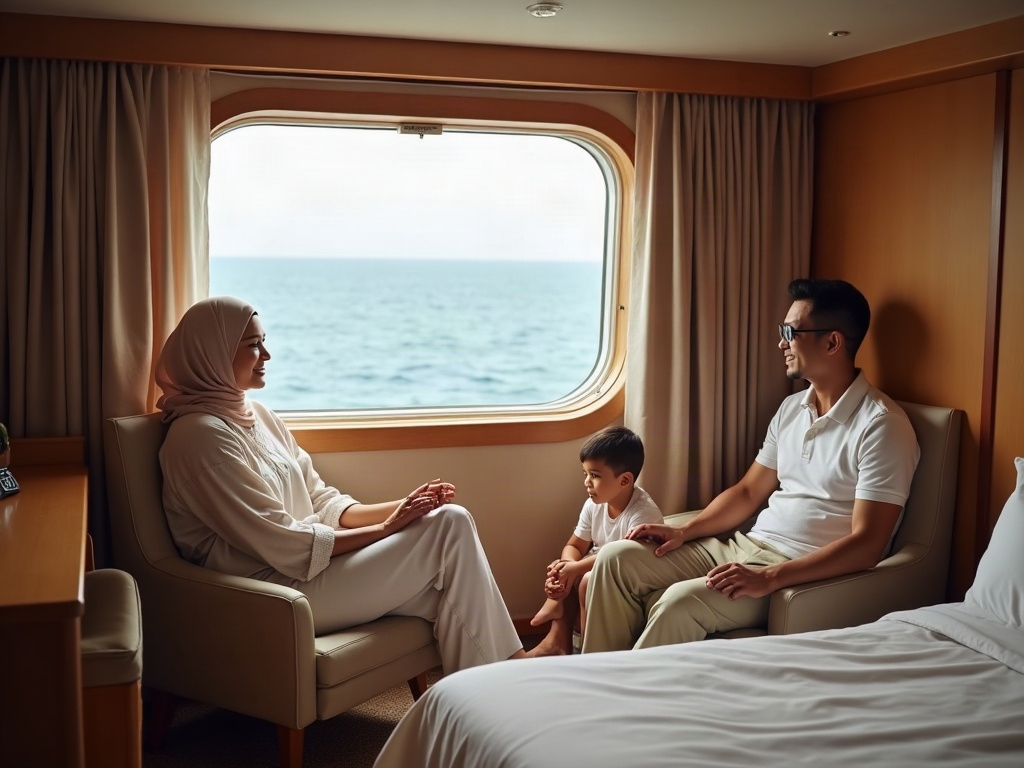
Figure 1: Navigating Open Water Motion
To better understand where family cruise vacations fit into the broader spectrum of travel, explore the various types of family vacations.
How does motion sickness affect children and adults differently on family cruises?
Motion sickness on family cruises affects children and adults differently due to variations in vestibular system development, symptom expression, and psychological response.
Children between the ages of 2 and 12 are the most susceptible and often exhibit non-verbal signs like irritability, lethargy, or sudden quietness before nausea. Adults typically report more classic symptoms like dizziness and headache and may have better-developed coping mechanisms.
A key difference is the psychological component; adults can rationalize the sensation, whereas a child may find the disconnect between a stable-looking room and the feeling of movement deeply unsettling, which can cause anxiety that exacerbates the physical symptoms.
If a parent experiences motion sickness, there’s a higher likelihood of 50% that their child will as well, according to Miller Children’s & Women’s Hospital.
[Developing Vestibular System (in children)] → has attribute → Higher Susceptibility.
Author’s Experience
“As a parent who’s seen firsthand how a bumpy sea can turn a dream vacation into a queasy nightmare, I’ve mastered the art of motion sickness prevention on family cruises. From mid-ship cabins to ginger candies, preparedness is truly key to a happy voyage.”
What are the common symptoms of motion sickness during a family cruise?
The common symptoms of motion sickness during a family cruise vacation range from mild discomfort to debilitating illness and can manifest both physically and behaviorally.
Key physical symptoms include nausea, vomiting, dizziness, cold sweats, pallor (pale skin), and headaches. Behavioral symptoms, especially in children, include drowsiness, irritability, and a general feeling of malaise or being unwell.
An often-overlooked early symptom is excessive yawning or sighing, which can be a sign of the body’s initial struggle to regulate the sensory conflict, appearing well before the onset of nausea. Recognizing this early cue provides a crucial window to take preventative action.
Before the age of six, it is more common for a child to experience symptoms such as dizziness, while for a 12-year-old they may experience more nausea, as noted by Cruise Critic.

Figure 2: Recognizing Early Behavioral Symptoms
2. How can families prepare for a cruise to prevent motion sickness before boarding?
Families can prepare for a cruise to prevent motion sickness before boarding by making strategic choices regarding medication, diet, and cabin selection.
This pre-cruise preparation involves consulting a pediatrician or family doctor about preventative medications, packing appropriate remedies, and strategically booking a stateroom in the most stable part of the ship. These proactive steps are the most effective way to ensure a comfortable family cruise vacation.
The concept of “pre-loading” is crucial. Starting certain medications or remedies 12-24 hours *before* boarding allows them to reach peak effectiveness before the body is exposed to the ship’s motion, a far more effective strategy than waiting for symptoms to appear.
Prophylactic Treatment: This medical term means taking a medication or treatment to prevent a condition from developing, which is the core strategy for managing cruise motion sickness.
Which pre-cruise medications help prevent motion sickness for family members?
Several pre-cruise medications, available both over-the-counter and by prescription, effectively prevent motion sickness for various family members on a cruise vacation.
The most common options include dimenhydrinate (Dramamine) and meclizine (Bonine) for non-drowsy or less-drowsy options, and the prescription transdermal scopolamine patch for adults seeking multi-day protection. Always consult a pediatrician for children’s options and correct dosages.
The key difference between dimenhydrinate and meclizine is not just efficacy but duration and side effects; Meclizine is often preferred for cruises as it’s taken only once daily and is generally less sedating, a critical factor for parents who need to remain alert and active.
The prescription scopolamine patch is applied behind the ear at least four to eight hours before exposure and is effective for up to three days (72 hours), as outlined by USA River Cruises Blog.

Figure 3: Common Preventative Medications
| Medication (Brand Name) | Active Ingredient | Best For | Key Consideration |
|---|---|---|---|
| Dramamine | Dimenhydrinate | Adults, Children (check age/weight) | Can cause drowsiness. Take every 4-6 hours. |
| Bonine | Meclizine | Adults, Children 12+ | Less sedating, once-daily dose. |
| Scopolamine Patch | Scopolamine | Adults (prescription only) | Multi-day protection (up to 72 hours). Applied behind ear. |
What dietary choices reduce motion sickness risk for children and adults on a cruise?
Specific dietary choices before and during a cruise reduce motion sickness risk for both children and adults by keeping the stomach settled and avoiding common triggers.
Families should eat light, non-greasy, and non-spicy meals. Good choices include crackers, pretzels, green apples, and ginger-based items, while heavy, fatty foods and excessive alcohol should be avoided.
The timing of meals is as important as the content. Keeping the stomach lightly filled by eating small, frequent snacks is better than having three large meals, as an empty stomach can increase nausea, and an overly full one can lead to discomfort. The “little and often” rule is paramount.
Studies have found that ginger alleviates nausea associated with motion sickness and can be taken in various forms, including powder, tea, pill, or candy, according to Celebrity Cruises Blog.
Foods to Eat
- Crackers and pretzels
- Green apples
- Ginger (chews, tea, powder, pill)
- Light, non-greasy meals
- Small, frequent snacks
Foods to Avoid
- Heavy, fatty, or spicy meals
- Excessive alcohol
- Large, infrequent meals
- Very acidic foods
How should families choose their cabin location to minimize motion sickness on a cruise?
Families should choose their cabin location to minimize motion sickness on a cruise by selecting a stateroom that is on a lower deck and in the center of the ship.
The most stable location on any cruise ship is a mid-ship cabin on a low to mid-level deck. This spot is the vessel’s natural balance point, experiencing the least amount of movement from both roll (side-to-side) and pitch (front-to-back).
While a balcony is often recommended for fresh air and a view of the horizon, a family with severe motion sickness concerns should prioritize location (low and central) over a balcony. An upper-deck, forward-balcony suite will experience significantly more motion than a lower-deck, mid-ship oceanview or even an interior room.
Mega-ships that weigh 100,000 tons or more are equipped with stabilizers to provide the smoothest ride possible, according to Adventuresmith Explorations.

Figure 4: The Most Stable Cabin Locations
3. What effective strategies prevent motion sickness for families while sailing?
Effective strategies to prevent motion sickness for families while sailing involve a combination of natural remedies, behavioral adjustments, and engaging activities.
Once on the cruise, families can actively prevent symptoms by using acupressure bands, consuming ginger, focusing their gaze on the stable horizon, and ensuring children are distracted with engaging activities on deck. These in-the-moment actions complement pre-cruise preparations.
The concept of “sensory congruence” is key. The brain’s confusion lessens when the vestibular system’s feeling of motion is matched by the eyes’ visual confirmation of that motion. Therefore, staying on an upper deck with a clear view of the stationary horizon is one of the most powerful non-medical interventions available.
Horizon Gazing: This behavioral technique involves visually “anchoring” your eyes on the fixed point where the sea meets the sky. This helps the brain reconcile the visual and vestibular inputs, reducing the sensory conflict that causes motion sickness.
Which natural remedies can families use to alleviate cruise motion sickness symptoms?
Families can use several effective natural remedies to alleviate cruise motion sickness symptoms, with ginger and acupressure being the most scientifically supported options.
The most effective natural remedies include consuming ginger in various forms (chews, tea, or capsules) to settle the stomach and wearing acupressure wristbands (like Sea-Bands) that apply pressure to the P6 point on the wrist. Inhaling peppermint oil can also provide quick, temporary relief from nausea.
While ginger is widely known, the specific compound responsible for its anti-emetic effect is gingerol. This is why the potency and form of ginger matter; crystallized ginger or a high-concentration tea is often more effective than weakly flavored ginger ale, which is often high in sugar and low in actual gingerol.

Figure 5: Deploying Natural Remedies Onboard
How can behavioral adjustments reduce motion sickness for children and parents on a cruise?
Behavioral adjustments on a cruise can significantly reduce motion sickness for both children and parents by helping the brain reconcile conflicting sensory information.
The most effective behavioral adjustment is to get on deck and fix your gaze on the stable horizon. Additionally, avoid reading or looking at screens, position yourself to face the direction of travel, and get plenty of fresh air.
The “lie down and close your eyes” advice is nuanced. While it can help by removing the visual input from the sensory conflict, it is only effective if lying down with the head as still as possible. For some, especially children, this can increase the feeling of being trapped and anxious; for them, active horizon-gazing is superior.
What onboard activities help distract children from motion sickness during family cruises?
Specific onboard activities help distract children from motion sickness during family cruises by engaging their minds and bodies, shifting their focus away from the sensation of movement.
The best activities are those on an open deck with fresh air and a view of the horizon, such as swimming in the pool, playing mini-golf, or participating in a deck party. Structured activities in the ship’s kids club are also designed by staff who are trained to manage and distract children who feel unwell.
Passive entertainment like watching a movie in the ship’s theater is a common mistake; the large screen in a dark, enclosed space is one of the worst environments for a motion-sensitive child. Active, participatory entertainment where the child is moving and engaged is far superior.
4. How do families manage motion sickness if symptoms appear during a cruise?
Families manage motion sickness if symptoms appear during a cruise by taking immediate corrective action, including administering remedies, changing location, and, if necessary, seeking medical assistance.
If symptoms appear, immediately stop the offending activity (like reading), move the family member to a central location on the ship with access to fresh air and a view of the horizon, administer an appropriate remedy like a ginger chew or a dose of meclizine, and encourage them to sip cool water. The goal is to quickly interrupt and reverse the sensory conflict.
The ship’s Guest Services desk often provides complimentary, generic-brand meclizine or dimenhydrinate tablets upon request. Knowing this “insider tip” can save a family from having to buy an expensive pack from the ship’s store or wait for the medical center to open.
When should families seek medical attention for severe motion sickness on a cruise?
Families should seek medical attention for severe motion sickness on a cruise when symptoms include persistent vomiting, dehydration, or extreme lethargy, especially in a child.
A family should visit the ship’s onboard medical center if a person is unable to keep down fluids for several hours, experiences continuous vomiting, or shows signs of dehydration such as a dry mouth, lack of tears, or infrequent urination. Any symptom accompanied by confusion, severe headache, or unresponsiveness is a medical emergency.
The onboard medical team can administer powerful, anti-emetic injections (e.g., Ondansetron) that are not available over the counter. These injections work much faster and more effectively than oral medications, especially when vomiting prevents someone from keeping a pill down, and can often resolve a severe case within an hour.
Red Flag Symptoms for Medical Attention
- Persistent vomiting
- Inability to keep down fluids for several hours
- Signs of dehydration (dry mouth, lack of tears, infrequent urination)
- Confusion
- Severe headache
- Unresponsiveness
- Motion sickness symptoms lasting more than 8 hours (especially in children)
What common mistakes do families make that worsen cruise motion sickness?
The most common mistakes families make that worsen cruise motion sickness involve poor cabin choice, dietary errors, and waiting too long to take action.
Key mistakes include booking a cabin at the front (fore) or back (aft) of the ship on a high deck, indulging in heavy or greasy buffet food, allowing kids too much screen time in the cabin, and waiting for severe nausea to set in before taking medication. Another error is assuming a calm port day means the open sea will be equally smooth.
A significant mistake is “remedy fatigue” – taking medication for the first day, feeling fine, and then stopping. The ship’s motion is constant, and preventative treatments must be taken consistently according to their directions to remain effective throughout the voyage.
5. Frequently Asked Questions (People Also Ask)
What dietary choices reduce motion sickness risk for children and adults on a cruise?
How should families choose their cabin location to minimize motion sickness?
When should families seek medical attention for severe motion sickness on a cruise?
Resolution
Preventing motion sickness on family cruise vacations is entirely achievable with a proactive, multi-layered strategy that combines pre-cruise planning with smart onboard actions. By strategically choosing your cabin, preparing a medical kit with remedies like ginger and meclizine, focusing on light foods, and utilizing behavioral techniques like horizon gazing, your family can effectively eliminate the risk of motion sickness. The key is preparation, not fear.
2 Responses