How to Travel with Medical Equipment on a family vacation?
Table of Contents
You travel with medical equipment on a family vacation by planning early, verifying rules with your airline, and making sure your destination has the right power sources and medical support.
Early planning is the most important step because it stops big problems before they happen, like getting stopped at the airport or finding out your machine won’t plug into the wall at your hotel.
By getting ready ahead of time, you avoid these stressful situations and make sure your family has a safe and fun vacation. The steps we cover here are a great addition to the basics of how to plan a family vacation step by step, making sure every special need is taken care of.
. Why is early planning crucial when traveling with medical equipment on a family vacation?
Early planning is crucial when traveling with medical equipment on a family vacation because it stops huge problems that could ruin the whole vacation, like the airline saying you can’t bring your child’s machine on the plane.
Getting ready early stops you from being told you can’t board your flight because your device isn’t approved. It also makes sure your equipment will actually work at your hotel, and that your insurance will cover you if there is an emergency. This planning turns scary situations into small bumps in the road.
What are the risks of unplanned travel with medical devices for families?
The risks of unplanned travel with medical devices for families include the airline refusing to let you fly, your expensive equipment getting broken in the luggage hold, and not being able to find a doctor if you need one.
Without planning, security officers might take away important liquid medicines. The airline might say your machine isn’t safe for the airplane. Or, you might get to your hotel and find out your life-saving machine can’t plug into the wall. These mistakes can cause scary health emergencies and cost a lot of money.
A big risk is the airline not letting you on the plane if your medical device, like a Portable Oxygen Concentrator (POC), isn’t on their approved list or doesn’t meet safety rules, as seen in many airline policies.[1]
A huge risk that people forget is “destination medical incompatibility.” This means you travel somewhere, like a beautiful island, but they don’t have the right technical help, the right supplies (like special water for a CPAP machine), or doctors who know how to fix your specific device if it breaks.
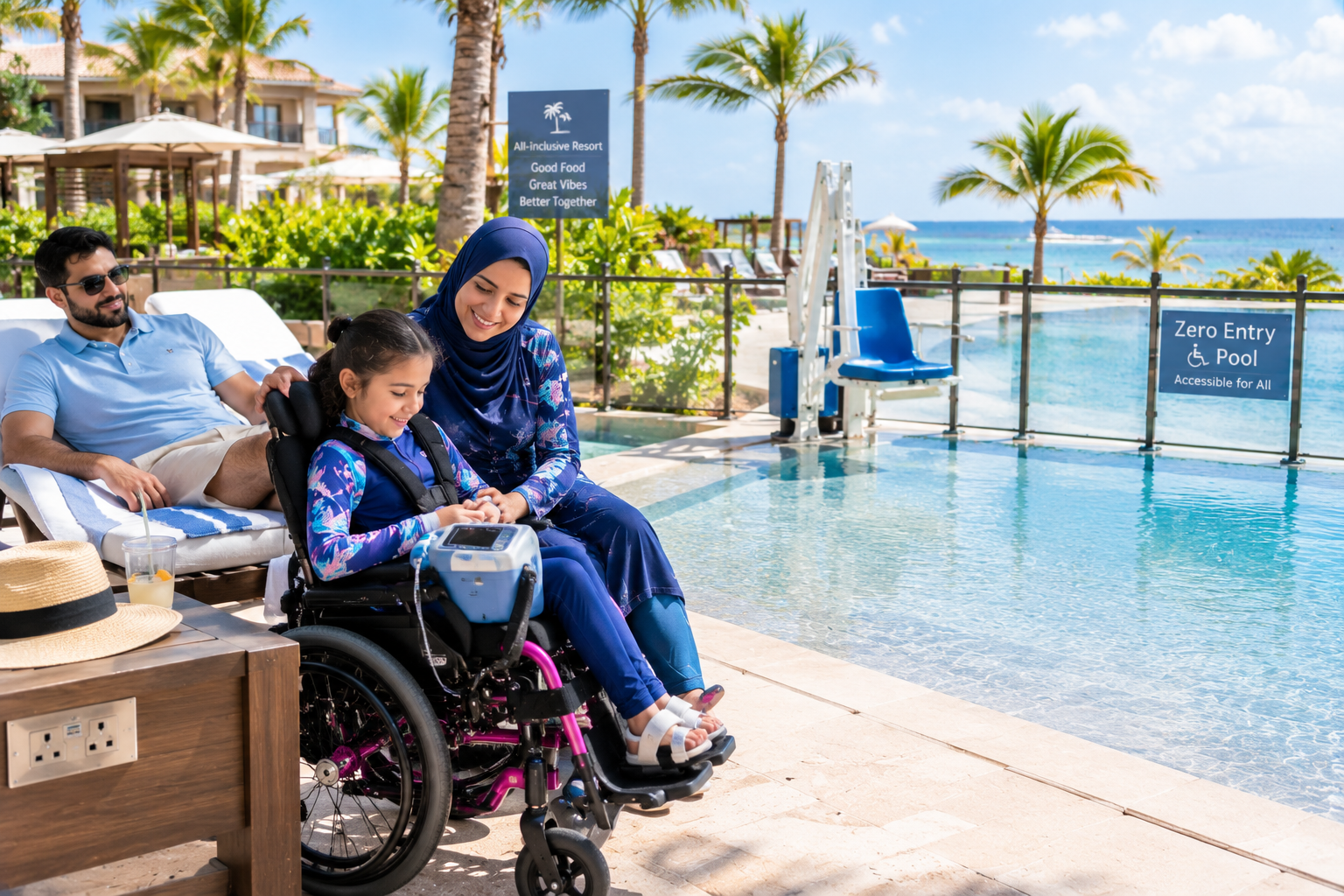
Author’s Experience
“Taking a family vacation with medical equipment can feel like planning a tough mission. I’ve learned that thinking about everything ahead of time, from airline battery rules to how the plugs work in other countries, is super important. It’s about being ready, so your family can focus on having fun, not fixing problems.”
Risks for Family Travel with Medical Devices
- Travel Problems: Not being allowed to fly because your device isn’t approved, or your hotel not having the right plugs for life-saving machines.
- Money Problems: Paying huge prices to replace broken equipment quickly, surprise hospital bills in another country, or having to cancel your vacation without good insurance.
- Health Problems: Not being able to find the care you need at your vacation spot, having a health scare without help, or security taking away your important liquid medicines.
How does medical equipment affect family vacation choices and destinations?
Medical equipment affects family vacation choices and destinations by changing how you can travel, where you can stay, and how much activity you can do.
If you need a strong power plug to run a machine, you probably can’t go camping in the woods; you might need an all-inclusive resort instead. If your equipment is heavy and hard to move, taking a cruise is usually much easier than trying to ride trains across Europe.
Families usually have to pick places where they know the electricity won’t turn off and where they can find good doctors easily, which means very wild or remote places are often not a good idea.
Think about the *pace* of your vacation. If you have medical equipment, it’s better to pick a slow, relaxing vacation, like staying at one nice beach hotel in the Caribbean. Fast vacations where you move to a new city every two days are stressful and increase the chance that something will get broken or lost.
. How to choose the best airlines and accommodations for family travel with medical equipment?
You choose the best airlines and accommodations for family travel with medical equipment by carefully reading their rules for special help, checking their physical setup, and getting written promises from them.
The best airline is one that clearly says on its website that your specific machine is allowed, and they have a special phone number you can call for medical help. The best hotel is one that will send you an email promising you a room that fits a wheelchair, a fridge for your medicine, and that a hospital is nearby.
Which airline policies impact traveling with medical devices on a family vacation?
The airline policies that impact traveling with medical devices on a family vacation are the rules about which machines are approved, how many batteries you can bring, and how early you have to tell them you are coming.
You must check if your specific oxygen machine (POC) is on their approved list. You also need to know the rules for packing strong batteries (lithium-ion). Most airlines demand that you call them 48 to 72 hours before your flight to ask for special help. If you don’t follow these rules, they can stop you from getting on the plane.
Many airlines require you to tell them at least 48 hours before a domestic flight, and 72 hours before an international flight, if you plan to use an oxygen machine on the plane.[2]
A super important rule to check is the “medical baggage allowance.” Many airlines let you bring a bag full of medical supplies onto the plane for free, *in addition* to your normal carry-on bag. Checking this rule can save you money and stop you from stressing out about packing space.

| What to Check | Why It Matters | How to Find Out |
|---|---|---|
| Approved Device List | If your machine isn’t listed, you can’t use it on the plane. | Check the airline’s “Special Assistance” webpage. |
| Battery Rules | Strong batteries might cause fires; you must pack them right. | Read the airline’s baggage rules for “Lithium Batteries.” |
| Free Medical Bag | You might get to bring your medical bag for free. | Call the airline and ask about “medical baggage allowance.” |
What to look for in family-friendly accommodations when traveling with medical equipment?
When looking for family-friendly accommodations for travel with medical equipment, you must find guaranteed accessible rooms, strong power outlets, and a hospital nearby.
You should look for hotels that can promise you a room with wide doors and grab bars. You also absolutely need a real refrigerator in your room for medicine (not just a drink cooler), and you need to know exactly how far away the closest doctor is.
Families need to get an email from the hotel promising that they will have a room that meets their needs, and that the fridge in the room gets cold enough to safely store medicine.
Don’t just ask if they have an accessible room. Ask them what happens if the power goes out. A great family hotel for medical travel (like a fancy all-inclusive resort) will have big backup generators that keep the power on in your room, which is a big deal if you have a life-saving machine plugged into the wall.
Accommodation Features Checklist
- Make sure they have rooms with roll-in showers and grab bars.
- Check that you will have a real refrigerator for medicine.
- Find out exactly where the nearest hospital is located.
- Ask if the hotel has a backup generator in case the power goes out.
. How to select appropriate travel insurance for a family vacation with medical needs?
You select appropriate travel insurance for a family vacation with medical needs by looking closely at the policy to see if it covers health problems you already have, your expensive medical machines, and emergency plane rides to a hospital.
The best choice is a strong plan that has a “pre-existing medical condition exclusion waiver.” This fancy term just means the insurance will still help you even if the emergency is caused by a health problem you knew about before the vacation. This is a must-have if you travel with medical equipment.
Which types of coverage are essential for traveling with medical equipment?
The essential types of coverage for traveling with medical equipment are emergency doctor visits, emergency flights to a better hospital, coverage for health problems you already have, and money back if you have to cancel the trip.
Emergency medical coverage pays the hospital bills while you are away. Medical evacuation pays for a special plane to fly you home or to a big hospital if you get really sick. The waiver for pre-existing conditions is super important because it makes sure the insurance actually pays out if your known health issue acts up.
Make sure your vacation insurance covers health problems you already have, emergency flights, and pays to replace lost medicine or machines.
A really important detail is making sure your expensive machine is covered if it gets broken. Normal luggage insurance only pays a little bit (like $500). Make sure your policy will pay enough to buy a brand new machine, or you might need to buy a special extra insurance rule just for your device.
Insurance Checklist for Families
- ☐ Covers health problems you already have (Pre-existing waiver)
- ☐ Pays to replace broken or lost medical equipment
- ☐ Pays for an emergency flight to a hospital (Evacuation)
- ☐ Gives your money back if you have to cancel the trip
How to compare travel insurance policies for families with medical devices?
To compare travel insurance policies for families with medical devices, you need to check how much they will pay out, how they describe your health problem, and how fast you have to buy the insurance.
Make a simple list comparing different plans on things like: how much it costs, the maximum amount they will pay the doctor, how much they will pay for a rescue flight, and the strict deadline for buying the policy so that your known health problems are covered. This helps you pick the best deal without guessing.
To get coverage for health problems you already have, you usually must buy the insurance very quickly, often within 14 to 21 days of paying for your first vacation ticket or hotel.
The smartest way to compare is to call the insurance company and ask a “what if” question. Say: “My child uses an insulin pump and the doctor just changed their medicine. If the pump breaks next month on our vacation, will you pay for it?” Ask them to email you the answer. This is the best test to see if the policy is actually good.
. What medical equipment should you consider bringing for a family vacation?
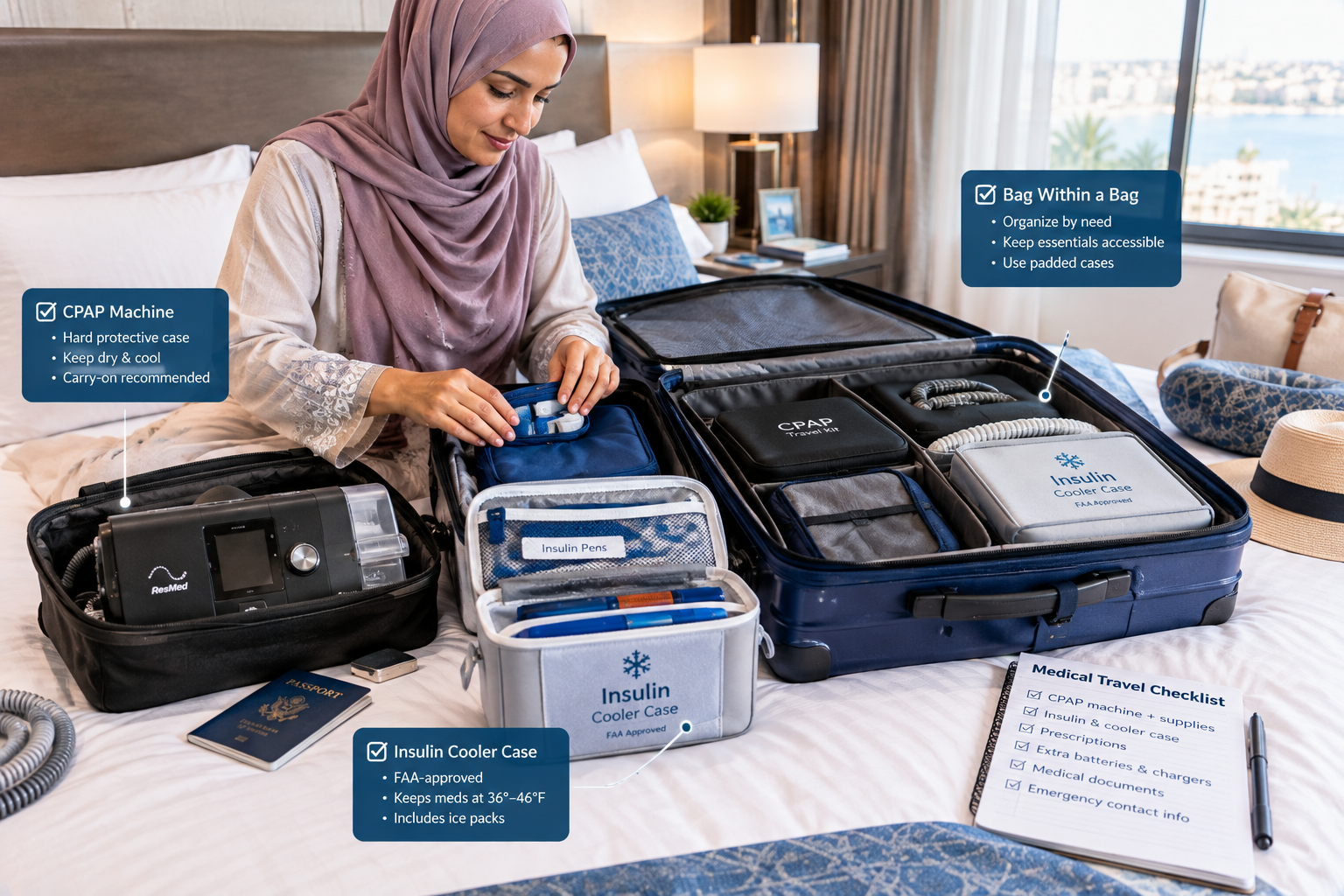
The medical equipment you should consider bringing for a family vacation includes everything you use every day, a big supply of your medicines, extra parts, and backup power cords.
Make a list and group things into three buckets: “Must-Have to Live” (like an oxygen machine), “Makes Life Better” (like a sleep machine), and “Emergency Only” (like an allergy pen or breathing treatment). Grouping things helps you figure out what must stay with you on the airplane and what can go in your big suitcase.
How to assess essential medical equipment needs for a family trip?
To assess essential medical equipment needs for a family trip, families should write down every single medicine, machine, and bandage they use during a normal 24-hour day at home.
Write down everything your doctor gives you, the machines you use, and even things from the drugstore like pain medicine or band-aids. Once you know what you use in one day, multiply that by the days you will be on vacation, and then add at least one whole extra week’s worth of supplies just in case you get stuck.
Experts say you should always pack at least three to five extra days of medicine and supplies in case your flights are delayed or you get stuck.[3]
You also need to think about where you are going. If you are going to hot, sticky Florida, you might sweat more and need more sticky tape for a feeding tube than you do at home. If you are going up high to a mountain city like Denver, your breathing machine might need to be adjusted by your doctor before you go.
What are the rules for carrying specific medical supplies on flights?
The rules for carrying specific medical supplies on flights allow you to bring necessary liquids and all your medical machines, as long as you tell the security officer about them.
Medicines and medical liquids do not have to fit in that tiny clear bag that regular shampoo goes in, but you MUST tell the TSA officer you have them before your bag goes through the x-ray. You should always keep your important medicines and machines in your carry-on bag, never in the big suitcase that goes under the plane.
Security officers allow you to bring larger bottles of liquid medicine or special food in your carry-on bag, but you must declare them to the officer so they can check them.
The rule says you can bring a “reasonable amount” of liquid medicine. This is a bit vague. The secret rule is to bring enough for your flight time plus 24 to 48 hours for emergencies. If you are going on a two-week vacation, put the big bottles of medicine in your checked suitcase, but keep a few days’ worth with you on the plane.
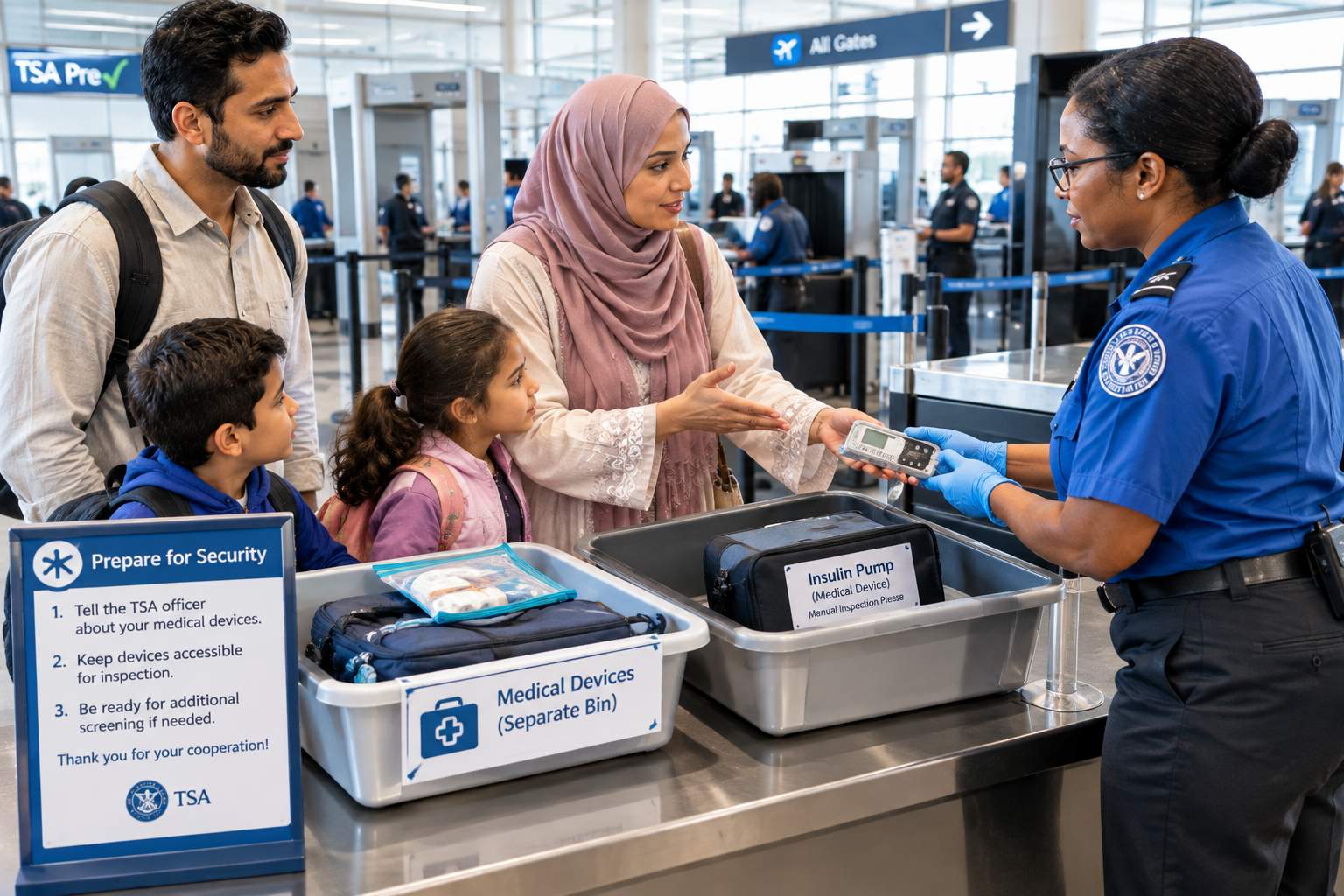
Rules for Medical Supplies on Flights
- DO tell the TSA officer about your medical liquids and machines.
- DO keep your important medicine in your carry-on bag.
- DON’T pack life-saving medicine in your checked suitcase.
. How to prepare medical equipment for travel and packing for a family vacation?
You prepare medical equipment for travel and packing for a family vacation by getting your doctor’s notes, sorting your supplies into bags, and wrapping your delicate machines in thick padding.
First, get a letter from your doctor saying why you need your equipment. Second, put your daily supplies in small bags and pack the machines in your carry-on luggage. Finally, make sure all medicines are still in the bottles the pharmacy gave you with your name on them.
What medical documentation do families need for traveling with equipment?
The medical documentation families need for traveling with equipment includes a letter from the doctor, copies of your medicine labels, and a sheet with your doctor’s phone numbers.
You should always have a “Letter of Medical Necessity” signed by your doctor. This letter explains why you have the machine. Also, bring the paper copies of your prescriptions, and a simple list with the phone numbers for your doctor, your pharmacy, and your health insurance. Take a picture of all these papers on your phone, too.
Customs officers say you should always have all your medical papers printed with your name on them, especially if you are carrying strong prescription medicines.
If you are traveling to another country, it’s very smart to use the internet to translate the most important words from your doctor’s letter (like “needs this to live” or “medical machine”) into the language they speak where you are going. This makes talking to airport security much faster.
Important Medical Papers
- Letter from your doctor (Letter of Medical Necessity).
- Paper copies of your prescriptions.
- A list of phone numbers for your doctor and pharmacy.
- A copy of your health insurance card.
How to safely pack sensitive medical devices and medications for a family vacation?
You safely pack sensitive medical devices and medications for a family vacation by using hard cases, keeping special medicines cold, and carrying the most important items onto the plane with you.
Use the thick, padded bag your sleep machine came in, or buy a hard plastic box for it. If you have medicine like insulin that needs to stay cold, buy a special travel cooler bag. You should never put important electronic machines or daily medicines into the big suitcases that the airline throws under the airplane.
For medicines that must stay cold, you are allowed to bring ice packs or cooler bags on the plane, as long as they follow the airline’s rules for safe carrying.
Use the “bag inside a bag” trick. Put your medical machine inside its own soft case. Then, put that soft case into a stronger carry-on backpack, and stuff soft clothes around it. This gives the machine two layers of protection so it doesn’t break if someone drops your bag or shoves it into the overhead bin on the plane.
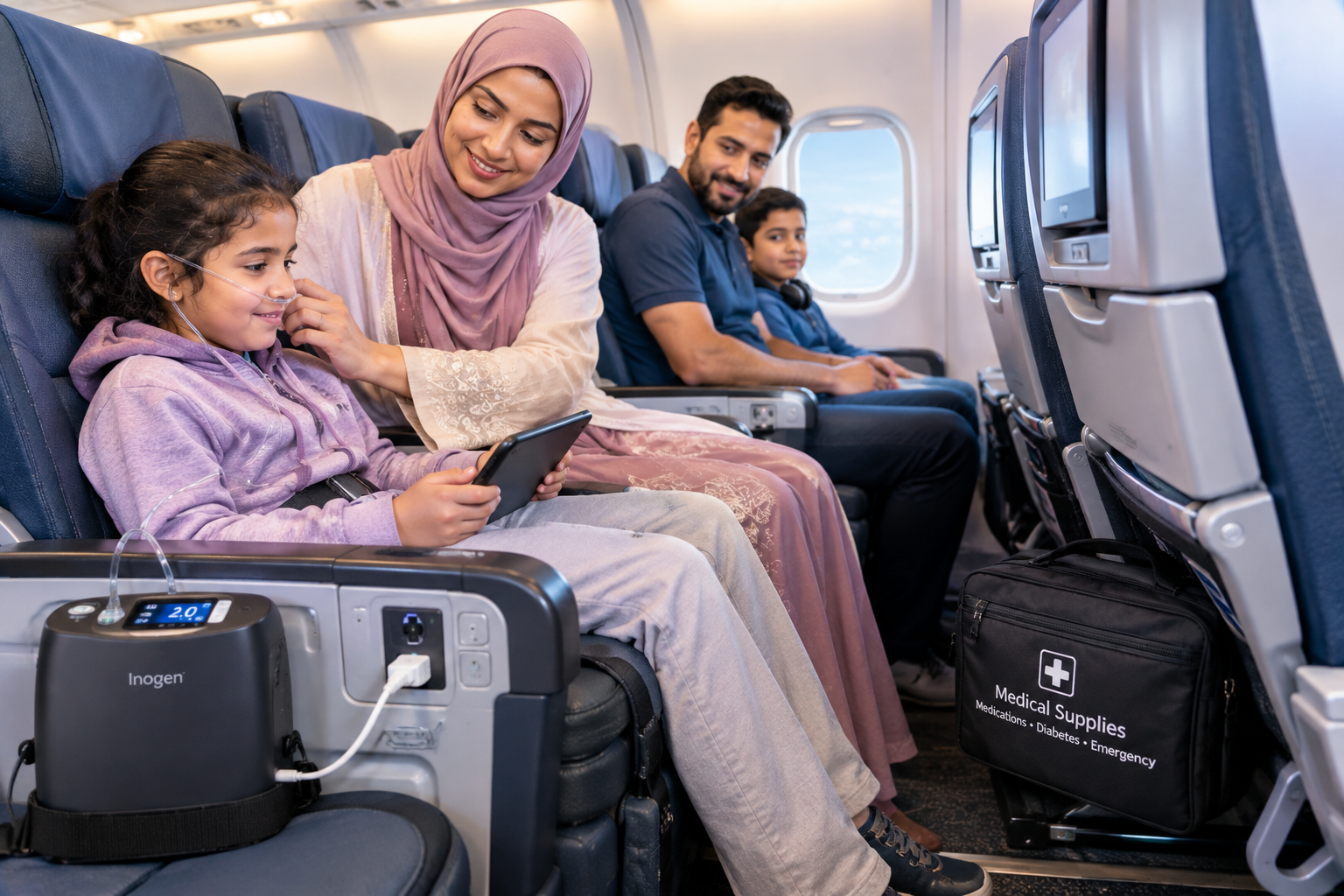
Safe Packing Tips
- Use a hard plastic box for breathing machines so they don’t get crushed.
- Use a special cooling bag for medicines that need to stay cold.
- Always carry emergency medicines (like an allergy pen) in your backpack.
. How to manage medical equipment during airport security and flights on a family vacation?
You manage medical equipment during airport security and flights on a family vacation by talking to the workers early, knowing the rules, and packing your bags so they are easy to open.
When you get to the security line, tell the officer right away about your machines and liquids before they look in your bag. Once you are on the airplane, tell the flight attendant if you need to use your machine, and make sure your batteries are fully charged because you can’t always plug things in on a plane.
What are the best practices for clearing airport security with medical devices?
The best practice for clearing airport security with medical devices is to talk to the officer first: tell them exactly what medical items you have before they start checking your bags.
Take your medical machine out of your bag and put it in its own plastic bin. Tell the officer you have medical liquids and hand them your doctor’s letter. Be ready to politely explain what the machine is and what it does.
You can call the airport’s special help line a few days before you fly to ask for a helper to walk you through the security line with your medical equipment.
Pack your carry-on bag smartly. Put the things you need to show the security officer (like liquids, your doctor’s letter, and the machine itself) right at the very top of your bag or in an outside pocket. This way, you don’t have to dig through all your clothes and hold up the line.
How to handle medical equipment and medications during a family flight?
To handle medical equipment and medications during a family flight, you must put the machines away safely when the plane is taking off and landing, and keep your medicine close to your seat.
Your medical machines must be put in the bin above your head or under the seat in front of you when the plane is moving on the ground. If you need to use an oxygen machine while flying, it must be approved by the airline and run on its own battery power. You cannot trust that the airplane seat will have a working plug.
The rules say that if you use an oxygen machine on the airplane, you must bring enough battery power to last for 150% of the flight time (meaning if it’s a 2-hour flight, you need 3 hours of battery).[4]
Never put your medical bag in a bin that is far away from your seat. Keep it right above you or under your feet. If there is an emergency while you are flying, a flight attendant might not be able to get a bag from the back of the plane for you. Keeping it close keeps your family safe.
Flight Rules for Medical Equipment
- DO put your equipment away safely during takeoff and landing.
- DO make sure your machine is allowed to be turned on during the flight.
- DO bring plenty of extra battery power.
- DON’T assume you can plug your machine into the airplane seat.
. How to use medical equipment safely at your family vacation destination?
You use medical equipment safely at your family vacation destination by making sure your power plugs work, setting up a clean spot for your supplies, and knowing where the closest doctor is.
As soon as you get to your hotel, check your power plugs before you plug in your important machines. Pick a clean table to keep all your medicines organized, and type the local emergency phone number (like 911) into your phone right away.
What local resources should families identify for medical emergencies abroad?
The local resources families should identify for medical emergencies abroad are the closest good hospital, a pharmacy that is open all night, and the phone number for their travel insurance helper line.
Before you even leave your house, find the address and phone number of a good hospital near your hotel. Also, find a pharmacy that stays open 24 hours a day. Save all these numbers in your cell phone.
Before traveling to another country, families should check to make sure the medicines they use are actually allowed in that country, because some common medicines are banned in other places.
Besides a big hospital, try to find a small “urgent care” clinic near your hotel. These smaller clinics are usually much faster and cheaper if someone has a minor problem like an earache, and they often have doctors who speak English if you are in a tourist area.
How to ensure power compatibility and availability for medical devices internationally?
To ensure power compatibility and availability for medical devices internationally, you must use the right shape of plug adapter and a special power converter if your machine needs one.
Look at the sticker on the plug of your medical machine. If it says “100-240V,” you are lucky and only need a cheap plug adapter to change the shape of the prongs. If it only says “110V,” you MUST buy a heavy “step-down voltage converter” so the strong electricity in other countries doesn’t fry your machine.
When going to a different country, you must check what kind of electricity they use ahead of time so you know if you need to buy special plugs or power boxes for your electronics.
Do not use a cheap, tiny power converter for an expensive, life-saving medical machine. Buy a very good, heavy power converter that is meant for medical items. This keeps the machine safe from getting too hot or catching fire.
Important Power Warning
If you plug a normal American machine (110V) directly into a strong European wall outlet (220V) without a converter, it will instantly break your machine and maybe start a fire. Always check the voltage sticker!
. How to avoid common mistakes when traveling with medical equipment on a family vacation?
You avoid common mistakes when traveling with medical equipment on a family vacation by always double-checking the rules, packing extra supplies, and knowing what to do if something breaks.
The biggest mistakes parents make are putting important medicine in the checked suitcases, not bringing enough extra supplies, and not getting the hotel’s promises in an email. Another big mistake is guessing that your vacation insurance will cover your pre-existing health problem without checking the fine print.
What to do if medical equipment is lost or damaged during a family vacation?
If medical equipment is lost or damaged during a family vacation, the very first thing you do is call your travel insurance company’s emergency phone number.
While one parent calls the insurance company, the other parent should call the company that made the machine, to see if they can send a replacement quickly. If the airline broke the machine, you must fill out a complaint form at the airport before you leave the building.
If the airline damages your medical device on a flight inside the country, you usually have to report it to them within 7 days, or they won’t pay for it.[5]
This is why looking things up before the vacation is so helpful. Use the list you made of local businesses to call a medical supply store near your hotel. Renting a machine from them is usually the fastest way to get a replacement while you wait for the insurance company to fix the broken one.
How to handle unexpected medical emergencies while on a family trip with equipment?
To handle an unexpected medical emergency on a family trip with equipment, you must use the local emergency numbers you saved and call your travel insurance right away.
One parent should focus on helping the child and calling an ambulance, while the other parent grabs all the doctor’s letters, the insurance cards, and the emergency supply bag to take to the hospital. Splitting up these jobs makes getting help much faster.
It is a very good idea to have a simple piece of paper that lists the child’s health problems, medicines, and normal baselines, so an emergency doctor can read it quickly and know exactly what to do.
Make sure both parents have the legal right and all the info needed to make medical choices. It’s smart to have a legal paper called a “Medical Power of Attorney,” especially in foreign countries, so that if one parent gets hurt, the other parent can still legally tell the doctor what to do.
Resolution
Having a great family vacation with medical equipment is totally possible if you plan things out early. By checking the airline’s rules, packing extra supplies, buying good insurance, and knowing what to do in an emergency, parents can stop worrying so much. The whole point of all this planning is to make the medical machines feel normal, so your family can focus on having fun and making great memories together, instead of stressing out over how to plug a machine in.