What to Expect at Border Control When Traveling with Family
Table of Contents
2. What is the primary purpose of border control for families?
The primary purpose of border control for families is to verify the identity and admissibility of each member while stringently ensuring the safety and welfare of any accompanying minors.
How does family travel impact the border control process?
Family travel automatically triggers heightened scrutiny at border control, shifting the focus beyond individual identity verification to include proving legal parental or guardianship rights for minors, requiring additional documentation and direct questions.
Officers are trained to observe family dynamics as a group. A child appearing unusually distressed or an adult seeming unable to answer basic questions about the child (e.g., age, school) can be a significant red flag that will prolong the inspection.
Why are children and minors subject to stricter checks at borders?
Children and minors are subject to stricter checks at borders primarily to combat international child abduction, human trafficking, and exploitation, operating under legal mandates that require verification of consent from all legal guardians.
A UNHCR survey of 404 unaccompanied child migrants found that 58% were forcibly displaced and faced harms indicating a need for international protection, which is why officers are trained to look for signs of trafficking or distress.
The burden of proof is on the traveling adult, not the border officer. The officer is not required to prove something is wrong; the adult is required to prove everything is right. This is a critical mindset for families to adopt for a smooth crossing.
Author’s Experience
“Navigating international borders with my nieces and nephews has taught me that preparation is key. A simple ‘why’ conversation about border control’s role in child safety transformed their anxiety into understanding, making our crossings much smoother.”
3. Which essential documents does your family need for border control?
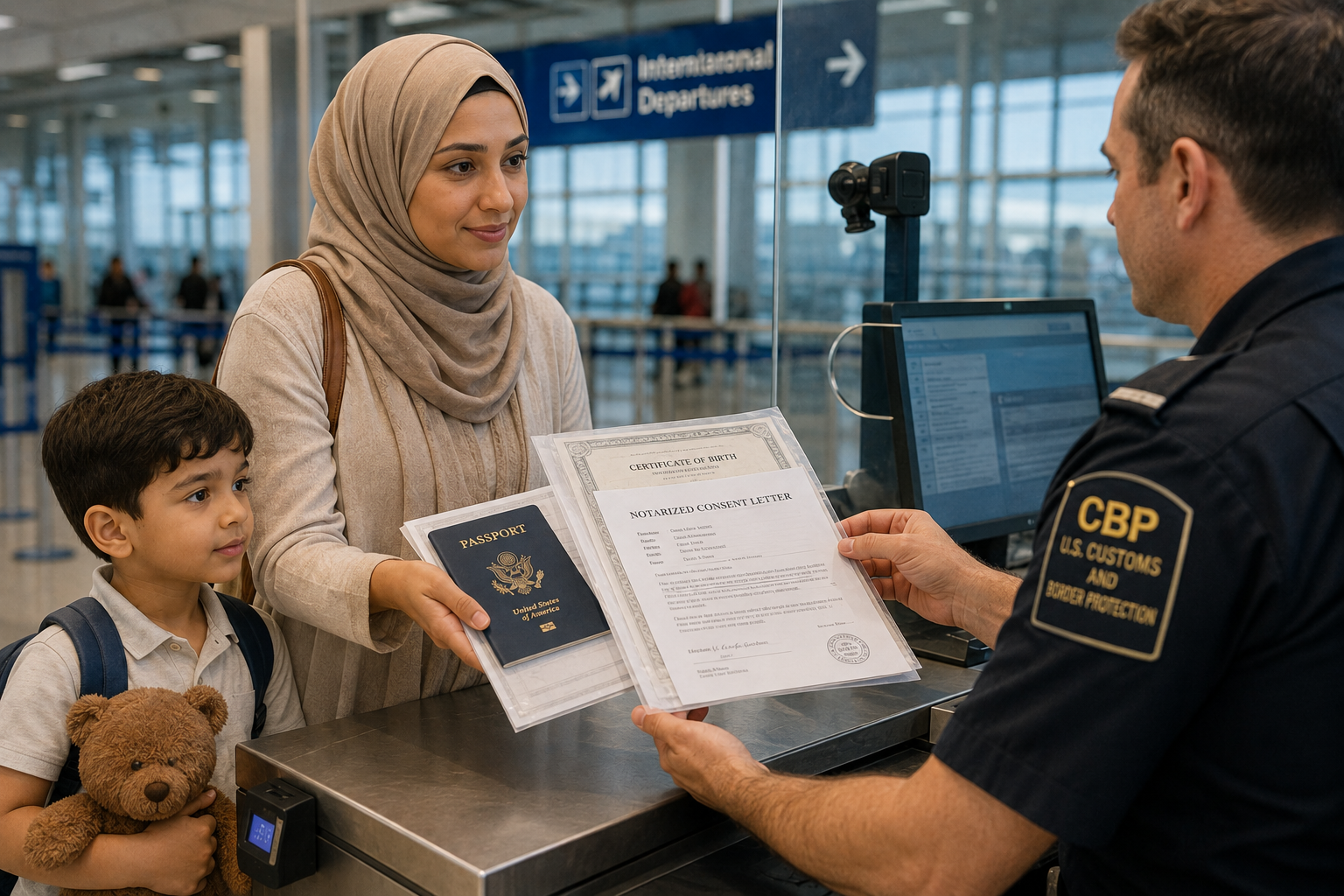
Essential documents for family border control include a valid passport for every individual, original birth certificates for all minors, and a notarized consent letter if a child travels with only one parent or a non-parent guardian.
What specific documents are required for children traveling with one parent?
Children traveling with one parent require a valid passport, their original birth certificate, and crucially, a notarized consent letter from the non-traveling parent detailing trip specifics, even if the traveling parent has sole custody.
In FY 2014 alone, U.S. Customs and Border Protection encountered 67,339 unaccompanied children, a fact that puts all border agents on high alert for any minor traveling without both parents, making a consent letter essential.
Even if you have sole custody, carrying the court-issued custody agreement is vital. An officer has no way of knowing your custody status without it, and a birth certificate alone often lists both parents, creating ambiguity the officer must resolve.
How do you handle documentation for adopted or foster children at the border?
For adopted or foster children at border control, carry all standard travel documents plus the official adoption decree or guardianship papers. In international adoptions, ensure the child’s citizenship status is clear and supported by documentation.
A 2010 survey showed that up to 40% of unaccompanied children screened in government custody were potentially eligible for relief due to abandonment or abuse, making it vital for adoptive parents to carry official decrees to prove their legal status.
Be aware of the child’s citizenship status, especially in cases of international adoption. The child’s passport might be from a different country than the parents’, which is normal but requires the supporting adoption decree to explain the situation to a border officer.
Micro-Glossary: Notarized Consent Letter
Notarized Consent Letter: A formal letter signed by the non-traveling parent(s) or legal guardian(s), granting permission for a minor to travel internationally. It must be witnessed and sealed by a notary public to be considered legally valid.
4. How do different family structures affect border entry requirements?
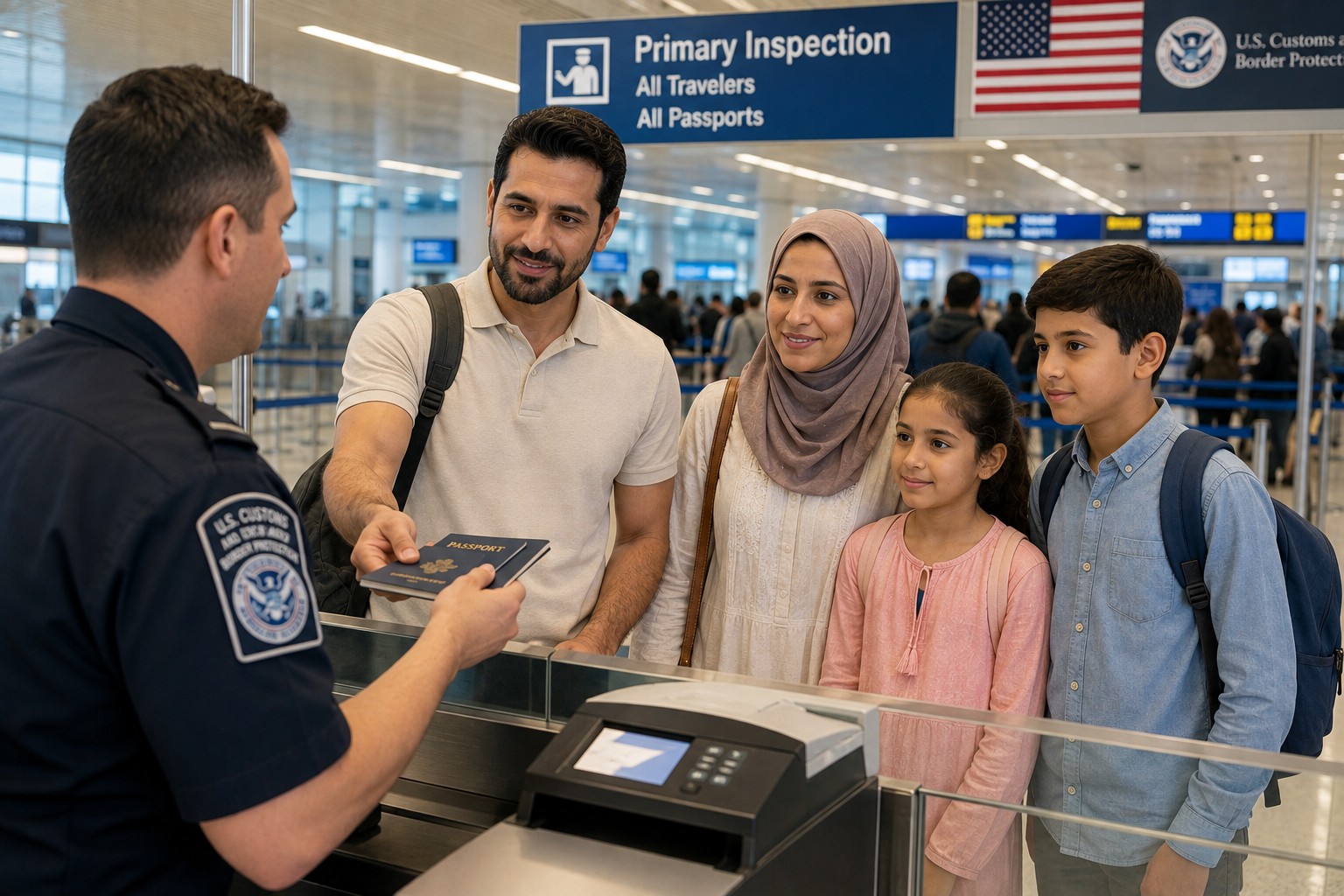
Different family structures significantly affect border entry requirements, with nuclear families with shared surnames facing the least scrutiny. Any deviation, like single parents, different surnames, or non-parent guardians, increases the need for specific, verifiable documentation.
What questions should single parents expect at immigration?
Single parents should expect direct immigration questions confirming custodial rights and the other parent’s consent and whereabouts. Be prepared to answer questions like, “Where is the child’s other parent?” and “Do they know about this trip?”, supported by documents.
With neighboring countries increasing their own enforcement (Mexico’s deportations of minors rose by 56% in early FY2015), U.S. officers are under pressure to rigorously verify the status of every child crossing the border.
Officers are trained to ask the child simple, non-leading questions separately if they have concerns, such as “Who is this person you’re traveling with?”. Preparing older children for this possibility can prevent them from becoming anxious or confused.
Why do different surnames between parent and child lead to extra scrutiny?
Different surnames between parent and child lead to extra scrutiny at border control because they create procedural ambiguity regarding parentage. Officers require documentary evidence, like an original birth certificate or marriage certificate, to establish the legal relationship.
As of FY 2014, there were 18,156 Border Patrol agents on the U.S. southwest border alone, all of whom are trained to resolve any ambiguity as quickly as possible. A different surname is a procedural flag that requires documentary proof to resolve.
This is not a judgment on the family structure; it is a procedural flag. The system is designed for simplicity, and a name difference breaks that simplicity. Having the child’s birth certificate easily accessible is the single fastest way to resolve this specific issue.
5. How can your family prepare for a smooth border control experience?
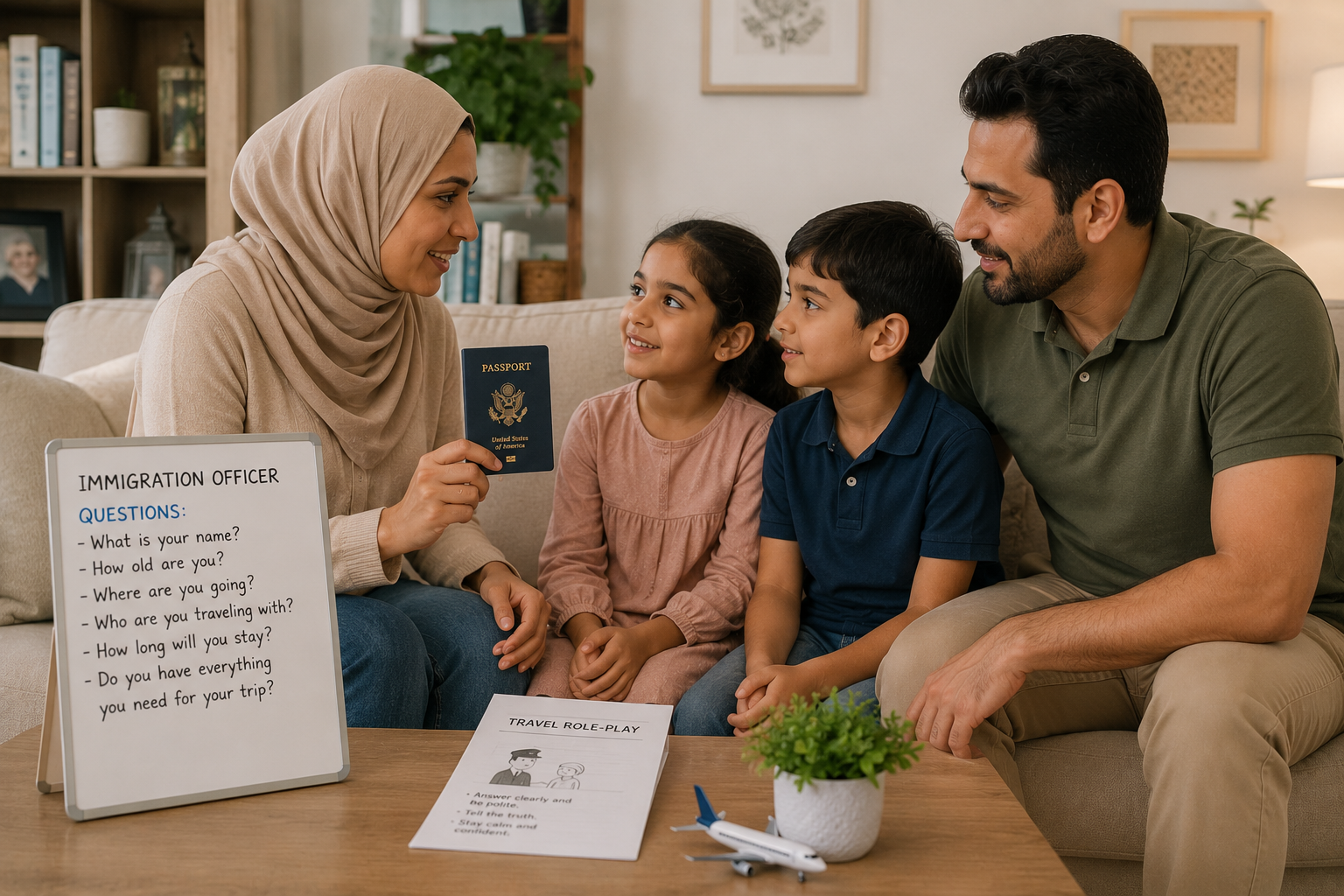
Your family can prepare for a smooth border control experience through meticulous organization of documents and by proactively coaching children on the process.
What are the best ways to organize family travel documents for border inspection?
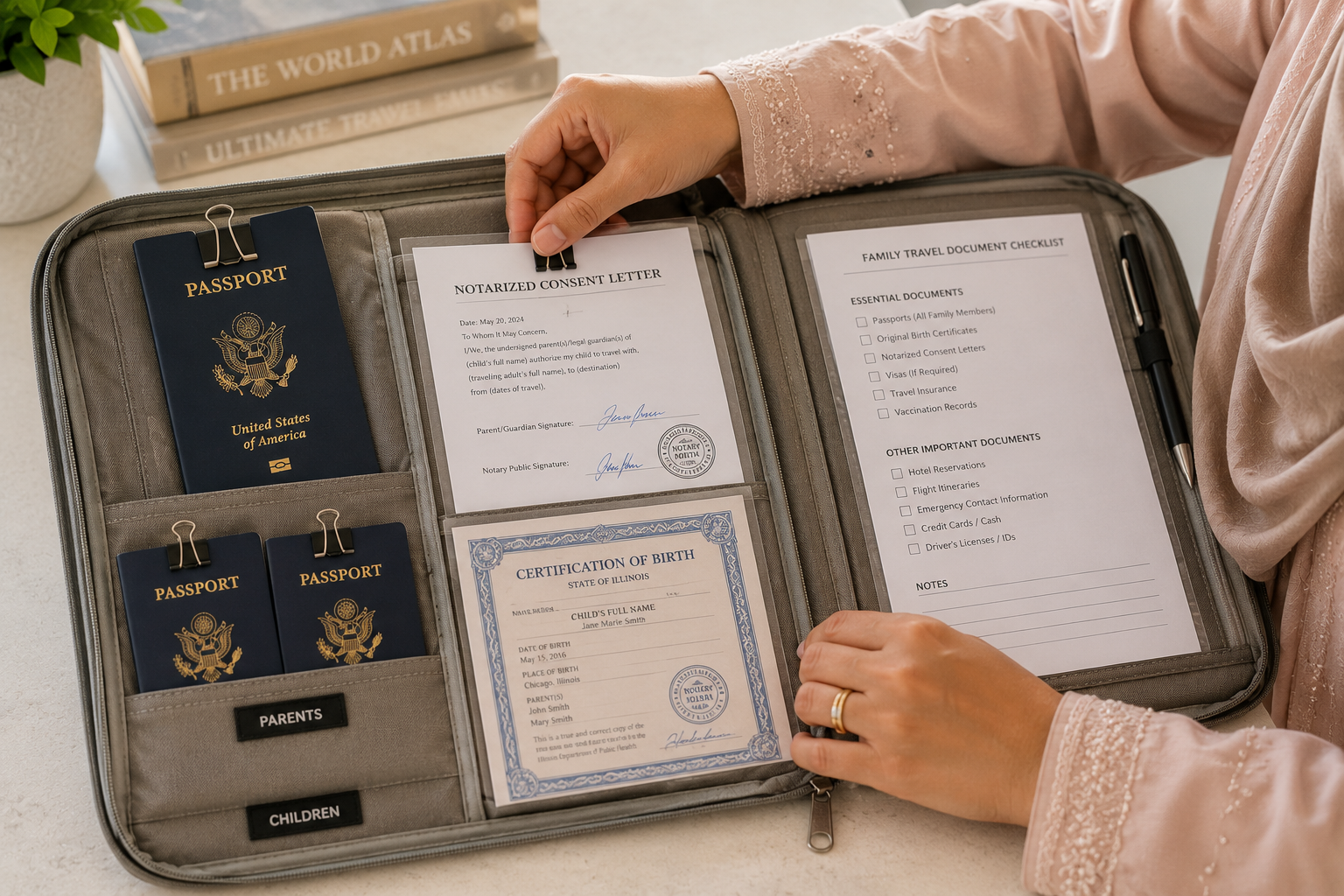
The best way to organize family travel documents for border inspection is using a multi-pocket travel document organizer, placing passports in the most accessible front pocket and supporting documents like birth certificates in separate, clearly clipped sections.
Using a digital tool like Canada’s Advance Declaration can reduce time spent at an airport kiosk or eGate by up to 50%, proving that pre-organization directly translates to a faster and smoother inspection process.
Experienced family travelers use a “two-folder” system: one transparent, waterproof folder for the absolute essentials you’ll hand over (passports), and a second, more robust folder for all supporting documents and backups. This prevents you from fumbling through everything in front of the officer.
How do you prepare children for questions from immigration officers?
Prepare children for immigration questions by calmly explaining the process in age-appropriate terms and role-playing potential scenarios. Emphasize honesty and simplicity, reminding them you will help, and manage your own anxiety, as children mirror parental stress.
Research confirms that detaining children can cause severe mental health issues; while a border interview is not detention, it is a stressful event where a child’s anxiety can be misinterpreted. Calm preparation helps prevent this.
The most important preparation is managing your own anxiety. Children are highly attuned to their parents’ stress levels; if you are calm, confident, and treat the process as normal, they are far more likely to do the same. Frame it as a simple, necessary step to begin the vacation adventure.
Micro-Glossary: Digital Backup
Digital Backup: A scanned copy or clear photograph of your important travel documents (passports, visas, birth certificates) saved securely on your phone, in your email, or on a cloud storage service. It is not a substitute for originals but is invaluable if they are lost or stolen.
Once your documents are organized, consider where you’ll keep them during your trip, as finding the safest place for passports during a family vacation is key to preventing loss or theft.
6. What steps should families follow during the border inspection process?
How should families respond to common questions from immigration officers?
Families should respond to common immigration questions with brief, factual, and consistent answers, delivered by one primary adult. State “Tourism” for visit purpose and exact days for stay, avoiding unnecessary details or jokes to prevent new lines of questioning.
Given that 83 percent of adults removed by the U.S. in FY 2013 were deported through out-of-court summary proceedings, it is critical that answers to officers’ questions are direct, factual, and do not raise unnecessary red flags.
The principle of “answer only the question asked” is paramount. If an officer asks for your passport, give them your passport, not your life story. Volunteering extra information can create new lines of questioning and unintentionally raise red flags.
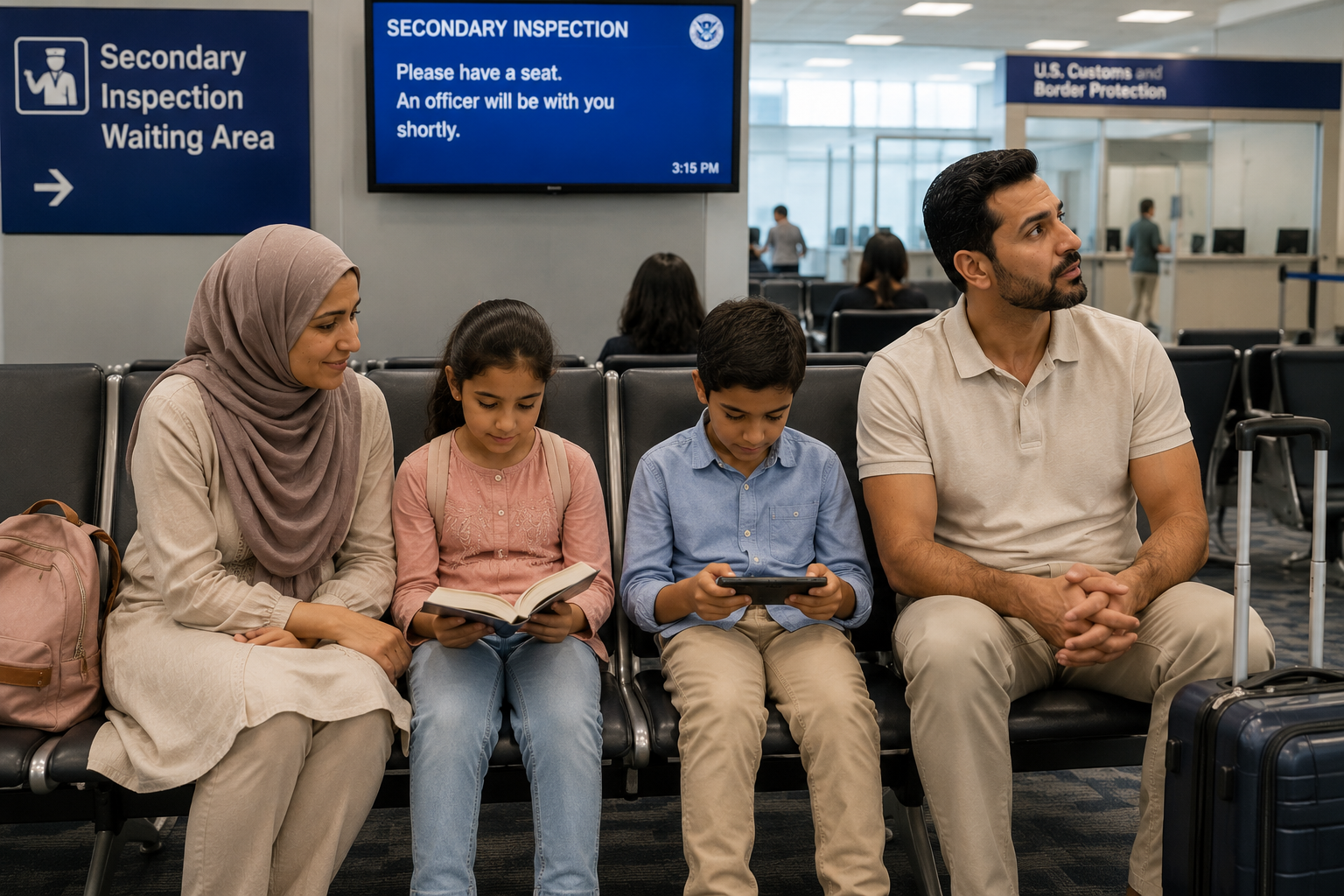
What is the process for families directed to secondary inspection?
For families directed to secondary inspection, the process involves being escorted to a separate waiting area for a detailed review. Remain calm and cooperative, as it’s typically a procedural check (not an accusation) to resolve ambiguities using more verification systems.
While statistics on secondary inspections for families are not published, the average length of stay for an unaccompanied minor in a government facility was 35 days in 2014, a figure that underscores the seriousness and potential for delay if documentation issues cannot be resolved.
Secondary inspection is an administrative process, not a criminal one. The officers there have more time and access to more verification systems than those at the primary desk. While stressful, it is a structured process designed to resolve ambiguity, and the vast majority of families are processed and cleared to continue their travel.
7. How can families avoid common border control issues and delays?
Families can avoid common border control issues and delays by triple-checking passport validity and meticulously preparing all necessary supporting documents for minors before leaving home.
What are the most frequent documentation errors families make at the border?
The most frequent family documentation errors at border control include missing notarized consent letters for minors, presenting photocopies instead of original birth certificates, having passports without six months validity, and incorrectly assuming custody agreements replace travel consent letters.
U.S. Customs and Border Protection can bar non-citizens from entry for five years if they present false documents or misrepresent themselves, making common documentation errors a high-stakes issue.
A “stale” consent letter is a frequent error. A letter from a trip two years ago is invalid. Best practice is to have a new, trip-specific notarized letter for every single international journey to avoid any ambiguity.
How can families proactively address concerns about health screenings or declarations?
Families can proactively address health screening concerns by checking the destination country’s official immigration website 72 hours pre-departure, completing all digital health declarations online, and having printouts or QR codes ready. Downloading required apps well in advance also reduces stress.
During the COVID-19 pandemic, some countries like Australia took the extreme measure of denying entry to their own citizens from high-risk areas, demonstrating how quickly and severely health-related border rules can be enforced.
Many countries have moved to app-based systems (like the US VeriFLY or Canada’s ArriveCAN in the past). Downloading and setting up the required app for the whole family a week before travel, rather than at the check-in counter, eliminates a massive point of stress and potential delay.
8. What to do if your family encounters unexpected challenges at border control?
Who should families contact if a document is questioned or rejected?
If a family document is questioned or rejected at border control, first ask to speak with the supervising officer. If unresolved and facing denied entry, immediately contact your country’s nearest embassy or consulate emergency line, saved pre-travel, for official citizen assistance.
With U.S. border officials having the authority to initiate “expedited removal” proceedings that can result in a five-year ban from entry, the stakes are too high not to involve your consulate in a serious dispute.
Airlines often have dedicated staff at international airports to help with documentation issues at check-in, but once you are at the foreign border control, they cannot help. Your only official advocates at that point are your government’s consular officials.
How to manage extended delays or miscommunication with border officers?
To manage extended border delays or miscommunication, remain patient and cooperative, keeping children calm and occupied. Politely request clarification or a translator if needed. Have a “go-bag” with essentials (charger, snacks, meds) ready for unforeseen lengthy waits.
Wait times at passport control can easily exceed an hour at major international airports even during normal processing; a documentation issue can extend this significantly, making personal preparedness for delays essential for families with children.
Always have a “go-bag” of essentials for this possibility: a portable charger for your phone, snacks and a small game for the kids, and any necessary medications. Being prepared for a two-hour delay can transform a potential meltdown into a manageable wait.
Understanding how to navigate such unexpected events is crucial when you plan a flexible family vacation schedule, allowing for adaptability and harmony during your travels.
9. Logistics: Family Border Readiness Checklist
| Family Scenario | Core Documents | Additional Documents (if applicable) | Key Considerations |
|---|---|---|---|
| Two Parents, Shared Surname | Valid Passports for all | Original Birth Certificates for minors | Least scrutiny, but birth certificates verify parentage. |
| Two Parents, Different Surnames | Valid Passports for all | Original Birth Certificates, Marriage Certificate | Marriage certificate explains name discrepancy; birth certificate links child to parents. |
| One Parent Traveling with Child | Valid Passports, Original Birth Certificates | Notarized Consent Letter from absent parent, Custody Agreement (if applicable) | Consent letter is critical, even with sole custody; specify trip details. |
| Grandparents/Non-Parent Guardians | Valid Passports, Original Birth Certificates | Notarized Consent Letter from *both* parents/legal guardians, Guardianship Papers | Must clearly prove permission from legal guardians. |
| Adopted/Foster Children | Valid Passports | Final Adoption Decree, Guardianship Papers, Certificate of Citizenship (if applicable) | Child’s citizenship and legal guardianship must be explicitly clear. |
| Checklist Item / Tactic | Status |
|---|---|
| Verify all passports have 6+ months validity | ⬜ |
| Obtain notarized consent letters for minors (if applicable) | ⬜ |
| Gather original birth certificates for all minors | ⬜ |
| Make physical and digital document copies for backup | ⬜ |
| Talk to children about the border process, explaining simply | ⬜ |
| Organize documents in a multi-pocket travel organizer | ⬜ |
| Check destination country’s health declaration requirements | ⬜ |
| Pre-clear customs declarations online if available | ⬜ |
| Pack a “go-bag” with essentials for potential delays | ⬜ |
Resolution
Navigating border control with family is a process fundamentally rooted in child safety, which becomes smooth and stress-free through diligent preparation. By proactively organizing documents and understanding procedures, families can confidently begin their international adventures.