What Are the Top Extreme Landscape Destinations for a Family Vacation?
Table of Contents
The top extreme landscape destinations for a family vacation are Chile’s Torres del Paine National Park, Italy’s Dolomites, and the USA’s Zion National Park, selected for their balance of accessibility and adventure.
These destinations excel by providing: direct interaction with unique geological formations and rare ecosystems; a structured environment for adventure-based activities suitable for various age groups; and tangible educational opportunities in geology, ecology, and resilience.
Exploring the diverse world of family travel, from serene beaches to bustling cities, often begins with understanding the 6 types of family vacation destinations available.
For families seeking more than typical leisure, extreme landscape destinations offer a profound journey into the heart of nature’s raw power and beauty.
Such adventures create lasting memories while challenging individuals and strengthening family bonds through shared experiences in awe-inspiring environments.
Places like Torres del Paine National Park in Chile, with its towering granite peaks and vast glaciers, provide a perfect example of such a destination.
Similarly, the jagged formations of the Dolomites in Italy or the iconic canyons of Zion National Park in the USA offer unique blends of accessibility and adventurous exploration.
2. Why Consider Extreme Landscape Destinations for a Family Vacation?
Extreme landscape destinations offer more than just picturesque scenery; they provide a profound platform for personal growth and family development.
These environments naturally present challenges that encourage skill-building, foster communication, and instill a sense of resilience in both children and adults.
Unlike conventional theme park or beach vacations, extreme landscapes demand engagement, problem-solving, and a deeper appreciation for the natural world.
The Adventure Travel Trade Association projects that the global adventure tourism market will grow to $1,169.09 billion in 2028 at a CAGR of 15.2%, highlighting a growing interest in these immersive experiences.[1]
This growth reflects a broader trend towards authentic and transformative travel, especially for families seeking meaningful shared experiences.
What Unique Experiences Do Extreme Landscapes Offer for a Family Vacation?
The unique experiences offered by extreme landscape destinations for a family vacation are direct, sensory interactions with geological wonders like the Grand Canyon, witnessing rare biomes such as the Patagonian Ice Fields, and exploring active volcanic terrains like the Icelandic Highlands.
These environments immerse families in spectacles of natural power and ancient processes, fostering a sense of awe and discovery that is often absent in more curated travel experiences.
Standing at the rim of the Grand Canyon, which is 277 miles long, up to 18 miles wide, and over a mile deep, offers an unparalleled perspective on geological time and erosion.[2]
Exploring the vast glaciers of the Patagonian Ice Fields allows families to connect with pristine ecosystems and understand climate processes firsthand.
Meanwhile, the geothermal activity of the Icelandic Highlands provides a living laboratory for observing volcanic landscapes and unique adaptations of life.
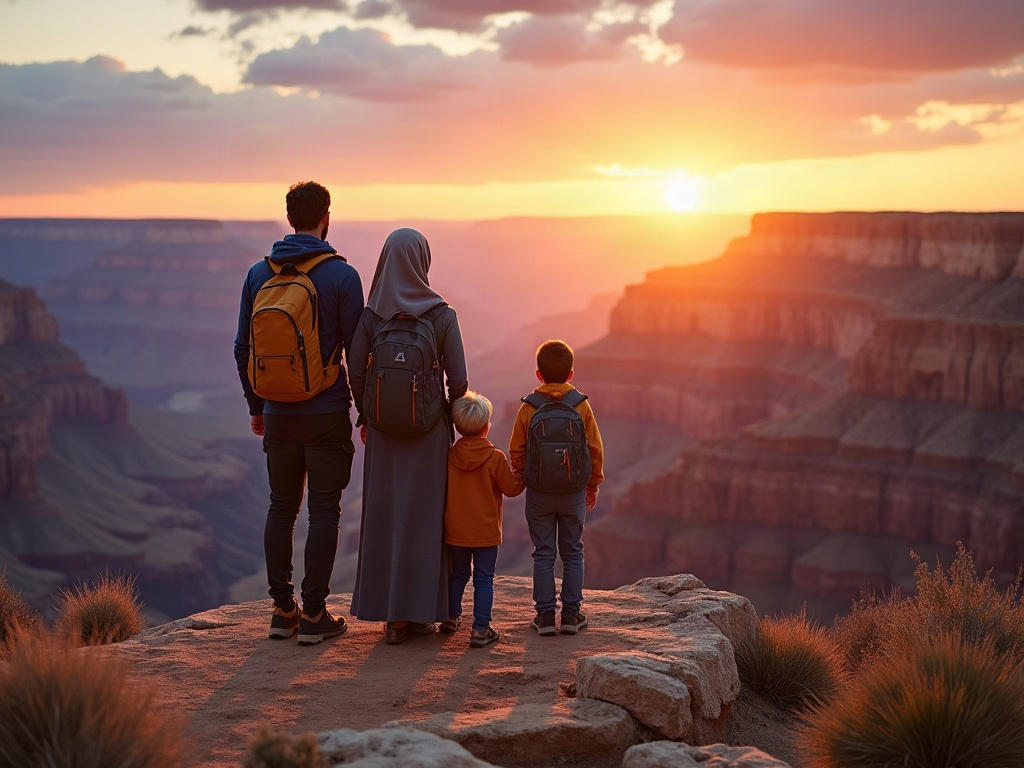
This image captures the breathtaking scale and intricate geological formations of the Grand Canyon National Park, a prime example of an extreme landscape offering unique family experiences.
© WovenVoyages.com
Unique Insight: These direct, sensory experiences in locales like the Grand Canyon cultivate a deeper understanding of geomorphology, the scientific study of the origin and evolution of topographic features created by physical, chemical, or biological processes on Earth.
How Do Extreme Landscapes Foster Education and Bonding on a Family Vacation?
Extreme landscapes foster education and bonding on a family vacation by creating real-world scenarios that demand collaborative problem-solving and provide hands-on learning in geology, ecology, and navigation.
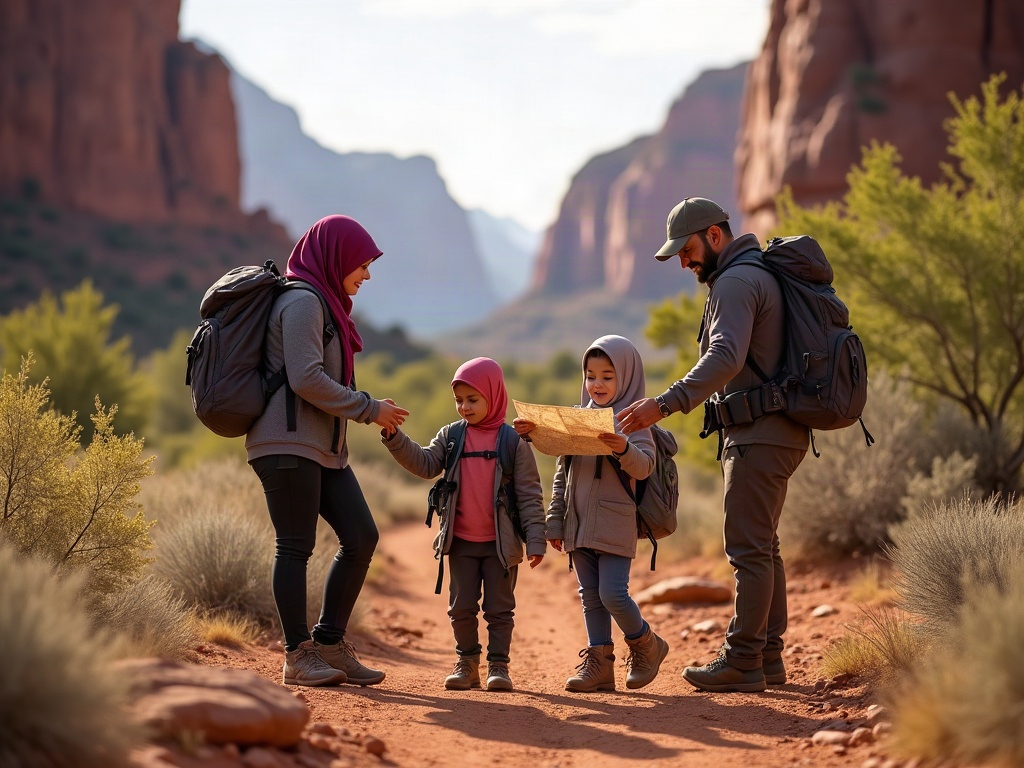
Shared challenges, whether it’s navigating a winding trail in Zion National Park or setting up camp in a remote area, require families to work together, communicate effectively, and rely on each other’s strengths.
This collaborative environment strengthens family bonds far more effectively than passive entertainment.
A study in the *Journal of Experiential Education* found that family-based adventure therapy significantly improved family functioning, with a large effect size (d = 1.25), underscoring the therapeutic and developmental benefits of such trips.[3]
Moreover, outdoor navigational and map-reading tasks have been shown to improve spatial reasoning skills, a key component of STEM success, offering tangible educational value beyond a classroom setting.[4]
Overcoming minor challenges together, such as a sudden change in weather or locating a specific landmark, builds collective resilience and teaches invaluable life skills.
Unique Insight: This process exemplifies Experiential Learning, which is learning through reflection on doing, a core component of adventure travel that deepens understanding and retention beyond traditional methods.
3. What Types of Extreme Landscapes Are Suitable for a Family Vacation?
Categorizing extreme landscapes helps families identify destinations that align with their specific interests, children’s ages, and desired activity levels.
The suitability of an extreme landscape for a family vacation hinges on its dominant geographical features and the accessibility of its challenges.
From towering High-Altitude Mountains like the Dolomites to sprawling Vast Deserts such as the Atacama Desert, each type offers distinct adventures.
Volcanic Regions, exemplified by the Icelandic Highlands, and Glacial Fjords, found in Patagonia, present unique opportunities and considerations for family travelers.
The key is to match the family’s experience level with the inherent demands and safety requirements of the chosen landscape type.
| Landscape Type | Prime Example | Family-Friendly Appeal | Primary Challenge |
|---|---|---|---|
| High-Altitude Mountains | Dolomites (Italy) | Stunning vistas, varied hiking trails, cable car access, rich cultural experiences. | Altitude sickness risk, sudden weather changes, steep terrain. |
| Vast Deserts | Atacama Desert (Chile) | Unparalleled stargazing, unique geological formations (salt flats), cultural history. | Extreme temperatures, strict hydration needs, remote access. |
| Volcanic Regions | Icelandic Highlands (Iceland) | Geothermal pools, active volcanoes (observational), black sand beaches, unique geology. | Unpredictable weather, limited infrastructure, harsh terrain. |
| Glacial Fjords | Patagonian Ice Fields (Chile/Argentina) | Majestic glaciers, wildlife viewing (marine mammals, birds), boating, hiking. | Cold weather, remote access, limited activity options for very young children. |
For families interested in exploring mountainous terrains, a deeper dive into which mountain destinations are best for summer family hiking can provide specific guidance.
Those considering the serene beauty of arid regions might also wonder where are the best desert destinations for stargazing during a family vacation to fully appreciate the night sky.
Which Extreme Geographical Features Define These Destinations for a Family Vacation?
The extreme geographical features that define these destinations for a family vacation include the hyper-arid salt flats of the Atacama Desert, the sheer, glacially-carved cliffs of the Fjords of Norway, and the geothermal geysers and hot springs of Yellowstone National Park.
These features, while posing environmental extremes, are precisely what make these locations captivating and educational for families.
The Atacama Desert is the driest nonpolar desert in the world, with some areas receiving virtually no rain, creating unique, alien-like landscapes that are perfect for stargazing and geological exploration.[5]
Norway’s Sognefjord, the country’s longest and deepest fjord, demonstrates the immense power of glacial erosion, with cliffs plunging over a kilometer into the sea.
Yellowstone National Park sits atop a massive supervolcano, evident in its erupting geysers and colorful hot springs, showcasing Earth’s dynamic geological activity.
A vibrant geothermal pool in Yellowstone National Park, showcasing the unique and extreme geological features that attract family travelers.
© WovenVoyages.com
Unique Insight: A Supervolcano is a volcano that has had an eruption of magnitude 8 on the Volcano Explosivity Index (VEI), meaning the measured deposits for that eruption is greater than 1,000 cubic kilometers, such as the caldera that forms Yellowstone National Park.
Families interested in the unique warmth of geothermal areas may also want to explore which hot spring destinations are safest for a family vacation with children, ensuring both enjoyment and peace of mind.
4. How Do Families Choose the Right Extreme Landscape for a Family Vacation?
The process of selecting the ideal extreme landscape destination for a family vacation requires a thoughtful balance of several critical factors.
The right choice balances the children’s ages, the family’s physical abilities, and the trip budget.
Ignoring any of these elements can lead to a less enjoyable, or even unsafe, experience in challenging environments.
A structured decision-making process helps families objectively assess destinations against their unique needs and limitations.
For instance, a family with very young children might prioritize destinations with well-maintained, paved trails and accessible facilities, while a family with active teenagers might seek out more strenuous activities and remote locations.
| Destination | Dominant Feature | Ideal Age Group | Budget Index ($–$$$$) | Physicality Rating (1-10) |
|---|---|---|---|---|
| Dolomites (Italy) | Jagged Limestone Peaks | Children (6-12), Teens (13-18) | $$ | 5-8 |
| Serengeti National Park (Tanzania) | Wildlife Migrations, Savanna | All ages (with proper safari setup) | $$$$ | 3-6 |
| Death Valley National Park (USA) | Arid Basins, Extreme Heat | Children (6-12), Teens (13-18) – seasonal | $ | 4-7 |
Which Are the Top Extreme Landscape Options for a Family Vacation?
The top extreme landscape options for a family vacation, balancing accessibility with adventure, are Torres del Paine National Park (Chile), the Dolomites (Italy), Cappadocia (Turkey), Serengeti National Park (Tanzania), and Death Valley National Park (USA).
These destinations consistently offer unique experiences while accommodating diverse family needs.
- Torres del Paine National Park (Chile): Designated a World Biosphere Reserve by UNESCO in 1978, this park covers 242,242 hectares and boasts a well-developed network of hiking trails suitable for various fitness levels. Ideal for active families seeking dramatic glaciers, granite peaks, and diverse wildlife.
- Dolomites (Italy): Renowned for its stunning jagged peaks and lush valleys, the Dolomites offer a mix of hiking, via ferrata routes, and cultural experiences. It suits families who appreciate both outdoor activity and European charm, with excellent infrastructure.
- Cappadocia (Turkey): Famous for its “fairy chimney” rock formations and ancient cave dwellings, Cappadocia provides a unique blend of history and surreal landscapes. Hot air balloon rides offer an unforgettable perspective for families.
- Serengeti National Park (Tanzania): An iconic safari destination, the Serengeti offers unparalleled wildlife viewing, especially during the Great Migration. It’s perfect for families desiring an immersive wildlife experience, though it requires careful planning for younger children.
- Death Valley National Park (USA): This desert landscape provides stunning vistas of salt flats, sand dunes, and colorful badlands, particularly during cooler months. It’s an excellent choice for families seeking unique geology and stargazing in a readily accessible U.S. National Park.

The iconic granite towers and azure lakes of Torres del Paine National Park, a Biosphere Reserve, exemplify extreme beauty suitable for active family adventure.
© WovenVoyages.com
Unique Insight: A Biosphere Reserve is a protected area designated by UNESCO that aims to demonstrate a balanced relationship between people and nature, such as Torres del Paine National Park, ensuring both conservation and sustainable tourism.
Given the appeal of wildlife viewing in destinations like Serengeti, families might also be curious about what are the top safari destinations for a family vacation, offering distinct adventure opportunities.
How Do Extreme Landscapes Vary in Suitability for Different Family Ages and Abilities on a Family Vacation?
Extreme landscapes vary in suitability for a family vacation based on factors like trail accessibility for toddlers in places like Zion National Park, the availability of high-intensity teen adventures in the Swiss Alps, and the physical tolerance required for expeditions into the Sahara Desert.
Tailoring the destination and activities to the family’s youngest and least able member is crucial for a successful trip.
For Families with Toddlers (Ages 2-5), destinations like Zion National Park offer accessible options such as the Pa’rus Trail, a 3.5-mile paved trail with minimal elevation, perfect for strollers. These environments prioritize short, safe explorations.
Families with Children (Ages 6-12) might enjoy the diverse, moderate trails and engaging ranger programs available in many U.S. National Parks, including parts of the Grand Canyon or Dolomites with gondola access. Activities can be more physically demanding but still offer frequent breaks and educational elements.
Families with Teenagers (Ages 13-18) can tackle more challenging adventures, such as multi-day treks in the Swiss Alps, which can involve 4-6 hours of hiking daily with significant elevation changes. Destinations offering activities like Via Ferrata climbing routes or multi-day wilderness expeditions are often a hit.
Unique Insight: A Via Ferrata is a protected climbing route found in the Alps and other locations, equipped with steel cables, ladders, and other fixed anchors, making it accessible to less experienced climbers, ideal for adventurous teenagers.
What Are the Budget Considerations for an Extreme Landscape Family Vacation?
The primary budget considerations for an extreme landscape family vacation are transportation to remote locations, costs of specialized gear or guided tours, and variable daily expenses, which can range from under $150/day in places like the Dolomites to over $1,000/day for a guided Serengeti safari.
These costs can fluctuate significantly based on the chosen destination, the duration of the trip, and the level of luxury or self-sufficiency desired.
- International/Domestic Transport: Flights to remote regions (e.g., Patagonia, Icelandic Highlands) can be substantial. Local transport, such as 4×4 rentals or charter flights, further adds to the cost.
- Accommodation: Options range from budget-friendly camping in national parks (like Zion National Park or Death Valley) to luxury lodges in areas like the Serengeti. Daily costs in areas near Patagonia can exceed $150 per day per family without lodging factored in.
- Activities & Guide Fees: Specialized activities such as guided glacier hikes, safaris, or hot air balloon rides (e.g., $150-$250 per person in Cappadocia) add considerable expense. Many national parks in Africa also charge Conservation Fees.
- Food & Supplies: Remote locations often mean higher food costs or the need to carry specialized rations. Families also need to account for water purification, snacks, and other consumables.
Unique Insight: Conservation Fees are mandatory per-person, per-day fees charged by many national parks and private reserves (especially in Africa) to fund anti-poaching, habitat maintenance, and community development projects, directly contributing to the preservation of these extreme landscapes.
Planning for both high-budget (e.g., fully-guided Serengeti safari) and lower-budget (e.g., self-driving trip through U.S. National Parks) scenarios can help families manage expectations and allocate resources effectively.
5. What Essential Logistics Ensure a Successful Extreme Landscape Family Vacation?
Success in extreme environments is determined by meticulous preparation, not merely by luck.
Families undertaking an extreme landscape family vacation must prioritize comprehensive logistical planning to mitigate risks and maximize enjoyment.
This involves addressing documentation, health, and booking arrangements well in advance, recognizing that remote areas often lack immediate support systems.
For example, navigating the remote paths of Patagonian Ice Fields or the vastness of the Atacama Desert requires pre-arranged permits, detailed maps, and reliable communication plans.
Every critical detail, from visas to emergency contacts, must be meticulously organized to ensure a smooth and safe expedition.
Use this interactive checklist to ensure you’ve covered all the critical logistical bases for your trip. Click the squares to check them off as you plan.
| Checklist Item / Tactic | Status |
|---|---|
| Documentation & Insurance | |
| ☐ Confirm travel insurance policy explicitly covers emergency medical evacuation from remote areas. | ⬜ |
| ☐ Secure all necessary visas and permits for national parks or restricted areas like the Patagonian Ice Fields. | ⬜ |
| ☐ Make multiple copies of passports, visas, and insurance documents; store digital copies securely. | ⬜ |
| Health & Vaccinations | |
| ☐ Consult a travel doctor for recommended vaccinations and preventative medications specific to the region (e.g., malaria for Serengeti National Park). | ⬜ |
| ☐ Pack a comprehensive first-aid kit, including prescription medications, pain relievers, and wound care for remote use. | ⬜ |
| ☐ Learn about altitude sickness prevention and symptoms if traveling to high-altitude destinations like parts of the Dolomites. | ⬜ |
| Route & Accommodation Booking | |
| ☐ Book all flights, ground transport, and accommodations well in advance, especially for popular or remote destinations like Zion National Park. | ⬜ |
| ☐ Plan detailed itineraries, including contingency days for unexpected delays or weather changes. | ⬜ |
| ☐ Research and pre-book any guided tours or specialized activities to ensure availability and secure reputable operators. | ⬜ |
How Can Families Plan Activities Safely in Extreme Landscape Destinations for a Family Vacation?
Families can plan activities safely in extreme landscape destinations for a family vacation by booking vetted guided tours in places like Petra, choosing age-appropriate trails in parks like Fiordland National Park, and adhering to all posted warnings from park authorities.
Safety is paramount, particularly when exploring environments that can be unpredictable or challenging.
The U.S. National Park Service reports that slips, trips, and falls are the leading cause of visitor injuries, emphasizing the need for caution on trails.
A simple rule-based framework can guide activity planning:
- Research Official Sources: Always check national park websites, local tourism boards, and government advisories for the latest safety information and trail conditions.
- Vet Third-Party Operators: When booking tours, especially for complex activities, ensure operators are certified (e.g., UIMLA-certified for mountain guiding) and have excellent safety records.
- Match Activity to the Least Capable Member: Plan activities that are comfortable for the least experienced or youngest member of the family to avoid undue stress or risk.
- Have a Contingency Plan: Always discuss “what if” scenarios, such as getting lost, sudden weather changes, or minor injuries, and know how to react.
In places like Petra, Jordan, managing heat and crowds is essential, while in Fiordland National Park, New Zealand, preparing for rapidly changing weather conditions is key.
A family enjoys hiking in a picturesque landscape, illustrating safe and age-appropriate activity planning in extreme landscapes.
© WovenVoyages.com
Unique Insight: Acclimatization, the process by which an organism adjusts to environmental changes like altitude or temperature, is vital for families in mountain environments, minimizing the risk of discomfort or illness.
What Essential Gear and Preparations Are Needed for an Extreme Landscape Family Vacation?
The essential gear and preparations needed for an extreme landscape family vacation are layered clothing systems for temperature regulation, broken-in and waterproof footwear, and a comprehensive first-aid kit equipped for remote environments.
Appropriate gear is not merely a convenience; it’s a critical safety component when venturing into challenging natural settings.
Quality and proper testing of equipment before departure are just as important as having the items themselves.
Unique Insight: A Layering System involves dressing in multiple garments that can be added or removed as activity level and weather conditions change, typically comprising a base, mid, and shell layer for optimal comfort and safety in varying extreme landscapes.
How Do Families Navigate Unique Challenges in Extreme Landscapes During a Family Vacation?
Families navigate unique challenges in extreme landscapes during a family vacation by preemptively learning the symptoms of altitude sickness, carrying and knowing how to use navigation tools beyond a smartphone, and preparing for sudden, dramatic weather changes.
Effective preparedness turns potential hazards into manageable inconveniences, ensuring a safer and more enjoyable trip.
Addressing these challenges proactively is key to a successful family adventure.
- Challenge: Altitude Sickness
Solution: Symptoms typically start at altitudes of 8,000 feet and above; monitoring blood oxygen saturation (SpO2) can be a useful tool, with levels below 90% indicating concern. Ascend gradually, stay hydrated, and plan rest days.
- Challenge: Navigational Errors
Solution: Always carry a physical map and compass in addition to GPS devices. Teach older children how to read them. Have fully charged power banks for electronics.
- Challenge: Unexpected Weather
Solution: Weather-related issues are a leading cause of rescue incidents in mountain environments like the Alps. Pack versatile clothing layers, waterproof outerwear, and always check forecasts. Be prepared to turn back if conditions deteriorate.
Unique Insight: Hypothermia, a dangerously low body temperature, is a primary risk in both cold and wet environments, even in seemingly moderate conditions. Understanding its symptoms and prevention is critical for safety in extreme landscapes.
Author’s Experience: Abdullahi Azaam
“My family’s trek through the Dolomites taught us the invaluable lesson of preparing for every eventuality. A sudden hailstorm reminded us that even well-marked trails in extreme landscapes can become challenging. Our layered clothing and a fully charged satellite messenger were not just gear; they were our peace of mind.”
6. What Are the Potential Risks and Challenges of an Extreme Landscape Family Vacation?
All adventure inherently contains risk, but an extreme landscape family vacation amplifies certain challenges that demand proactive and systematic planning.
Understanding these potential risks is the first step toward effective mitigation and response planning, ensuring the safety and well-being of all family members.
Risks can broadly be categorized into environmental hazards, logistical failures, and medical issues, each requiring specific foresight and preparation.
For example, navigating the wildlife-rich plains of Serengeti National Park differs vastly from managing thermal dangers in Death Valley National Park.
The focus should always be on preparedness, not fear-mongering, enabling families to enjoy these unique destinations safely.
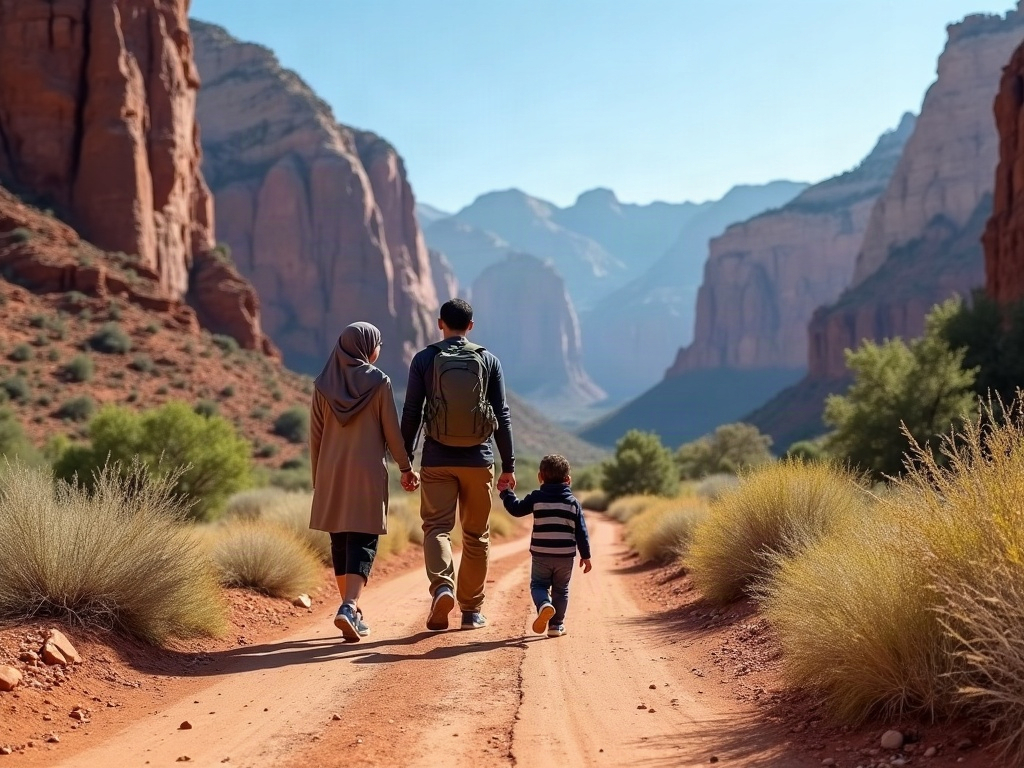
A family carefully traverses challenging terrain, highlighting the need for awareness and preparedness when exploring extreme landscapes.
© WovenVoyages.com
How Can Families Mitigate Safety Hazards in Extreme Landscape Destinations for a Family Vacation?
Families can mitigate safety hazards in extreme landscape destinations for a family vacation by studying the specific environmental dangers of the region, such as flash flood seasons or typical wildlife encounter protocols, and always following the guidance of local authorities.
Proactive education and adherence to expert advice are the most effective tools for hazard reduction.
- Environmental Dangers: Understand local phenomena like flash floods in desert canyons (e.g., Zion National Park) or rockfalls in mountain regions like the Dolomites. A dry wash can become a raging river up to 10 feet deep in minutes in desert areas.
- Wildlife Encounter Protocols: Learn appropriate responses to local wildlife. For instance, the U.S. Forest Service recommends maintaining at least 100 yards from bears and 25 yards from most other large animals. This is especially important in places like Serengeti National Park or Yosemite National Park.
- Local Authority Guidance: Always heed warnings, trail closures, and safety instructions issued by park rangers or local guides. They possess crucial, up-to-date information on current conditions.
The willingness to alter or cancel plans when conditions are unsafe is the most critical safety tool a family can employ.
Unique Insight: A Flash Flood is a rapid flooding of low-lying areas, often caused by heavy rain. In extreme landscapes like canyons, this poses a significant danger with little to no warning.
What Environmental Responsibilities Do Families Have When Visiting Extreme Landscapes for a Family Vacation?
The primary environmental responsibilities families have when visiting extreme landscapes for a family vacation are to strictly adhere to the seven principles of the Leave No Trace framework, including packing out all waste and respecting wildlife from a distance.
These principles are essential for minimizing human impact and preserving the fragile beauty of these unique ecosystems for future generations.
- Plan Ahead & Prepare: Proper planning minimizes impact. Know regulations and special concerns for the area, like the Leave No Trace Center for Outdoor Ethics advises.
- Travel & Camp on Durable Surfaces: Stick to existing trails and campsites. Avoid trampling vegetation or disturbing sensitive areas, such as Cryptobiotic Soil in arid regions.
- Dispose of Waste Properly: Pack it in, pack it out. This applies to all trash, including food scraps. A plastic bottle can take up to 450 years to decompose.[19]
- Respect Wildlife: Observe animals from a distance. Never feed wildlife, as it can harm them and alter their natural behaviors.
- Be Considerate of Other Visitors: Maintain peace and quiet, and respect the privacy and solitude of others in natural settings.
Unique Insight: Cryptobiotic Soil is a complex living crust found in arid regions like the Atacama Desert or Zion National Park. It is extremely fragile and crucial for ecosystem health; stepping on it can destroy decades of growth.
How Do Families Address Unexpected Situations During an Extreme Landscape Family Vacation?
Families address unexpected situations during an extreme landscape family vacation by creating a detailed emergency plan that includes pre-identified medical facilities, a reliable satellite communication device, and copies of all essential documents.
An emergency plan is not just a formality; it is a vital roadmap for navigating unforeseen events in remote or challenging areas.
Every responsible family member should understand the plan and know how to access it.
- Emergency Plan Template: Create a physical and digital document with local emergency numbers, embassy/consulate contacts (for international travel), insurance policy numbers, and pre-written emergency contact messages.
- Satellite Communication: Devices like Garmin inReach or SPOT allow two-way text messaging and SOS alerts, even without cellular service, which is crucial in remote Patagonian Ice Fields or Icelandic Highlands.[20]
- Copies of Essential Documents: Beyond digital copies, keep physical copies of passports, visas, and medical information in a separate, waterproof bag. Enroll in programs like the Smart Traveler Enrollment Program (STEP) for alerts and easier location in emergencies.[21]
Unique Insight: Medical Evacuation (Medevac) is the timely movement and en route care of injured patients to a medical facility. Ensuring your travel insurance covers Medevac from remote extreme landscapes is non-negotiable.
7. Frequently Asked Questions (People Also Ask)
What are the primary benefits of an extreme landscape family vacation?
How can families ensure safety in extreme landscape destinations?
What budget considerations are important for these types of trips?
What environmental responsibilities should families prioritize?
What Is the Definitive Verdict on Booking Extreme Landscape Destinations for a Family Vacation?
An extreme landscape family vacation is a high-investment, high-reward travel choice, offering unparalleled opportunities for growth, education, and strengthening family bonds. These trips, exemplified by destinations like Torres del Paine National Park or the Dolomites, demand significant preparation, meticulous planning, and a deep respect for the natural environment. Success hinges on a family’s willingness to match the destination’s challenges to their capabilities and preparedness level, ensuring a safe, enriching, and truly unforgettable adventure.