How to Identify Hidden Family Vacation Costs
Table of Contents
Planning a family vacation often brings excitement, but beneath the surface of advertised prices lurk numerous hidden costs that can derail even the most meticulously planned budget. These unexpected expenses, ranging from resort fees to baggage charges, accumulate swiftly, transforming a dream trip into a financial headache if not anticipated.
This guide provides a structured approach, dissecting common budget pitfalls and offering actionable strategies to identify, budget for, and ultimately avoid these unseen expenses, ensuring your family’s travel experiences remain joyful and stress-free.
2. What are the Most Common Hidden Family Vacation Costs?

The most common hidden family vacation costs are found across five key areas: transportation, accommodation, dining, activities, and pre-trip preparation.
The most common hidden family vacation costs arise from surcharges and fees not included in the advertised price, such as resort fees, baggage fees, and service charges. These seemingly small amounts accumulate rapidly, significantly impacting a family’s overall travel budget if not proactively identified.
Most families focus on the “big two” (flights and hotels) but the “death by a thousand cuts” comes from tertiary costs like non-bank ATM fees, destination-specific tourist taxes levied per person per night, and automatic gratuities on room service.
Surcharge is a mandatory extra charge or fee added to a stated price for a good or service, which is often not included in the initial quote (e.g., a fuel surcharge on a flight or a credit card surcharge at a small vendor).
Why Do Families Frequently Overlook These Hidden Vacation Costs?
Families often overlook hidden costs because they concentrate on major ticket items like flights and lodging, underestimating the cumulative impact of smaller, incidental expenses. This oversight is compounded by misleading “drip pricing” that reveals fees only at the final stages of booking, leading to budget failure.
Families frequently overlook these hidden vacation costs due to cognitive biases like “optimism bias” and a narrow focus on large, upfront expenses. Families often overlook hidden costs because they concentrate on the major ticket items like flights and lodging, underestimating the cumulative impact of smaller, incidental expenses. This oversight is compounded by misleading advertising that presents a “drip pricing” model, revealing fees only at the final stages of booking.
The primary cognitive error is “budget anchoring”, where a family mentally locks in the initial price shown for a flight or hotel and treats all subsequent fees as minor annoyances rather than part of the core cost, leading to poor financial tracking. Unexpected travel expenses and hidden hotel charges can easily accumulate.
According to travel budgeting data, families who don’t account for hidden costs can exceed their planned spending by 20-30%.
Author’s Experience
“As a parent who’s navigated five continents with two young children, I’ve learned that a vacation budget without a ‘hidden costs’ buffer is merely a wish list. Once, a surprise resort fee almost derailed our entire day’s activity budget, but a quick pivot saved our plans.”
How Do Hidden Costs Impact Your Overall Family Vacation Budget?
Hidden costs systematically dismantle family vacation budgets by creating a significant gap between planned and actual spending, often by 15-30%. This budget deficit forces families to cut back on experiences, incur credit card debt, or deplete savings, thus reducing the vacation’s experiential return on investment.
Hidden costs directly impact your overall family vacation budget by eroding funds designated for planned activities and creating financial stress. Hidden costs systematically dismantle a family vacation budget by creating a significant gap between planned and actual spending, often by 15-30%. This budget deficit forces families to either cut back on experiences, incur credit card debt, or deplete their emergency savings.
The impact is not just financial; it’s experiential. Every dollar spent on an unexpected fee is a dollar not spent on a memorable family activity, directly reducing the “return on investment” of the vacation. A family of four can easily accumulate over $500 in hidden costs on a one-week trip.
Hidden costs typically add 20-60% on top of the base price for flights and hotels, according to Endless Travel Plans.
While managing costs is crucial, equally important is knowing how to plan a family vacation destination that aligns with your budget and family’s desires.
3. How Can Families Choose the Right Budgeting Approach to Account for Hidden Costs?

The best budgeting approach for hidden costs involves a two-pronged strategy: first, creating an itemized breakdown of all potential expenses based on research, and second, setting aside a dedicated contingency fund of 10-15% of the total trip cost. This combination prepares for both known-unknowns and true surprises.
Families can choose the right budgeting approach to account for hidden costs by selecting a method that matches their planning style, from granular itemization to a simple contingency fund.
The most effective approach is a “hybrid model”: use a digital tracking app for macro-spending (flights, hotel), but use a physical envelope system for daily micro-spending (ice cream, souvenirs, tips) to give kids a tangible sense of the daily budget.
Contingency Fund is a specific pool of money set aside in a travel budget exclusively for unforeseen and un-budgeted expenses, distinct from general spending money.
Choose the “Itemized Breakdown + Buffer” approach if you are a detail-oriented planner traveling to a destination with many variable costs; choose the “Contingency Fund” approach for shorter, more structured trips like an all-inclusive resort stay.
Which Initial Planning Fees Hide in Plain Sight for Family Trips?
Initial planning fees that hide in plain sight for family trips are typically service fees, processing fees, and mandatory insurance added by booking platforms at checkout. These additional charges often appear just before payment, significantly increasing the final cost beyond the advertised price if not carefully reviewed.
The initial planning fees that hide in plain sight for family trips are typically service fees, processing fees, and mandatory insurance added by booking platforms at checkout. During the initial planning phase, families must watch for hidden fees on third-party booking sites (like OTAs) which often add “service fees” or “platform fees” just before payment. These are separate from the costs charged by the airline or hotel and represent the platform’s cut for facilitating the booking. Online Travel Agencies (OTAs) are a primary source of these hidden planning fees. Always compare the final checkout price on an OTA with the price of booking directly with the airline or hotel to avoid hidden fees on vacation.
A critical hidden cost is the “seat selection fee.” Airlines often show families separated on the seat map, creating anxiety that pressures parents into paying for adjacent seats, a fee that can be avoided by checking in exactly 24 hours before the flight when more seats are often released for free.
Online booking platforms frequently add service fees of $3-$15 per ticket, which for a family of four buying tickets to three attractions, could add up to $36-$180.
For those just starting their financial planning, learning how to create a baseline budget for a family vacation can be an invaluable first step.
4. What Accommodation Surcharges and Service Fees Should Families Anticipate?

Families should anticipate a range of accommodation surcharges beyond the nightly rate, including mandatory resort fees and significant cleaning fees for vacation rentals. These costs, often presented as non-negotiable extras, can dramatically increase the overall lodging expense and must be verified before booking to avoid unexpected budget impacts.
Families should anticipate a range of accommodation surcharges and service fees, most notably resort fees, parking fees, and cleaning fees.
When booking accommodation, families must anticipate surcharges beyond the nightly rate, including daily Resort Fee which are mandatory and cover amenities you may not use. For vacation rentals, exorbitant cleaning fees and utility surcharges can be significant hidden costs. The rise of high Cleaning Fee on platforms like Airbnb and Vrbo explicitly warns families about this.
The “free Wi-Fi” claim is a common trap. Many hotels offer free “basic” Wi-Fi that is too slow for streaming, forcing families to upgrade to a paid “premium” tier for multiple devices, costing an extra $10-$15 per day.
Resort Fee (or Amenity/Destination Fee) is a mandatory daily charge imposed by hotels, ostensibly to cover a bundle of amenities like pool access, Wi-Fi, and gym use, regardless of whether the guest uses them.
Choose a vacation rental if your family needs kitchen facilities to save on dining costs, but only after confirming the total price including all fees; otherwise, a traditional hotel may be more transparently priced.
How Do Unseen Transportation Costs Impact Family Travel Budgets?
Unseen transportation costs inflate family travel budgets primarily through airline ancillary fees for checked bags and seat selection, which can add hundreds of dollars. Additionally, expensive rental car add-ons like Collision Damage Waivers, if not properly covered by existing insurance, represent a major financial risk that can significantly increase trip expenses.
Unseen transportation costs significantly impact family travel budgets through airline ancillary fees, rental car add-ons, and overlooked local transit expenses. Unseen transportation costs inflate budgets primarily through airline fees for checked bags and Seat Selection Fee, which can add hundreds of dollars for a family. Additionally, declining the expensive Collision Damage Waiver (CDW) at the car rental counter without confirming your personal insurance or credit card provides coverage is a major financial risk. A family of four flying on a budget airline can easily pay more in fees than for their base airfare.
A major hidden cost is the “one-way rental drop fee.” Families planning a road trip that ends in a different city can be hit with a surcharge of several hundred dollars, a detail often buried in the fine print.
Rental car companies at airport locations often add on concession fees of 10-30% on top of the base rate.
For more specific guidance, consider our detailed advice on how to budget for family vacation transportation effectively.
5. How Can Families Proactively Identify and Minimize Hidden Dining Costs During Vacation?

Families can minimize hidden dining costs by proactively planning a mix of restaurant meals and self-prepared food. Booking accommodations with a kitchenette to cook breakfast and pack lunches can cut a family’s daily food spend by over 50%, effectively avoiding the expensive “three-times-a-day restaurant trap” prevalent in tourist areas.
Families can proactively identify and minimize hidden dining costs by planning a mix of restaurant meals, grocery store visits, and packed snacks.
To minimize hidden dining costs, families must avoid the “three-times-a-day restaurant trap” by booking accommodations with a kitchenette and preparing their own breakfast and packing lunches. This single strategy can cut a family’s daily food spend by over 50%. Packing a reusable water bottle for each family member can save $15-20 per day.
A subtle hidden cost is the “kid’s menu trap,” where small portions of low-quality food are sold at an inflated price. Often, it is more cost-effective for two children to share a regular-sized, healthier adult entree.
Service Charge is a mandatory fee (often 10-20%) automatically added to a bill in many restaurants, especially for large groups or in tourist areas. This is not the same as a discretionary tip (gratuity).
Choose to eat your main meal at lunchtime if you want a restaurant experience, as many establishments offer lunch specials that feature the same food as their dinner menu for a significantly lower price.
What Unexpected Activity and Entertainment Expenses Should Families Budget For?
Families should budget for unexpected activity and entertainment expenses such as express passes, equipment rentals, and souvenir shop purchases. These “convenience” upsells, like fast passes at theme parks, are designed to capitalize on in-the-moment desires and can double the cost of an activity if not planned for in advance.
Families should budget for unexpected activity and entertainment expenses such as express passes, equipment rentals, and souvenir shop purchases. The most significant unexpected activity expenses arise from “convenience” upsells, such as paying for fast passes at theme parks or photo packages at attractions. These are designed to capitalize on in-the-moment desires and can double the cost of an activity if not planned for.
The most insidious hidden cost is the “exit through the gift shop” design. This is a deliberate architectural choice to force families through a retail environment when they are at peak emotional excitement, maximizing the chance of an impulse souvenir purchase. The end-of-activity souvenir shop is a calculated budget trap for families. Souvenir Creep, the gradual accumulation of small, unplanned purchases, is a real threat. Parents should set a firm “souvenir budget” per child *before* the trip and have them manage it themselves.
A single ride photo at a major theme park can cost $20-30, and an “unlimited photo package” can cost between $100 and $200. This is according to Bankrate.
Learning how to estimate food and dining expenses for a family vacation can drastically reduce unexpected outlays.
6. How Can Families Prepare for Unforeseen Medical and Safety-Related Hidden Costs?
To prepare for unforeseen medical costs, families must first review their existing health insurance policy for international coverage, then purchase a separate travel insurance policy including medical evacuation and trip interruption coverage. This proactive step prevents catastrophic financial loss from emergencies, as domestic insurance is often insufficient abroad.
Families prepare for unforeseen medical and safety-related hidden costs by verifying their insurance coverage and purchasing supplementary travel insurance.
To prepare for medical hidden costs, families must first review their existing health insurance policy to understand its out-of-network and international coverage. Then, they should purchase a separate Travel Insurance policy that explicitly includes Medical Evacuation Coverage and Trip Interruption coverage, which can prevent catastrophic financial loss. Do not travel internationally without confirming your medical coverage.
Most families don’t realize their domestic health insurance is often useless abroad. A major hidden cost is a foreign hospital demanding upfront payment via credit card for treatment, a bill that can run into thousands of dollars and must be paid before you can claim it back (if at all).
Medical Evacuation Coverage is a component of travel insurance that covers the cost of transporting you to a medical facility deemed appropriate, or even back to your home country, which can cost upwards of $100,000 without insurance.
Purchase a “Cancel For Any Reason” (CFAR) travel insurance policy if you are booking a very expensive trip far in advance, as it provides the most flexibility, albeit at a higher premium.
What Administrative Fees and Documentation Expenses Do Families Overlook When Traveling?
Families often overlook administrative fees like the cost of an International Driving Permit (IDP) and visa application fees for certain destinations. A consistently draining expense is the 2-3% foreign transaction fee charged by many credit cards on every purchase abroad, compounded by Dynamic Currency Conversion (DCC), which can add a 3-5% markup.
The administrative fees and documentation expenses families overlook most are passport expedition fees, visa application costs, and foreign transaction fees on credit cards. Families often overlook administrative fees like the cost of an International Driving Permit (IDP), which is required to rent a car in many countries, and visa fees for certain destinations. A more common and consistently draining expense is the 2-3% Foreign Transaction Fee charged by many credit cards on every single purchase abroad. Relying on a credit card with foreign transaction fees is like willingly paying a 3% tax on your entire vacation. Parents should apply for a no-Foreign Transaction Fee Credit Card at least two months before any international trip.
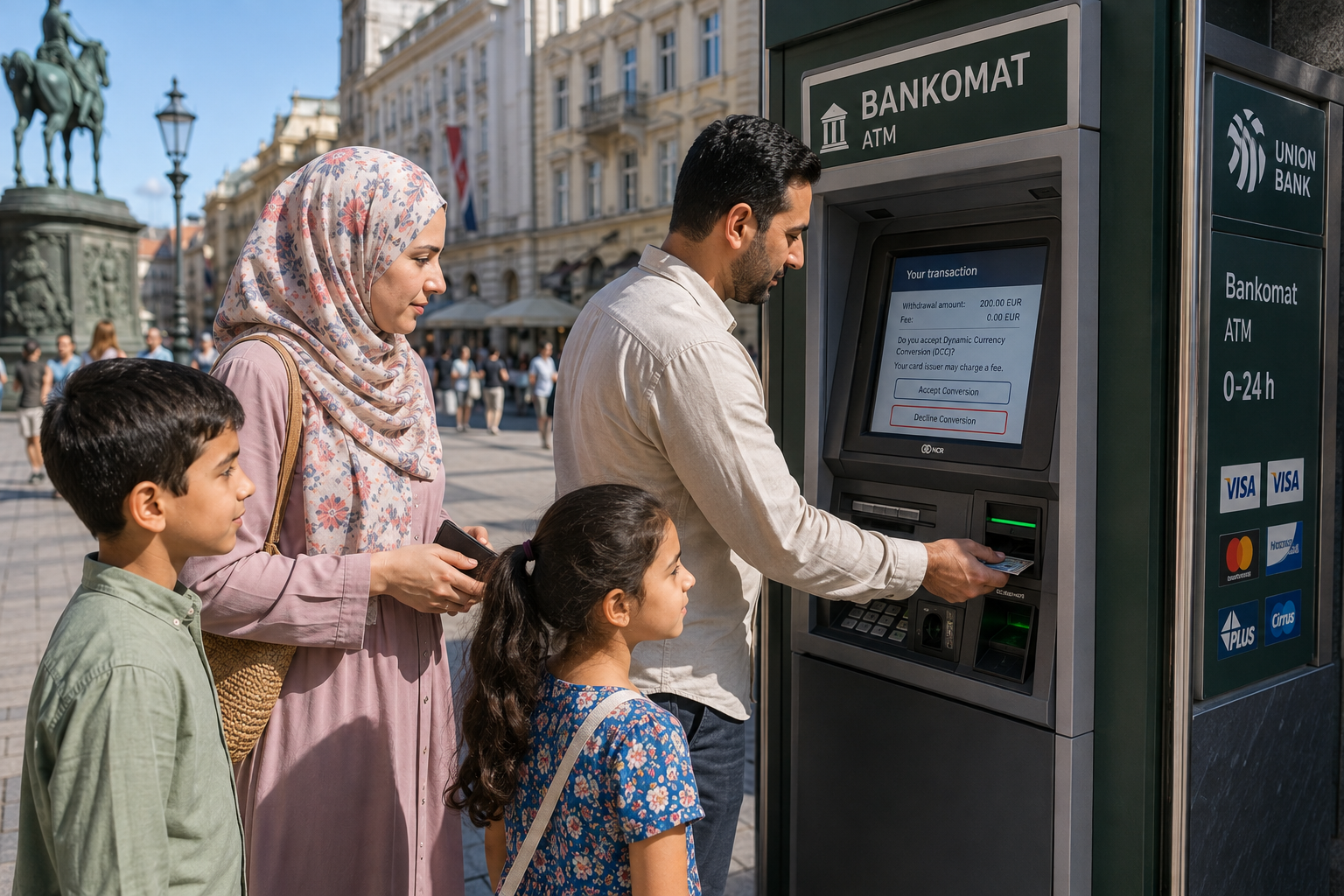
A very subtle hidden cost is Dynamic Currency Conversion (DCC). When a foreign merchant asks if you want to pay in your home currency, always say no. This “service” allows them to use an unfavorable exchange rate, adding 3-5% to your bill compared to letting your credit card network handle the conversion.
If you need a passport or renewal quickly, you will have to pay an extra $60 expediting fee per person.
To delve deeper into comprehensive protection, explore dedicated resources on how to plan travel insurance for a family vacation and safeguard your trip.
7. How Do Families Navigate Unexpected Costs Related to Packing and Baggage?
To avoid unexpected packing and baggage costs, families must use a luggage scale at home to prevent overweight fees and pre-pay for checked bags online, which is cheaper than at the airport. A thorough packing list also prevents re-buying forgotten essentials like sunscreen or chargers at inflated tourist prices, saving significant money.
Families navigate unexpected costs related to packing and baggage by knowing their airline’s specific allowances and creating a comprehensive packing list.
To avoid Baggage Allowance costs, families must use a luggage scale at home to ensure bags are not overweight and prepaying for checked baggage online, as this is always cheaper than paying at the airport. The second major cost is re-buying forgotten essentials like sunscreen or chargers at inflated tourist prices, which is prevented with a thorough packing list. Weigh every checked bag before leaving for the airport.
The “Basic Economy” trap is a significant source of hidden costs. While the ticket is cheap, it often prohibits a free carry-on bag. A family of four might save $200 on tickets but then pay $280 in mandatory checked bag fees at the gate, negating all savings.
Ancillary Fees are revenue that airlines generate from non-ticket sources, such as charges for checked baggage, seat selection, priority boarding, and on-board food and drink.
Choose to use packing cubes if your family needs to maximize space in carry-on luggage to avoid checking bags on shorter trips; they compress clothing and keep items organized.
How Can Families Account for Unseen Costs from Spontaneous Decisions and Souvenirs?
The best way for families to account for unseen spontaneous costs is to build them into the budget from the start with a dedicated “spontaneous fun” category. For souvenirs, giving each child their own pre-set cash budget empowers them to make choices and understand spending limits, turning potential overspending into a financial lesson.
Families can account for unseen costs from spontaneous decisions and souvenirs by allocating a specific, separate “fun fund” or daily cash allowance. The best way to account for spontaneous costs is to build them into the budget from the start with a dedicated “spontaneous fun” category, separate from the contingency fund. For Souvenir Budget for Kids, giving each child their own pre-set budget in cash empowers them to make their own choices and understand spending limits. A vacation budget without a line item for “fun” is a budget that is destined to fail.
This category is not about avoiding fun; it’s about pricing it in. A key strategy is to tell children, ‘You have a $30 souvenir budget for this trip. You can buy this small toy now, or you can save it for something bigger at the next stop.’ This teaches valuable financial decision-making.
A family of four can easily spend $50 a day on between-meal refreshments and snacks.
Even with perfect packing, the on-trip choices and impulse buys present another layer of hidden costs.
8. What Common Budgeting Mistakes Lead to Unexpected Hidden Family Vacation Costs?
The most common budgeting mistake leading to unexpected hidden family vacation costs is failing to create a detailed, granular budget instead of a vague one. Another critical error is neglecting to budget for “first and last day” costs like expensive airport meals and transportation, and crucially, not having a contingency fund.
The most common budgeting mistake that leads to unexpected hidden family vacation costs is failing to create a detailed, line-item budget in the first place.
The single biggest budgeting mistake is creating a vague budget (e.g., “$100/day for food”) instead of a granular one based on research. Another critical error is forgetting to budget for the “first and last day” costs, like expensive airport meals, transportation to/from the airport, and final gratuities. Not having a contingency fund is not a strategy, but a gamble. The use of a family vacation budget template can combat these mistakes.
A frequent mistake is “currency confusion.” When in a country with a different currency, it’s easy to lose a sense of value and overspend. A $20 local note might feel like monopoly money but is still real money coming out of the budget.
Zero-Based Budgeting is a method where every dollar of your travel budget is assigned to a specific category (e.g., lodging, food, activities, contingency), so that income minus expenses equals zero.
If you are a novice traveler, make the mistake of over-budgeting rather than under-budgeting. It is far less stressful to come home with extra money than to run out of funds mid-trip.
How Can Families Recover from Unforeseen Expenses During Their Trip?
Families can recover from unforeseen expenses mid-trip by first utilizing their dedicated contingency fund. If costs exceed this, the next step is to immediately re-evaluate the remaining itinerary, substituting expensive, unbooked activities for free alternatives. Holding a “budget reset” family meeting can turn the challenge into a team-building financial lesson.
Families can recover from unforeseen expenses during their trip by first utilizing their contingency fund and then re-evaluating their remaining itinerary for cost-saving adjustments. When faced with an unforeseen expense, the first step is to use the dedicated Contingency Fund to cover it without panic. If the cost exceeds the fund, the next step is to immediately review planned, non-booked activities and substitute expensive options for free ones, such as swapping a paid museum for a day at a public park or beach. Never use your primary emergency fund for a vacation-related issue unless it is a true medical or safety crisis.
This is the moment for the “budget reset.” Hold a brief family meeting and be transparent: ‘We had an unexpected expense with the rental car, so we need to make a choice: do we do the big water park tomorrow, or do we go to the splash pad and have a pizza party in the room?’ Involving the kids can turn a negative into a lesson in teamwork.
Families who build in a 15-20% buffer or cushion for their trip tend to feel more on track with their budget, even when surprises occur.
But what happens if, despite your best efforts, you encounter a major unexpected expense on your trip?
9. How Can Families Avoid Financial Pitfalls from Trip Changes or Cancellations?
To avoid financial pitfalls from trip changes or cancellations, families must meticulously read booking policies to understand refund terms. The ultimate protection is securing comprehensive travel insurance with trip cancellation and interruption benefits, which reimburses non-refundable prepaid costs and safeguards against the “domino effect” of separate, unlinked bookings.
Families avoid financial pitfalls from trip changes or cancellations by thoroughly understanding all booking policies and securing comprehensive travel insurance.
To avoid cancellation pitfalls, families must read the fine print *before* booking to understand the difference between “refundable” (which may only be a travel credit) and “cash back.” The ultimate protection is a comprehensive Travel Insurance policy with “Trip Cancellation” and “Trip Interruption Coverage” benefits, which reimburses non-refundable prepaid costs. A travel credit is not the same as a cash refund. The COVID-19 pandemic highlighted the critical importance of understanding these policies.
A major pitfall is booking separate components (flight, hotel, car) from different vendors. If one part is cancelled (e.g., the flight), you may still be on the hook for the non-refundable hotel and car. Travel insurance is the only thing that protects you from this “domino effect” financial loss.
Trip Interruption Coverage is the part of a travel insurance policy that reimburses you for the unused portion of your trip and extra costs to get home if you have to cut your trip short for a covered reason.
Choose a policy from a third-party insurance provider rather than the one offered by the airline or booking site during checkout. Third-party policies are typically more comprehensive and have better coverage terms.
What Strategies Help Families Manage Currency Exchange and Foreign Transaction Hidden Costs?
To manage currency exchange and foreign transaction hidden costs, families should primarily use a credit card that does not charge foreign transaction fees for all major purchases. For cash, withdraw local currency from a bank-affiliated ATM upon arrival, avoiding airport kiosks and always declining Dynamic Currency Conversion (DCC) when offered by merchants.
The best strategies to manage currency exchange and foreign transaction hidden costs are using a no-Foreign Transaction Fee Credit Card and declining Dynamic Currency Conversion. To manage currency costs, families should primarily use a credit card that does not charge foreign transaction fees for all major purchases. For cash, they should withdraw local currency from a bank-affiliated ATM upon arrival, rather than exchanging money at an airport kiosk which offers the worst rates. Always decline when a merchant asks if you want to be charged in your home currency. Bank ATMs are better than standalone kiosks due to better rates and lower fees.
Never use a credit card for a cash advance abroad. This action triggers immediate, high-interest charges and steep cash advance fees, making it one of the most expensive ways to get local currency. It is always cheaper to use a debit card at an ATM.
When traveling internationally, families should expect currency exchange fees of 1-3% for each transaction.
Even with a perfect trip, the final financial sting can come from international currency issues.
10. Logistics: How to Manage Hidden Family Vacation Costs
| Checklist Item / Tactic | Status |
|---|---|
| Step 1: Research all potential fees for transportation, accommodation, and activities before booking. | ⬜ |
| Step 2: Allocate a 10-15% contingency fund from the total trip cost to cover unexpected expenses. | ⬜ |
| Step 3: Review existing health and travel insurance for coverage and consider supplementary policies. | ⬜ |
Resolution
Identifying and proactively managing hidden family vacation costs transforms budgeting from a reactive chore into a strategic advantage. By embracing thorough research, detailed planning, and strategic buffering, families can neutralize unexpected expenses, eliminating financial anxiety and ensuring a more enjoyable, memory-rich travel experience.
Ultimately, identifying hidden family vacation costs transforms the budgeting process from a reactive chore into a proactive strategy for a stress-free trip. The key to mastering your family vacation budget is to treat hidden costs not as a surprise, but as a predictable and manageable expense category. By adopting a mindset of proactive research, detailed planning, and strategic buffering, you can neutralize their financial impact. This frees up your mental energy to focus on what matters: creating lasting memories with your family.