Family Staycations: How Do You Create a True Vacation Vibe Near Home?
Table of Contents
A highly successful family staycation requires ruthlessly severing the psychological ties to daily chores and work obligations, deliberately structuring your local environment to mimic the restorative boundaries of a remote getaway.
A family staycation is an intentionally designed vacation experience created without long-distance travel, leveraging local attractions and highly curated home-based activities to force connection and relaxation. They are a critical tool in a family’s travel arsenal due to their massive cost savings, total elimination of transit stress, and high accessibility. To understand how to categorize and leverage this option against broader travel frameworks, analyze our matrix detailing the core types of family vacation destinations available.
1. What Exactly Are Family Staycations and Why Are They Growing in Popularity?
Family staycations are intentionally planned periods of leisure and recreation executed entirely at home or within one’s immediate local area, deliberately structured to replicate the restorative psychological boundaries of a traditional vacation.
Family staycations are purposeful breaks spent at or near home, offering the relaxation of traditional travel without the expense or stress. Their exponential growth in popularity stems directly from massive cost savings, the reduction of logistical aviation hassles, and the immediate ability to disconnect and bond within a familiar, highly controlled environment.
The core value of a family staycation lies not in the physical location, but in the psychological shift—a deliberate, negotiated “unplugging” from daily routines, chores, and work obligations. This rigid mental boundary is the primary mechanism that transforms a mundane “week at home” into a genuine, restorative vacation.
How do family staycations differ from regular time at home?
The primary difference is absolute intentionality. A family staycation involves a conscious, documented plan to break from normal routines like cooking, cleaning, and work, whereas regular time at home operates passively within those existing, fatiguing structures.
A key difference is that a staycation is about consciously spending time together on special activities, with one resource providing 25 ideas for fun beyond normal day-off activities: glitterandmud.com.
The key differentiator is the “permission structure” families establish. On a staycation, you formally give yourselves permission to order takeout, ignore the laundry pile, and silence non-urgent emails, directly opposing a typical weekend’s “catch-up on chores” mentality.
Comparison Table: Regular Time vs. Staycation Vibe
| Aspect | Regular Time at Home | Family Staycation Vibe |
|---|---|---|
| Meals | Operates within existing cooking routines. | Permission to order takeout, special culinary theme nights. |
| Chores | Expected daily cleaning and laundry, “catch-up” mentality. | Conscious disengagement from non-essential chores, leave the laundry. |
| Work/Screen Time | Work obligations, typical screen use. | Ignore non-urgent emails, intentional “digital sunsets.” |
| Environment | Familiar structures, everyday space. | Transformed into a recreational or relaxation zone. |
What are the primary benefits of choosing a family staycation?
Families benefit from staycations primarily through massive capital retention by eliminating flights and accommodation costs, and by completely avoiding the high stress of packing, transit days, and pediatric jet lag.
The benefit of exploring locally is highlighted by programs like Utah’s “Connect Pass,” which allows subsidized entrance to 13 select attractions including zoos, museums, and resorts (extension.usu.edu).
A highly unique benefit is “re-discovering your locality.” A staycation forces families to view their own town through the eyes of a tourist, often uncovering hidden civic gems and fostering a deeper appreciation for their local community infrastructure.
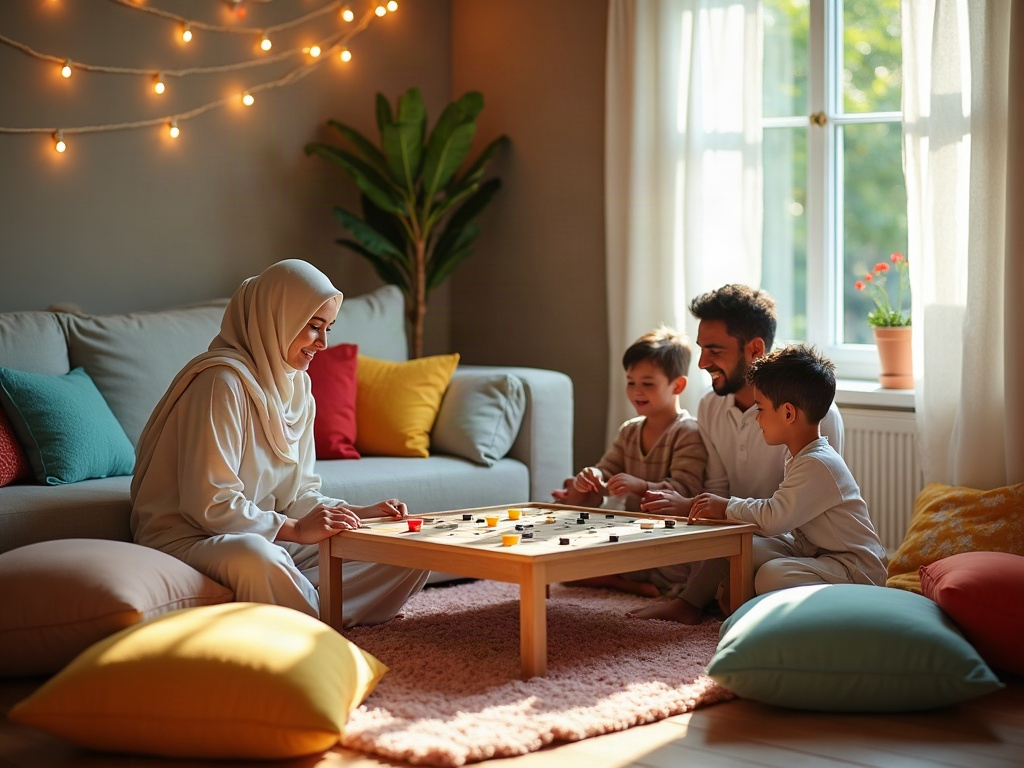
Demonstrating how deliberate environmental staging can successfully replicate the psychological rest of a remote resort without the logistical friction of travel.
© WovenVoyages.com
2. How Can Families Cultivate a True Vacation Vibe at Home?
Families cultivate a true vacation vibe at home by implementing hard mindset shifts, creating dedicated “vacation-only” spaces, and strictly enforcing boundaries against daily work and chores.
To cultivate a true vacation vibe at home, families must consciously establish “vacation mode” rules, create dedicated relaxation zones within their physical house, and plan activities that deliberately diverge from daily obligations.
The “vacation vibe” is an auditory and olfactory experience as much as a visual one. Creating a designated staycation playlist (e.g., tropical, classical) and using a specific scent (e.g., a coconut candle, lavender diffuser) only during the staycation can powerfully trigger a psychological sense of being in a different place.
What mindset shifts are essential for a successful staycation?
A successful staycation requires shifting from a high-stress “to-do” mindset to a permissive “to-be” mindset. This means formally letting go of the pressure to be productive and authorizing the enjoyment of unscheduled moments.
One guide to creating a vacation at home offers 15 easy ideas, all of which begin with the essential mindset shift to prioritize intentionality over default routines.
The most difficult but crucial mindset shift is for parents to release “host guilt”—the feeling that they must constantly entertain. A successful staycation balances planned activities with periods of unstructured, independent play, allowing everyone, including parents, to recharge.
How does creating a dedicated “vacation space” enhance the experience?
A dedicated “vacation space,” like a living room converted into a “resort lounge” or a backyard “campsite,” acts as a hard physical boundary against the everyday environment, signaling to the brain that normal rules are suspended.
For a backyard camping theme, one family found it more manageable to use two dome tents rather than one large one to compartmentalize their dedicated vacation space.
This concept, known in environmental psychology as “behavior setting,” dictates that specific environments cue specific behaviors. By altering the visual cues in a room (e.g., adding floor pillows, board games, and a snack bar), you naturally alter the family’s behavior to become more relaxed and playful.
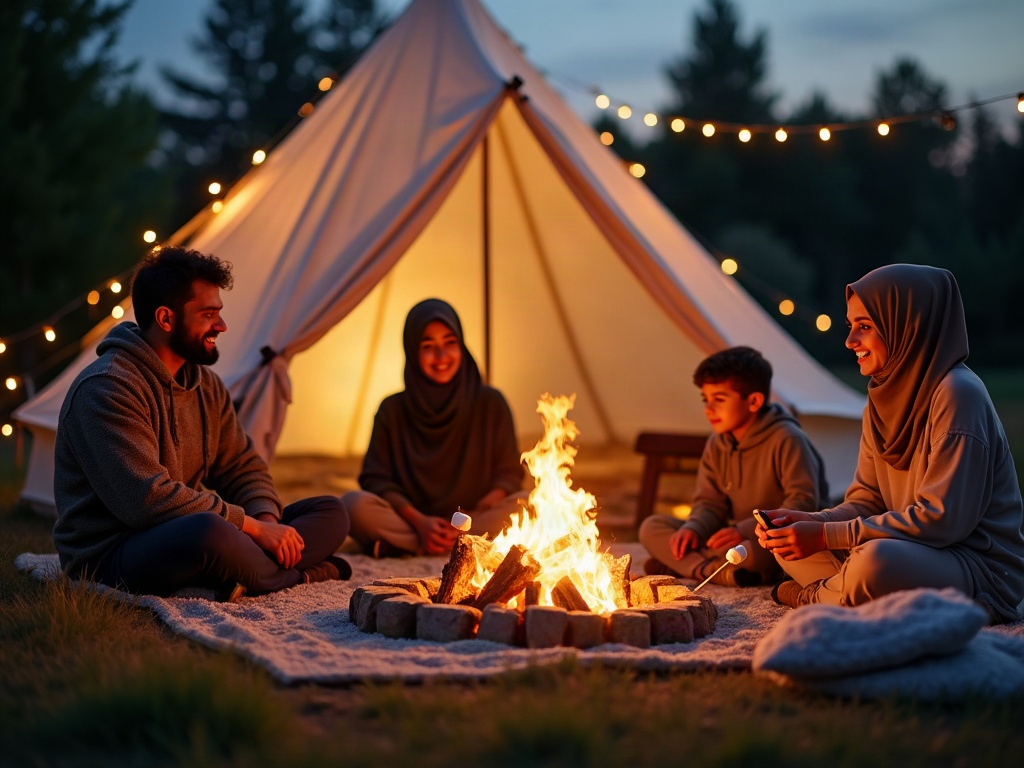
Visualizing how deploying specific auditory and olfactory cues (like diffusers and curated playlists) forces the brain to disengage from standard household anxiety.
© WovenVoyages.com
3. Which Themed Family Staycations Offer the Best Immersive Experiences?
Themed family staycations that offer the best immersive experiences are those built around a rigid, unifying concept—like “Outdoor Adventure,” “Cultural World Tour,” or “Relaxation Resort”—which dictates all subsequent activities, food, and decor choices.
Immersive themed staycations provide a unifying narrative for the week. The most successful themes incorporate a “quest” or “goal” element to sustain engagement.
For an adventure theme, the anchor is a scavenger hunt; for a cultural theme, it’s ‘collecting’ stamps in a homemade passport for each country’s activity; for a wellness theme, it’s completing a ‘relaxation challenge’. This gamification is critical for sustaining pediatric engagement over multiple days.
What are popular outdoor adventure staycation themes for families?
The most successful outdoor themes are backyard camping, executing a “nature documentary” in a local municipal park, and holding a family Olympics with tracked scoring. These themes require minimal equipment but transform familiar spaces into arenas.
To encourage local outdoor adventure, the National Parks in Utah offer free entrance days on specific dates, such as August 25-28, providing high-value anchor events for an adventure theme. For those planning a more traditional outdoor experience, understanding how you balance thrills and safety on family adventure vacations is highly relevant even for localized trips.
A “Bio-Blitz” theme offers an elite educational spin. Families use apps like iNaturalist to formally identify and log as many plant and animal species as possible in their yard or local park, turning a standard walk into a data-driven scientific expedition.
How can families create cultural or educational staycation themes?
To create a cultural theme, rigidly assign a different global destination to each day of the staycation. Families then cook a traditional meal from that nation, consume related media, and take a virtual tour of a famous landmark.
One way to achieve a cultural theme is through cinema; one list of vacation movies includes titles that can virtually transport a family to places like Australia, Brazil, and China (travelandleisure.com). Discover more about how you can make learning fun for kids with educational family vacations.
Enhance the theme by creating a physical “travel trunk” at the start. The trunk contains sealed envelopes for each day, revealing the “destination” and including necessary supplies (e.g., chopsticks for “China Day,” a hieroglyphics chart for “Egypt Day”), massively building anticipation.
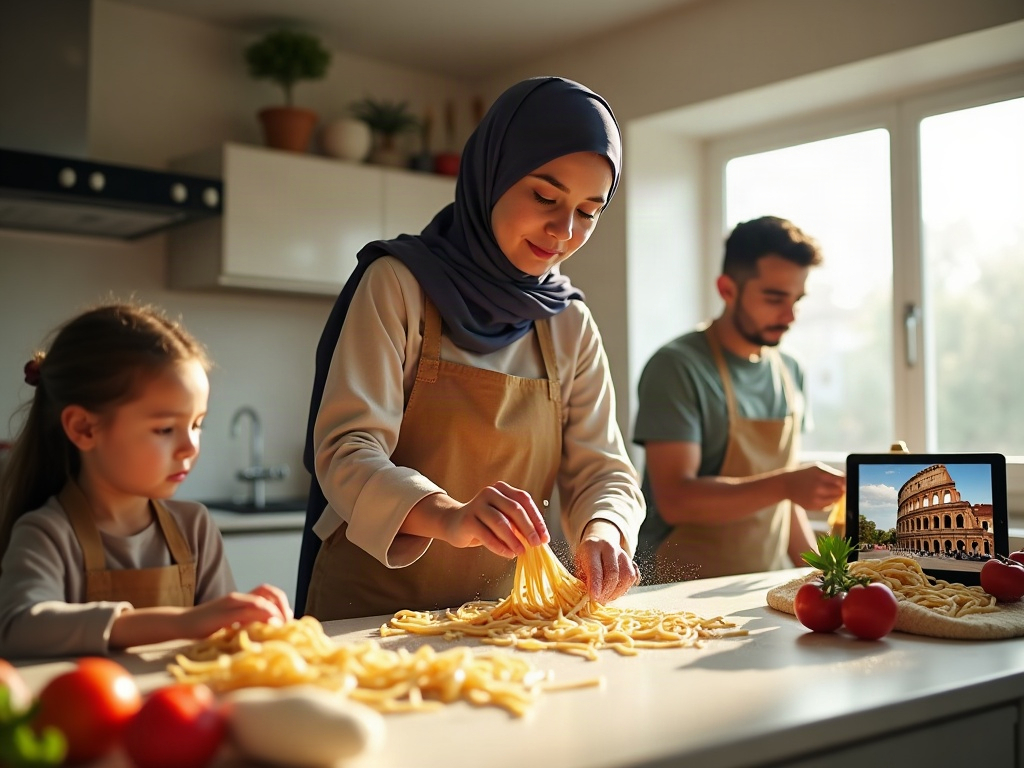
Showcasing how rigidly adhering to a daily theme—from culinary choices to evening activities—creates a cohesive, memorable narrative arc for the week.
© WovenVoyages.com
4. How Do Families Select Activities to Maintain a Vacation Energy?
Families maintain vacation energy by engineering a balanced itinerary that pairs one high-energy “anchor” event with mandated low-key relaxation time, ensuring at least one novel experience is injected daily.
The principle of “Novelty and Ritual” is the operational key. A successful staycation itinerary introduces *novelty* (a new activity or place each day) while simultaneously relying on a simple *ritual* (e.g., a special “vacation breakfast” or an evening family game) to provide comforting predictability.
What indoor activities can sustain a family vacation atmosphere?
To sustain a vacation atmosphere indoors, focus exclusively on highly collaborative and immersive activities. Building an elaborate pillow fort, executing a “Chopped”-style cooking competition, or staging a family talent show transforms the standard home into an event arena.
Deploy an “Escape Room in a Box” or a printable DIY escape room kit. This offers a highly engaging, time-bound activity that feels like a premium commercial outing without leaving the house, forcing high-stakes teamwork.
How can local attractions become part of a family staycation plan?
Integrate local attractions by programming one localized outing each day, treating it as the primary “anchor event.” Visit a local museum you normally bypass, scout a new hiking trail at a state park, or utilize the community pool.
The psychological trick is framing. Instead of “going to the park,” it must be framed as “Operation: Park Explorer,” complete with a physical map and a mission objective. This reframing elevates a mundane local outing into a memorable expedition.
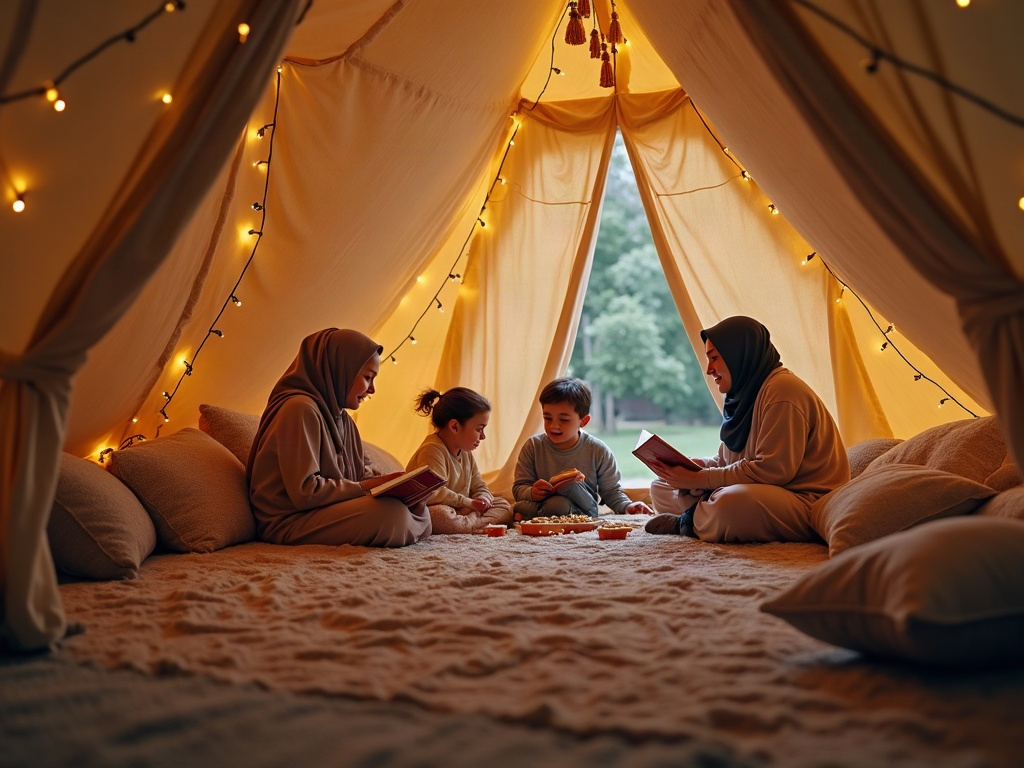
Demonstrating why scheduling only ONE primary “anchor activity” per day prevents exhaustion and allows for the critical “Flex-Time” required for genuine relaxation.
© WovenVoyages.com
5. How Do Families Plan and Structure a Successful Staycation Itinerary?
Families structure a successful staycation itinerary by executing a collaborative “planning summit” with their children, fixing a strict budget, and mapping out a schedule that mandates large blocks of “Flex-Time” around daily anchor events.
The most effective itineraries are highly visual and posted publicly in the home. Using a large whiteboard with columns for each day builds immense anticipation and provides a physical space for kids to check off completed missions, cementing their buy-in.
What roles can children play in planning their family staycation?
Guarantee pediatric engagement by assigning specific, meaningful authority. Allow them to dictate the dinner menu for one night, put them in charge of selecting the evening’s board game, or assign an older child to curate the “vacation playlist.”
A highly effective role for an older child is the “Official Vacation Chronicler.” Equipped with a camera, their designated job is to document the staycation. This provides a sense of official purpose and yields a treasured physical photo album.
How important is setting a staycation budget for families?
A rigid staycation budget is absolutely vital; without the high sunk costs of flights and hotels, it is alarmingly easy to accidentally overspend on premium takeout, rental fees, and local entertainment, negating the financial benefit of staying home.
The most resilient staycation budgets feature a designated “Spontaneity Fund”—a pre-approved cash envelope explicitly set aside for impulse decisions like a passing ice cream truck. This permits in-the-moment joy without violating the macro budget.
6. How to Transform Your Home Environment for an Authentic Vacation Experience?
You transform your home environment by initiating a “Chore Moratorium” and systematically hiding the visual triggers of daily life (laptops, mail, bills) while introducing novel lighting and textiles.
A “Welcome Aboard” ceremony on day one is highly effective. Prepare the “vacation space” in secret, then execute a grand reveal for the kids, presenting them with a small “welcome kit” (sunglasses, a fun cup) to formally signal that the environment has shifted into vacation mode.
How can families minimize household chores during a staycation?
Minimize chores by planning a meal schedule that relies entirely on a BBQ, a slow cooker, or pre-funded takeout. For tidiness, enforce a “power-tidy” approach where the entire family spends exactly 10 minutes cleaning before the evening activity begins, preventing the accumulation of mess.
The “One-Touch Rule” is a mandatory micro-habit. If you pick an item up, you must put it away immediately in its proper place rather than setting it down on a counter. This single rule prevents surface clutter from accumulating and eliminates the need for massive cleaning sessions.

Visually confirming how physically removing the triggers of daily labor (laptops, mail) is required to successfully transition a room into a “vacation hub.”
© WovenVoyages.com
7. How Do Families Overcome Common Challenges During a Staycation?
Families overcome common staycation challenges by proactively managing the “Expectation Hangover,” strictly policing the daily itinerary to ensure flexibility, and deploying pre-planned “boredom busters” when pediatric energy lags.
Institute a “Reset Button” protocol. This is a pre-agreed-upon silly action (like everyone freezing to make a funny face) that any family member can trigger when tensions escalate. It acts as a vital pattern interrupt, breaking negative emotional loops instantly.
What strategies prevent boredom and maintain excitement for children?
Prevent boredom by maintaining an “Activity Jar” filled with slips of paper detailing 5-minute tasks (e.g., “build a fort,” “dance party”). Furthermore, preserve excitement by keeping the afternoon itinerary classified, revealing the next activity just before execution.
The “Activity Countdown Chain” is a highly effective visual tool. Create a paper chain with one link per day, writing the anchor activity on the inside. Tearing off a link each morning provides a tactile, exciting start to the day’s adventure.
How can parents manage expectations for a “perfect” family staycation?
Manage expectations by holding a pre-trip briefing to explicitly define success as “laughing and relaxing together,” purposefully lowering the bar from “flawless execution” and authorizing the family to embrace inevitable imperfections.
A powerful parental technique is to publicly highlight a “favorite imperfect moment” at dinner. Laughing about a collapsed blanket fort or a burned pizza models for children that logistical failures are actually the source of the best memories.
8. Logistics: Family Staycation Execution Checklist
| Checklist Item / Tactic | Status |
|---|---|
| Define Success: Hold a family meeting to align on specific staycation goals (connection vs. relaxation). | ⬜ |
| Theme Selection: Choose a rigid, immersive theme to dictate activities, food, and environmental decor. | ⬜ |
| Minimize Chores: Implement a strict “Chore Moratorium” and map out a low-effort meal plan. | ⬜ |
| Prepare Boredom Busters: Construct an “Activity Jar” for immediate deployment during pediatric downtime. | ⬜ |
9. Frequently Asked Questions (People Also Ask)
What exactly defines a family staycation?
How can families cultivate a true vacation vibe at home?
What are the best strategies to overcome common staycation challenges?
Resolution
A highly successful family staycation is not achieved by accident; it is the direct result of ruthlessly enforcing psychological boundaries between “home as an office” and “home as a resort.”
The ultimate victory condition is achieving a state of complete detachment from your standard operating procedure without ever packing a suitcase. By deploying strict chore moratoriums, radically altering the sensory inputs of your living space, and aggressively protecting daily blocks of unstructured “Flex-Time,” you force your brain to register the experience as a genuine vacation. A staycation is the ultimate logistical hack—providing the maximum restorative benefits of travel while entirely eliminating the financial and physical friction required to achieve them.
The WovenVoyages Standard
At WovenVoyages, we reject the premise that you must cross borders to experience profound family connection. By executing strict Decision Intelligence protocols—weaponizing environmental psychology to alter your home, enforcing hard boundaries against work emails, and utilizing “Anchor Activities” to prevent aimlessness—we equip you to conquer the staycation format. You become the architect of your own leisure, proving that the most restorative vacations are built on intentionality, not geography.