Family Adventure Vacations: How Do You Balance Thrills and Safety?
Table of Contents
An expertly designed family adventure vacation successfully merges high-adrenaline experiences with rigorous, pre-vetted safety protocols. This guide outlines how to maximize perceived risk for excitement while entirely outsourcing objective hazards to professionals.
To understand how active travel fits into the broader landscape of excursions and compare it against lower-intensity formats, it is highly beneficial to explore what the 10 core types of family vacations are.
1. What defines a family adventure vacation with balanced thrills and safety?
The core definition of a balanced family adventure is an itinerary where the excitement stems from the environment and activity, not from a lack of preparation or amateur execution.
A balanced adventure involves activities like guided rafting or canopy walks that create a sense of excitement and challenge (thrills) while being managed by professional operators with proven safety records and appropriate equipment (safety). This balance ensures the experience is memorable for positive reasons, not for accidents.
The key is distinguishing between “perceived risk” and “objective hazard.” A great adventure destination maximizes the feeling of excitement (perceived risk) for kids and parents, while a professional operator works to minimize or eliminate the actual danger (objective hazard).
How do adventure vacations differ for families compared to solo travelers?
Family-focused adventures differ from solo travel due to non-negotiable requirements for age-appropriate activities, comprehensive risk mitigation tailored to all participants, and a shared decision-making process where the pace and choices are calibrated to the least experienced family member.
According to T+L A-List advisor Henley Vazquez, who took her three kids (ages seven to 17) plus her mother on a trip to Kenya, multi-generational active travel has a strong appeal that checks the boxes for everyone when planned correctly.
The critical difference is the “weakest link” dynamic; the entire family’s pace, activity choice, and risk tolerance must be calibrated to the least experienced or youngest member, a factor a solo traveler does not have to consider.
Understanding the specific capabilities of young travelers is crucial for planning; you might want to consider what age is ready for active trips to ensure everyone is prepared.
What makes an adventure activity inherently thrilling yet manageable for all ages?
An activity is made thrilling yet manageable for all ages by combining high sensory engagement with low objective hazard, overseen by professional guides who manage all safety systems.
Manageable adventures are often found on small-group tours, such as National Geographic–Lindblad Expeditions cruises which have fewer than 200 guests, allowing for more controlled and personal experiences with wildlife and nature.
The “manageable” aspect is rooted in control. The best activities are those where the operator retains full control over the safety-critical elements (e.g., belay systems, boat navigation), allowing the family to simply participate and experience the thrill without needing technical expertise.
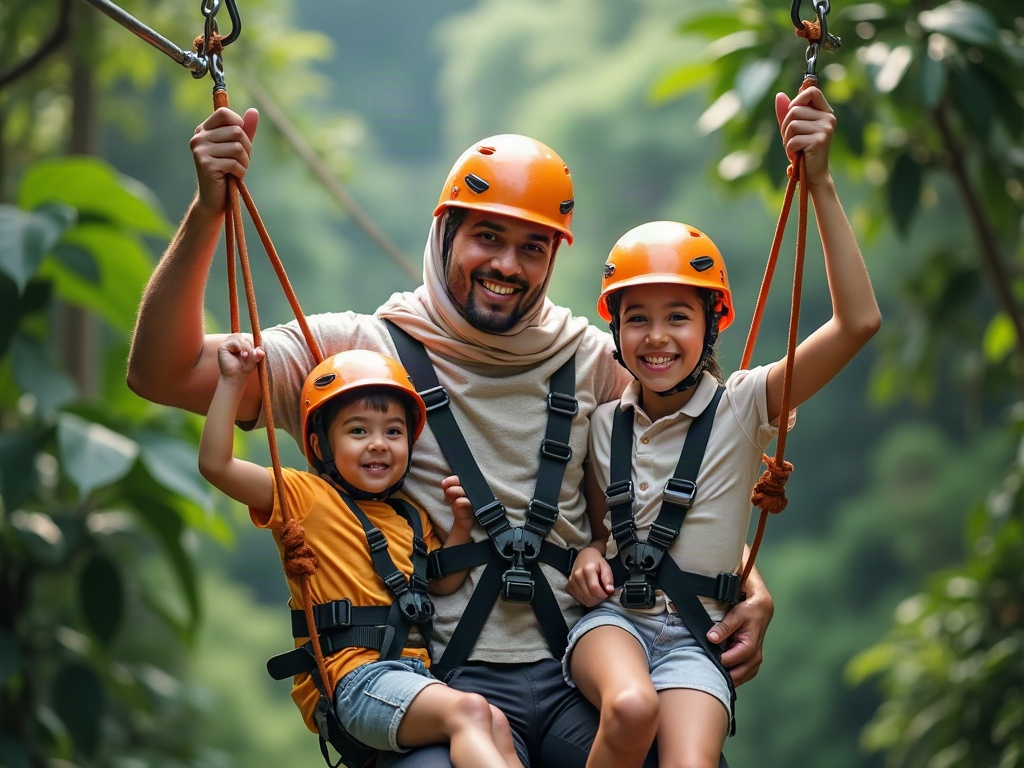
Demonstrating how professional operators manage objective hazards (safety harnesses) while allowing families to experience the thrill of perceived risk (height).
© WovenVoyages.com
2. Why should families consider adventure vacations for growth and bonding?
Families should consider active travel because the shared experience of overcoming novel challenges fosters significant personal growth in children and creates powerful, lasting family bonds.
Active excursions move families out of their comfort zones in a controlled environment, promoting teamwork and shared accomplishment. Facing and solving a small, managed challenge together, like navigating a trail, builds a unique form of trust and connection that daily life often lacks.
This type of travel creates “scaffolded challenges”—difficult but achievable tasks with support. This process is a proven educational and psychological tool for building resilience and self-efficacy in children, turning a vacation into a developmental experience.
To delve deeper into the positive impacts, consider how outdoor travel builds confidence and can profoundly shape a child’s development.
How do shared adventure experiences strengthen family relationships?
Shared active experiences strengthen family relationships by creating a state of “interdependence,” where family members must rely on each other’s support, communication, and encouragement to navigate a new challenge.
Travel advisors describe safaris as “the trip of a lifetime,” where moments like watching giraffes at Nairobi’s Giraffe Manor create powerful, shared memories that bond generations.
Adventure strips away the digital distractions and daily routines that often isolate family members. This forced “unplugged” interaction in a novel environment resets communication patterns and encourages deeper, more present conversation and cooperation.
Author’s Experience
“My family’s white-water rafting trip through the Grand Canyon remains a powerful memory. Seeing my children navigate rapids, relying on each other and our guide, taught them resilience and teamwork far beyond any classroom. Those moments of shared challenge and triumph truly forged an unbreakable bond.”
For those particularly interested in wildlife, exploring how you should prepare for the ultimate wildlife trip can provide valuable insights for such an unforgettable journey.
What life skills can children learn from challenging adventure travel?
Children learn critical life skills from challenging travel, including resilience, problem-solving, risk assessment, and adaptability.
According to an educational travel association, historical destinations are ideal for experiential learning, with Egypt being a must-visit for children ages 10 to 12 who are old enough to appreciate the rich history while exploring ancient tombs.
A key untaught skill is “dynamic risk assessment.” In a controlled setting, a child learns to ask: “Is this ledge slippery? Is that branch stable?” This is a fundamental executive function skill—the ability to assess a situation and modify behavior accordingly—that outdoor experiences teach viscerally.
Beyond traditional outings, the concept of integrating learning and fun is paramount, prompting many to ask how can you make learning fun for kids during their travels.
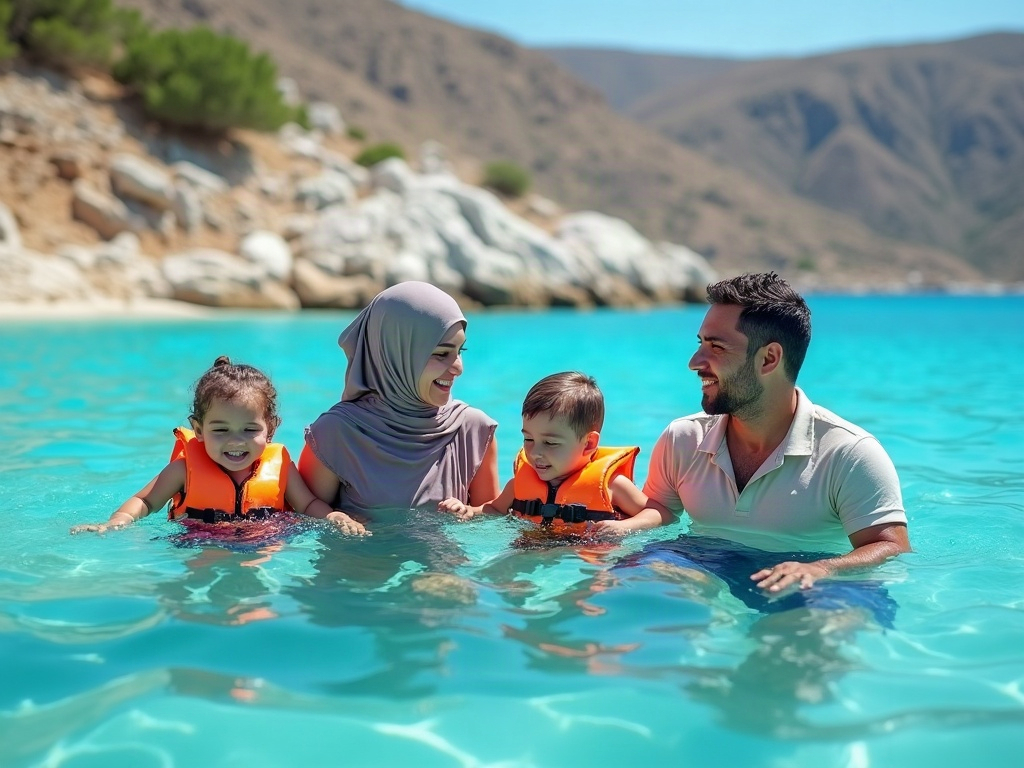
Visualizing how shared physical challenges force communication, teamwork, and an immediate reliance on family members.
© WovenVoyages.com
3. How do families choose adventure activities that match all ages and thrill levels?
Families choose activities that match all ages and thrill levels by first assessing the physical and psychological readiness of their least experienced member, and then filtering destinations and operators based on “soft” versus “hard” adventure classifications.
The process involves creating a family “adventure resume” to honestly evaluate everyone’s fitness and comfort levels. Then, research destinations known for multi-generational activities, like Costa Rica (nature walks and zip-lining) or U.S. National Parks (ranger-led programs and scenic drives).
A superior method is to choose a “hub and spoke” destination. This is a location (the hub, e.g., a town like Moab, Utah, or Queenstown, New Zealand) that offers a wide spectrum of activities (the spokes), allowing the family to split up for different intensity levels during the day and regroup in the evening.
Which low-impact adventure activities suit younger children and first-timers?
Low-impact activities that suit younger children and first-timers include guided nature walks, snorkeling in calm, shallow waters, and short, scenic kayaking on flatwater lakes.
The Greek island of Naxos is considered highly family-friendly, featuring more than 30 beaches with many calm, sandy stretches in the south that are ideal for younger children. Safe Kids Worldwide provides additional water safety tips.
The key is to select activities with high “engagement-to-effort” ratios. For example, a tide pooling walk on a beach is low effort but high engagement, as kids are constantly discovering new creatures. This keeps them excited without exhausting them.
What moderate adventure options safely engage teens and pre-teens?
Moderate options that safely engage teens and pre-teens include introductory whitewater rafting on Class II-III rapids, professionally guided zip-line canopy tours, and beginner-level rock climbing with a certified instructor.
For teens seeking high-thrill activities, PortAventura Park in Spain, located less than two hours from Barcelona, features Red Force, the fastest roller coaster in Europe which travels at 112 miles per hour.
The psychological component for this age group is crucial. The ideal activity is one they can “master” in a single session (e.g., successfully navigating a rapid as a team), providing an immediate, powerful confidence boost that is highly shareable on social media, a key motivator for this demographic.
How to assess an adventure operator’s safety record and family suitability?
Families assess an operator’s safety record and suitability by verifying their certifications, reading recent multi-generational reviews, and directly questioning them about their guide-to-guest ratios and emergency action plans.
As a first step in assessing risk, families can consult the US Department of State website, which categorizes every country into one of four Travel Advisory Levels based on safety and security information.
The most telling question to ask an operator is: “Can you describe a time you had to manage a minor incident (like a twisted ankle or a scared child) on a family tour?” A professional operator will have a clear, reassuring, and non-dramatic answer, demonstrating experience and preparedness. A vague answer is a major red flag.
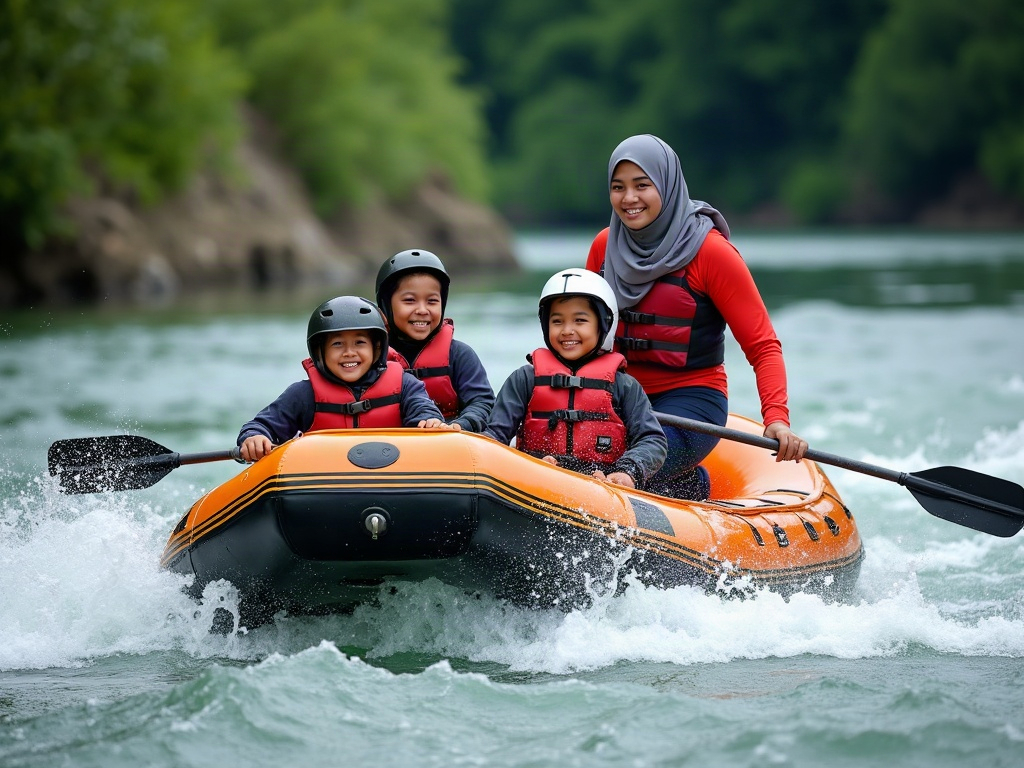
Showcasing the ‘hub and spoke’ concept: utilizing a central location to permit different family members to engage at their own risk tolerance level.
© WovenVoyages.com
4. How can families proactively plan for safety on adventure vacations?
Families can proactively plan for safety by assembling a destination-specific first-aid kit, conducting thorough research into local risks, and ensuring every family member has appropriate gear and fitness levels.
Proactive safety planning involves three key areas: health (getting necessary vaccinations and packing medications), information (researching local wildlife, weather patterns, and political stability), and equipment (purchasing or renting proper footwear, clothing, and safety gear). This preparation minimizes surprises and maximizes the family’s ability to handle issues independently.
Go beyond a generic first-aid kit. A “proactive” family builds a “scenario-based” medical kit. For a tropical hiking trip, this means adding extra blister treatment, insect repellent with DEET, and broad-spectrum antibiotics (prescribed by a travel doctor), not just standard bandages.
What critical safety gear and first-aid provisions do families need for adventure travel?
The critical safety gear families need for active travel includes layered clothing, proper footwear, and activity-specific items like helmets or PFDs, while first-aid provisions must include wound care, allergy medications, and pain relievers.
One of the most significant preventable risks in family travel is drowning, which is the leading cause of death for children aged 1-4, making personal flotation devices critical gear for water-based activities.
Do not just pack a pre-made kit. Families must “deputize” a parent as the trip’s ‘medic’ who not only carries the kit but also inventories it, knows how to use every item, and has downloaded offline first-aid guides to their phone.
When considering specific items, families often ask should you rent or buy family gear to optimize their packing and budget.
How to research destination-specific risks relevant to family adventures?
Families research destination-specific risks by consulting government travel advisories, CDC health recommendations, and recent travel blogs or forums focused on family travel to that region.
A primary source for risk assessment is the U.S. Department of State, which assigns one of four travel advisory levels to each country.
Official sources are excellent for macro risks (e.g., political instability), but for micro risks relevant to families (e.g., “Is the path to that waterfall too slippery for a 6-year-old?”), the best sources are often detailed family travel blogs or forum posts from the last 6-12 months.
When should families consider professional guides or certified instructors?
Families must consider a professional guide or certified instructor whenever an activity involves technical skills, specialized equipment, or navigation in an unfamiliar environment with objective hazards.
An expedition cruise with a line like Explora Journeys organizes family-friendly excursions with educators who teach about caring for the sea and planet.
The guide’s value is not just safety, but “information gain.” A great guide transforms a simple walk into an educational experience, pointing out flora, fauna, and local history that a family would otherwise miss, significantly increasing the trip’s value and engagement for children.
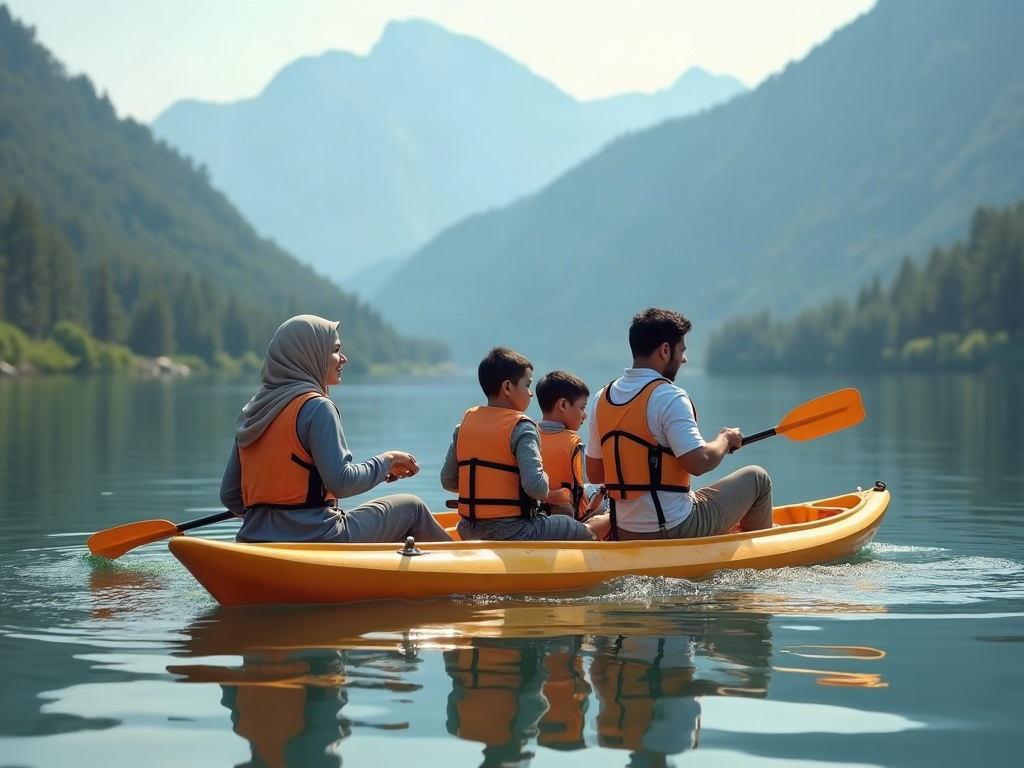
A visualization of an advanced, destination-specific medical kit required for mitigating risks during remote excursions.
© WovenVoyages.com
5. What essential safety protocols should families follow during adventure experiences?
The essential safety protocols families must follow include constant adult supervision, clear communication of rules to children, and adherence to all instructions given by professional guides.
During any high-energy activity, families must establish a “safety first” culture. This means always using provided safety gear correctly, never deviating from marked trails, and having a pre-arranged plan for what to do if a child gets separated or needs help.
Implement a “buddy system” not just for kids, but for the whole family. Additionally, use a “challenge by choice” philosophy, where no family member, especially a child, is ever pressured or forced to do an activity they are genuinely scared of. This builds trust and prevents panic-induced accidents.
How to communicate safety guidelines effectively to children of different ages?
To communicate safety guidelines effectively, parents must tailor their language and concepts to the child’s developmental stage, using simple, concrete rules for young children and explaining the “why” behind rules for teens.
Gamify the rules. For younger kids, turn it into a game like “I Spy a Trail Marker” to keep them on the path, or call them your “Safety Deputy” and give them the job of making sure everyone has their water bottle. This gives them a sense of ownership over the rules.
What role does supervision play in ensuring children’s safety during adventure activities?
Supervision plays the critical role of providing an immediate physical and emotional safety net, with the type of supervision—direct versus observational—depending on the child’s age and the activity’s risk level.
According to Safe Kids Worldwide, drowning is the leading cause of death from preventable injuries among children aged 1 to 4, making direct supervision near water a non-negotiable safety protocol.
The role of supervision extends beyond just watching. It involves proactive “environmental scanning”—constantly looking ahead on a trail for potential hazards (e.g., loose rocks, a steep drop-off) and redirecting the child *before* they encounter the danger.
How to practice responsible wilderness ethics as a family?
Families practice responsible ethics by adhering to the core principles of the Leave No Trace framework, which provide a simple and effective guide for minimizing environmental impact.
In places like Yellowstone National Park, often called “America’s Serengeti” for its abundant wildlife, families can participate in junior naturalist programs that teach responsible ethics and conservation.
Frame the Leave No Trace principles in a kid-friendly way. For example, “Pack it in, pack it out” becomes “We leave only footprints.” “Respect wildlife” becomes “We are visitors in the animals’ home.” This makes the concepts memorable and easy for children to grasp and follow.
6. How do families mitigate common risks and respond to unforeseen events on adventure trips?
Families mitigate common risks and respond to unforeseen events by having a pre-established emergency action plan, carrying a well-stocked first-aid kit, and holding comprehensive travel insurance.
Mitigation is achieved through preparation—knowing basic first-aid, having emergency contacts saved offline, and carrying a GPS device. Response is about staying calm, following the pre-made plan, and prioritizing the injured or lost person’s immediate safety before seeking external help.
The most critical and overlooked component of response is a designated “incident commander”—one parent who takes the lead in an emergency. This prevents panicked, conflicting decisions and ensures a calm, logical response to a stressful situation. The other parent’s role is to manage the other children and provide support.
What emergency action plans should families have in place for various scenarios?
Families should have emergency action plans for at least three core scenarios: getting lost, a medical emergency (minor and major), and a natural event like a sudden storm.
As part of an emergency plan, specialized evacuation services like Medjet can provide an emergency medical cash advance of up to $60,000 if cash is demanded upfront for treatment.
The plan should be written down and saved on multiple phones (and a waterproof hard copy). For the “getting lost” scenario, equip each child with a loud whistle and an ID tag with contact information but NOT the child’s name, to prevent a stranger from feigning familiarity.
How to manage minor injuries or illness in remote adventure settings?
Families manage minor injuries and illnesses in remote settings by using a comprehensive first-aid kit to clean and dress wounds, treat common ailments like dehydration or blisters, and making an informed decision about whether to continue the activity.
Basic travel medical insurance for a family of four on a 10-day trip can be as affordable as $45, providing a crucial safety net for managing unexpected minor illnesses or injuries.
The critical skill is not just treatment, but assessment. Use the “SOAP” method (Subjective, Objective, Assessment, Plan) taught in wilderness medicine. Ask how they feel (S), look at the injury (O), decide if it’s serious (A), and make a plan to treat and monitor or evacuate (P). This structured approach prevents panic.
What role does comprehensive travel insurance play in family adventure safety?
Comprehensive travel insurance plays the critical role of a financial safety net, ensuring that a medical emergency or trip cancellation does not result in a catastrophic financial loss for the family.
For ultimate peace of mind, families can get a medical evacuation membership from a provider like Medjet; an annual plan for a family of four costs approximately $575.
The most overlooked clause to check is the “search and rescue” benefit. Many policies cover medical evacuation *after* you’ve been found, but do not cover the cost of the search itself. For families engaging in remote hiking or backcountry activities, this specific coverage is essential.
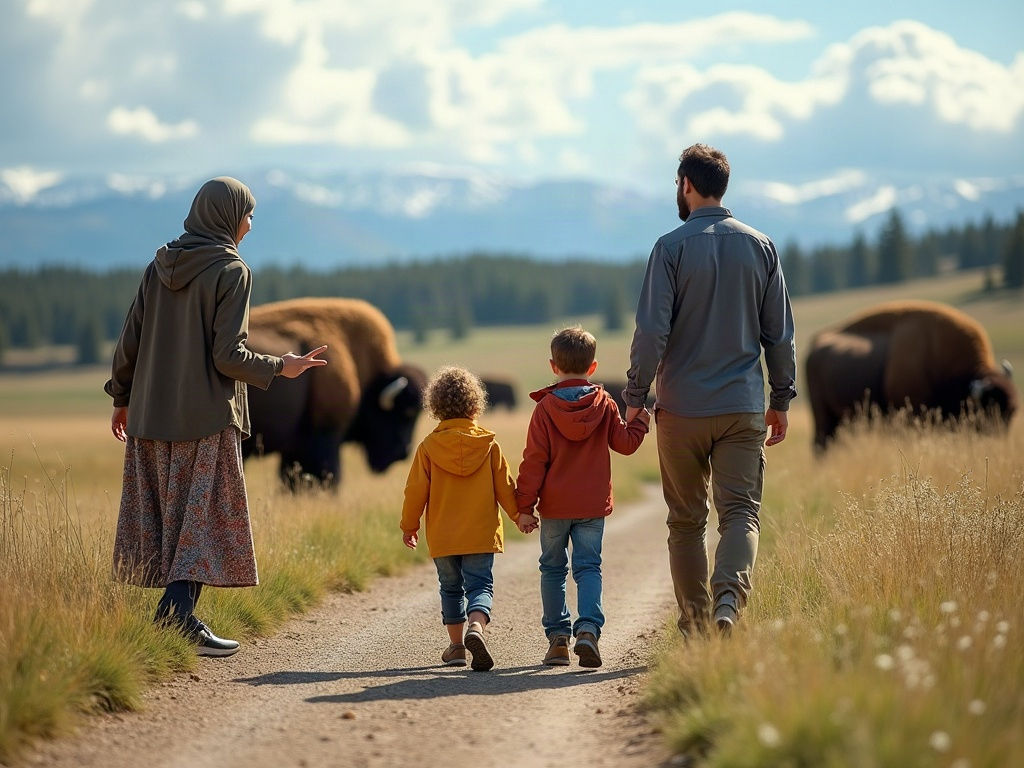
Demonstrating how pre-assigning an “incident commander” role prevents parental panic and ensures swift, logical response to unforeseen events.
© WovenVoyages.com
7. Logistics: Family Adventure Vacation Preparation Checklist
| Checklist Item / Tactic | Status |
|---|---|
| Assess Readiness: Create a family “adventure resume” evaluating physical and psychological fitness before booking. | ⬜ |
| Vet Operators: Verify guide certifications, emergency action plans, and multi-generational reviews. | ⬜ |
| Build Scenario Kit: Upgrade from a generic first-aid kit to a destination-specific medical loadout. | ⬜ |
| Assign Roles: Establish a designated “incident commander” among parents for emergency response. | ⬜ |
Resolution
Ultimately, balancing thrills and safety on high-intensity outings is achieved through a deliberate process of proactive planning, careful vetting of operators, and open communication within the family. The perfect experience is not about eliminating all risk, but about intelligently managing it.
By choosing age-appropriate challenges, preparing for contingencies with scenario-based medical kits, and prioritizing a culture of safety (like the “challenge by choice” philosophy), you can provide your family with an unforgettable experience of growth and bonding. The balance is dynamic, not static. As your family gains experience and your children grow, your definition of “balance” will shift towards more challenging adventures. The frameworks for planning and safety discussed in this guide, however, remain constant.
The WovenVoyages Standard
At WovenVoyages, we reject the premise that active travel must involve unacceptable risk. By deploying rigorous Decision Intelligence—from vetting operator emergency protocols to implementing the “incident commander” strategy—we equip you to execute flawless, high-thrill excursions. We ensure you select environments engineered specifically to absorb the stress of multi-generational dynamics, allowing you to actually experience the growth and bonding you paid for.