Family Road Trip Vacations: What Is the Best Way to Enjoy the Journey?
Table of Contents
The absolute best way to enjoy a family road trip vacation is to shift your psychological focus from merely surviving transit to actively designing the drive itself as the core, shared vacation experience.
The unique reward of this vacation type comes from the shared experience of navigating the open road, which creates a concentrated environment for bonding. This contrasts with other travel where the journey is merely a stressful means to an end, creating richer, more integrated memories. To explore the full spectrum of family travel options and see how vehicular travel compares, delve into the 10 types of family vacations.
1. What makes a family road trip vacation unique and rewarding?
A family road trip vacation is uniquely rewarding because it merges the transit logistics directly with the destination, creating a continuous, mobile adventure that forces unparalleled family connection and shared discovery.
The unique reward of a road trip vacation comes from the shared experience of navigating the open road, which creates a concentrated environment for bonding. This contrasts with other travel where the journey is merely a means to an end, creating richer, more integrated memories.
Beyond just “seeing the country,” road trip vacations create a “narrative arc” for the family’s vacation story. Every unexpected stop, shared meal, and map-reading session becomes a chapter co-authored by the family, embedding memories more deeply than a passive resort stay.
**”Slow Travel”** is an approach to travel that emphasizes connection to local people, cultures, food, and music, which is an inherent benefit of the road trip format.
Choose a family road trip vacation if your primary vacation goal is strengthening family connections and creating shared stories, rather than simply relaxing at a single destination.
- **Shared Adventure:** Forges new paths and experiences together.
- **Unmatched Flexibility:** Instills a sense of freedom and adaptability.
- **Deep-Rooted Memories:** Amplifies the emotional impact of the journey.

Illustrating the fundamental difference of a road trip vacation: the transit itself serves as the primary mechanism for family bonding and scenic discovery.
© WovenVoyages.com
How do family road trip vacations strengthen family bonds and memories?
Family road trip vacations strengthen family bonds by removing the family unit from its routine environment and placing it into a shared, goal-oriented experience that necessitates teamwork and communication.
Road trip vacations foster bonds by minimizing external distractions within the vehicle’s confined space, compelling families to engage through conversation, games, and shared problem-solving. This extended, uninterrupted time together is the primary catalyst for creating strong “core memories” and deepening relationships. Research suggests that heightened emotions and adrenaline, often experienced during travel challenges or exciting discoveries, can draw family members closer together, and recounting shared adventures helps solidify those memories (whatsupmoms.com).
The “vehicle as a bubble” creates a temporary, self-contained social unit. This isolation from outside social pressures and digital routines allows for deeper, more authentic conversations that are often difficult to achieve at home, transforming travel time into quality connection.
Abdullahi Azaam Adan
“As a parent who has embarked on countless road trips, I’ve found that the unexpected detours—like breaking down outside a diner in Arizona—and the car singalongs are often the most cherished memories, far surpassing any perfectly planned activity.”

Demonstrating how the physical confinement of a vehicle strips away external distractions and forces active, face-to-face family bonding during the vacation.
© WovenVoyages.com
What level of flexibility do family road trip vacations offer compared to other vacations?
Family road trip vacations offer the highest possible level of flexibility among all vacation types, providing complete autonomy over the daily schedule, transit route, pace, and activities.
A road trip vacation allows for unparalleled adaptability, enabling spontaneous detours to newly discovered attractions or extended stays without fixed schedules. This complete control over itinerary, pace, and activities makes it far more responsive to real-time family needs and interests than rigid alternatives like cruises or pre-booked tours. For optimal enjoyment and flexibility, a recommended sweet spot for daily drive time is about three hours, which leaves ample time to play and explore the destination before dinner and bed (australia.com).
This flexibility extends to “micro-adjustments” based on the family’s mood. A tired toddler can mean an early stop for the day, or a burst of energy can fuel a longer drive to a new destination—a level of responsiveness impossible with pre-booked tours and schedules.
Road Trip Flexibility
Offers complete autonomy over schedule, route, pace, and activities; enables spontaneous detours; responsive to real-time needs.
Fixed Vacation Constraints
Rigid schedules; pre-booked tours and activities limit spontaneity; less adaptable to changing moods or interests.

Visually contrasting the infinite modifiability of a vehicular route against the immovable logistical constraints of a commercial cruise ship.
© WovenVoyages.com
For those considering alternatives with different flexibility levels, insights into how to choose the perfect ship and itinerary for family cruise vacations can offer a useful contrast.
2. Why are family road trip vacations an ideal choice for diverse family needs?
Family road trip vacations are an ideal choice for diverse family needs because the format is inherently modular, allowing planners to rapidly adjust pacing, budget levels, and physical activities to suit completely different generational capacities.
Road trip vacations offer a highly adaptable framework that can be tailored to various family compositions, ages, and budgets. This means families with toddlers can plan shorter drive times, while those with teenagers can incorporate more adventurous activities, making it a universally appealing and personalized vacation choice.
The road trip vacation is a uniquely “scalable” vacation. It can be a budget-friendly camping trip in a state park or a luxury journey between five-star hotels, all using the same fundamental travel method. This scalability in cost and comfort is a key reason for its broad appeal.
**”Intergenerational Travel”** is a trip that includes multiple generations (e.g., children, parents, and grandparents), a format for which road trip vacations are exceptionally well-suited due to shared experiences and flexible pacing.
Choose a road trip vacation if your family includes a wide range of ages or interests, as it’s the easiest vacation type to tailor to individual needs simultaneously without extensive compromise.
Which family structures and age groups benefit most from road tripping?
While all families can enjoy road tripping, families with young children (who require massive gear logistics) and multi-generational groups (who require highly variable pacing) benefit the most from the environmental control that a personal vehicle provides.
Families with babies and toddlers benefit immensely from the ability to transport extensive gear and stop instantly for needs. Teenagers thrive with roles in navigation and activity selection. Multi-generational groups appreciate the flexible pacing and shared experiences, making road trip vacations particularly advantageous for these specific demographics. As a rule, all children under the age of seven must be in an approved car seat or restraint according to national safety guidelines, and adult seat belts are designed for a minimum height of 145 centimeters (57 inches) (parent.com).
For families with children on the autism spectrum or with sensory sensitivities, the road trip vacation is often the most manageable form of travel. It provides a consistent, predictable home base (the car) and allows parents to fully control the environment to avoid overstimulation, reducing stress significantly.
Families with Toddlers
Benefit from ample luggage space for gear and the ability to make frequent, unscheduled stops. Your own vehicle is superior to flying due to luggage capacity and spontaneity.
Families with Teenagers
Thrive with roles in navigation and activity selection, fostering responsibility and engagement.
Multi-Generational Families
Appreciate flexible pacing and shared experiences, accommodating highly varied biological energy levels and interests.

Demonstrating how a personal vehicle allows families to seamlessly combine the physical requirements of both grandparents and toddlers during their vacation.
© WovenVoyages.com
How do road trip vacations accommodate varying interests and preferences within a family?
Road trip vacations accommodate varying family interests by design, allowing the physical itinerary to be a composite mosaic of different geographical stops that cater sequentially to each member without requiring group compromise at every single location.
The primary method for accommodating diverse interests on a road trip vacation is structuring the route to fulfill different preferences on alternate days or even within the same day. For example, a morning hike for one family member can be followed by an afternoon museum visit for another, ensuring everyone’s desires are met. To prevent squabbles and give children a sense of agency, assigning a specific task to each child, such as navigation, photography, or snack management, significantly enhances engagement and cooperation (roadtrippers.com).
A highly successful strategy is the “One Pick Each” rule, where every family member, including the youngest, gets to choose one “must-do” activity or stop along the route. This guarantees buy-in and ensures everyone feels their interests are valued, transforming potential conflict into a collaborative plan.
Concrete Itinerary Example
Day 1: Mom’s Pick (Art Museum) → Day 2: Son’s Pick (Go-Kart Track) → Day 3: Dad’s Pick (Historic Battlefield). The journey between these “anchor” activities is where spontaneous, shared discoveries happen.
Visualizing how an extended route can sequentially string together the highly varied interests of different family members throughout the vacation.
© WovenVoyages.com
While road trip vacations offer immense flexibility, other forms of travel, such as maximizing fun and saving time on a theme park vacation, might better suit families seeking a more contained and heavily structured experience.
3. How do you choose the right style of family road trip vacation for maximum enjoyment?
Choosing the right style of family road trip vacation for maximum enjoyment requires auditing your family’s tolerance for logistical uncertainty and selecting a framework—either heavily structured or entirely spontaneous—that prevents parental anxiety.
The core decision for choosing a road trip vacation style lies between a highly structured, destination-oriented trip with pre-booked stops and a spontaneous, exploratory trip focused on the journey. A family’s preference for predictability versus adventure will determine the most suitable style for maximum enjoyment and minimal stress.
The most successful trips often use a “Hub and Spoke” model. Families establish a base in a vacation rental for 3-4 days (the hub) and take shorter day trips (the spokes) from there. This model balances the desire for exploration with the need for a stable, comfortable home base, drastically reducing the fatigue of unpacking every night.
**”Destination-Driven”** vs. **”Journey-Driven”** are two primary road trip philosophies. Destination-Driven uses the car to get between major points of interest (e.g., National Park hopping), while Journey-Driven focuses on the experience of the road itself (e.g., driving all of Route 66).
Choose a “Destination-Driven” style if your family has a specific, non-negotiable bucket list. Choose a “Journey-Driven” style if your family thrives on spontaneity and discovering the unknown.
Fully Planned Road Trip Vacation
**Pros:** Predictability, security of accommodations, ability to book popular attractions in advance.
**Cons:** Less room for spontaneity, massive potential stress if weather or traffic derails the timeline.
Fully Spontaneous Road Trip Vacation
**Pros:** Maximum freedom and discovery, responsive to real-time interests.
**Cons:** High risk of no lodging, daily decision fatigue for parents. This approach is generally high-risk for families with young children.
Should families prioritize a structured itinerary or spontaneous exploration for their vacation?
Families must prioritize a hybrid approach—specifically the “80/20 Rule”—for their family road trip vacation, combining a structured spine of confirmed lodgings with massive gaps of unallocated time to prevent daily decision fatigue.
The optimal strategy for a family road trip vacation is booking nightly accommodations and one anchor activity per day in advance, especially during peak season. This creates a reliable framework, within which families can leave the rest of the day open for spontaneous discoveries, balancing predictability with adventure and preventing decision fatigue. A successful structure can involve planning for three long-drive days of about seven hours each, alternating with a couple of days with only three to five hours of drive time, ensuring a sustainable pace.
The “80/20 Rule” of road trip planning is highly effective: plan 20% of your trip (the big things: where you sleep, a major park visit) and leave 80% of your time flexible. This prevents panic regarding sleeping arrangements while still allowing for magical, unplanned stops.
What themes and focuses enhance the family road trip vacation experience?
Applying a rigid theme to a family road trip vacation—such as tracing historical migration trails or auditing regional BBQ styles—drastically enhances the experience by eliminating arguments over where to stop next.
Themed road trip vacations elevate a simple journey into a memorable quest by providing a unifying narrative and purpose. For example, a “Civil War History” trip connects battlefield visits, while a “Taco Tour” of the Southwest turns every meal into an event, making the overall experience more engaging and cohesive for families. One notable family trip included stops at diverse, oddball landmarks such as the Seven Magic Mountains in Nevada, a hot springs resort with alligators, local fish farms, and numerous rock and gem stores, showcasing the breadth of possible unique themes (mamasmiles.com).
A powerful, engaging theme for families with school-aged children is “State Capital Bagging,” where the goal is to visit the capitol building in each state you pass through. These buildings are often architecturally stunning, free to visit, and offer excellent, concise history lessons, providing a great educational component.
Compelling Road Trip Themes
- National Park Quest: Focus on collecting passport stamps at multiple federal parks.
- Major League Ballpark Tour: Ideal for sports fans, executing a regional loop of baseball stadiums.
- State Capital Bagging: An excellent educational framework demanding visits to state capitol buildings.
A theme makes it easier to say “no” to distractions that don’t fit the vacation’s narrative, drastically reducing parental decision fatigue.
4. How can families select the best vehicle for comfort and safety on a family road trip vacation?
Families must select the best vehicle for a family road trip vacation by prioritizing extreme interior cargo capacity and “hip-to-hip” back seat dimensions over exterior aesthetics or off-road capabilities.
The best vehicle for a family road trip vacation prioritizes passenger comfort, ample luggage space, and critical safety features. For most families of four or more, a minivan or a large three-row SUV offers the optimal combination, with the final choice depending on specific needs like all-wheel drive, easy access, or fuel economy.
The critical, often-overlooked metric when evaluating vehicles for families is “hip-to-hip” space in the second row. When using two car seats, this measurement determines if a third passenger (or even a slim adult) can sit comfortably between them, a crucial factor for family harmony that standard legroom specifications don’t adequately capture.
Choose a Minivan if easy access for loading children and gear via sliding doors is your top priority. Choose a three-row SUV if you require all-wheel-drive capability for mountain passes or winter routes.
| Category | Minivan | SUV | Recreational Vehicle (RV) |
|---|---|---|---|
| Best for | Families prioritizing sliding-door access and maximal interior cubic volume. | Families requiring AWD/4WD for traversing challenging weather or dirt routes. | Families demanding consistent, on-board living space and integrated bathroom facilities. |
| Key Pros | Low step-in height; exceptional fuel economy; unmatched car seat installation ease. | Higher towing capacity for boats/trailers; superior off-road clearance. | Zero daily unpacking; built-in kitchen suppresses daily food expenditure. |
| Key Cons | Lacks rugged clearance for true off-grid trails. | Poorer fuel efficiency; fixed third-row seating often limits cargo space severely. | Massive fuel consumption; cannot navigate standard urban parking structures. |
What essential vehicle features improve comfort for long family road trip vacations?
To survive a family road trip vacation, a vehicle must possess multi-zone climate control, heavy-duty integrated sunshades, and a 120V AC household power outlet.
For long family road trip vacations, critical comfort-enhancing vehicle features include multi-zone climate control, ample USB charging ports, and built-in rear-seat entertainment. Additionally, amenities like integrated sunshades and ventilated front seats transform the travel experience by reducing common complaints and parental fatigue. Bringing personal comfort items from home, such as familiar pillows and soft blankets, can make a significant difference for children, helping them to sleep more soundly in the car.
A feature that provides outsized value is a 120V AC power outlet (a standard household plug) in the vehicle. This allows for the charging of non-USB devices like laptops, breast pumps, or bottle warmers, providing a level of rapid problem-solving that a simple USB port cannot match during extended travel.
When does an RV or camper offer a better family road trip vacation experience than a car?
An RV provides a vastly superior experience specifically when a family absolutely refuses to unpack luggage nightly or requires immediate, private bathroom access for recently potty-trained toddlers.
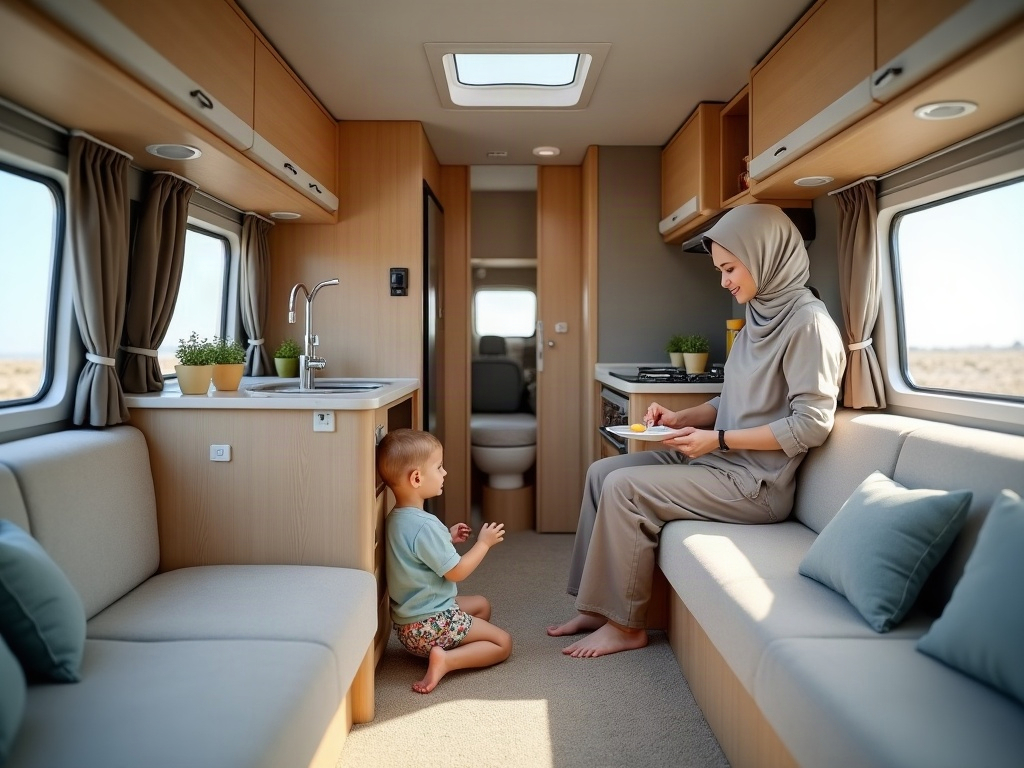
An RV or camper provides a superior family road trip vacation experience when prioritizing a consistent living space, personal bathroom access, and a dedicated kitchen. It’s ideal for remote national park visits, families with very young children needing frequent stops, or those with strict dietary restrictions, as the self-contained unit often outweighs the downsides of larger vehicle operation.
The key tipping point for many families choosing an Recreational Vehicle is the “bathroom factor.” For families with young children, the immediate availability of a private, clean bathroom eliminates a massive source of travel stress and is often the single most compelling reason to abandon standard cars.
For an in-depth guide on selecting the optimal choice, explore which cars and RVs are best for family travel. Beyond vehicle features, ensuring you have what families need for long drives is crucial for maintaining sanity throughout the vacation.
5. Logistics: Execution Checklist
| Checklist Item / Tactic | Status |
|---|---|
| Execute Hybrid Planning: Book only key structural anchors (hotels, major park entry) and leave the transit routes highly flexible. | ⬜ |
| Vehicle Audit: Verify the presence of 120V AC outlets and multi-zone climate control before committing to a rental contract. | ⬜ |
| Enforce ‘One Pick Each’: Force every family member to declare their absolute top priority stop to guarantee itinerary buy-in. | ⬜ |
Resolution
A truly successful family road trip vacation is not defined by perfectly executing a rigid map; it is defined by building a logistical framework strong enough to support massive, spontaneous deviations.
By applying the “80/20 Rule” of planning, strictly enforcing the “One Pick Each” doctrine to secure family-wide buy-in, and prioritizing vehicles engineered for passenger comfort over exterior styling, you neutralize the standard frictions of vehicular travel. The goal is to cultivate **”Travel Resiliency”**—the ability to look at a flat tire or a rained-out picnic not as a disaster, but as the moment your family is forced to work together to write the most memorable chapter of the vacation. The vehicle is simply the tool; the shared journey is the actual destination.
The WovenVoyages Standard
At WovenVoyages, we reject the premise that long hours in a car must result in parental exhaustion. By deploying strategic frameworks—like the “Hub and Spoke” model and rigorous vehicle audits—families can effectively convert grueling transit into the ultimate inter-generational bonding experience. We equip you to view the open road not as an obstacle, but as a meticulously engineered environment perfectly suited to balance complex adult desires with immediate pediatric needs.
One Response