Safest place for passports during a family vacation?
Table of Contents
The safest place for your family’s passports during a vacation is locked inside a high-quality hotel room safe when you are out exploring, or securely concealed in an under-clothing money belt worn by an adult during transit days.
Securing passports is essential for family travel because a passport is the only universally accepted proof of identity and citizenship abroad, and its loss can instantly derail an entire vacation. For families, a lost or stolen passport isn’t just an inconvenience; it’s a major logistical crisis that halts plans and requires immediate, stressful interaction with foreign authorities and embassies. Losing multiple family passports at once multiplies this disruption, potentially leaving a family stranded.
. Why is securing passports essential for family travel?
Securing passports is essential because replacing a family’s primary travel documents abroad involves costly fees, complicated embassy visits, and massive disruptions to your carefully planned itinerary.
What common risks threaten family passports abroad?
The most common risks that threaten family passports abroad are opportunistic theft like pickpocketing, accidental loss in transit, and physical damage from elements like water or dirt.
Theft, particularly in crowded tourist areas, is a primary risk. Accidental loss often occurs when passports are left behind in hotel rooms, taxis, or restaurants, while damage from spills or weather can render the document completely invalid for border crossings. According to travel security experts, passports remain one of the most highly targeted items for thieves worldwide.
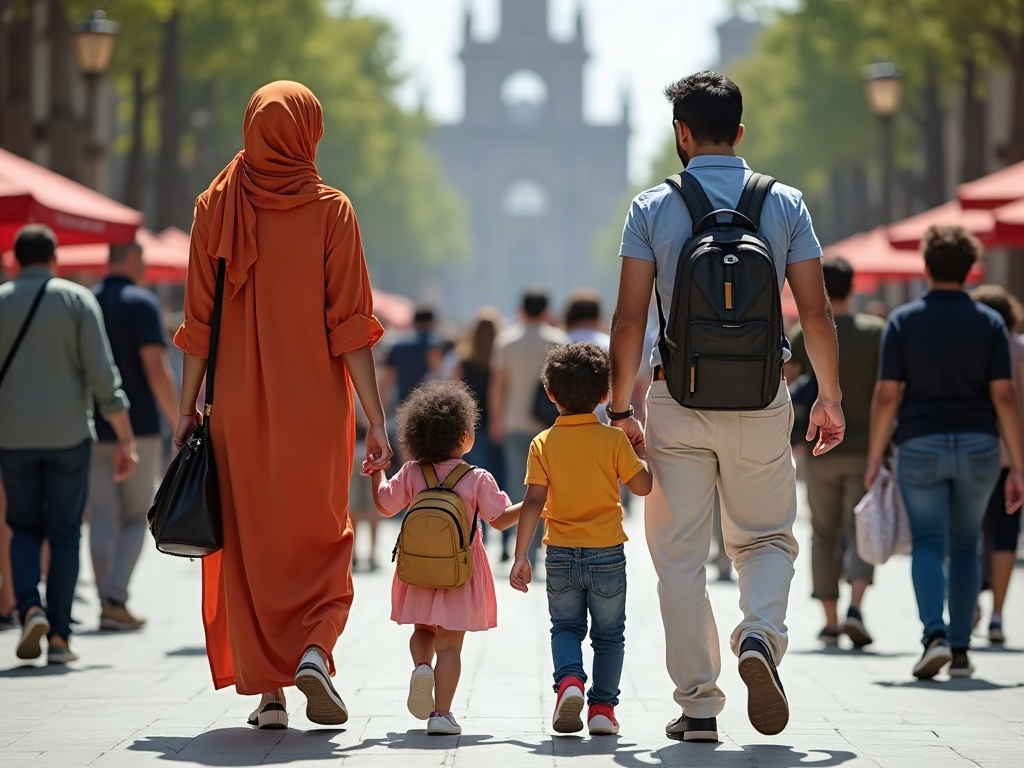
For families, a unique risk is “misplacement by proxy,” where a well-meaning child or partner puts the passports in an “unsafe” safe place. Another is the increased target profile of a distracted family unit navigating a busy train station or market.
 © WovenVoyages.com
Author’s Experience
“My family once nearly missed a flight in Rome because we couldn’t find our passports. It was a frantic 30 minutes of searching every bag. That scare taught me the importance of having a designated, consistent spot for all documents, a lesson I now apply to every trip.”
How does passport loss impact a family vacation?
Passport loss impacts a family vacation by causing an immediate halt to travel plans, forcing you to spend valuable time and money securing emergency replacements at an embassy instead of enjoying your trip.
A lost passport means a family cannot cross borders, board international flights, or sometimes even check into new hotels. The process involves filing police reports, traveling to a consulate, paying for new photos and fees, and waiting for an emergency document.
The impact is asymmetrical for families. If only one parent’s passport is lost, it can force a difficult decision: does one parent and the children proceed while the other stays behind to manage the embassy paperwork?
To help mitigate the significant financial and logistical impacts of such emergencies, exploring How to Plan Travel Insurance for a Family Vacation is highly recommended.
. What are the safest options for storing family passports while traveling?
The safest options for storing family passports while traveling involve a layered approach, typically utilizing a secure location in your accommodation combined with a secure on-body solution for transit days.
The two primary safe options are a high-quality hotel room safe for when you are out on daily excursions and a concealed, body-worn pouch or belt for days when you are in transit between locations. The absolute safest choice depends heavily on the security of your specific accommodation and the nature of your daily activities.
How do hotel safes compare to personal security for passports?
Hotel safes offer excellent protection from opportunistic room theft while you are out, whereas personal, body-worn security solutions provide continuous protection against pickpockets when you must carry the documents on your person.
A hotel safe is secure against most theft but remains slightly vulnerable to internal staff issues or a master-code override. A personal, body-worn carrier offers superior protection on the street but requires constant vigilance from the parent wearing it. Many veteran travelers rely on hotel safes for years without issue, confirming they are generally a very reliable option.
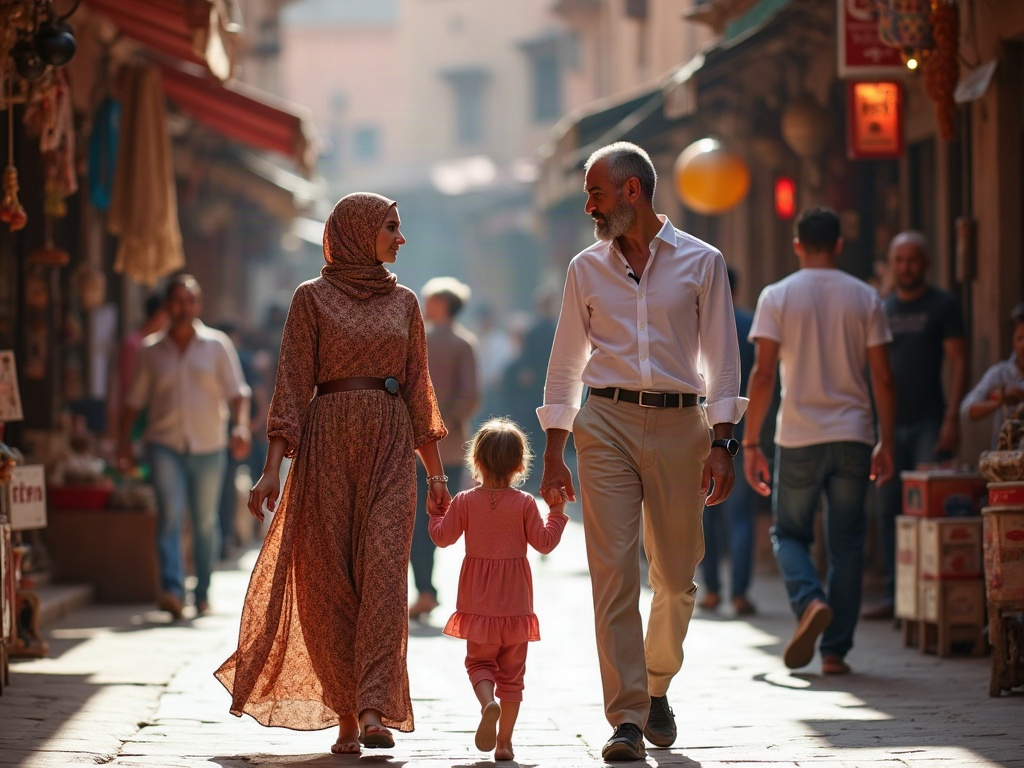
The “illusion of security” is a key differentiator. A hotel safe *feels* secure, but you are outsourcing trust to the hotel’s staff. A money belt’s security is entirely within your own physical control. For a family in a vacation rental (e.g., Airbnb) with no safe, a portable travel safe becomes a necessary hybrid solution.
 © WovenVoyages.com
Which body-worn solutions best protect passports during excursions?
The body-worn solutions that best protect passports during excursions are those designed for deep concealment under your clothing, such as low-profile money belts and neck wallets.
Money belts worn around the waist and under the pants are the top-tier choice for anti-theft security because they are physically difficult for a thief to access without being noticed. Neck wallets, worn beneath a shirt, are a close second. Specialized anti-theft backpacks with secure internal passport pockets are a secondary option for parents who must carry larger family items.
The best solution is activity-dependent. For a beach day in the Caribbean where you need to swim, a heavy-duty waterproof pouch is essential. For a day of museum-hopping in Paris, a concealed money belt is superior. The cardinal rule is that the solution must not be visible to onlookers.
 © WovenVoyages.com
. How to choose the best passport security method for your family’s trip?
Choosing the best passport security method for your family’s trip requires evaluating your destination’s specific risk profile, your type of accommodation, and your planned daily activities.
The best method is a customized plan, not a single product. A family staying at a high-security resort in Japan may rely entirely on the in-room safe, while a family backpacking through Southeast Asia will need a robust, multi-layered on-body and split-storage strategy.
What factors should influence your passport storage decisions?
The primary factors that must influence your passport storage decisions are the security level of your accommodation, the crime rate of your destination, your daily activity level, and your family size.
A hotel with 24/7 security and modern electronic safes warrants more trust than a private vacation rental with a simple key lock. A trip to a highly monitored city requires different precautions than navigating a bustling European transit hub known for opportunistic theft.
A critical factor is the “passport necessity” for the day’s activities. In many countries, you are legally required to carry ID, but a color photocopy may suffice for casual daily outings. Knowing the local laws for your specific destination (e.g., Italy vs. Thailand) determines if leaving the passport in a safe is legally viable.
 © WovenVoyages.com
When should you consider splitting up family passports?
You should always consider splitting up family passports between the responsible adults in your group to mitigate the catastrophic impact if one person’s bag is stolen or lost.
Splitting passports is most critical during high-risk transit phases, such as in airports, train stations, or on public transport. For example, one parent could carry their own passport and one child’s, while the other parent carries theirs and the other child’s, each in a separate, secure body carrier.
The “rule of two” is a simple but effective family travel security principle. Never have all critical documents (passports, credit cards, phones) stored in one bag or with one person. Splitting them up ensures that even if one adult is targeted, the family retains a backup set of resources to manage the crisis.
This decision-making process is a vital component of ensuring comprehensive family vacation safety throughout your journey.
. How can families proactively protect passports before and during their vacation?
Families can proactively protect passports by creating comprehensive digital and physical backups before the trip and establishing rigorous security routines during travel.
Before leaving, you must make multiple photocopies and save encrypted digital copies of every family member’s passport. During the trip, this involves using a layered security system and performing consistent visual checks to ensure all documents are accounted for.
What digital and physical backups should you prepare for passports?
For each family member, you should prepare two physical photocopies of the passport data page and at least two different secure digital copies stored on your phone or in the cloud.
Keep one set of photocopies with you but completely separate from the actual passports, and leave another set with a trusted contact back home. For digital copies, a common recommendation is to email them to yourself and save them to a secure cloud service in a password-protected folder.
The most advanced digital backup method involves using a dedicated, encrypted password manager app. These apps have specific templates where you can safely store passport numbers, expiry dates, and the image file itself, all behind strong authentication, offering much better security than a simple camera roll photo.
 © WovenVoyages.com
How to secure passports in your accommodation during a family trip?
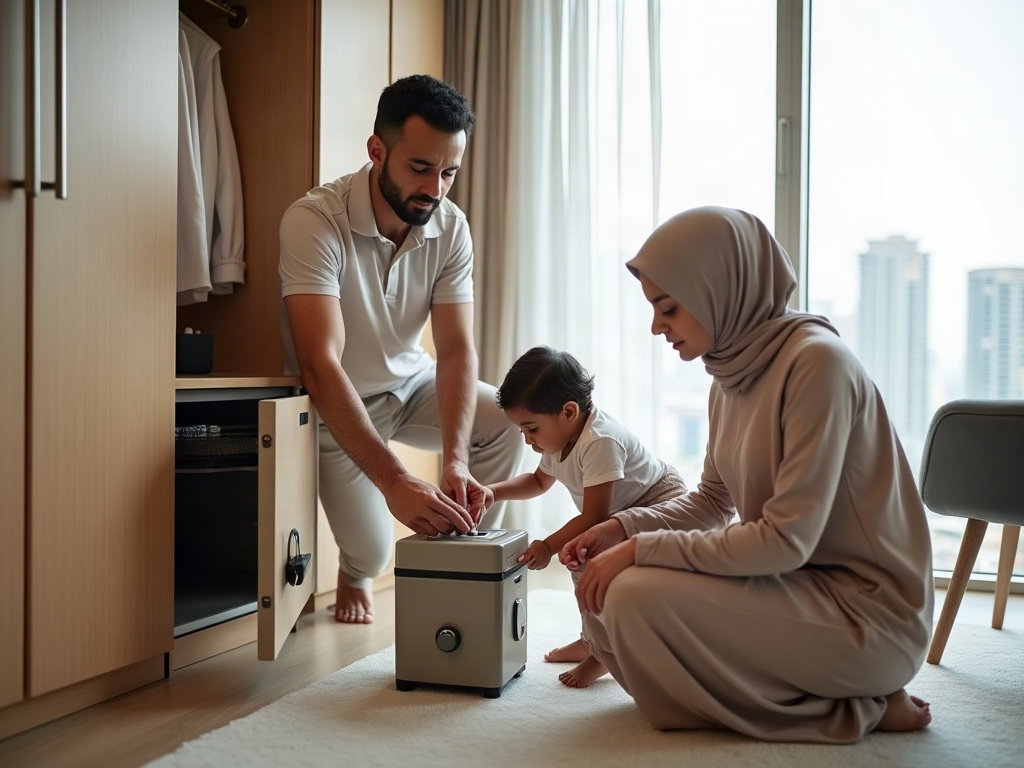
The best way to secure passports in your accommodation is by using the in-room electronic safe correctly, or if one isn’t available, locking them inside a portable travel safe secured to heavy furniture.
If using a hotel safe, always set your own unique code and double-check that the door is firmly locked before leaving the room. In a vacation rental without a built-in safe, hiding the passports in a non-obvious, padlocked piece of luggage is a basic alternative, but a dedicated portable safe is vastly superior.
When using a hotel safe, perform a “factory reset check.” Many cheap safes can be opened with a default manufacturer code. Test simple codes like 000000 or 123456 after you’ve locked your valuables. If the safe opens, it is not secure, and you should rely on your own portable lockbox or speak to management.
To understand more about the role of digital copies for insurance claims and general security, read our guide on How Do You Store Travel Documents Digitally for a Family Vacation?
. What daily habits improve passport safety for families on the go?
The most effective daily habit for improving passport safety is establishing a strict “document check” routine that is performed every single time your family leaves or returns to your accommodation.
This routine involves a designated adult physically confirming the location of all family passports—either feeling them secured in an on-body carrier or visually verifying they are locked in the room safe. This twice-daily check prevents passports from simply being left behind.
How to carry passports securely during daily outings and transit?
To carry passports securely during daily outings and transit, you must use a concealed, body-worn pouch and never place them in an outer jacket pocket, an easily accessible backpack, or a loose handbag.
On busy transit days, all passports should be secured on the person of responsible adults in a money belt worn completely under clothing. For daily outings where local laws require you to carry them, the same strict concealment rule applies. Never access your concealed pouch in public; step into a private restroom if you need to retrieve a document.
The “decoy wallet” strategy is an expert-level habit. Carry a cheap, secondary wallet with a small amount of local currency and some expired cards in your normal pocket. In the rare event of a mugging, this is what you hand over, while your true valuables and passports remain safely concealed underneath your clothes.
As you consider what to carry on your person, it’s also helpful to think about What belongs in family vacation carry-on bags?
What security checks should you perform before leaving your accommodation?
Before leaving your accommodation for the day or checking out permanently, you must perform a deliberate “passport check” and a “full room sweep” as your final security measures.
The passport check involves physically touching the secure carrier or visually verifying the locked safe. The full room sweep involves physically checking the most common places where items are forgotten: the safe (check that it is completely empty), under the beds, in all bedside drawers, and the bathroom counter.
A pro-level check involves taking a quick photo of the empty, open safe before you pull the hotel room door shut for the last time. This serves as a strong mental confirmation and, in a dispute with the hotel over a “left” item, provides a time-stamped record that you cleared the safe.
. What common mistakes jeopardize family passport safety?
The most common mistake that jeopardizes family passport safety is treating a standard backpack or purse as a secure location for storage while navigating crowded tourist areas.
Placing passports in an easily accessible bag is a major error, as it provides a prime target for pickpockets. Other frequent mistakes include leaving passports in a rental car glovebox, handing them to young children to hold, or becoming complacent about daily security checks after a few days on the trip.
How can families avoid common passport theft scenarios?
Families can avoid common passport theft scenarios by maintaining strict situational awareness in high-risk environments and being extremely wary of distraction techniques used by coordinated pickpockets.
In crowded public transport or markets, always wear your backpack on your front and keep a hand securely on it. At outdoor cafes, never hang a bag containing valuables on the back of your chair. Be highly suspicious of anyone who “accidentally” spills something on you or creates a loud commotion near you.
Thieves often work in teams and specifically target families because parents are naturally distracted by watching their children. A common scenario is the “helpful local” at a complex transit ticket machine. While they appear to help you navigate the menu, their partner is quietly accessing your bag. The rule is to be wary of any unsolicited help in transit hubs.
What are the dangers of leaving passports in unsecured locations?
The primary danger of leaving passports in any unsecured location is that it exposes them not only to immediate physical theft but also to the serious, long-term threat of identity fraud.
A passport left in a rental car or sitting inside a beach bag while you swim is an incredibly easy target for a quick smash-and-grab thief. Beyond the immediate loss of the document, a stolen passport contains enough sensitive personal information to be sold and utilized for identity theft.
The danger extends long past the end of the vacation. Unlike a stolen credit card which can be quickly frozen and cancelled, you cannot instantly “cancel” the personal data printed on a stolen passport. This data can be exploited weeks or months later to commit crimes in your name.
. How should a family respond if passports are lost or stolen abroad?
If your family’s passports are lost or stolen abroad, you must immediately secure your physical safety, report the loss to local law enforcement, and then urgently contact the nearest U.S. embassy or consulate.
Your first priority is to move your family to a safe, stable location, such as your hotel room. From there, you will need to file a formal police report—which is often required for the replacement process—and then begin navigating the application for emergency travel documents with consular services.
What immediate steps should you take after discovering a missing passport?
The very first step to take after discovering a missing passport is to conduct one final, methodical search of your immediate area and bags; if it is truly gone, you must report the loss to local police and your government’s state department immediately.
Filing a police report provides official documentation of the theft, which is usually necessary for embassy processing. Reporting the loss to the U.S. Department of State (typically via an online form like DS-64) is crucial to officially invalidate the document and prevent its fraudulent use by thieves.
Before you even call the police, pull up the backup digital copies on your phone. This gives you the exact passport number, issue date, and spelling of the name, all of which will be required for the police report and the embassy forms, dramatically speeding up the bureaucratic process.
How to obtain emergency travel documents for a family?
To obtain emergency travel documents for a family, all members must appear in person at the nearest U.S. embassy or consulate during business hours, presenting the required forms, proof of identity, and new passport photos.
You will need to provide a completed passport application (Form DS-11), proof of U.S. citizenship (this is where your digital backups or photocopies are vital), the local police report, and payment for the expedited fees. The consular officer will then issue a limited-validity emergency passport that allows you to fly home.
For families, a major hurdle is proving the parental relationship for minor children, especially if only one parent is present at the embassy. A clear digital copy of the child’s original birth certificate is critical here. This reinforces why having digital backups of *all* essential family civil documents is a vital travel strategy.
. Logistics: Passport Security Checklist
| Checklist Item / Tactic | Status |
|---|---|
| PRE-TRIP PREPARATION: Create physical and encrypted digital backups of all family passports. | ⬜ |
| DAILY SECURITY: Choose appropriate storage (verified hotel safe or concealed body-worn carrier) based on the day’s activity. | ⬜ |
| EMERGENCY PLAN: Know the steps for reporting lost/stolen passports to local police and locating the nearest U.S. embassy. | ⬜ |
Frequently Asked Questions
Is it safer to carry my passport or leave it in the hotel safe?
What is the best way to carry multiple family passports?
Do I need an RFID-blocking wallet for my passport?
What should I do first if our passports are stolen abroad?
Are digital copies of passports actually useful?
Resolution
Ensuring family passport safety boils down to a simple, three-part framework: proactive preparation, layered daily security, and a clear emergency plan. By creating robust backups before you leave, adopting a layered security strategy of in-room safes and on-body carriers, and knowing the exact steps to take in an emergency, you transform passport security from a source of anxiety into a manageable routine.
If you prefer a little help creating customized lists or planning itineraries that keep your documents safe while on the go, check out our interactive tools like PackPal for personalized packing lists, or SmartGuide for expert location-based planning.
The ultimate goal of this entire system is not to create fear, but to build confidence. By managing the known risks with a professional, systematic approach, you free up your mental energy to focus on what matters: enjoying the vacation experience with your family.