When do you need emergency evacuation coverage on a family vacation?
Table of Contents
You need emergency evacuation coverage on a family vacation when traveling to remote locations, developing nations, or participating in adventure activities where local medical care is insufficient to handle a severe injury or illness.
Ensuring your family’s safety on faily vacation goes beyond packing a first-aid kit; it involves strategically planning for low-probability, high-impact events with tools like emergency evacuation coverage. This guide is an essential part of your comprehensive approach to How to Plan a Family Vacation Step by Step, focusing on critical safety nets.
1. What is emergency evacuation coverage for a family vacation?
Emergency evacuation coverage for a family vacation is a specialized insurance product or membership service that arranges and pays for your transport from an inadequate medical facility to one that can provide appropriate care for your condition.
This coverage ensures that if you or a family member suffers a serious injury or illness on family vacation, you will be moved to a hospital capable of treating you. It is designed to bridge the gap when local medical services are insufficient, covering costs that can easily reach six figures.
The critical distinction is “medical necessity” vs. “hospital of choice.” Basic travel insurance policies evacuate only when medically necessary, often to the *nearest* adequate facility, which may still be foreign. Premium standalone plans often allow evacuation to your *home* hospital, a crucial benefit for family support and continuity of care.
Medical Escort: A trained medical professional (nurse, paramedic, or doctor) who accompanies a patient during transport on a commercial flight to provide medical monitoring and care, a common component of less critical evacuations.
How does medical evacuation coverage differ from repatriation?
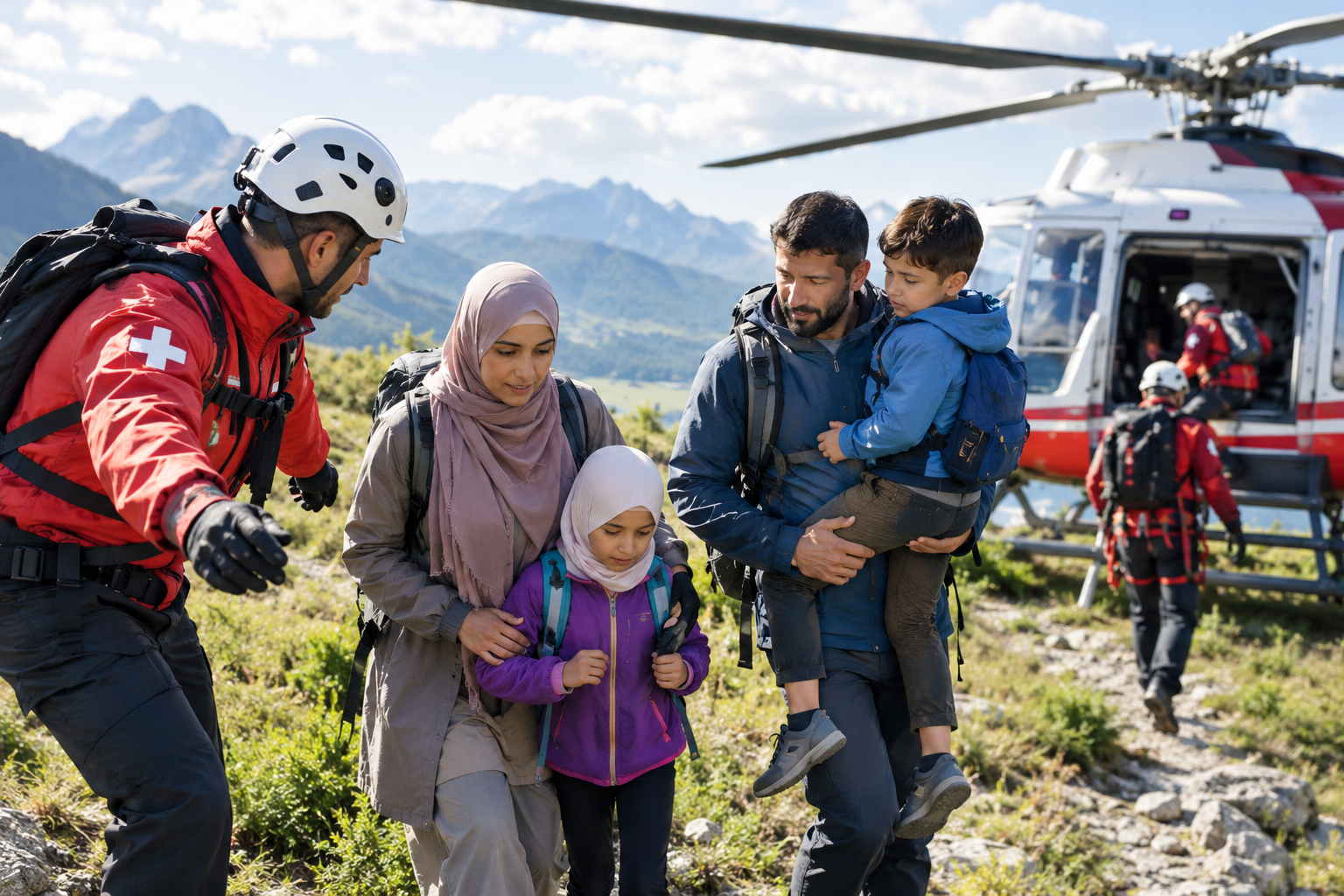
Medical evacuation coverage differs from repatriation primarily by its destination: medical evacuation transports you to the nearest *adequate* medical facility, while repatriation transports you back to your *home country*.
Some policies include a separate limit for repatriation of remains, generally between $10,000 to $20,000, which is typically sufficient coverage for that specific service. (Squaremouth)
A critical gap exists when a policy offers only repatriation. If you are seriously ill in a remote country, a repatriation-only policy will not move you to a better hospital in a neighboring country; it only triggers once you’re stable enough for the long journey home, which could be days or weeks later.
Author’s Experience
“As a parent who has faced unexpected travel challenges, I’ve personally experienced the relief that comprehensive planning brings. Understanding these nuances isn’t just theory; it’s about safeguarding your family’s journey, transforming potential crises into manageable situations with expert support.”
What specific types of emergencies does evacuation coverage address?

Emergency evacuation coverage addresses a range of critical situations where local medical care is insufficient, including severe traumatic injuries, acute medical events like heart attacks or strokes, and complications from natural disasters or political unrest.
The cost of a medical evacuation from Africa to the U.S. can range from $125,000 to $300,000, illustrating the extreme financial risk in remote regions. (IMGlobal)
Beyond medical crises, some premium policies include “political evacuation” and “natural disaster evacuation” services. This means if a civil war breaks out or a volcano erupts, the service will arrange and pay for your family’s transport out of the danger zone to a safe location, a benefit not found in standard travel insurance.
- Severe Injury: Such as a fall during a hike resulting in a compound fracture far from an orthopedic surgeon.
- Sudden Illness: Like a child’s severe asthma attack in a country with high air pollution.
- Natural Disaster: Covering transport if a hurricane or earthquake makes a region unsafe.
- Political Unrest: Arranging evacuation if a civil war or significant unrest makes staying in a country dangerous.
2. Why is emergency evacuation coverage important for family vacations?
Emergency evacuation coverage is critically important for family vacations because it acts as the ultimate financial and logistical safeguard against a catastrophic medical event abroad.
This coverage is vital because the cost of a single medical air transport can bankrupt a family, and the logistics of arranging such a transport during a crisis are overwhelming. It transfers both the immense financial risk and the complex logistical burden to experts.
How can a lack of evacuation coverage impact family finances during an emergency?
A lack of emergency evacuation coverage can impact family finances catastrophically, exposing them to the full, unsubsidized cost of medical transport, which routinely ranges from $25,000 to over $250,000.
According to the CDC, a medical air evacuation can cost anywhere from $25,000 to more than $250,000, depending on the location and medical needs.
The cost isn’t just the flight. It includes the hiring of a specialized medical team, expensive in-flight medical equipment, international landing and permit fees, ground ambulance coordination at both ends, and often a medical director’s time to coordinate the logistics. A single international evacuation is a complex, expensive logistical operation, not just a plane ticket.
What peace of mind does evacuation coverage offer parents traveling with children?
For parents traveling with children, emergency evacuation coverage offers the profound peace of mind that comes from knowing you have a guaranteed plan to access first-world medical care, no matter where your travels take you.
Industry surveys indicate that almost one in three U.S. travelers consider emergency medical coverage their top priority when buying travel insurance, highlighting its importance for peace of mind. (InsureMyTrip)
The peace of mind is rooted in empowerment. Instead of feeling helpless and forced to accept potentially substandard care, parents with this coverage are empowered. They have the ability to make a single phone call and activate a global network of medical and aviation experts whose only job is to get their family to safety. It’s the difference between being a victim of circumstance and being in control of the solution.
Emergency evacuation coverage is a key component of How Do You Plan for Family Vacation Safety, providing a crucial layer of protection.
3. When do you truly need emergency evacuation coverage for your vacation?
You truly need emergency evacuation coverage for your family vacation when your travel plans involve a combination of destination, activities, or traveler health profiles that elevate your risk beyond what is manageable by local resources.
This coverage becomes essential if you are traveling to a remote location, a developing country with questionable healthcare, participating in adventure activities, or traveling with anyone with a pre-existing medical condition. If any of these factors apply, the need shifts from a “nice-to-have” to a “must-have.”
A often-overlooked factor is “medical density.” A trip to a major European city like Paris has high medical density (many world-class hospitals). A trip to a remote Indonesian island has low medical density. The need for evacuation coverage is inversely proportional to the medical density of your destination.
Golden Hour: The critical period of time, typically the first 60 minutes after a traumatic injury, during which there is the highest likelihood that prompt medical and surgical treatment will prevent death. Evacuation coverage is designed to get you to a facility that can honor the golden hour.
What vacation destinations increase the need for evacuation coverage?

Vacation destinations that significantly increase the need for emergency evacuation coverage include remote areas, developing countries with inconsistent medical standards, and any location geographically isolated from advanced medical care.
As an example of cost from a distant, though developed, location, an air ambulance transfer from the United Arab Emirates (UAE) to the U.S. can cost approximately $186,200.
The need isn’t just about the quality of care, but the *specialty* of care. A clean, modern clinic in a developing country may handle basic issues but will be unequipped for a pediatric cardiac emergency, a severe burn, or a complex orthopedic surgery. The destination risk is about its inability to handle a *complex, specialized* family medical emergency.
- Remote Islands: A five-star resort on a remote private island, far from major hospitals.
- Mountainous Regions: A trip to the Scottish Highlands or a multi-day trek in Peru, where medical help is hours away.
- Developing Nations: Countries where medical infrastructure may be inconsistent or lacking specialized care.
- Cruise Ships: While floating, they are inherently remote from advanced medical facilities.
- Vast Remote Areas: Even in “safe” countries, like the Australian Outback or the Amazon basin.
Which adventure activities on a family trip require emergency evacuation protection?
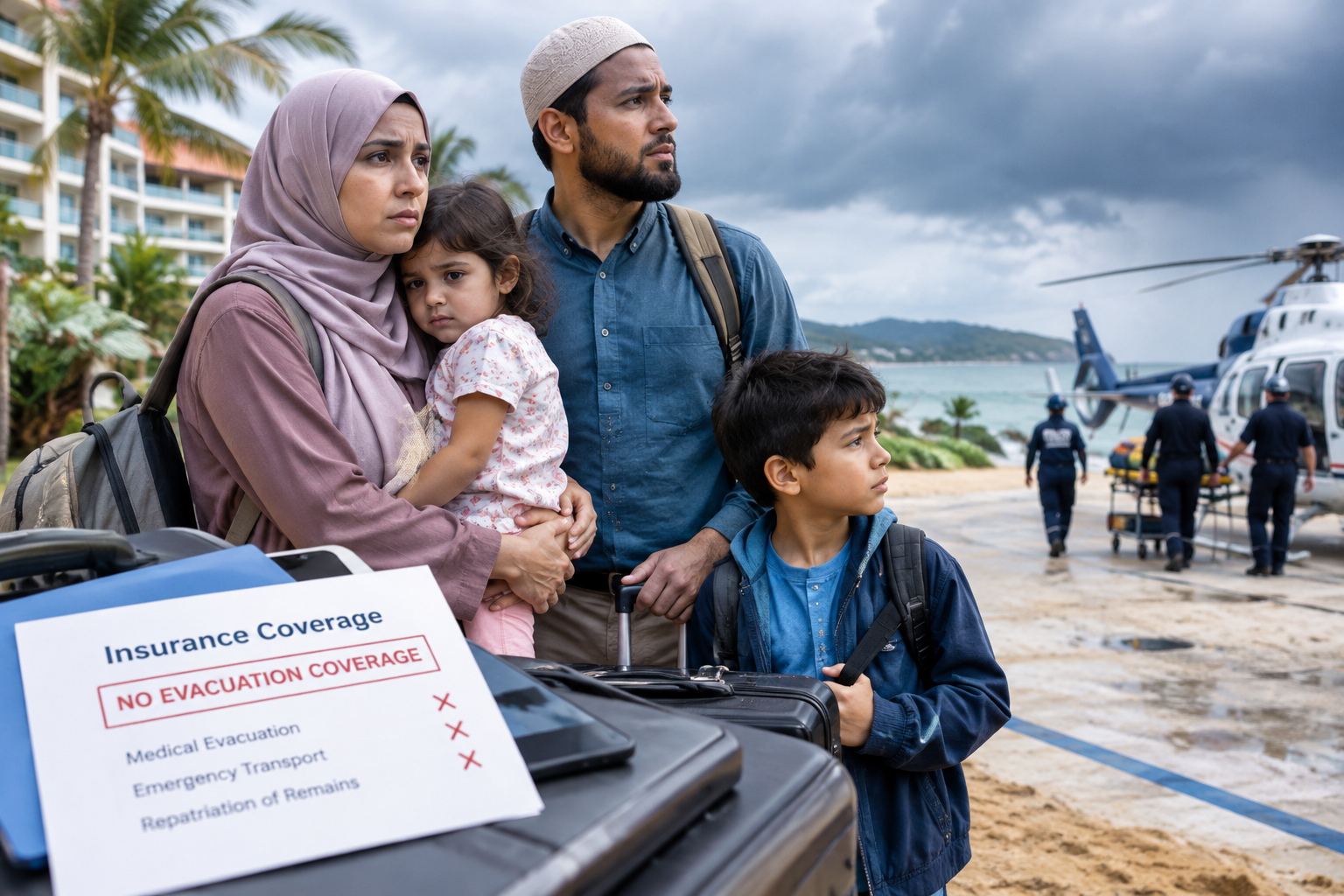
Adventure activities on a family trip that require emergency evacuation protection are those with an inherent risk of traumatic injury, such as skiing, scuba diving, zip-lining, rock climbing, and even safaris in remote game reserves.
For injuries in remote areas requiring a helicopter, the national average for a single emergency helicopter ride is about $40,000. (American Visitor Insurance)
The danger is not just the activity itself, but its location. A sprained ankle from horseback riding on a ranch near a major city is an inconvenience. The same injury on a multi-day trek in Peru is a medical emergency requiring a complex evacuation. The policy is for the *combination* of the activity and the remoteness.
- Skiing/Snowboarding: High risk of fractures and head injuries.
- Scuba Diving: Potential for decompression sickness.
- Zip-lining/Canopy Tours: Risk of falls or collisions.
- Rock Climbing/Mountaineering: High risk of traumatic injury in remote terrain.
- Safaris in Remote Reserves: Interaction with wildlife or accidents far from hospitals.
- Whitewater Rafting: Risk of injury from impacts or drowning.
How does the health of travelers in your family influence the need for evacuation coverage?
The health of travelers in your family, particularly the presence of pre-existing medical conditions or the inclusion of very young children or elderly grandparents, dramatically influences and increases the need for emergency evacuation coverage.
According to common insurance industry data, a main reason for refusal of claims related to international travel health insurance is undeclared pre-existing illnesses.
The key is the “pre-existing medical condition” clause. Many policies have a “look-back period” (e.g., 60-180 days) and won’t cover conditions that weren’t stable in that time. However, purchasing a policy within a short window (e.g., 14-21 days) of your initial trip deposit often grants a “pre-existing condition waiver,” making this an extremely time-sensitive but valuable benefit for families with health concerns.
Understanding specific strategies for How to manage pre-existing conditions While on a family vacation is crucial for ensuring a smooth trip.
4. What types of emergency evacuation coverage options are available for travelers?
The primary types of emergency evacuation coverage options available for travelers are standalone medical evacuation memberships, and comprehensive travel insurance policies that include evacuation as a bundled benefit.
Standalone plans (like Medjet) focus exclusively on providing high-end evacuation services, often with higher limits and more choice in destination hospital. Comprehensive plans (like from World Nomads or Allianz) bundle evacuation with other benefits like trip cancellation and lost baggage, but the evacuation component may have lower limits.
The third, less-reliable option is “premium credit card benefits.” While certain premium cards offer evacuation services, they are often secondary, have strict definitions of “medical necessity,” and give the cardholder zero control over the logistics. They are a backup, not a primary plan, as the decision-making power rests entirely with the credit card’s third-party assistance company.
Standalone Evacuation Membership: An annual or per-trip membership to a company whose sole business is providing emergency medical evacuation and repatriation services, distinct from a traditional insurance policy.
How do standalone evacuation policies compare to comprehensive travel insurance plans?
Standalone evacuation policies compare to comprehensive travel insurance plans by offering specialized, high-limit evacuation services, whereas comprehensive plans provide a broader, but often less deep, range of travel protections.
Most comprehensive travel insurance policies come standard with Medical Evacuation & Repatriation coverage, but the limits and specific terms can vary significantly between providers.
A key difference is the activation trigger. Standalone memberships often only require that you are hospitalized as an inpatient to trigger transport to your home hospital (“hospital of choice”). Comprehensive insurance usually requires strict “medical necessity” to move you to the *nearest appropriate* facility, which is a much higher and more restrictive bar to clear.
Can your credit card or existing health insurance provide adequate evacuation benefits?
Your credit card and existing health insurance almost never provide adequate emergency evacuation benefits for international family travel.
With rare exceptions, the U.S. Medicare program does not provide coverage for any medical costs, including evacuation, incurred outside the United States.
The critical flaw in credit card benefits is that they are “providers of last resort.” They will typically require you to file a claim with any other insurance you have first. Furthermore, you have no direct relationship with the assistance company; you are just one of many cardmembers, which can lead to a less responsive, more bureaucratic experience during a crisis compared to a dedicated membership service.
To help you make the best decision for your family’s protection, here’s more information on How Do You Choose Travel Insurance for a Family Vacation.
5. How do you evaluate different emergency evacuation coverage plans?
You evaluate different emergency evacuation coverage plans by systematically comparing their coverage limits, key benefits, exclusions, and the reputation of the assistance provider.
The evaluation process requires you to look past the price and scrutinize the policy wording. Focus on the maximum dollar amount for evacuation, whether it allows for ‘hospital of choice’, what activities and conditions are excluded, and the global reach of the provider.
One of the most important but overlooked evaluation criteria is the provider’s ownership of the logistics chain. Some providers are essentially brokers who subcontract every aspect of an evacuation. Top-tier providers have in-house medical and security staff and direct relationships with aviation partners, resulting in a more seamless, expert-led response in a crisis. Inquire about the provider’s operational model.
Assistance Provider: The actual company that you call in an emergency. The insurance company is the financial backer, but the assistance provider is the team that arranges the doctors, ambulances, and flights. The quality of this provider is paramount.
What are essential coverage limits to look for in an evacuation policy?
The essential coverage limit to look for in an emergency evacuation policy is a minimum of $250,000, with $500,000 to $1,000,000 being preferable for robust protection.
Due to the high potential costs, experts recommend policies that offer at least $100,000 in emergency medical evacuation coverage, and no less than $250,000 for cruises or remote destinations.
The limit should also be “per person.” A family plan with a $500,000 limit might be a $500,000 total limit for the entire family, not per individual. In a scenario like a car accident where multiple family members are injured, a “per person” limit is vastly superior. Always clarify if the limit is per person or per policy.
Which common exclusions should families be aware of in evacuation plans?
Families should be acutely aware of common exclusions in evacuation plans, which often include incidents arising from adventure sports, pre-existing medical conditions, and travel to destinations with government-issued “Do Not Travel” advisories.
Some Medigap plans that do offer foreign travel benefits only cover emergency care if it begins during the first 60 days of your trip.
A subtle but dangerous exclusion is the “unforeseen event” clause. If you have a known heart condition and your doctor advised against the trip, a heart attack on that trip may be deemed “foreseeable” and therefore excluded from coverage. This highlights the importance of honesty about medical conditions and trip planning in consultation with a physician.
- Unmanaged Pre-existing Condition: Example: A child’s asthma is not covered if their medication was changed a week before the trip and the policy has a 60-day look-back period.
- Adventure Sports: Many standard policies exclude activities like scuba diving or rock climbing unless an Adventure Sports Rider is purchased.
- Travel Against Advisories: Traveling to a destination with a U.S. State Department Level 4 “Do Not Travel” advisory will void most policies.
- Alcohol/Drug Use: Incidents occurring under the influence are typically excluded.
6. How do you purchase the right emergency evacuation coverage for your family vacation?
You purchase the right emergency evacuation coverage for your family vacation by following a structured process of risk assessment, provider research, quote comparison, and careful policy review before buying.
The purchase process isn’t a quick click; it’s a deliberate decision. First, assess your trip’s specific risks, then gather quotes from 2-3 different types of providers (e.g., one standalone, one comprehensive), and finally, read the full policy document of your chosen plan before entering your credit card details.
Use aggregator websites as a starting point for research and quote comparison, but always click through and purchase directly from the provider’s website. This ensures you have a direct relationship with the provider, receive all official documentation instantly, and have a clearer path for customer service or claims. Aggregators are for research; the final transaction should be direct.
Free Look Period: A specific number of days (usually 10-14) after purchasing a policy during which you can review the full document and cancel for a full refund if it does not meet your needs. This is a critical consumer protection feature.
When is the best time to buy emergency evacuation coverage before a trip?
The best time to buy emergency evacuation coverage is within 10-21 days of making your first trip payment or deposit.
You may not be eligible for time-sensitive benefits like a Pre-Existing Condition Waiver if you do not purchase your policy within 10-21 days of making your initial trip payment.
For comprehensive plans that include trip cancellation, buying early also maximizes the protection period. If you buy the policy on the same day you book your non-refundable flights and hotels, you are immediately covered for unforeseen events that could force you to cancel between the booking date and the departure date.
What essential documents or information do you need to secure a policy?
To secure an emergency evacuation policy, you will need essential documents and information for all travelers, including their full names as they appear on their passports, dates of birth, and your complete trip itinerary with dates.
Insurance industry data indicates that a main reason for claims being refused was poor documentation of the expenses incurred.
Be prepared with the total non-refundable cost of your trip, even for a standalone evacuation plan. Some providers use this figure to help calculate rates or to suggest appropriate levels of accompanying trip insurance. Having this number ready will streamline the quoting process across different types of plans.
- Full Names: As they appear on passports for all family members.
- Dates of Birth: For all travelers, as rates can be age-dependent.
- Complete Trip Itinerary: Including travel dates and specific destinations.
- Recent Medical History: Especially if seeking a pre-existing condition waiver.
- Total Non-Refundable Trip Cost: Useful for comprehensive plans.
7. How do you activate and use emergency evacuation services during a crisis?
You activate and use emergency evacuation services during a crisis by first ensuring the patient’s immediate safety, and then contacting the 24/7 emergency assistance number provided by your coverage provider.
In an emergency, your first call is to local emergency services (like 112 in Europe or 911). Once the immediate situation is stabilized, your second call is to your evacuation provider, with your policy number ready, to initiate the official response.
Do not arrange your own transportation and expect reimbursement. The core value of these services is their logistical expertise. You must contact them and allow their medical team to coordinate with the local treating physician to arrange the appropriate transport. Acting independently will almost certainly void your coverage.
Case Manager: The specific individual at the assistance company assigned to your emergency. They will be your primary point of contact throughout the evacuation process, coordinating medical teams, flights, and communication.
What immediate steps should you take if an emergency requiring evacuation occurs?

The immediate steps to take if an emergency requiring evacuation occurs are to first secure the safety of yourself and your family, then contact local emergency services for immediate medical attention.
Given that the average cost of an emergency medical flight to the U.S. is $50,820, it is critical to contact the insurance provider as soon as possible to ensure these high costs are managed and covered.
Before you even call, assign one calm adult to be the documentarian. Their job is to to collect all paperwork: hospital admission forms, doctor’s names, local contact numbers, and initial diagnoses. This information will be invaluable when you speak to your evacuation provider’s case manager.
- Secure Safety: Ensure all family members are safe from immediate danger.
- Contact Local Emergency Services: Call the local emergency number (e.g., 911, 112) for immediate medical attention.
- Contact Evacuation Provider: Once stable, call your provider’s 24/7 hotline with your policy number ready.
- Document Everything: Designate one adult to collect all medical paperwork and contact information.
To learn more about accessing care, discover Sick on a Family Vacation? How to Find Doctors, Hospitals, and Pharmacies Fast.
How can you ensure seamless communication with your evacuation provider while abroad?
You ensure seamless communication with your evacuation provider while abroad by preparing your communication tools and information before your trip.
A key feature to look for in any plan is 24/7 assistance, which ensures the insurer is available at any time to help you file a claim, find a doctor, or coordinate care.
Communication is a two-way street. Inform your case manager of the best way to reach you (e.g., WhatsApp, a local SIM card number) and provide a secondary contact number for a family member. Also, ask for the case manager’s direct email address to send copies of medical documents and create a paper trail of communication.
- Save Hotline Number: Save the 24/7 hotline with international codes as a favorite in your phone.
- Enable International Calling: Ensure you have an international calling plan or local SIM.
- Pack Battery Bank: Keep your devices charged for critical communication.
- Share Itinerary: Provide your evacuation provider with your detailed travel plans.
- Provide Secondary Contact: Give a trusted family member’s contact for backup communication.
- Consider Satellite Communication: For extremely remote areas, consider a satellite phone.
8. What common mistakes should you avoid with emergency evacuation coverage?
The most common mistakes to avoid with emergency evacuation coverage involve making assumptions about coverage, not reading the policy, and waiting too long to purchase it.
The biggest mistakes are assuming your credit card has you covered, failing to declare pre-existing conditions, and not understanding the specific exclusions for your planned activities. These assumptions can lead to a denied claim in a moment of crisis.
A frequent mistake is confusing “trip interruption” with evacuation. Trip interruption reimburses you for the unused portion of your trip if you have to leave early due to an emergency. It does NOT pay for the cost of the emergency transport itself; that is the separate, specific job of evacuation coverage.
Denied Claim: A refusal by an insurance company or assistance provider to honor a request for coverage or service, usually because the event falls under a policy exclusion or the proper activation procedure was not followed.
How does misunderstanding policy terms lead to denied evacuation claims?
Misunderstanding policy terms directly leads to denied evacuation claims because key definitions, exclusions, and activation procedures are legally binding contracts that leave no room for interpretation during an emergency.
Travel insurance industry analysis indicates that only two-thirds of claims were fully paid, with policy term misunderstandings being a significant factor in denials.
The most misunderstood term is often “medically necessary.” The traveler may feel it’s necessary to go home, but the assistance provider’s medical director, in consultation with the local doctor, may determine that the local facility is “adequate” for the condition. This conflict is the source of many disputes and denied claims, and it’s why “hospital of choice” is such a powerful, superior benefit.
Why relying solely on standard travel insurance might be an evacuation pitfall?
Relying solely on the evacuation benefit within a standard travel insurance policy is a major pitfall because the coverage limits are often far too low to cover a real-world international evacuation.
Evacuation costs even within the U.S. can range from $30,000 to $50,000, easily exceeding the low-tier limits included in some bundled travel insurance plans.
The pitfall is one of marketing. The policy is advertised as having “medical evacuation,” but the low limit makes it functionally useless for its intended purpose. It’s a checkbox feature designed to sell the policy, not a robust benefit designed to save you in a crisis. This is why scrutinizing the specific dollar amount is the most important evaluation step.
9. Logistics: Emergency Evacuation Coverage Execution Checklist
| Checklist Item / Tactic | Status |
|---|---|
| TIER 1: Assess Your Trip’s Risk Profile | ⬜ |
| TIER 2: Compare Coverage Options | ⬜ |
| TIER 3: Purchase Policy Directly and Early | ⬜ |
Resolution
Securing emergency evacuation coverage is a critical investment in family safety, providing a planned response for low-probability, high-impact medical events abroad. By understanding policy nuances, assessing risks, and purchasing correctly, parents gain invaluable financial protection and peace of mind.
By assessing your trip’s risk, understanding the difference between policy types, scrutinizing coverage limits and exclusions, and purchasing the right plan early, you transform this complex product into a simple, powerful tool for parental peace of mind. It is the definitive answer to the question, “What happens if there’s a serious medical emergency far from home?”
The final decision to purchase evacuation coverage is an investment, not an expense. It’s an investment in financial security, logistical support, and most importantly, the unwavering ability to provide the best possible care for your family, no matter where your adventures lead. Travel with confidence, knowing you’ve put the ultimate safety net in place for the people who matter most.