How Do You Plan for Family Vacation Health?
Table of Contents
You plan for family vacation health by proactively focusing on prevention, treatment, easy access to care, and comfort. This careful planning turns scary medical events into problems you can easily solve. It keeps your family safe, stops you from losing money, and makes sure you can relax on your trip.
This planning provides confidence for parents to effectively handle any health issues abroad. For a more comprehensive understanding of the entire vacation preparation process, consider reviewing our guide on How to Plan a Family Vacation Step by Step.
1. Why is proactive health planning essential for family vacations?
Proactive health planning is essential for family vacations because it provides a strong safety net. It allows parents to spot specific risks at their destination and get the right supplies ahead of time, ensuring everyone stays healthy and safe while traveling.
How does pre-trip health preparation minimize risks for traveling families?
Pre-trip health preparation minimizes risks for traveling families by pointing out local health threats and using specific steps to stop them, like getting vaccines and learning about the environment. This preparation stops diseases before they start and helps you avoid common dangers like bad water. It’s a clear process of seeing problems early and stopping them. Getting ready means more than just shots; visiting a travel doctor gives your family a custom safety plan based on your kids’ ages and health needs.

According to the CDC, traveler’s diarrhea affects 30-70% of travelers, depending on the destination and season.
This targeted approach transforms potential dangers into manageable concerns, enhancing overall family safety. For more information, explore our guide on Travel Vaccinations for Families.
What core elements should a family health plan include for any trip?
The core elements a family health plan should include for any trip are medical records, good insurance, a first-aid kit, and emergency contacts. These four items create a strong safety net for any destination. Having the right information is key. This means keeping copies of kids’ vaccine records, bringing a doctor’s note for any long-term illnesses, and knowing the generic names of all medicines because brand names change in other countries.
Studies show that having a well-stocked First-Aid Kit can reduce minor injury complications by up to 60% during travel.
These pillars collectively provide a proactive safety net, ensuring preparedness for common medical issues and unforeseen emergencies abroad. For detailed guidance, see our internal guide on Organizing Medical Records for Travel.
2. Which health considerations are crucial when selecting a family vacation destination?
The health considerations that are crucial when selecting a family vacation destination include the quality of local hospitals, the spread of diseases, and environmental factors like high altitude or extreme heat.
How do you assess destination-specific health risks for your family’s travel plans?
You assess destination-specific health risks for your family’s travel plans by checking official government health websites and then talking to a travel doctor. To check risks, first look at travel health warnings on the CDC and U.S. Department of State websites. Next, visit a Travel Clinic to go over your family’s specific needs, your daily plans, and the right ways to stay safe. Parents should also look into air quality for kids with asthma, check if tap water is safe to drink, and find out about dangerous animals in nature spots.
Author’s Experience
“On a family trip to Southeast Asia, pre-travel research led us to a fantastic travel clinic that customized our vaccine schedule and provided specific advice on food safety, preventing an otherwise unpleasant experience for my younger child.”
India has made substantial progress in reducing its malaria burden, achieving a reduction of 85% in malaria morbidity and 78.38% in malaria mortality between 2015 and 2022.
This two-pronged approach ensures comprehensive identification and mitigation of potential health threats. More details can be found in our internal guide on Understanding CDC Travel Health Advisories.
What vaccinations and preventative medications should your family consider for travel?
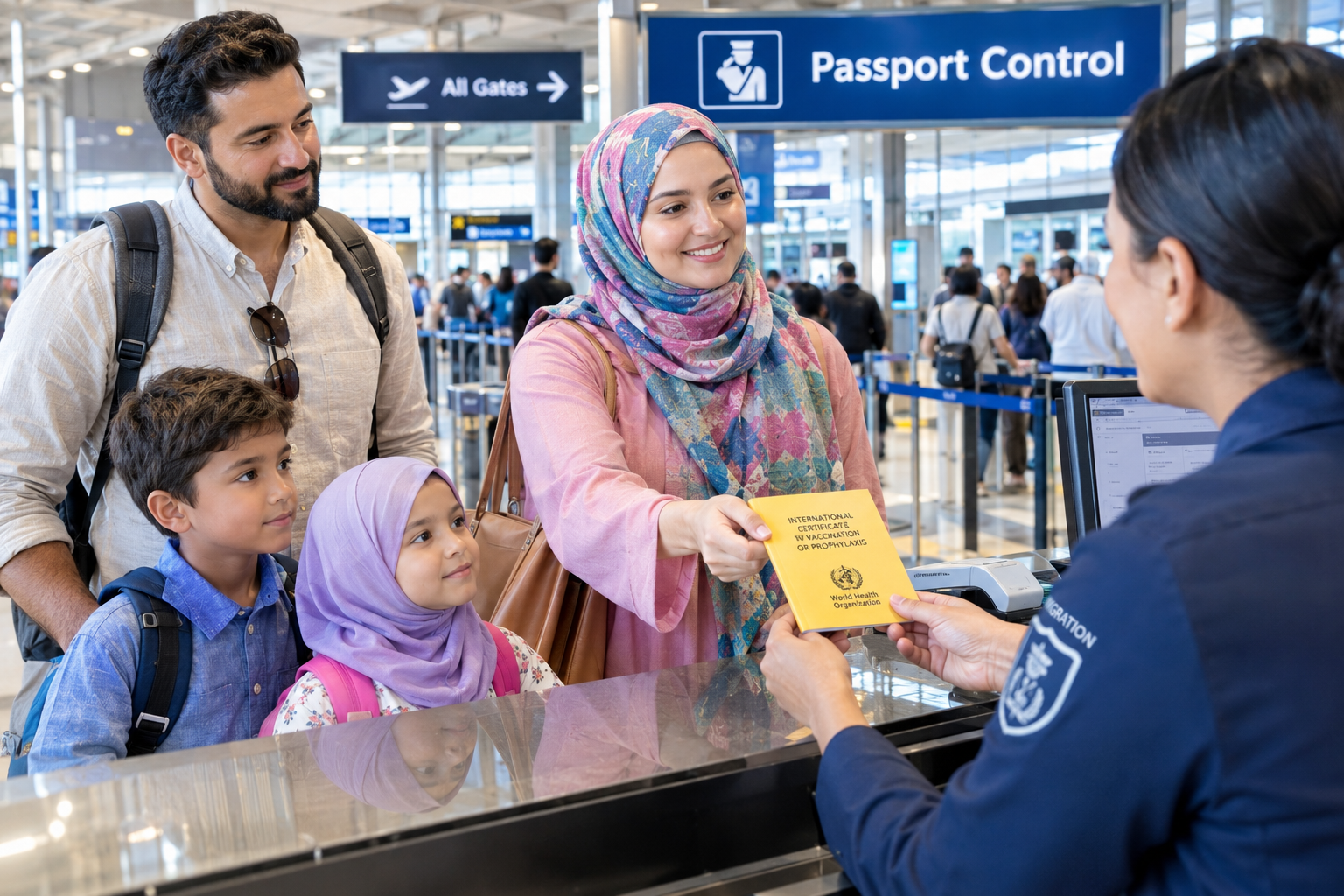
The vaccinations and preventative medications your family should consider for travel include routine shots, recommended vaccines like Hepatitis A, and required vaccines like Yellow Fever. First, make sure all everyday childhood and adult shots are up-to-date. Then, depending on where you are going, think about taking pills to stop illnesses like malaria. Timing is very important because some vaccines need to be started 4 to 6 weeks before you leave, and some required vaccines take 10 days to become official on your paperwork.
- **Routine:** MMR, DTaP
- **Recommended:** Hepatitis A, Typhoid
- **Required:** Yellow Fever (for certain countries)
According to the CDC, a travel health consultation should be scheduled 4 to 6 weeks before a long or international trip to allow for necessary vaccinations and medication planning.
Families should ensure routine immunizations are current, then consult a travel clinic for destination-specific recommendations and mandatory requirements that may necessitate an International Certificate of Vaccination. Review our guide on Required Travel Vaccines by Destination for detailed requirements.
3. How do families select the right travel health insurance for their vacation?
Families select the right travel health insurance for their vacation by making sure the policy has high limits for emergency medical care, pays for medical flights, and covers pre-existing health conditions.
What essential coverage features are critical for family medical emergencies abroad?
The essential coverage features critical for family medical emergencies abroad are high-limit emergency medical pay, emergency medical evacuation, and a 24/7 help hotline. For any family crisis, your Travel Health Insurance must cover at least $250,000 in hospital bills and pay 100% of the cost to fly you to a good hospital or back home. Another great feature to look for is “Bedside Visit” coverage, which pays for a family member to fly out and stay with someone who is stuck in a hospital far away.

The average cost of an international Medical Evacuation can range from $25,000 to $250,000, depending on the location and medical necessity, making robust coverage essential.
These pillars ensure comprehensive support and protection during a crisis, minimizing financial and logistical burdens. Learn more about Understanding Medical Evacuation Coverage.
How to compare travel health insurance policies for specific family needs and comfort?
You compare travel health insurance policies for specific family needs and comfort by making a checklist of your family’s health profile and checking it against the details of each policy. List out needs like asthma, bad food allergies, or plans to do dangerous sports. Use comparison websites to see if policies actually cover these things, and always read the small print. It is smart to call the insurance company and ask them direct questions, like “Will a helicopter flight be covered if my child gets sick while hiking?” to see how well they answer.
Family Needs Checklist
- [ ] Chronic Conditions
- [ ] Food Allergies
- [ ] Adventure Activities
- [ ] Infant Travel
Uncovered pre-existing conditions are a leading cause of travel insurance claim denials, accounting for approximately 15-20% of all rejected claims, according to bhtp.com.
This ensures all family members are financially protected against unforeseen health crises abroad. Emphasize the task of reading the “Exclusions” section of a policy document, as this is where most coverage gaps are found. For more, see our guide on Travel Insurance for Pre-existing Conditions.
4. How do you prepare a comprehensive family travel health kit for prevention and treatment?
You prepare a comprehensive family travel health kit for prevention and treatment by gathering basic first-aid items, common medicines, prescription drugs, and special items for your specific destination.
What essential over-the-counter medicines should a family health kit include?
The essential over-the-counter medicines a family health kit should include are pain relievers, fever reducers, allergy medicines, stomach aids, and skin creams. Pack an Antihistamine for allergic reactions, medicine to stop diarrhea, and cream to stop itching from bug bites. Packing brands you know from home is very important because medicine in other countries might have different ingredients or instructions in a language you cannot read.
Essential Family Travel Health Kit
- **Pain & Fever:** Adult and child formulations of ibuprofen or acetaminophen, with correct dosing instruments.
- **Allergies:** Antihistamine for allergic reactions.
- **Stomach & Digestion:** Anti-diarrheal medication, Oral Rehydration Salts (ORS).
- **Topical/Skin:** Hydrocortisone cream, antiseptic wipes.
According to the WHO, traveler’s diarrhea is the most common illness affecting international travelers, with incidence rates ranging from 20% to 50%.
Differentiating between carry-on and checked luggage kits is crucial to ensure uninterrupted access to vital supplies. For further details on avoiding stomach issues, consult our guide on Avoiding Traveler’s Diarrhea.
How to safely pack and manage prescription medications for family members during travel?
You safely pack and manage prescription medications for family members during travel by keeping them in their original labeled bottles, packing them in your carry-on bag, and bringing a doctor’s note. You must never put Prescription Medication in a checked suitcase just in case the bag gets lost. Also, find out if your medicine is legal where you are going; some common ADHD medicines are illegal in certain countries and can get you into major trouble without the right papers.
According to youthclinic.com, when traveling internationally, it is helpful to carry a written note from your doctor explaining why you need certain medications, especially for controlled substances.
This ensures legal compliance and avoids travel disruptions. It’s also vital to pack enough medication for the entire trip plus at least one extra week’s supply in case of travel delays. For more details, consult our internal guide on Traveling with Chronic Illness and Medications.
5. How can families ensure seamless access to medical care during their vacation?
Families can ensure seamless access to medical care during their vacation by finding local clinics ahead of time, saving emergency numbers in their phones, and preparing medical documents.
What steps should you take to identify reputable local medical facilities at your destination?
The steps you should take to identify reputable local medical facilities at your destination are checking with your travel insurance company, looking at the local embassy website, and finding hospitals with international awards. Call your insurance hotline first to find clinics they already work with. Check the U.S. Department of State website for doctors they trust, and look for places with the “JCI” stamp of approval to ensure good quality.
As of 2023, over 1,100 healthcare organizations across more than 70 countries have achieved Joint Commission International (JCI) accreditation, signifying adherence to rigorous quality and patient safety standards.
This preparedness minimizes delays and stress if medical assistance is required abroad. Emphasize consulting official sources (insurance, embassy) over informal ones (hotel concierge, random web forums) to ensure accuracy. For more information, see our guide on Finding JCI Accredited Hospitals Abroad.
How do you effectively communicate family medical needs and history in a foreign country?
You effectively communicate family medical needs and history in a foreign country by using language translation apps, carrying typed medical summaries, and calling your insurance hotline for a translator. Have a professional translator type up a brief history of your family’s health and allergies before you leave. A great idea is a “Medical QR Code” printed on a card that a foreign doctor can scan to quickly read your history in their own language.
Medical errors due to communication breakdowns account for an estimated 1,700 deaths and millions in healthcare costs annually in the U.S. alone, highlighting the importance of clear communication in foreign medical settings.
Preparing these tools beforehand mitigates language barriers and ensures accurate information exchange during critical medical situations. This frames preparation as a way to be a more effective advocate for your child in a stressful situation. For tools and tips, see our internal guide on Medical Translation Tools for Travelers.
6. How do families manage existing health conditions and comfort during travel?
Families manage existing health conditions and comfort during travel by carefully planning when to take medicine, sticking to normal meal times, and bringing familiar items from home. Always talk to a doctor before the trip to make a clear plan, and try hard to keep your daily routines to lower stress for kids who get easily upset.
What strategies help children and sensitive family members stay comfortable during vacation?
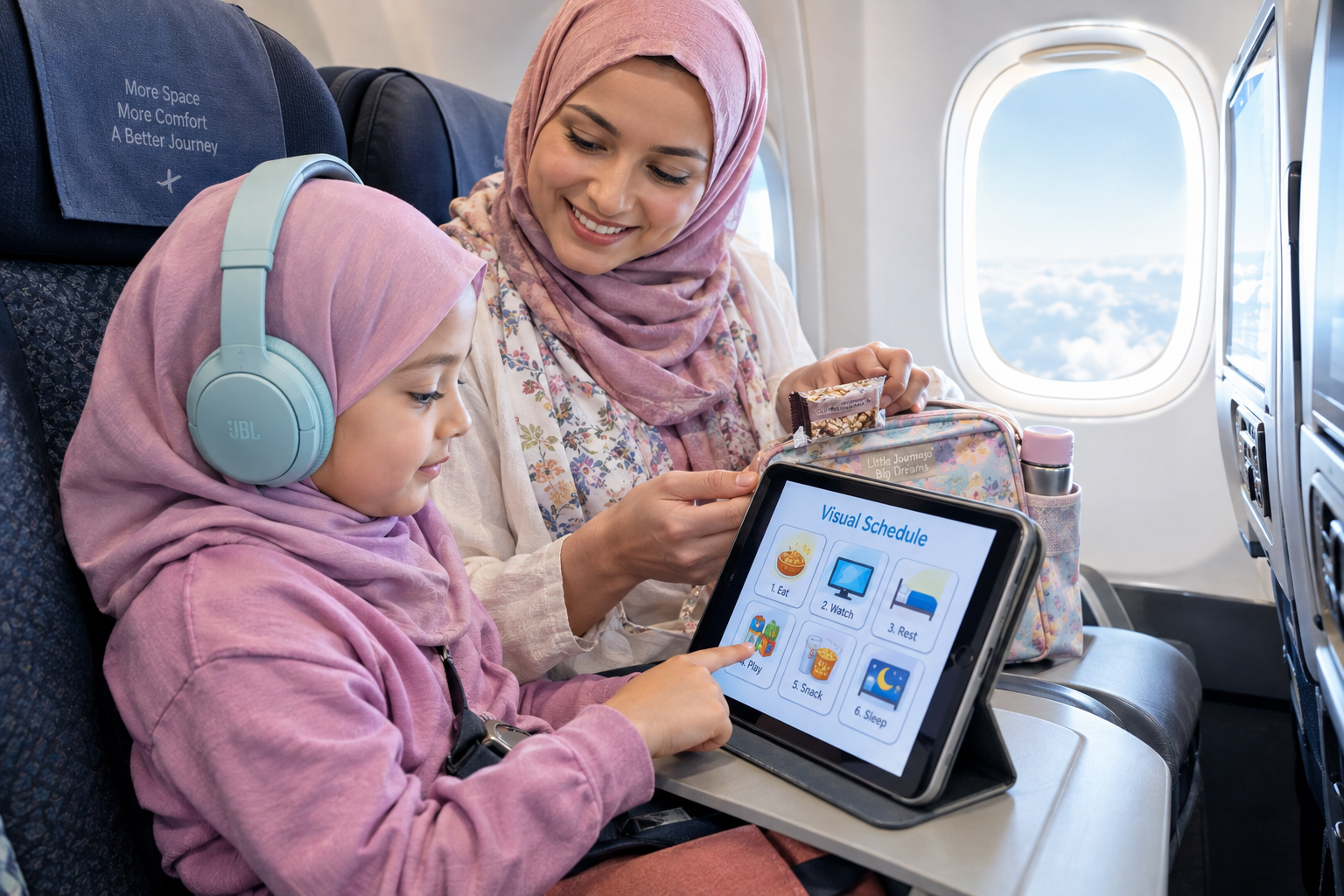
The strategies that help children and sensitive family members stay comfortable during vacation include keeping normal sleep routines, managing loud noises with headphones, and bringing favorite snacks. Use a “visual schedule” showing pictures of the day’s plans so kids know exactly what will happen next. This stops them from feeling scared of the unknown.
- Maintain Routines (sleep, meal schedules)
- Pack Familiar Items (snacks, toys, blankets)
- Manage Sensory Input (headphones, eye masks)
- Stay Hydrated
Especially on the first day, limit time spent in a theme park to six to eight hours and be prepared to shut down sooner if you see signs of approaching meltdowns, as advised by childrens.com.
Implementing a visual schedule can also reduce anxiety by setting clear expectations. These small actions prevent meltdowns and make the trip more enjoyable for everyone. For more, see our internal guide on Travel Tips for Children with Sensory Needs.
How to maintain essential routines for chronic conditions while on a family vacation?
You maintain essential routines for chronic conditions while on a family vacation by using phone alarms for medicine, planning the days with your doctor, and making sure all adults know the schedule. A good phone app can fix times when you fly across the world so you don’t mess up when a pill is needed while feeling jet-lagged.
Studies indicate that proactive planning and digital reminders can improve medication adherence during travel by up to 30% for individuals with chronic conditions, according to healthy.kaiserpermanente.org.
Crucially, consult with your Pediatrician pre-trip to create a detailed, condition-specific management plan, ensuring all traveling adults understand the adapted schedule. This is a non-negotiable step for optimal care. For recommended apps, see our internal guide on Best Travel Apps for Chronic Condition Management.
7. How do you handle common family health emergencies and unexpected illnesses on vacation?
You handle common family health emergencies and unexpected illnesses on vacation by following a set plan: check how bad the situation is, use your first-aid kit, and call for professional help if needed. Never wait to call a doctor because you are worried about the bill; your insurance handles the money so you can focus only on keeping your child safe.
What immediate steps should you take for common travel ailments like stomach bugs or minor injuries?
The immediate steps you should take for common travel ailments like stomach bugs are to drink plenty of water with hydration salts, while minor cuts just need to be cleaned and bandaged. For burns, do not use ice or cream right away; instead, run cool water over the burn for up to 20 minutes to stop the skin from hurting more.
Common Ailments: Quick Reference
- **Stomach Bug:** Administer water and ORS. Seek medical care if diarrhea persists for more than 24 hours in a young child.
- **Minor Cut:** Clean with antiseptic, apply antibiotic ointment, cover with sterile bandage.
- **Sunburn:** Run cool water over minor burns for 10-20 minutes.
In 2023, under the Intensified Diarrhoea Control Fortnight (IDCF), approximately 11 crore children up to five years of age were provided with ORS and Zinc.
Always reference your pre-packed First-Aid Kit and seek professional medical advice if symptoms worsen or persist, particularly in young children. For detailed treatment, see our internal guide on Treating Traveler’s Diarrhea in Children.
How to navigate serious medical situations or hospital visits abroad with your family?
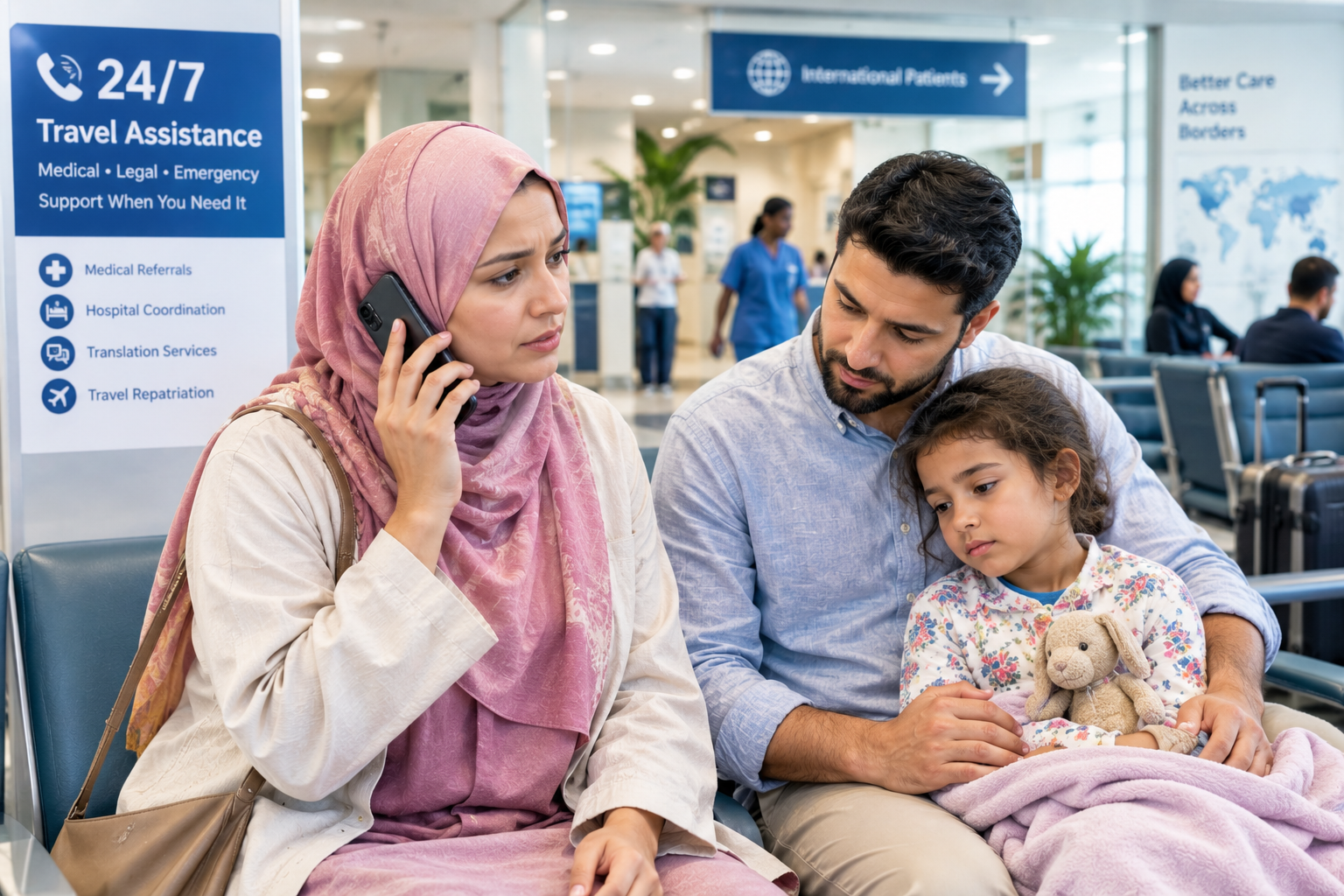
You navigate serious medical situations or hospital visits abroad with your family by immediately calling your travel insurance hotline to organize care and calling your home country’s embassy for help. One parent should always stay holding the child’s hand while the other parent makes phone calls to plan Medical Evacuation or get a translator to speak to the local doctors.
Emergency Protocol
- Contact Local Emergency Services.
- Call Insurance Assistance (24/7 hotline).
- Call Embassy/Consulate.
- Gather Documents (medical summaries, passports, insurance info).
In a medical emergency abroad, knowing the local emergency number (e.g., 112 in Europe, 999 in UK) and having direct access to your travel insurance’s 24/7 hotline can significantly reduce response times and improve outcomes.
Designate one parent for care and the other for logistics, ensuring all prepared documents are accessible to facilitate efficient, coordinated care. Consider services like International SOS for premium assistance. For key contacts, see our internal guide on Emergency Contacts for International Travelers.
8. Logistics: Family Vacation Health Planning Checklist
| Checklist Item / Tactic | Status |
|---|---|
| PRE-TRIP PREP: Consult CDC/WHO and travel health professionals for destination-specific health risks. | ⬜ |
| INSURANCE: Secure comprehensive travel health insurance with medical evacuation and pre-existing condition waivers. | ⬜ |
| HEALTH KIT: Prepare a thorough medical kit including basic first-aid, OTC meds, and prescriptions (carry-on essentials separate). | ⬜ |
| MEDICAL ACCESS: Identify reputable local facilities and program emergency contacts, including insurance hotline. | ⬜ |
| CHRONIC CONDITIONS: Obtain physician’s travel-specific management plans and maintain routines. | ⬜ |
| EMERGENCY PLAN: Establish a clear response plan for unexpected illnesses or injuries. | ⬜ |
Resolution
Ultimately, comprehensive family vacation health planning is the architecture of a successful trip, transforming worry into preparedness and enabling families to explore the world with confidence and security. The key to family vacation health is a four-part strategy: proactively choosing a suitable destination, securing robust insurance, preparing a thorough medical kit, and having a clear plan for accessing care. This system of prevention, treatment, access, and comfort is the blueprint for peace of mind. By architecting your family’s health and safety plan, you give them the greatest gift of all: the freedom to enjoy every moment of your journey together.