What Equipment Is Needed for a Safari Family Vacation?
Table of Contents
A successful safari family vacation requires packing a strict 15-20kg limit of soft-sided duffel bags, neutral-colored layered clothing, closed-toe walking shoes, robust sun/insect protection, high-capacity power banks, 8×42 binoculars, and a pediatric medical kit.
Unlike packing for a standard getaway, outfitting your family for the African bush requires extreme logistical precision. Ensuring you have the exact right gear is a critical component of thorough safari preparation, as forgotten items cannot simply be purchased in isolated wilderness camps.
By prioritizing durable, multi-functional items that accommodate the safety, comfort, and active engagement of every family member, you guarantee your trip is defined by discovery rather than equipment frustration.
1. Why is specialized luggage and weather equipment crucial for a safari family vacation?
Specialized luggage is crucial for a safari family vacation because standard hard-shell suitcases physically cannot fit into the small cargo pods of bush planes used for camp transfers. Additionally, weather on the savanna fluctuates wildly, requiring specific protective gear. Ensure that any required family adventure travel planning factors in these strict transport limitations.
How do luggage constraints dictate your packing strategy?
Luggage constraints dictate your packing strategy by enforcing a strict 15-20kg (33-44 lbs) maximum weight limit per person, requiring the use of frameless, soft-sided duffel bags that can be easily squashed into small aircraft holds.
Most light aircraft operators in Africa strictly enforce a 15kg limit inclusive of hand luggage, forcing families to pack only the absolute necessities in pliable bags. Rigid wheels or pull-handles can damage the aircraft’s cargo pod lining, leading pilots to refuse boarding to passengers with hard-sided luggage.
Packing Cubes Hack: Because a frameless duffel bag lacks structure, using packing cubes acts as “portable drawers,” preventing your family’s gear from turning into a disorganized jumble during daily transit.
Why are weather and insect protection gear non-negotiable?
Weather and insect protection gear are non-negotiable because the African bush presents intense UV radiation during the day, freezing temperatures on early morning drives, and significant risks from disease-carrying insects.
Dark blue and black clothing actively attracts tsetse flies, which deliver painful bites, making neutral colors a safety requirement rather than a fashion choice. Furthermore, temperatures can plummet to 40°F (4°C) before dawn, making windproof thermal layers essential for open-air game drives.
Layering Strategy: The secret to safari comfort is a three-piece system: a moisture-wicking base layer, a warm fleece mid-layer for frigid 6:00 AM starts, and a lightweight, windproof outer shell that can be easily shed as the sun rises.
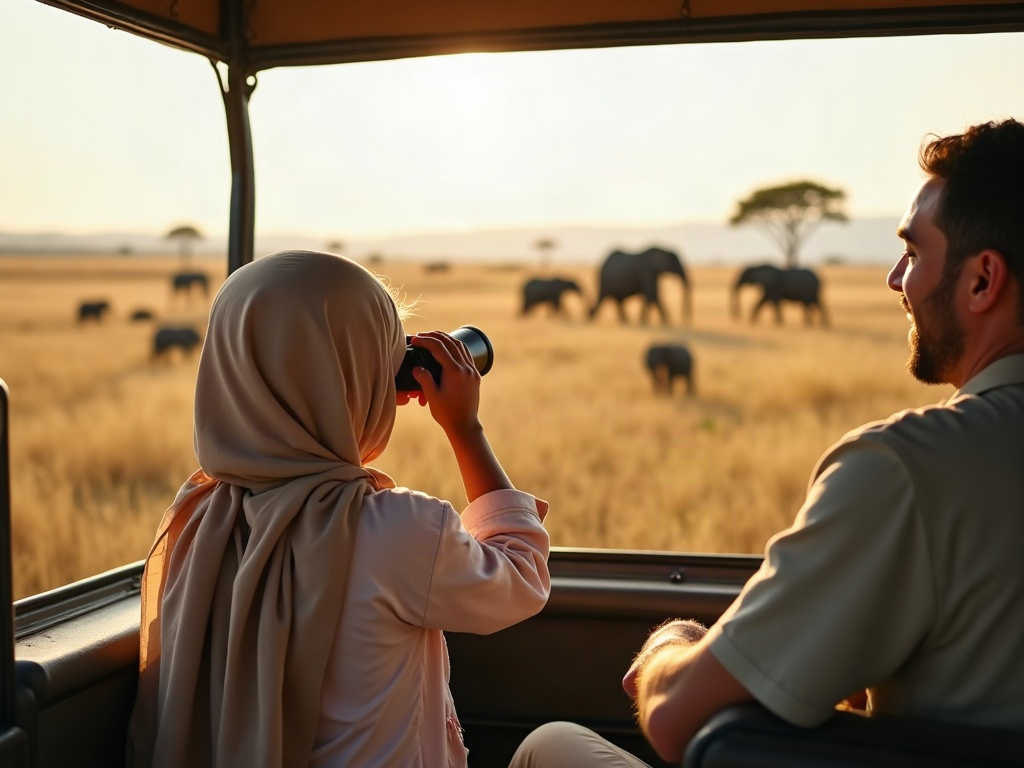
Soft-sided duffel bags are mandatory for fitting into the small cargo pods of bush planes.
© WovenVoyages.com
2. What clothing and footwear are essential for a safari family vacation?
The essential clothing and footwear for a safari family vacation prioritize utility over style, focusing on earth-toned fabrics that hide dust and sturdy shoes that protect against rugged terrain and thorns. Always check specific safety conditions if your itinerary includes coastal extensions after the bush.
Which safari footwear and walking shoes provide the best protection?
Safari footwear and walking shoes provide the best protection when they are closed-toe, feature durable soles to repel acacia thorns, and offer mild ankle support for uneven ground during bush walks.
Heavy, rigid hiking boots are rarely necessary for standard vehicle-based game drives; instead, lightweight trail running shoes offer the perfect balance of comfort in the vehicle and protection on the ground against tick-borne diseases found in tall grasses.
Camp Shoes Rule: Always pack a pair of simple slip-on sandals (like Crocs or flip-flops) for moving around the lodge or tented camp in the evening, giving feet a break from hot walking shoes.
How does neutral, layered clothing protect against the elements?
Neutral, layered clothing protects against the elements by utilizing breathable fabrics in khaki, green, or beige to reflect the sun, hide pervasive dust, and allow travelers to quickly adjust to the 30-degree temperature swings typical of a safari day.
Wearing white clothing is highly discouraged as it instantly becomes permanently stained by the red dust prevalent across East and Southern African parks. Furthermore, avoid camouflage clothing entirely, as it is illegal for civilians to wear in countries like Zimbabwe and Zambia, potentially leading to confiscation or fines at the airport.
The Laundry Advantage: Do not pack an outfit for every day. Almost all luxury and mid-range safari camps offer 24-hour laundry service (often complimentary), allowing you to pack just 3-4 shirts and rotate them.
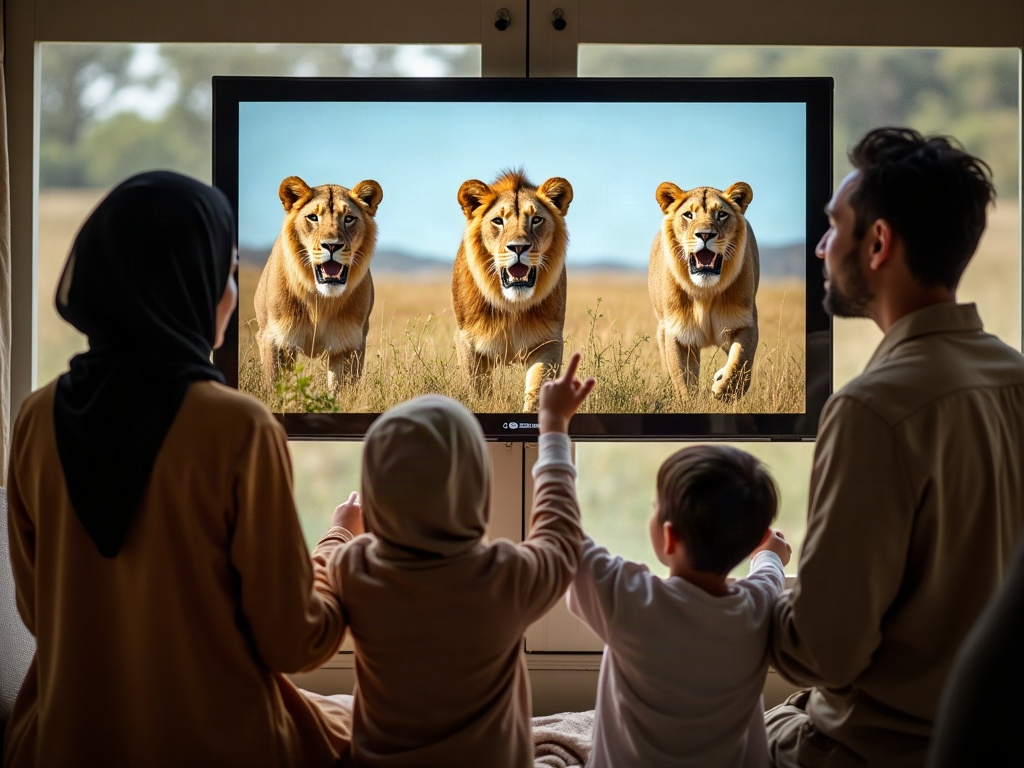
Stick to earth tones to hide dust and avoid attracting tsetse flies.
© WovenVoyages.com
3. What electronics and optics do you need for a safari family vacation?
The electronics and optics needed for a safari family vacation are focused on capturing the experience, viewing distant wildlife clearly, and maintaining safety in off-grid locations with reliable power solutions and high-quality viewing tools.
Which power banks, charging, and adapters keep devices running?
Power banks with at least 20,000mAh capacity, multi-port USB chargers, and universal travel adapters (specifically Type M for Southern Africa and Type G for East Africa) keep devices running reliably in remote camps with limited electricity access.
Many tented camps run exclusively on solar power and generators, meaning in-room outlets may only function during specific daylight hours, making personal battery backups essential.
The Vehicle Charging Hack: Most modern 4×4 safari vehicles feature USB ports or 12V cigarette lighters. Bring a high-speed 12V car charger to “top up” camera batteries directly from the vehicle while driving between sightings.
Why are headlamps and flashlights critical for camp safety?
Headlamps and flashlights are critical for camp safety because many luxury lodges and tented camps feature unlit, uneven dirt pathways that guests must navigate in the dark, posing a risk of tripping or encountering nocturnal wildlife.
A headlamp featuring a “red light” mode is highly recommended, as red light preserves your natural night vision and prevents blinding your guide or startling wildlife in the dark.
Hands-Free Necessity: While smartphones have flashlights, a dedicated headlamp is mandatory. You need both hands free to safely hold a child’s hand or carry gear while walking to dinner under the African stars.
Which binoculars and cameras optimize family wildlife viewing?
An 8×42 binocular configuration optimally balances magnification and brightness, while a bridge camera or mirrorless system with a 100-400mm lens captures distant action without the bulk of professional gear.
According to Finding the Universe, an 8x magnification with a 42mm objective lens (8×42) is the universally recommended standard for balancing image stability and low-light performance on safari. For family travelers, Travel and Leisure highlights the importance of lightweight, rubber-armored models to withstand drops and reduce neck strain for children. When selecting photography gear, Saving Wild advises prioritizing a versatile zoom lens over multiple prime lenses to avoid exposing sensors to pervasive savanna dust during lens changes. For specific camera systems, experts at Photo Safari Company strongly recommend APS-C sensor cameras because their 1.6x crop factor effectively extends the reach of telephoto lenses, bringing distant wildlife closer. Finally, Aardvark Safaris emphasizes that sharing binoculars leads to missed sightings; every family member, including children, must have their own dedicated pair to fully engage with the environment.
The Tape Trick: Before your trip, use matte black gaffer tape to cover the shiny brand logos (like Canon or Nikon) on your expensive camera bodies and lenses. This reduces the risk of theft in transit hubs by making the gear look older and less conspicuous.
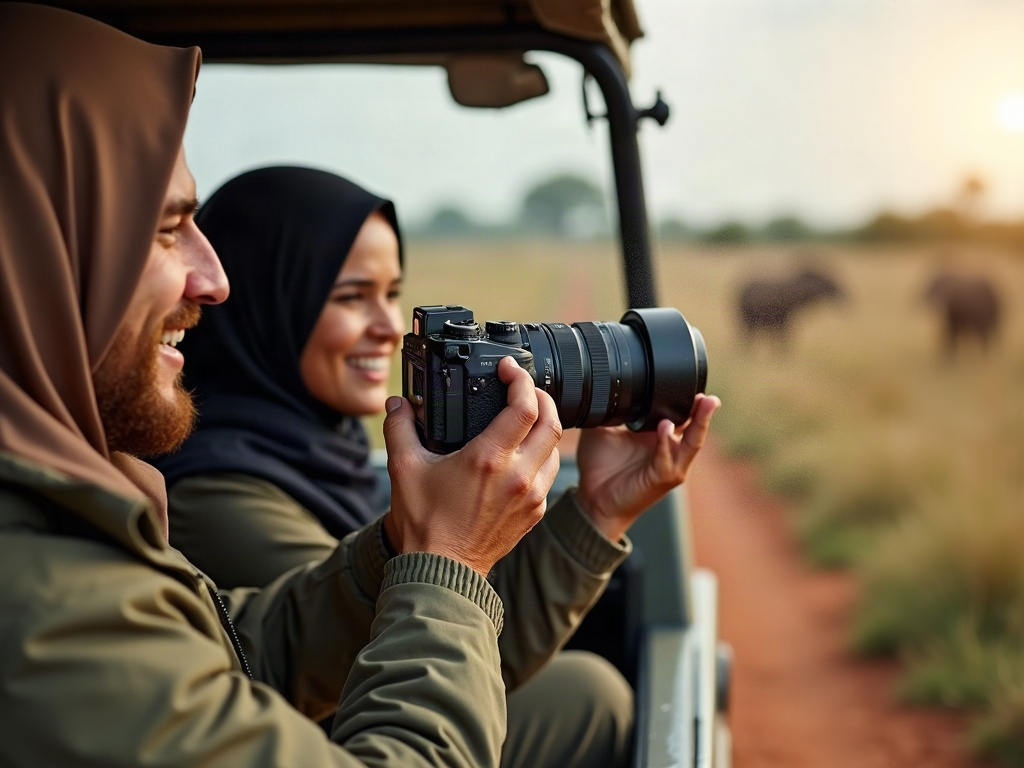
Reliable power, hands-free lighting, and personal 8×42 binoculars are vital in remote wilderness camps.
© WovenVoyages.com
4. What daypacks and hydration equipment support daily safari activities?
Daypacks and hydration equipment support daily safari activities by organizing personal gear inside the cramped vehicle and ensuring the family remains safely hydrated under the intense equatorial sun.
How do you select the right daypacks and protective bags?
You select the right daypacks and protective bags by choosing soft-sided, multi-compartment backpacks (15-25L) that easily stash at your feet in the 4×4, supplemented by dry-bags to shield expensive camera gear from pervasive road dust.
Rigid backpacks are heavily discouraged as space in the seating area of a safari vehicle is premium; soft daypacks can be molded around feet or tucked into seat pockets.
The Dust Defense: Fine African dust penetrates standard zippers. Bring a simple, roll-top waterproof “dry bag” (like those used for kayaking) to place your camera or binoculars inside while the vehicle is in motion on dirt roads.
Which water bottles and hydration equipment prevent dehydration?
Vacuum-insulated stainless steel water bottles (like Yeti or HydroFlask) prevent dehydration by keeping liquids refreshingly cold all day, encouraging kids to drink continuously despite the heat.
Many high-end eco-lodges have entirely banned single-use plastics, requiring guests to bring their own refillable vessels to utilize the filtered water stations provided at camp.
Hydration Multiplier: Pack powdered electrolyte packets (like Liquid I.V.). Adding these to a child’s water bottle dramatically increases hydration efficiency and helps combat the fatigue associated with long days in the sun.
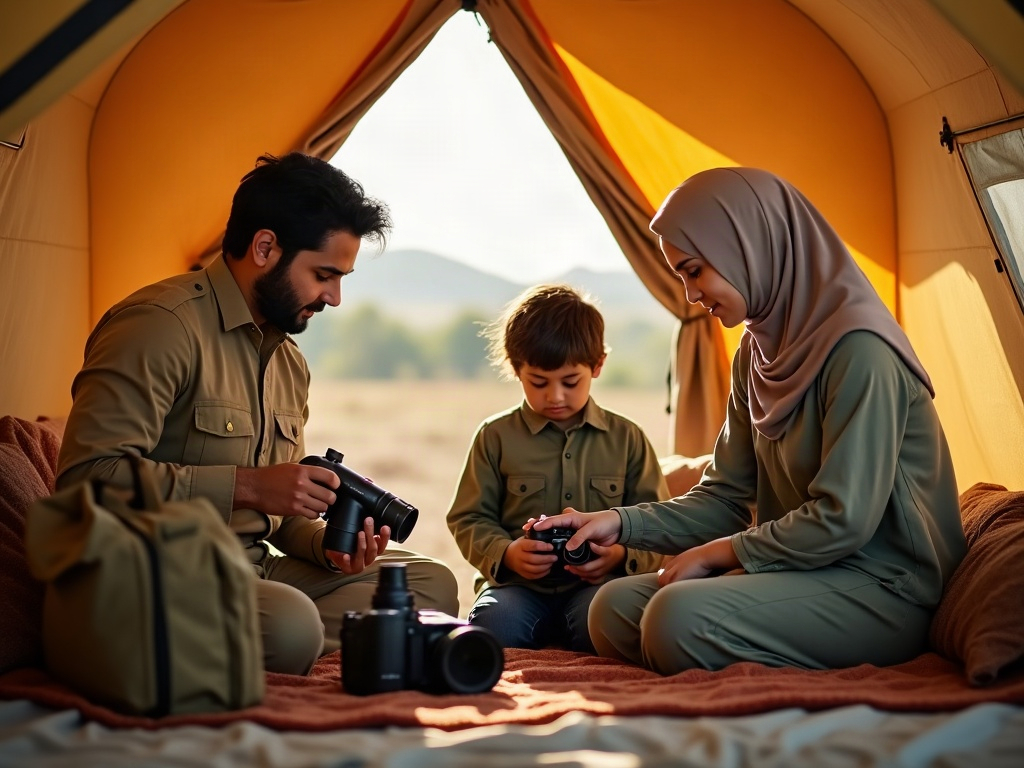
A well-packed, soft-sided daypack is essential for vehicle organization and hydration.
© WovenVoyages.com
5. How do you manage family-specific equipment and children’s safety gear?
Managing family-specific equipment requires balancing the medical and physical safety needs of young children with smart budgeting strategies to avoid overspending on items they will rapidly outgrow. Knowing how to efficiently pack these items aligns perfectly with the principles of minimalist family camping.
What specific safety gear protects children on game drives?
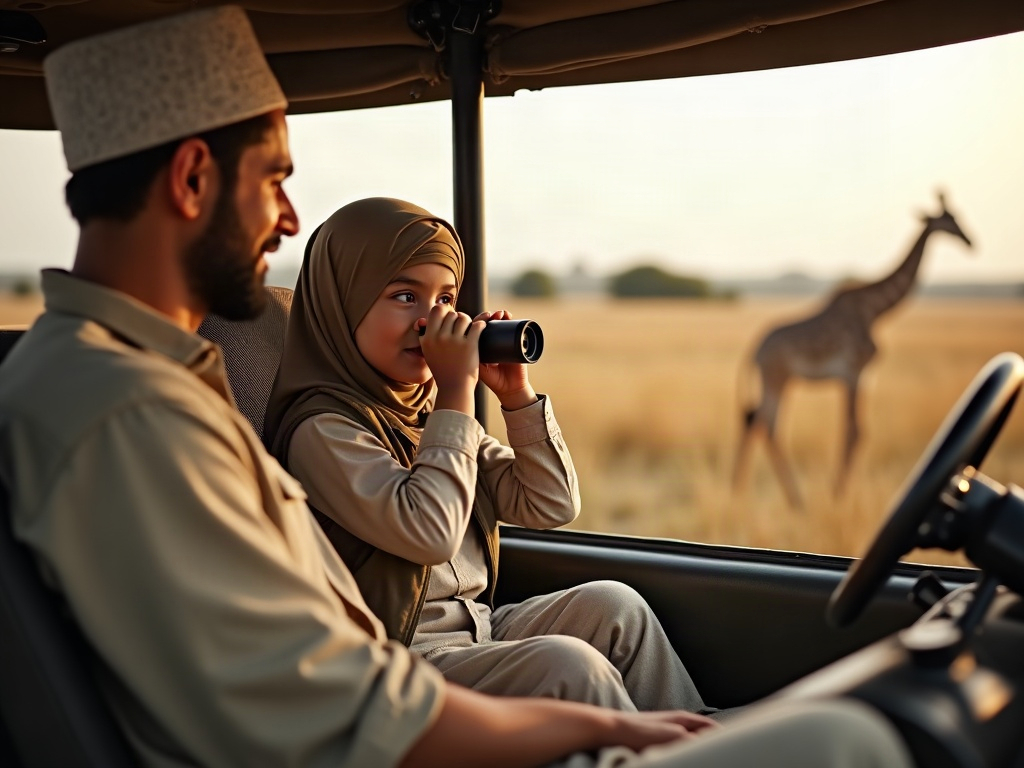
Specific safety gear protecting children on game drives includes child-sized binoculars to keep them engaged inside the vehicle, polarized sunglasses to prevent retinal damage, and a custom pediatric first-aid kit stocked with weight-dosed medications.
Operators strictly recommend against relying on local pharmacies in rural Africa for children’s medications, mandating that parents bring their own supply of children’s ibuprofen, antihistamines, and EpiPens if allergies are present. Furthermore, pack oral rehydration salts (ORS) and a digital thermometer, as dehydration and fever are the most critical early indicators of pediatric malaria or severe heat exhaustion.
The Binocular Distraction: Providing a child with their own inexpensive, rugged binoculars (6x magnification) isn’t just for viewing; it’s a safety tool. It keeps them seated, focused, and quiet inside the vehicle, preventing them from leaning out or causing disruptions.
How should you balance the budget between buying, renting, and using existing equipment?
You balance the budget by utilizing existing athletic wear for base layers, renting high-end camera lenses to avoid massive depreciation, and only buying foundational items like quality walking shoes and durable duffels that offer long-term use.
Renting a professional 100-400mm telephoto lens for a week costs approximately $100-$150, a fraction of its $2,500 retail price, providing massive Information Gain and budget efficiency for amateur photographers.
The “Athleisure” Repurpose: Don’t buy expensive, branded “safari clothing.” Standard, earth-toned yoga pants, golf polos, and moisture-wicking gym shirts you already own function identically to high-end safari gear at zero additional cost.
Budget Strategy Breakdown
- Buy: Soft-sided duffels, walking shoes, polarized sunglasses, medical supplies.
- Rent: High-end camera lenses, specialized camping equipment (if self-driving).
- Repurpose: Existing neutral athletic wear, old smartphones (for kids to take photos).
Author’s Experience: Abdullahi Azaam Adan
“On my first guided family trip to the Maasai Mara, half the group arrived with massive hard-shell suitcases that literally could not fit onto the Cessna Caravan. We spent a frantic hour transferring their belongings into garbage bags to make the flight. I never travel to the bush without a strict adherence to the soft-duffel rule.”
A customized medical kit is your primary line of defense in remote camps.
© WovenVoyages.com
6. Logistics: Safari Equipment Acquisition Checklist
Use this interactive checklist to ensure you’ve acquired and packed all the critical gear for your trip. Click the squares to check them off as you pack.
| Checklist Item / Tactic | Status |
|---|---|
| Luggage & Organization | |
| Procure soft-sided, frameless duffel bags (under 20kg max capacity). | ⬜ |
| Acquire packing cubes to compress clothing and organize the duffel. | ⬜ |
| Clothing & Protection | |
| Pack neutral-colored (khaki, olive) layering pieces; discard blue/black items. | ⬜ |
| Ensure every family member has sturdy, closed-toe walking shoes. | ⬜ |
| Electronics & Medical | |
| Pack high-capacity (20,000mAh+) power banks and universal adapters. | ⬜ |
| Equip every family member with their own 8×42 binoculars to prevent fighting over optics. | ⬜ |
| Assemble a pediatric-specific medical kit with weight-dosed medications. | ⬜ |
7. Frequently Asked Questions (People Also Ask)
Why are soft-sided duffel bags required on a safari family vacation?
Why are blue and black clothing colors avoided on safari?
What type of footwear is best for a family safari?
What binocular magnification is best for a family safari?
Resolution
Outfitting your family for a safari requires strict adherence to practical, logistical rules over aesthetic choices. By securing soft-sided duffels, packing neutral-colored layers, carrying your own power and lighting, ensuring everyone has their own 8×42 binoculars, and customizing a pediatric medical kit, you construct a resilient barrier against the unpredictable nature of the African bush, ensuring the focus remains entirely on the incredible wildlife experience.
Sources & External Links
- https://www.findingtheuniverse.com/best-binoculars-for-safari
- https://www.travelandleisure.com/travel-tips/cool-gadgets/best-binoculars-for-safari
- https://savingwild.com/2018/03/28/best-camera-and-binoculars-for-your-safari
- https://photosafaricompany.com/african-photo-safari-blog/best-canon-cameras-for-safaris/
- https://aardvarksafaris.com/binoculars-for-a-safari-holiday
One Response