How to manage teenagers’ late-night energy on vacation?
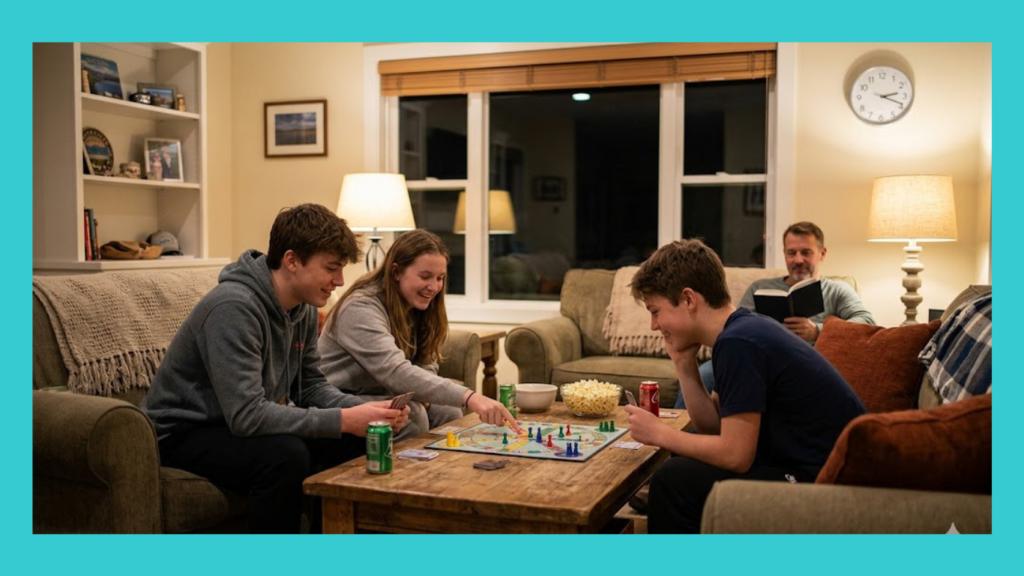
How to manage teenagers' late-night energy on vacation?"

How to manage teenagers’ late-night energy on vacation? | WovenVoyages How to manage teenagers’ late-night energy on vacation? Table of Contents Authored by Abdullahi Azaam Adan 1. The Adolescent Evening Strategy Resolution Table of Contents 1. The Adolescent Evening Strategy Managing teenagers’ late-night energy on vacation requires parents to stop fighting the adolescent biological clock and proactively channel their nocturnal focus into safe, pre-approved independence. The Adolescent Evening Strategy: Circadian Itinerary Shifting: Acknowledge the biological “adolescent phase delay.” Shift your daily itinerary to start at 10:00 AM instead of 8:00 AM, naturally aligning with their late-night energy bursts. Autonomy Scaffolding: Channel their energy into safe independence. Designate pre-approved, well-lit resort zones (arcades, teen lounges, or late-night cafes) where they can safely expend energy without parental hovering. The “Containment” Rule: If sharing a single hotel room, establish a “Headphones & Screens Only” rule after 10:30 PM. This allows them to stay awake without destroying the parents’ or younger siblings’ sleep architecture. Physical Exhaustion Offsets: Pre-plan heavy physical exertion (hiking, surfing, skiing) for the late afternoon (4:00 PM) rather than the morning, naturally draining their physical battery closer to bedtime. This guide equips parents with a biological and logistical framework to safely channel adolescent nocturnal energy while rigorously protecting the rest of the family’s travel sleep architecture. Circadian Phase Delay describes the natural biological shift during puberty that pushes an adolescent’s sleep and wake times roughly two hours later than adults. Global time-use diaries covering 25,248 adolescents across nine nations confirm the universality of this phenomenon, with sleep duration dropping to an average of 7 hours and 21 minutes in demanding environments like South Korea, proving the biological drive for delayed sleep spans all continents and cultures. 2. Why is teen vacation late-night energy biologically unavoidable? Teen vacation late-night energy is often biologically unavoidable because puberty fundamentally rewires the neurological mechanisms governing an adolescent’s internal sleep-wake cycle. Adolescent Puberty → Rewires → Sleep-Wake Cycles. Recognize the adolescent shift toward nocturnal circadian rhythms Recognizing the adolescent shift toward nocturnal circadian rhythms can help parents stop treating a 1:00 AM energy spike as deliberate behavioral defiance. Teen sleep patterns often shift later, requiring flexible yet controlled evening routines. PubMed Central (PMC) data details that from 165,793 adolescents across 24 countries, nocturnal sleep duration systematically decreases as age increases, with girls reaching maximum phase delay at 19.5 years and boys at 20.9 years. Rule: Cease punishing teenagers for feeling wide awake at midnight despite heavily active travel days. Reason: A two-hour delay in natural melatonin release is a biological reality of puberty, not a choice. Example: Letting a teen read quietly on the balcony at 11:30 PM rather than forcing them to lay in the dark. Figure 1: The Adolescent Circadian Shift 6 PM 10 PM 12 AM 2 AM 6 AM Adult Sleep Cycle Teen Sleep Cycle +2 Hour Delay Visualizing the 2-hour biological phase delay pushing teen wakefulness deep into the night. © WovenVoyages.com Map the correlation between vacation dopamine and nighttime wakefulness Highly stimulating travel days artificially extend an adolescent’s evening stamina by flooding their brain with novel dopamine. The Reality Layer: Teens rarely admit they are physically exhausted when exploring a new city at night. The sheer excitement masks their fatigue, and they often push through the evening only to crash suddenly and completely the next morning. Clinical studies establish that a 72-hour sleep deprivation cycle in adolescents elicits a hyperdopaminergic status, escalating sensitivity to novel environments and artificially inflating stamina by chemically overriding physical exhaustion offsets. Rule: Anticipate artificially inflated evening energy levels on highly engaging travel days. Reason: Massive dopamine releases triggered by travel independence suppress normal neurological fatigue signals. Example: Planning for a slower morning following an exciting evening theme park visit. 3. How does environment trigger teen vacation late-night energy? Specific hospitality environments typically trigger teen vacation late-night energy by trapping biologically awake adolescents in confined spaces with sleeping family members. Confined Spaces → Trigger → Adolescent Restlessness. Identify how shared hotel rooms exacerbate evening overstimulation Shared hotel rooms can easily exacerbate evening overstimulation if parents force a biologically active teenager to lie completely still in the dark. Hyper-arousal defines the state of severe physical restlessness and behavioral frustration caused by forcing a teenager to lie still before biological sleep readiness occurs. PMC actigraphy data derived from 517 youth confirms that arousal incidence rates per sleep bout increase significantly when adolescents share rooms with adults or younger children, destroying sleep maintenance efficiency. Acknowledge the role of digital socialization in delaying sleep Acknowledging the role of digital socialization in delaying sleep allows parents to implement practical screen filters rather than executing aggressive, conflict-inducing device confiscations. Late-night screen time or social activities can interfere with overall energy balance during travel. The Reality Layer: Teens rely on group chats and social media to process their days with peers back home. Confiscating the phone entirely often creates more anxiety and wakefulness than simply managing the screen’s brightness. PubMed Central reports that exposure to 6200 K blue-enriched LED lighting results in an 81.2% suppression of melatonin in children, whereas shifting screens to a warm, red-shifted spectrum allows melatonin levels to recover within two hours. Rule: Implement mandatory “blue light filter” parameters on all devices after 10:00 PM. Reason: You preserve their social lifeline while reducing the neurological stimulation that blocks sleep. Example: Shifting the phone’s display to “Night Shift” or warm mode to prevent melatonin suppression. Figure 2: Melatonin Suppression via Blue Light Brain Melatonin: SUPPRESSED (81%) Animated graphic demonstrating how shifting screens to a warm spectrum preserves essential sleep architecture. © WovenVoyages.com 4. Which locations best absorb teen vacation late-night energy? Selecting precise locations to safely absorb teen vacation late-night energy requires parents to vet resort grounds for secure, low-risk independence zones. Autonomy Scaffolding → Absorbs → Nocturnal Energy. Compare resort-supervised teen lounges against independent town exploration Comparing resort-supervised teen lounges against independent town exploration highlights the critical balance between physical safety and adolescent appeal. Unmanaged late nights can affect