What to Include in a Family Vacation First-Aid Kit?
Table of Contents
A Family Vacation First-Aid Kit is essential for safe travels because it provides the immediate, on-site resources necessary to manage common injuries and illnesses, preventing minor incidents from escalating into major travel disruptions.
This kit functions as your primary line of defense against health issues away from home, ensuring you can treat everything from a scraped knee at a playground to a sudden fever in a hotel room. Its presence provides critical peace of mind, allowing your family to enjoy the vacation with confidence. Ensuring you have a proper first-aid kit is a crucial part of learning how to plan a family vacation step by step.
1. Why is a Family Vacation First-Aid Kit essential for safe travels?
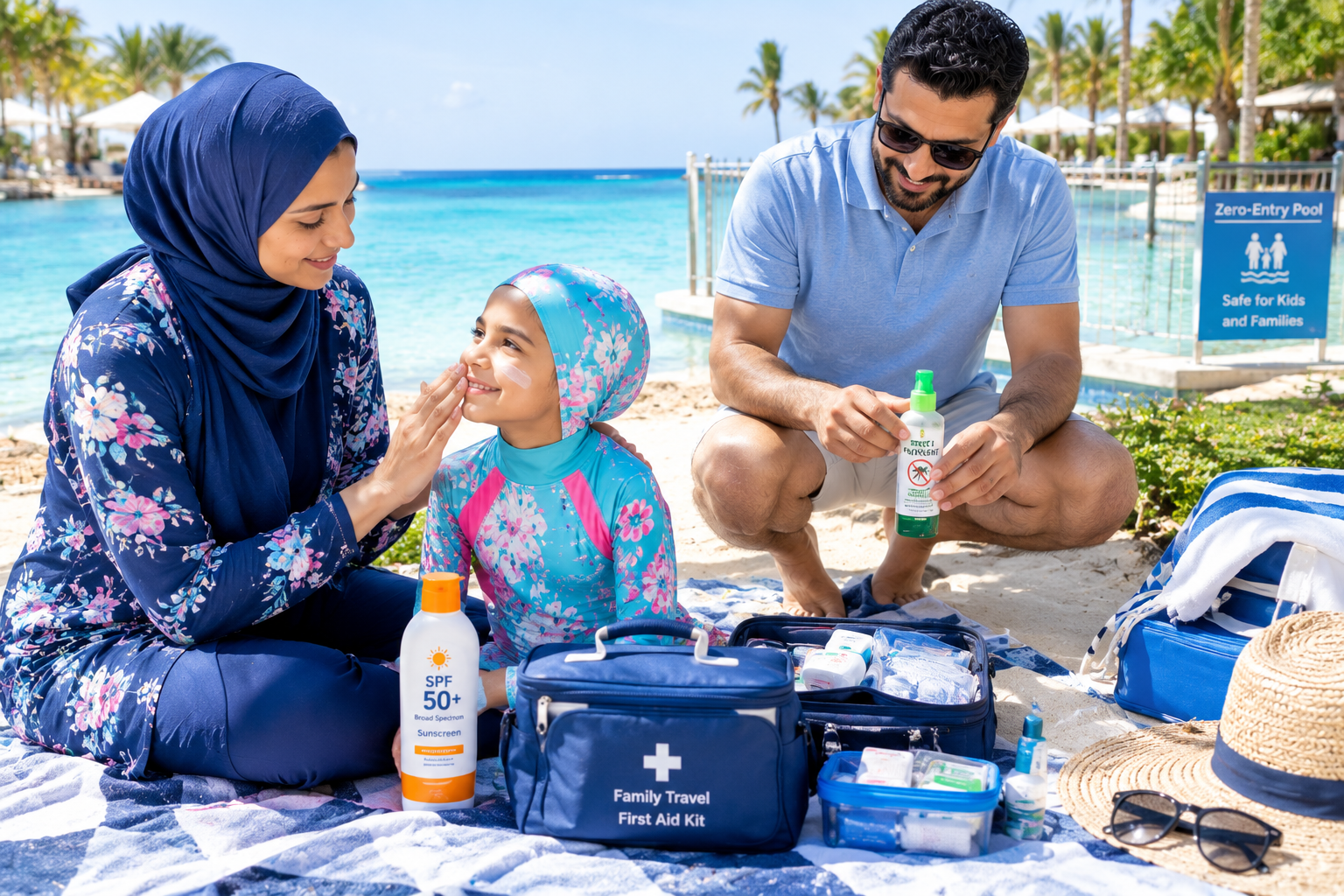
A well-stocked Family Vacation First-Aid Kit is a critical tool that prevents minor scrapes, bug bites, or sudden fevers from turning into emergencies that ruin your trip. It gives parents the power to fix small problems instantly without hunting for a pharmacy in a strange town.
This kit is your first line of defense against health issues away from home. Its presence provides critical peace of mind, allowing your family to enjoy the vacation with confidence instead of worrying about “what ifs.”
What core benefits does a well-stocked family first-aid kit provide?
The core benefits a well-stocked family first-aid kit provides are immediate care for injuries, rapid response to common illnesses, and a massive reduction in travel-related stress.
It allows for the instant treatment of cuts, scrapes, and burns, which is crucial for preventing infection in new environments. Furthermore, having access to familiar, age-appropriate medications for pain, fever, or allergies means you can manage symptoms promptly. For instance, as noted by Children’s Hospital of King’s Daughters, a heat index of 90 degrees or higher can pose serious health risks for children, making quick access to fever reducers and hydration vital.
A primary benefit is “parental empowerment.” The kit transforms a parent from a worried bystander into a capable first responder, which calms both the parent and the child during a stressful situation, de-escalating the entire event.
To holistically address prevention, treatment, access, and comfort for your family, it’s essential to understand how to plan for family vacation health.
How does a family first-aid kit support overall travel planning and peace of mind?
A family first-aid kit supports overall travel planning by systematically forcing parents to think about health risks early, thereby removing anxiety about potential medical unknowns.
By proactively addressing health risks before you leave, you remove a significant source of in-trip stress and decision fatigue. Knowing you have the necessary supplies for your child’s specific allergies or common ailments means you can relax and focus on the vacation experience itself.
The process of assembling the kit forces parents to actively consider the health risks of their destination (e.g., sun exposure at the beach, insect bites in the woods) and pack accordingly, making it an integral part of smart travel planning, not just an afterthought.
Author’s Experience
“While exploring a nature reserve with my kids, my youngest took a hard fall on some sharp, uneven rocks. Being miles from the nearest town could have been terrifying, but our well-stocked first-aid kit changed everything. Having sterile gauze, an antiseptic wipe, and a liquid bandage readily available meant I could clean and seal the wound right on the trail. It turned a potential emergency into a simple five-minute pause, saving our day and proving exactly why this preparation is so vital.”
2. What foundational medical supplies should you always include in a Family Vacation First-Aid Kit?
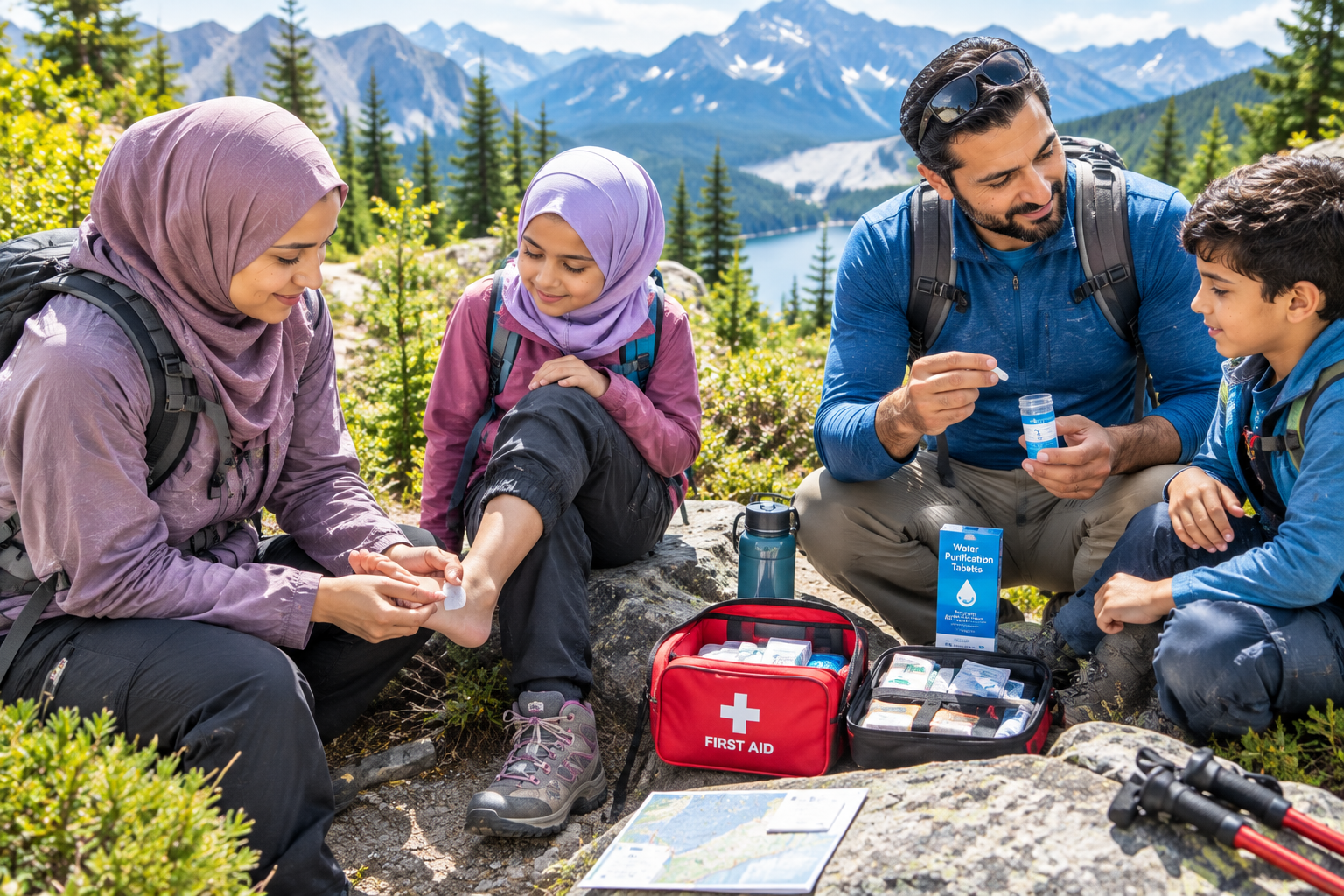
Foundational medical supplies you should always include in your kit are wound care items, pain and fever relievers, digestive aids, and basic medical tools.
This core set of supplies forms a universal baseline for any trip, designed to handle the most common travel-related health issues for both adults and children. These items should be considered non-negotiable regardless of your destination or planned activities.
Which essential wound care and sterilization items belong in your kit?
Essential wound care and sterilization items include antiseptic wipes, assorted adhesive bandages, sterile gauze, and medical adhesive tape.
These items are critical for cleaning, covering, and securing dressings on minor cuts, scrapes, and blisters to prevent infection, which is a heightened risk in new environments. Your selection should prioritize variety in size and type to handle different injuries effectively. If carrying the kit in carry-on luggage, remember that the Transportation Security Administration (TSA) allows small scissors with blades less than 4 inches long.
For family travel, supplement standard bandages with liquid bandage and self-adherent wrap. Liquid bandage is waterproof and ideal for fingers and knuckles on active kids, while self-adherent wrap is excellent for securing gauze on joints without needing tape.
What over-the-counter medications are vital for common family travel ailments?
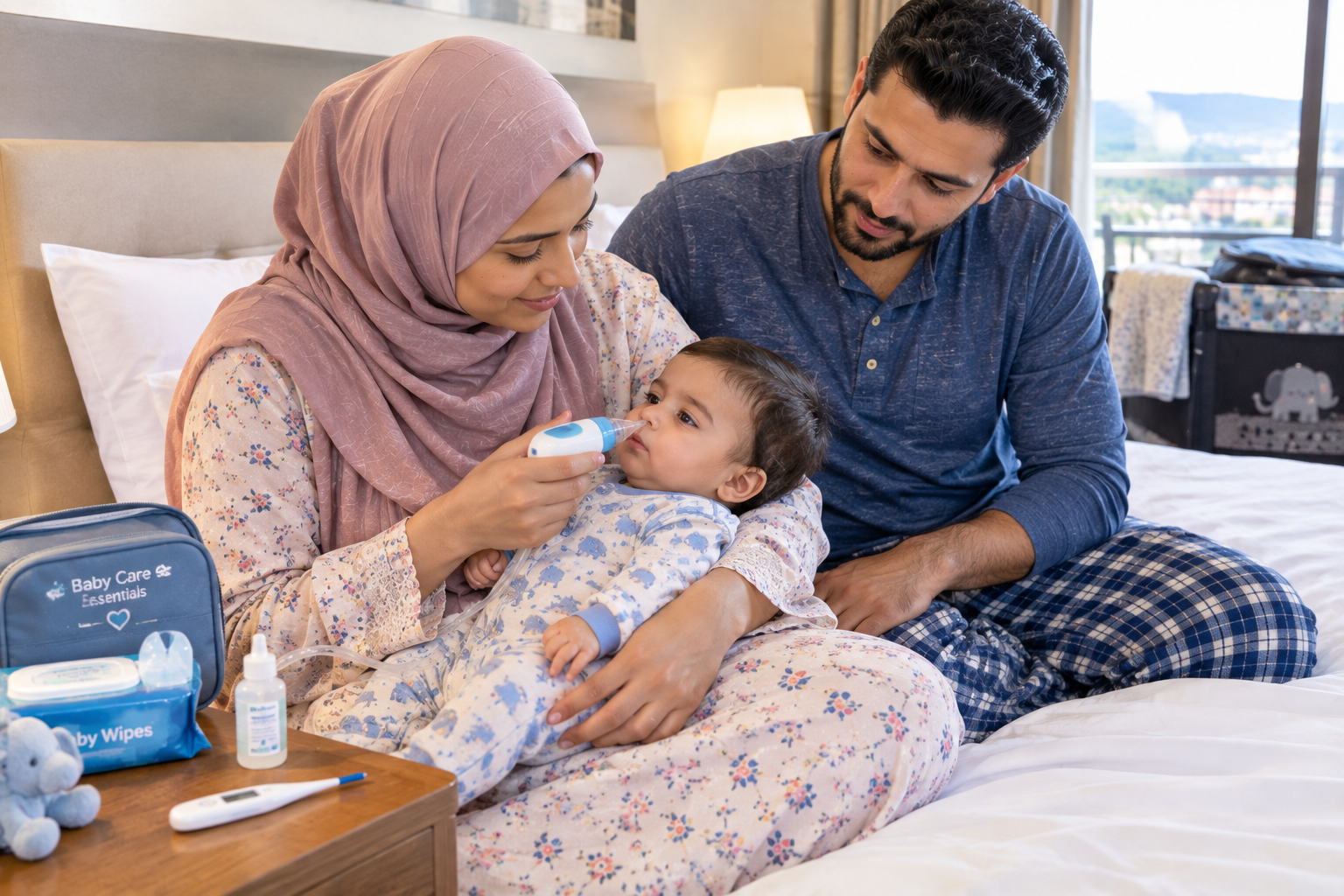
Vital over-the-counter medications for family travel include age-appropriate pain and fever reducers, antihistamines for allergic reactions, and treatments for digestive issues.
Specifically, Cleveland Clinic suggests packing both Ibuprofen and Acetaminophen to manage pain and fever, Diphenhydramine or a non-drowsy alternative for allergies, and Loperamide for adults and Bismuth subsalicylate for digestive upset. Always include child-specific formulations and dosing instruments if traveling with kids. Before touching any cuts or scrapes, use hand sanitizer that contains at least 60% alcohol.
A critical expert tip is to pack two different types of pain/fever reducers (e.g., Ibuprofen and Acetaminophen). This allows for staggered dosing under a doctor’s guidance for persistent fevers, a strategy many pediatricians recommend.
Beyond immediate treatment, adopting preventive measures is key to knowing how to prevent kids from getting sick on vacation.
3. How do you customize your Family Vacation First-Aid Kit for specific family needs and destinations?
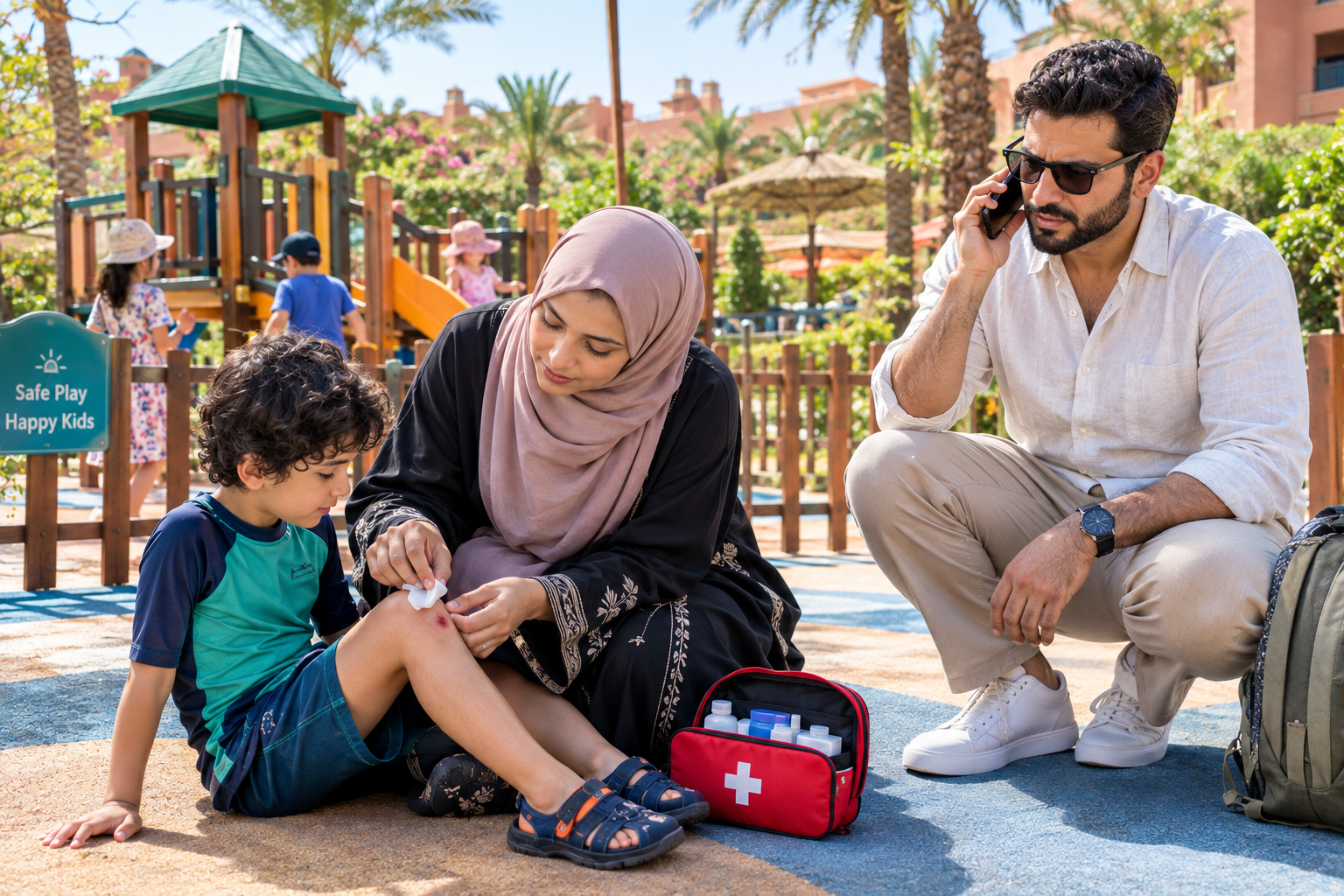
You customize your kit by adding specialized items based on individual health profiles, the destination’s unique environment, and your planned activities.
This personalization is the most critical step for ensuring your kit is truly effective. It involves packing specific prescription medications for family members with chronic conditions, adding items like extra sunscreen for a tropical beach vacation, or including blister pads for a hiking-focused trip.
Which specialized items are crucial for babies, toddlers, or family members with chronic conditions?
Crucial specialized items include age-specific tools like nasal aspirators, emergency medications like EpiPens, and extra supplies for managing ongoing health needs.
For an infant, this means packing a nasal aspirator, infant-formulation medications, and a digital rectal thermometer. For a family member with a severe allergy, it is a non-negotiable requirement to pack multiple epinephrine auto-injectors. Also, doctors advise not to use insect repellant on infants 2 months of age or younger.
For chronic conditions, pack double the required medication and split it between two different bags (e.g., carry-on and checked bag) to mitigate the risk of loss or theft. Also include a printout of the pharmacy’s contact information for emergency refill coordination.
For those with ongoing health needs, specialized planning is required to manage pre-existing conditions while on a family vacation.
How should you adapt your first-aid kit for different travel environments or activities?
You adapt your kit by anticipating environmental exposures, such as packing high-SPF sunscreen for a beach or blister pads for a hiking trip.
Following guidance from the CDC Yellow Book, for a tropical beach vacation, this means adding high-SPF broad-spectrum sunscreen, aloe vera gel for sunburns, and insect repellent. For a mountain hiking trip, your adaptation must include blister treatment pads, an elastic bandage for sprains, and water purification tablets.
Think in terms of ‘exposure.’ A city trip involves exposure to crowds and germs (pack more hand sanitizer), a wilderness trip involves exposure to environmental hazards (pack bite/sting relief, water filter), and a high-altitude trip involves exposure to lower oxygen (discuss altitude sickness medication with a doctor).
What prescription medications and supporting documents should you carry in your family kit?
You must carry all necessary personal medications in their original, pharmacy-labeled containers, accompanied by a doctor’s note and a copy of the prescription.
Never transfer prescription pills into a generic pill organizer for air travel; always keep them in the original pharmacy-labeled bottles to avoid issues with security or customs. Supporting documents, like a letter from the prescribing physician explaining the need for the medication, are crucial for international travel, especially with controlled substances or injectable medicines.
Before international travel, check the destination country’s embassy website for rules on specific medications. Some common medications in one country (e.g., certain ADHD medications) may be considered illegal narcotics in another. This verification is a critical, often-overlooked step.
Understanding the necessity of medical paperwork also highlights the importance of learning how to plan travel insurance for a family vacation.
4. How can you effectively pack and organize your Family Vacation First-Aid Kit for easy access and safety?
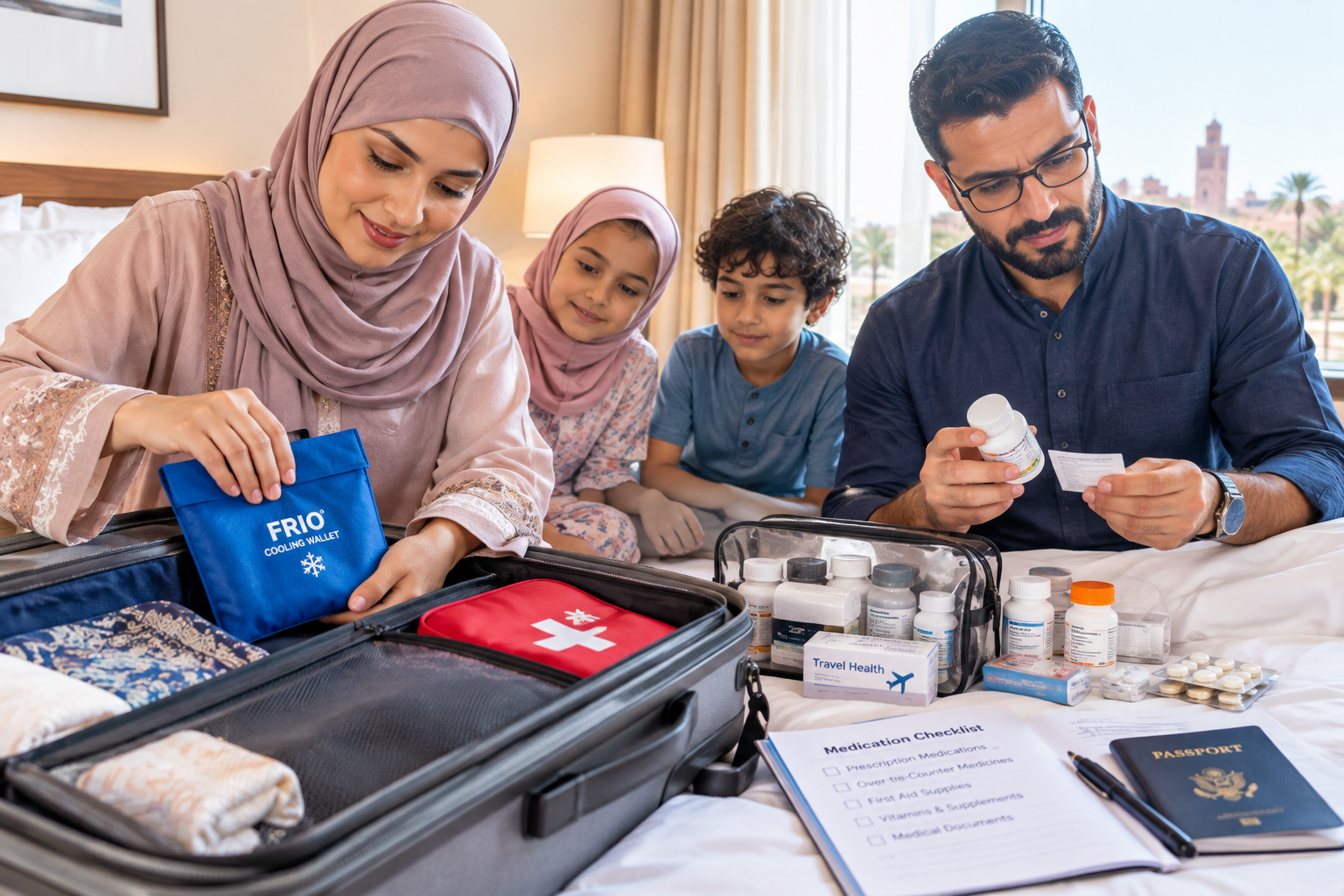
Effectively organizing your kit requires a durable, compartmentalized container with like items grouped into clearly labeled, waterproof pouches.
The goal of organization is to reduce retrieval time during an emergency. Place medications in one bag, wound care in another, and tools in a third, with the most frequently used items like bandages and antiseptic wipes at the top for quick access.
What are the best practices for assembling and maintaining your first-aid kit before departure?
Best practices involve checking all expiration dates, replenishing any used supplies, and reviewing the contents against your specific itinerary at least a month before leaving.
At least one month before your trip, conduct a full inventory of your kit. Discard and replace any expired medications or sterile items, and purchase fresh supplies for any items that are running low from previous use. You should rotate supplies quarterly by checking expiration dates and replacing used or expired items.
Create a digital inventory of your kit in a notes app on your phone. List each item and its expiration date. This makes the pre-trip review a 5-minute task of scanning the list instead of physically unpacking the entire kit every time.
How can you organize your first-aid supplies for quick identification and retrieval during an emergency?
Organize supplies for quick retrieval by using clear, zippered pouches to group items by function (e.g., “Cuts,” “Meds”) and labeling each pouch explicitly.
For instance, following advice similar to Johns Hopkins Medicine, create a ‘Cuts & Scrapes’ pouch with bandages and antiseptics, a ‘Meds’ pouch with pill bottles, and a ‘Tools’ pouch with tweezers and scissors. This modular system allows you to grab only the relevant pouch needed for a specific situation.
Use different colored pouches or zippers for critical categories. For example, a red pouch for ‘Allergies & Emergency Meds’ (like an EpiPen) provides an immediate visual cue that helps another caregiver or first responder locate the most critical items instantly, even if you are unable to give instructions.
A well-organized first-aid kit integrates seamlessly into your broader efforts to determine how to plan what to pack for a family vacation.
5. What common mistakes should families avoid when preparing and managing their travel First-Aid Kit?
The most common mistakes include failing to check expiration dates, packing only adult-strength medications, and not customizing the kit for the specific destination.
A frequent error is packing only adult-strength medications for a family with children, leaving them without safe treatment options. Another is overpacking with unnecessary items while forgetting essentials like prescription medications or an epinephrine auto-injector.
How can you prevent medication expiry or damage while on a family vacation?
Prevent damage by keeping the kit in your climate-controlled carry-on luggage and performing a pre-trip inventory to discard expired items.
Before packing, check every item and replace anything that has expired or will expire during your trip. During travel, keep the first-aid kit in your carry-on luggage to protect it from the extreme temperatures in a vehicle’s trunk or an airplane’s cargo hold, which can degrade medication efficacy.
For essential, temperature-sensitive medications like insulin or certain liquid antibiotics, use a specialized travel cooling wallet (e.g., Frio bag). These wallets use evaporation to keep medication cool for hours without needing refrigeration, providing a robust solution for transit days.
What are the risks of packing excessive or insufficient items in your family’s first-aid kit?
Under-packing leaves you unprepared for emergencies, while over-packing creates a bulky kit that is difficult to search through or is left behind in the hotel.
As highlighted by Thrive Pediatrics, an insufficient kit creates the serious risk of not having a critical item—like an antihistamine during an allergic reaction—when needed. Conversely, an excessively large kit often gets left behind in the hotel room due to its weight and bulk, making it just as useless as no kit at all.
The “80/20 Rule” applies here. 80% of your travel health needs will be addressed by 20% of the potential items. The key is to identify that critical 20% (wound care, pain/fever meds, allergy meds, personal prescriptions) and be ruthless about excluding low-probability, “just-in-case” items that don’t match your destination’s risk profile.
6. Logistics: Family First-Aid Kit Tactical Checklist
| Checklist Item / Tactic | Status |
|---|---|
| Review Expiration Dates: Inspect all medications and sterile items, discarding and replacing any that are expired or will expire during your trip. | ⬜ |
| Replenish Supplies: Restock any used items or those running low, ensuring a full supply for the entire duration of your travel. | ⬜ |
| Customize for Itinerary: Add or remove items based on your destination’s specific health risks, planned activities, and family members’ individual needs. | ⬜ |
Conclusion: Final Considerations for Your Family Vacation First-Aid Kit
The final step is actively reviewing your completed kit with other adult caregivers so everyone knows exactly where items are during an emergency. Your kit is not complete until you have customized it for your family and destination, checked all expiration dates, and organized it for rapid access.
The ultimate goal is not to have a perfect kit, but to cultivate a mindset of preparedness. The process of building and maintaining your kit makes you a more aware and capable traveling parent, which is the most valuable travel safety asset of all. Your final action before zipping the suitcase is to place your completed, reviewed Family Vacation First-Aid Kit into your carry-on luggage.